STEM & Learning

Best STEM Toys of 2026

The best STEM toys don't announce themselves as educational. They get built, knocked over, rebuilt, and argued over at the kitchen table—and somewhere in there, a kid learns something. I've watched 'learning toys' crack, lose pieces, and die at the bottom of a toy bin, so my team and I spent the past four months testing 14 sets with kids ages 4 to 11: magnetic tiles, building kits, coding robots, and build-and-fly contraptions that landed on the roof more than once. The right one turns a rainy afternoon into something they ask for again—not a lesson you have to sell.

What separates the keepers from the dust collectors usually isn't the feature count. It's whether a kid can start in five minutes and still find new challenges a month later. We paid attention to magnetic strength—towers that collapse under their own weight get old fast—and to complexity, because a robot that needs an adult for every step stops being fun. We also noted cuteness and whether a set arrives gift-ready or needs batteries and a download.

#1

Snap Circuits Jr. SC-100
Snap Circuits Jr. SC-100

Learning circuits

Doodle Score 9.6/10
Check Price

Worth Noting

  • Batteries required to run the projects
Ages
8+
Parts
28 snap-together
Projects
100+
Batteries
Alkaline
Read the full review

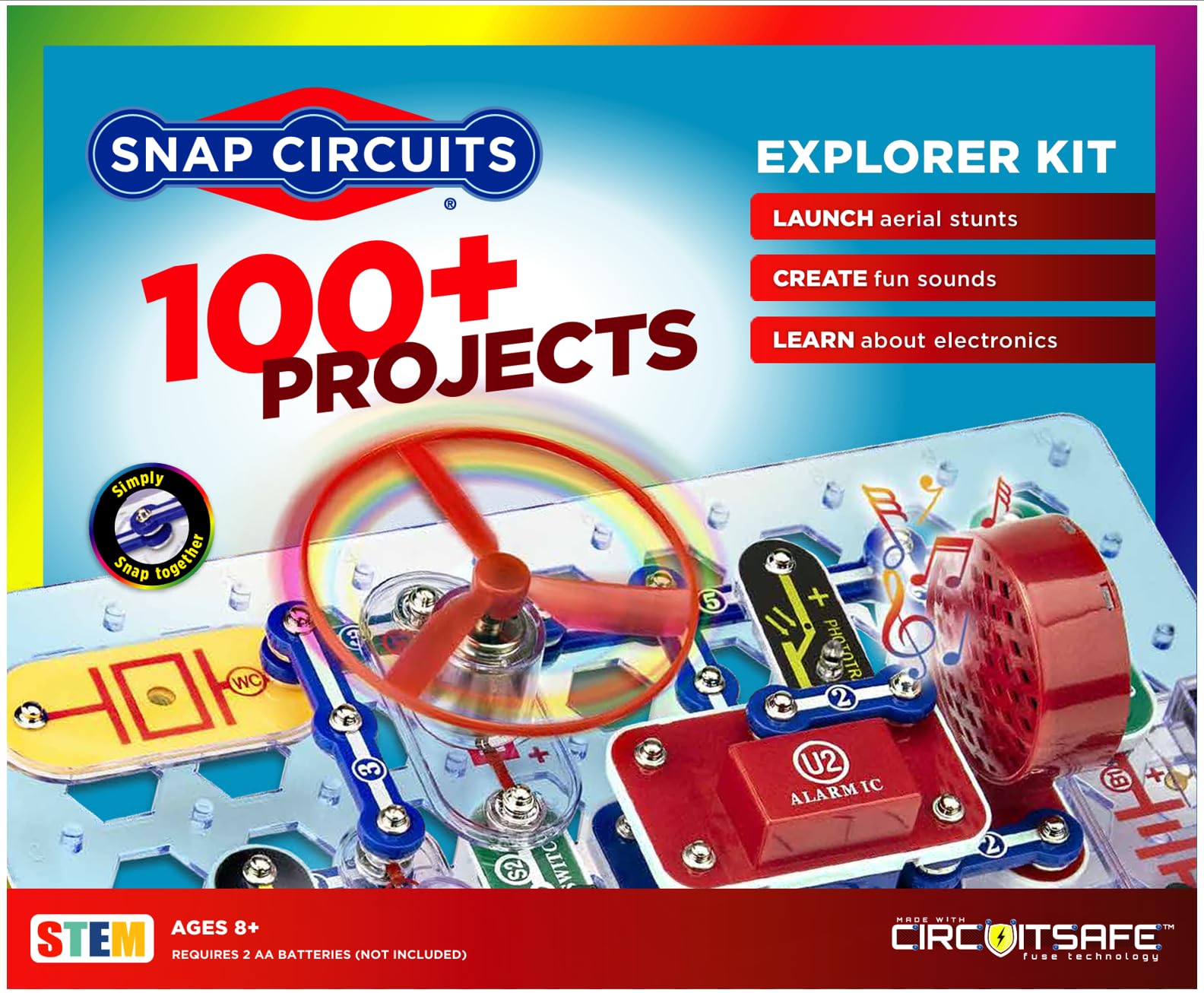
Where does the light actually come from? Snap Circuits Jr. answers that with a switch, a lamp and two snaps, and keeps answering for a hundred projects after that. Twenty-eight parts press onto a plastic grid, a full-color manual shows where each one goes, and the first working circuit is short enough that a kid gets a result before boredom sets in. Of everything here, this is the kit we put in front of an eight-to-eleven-year-old first.

What makes the format work is the absence of everything usually sold as part of electronics: no soldering, no stripped wires, no tools. The parts snap, so the assembly itself is the lesson in how a circuit is wired. And because the manual is picture-led, a child who can read a diagram can work alone, flipping between pages to fix their own mistake rather than waiting for an adult to diagnose it.

The projects escalate sensibly. Each one adds a part or changes a single connection instead of starting from scratch, so the same 28 components keep coming back in new combinations, and there is no glue, no drying time and no model to throw away once it has been admired. That reuse is why this kit outlasts the build-it-once sets that look more exciting in the box.

The gap is the why. The manual shows wiring rather than physics: it tells a child what to connect and only rarely what the connection is doing. For a builder who learns by making something work, that is fine. For a kid who wants the theory, plan to supply it yourself over the first few projects, or accept that year one is about circuits that function rather than circuits that are understood. Batteries are needed to run the projects, so add them to the order.

Bottom line: The STEM toy we recommend first: real circuits a kid builds, tests and switches on with no tools, backed by enough projects to last for years.
#2

PicassoTiles 100-Piece Tiles

PicassoTiles 100-Piece Tiles

Ages 3 to 6

Doodle Score 9.6/10
Check Price

Worth Noting

  • Magnet grip varies on tall, unsupported builds
Ages
3+
Format
Clear 3D magnetic tiles
Pieces
100
Players
Multiple
Read the full review

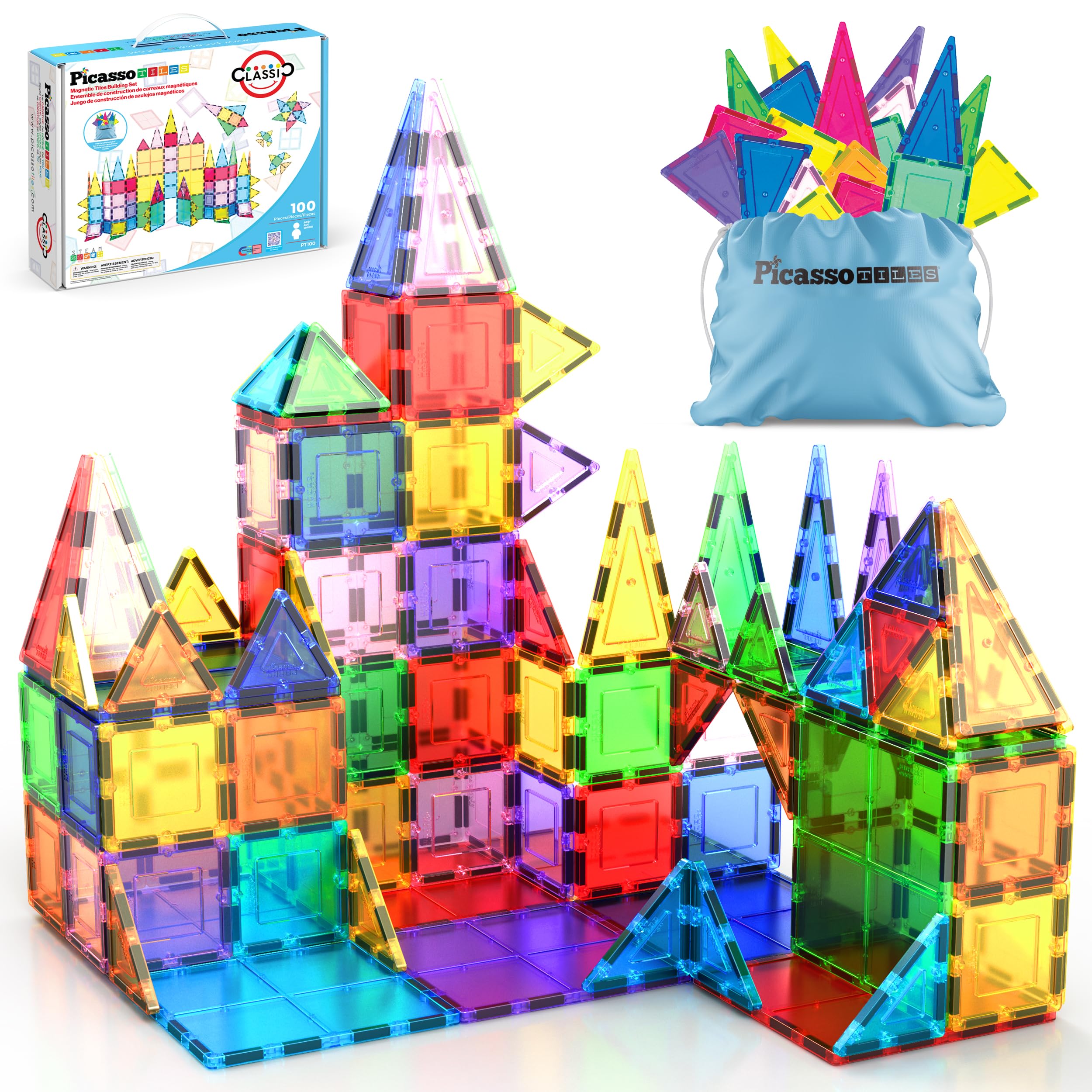
Hand a three-year-old and a nine-year-old the same box and you usually get two different toys. Magnetic tiles are the exception. The little one stacks flat squares into a house, the older one builds a garage with a ramp and a roof, and both are drawing from the same 100 pieces. That spread is the reason this set lives on our floor rather than in the toy bin.

The building is simple in the best way. Every tile carries magnets in its edges, so a join either clicks or it does not, and a child works out within a minute that a corner needs two tiles meeting at a right angle to stay up. The clear colored plastic makes windows, towers and roofs look like something, and 100 pieces is enough for one good castle rather than two.

Magnet grip is the variable to know about. Flat joins with plenty of tiles behind them hold well; a tall tower leaning on a single edge is where a set like this can slump. If your builder is the ambitious type, go for the larger count rather than the smaller one and treat 100 as a starter.

For ages three to seven this is the open-ended builder we reach for over every other one here: it survives being stepped on, it packs into a shallow box, and it needs no adult, no instructions and no batteries. Above eight, the tiles become part of a bigger build rather than the main event, which is when the electronics and the marble runs take over.

Bottom line: Our pick for ages three to seven: magnetic tiles tough enough for daily play, and the rare set that keeps a preschooler and a nine-year-old busy at the same table.

#3

Brain Flakes 500-Piece Set

Brain Flakes 500-Piece Set

Big shared builds

Doodle Score 9.6/10
Check Price

Worth Noting

  • Discs need firm hand strength to click
  • Loose pieces need a tray or bin
Ages
3+
Colors
12
Pieces
500
Storage
Lidded storage jar
Read the full review

Every piece in this jar is the same shape: a flat disc with slotted edges that press into another disc. That sounds limiting until you see what 500 identical pieces do. The constraint pushes children toward structure, because you cannot lean on a special part to make the idea work; the geometry has to do the job. Bridges, spheres, a Ferris wheel, a tower taller than the table.

Two practical things to plan for. The discs take a firm press, so a three-year-old will mostly sort colors and hand you pieces while a six- or seven-year-old does the clicking; the box says three and up, and we read that as three and up with help. And 500 loose discs make a mess that has to be managed, which is where the yellow-lidded jar earns its place. A shallow tray helps more.

What you get is the most building per dollar in this guide. There is no manual to lose and no single finished model, so it works for a classroom table, a waiting room and siblings who will not share anything else. It teaches no electronics and no physics; it teaches spatial planning and patience, which is where nearly all of these toys actually start.

Bottom line: If you want the most building per dollar here, this is it: one simple shape, 500 pieces, and no wrong way to use them.

#4

Melissa & Doug Wooden Blocks

Melissa & Doug Wooden Blocks

First blocks

Doodle Score 9.6/10
Check Price

Worth Noting

Ages
2+
Colors
4
Pieces
100
Shapes
9
Read the full review

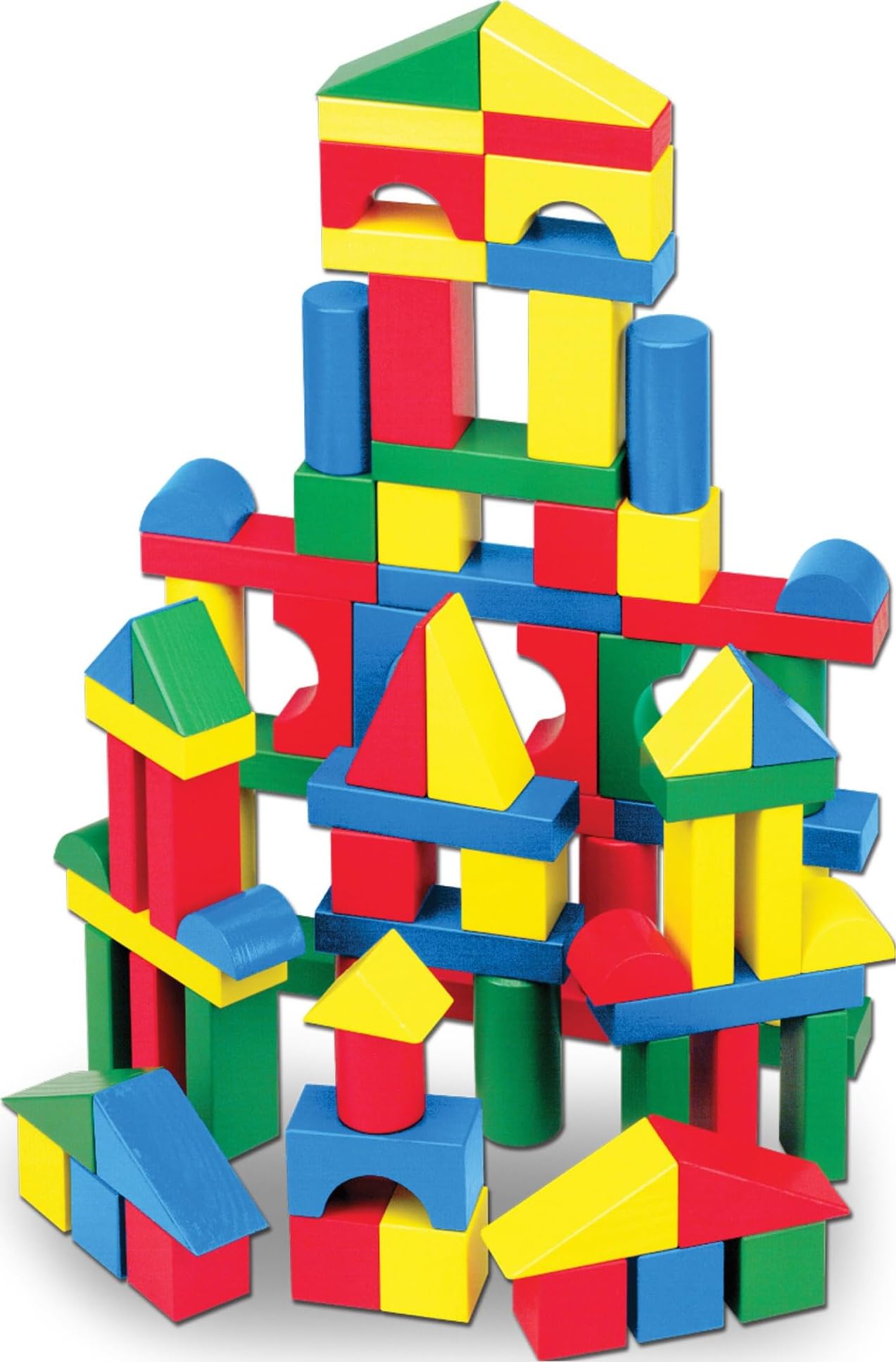
No cards, no app, no instructions: 100 solid wood blocks in four colors and nine shapes, in a cardboard box. A two-year-old does not need more than that, and neither, honestly, does a four-year-old. The whole toy is stacking, balancing and knocking down, and it is the first place a child meets the idea that a wide base holds more than a narrow one.

We keep coming back to this set because it is the cheapest way to buy genuine spatial practice: naming the shapes, counting a tower, sorting by color, then discovering that three small blocks cover the length of one long one. The blocks are light, the edges are rounded, and the paint has held up to chewing and throwing. The box is the weak point, since it is cardboard and it will split; a deep storage bin fixes that permanently. Buy this before any kit that comes with a manual.

Bottom line: Buy this for the two-year-old who stacks everything: 100 solid wood blocks that teach balance, counting and shape names without a screen or a battery.

#5

Educational Insights Kanoodle

Educational Insights Kanoodle

Travel and waiting

Doodle Score 9.4/10
Check Price

Worth Noting

  • Opening challenges are too easy for older kids
Ages
7+
Pieces
12
Challenges
228
Puzzle Modes
2D and 3D
Read the full review

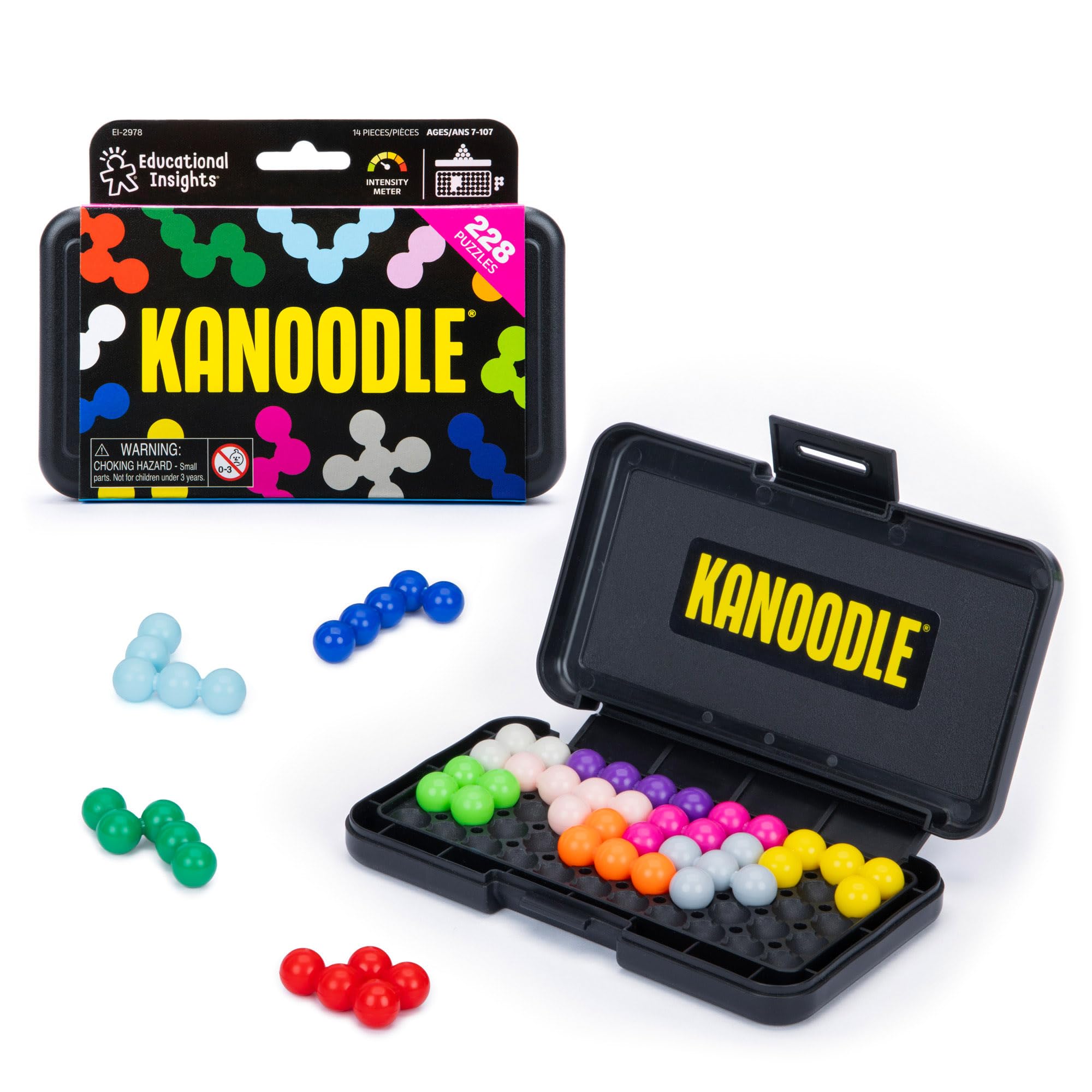
This is the cheapest thing in the guide and the one that travels best: a compact case that opens into the board, 12 chunky pieces and 228 challenges across two and three dimensions. We keep one in a bag for restaurants and waiting rooms, because it is the pick that works on the kid who announces they are bored and then goes quiet. Everything the puzzle needs is inside the case, including the guide.

Fair warning on the difficulty curve. The opening challenges are easy, and a sharp seven-year-old will clear a good stretch of them in one sitting before the puzzles start to bite. That ramp is also what makes the same toy usable by a six-year-old and an adult in the same week, so we do not count it against the set, but a child who wants to be challenged immediately will get there faster with Gravity Maze. The three-dimensional puzzles are the ones that hold attention longest.

Bottom line: The one we keep in a bag: 228 logic puzzles in a case the size of a phone, and the cheapest route to real thinking on a car ride.

#6

ThinkFun Gravity Maze

ThinkFun Gravity Maze

Logic and gravity

Doodle Score 9.2/10
Check Price

Worth Noting

  • Color-coded towers are hard for colorblind kids
Ages
8+
Players
1
Challenges
60 cards
Components
9 towers, 3 marbles
Read the full review

A card shows a target square. You build a run of towers so a marble dropped at the top finishes on that square. Get it right and the marble disappears through the plastic with a clatter; get it wrong and you can see exactly where it left the track. That feedback loop is the whole toy, and it is a good one, because the failure is visible rather than mysterious.

Sixty cards run from beginner to expert, and the early ones really are easy, so a seven- or eight-year-old can work alone after one demonstration. The later cards take planning two or three moves ahead, which is why this stays in rotation for the adults in the house. It is single player and tabletop, and it wants a flat surface and a little patience.

One thing to check before buying: the towers and cards are color-coded, and a colorblind child can lose the distinction between two of the shades. If that is your kid, a shape-based puzzle such as Kanoodle is the better fit. For the eight-to-twelve builder who likes levels and cause and effect, this is the challenge we rate highest of the logic picks here.

Bottom line: For the kid who likes levels and a marble that has to land in the right place, this is the most satisfying challenge in the group.

#7

Klutz LEGO Gear Bots

Klutz LEGO Gear Bots

LEGO mechanisms

Doodle Score 9.2/10
Check Price

Worth Noting

  • One model at a time; rebuild to switch
  • Papercraft parts crease with play
Ages
8-12
Book
64 pages
Models
8
LEGO Elements
62
Read the full review

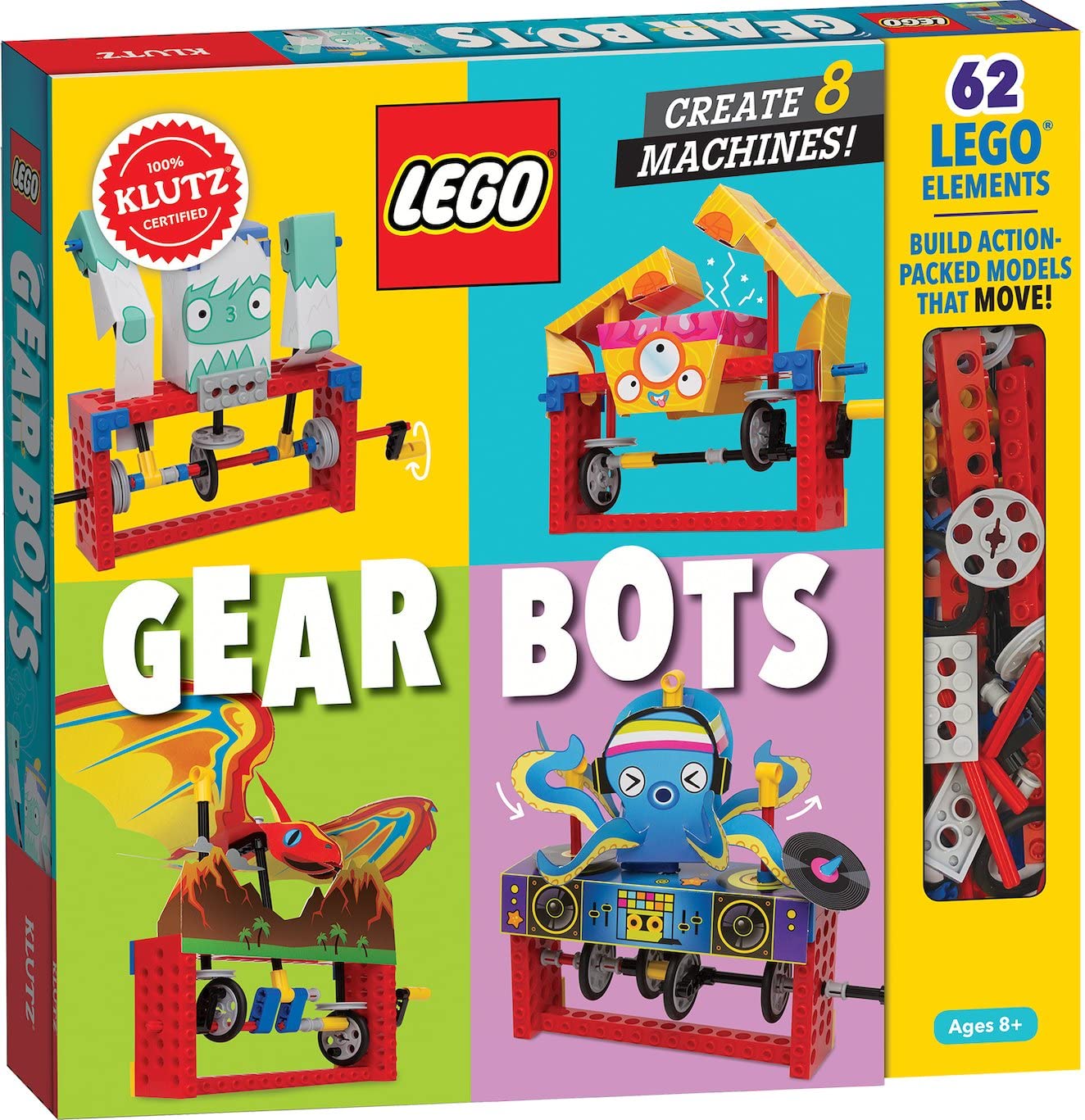
Sixty-two LEGO Technic elements, ten sheets of papercraft and a 64-page book that explains axles, cams and cranks while you use them to build eight kinetic creatures. The papercraft bodies are what make the models look like animals rather than machines; the Technic parts are what make them move. It reads like a book and builds like a kit, which is a combination few toys here manage.

For a LEGO-obsessed eight-to-twelve-year-old who wants to know why the model moves, this is the clearest mechanics lesson in this guide, and the book does the teaching rather than a parent. The catch is that the parts build one model at a time: you finish a creature, watch it walk, then take it apart to build the next. For a kid who enjoys the rebuild that is the whole appeal; for a kid who wants eight finished things on a shelf, it is a dealbreaker.

The paper bodies also crease with handling, so the model that gets played with hardest is the one that ages fastest, and the pieces you would replace first are paper rather than plastic. If your child would rather keep what they build, Snap Circuits is the better buy: that kit's parts stay assembled and keep working.

Bottom line: The LEGO kid's mechanics lesson: eight moving models built from real Technic parts, with the engineering explained beside the instructions.

#8

Smartivity Hydraulic Launcher

Smartivity Hydraulic Launcher

Build then launch

Doodle Score 9.2/10
Check Price

Worth Noting

  • Paper planes need careful folding to fly
Ages
6-14
Parts
58
Builds
Plane and dart launcher
Material
Engineered wood
Read the full review

The mechanism is a pair of syringes joined by a tube: push one plunger and the other moves, and that hydraulic pressure is what fires the launcher. Putting that inside a wooden kit for six-to-fourteen-year-olds is a genuinely clever choice, because a child can see the whole system at once. There is no motor, no battery and nothing to charge.

Fifty-eight engineered-wood parts go together with the instruction manual over an afternoon, and the fit is good enough that a patient nine-year-old can do most of it alone. Younger builders need an adult for the first third, and not for the reason you expect: the frame has to go together square, or nothing downstream lines up properly.

Once it is built, it fires. The foam dart is the reliable projectile, the one that flies and survives; the paper planes are the fussy half, since a fold that is slightly off sends one straight into the floor. Expect to spend more of the first session folding than launching.

That build-then-play arc is why it earns a place when most kits here end the moment the model is finished. It is the pick for a kid who wants a toy that does a job, and for an adult who fancies an afternoon of building alongside them. Set expectations that the plane launcher is a craft project as much as a toy, and the afternoon lands well.

Bottom line: A wooden launcher a kid assembles and then actually plays with, though the paper planes are fussier than the foam dart.

How We Tested 14 STEM Toys With Real Kids

To build the shortlist, we started with about 40 sets and narrowed by age range, piece count, price, and whether a kid could open the box and start without a screen. We ended up with 14 units and ran them through four months of real use: after-school kitchen-table sessions, rainy Saturdays, a birthday-party gift test, and backyard launches for the build-and-fly kits. My team's kids, ages 4 to 11, cycled through them without a script, and I watched what they picked up first and what they abandoned by the second week.

With magnetic tiles, we built towers and bridges, then gently shook the table to see which pieces slid or collapsed—magnetic strength showed up fast. For ease of use, we handed over new sets without instructions and timed how long it took a kid to make something that stayed together. Complexity got judged by how often they asked for help and whether they came back the next day without prompting. For the flying toys, we measured flight distance from launch to landing in the backyard and checked for cracks after each crash.

Quality meant dropping, stepping on, and wiping down pieces, then seeing what still worked. Gameplay got tested over multiple sessions: did kids take turns, invent rules, or lose interest when an adult stopped guiding? We also noted cuteness—which robots got nicknames—and gift readiness, including whether batteries or a download were required before the first play. The sets that stayed on our shelf were the ones kids reached for after the novelty wore off.

How to Choose STEM Toys

Three formats, three different jobs

A guided kit such as Snap Circuits Jr. or the LEGO Gear Bots book hands a child a sequence: follow the diagram, get a result. That is excellent for persistence and for showing how a system fits together, but the learning lives in the sequence, so check that the parts can be rebuilt into something else once the manual runs out. A kit that makes exactly one model is an afternoon's entertainment, not a toy.

Open-ended builders like magnetic tiles and Brain Flakes invert the deal: no instructions, no finished model, and the child supplies the plan. Single-player puzzles such as Gravity Maze and Kanoodle sit in between, where someone else sets the problem and the difficulty climbs on its own. Choose by what your kid does with a free afternoon: follows, invents, or solves.

What the age on the box really measures

The number tracks reading and hand strength more than curiosity. An eight-plus electronics kit is mostly a reading demand, and the wiring is within a six-year-old's reach if an adult reads the manual aloud for the first few projects. A three-plus builder usually means the pieces are too small to mouth and can be pressed together by a preschooler.

Our rule: buy at the printed age for a child who finishes things, and one step below for a child who gets frustrated and walks away. A kit that ends in tears teaches nothing.

Count the pieces, then decide where they live

Sets arrive short more often than they should, and a 500-disc jar or a 100-tile box is impossible to audit once it has been tipped onto the floor. Count in the first week, while a return or a replacement is still simple. Then give the set a home: the lidded jar that comes with Brain Flakes and the case that comes with Kanoodle are part of why those two get used, and a deep tray under the magnetic tiles saves ten minutes of tidying. A set that is a nuisance to put away stops coming out.

Buy for the parts you will still have in a year

Durability is the shakiest part of this category, and it is rarely the electronics that fail first. It is the papercraft body, the brittle clip, the magnet that lets go of a tile. Before you buy, look at what the toy is made of rather than what it does: solid wood and sealed plastic tiles last, paper models crease, and anything stored in a thin cardboard box will be loose in a drawer by spring.

If a kit is mostly paper, treat it as a craft project with a shelf life and buy it for the build, not for a decade of play.

Frequently Asked Questions

Final Verdict

Snap Circuits Jr. is our default because it is the one toy here that a child builds, powers up and can explain afterwards, and the hundred-project manual keeps it on the shelf long after the first circuit works. If your builder is under seven, start with the magnetic tiles instead; the snaps and the reading will be an adult's job for another year or two.

And if the goal is a quiet stretch in a restaurant or on a plane, Kanoodle is the cheapest pick here and the only one that fits in a coat pocket.