STEM & Learning

Best Learning Toys for Toddlers of 2026

Toddler toys live hard lives. They get hurled across the playroom, stepped on in bare feet, and gnawed on during a molar emergency, so the best ones have to be sturdy enough to survive all that and clever enough to teach something along the way. A good learning toy buys you a few minutes of focused play and gives your child a real skill to practice—stacking, matching, naming colors—without turning into a battery-powered light show you both regret. The right pick fixes the "I'm bored" whine and the "is this actually educational?" worry at the same time.

I've been through a lot of toddler toys with my own kids, and the ones that stick around are rarely the loudest. Over the past four months, my team and I tested 16 learning toys with a 2-year-old and a 3-year-old, paying attention to how they held up after repeated throws, whether the songs made us wince by day three, and whether the battery lids stayed screwed shut. The short answer: the best ones are playful enough to earn repeat play and sturdy enough to pass down.

#1

Learning Resources Farmer's Market Set
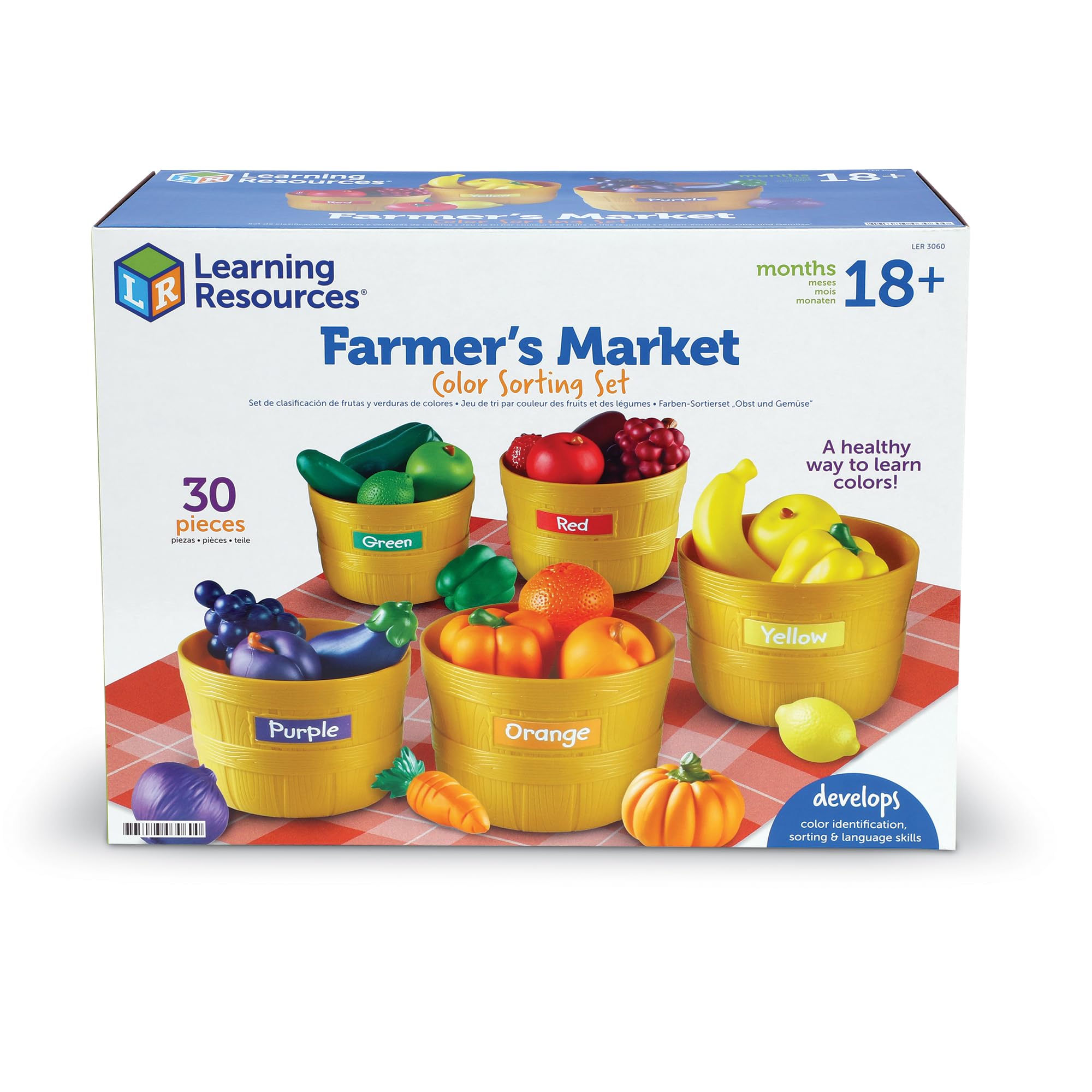
Learning Resources Farmer's Market Set

Color sorting

Doodle Score 9.8/10
Check Price

Worth Noting

  • Sorting needs an adult naming the colors
Colors
5 sorting colors
Pieces
25 foods, 5 baskets
Material
Soft rubbery plastic
Recommended Age
18 months and up
Read the full review

The produce is the first surprise. It's a soft, rubbery plastic with a little give — closer to a pencil eraser than to the hard play fruit in most sets — so it survives being chewed, dropped and sat on, and it lands on a kitchen floor with a thud instead of a clatter. Five baskets, twenty-five foods, five colors.

The structure is the point. Every piece belongs to a color, so a two-year-old can put the red things in the red basket, count them, name them and hand you a tomato. Later the same pieces become a market stall, a play-kitchen delivery or a picnic, which is why the set keeps its place long after the sorting has been solved.

What keeps it out of the top spot is that it works best with you on the floor. The colors click faster with an adult naming them, and a child alone mostly tips baskets out. Set the berries aside until mouthing stops, since they are the smallest pieces in the set. As a toy for the half hour before dinner, though, it is the best of these: quiet, open-ended and genuinely nice in the hand.

Bottom line: For a two-year-old learning colors, this is the best set here: five baskets, 25 soft pieces, and pretend play long after the sorting is solved.

#2

LeapFrog Shapes and Sharing Picnic Basket

LeapFrog Shapes and Sharing Picnic Basket

Pretend picnic play

Doodle Score 9.8/10
Check Price

Worth Noting

  • Lost pieces have no replacement route
  • Talks, sings and needs three AA batteries
Pieces
15
Batteries
3 AA
Play Modes
3
Recommended Age
6 months to 4 years
Read the full review

Where the word book names things for your child, this basket asks for them back. Drop a piece of play food into the shape sorter and it tells you the shape and the color. Press the butterfly and it requests a snack; feed it the right one and it rewards you. It is a conversation with a plastic picnic basket, which is a strange sentence to write and a genuinely good thing to watch.

Fifteen pieces — plates, forks, cups, food and a tablecloth — and three modes covering music, shapes and colors, and picnic time. The pieces fit back inside and the lid closes, which is more than most sets this size manage. From about 18 months a child can run the request-and-response loop alone; by three it becomes a prop for pretend play with a sibling or a doll.

Pieces go missing, and there is no route to buying a replacement triangle, so the set quietly loses a little every year. It also talks: three AA batteries, songs, lights, and a volume control you will use more than you expect.

We rate it above every other electronic toy here for the simple reason that it asks questions instead of broadcasting answers. That is the difference between a toy a toddler watches and a toy a toddler answers, and it is worth the extra pieces to pick up at the end of the day.

Bottom line: The best pretend-play pick here: a shape sorter that asks for the right piece, from about 18 months to three.

#3

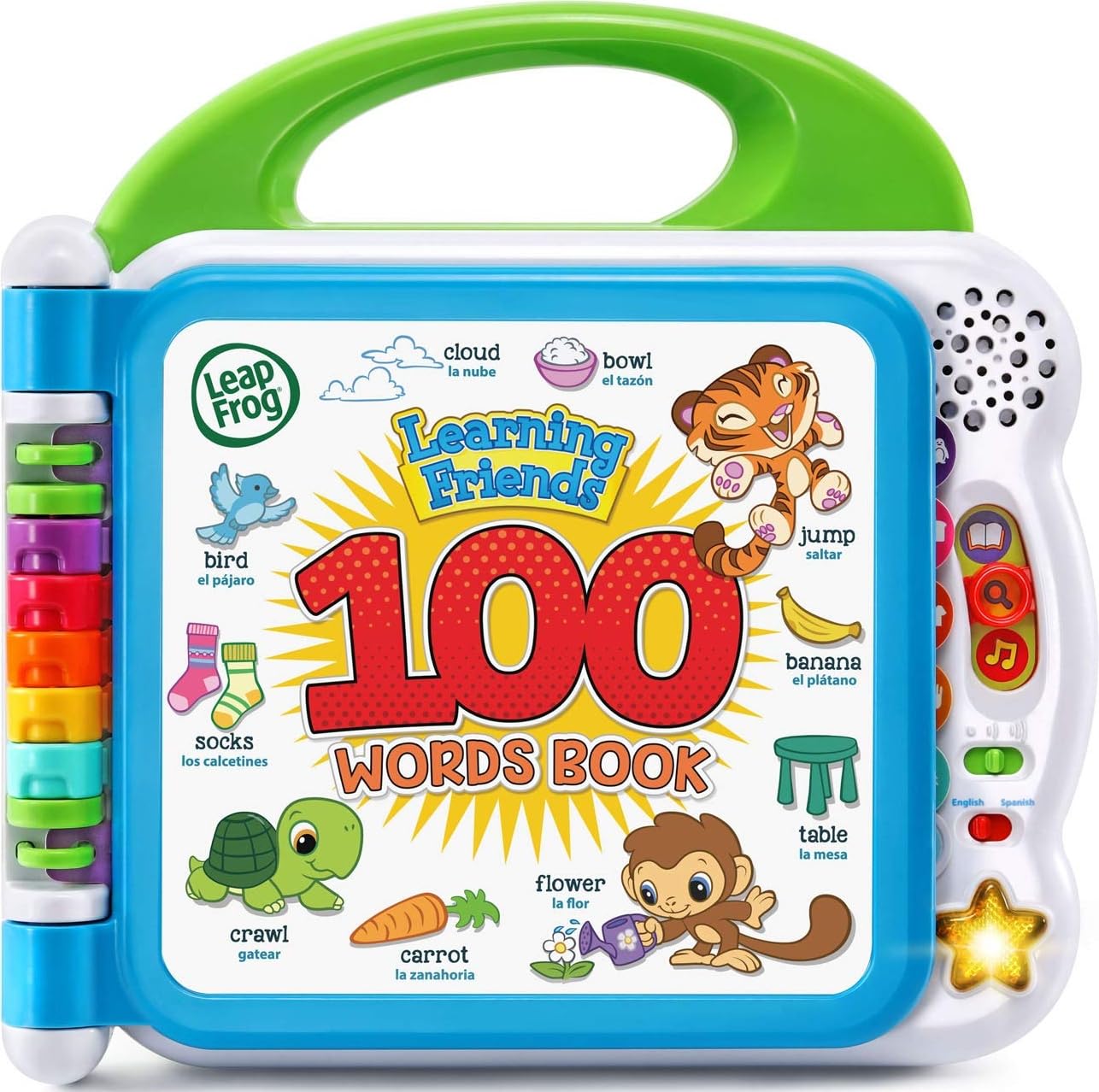
LeapFrog 100 Words Book

LeapFrog 100 Words Book

First vocabulary toy

Doodle Score 9.6/10
Check Price

Worth Noting

  • Recorded voice is the whole toy and wears on adults
  • Ships with demo batteries that need replacing
Size
9.4 x 9.2 x 1.9 in
Words
100+ in English and Spanish
Batteries
2 AA (demo set included)
Recommended Age
18 months to 4 years
Read the full review

The clever part of this book is that it hands a toddler the controls. There are more than 100 words inside, grouped into pets, animals, food, mealtime, colors, opposites and outside, and every picture answers a finger: press it and you get the word, a sound effect and a short fact. The light-up star plays the theme song. A second setting switches the whole book into Spanish, so the same page carries two vocabularies instead of one.

What that means in a living room is a toy a child can drive alone. The pages are thick plastic — a snippet of a page will not tear out in a tantrum — and the book sits at about nine inches square, small enough for a lap and big enough that the pictures are easy to hit. At 18 months it's a pointing game. By three it's the opposites and the fact lines. It's the one pick here that is better in a car seat than on the floor, so it complements blocks rather than replacing them.

It is not a floor toy, and that's the honest boundary. One player, one activity, and a child who wants to move will put it down and come back later. Power comes from two AA cells, and the ones in the box are demo power, so put fresh batteries in before a long drive rather than discovering the problem at a rest stop.

Where it beats everything else on this list is the ratio of learning to effort: no adult has to set anything up, nothing gets lost, and the content expands as the child does. That's why it gets the top spot rather than one of the building sets — a first or second birthday present that is still being used at four is a rare thing. Park it next to a basket of blocks and you have covered both halves of how a toddler plays.

Bottom line: Our default for the toy that actually teaches: more than 100 words in English and Spanish, from 18 months, with enough content to keep a three-year-old interested.

#4

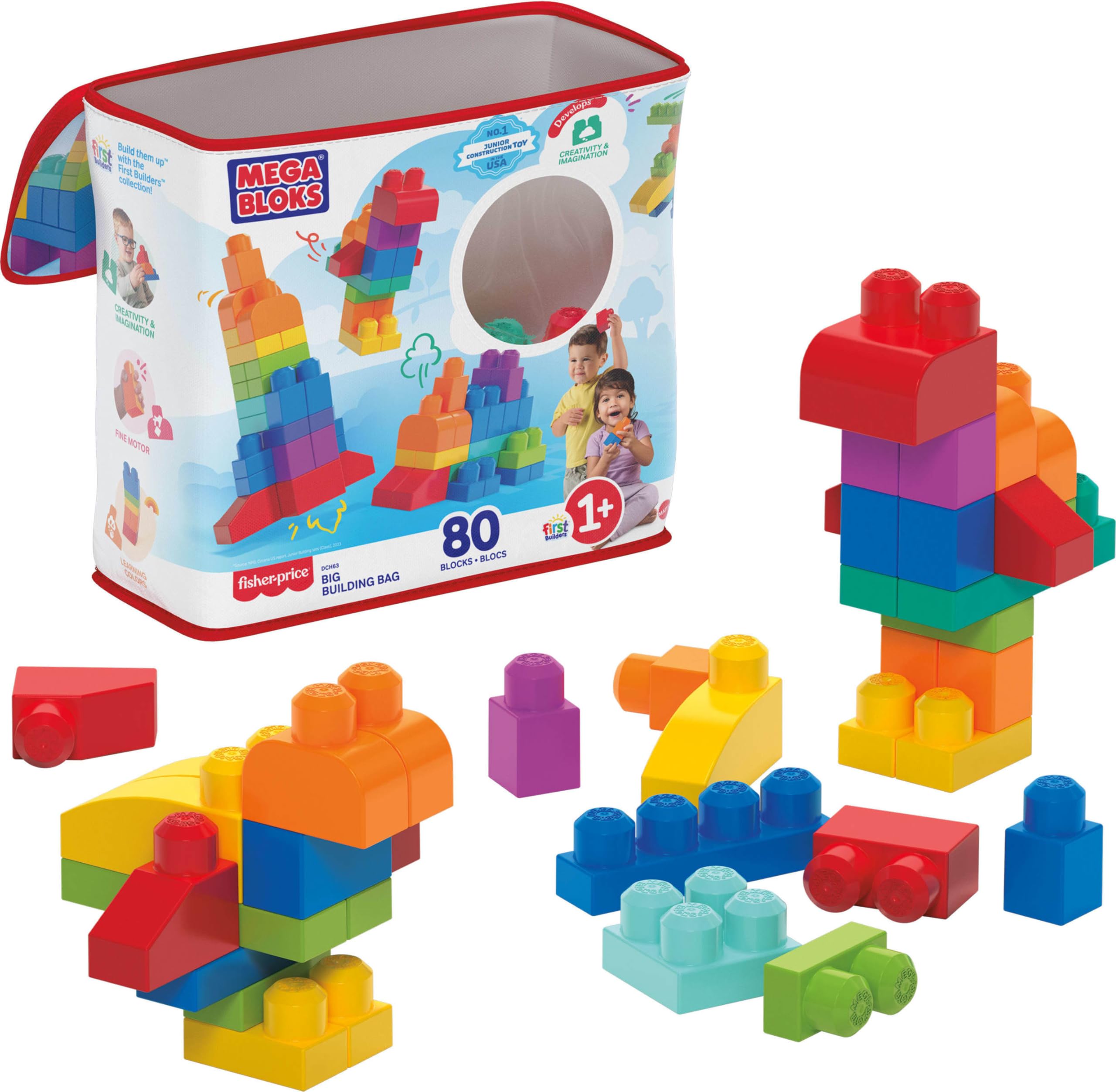
MEGA BLOKS Big Building Bag

MEGA BLOKS Big Building Bag

First building set

Doodle Score 9.6/10
Check Price

Worth Noting

  • 80 pieces mean constant floor clutter
  • No letters, numbers or guided lessons
Pieces
80
Storage
Bag with handle
Recommended Age
1 to 5 years
Shapes And Colors
10 shapes, 9 colors
Read the full review

Eighty blocks arrive in a fabric bag with a handle, and the bag turns out to matter as much as any block in it: two hands sweep the floor, the top closes, and the whole set goes on a shelf instead of into a drawer. Inside are ten shapes in nine colors, all sized for a fist that is still learning to grip. Of the building sets here, this is the one we hand a 1-year-old first.

The size is what makes the age rating honest. A young toddler can hold one in each hand, push them together and pull them apart without an adult, which is the entire skill the toy is teaching. They are thick-walled and forgiving, a thrown block bounces, and a stood-on block survives. After a couple of years you'll lose a few to the sofa and the garden; that's the normal lifespan of any block.

What you give up is calm. Eighty pieces is a real mess, bare feet will find them, and there is nothing here that beeps, counts or spells a word. That's the trade for open-ended play: no batteries, no songs, and a child who is absorbed in engineering instead of being entertained. If you want a toy that teaches letters, this isn't it. If you want the set they'll still be building with at four, it is.

Bottom line: Eighty chunky blocks and a bag that makes cleanup a single sweep — the building set we hand a 1-year-old first.

#5

VTech Busy Learners Activity Cube

VTech Busy Learners Activity Cube

Sitters and crawlers

Doodle Score 9.6/10
Check Price

Worth Noting

  • Song set wears thin for adults
  • Outgrown by about three
Batteries
2 AAA (demo set included)
Play Sides
5
Recommended Age
6 months to 3 years
Songs And Sounds
25 songs and melodies
Read the full review

Five faces, each doing a different job: light-up buttons that name animals, shapes and colors, spinners and moving parts for fingers, and 25 songs and melodies underneath it all. A motion sensor wakes the toy when it is moved, which sounds like a gimmick and isn't — it is what makes the cube interesting to a baby who is just starting to push up, roll and crawl toward things.

The window where it earns its space is roughly nine months to two years. In that stretch it is the most reliable floor toy here: one object, five things to do, no pieces to lose or pick up. Past two the animal names are old news and it becomes something to carry from room to room. It measures about six inches a side and is light enough for a toddler to relocate, which matters more than it sounds.

The catch is the soundtrack. Twenty-five songs is a lot of songs, the voice is cheerful in the way only children's toys are, and the volume control and auto shut-off only do so much on the fourth straight chorus. It runs on two AAA batteries, included for the demo, so keep spares in the drawer.

Bottom line: Five sides of cause and effect in one compact cube — the floor toy we reach for from about nine months to two.

#6

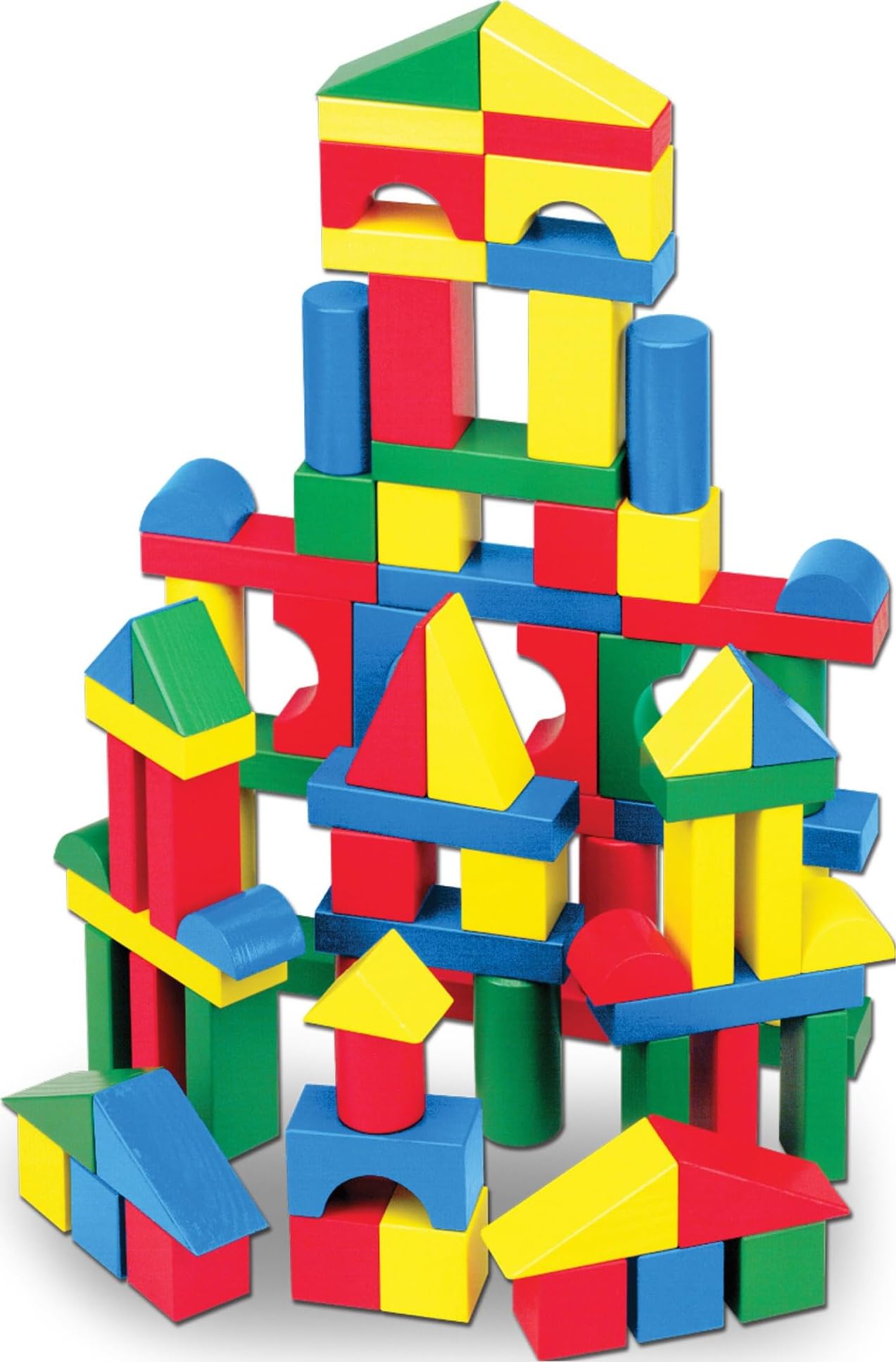
Melissa & Doug 100 Wooden Blocks

Melissa & Doug 100 Wooden Blocks

Wooden building

Doodle Score 9.6/10
Check Price

Worth Noting

  • Rated 2+, so not a first-birthday pick
Pieces
100
Material
Solid wood
Recommended Age
2 years and up
Shapes And Colors
9 shapes, 4 colors
Read the full review

A hundred blocks of solid wood land with a clack, not a crash, and the difference from plastic is immediate: heavier pieces, a sharper sound, towers that need a little care. Nine shapes in four colors, rounded at the corners, in a cardboard box sturdy enough to keep using. It is also the one set here that starts at two rather than one, and for a two-year-old it is the set we hand over first.

Wood changes how the building goes. The pieces are dense relative to their size, so a tower that would survive in plastic topples, and a bridge that would slide apart stays put. The finish holds up too — the corners are rounded rather than sharp, the paint doesn't flake away, and the blocks come through a chewing phase better than painted plastic does.

The practical cost is volume. A hundred pieces is a hundred pieces to pick up, and a spilled set covers a living-room floor. That is also the appeal: enough blocks for two children to build at once without a negotiation over the good pieces. A cloth bag by the shelf turns the end of playtime into a two-minute job instead of a chore.

Bottom line: The wooden set we reach for with a two-year-old: 100 solid blocks, rounded edges and a weight that makes towers worth building.

#7

Fisher-Price Baby's First Blocks

Fisher-Price Baby's First Blocks

First shape sorter

Doodle Score 9.6/10
Check Price

Worth Noting

  • Lid lifts off instead of snapping shut
  • Only ten blocks, so building is limited
Pieces
10 blocks plus bucket
Storage
Bucket with carry handle
Batteries
None required
Recommended Age
6 months and up
Read the full review

Ten blocks, a bucket, a shape-sorter lid and a carry handle, with no batteries and no songs. It is the plainest toy here by a wide margin, and it has been in nursery rooms for decades because the loop it teaches — dump, sort, stack, refill — is the loop a one-year-old wants to run all afternoon.

The bucket does half the work. Blocks go in through the holes or over the rim, the handle makes it portable, and the whole thing stores in a corner. Colors and shapes come free: a two-year-old will name them without being asked, then start matching the lid's holes to the blocks on purpose.

It is also the earliest pick here, rated from six months, which means it starts before the toddler years and is largely solved by two and a half. That short run is the honest cost of a toy this simple. It remains the first shape sorter we point people toward, because it does the job for the least money on this page and it takes being emptied onto a hardwood floor a thousand times.

Bottom line: The budget first shape sorter we still recommend: ten chunky blocks, a carry bucket and a lid that does the teaching.

#8

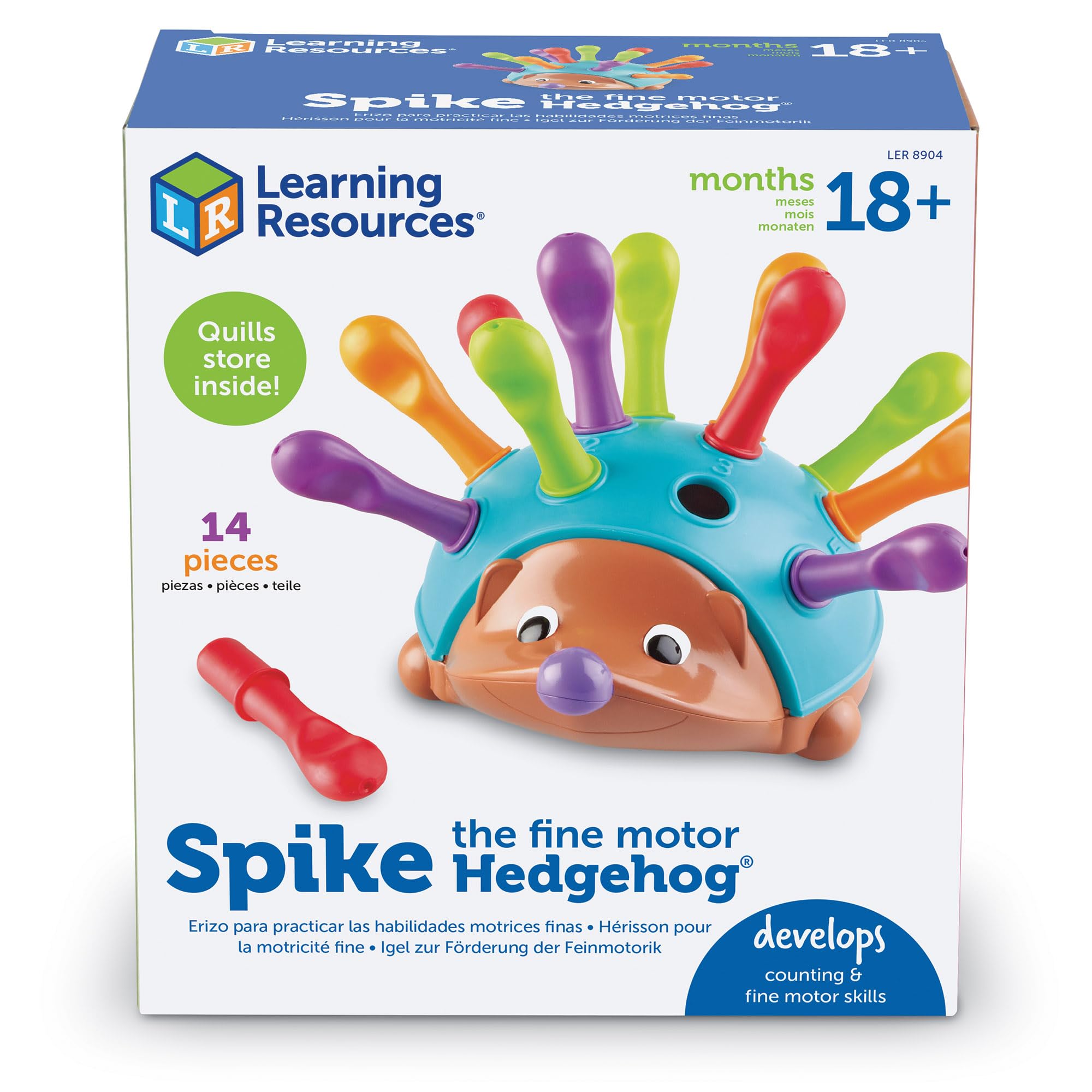
Learning Resources Spike the Hedgehog

Learning Resources Spike the Hedgehog

Fine motor practice

Doodle Score 9.4/10
Check Price

Worth Noting

  • Light plastic can crack after a hard fall
Pieces
14
Storage
Quills fit inside the body
Batteries
None required
Recommended Age
18 months to 4 years
Read the full review

Chunky quills pull out of a hedgehog's back and push back in, and that is the whole toy: no batteries, no music, no lights. It looks like too little for the job until you watch a one-year-old do it forty times in a row. Grip, aim, push, pull — the exact sequence a toddler's hands are practicing, with color sorting and counting built into the same pieces.

We expected a week of novelty and got a toy that comes back out most days, because the repetition is the point at this age. The quills store inside the body when play stops, which makes this the easiest thing on the list to put away. Durability is the question mark: the body and quills are light plastic, and a hard throw onto tile is where this one is most likely to crack or lose a quill. At this end of the price range that is a fair trade.

Bottom line: Quills in, quills out, no batteries: the quietest, simplest fine-motor toy here.

How We Tested the Best Learning Toys for Toddlers

We started by scanning age labels, safety certifications, and parent reviews for toys aimed at 18 months to 3 years, then narrowed the field to 16 that represented different skill areas—stacking, sorting, matching, early letters and numbers—and price points. We skipped anything that required a screen or advertised itself mainly as a babysitter.

Testing happened where toddlers actually play: the living room floor, the back seat during school pickup, and the high chair during snack time. We dropped each toy from toddler height onto hardwood, threw it against a wall, and handed it to a 2-year-old and a 3-year-old for free play, noting which ones earned repeat attention and which got abandoned after five minutes. We also checked whether pieces were easy for small hands to grip and too big to swallow.

Because so many learning toys talk, sing, or beep, we listened to every sound mode at close range and across the room, noting distortion, volume spikes, and whether the same three songs burrowed into our heads after a week. We unscrewed and re-screwed every battery compartment, then let a toddler try to pry the lid open; the ones that stayed shut got extra points. At the end of four months, we looked for cracks, loose screws, and peeling stickers, and asked whether each toy had actually taught something—colors, counting, matching—or just lit up.

How to Choose Learning Toys for Toddlers

Match the toy to the stage, not the birthday

The age on the box is a floor, not a promise. A one-year-old is working on grip, dumping and filling. A two-year-old sorts, stacks and starts naming. A three-year-old pretends and asks questions. A toy that spans that spread — the way the 100 Words Book runs from pointing at pictures to opposite pairs — stays in rotation far longer than a single-trick toy that gets solved in a fortnight.

If you're buying ahead of a birthday, favor the widest range and the plainest pieces. A set that needs a specific stage to work will sit in the cupboard until the stage arrives, and by then the moment has passed.

Decide between a toy that teaches and a toy that plays

Both are learning, but they build different things. Direct-instruction toys — a talking word book, a sorter that names the shape — hand over vocabulary and labels. Open-ended ones, blocks and play food, hand over the thinking: what happens if I put this here, what else could this be.

Most toddlers do better with one of each than with two of either. If only one is going on the shelf this month, we prioritize the open-ended one; a good building set or a basket of play food is outgrown much more slowly than any toy with a fixed script.

Count the pieces before you commit

Piece count decides how much of the toy ends up under the sofa. A hundred wooden blocks is a genuine daily pickup; fifteen picnic pieces is a quick sweep. Look for storage built into the toy itself — a bag with a handle, a bucket, a compartment the quills drop into — because a set with a home gets put away and a set without one lives on the floor.

Fewer, bigger pieces suit a one-year-old who is still mouthing. More, smaller pieces suit a two-year-old who wants to sort and count. Buying the second kind for the first child is the most common mistake we see.

Listen before you buy

Electronic toys are the ones you will hear for months, so a volume control and an auto shut-off matter as much as the content. Check both on the box before you commit; they are the difference between a toy you tolerate and one you hide on a high shelf.

Batteries are the running cost. Two AA here, three AA there, a couple of AAA in the small cube — rechargeables pay for themselves quickly, and the cells in the box are usually demo power rather than anything with life in it. A toy with no batteries at all is a different purchase: quieter, easier to live with, and more likely to come back out.

Check the small pieces against your child, not the label

An 18-month rating assumes a child who has mostly stopped putting things in their mouth. If yours hasn't, the smallest pieces in a set — the berries in a sorting basket, the thinnest little play-food shapes — should come straight out of the packaging and into a cupboard for a few months.

Do that check when you open the box, before a toddler sees the contents, because once a piece is in the rotation it is much harder to retire. It costs you nothing and it keeps the rest of the set in play.

Frequently Asked Questions

Final Verdict

Start with the LeapFrog 100 Words Book. It teaches something specific, a toddler can run it without help, and it stays interesting from 18 months to about four, which is more than most toys manage in a month.

If your child would rather use their hands than their ears, buy the MEGA BLOKS bag instead — similar money, and it covers the open-ended half of the shelf. Buy one of each and you have the two modes of toddler play covered: the lap toy and the floor toy.