STEM & Learning

Best Solar Robot Kits of 2026

A solar robot kit is one of those gifts that looks educational on the box and can either spark a genuinely fun afternoon of building or end in a puddle of brittle plastic and a bored kid. The best ones earn their place at the kitchen table: they teach a little about circuits and sunlight, keep kids engaged long enough to finish a build, and include enough varied pieces to make more than one robot worth assembling. Over four months, my team and I built 14 kits with kids and adults, and the differences in quality, assembly, difficulty, and instructions showed up fast.

A kit’s value isn’t just the piece count; it’s whether the instructions are clear enough for a child to work independently, whether parts snap together without cracking, and whether the finished robot actually moves in sunlight. Some sets are better gifts because they balance challenge with fun; others frustrate even grown-ups. The picks below are the ones we’d hand to a curious kid or a gift-giver who wants the box to deliver.

#1

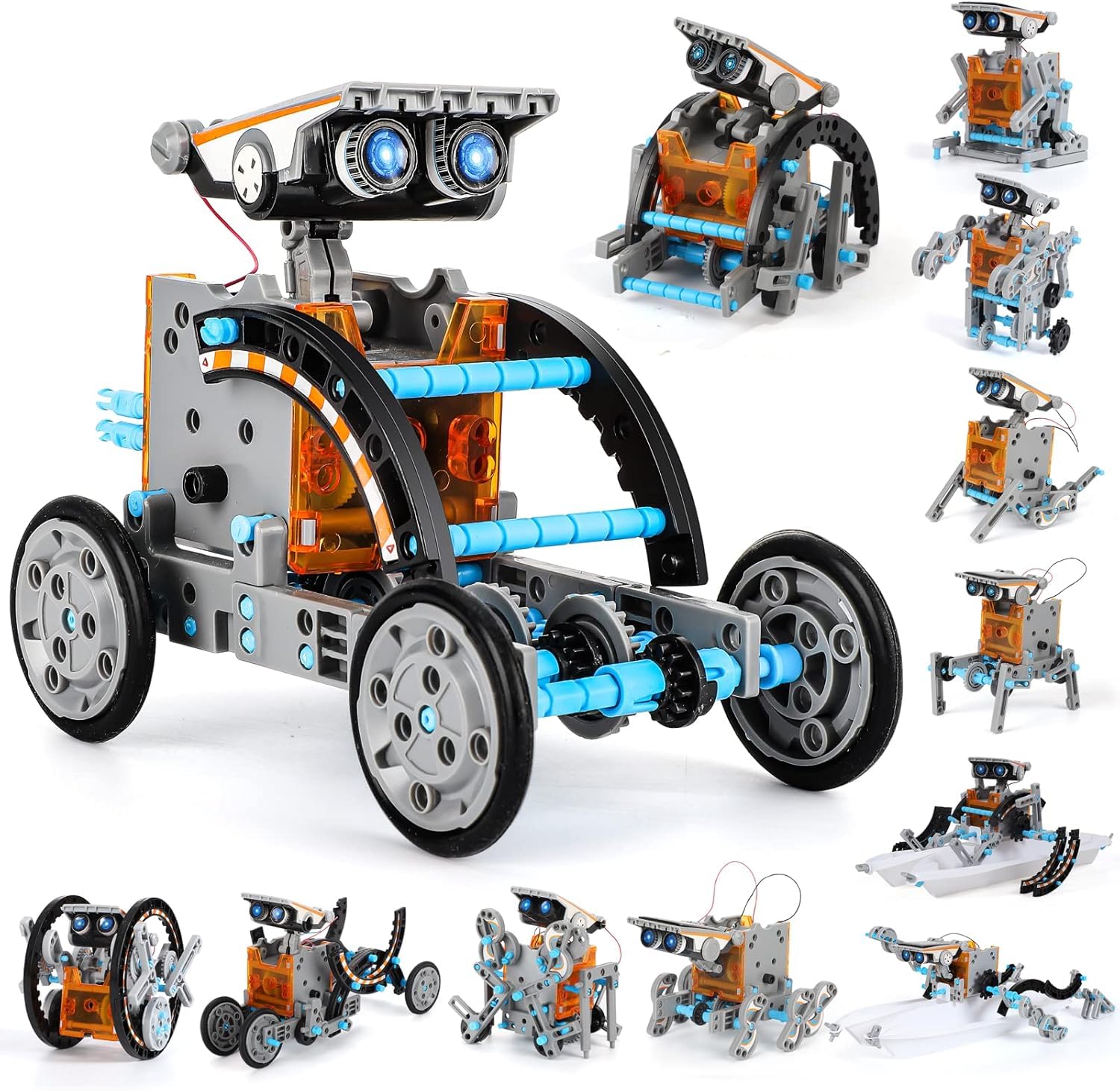
Wesfuner 30-in-1 Solar Robot Kit

Wesfuner 30-in-1 Solar Robot Kit

Maximum variety

Doodle Score 9.0/10
Check Price

Worth Noting

  • Instructions are not equally clear
Power
Solar or battery
Models
30
Pieces
243
Recommended Age
8 to 13 years
Read the full review

Thirty robots in one box is a real draw, but it also sets a trap. The 243 pieces rebuild into one model at a time, so the count is a menu, not a shelf of finished robots. We like that trade for a child who finishes a build and immediately asks what else the parts can do; the engagement and gift appeal are the strongest in this group.

The build quality is more variable than the top pick's, and the 243-piece set has enough small parts that a 7- or 8-year-old will need help sorting before starting. The payoff is breadth: cars, boats, and walking robots from the same kit, which makes it feel less like a one-off toy and more like a box of possibilities.

We think the Wesfuner earns its place as the variety pick rather than the default. The robots are smaller than the model count suggests, and a child who wants one durable favorite may do better with a simpler kit. But if the fun is in trying the next design, this is the one we point to first. The storage problem is real: keep the pieces sorted, or the 30th build turns into a search party.

Bottom line: Our variety pick is the Wesfuner 30-in-1: it gives a patient builder the widest choice of robots here, with more designs than any other kit in this group.
#2

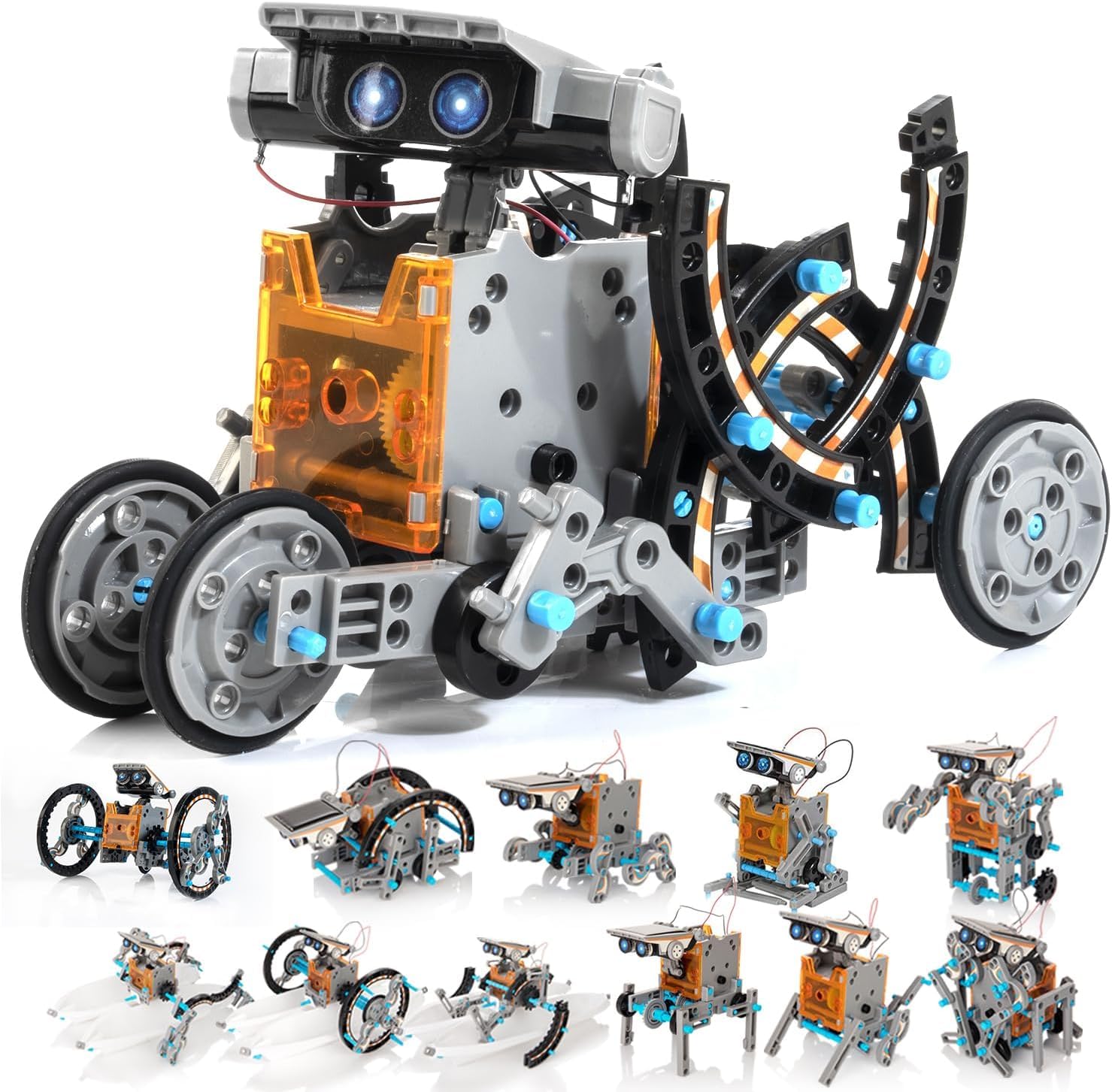
Kidwill 14-in-1 Solar Robot Kit

Kidwill 14-in-1 Solar Robot Kit

All-round first kit

Doodle Score 8.8/10
Check Price

Worth Noting

  • Motor and panel performance is inconsistent
Power
Solar or AAA battery
Models
14
Battery
1 AAA (not included)
Recommended Age
8 years and up
Read the full review

We recommend the Kidwill 14-in-1 as the default because it gives a family room to build without turning the project into a weekend. Fourteen models come from the same set of plates and gears, and the one AAA battery option matters more than the model count: when a robot refuses to move indoors, you can swap in the battery and find out whether the problem is the build or the sunlight.

The build is not a solo project for every 8-year-old. Gearboxes and small shafts are the fiddly part, and the kit rewards a parent who checks each stage rather than a child working alone. We think that is a fair trade for the number of builds here: the 14 models give you several sessions, not one afternoon, and the illustrated steps are enough when an adult is nearby.

The 14 models are rebuilt one at a time, so storage matters. Bag the gears by type between builds or the next model starts with a hunt, and keep the manual with the bags; the later builds lean on the same parts in less obvious ways. That rebuild loop is the real play value here, not a shelf of finished robots.

Bottom line: The Kidwill 14-in-1 is the kit we recommend first for most families: enough builds to stay interesting, dual power for indoor testing, and a clear step up from the six-model sets.

#3

Cobfdha 6-in-1 Space Robot Kit

Cobfdha 6-in-1 Space Robot Kit

Younger first-timers

Doodle Score 8.8/10
Check Price

Worth Noting

  • Only six robot designs
Power
Solar or battery
Models
6
Pieces
120
Recommended Age
8 to 12 years
Read the full review

Six robots sounds modest next to the 30-in-1 kits, but that is the point. With 120 pieces and a space theme, this Cobfdha set gives an 8-year-old a build that can be finished before attention runs out, and the six designs still leave room for a second or third session. The box is small enough to keep on a shelf between builds, which matters when the pieces are shared.

We like the dual-power setup for the same reason: solar for the yard, battery for the kitchen table. It lets a child finish a model in the evening and still see it move, and it keeps a stalled build from becoming a lesson in weather. The parts are shared across all six robots, so you rebuild one at a time; keep the instructions clipped together and the small bags labelled.

The trade-off is assembly. The gearbox and small connectors can be fussy, and the 8-to-12 age range is not a solo-build promise at the lower end. For a first kit, that help is a fair exchange for a robot that gets finished; the build is short enough that a parent can stay involved without taking over.

Bottom line: For younger first-timers, the Cobfdha 6-in-1 is our pick: the space theme and 120-piece build are easier to finish, and the battery option keeps a finished robot moving indoors.

#4

Raesoot 12-in-1 Solar Robot Kit

Raesoot 12-in-1 Solar Robot Kit

Gift-ready middle ground

Doodle Score 8.8/10
Check Price

Worth Noting

  • Build quality is inconsistent
Power
Solar or battery
Models
12
Pieces
190
Recommended Age
8 to 12 years
Read the full review

The one-year warranty is unusual in this group, and it is the first thing we noticed about the Raesoot. For a kit that will be handled, rebuilt, and maybe dropped, that coverage is a useful buffer, especially when the 190 pieces include small gears and shafts that can go missing. It is the kind of detail that matters when a kit gets rebuilt and moved around a house.

The 12-in-1 format is familiar: solar panel on top, battery compartment for indoor runs, and a manual that walks through each model. We prefer the dual-power setup here because it lets a child finish a build in the evening and still see it move, rather than waiting for a sunny afternoon. The battery backup also makes it easier to check whether a stalled robot is a build problem or just shade.

Where it falls behind the top pick is the build experience. The gearbox steps are fussy, and the 190 pieces take sorting before the first model. We see it as a gift-ready alternative rather than the default: the warranty and dual power give it a practical edge, but the Kidwill is the easier recommendation for a first build.

Bottom line: The Raesoot 12-in-1 is our middle option: dual power, 190 pieces, and a one-year warranty make it a reassuring gift, even if the build quality is not the most consistent here.

#5

Aohu 15-in-1 Solar Robot Kit

Aohu 15-in-1 Solar Robot Kit

Older builders

Doodle Score 8.8/10
Check Price

Worth Noting

  • Premium price for the piece count
Power
Solar or battery
Models
15
Pieces
212
Recommended Age
8 years and up
Read the full review

With 212 pieces and 15 models, the Aohu sits at the ambitious end of this group. That is appealing for a 10- or 11-year-old who has already built a smaller kit and wants a longer project, but it is not the kit we hand to a child who is new to gears and axles. The 15 builds cover cars, boats, and walking robots, so the variety is real rather than a dozen variations on the same chassis.

The dual-power setup is welcome at this size. Solar for outside, battery for indoors, and a manual that walks through the builds; the extra pieces buy more complex shapes, including cars and boats as well as walking robots. We like that range because it gives a finished kit somewhere to go after the first robot.

The assembly is the main hesitation. Some steps are difficult for kids, and the 212 pieces take more patience than the 120-piece kits here; a family that wants a quick win should look at the Cobfdha instead. For the builder who wants the next step up, the Aohu makes sense, but it is a kit to grow into rather than a first purchase.

Bottom line: We point older builders to the Aohu 15-in-1 when they want more pieces and more models; it is the ambitious next step in this group.

#6

Lucky Doug 12-in-1 Solar Robot Kit

Lucky Doug 12-in-1 Solar Robot Kit

Tight budgets

Doodle Score 8.4/10
Check Price

Worth Noting

  • Solar-only, so cloudy days pause play
Power
Solar
Models
12
Pieces
190+
Recommended Age
8 to 13 years
Read the full review

The Lucky Doug is the least expensive way into a 12-in-1 build in this group, and that is its whole argument. You get 190+ pieces and the same build-and-rebuild format as the pricier kits, with a solar panel and a small motor. For a family that wants to try the hobby without committing much, that is an easy yes.

The build is the familiar shared-parts routine: one model at a time, and the 12 designs range from simple rolling robots to more involved walkers. The 190+ pieces give it enough substance that it does not feel like a stocking stuffer. We think it is the right pick when the budget is fixed and the child is ready to build outside.

The kit does not hide that it is built to a price. The parts are light and the finish is plain, but the project is real and the 12 models give a child something to work through. It is a kit for a family that will build on a sunny patio and keep expectations in line with the price tier. If you already know the child will stick with the hobby, the dual-power kits above are the safer long-term buy.

Bottom line: We keep the Lucky Doug 12-in-1 for budget-minded families: it puts 190+ pieces and twelve builds within reach, though the solar-only design asks for patience outdoors.

How We Tested Solar Robot Kits

We started by comparing the kits shoppers are most likely to encounter, filtering by recommended age, piece count, number of buildable models, solar panel size, and price, then cut the list to 14 kits that represented the range from simple first builds to more complex multi-robot sets. Testing ran for four months, mostly on weekend afternoons and after-school sessions at my kitchen table, with kids ages 8 to 12 and a few adults building alongside them. Each kit was built at least twice—once following the instructions exactly, once with the pieces mixed up—so we could see how well the parts held up and whether the manual made sense without an adult translating every step.

Assembly was timed with a stopwatch, and we noted where kids stalled, which steps needed extra hands, and whether pieces snapped together cleanly or required enough force to risk cracking. We read the instructions page by page and flagged confusing diagrams, missing labels, and any step that skipped a connection. Difficulty got judged by age group: a build that kept a 12-year-old engaged sometimes lost an 8-year-old in ten minutes, and we tracked whether the kit recovered that attention with a working robot at the end.

For functionality, we took every finished robot outside on sunny and slightly hazy days, placed it on a flat patio stone, and watched whether it moved on its own, stalled, or needed a push. We also checked quality after repeated builds—loose joints, bent panels, cracked clips—and counted how many distinct models each kit could actually make with its reusable pieces. Value came down to whether the box delivered enough build time and working models to justify its price, and we watched for engagement: did kids ask to build another, or drift away after the first? The kits that made the cut were the ones that stayed fun, taught something, and felt gift-worthy without creating a frustrating afternoon.

How to Choose Solar Robot Kits

Count builds, not promises

Thirty-in-one is a menu, not a shelf. Almost every kit here rebuilds one robot at a time from a shared set of plates, gears, and shafts, so the model count tells you how many instructions you get, not how many robots a child can display. For a first kit, six to twelve builds is plenty; the Cobfdha's six-model scope is easier to finish, while the Kidwill's 14 builds suit a child who likes a longer runway. Choose 30 only if the fun is in trying the next design, as with the Wesfuner.

Choose solar-only or add battery backup

Solar panels are honest but demanding: they need direct sun, and a bright window is not the same thing. Battery backup is the feature we prioritize for most families because it keeps a finished robot moving indoors and lets you separate a build mistake from weak light. A solar-only kit such as the Lucky Doug is fine if you expect to build outside on sunny days. If the kit will be used after school or in winter, pay for dual power.

Match the build to the child, not the box age

The age on the box is a starting point, not an independence guarantee. A 120-piece kit with six models is a different evening from a 243-piece kit with 30; gearboxes and small shafts are where younger builders stall. If your child is 8 and new to this, plan to sit alongside them for the first build. If they are 10 or older and have built similar kits, the larger Aohu or Wesfuner sets give them more to sink into.

Check the moving parts before the body goes on

Before snapping the body together, turn the gearbox by hand and check that the motor shaft engages cleanly. Test with a battery if the kit has one, then move outside and angle the panel toward direct sun. A robot that stutters on carpet may be fine on a flat patio; a robot that does nothing in full sun with a fresh battery is a return, not a lesson in patience. Bag the small parts by type between builds so the next model does not start with a hunt.

Frequently Asked Questions

Final Verdict

For most families, the Kidwill 14-in-1 is the solar robot kit we recommend first. It has enough builds to keep a child busy, dual power for indoor testing, and a clearer path than the 30-in-1 sets. If your child is younger or new to building, choose the Cobfdha 6-in-1; if variety is the point, the Wesfuner 30-in-1 is the alternative.