STEM & Learning

Best Educational Toys of 2026

The tricky thing about educational toys is that the label can work against them. Put “educational” on the box and kids assume it’s homework in disguise. I’ve watched a flashy science kit lose a room in ten minutes and a simple building set hold it for a rainy afternoon. The difference usually isn’t how much a toy teaches—it’s whether it invites play first. A good one makes learning a side effect of the fun.

Over the past six months, our team tested 14 educational toys, and the keepers were the ones kids chose during free play, returned to weeks later, and asked questions about. We judged quality through drops and sticky hands, value by whether a toy still got picked in month five, and enjoyment by one simple test: did anyone ask to play again? We also noted weak magnets, tinny speakers, looping music, and volume controls that don’t go quiet. Ease of use mattered—if a kid needed an adult for every step after the first try, it lost ground. The picks below cleared those bars.

#1

Learning Resources Farmer's Market
Learning Resources Farmer's Market

Color sorting play

Doodle Score 9.8/10
Check Price

Worth Noting

  • Five baskets take up shelf space
Pieces
30
Baskets
5
Material
Soft plastic
Recommended Age
18 months-10 years
Read the full review

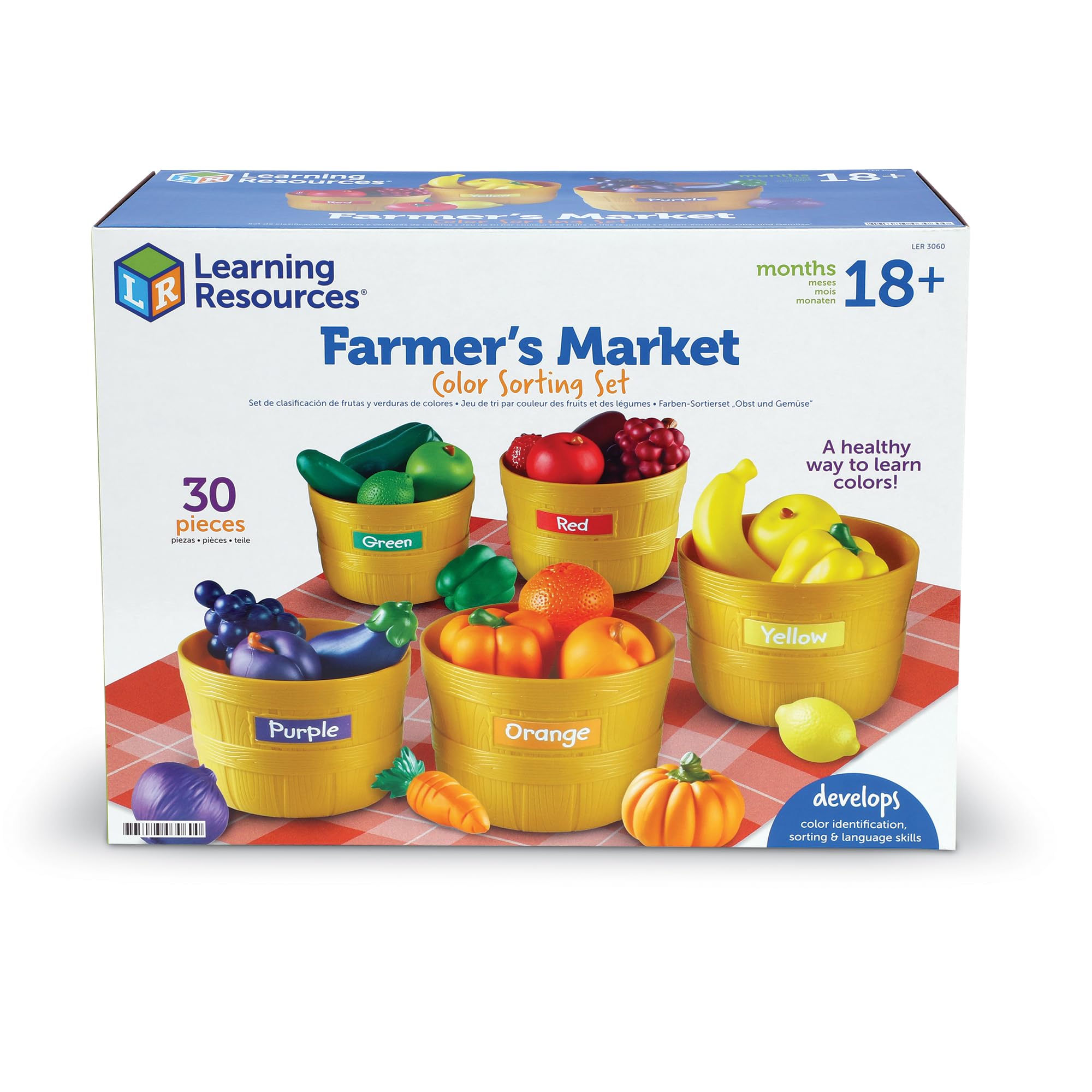
The soft, rubbery feel is the first thing we noticed. These fruits and vegetables are not the hollow plastic play food that dents when a toddler sits on it; they hold their shape, and the pieces are sized for little hands.

The set is organized around five colors and five baskets, with 25 food pieces to sort. That structure gives a toddler a clear job—put the red pieces in the red basket—and then lets the play drift into naming, counting, and a pretend market. We like that the learning is built into the objects, not a card or a screen.

The pieces are realistic enough to prompt conversation: a child can learn the names of familiar produce and start sorting by category. The baskets are sturdy enough to carry around, which is half the appeal for a toddler who is in the transporting stage. There are more unusual produce pieces than the usual apple-banana-grape set, which gives an adult something to name beyond the basics.

For a toddler or preschooler, this is the color-sorting set we choose first. It is open-ended enough to become pretend play, but it has a clear early-learning job. The soft material makes it forgiving for a child who still chews or drops things.

Bottom line: This is the color-sorting set we choose for toddlers: soft play food and five baskets turn matching into a hands-on market game.
#2

LeapFrog 100 Words Book

LeapFrog 100 Words Book

Toddler language learning

Doodle Score 9.6/10
Check Price

Worth Noting

  • Higher volume can sound harsh
Batteries
2 AA
Languages
English and Spanish
Words Included
100+
Recommended Age
18 months-4 years
Read the full review

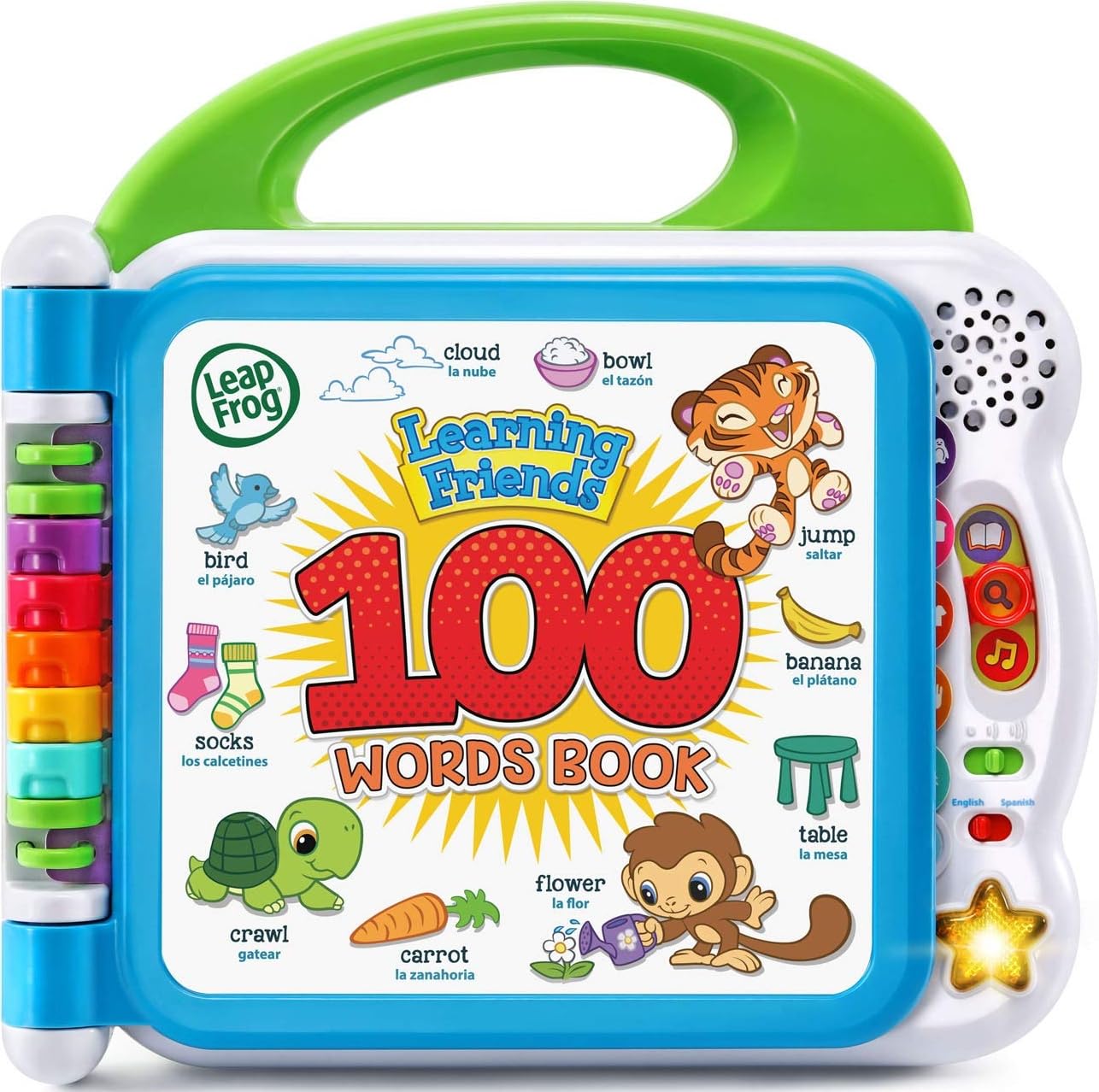
A 100-word vocabulary in English and Spanish, aimed at 18 months to 4 years, is the promise here, and the plastic pages make it usable for a child still learning to turn them. The book is built for the child who is just discovering that pictures stand for things; the touch-and-listen format does not ask a toddler to navigate a menu.

The page groups cover familiar slices of life—pets, food, colors, opposites, outside—and a touch plays the word, a sound effect, or a fact. We like that the categories are concrete. A child can point to a cat, hear the word, and make the connection without an adult translating the interface.

The bilingual mode is the feature we value most. Spanish is not buried as a novelty; the same words and songs are available in both languages, so a bilingual household can use the book in the language of the moment. The star button adds a song, which is the part that often keeps a toddler coming back after the novelty of touching pictures fades.

In the hand, it is a 1.5-pound plastic book, not a tablet. That matters: the pages turn, there is nothing to swipe, and the interaction stays physical. We also appreciate that it runs on two AA batteries rather than a charging cable, though the included cells are demo-only.

For a toddler, this is the educational toy we reach for first. It teaches vocabulary through a lap-sized, physical book, and the bilingual layer gives it a longer life than a single-language sound toy. What seals it for us is that the learning stays social: a child points, an adult names, and the book answers back.

Bottom line: For toddlers, this is the first educational toy we reach for: vocabulary, animal sounds, and a second language arrive through a simple touch-and-listen routine.

#3

PicassoTiles 100-Piece Tiles

PicassoTiles 100-Piece Tiles

Open-ended STEM play

Doodle Score 9.6/10
Check Price

Worth Noting

  • Magnet strength varies between tiles
Tile Type
Magnetic
Build Scale
Scalable
Piece Count
100
Recommended Age
3 years and up
Read the full review

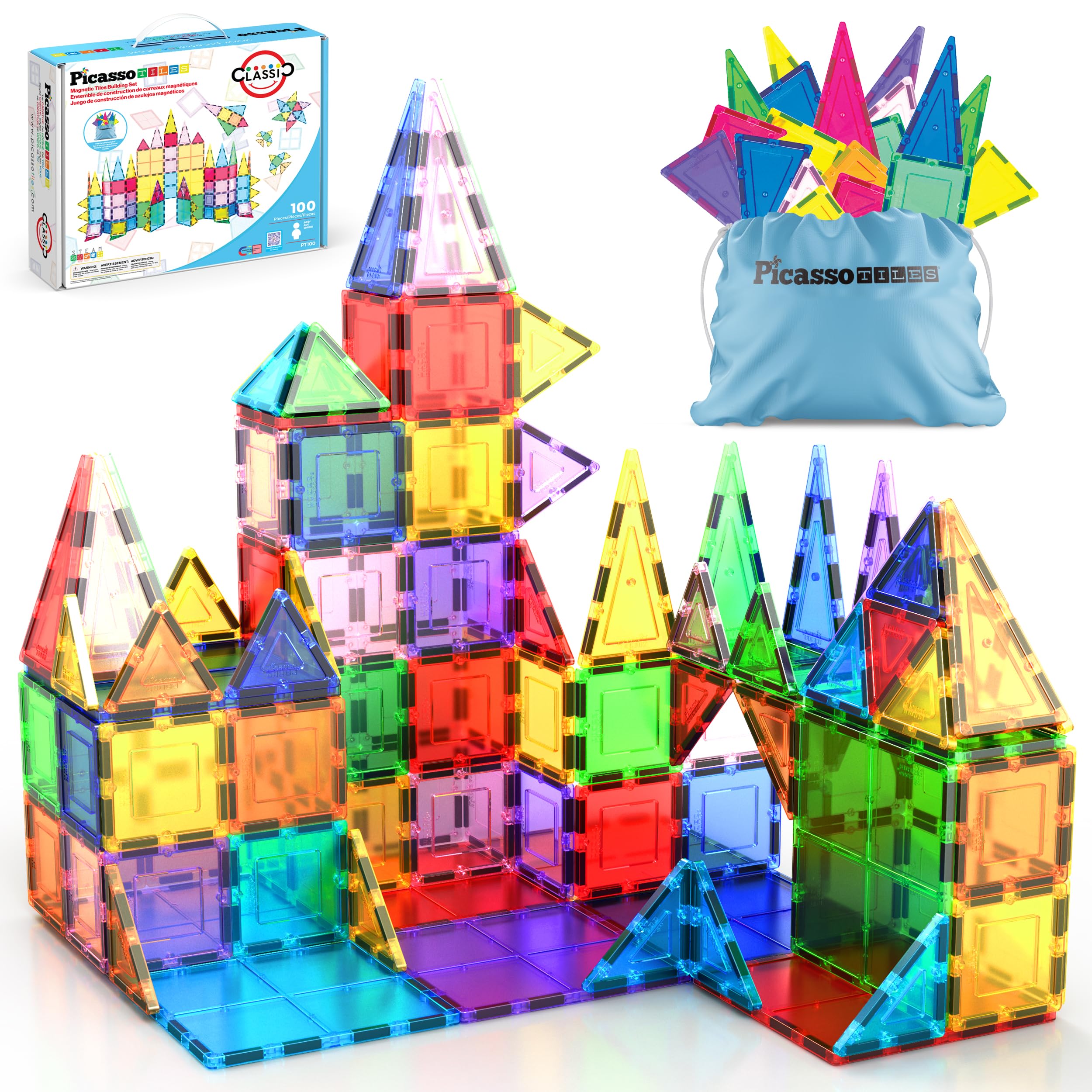
Where the LeapFrog book gives a toddler a guided path, PicassoTiles hands over the pieces and lets the child decide what the path is. The 100-piece set is a pile of magnetic tiles that click into castles, towers, and flat patterns.

The appeal is the scale. A preschooler can start with a simple stack; an early-grade child can plan a window, a roof, or a symmetrical shape. The magnets do the holding, so the building does not collapse every time a small hand bumps it. We appreciate that the set stores as a compact stack of tiles, not a bin of loose blocks. The tiles are also easy to sort by color at cleanup, which makes the set less daunting than a 100-piece bin of random blocks.

The trade-off is that open-ended play asks more of the adult at first. We found the set works best when someone builds alongside a younger child for the first few sessions; after that, the tiles take over. If a child prefers a clear right answer, a guided puzzle will suit them better. For a family that wants one toy to span ages and play styles, this is the strongest builder here.

Bottom line: We keep this set for the child who wants to build without instructions; the open-ended magnetic tiles reward trial and error from preschool through early grade.

#4

VTech Sit-to-Stand Walker

VTech Sit-to-Stand Walker

First walkers

Doodle Score 9.6/10
Check Price

Worth Noting

  • Music and sounds repeat often
Play Modes
Sit and stand
Activity Panel
Removable
Maximum Weight
35 lb
Recommended Age
9 months-3 years
Read the full review

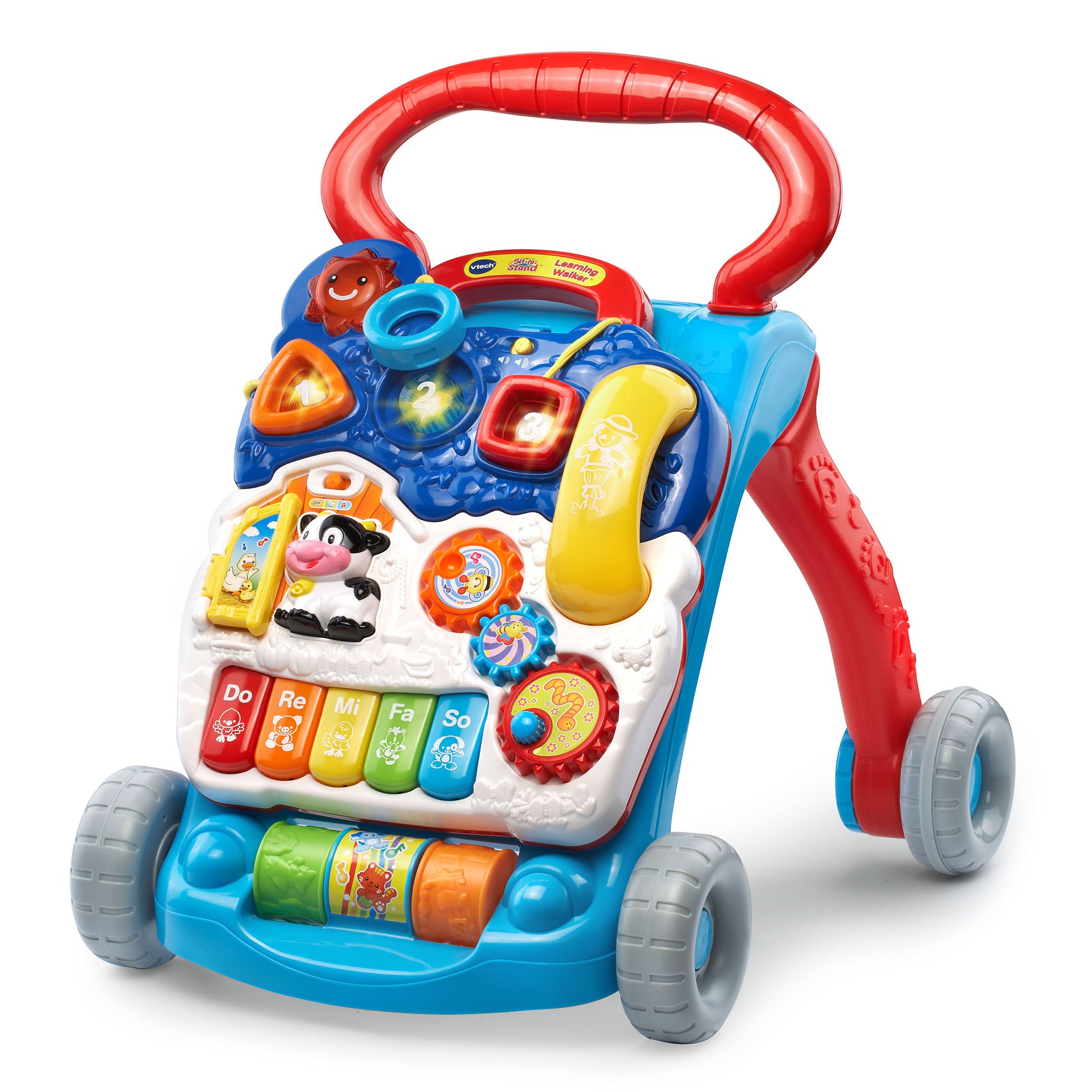
The removable activity panel is the reason this walker earns a place beyond the first few months. It lifts off the frame so a sitting baby can play with the piano keys, shape sorters, and telephone handset, then reattaches when the child wants to push. We like that the walker does not become useless once walking is mastered. The activity panel is busy enough for a sitting baby, with keys, rollers, and a handset to grab.

The frame has a two-speed switch, which matters more than it sounds: a fast walker on bare floor is a different experience from a slow one on carpet. The 35-pound weight limit and 9-month-to-3-year range cover the usual span, and the four wheels are stable enough for a child who is still pulling up. Assembly is straightforward, and the blue plastic wipes clean.

What we value most is the handoff. The panel gives a baby a reason to sit and manipulate small parts, while the frame gives a toddler a reason to stand and move. That combination is why this one stays in the room after the novelty of the music fades.

Bottom line: This is the walker we choose for the wobbly stage: a stable frame for first steps, plus a removable panel that keeps the learning play going.

#5

Learning Resources MathLink Cubes

Learning Resources MathLink Cubes

Early math practice

Doodle Score 9.6/10
Check Price

Worth Noting

  • Snapping takes hand strength at first
Cube Size
3/4 inch
Cube Count
100
Power Source
Manual
Recommended Age
5-10 years
Read the full review

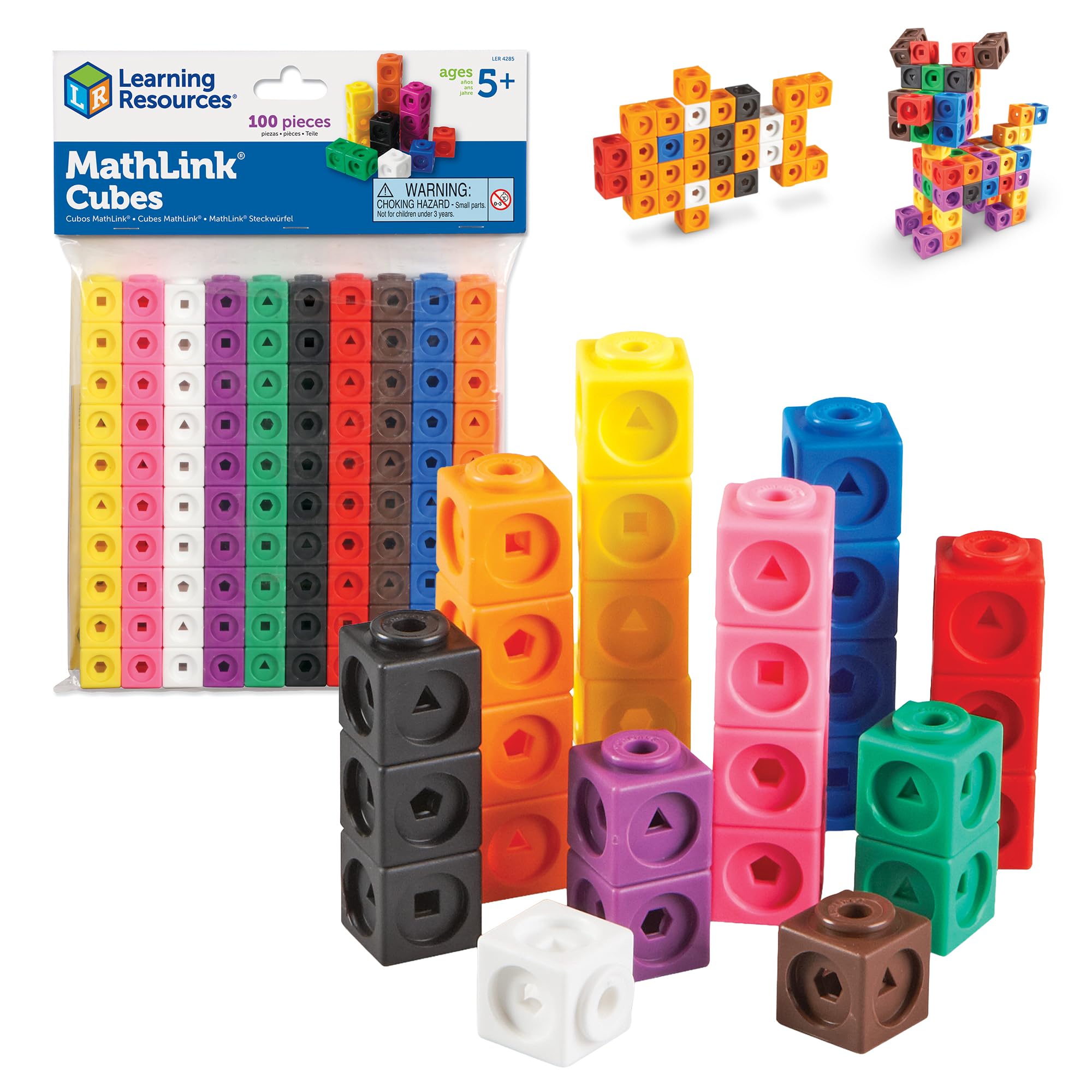
The 3/4-inch cube is the detail that makes MathLink work. It is small enough for a child to hold several in one hand, but big enough for small fingers to manage, and the geometric cutouts on the sides add a second layer of pattern play.

The set is built around the math a child meets in kindergarten and first grade: one-to-one correspondence, counting to 100, skip counting, making 10, grouping, addition, subtraction, and graphing. We like that the cubes are not a worksheet in disguise. A child can build a tower, then count it, then break it into tens.

The 100-piece count is enough for place-value work without becoming a floor-covering set. They snap on all sides, so a flat number line and a three-dimensional staircase use the same pieces. The cubes are manual, with no batteries or app, which makes them easy to leave out for a quick session.

For a child who is already doing early-grade math, this is the most direct learning tool here. It is not a toy that hides the math; it is a toy that makes the math visible. That is exactly what we want from a manipulative.

Bottom line: These cubes make early-grade math something a child can hold, snap together, and rearrange; that is why we put them in the math slot.

#6

Snap Circuits Jr. SC-100

Snap Circuits Jr. SC-100

Electronics beginners

Doodle Score 9.6/10
Check Price

Worth Noting

Parts
28
Projects
100+
Power Source
Battery
Recommended Age
8-108
Read the full review

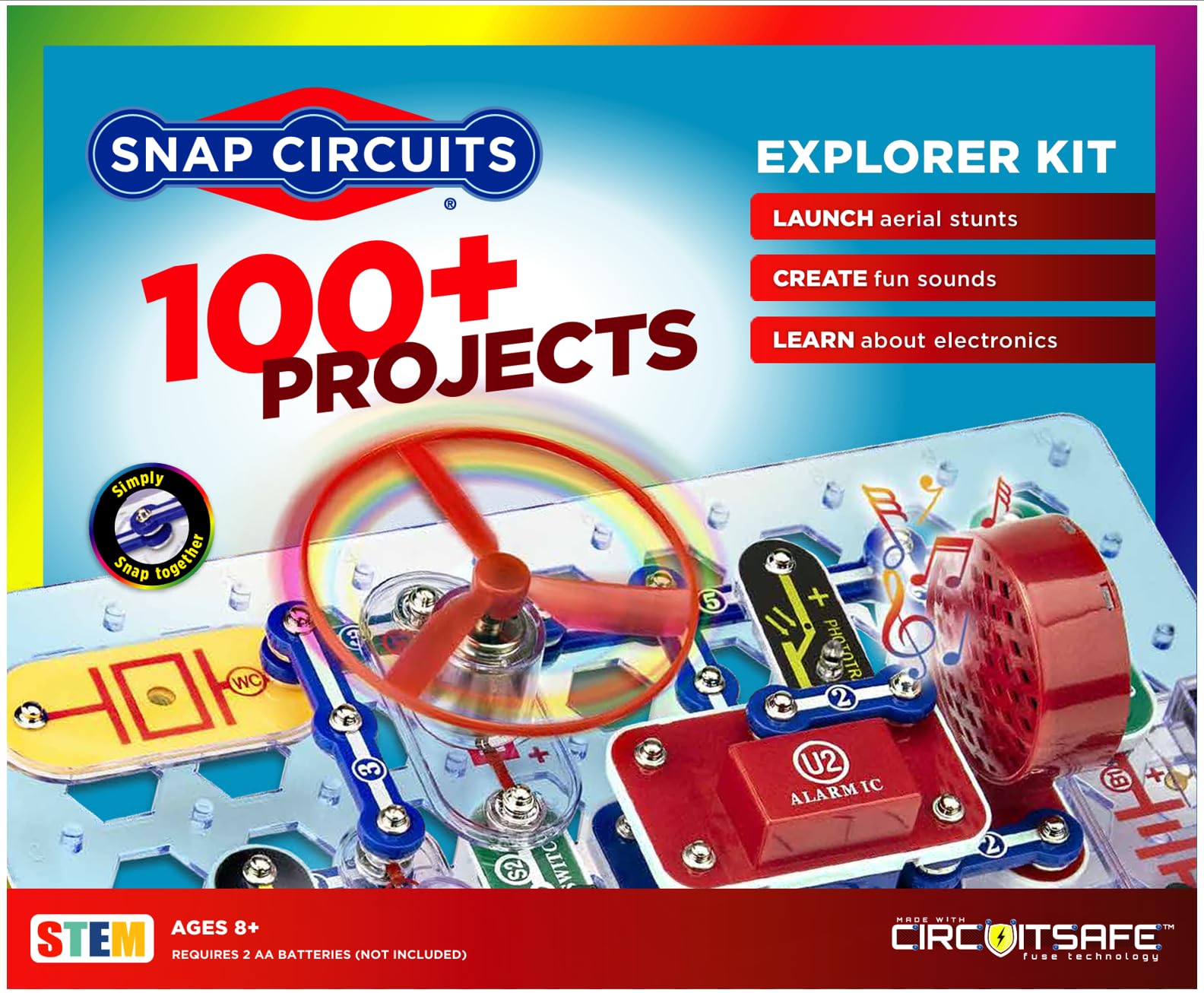
The 100-project promise and the age-eight floor tell you what this kit is: a guided electronics set for a child old enough to follow a diagram, built around 28 snap-together parts. There is no soldering, no loose wire to strip, and no adult-only step standing between a child and a working circuit.

We like that the projects are guided enough to produce a result and open enough to invite tinkering. A child can follow the manual to make a light, a sound, or a simple radio, then swap a part and see what changes. The age-eight floor is real: the reading and the fine alignment of the snaps suit a child who can follow a diagram. The manual is the real second half of the kit; without it, the parts are just colorful blocks. With it, a child can work independently for a stretch, which is the point.

The kit stores in its box, and the parts are sturdy enough to survive repeat assembly. For a family with an early-grade child who likes control panels, alarms, and gadgets, this is the most direct electronics introduction here. It teaches that a circuit is not magic; it is a path.

Bottom line: For the child who asks how things work, this is the kit we hand over: snap-together parts turn circuits into projects a kid can build, test, and show off.

#7

Melissa & Doug Wooden Blocks

Melissa & Doug Wooden Blocks

Classic block play

Doodle Score 9.6/10
Check Price

Worth Noting

  • 100 pieces take time to gather
Colors
4
Shapes
9
Piece Count
100
Recommended Age
2-8 years
Read the full review

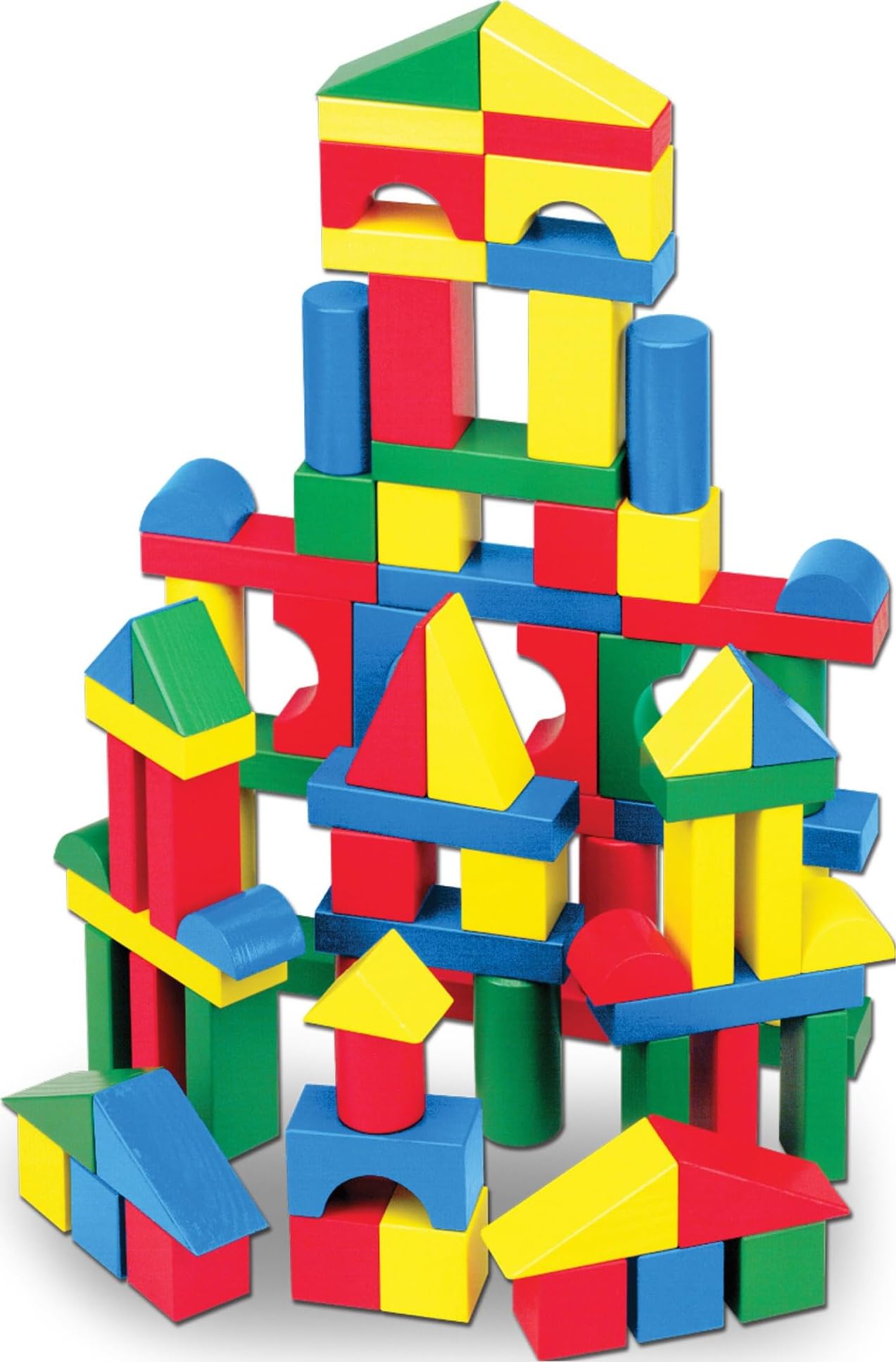
The plain wooden-block appeal is not complicated: 100 solid pieces in four colors and nine shapes, with no lights, no songs, and no app. That simplicity is the point. A child can stack a tower, sort by color, or line the blocks up as a train, and the toy does not need to be reset.

The pieces are smooth and rounded, and the wood has enough weight to make a satisfying stack. We like that the set includes enough blocks for two children to build side by side without a fight over the last long piece. The shapes are familiar enough for a child to copy a bridge or a tower, and the cardboard storage box is basic but does the job.

For a toddler or preschooler, this is the classic block set we keep in the rotation. It is not as flashy as the magnetic tiles, and it will not teach letters or numbers on its own, but it gives a child the raw material for open-ended play. That is a different kind of educational value, and it lasts.

Bottom line: These are the blocks we hand to a child who wants to build without batteries or instructions, and the solid wood set earns its keep.

#8

VTech Busy Learners Cube

VTech Busy Learners Cube

Compact toddler play

Doodle Score 9.6/10
Check Price

Worth Noting

  • Songs can become repetitive for adults
Songs
25
Batteries
2 AAA
Play Sides
5
Recommended Age
6 months-3 years
Read the full review

The five-sided activity format is what makes this cube easy to keep out. Each side gives a baby something different to press, spin, or sort, and the size is small enough to sit on a shelf or travel in a bag. The 25 songs and four light-up buttons introduce animal names, sounds, and shapes, and the motion sensor adds a reaction when the cube is moved.

For a baby from six months to three years, this is the compact activity center we choose when floor space is tight. The volume is adjustable and the toy shuts off automatically, which matters in a shared room. It will not grow into early-grade math like the cubes, but it gives a sitting baby a lot to do with two hands. Think of it as the small, busy toy that fills the gaps between the walker and the block set.

Bottom line: For babies who need variety in a small footprint, this is the compact cube we keep around; five sides make it interesting without taking over the floor.

#9

Kanoodle

Kanoodle

Travel logic puzzles

Doodle Score 9.4/10
Check Price

Worth Noting

  • First puzzles are very easy for older kids
Case
Compact
Pieces
12
Puzzles
228
Recommended Age
7 years and up
Read the full review

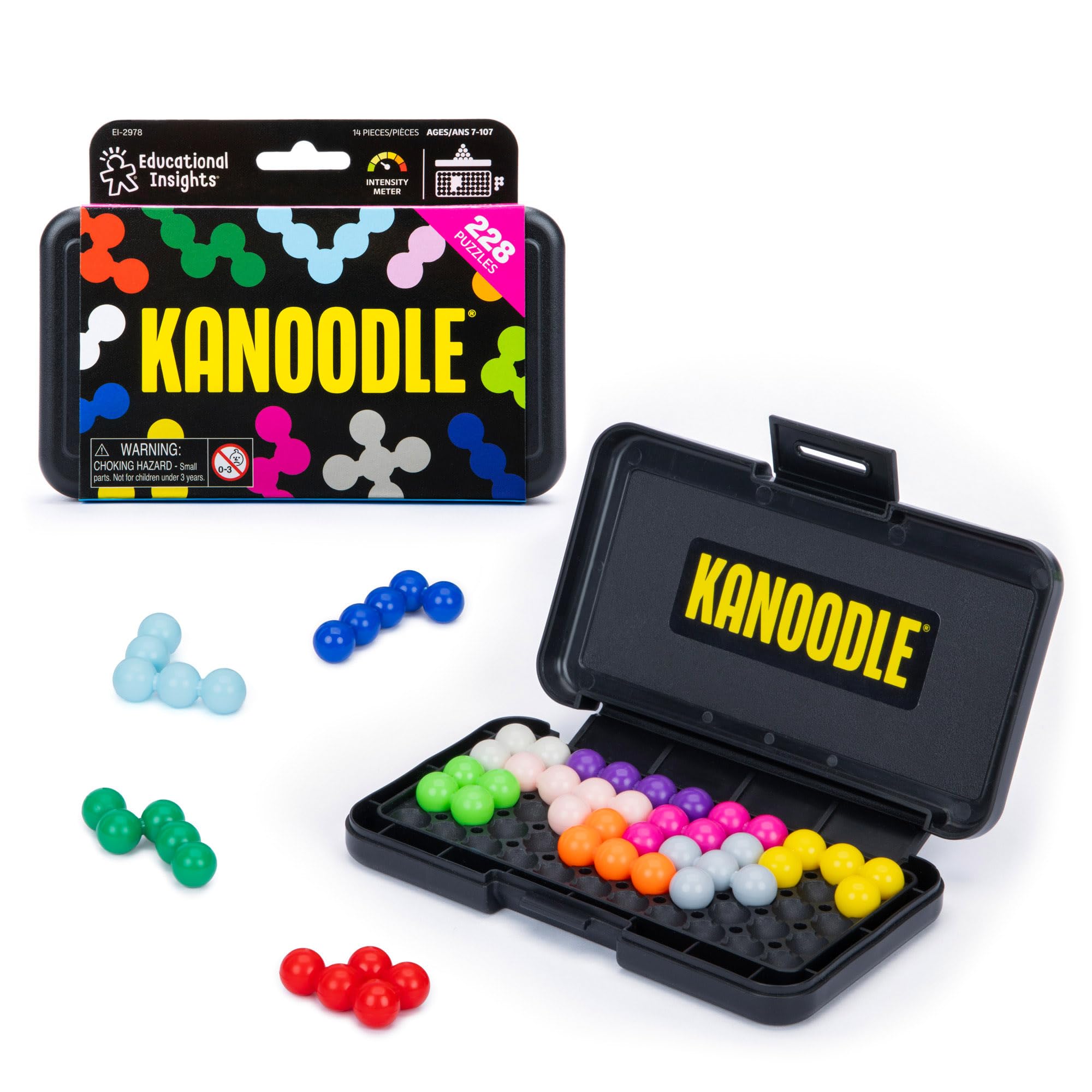
The tiny travel case is the whole idea. Kanoodle is a 12-piece puzzle that packs into a compact case that doubles as the board. We like that there is no loose rulebook to lose and no screen to recharge. The pieces fit into the case with the guide, so the set is self-contained on a car seat or restaurant table.

The 228 challenges start with beginner 2D puzzles and move into 3D builds, so the same set can occupy a seven-year-old and an adult. The first few puzzles are easy enough to teach the rules; the later ones require real spatial reasoning. That range is why it earns a spot in a bag rather than a shelf.

For a child who likes logic games, this is the most portable pick here. It is also a good choice for a mixed-age table, because the difficulty is in the puzzle card, not the toy. The small pieces are the trade-off—this is not a toddler toy.

Bottom line: For travel and quiet time, this is the puzzle we pack: a pocket-size case holds 228 challenges that scale from simple fills to tricky builds.

How We Chose and Tested the Best Educational Toys

To build the shortlist, we started with a wide sweep of educational toys across age ranges and price points, then narrowed by materials, size and storage footprint, battery and charging needs, volume controls, and whether a toy could be used without a screen. We ruled out anything that required a subscription to keep playing or had instructions that assumed a parent would run the whole activity. That left 14 toys, which we tested over six months with families in playrooms, at kitchen tables, on car rides, and during the after-school stretch when attention is shortest.

We watched how kids actually played. A toy earned credit when it was chosen during free play, pulled out again a week later, and used in a way we hadn’t suggested. For the educational piece, we didn’t just check whether a child got the right answer; we noted whether they asked a follow-up question, explained the idea back to someone else, or tried a new variation without prompting.

Build quality got the rough treatment: we dropped pieces on hardwood, wiped sticky residue off surfaces, packed everything back into its storage spot, and checked for cracks, loose joints, and magnets that slid or let a structure collapse. We listened from across the room to judge sound quality, noted whether music looped in a way that burrowed into the brain, and tested every volume control to see if it could actually reach a quiet level. Ease of use meant timing setup, reading the instructions cold, and seeing whether a kid could restart the activity solo the second time. At the end, we compared how often each toy came back off the shelf—the simplest measure of value we know.

How to Choose Educational Toys

Start with the learning job

A toy that promises language, math, logic, and fine motor in one box usually does none of them deeply. Decide which job matters now: vocabulary and naming for a toddler, counting and place value for an early grader, or spatial reasoning for a builder. The LeapFrog book is a clear language tool; MathLink Cubes are a clear math tool. We prioritize a toy with one strong learning job over a dashboard of weak ones.

Choose guided or open-ended play

Guided toys give a child a clear win: press the picture, hear the word, finish the puzzle. Open-ended sets like magnetic tiles or wooden blocks ask the child to invent the goal. We keep both in a balanced toy shelf. Guided play suits a child who needs a confidence boost or a quiet activity; open-ended play suits a child who wants to build and repeat. If you are buying one toy for a wide age range, open-ended usually stretches further.

Count the pieces and plan the cleanup

Piece count is a real ownership cost. A 100-piece set can be the best toy in the room and still be the one you avoid on a rushed morning. Look for a set with a dedicated container, and decide where it will live before it comes home. For toddlers, fewer pieces with a clear sorting job often get more repeat play than a giant bin. For early graders, 100 pieces can be the point: enough to build something ambitious.

Plan for sound and setup

Battery-powered toys are not automatically worse, but they ask more of the household. Check whether the volume can be lowered, whether the toy shuts off automatically, and whether the battery door stays secure. We prefer toys with a volume control for shared rooms. Manual toys avoid the battery treadmill, while electronic kits like Snap Circuits need batteries but repay the cost with repeat projects. Assembly is the other hidden cost: a toy that needs an adult every time will get used less.

Look at the weak points

Every toy has a stress point: a lid that does not snap, a hinge, a battery door, a thin plastic quill. Read the design, not the box photo. For wooden blocks, check for rounded edges and a smooth finish. For electronic toys, check the battery compartment and the screen. For magnetic tiles, check the magnets and the seams. A toy that survives being dropped, chewed, and stepped on is the one that gets used.

Frequently Asked Questions

Final Verdict

For most families, the LeapFrog 100 Words Book is the educational toy we recommend first. It gives toddlers a clear, bilingual vocabulary activity they can hold and control, and the touch-and-listen format keeps the learning concrete.

If your child is already past the toddler stage, choose PicassoTiles instead: the open-ended tiles stretch from preschool stacking to early-grade building, while the book's age band tops out at four. That is the fork in the decision, and it leads to the right toy more reliably than a shelf full of features.