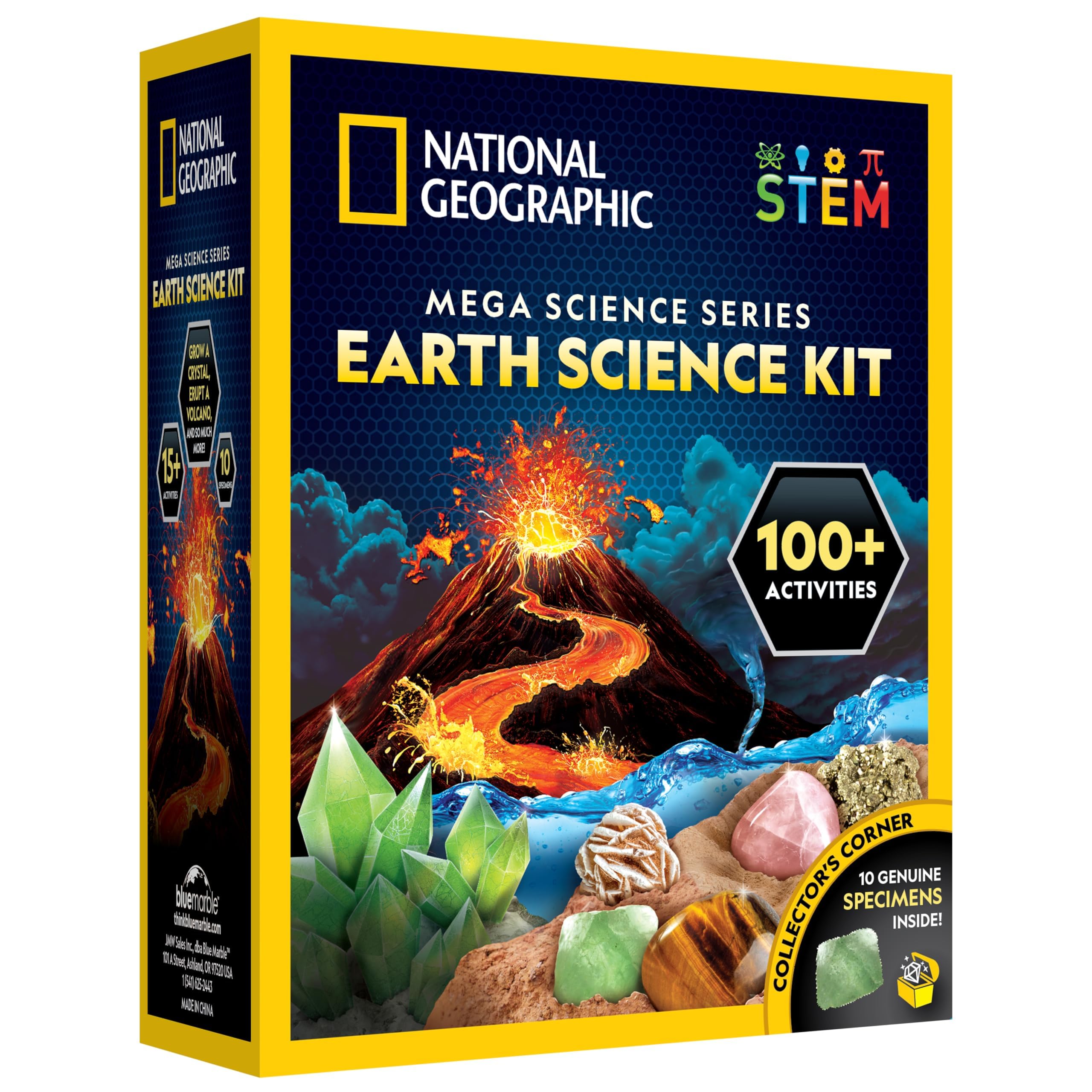
National Geographic Earth Science Kit
What We Like
- Covers volcanoes, digs, crystals, and water science in one box
- Enough material for siblings to work at the same time
- Learning guide explains the science, not just the steps
Worth Noting
- Recommended for ages 8 and up, so younger kids need close help
- Guide
- Full-color learning guide
- Activities
- 100+ experiments and activities
- Main Theme
- Earth science
- Recommended Age
- 8 years and up
Read the full review
Count the contents rather than the cover: two geologic dig kits, a volcano mold with plaster and paints, crystal-growing supplies, tornado tubes, and a set of rock specimens, packed into a box about the size of a hardback. As a single purchase, that is the widest spread of hands-on earth science in this group, and it is why the kit is still being opened a month after it arrived.
Breadth alone would not win it. What settled it for us is that the activities ask for genuinely different things. A dig is quiet and slow, the volcano takes two evenings of plastering and painting, and the tornado tubes are a five-minute trick a kid can repeat for a younger sibling. That variety is what keeps a kit off the shelf. The eight-and-up guidance is honest rather than conservative: the digs want a child who can follow a sequence and keep at a stubborn rock, so a six-year-old will need you at the table.
The guide is the weaker half. It is full color and genuinely good on the science — why a crystal forms the way it does, what a geode actually is — but it does not cover every activity on the list with the same care, and a couple of entries leave you filling gaps yourself. Read the section before you hand the kit over and the whole thing runs smoothly. Skip that, and the crystal and volcano steps are where a missed detail costs you a day.
Bottom line: Our default recommendation: volcanoes, digs, crystals, and water tornadoes in one box, with enough material for two kids to work side by side.