STEM & Learning

Best GPS Watch for Kids of 2026

The first time my daughter walked to a friend's house alone, I did what every parent does — watched the little dot on my phone and held my breath. A kids' GPS watch is what closed that gap for us. It gave her a way to call me from the corner and gave me a way to see she arrived, all without handing a nine-year-old a smartphone. The good ones fade into the background of a childhood; the bad ones make you wish you'd just driven her.

Not every watch on the shelf earns that kind of calm. Over the past eight months, my team and I have put a dozen of these on real wrists, and the differences show up fast. A watch that updates location every fifteen minutes looks identical, in product photos, to one that pings live. Battery life is the other quiet trap — live tracking and calls drain a small watch far faster than the box suggests, and a dead watch on a school morning is worse than no watch at all. The picks below are the ones we'd buy again.

#1

AIWIEP G31

AIWIEP G31

Games and video

Doodle Score 8.8/10
Check Price

Worth Noting

  • Charging faults can appear early
Calls
4G video and voice
Battery
650 mAh
Tracking
GPS and LBS
Water Resistance
IP67
Read the full review

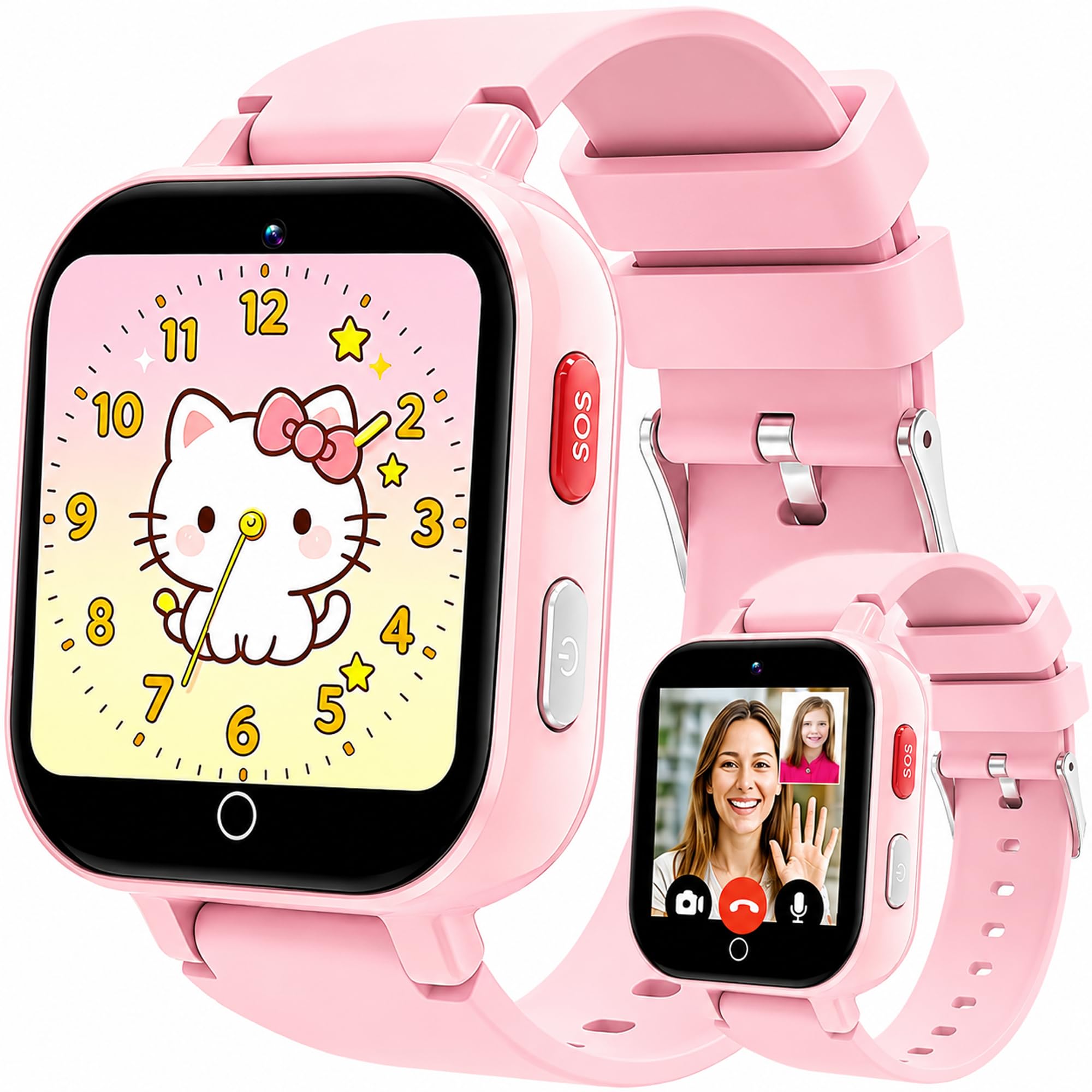
Games, a camera and video calling are the reasons a kid will keep this AIWIEP on their wrist, and the 1.54-inch touchscreen makes all three easy to find. The watch handles 4G voice and video calls, GPS plus LBS location, one-key SOS, voice chat and a school mode that blocks distractions during class. The 7.5-inch silicone band leaves room for growth, though it can run long on a small wrist.

We appreciate that the fun features do not crowd out the safety basics. Parents can manage contacts and school mode from the app, and the SOS button is a long press rather than a single accidental tap. The 650 mAh battery is midpack here, so a nightly charge is the routine. IP67 water resistance means handwashing and rain are fine, but this is not a swim watch.

The camera and games are genuinely appealing, but they also make this one of the more distraction-heavy picks here. A child who wants a watch that feels fun will wear this one; a child who needs a simple safety tool may do better with the Garmin. The AIWIEP earns its place for families who want the entertainment to be part of the appeal.

Bottom line: The AIWIEP G31 is our pick for younger kids who will actually wear a watch with games, a camera and video calling.

#2

Transformers 4G Kids Watch

Transformers 4G Kids Watch

Rough outdoor use

Doodle Score 8.6/10
Check Price

Worth Noting

  • No SIM included
SIM
Nano, not included
Screen
1.42 inches
Tracking
GPS
Water Resistance
IP68
Read the full review

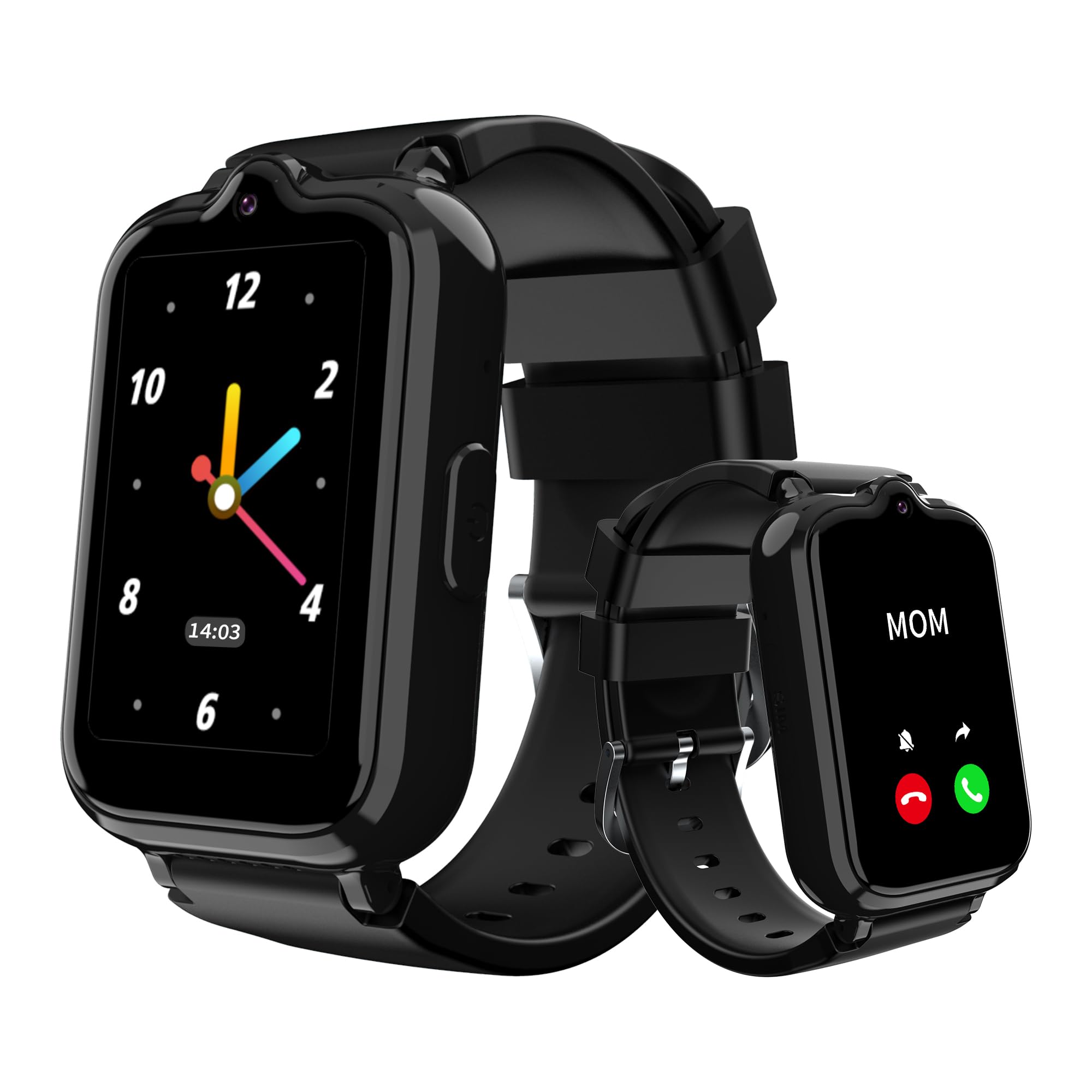
IP68 water resistance and a dual-strap design are the practical reasons to consider this Transformers watch. It handles 4G calls and video, GPS tracking, SOS, class mode and a 1.42-inch touchscreen. The watch is aimed at kids from 4 to 12, and the 1.42-inch screen is compact enough for a younger wrist and still readable for calls. The Transformers branding is the least useful part of the package; the water rating is what earns it a place.

The case for this one is simpler than the spec sheet suggests: it is built for kids who are hard on gear. IP68 means it can handle rain, splashes and muddy play, and the dual-strap design gives you a second fit option as a wrist grows. The 4G calling and SOS features cover the safety basics, and class mode keeps the watch from becoming a distraction during school hours. It is not trying to be a camera or a game console.

The trade-off is setup. The watch needs an active nano SIM, and there is not one in the box, so you are choosing a carrier and a plan before your child can use it. That is the same hurdle as the Spodus, though the Transformers costs more. If you want a tough watch for a kid who spends weekends outdoors, this is a sensible alternative; if you need the better bet for tracking and messaging, the Garmin is the one.

Bottom line: The Transformers watch is the rugged also-consider: IP68 water resistance and dual straps suit active kids, but you need to supply the SIM.

#3

Spodus G41

Spodus G41

Budget 4G calls

Doodle Score 8.4/10
Check Price

Worth Noting

  • No SIM included; T-Mobile-compatible nano SIM required
SIM
Nano, not included
Battery
850 mAh
Tracking
GPS, BeiDou, and Galileo
Water Resistance
IP67
Read the full review

Fifteen approved contacts and a five-second SOS hold are the two details that tell you what the Spodus G41 is for. The watch keeps calls to a whitelist of 15 numbers, adds three SOS contacts, and blocks everyone else. It handles 4G voice and video calls, and the GPS setup includes BeiDou and Galileo alongside the core GPS fix. Spodus claims 5 to 15 meters of accuracy and lets you draw safe zones in the app.

We like that Spodus spends its money on the safety basics instead of a flashy screen. The 850 mAh battery is the largest in this group, the 1.57-inch display is easy enough for a child to tap, and IP67 water resistance covers rain and splashes. The 5 to 15 meter accuracy claim is a fair-weather number, not a guarantee; we treat the app's location history as the real test, especially on the walk to school. The five-second SOS hold is long enough to avoid accidental presses but easy to teach.

Setup is the catch. The G41 needs a T-Mobile-compatible nano SIM, and there is not one in the box; Spodus recommends Speedtalk. That is an extra step, but it also means you can choose the plan. The two-year warranty is longer than most here, which helps at this price. If you want a simple 4G watch for calls and location without paying premium money, this is the one we start with.

Bottom line: We point budget-minded parents to the Spodus G41: it covers 4G calls, SOS and location tracking for a lot less than the premium picks.

#4

Garmin Bounce

Garmin Bounce

Focused location tracking

Doodle Score 8.2/10
Check Price

Worth Noting

  • No voice calling
Battery
Up to 2 days
Tracking
GPS, Galileo, and LTE subscription
Messaging
Text and voice messages
Water Resistance
50 m
Read the full review

The Bounce arrives with a 1.3-inch touchscreen, a 37.2-gram body, and no game drawer at all. That last part is the first thing we noticed, because many kids watches pile on games and camera tricks to win over a child. Garmin skips all of it. The watch still sends text and voice messages through the Garmin Jr. app, and the Assistance feature can send a live location to family contacts. It feels like a safety tool that happens to live on a wrist.

We like that restraint. The Bounce uses GPS and Galileo for location, with LTE carrying updates to your phone, and the 50-meter water resistance means a pool session or a rainy walk is not an emergency. Battery life is listed at up to two days, which is enough for a school day and a night without turning the watch into another device you charge at lunch. The 1.3-inch screen is small, but that is the right size for a child's wrist and it keeps the watch from becoming a wrist-mounted tablet.

The Bounce needs LTE service and a Garmin subscription for tracking, messaging and Assistance, so it is not a set-and-forget purchase. It also sits at the premium end of this group, and that money buys focus rather than features. If your child needs to dial a parent, this is not the watch; the Spodus is the budget 4G alternative. If you want a watch that does the safety job without inviting games and open calling, the Bounce is the one we trust most for tracking and parent-controlled messaging.

Bottom line: We recommend the Bounce for parents who want dependable location tracking and controlled messaging more than games or phone calls.

#5

DXPICR 4G Kids Watch

DXPICR 4G Kids Watch

Feature-packed setup

Doodle Score 8.0/10
Check Price

Worth Noting

  • Calls and connectivity can be inconsistent
SIM
Included
Tracking
GPS, GLONASS, Galileo, BeiDou
Warranty
3 years
Water Resistance
IP68
Read the full review

An included SIM card and four satellite systems make the DXPICR the most feature-complete 4G watch here, and that is exactly why we recommend it to parents who want a bundled setup. The watch handles 4G video calls, voice calls, instant messaging, family group chat and one-tap SOS. It also supports remote listening, class mode, contact management and blocking unknown callers. The SIM in the box removes a setup step that trips up a lot of parents.

The location side is unusually broad for this group: GPS, GLONASS, Galileo and BeiDou, with Wi-Fi on board as well. The AI voice assistant, translation and image recognition are more novelty than necessity; we paid more attention to the IP68 water resistance, the 1.4-inch screen and the three-year warranty. Those are the features that make the DXPICR feel like a long-term purchase rather than a disposable gadget.

Pair it at home, walk the school route and make a call from the places your child actually spends time. The included SIM makes that easy to do before the return window closes. If you want the simplest setup, the included SIM is a real advantage. If you need voice calling above all else, the Spodus is the budget alternative.

Bottom line: The DXPICR is the feature-heavy choice for parents who want an included SIM, multi-band positioning and AI extras without paying Garmin money.

How We Tested a Dozen Kids' GPS Watches

We built a long list of roughly 30 watches, then cut it down by checking carrier compatibility, whether each one needed its own data plan, case size on a small wrist, and what the monthly service cost worked out to over a year. We ordered 12. My kids, ages seven and ten, wore them to school, to soccer practice, on bikes around the block, and to their grandparents' house two towns over. Setup was the first test: I left the room and let each kid unbox and pair the watch on their own, timing it and noting exactly where they got stuck.

For location accuracy, I carried a watch in a backpack on a known two-mile drive and compared the pin it reported against the corner we were actually on. I also watched how often the dot moved while a kid was walking rather than sitting still. Then I walked each watch to the far edge of the neighborhood to see how the connection held and how long it took to recover after a dead zone. Arrival alerts got the same scrutiny — whether the notification landed when a kid walked in the door or five minutes later.

Battery life we measured the hard way: full charge on a Sunday night, live tracking on, then timed through a school week and a weekend with calls mixed in. For call quality, I rang each watch once from a quiet kitchen and once from a windy playground, then asked my kids whether they could hear me and whether hanging up took one button or three.

The final stretch was kid-judged. I asked both kids which watches they actually wanted to put on in the morning, whether they kept tapping the games and step challenges after the novelty wore off, and which bands pinched or slid. After eight months of playgrounds, handwashing, and one accidental dunk in a puddle, I checked straps for cracking and screens for scratches, and compared what each watch could do against what we genuinely used.

How to Choose the Right GPS Watch for Kids

Tracking: GPS, LBS, and LTE Are Different

A watch can say GPS and still rely on Wi-Fi, cell towers, or last-known points between fixes. GPS gives the precise fix; LBS is coarser and useful as a backup. LTE matters because it sends that fix to your phone when you are apart. If you only need to know your child reached school, a basic GPS and LBS watch can do the job. If you want live updates on a bike ride or a walk home, choose a 4G model and check the carrier. The Garmin Bounce leans on LTE for remote tracking; the Spodus and DXPICR use a SIM.

Calls, SOS, and the Contact List

Two-way calling changes the job of the watch. A messaging-only watch like the Garmin Bounce keeps distractions low and sends text or voice messages; a 4G watch with a dialer lets a child call a parent directly. For either, set the SOS contact list and practice the long press. The Spodus limits calls to 15 approved contacts and three SOS numbers, which is the right approach: a kids watch should not be an open phone line. If your child is not ready to manage calls, choose messaging and a small approved list instead.

Battery Life and the Charging Routine

Battery capacity is only half the story. A 650 mAh or 850 mAh battery can still be flat by dinner if the watch is on LTE, playing games, and sending location updates. Garmin lists up to two days for the Bounce, but that assumes typical use, not constant tracking. Plan on a nightly charge until you know your child's routine, and keep the charger where the watch comes off. Check that the charging cable seats firmly; a watch that misses a charge overnight is a watch that cannot be worn to school.

Fit, Water Resistance, and Rough Play

A 1.7-inch screen looks generous in a listing and enormous on a seven-year-old's wrist. Screens here run from 1.3 to 1.7 inches, and the Garmin Bounce is the lightest at 37.2 grams. For water, IP67 handles rain and splashes; IP68 and 50-meter ratings are the ones to choose for swimming or a kid who never avoids puddles. Check the band length too: a 7.5-inch band leaves room to grow but can swallow a small wrist. A snug fit keeps the watch from twisting during play.

The SIM and Subscription Decision

Some 4G kids watches include a SIM; others need one you supply, and the Garmin Bounce uses an eSIM with a separate subscription. Before buying, check three things: the watch supports your carrier's bands, the plan includes data for location and calls, and the monthly cost fits your budget. The Spodus asks for a T-Mobile-compatible nano SIM and recommends Speedtalk; the DXPICR ships with a SIM included. If you do not want another monthly bill, a messaging watch with a prepaid plan may still be cheaper than a premium subscription over a year.

Frequently Asked Questions

Final Verdict

The Garmin Bounce is the one we recommend first for a reason that is easy to miss: it does less, but what it does is tied to the job. Location tracking, controlled messaging, swim-friendly water resistance and a two-day battery make it the most trustworthy default for a parent who wants a safety watch, not a tiny smartphone.

If your child needs to make voice calls, the Spodus G41 is the budget 4G alternative; if games and video calls are what will keep the watch on the wrist, the AIWIEP G31 is the more fun pick.