STEM & Learning

Best Diaries for Kids of 2026

Hand a kid a diary and the first thing they do is test the lock — usually by passing it to a sibling and asking them to break in. The second thing they do is lose the key. That's the category in miniature: privacy has to feel real enough to write behind, and the hardware has to survive a month of being snapped shut, dropped on a bedroom floor, and stuffed into a backpack. A diary abandoned in week two helps nobody, so we went looking for the ones kids kept opening.

We've spent three months with 14 of them — my own two kids plus a rotating cast of nieces, nephews, and friends' children from six to eleven, some bought as birthday gifts, some handed over on the first day of school. Covers got judged like book jackets, which surprised me, but the deciding details were smaller: whether the pen and stickers actually came in the box, whether the line spacing suited a six-year-old's handwriting, and whether a forgotten combination could be reset without a meltdown. Everything below earned its spot, at prices that won't make you wince.

#1

Harry Potter Lockable Diary

Harry Potter Lockable Diary

Potter fans, 7 to 11

Doodle Score 9.8/10
Check Price

Worth Noting

  • UV pen light needs a battery fitted
Pen
UV invisible-ink pen
Pages
150
Closure
Lock and key
Paper Size
A5
Read the full review

The invisible-ink pen is the part that sells it. Write a line, run the UV light along the barrel, and the words come up. A locked diary already feels private; a diary where half the entries are invisible is the version a seven-year-old shows off to a friend and then hides from a sibling. The lock underneath is the plain kind — one key, a turn, done.

That pairing is why this is our top pick. Locks are where diaries in this price range go wrong: a tiny metal tongue that bends, or a dial a child cannot reset. Here it is a simple key mechanism a small hand can manage, with a second key in the box as backup. Add 150 lined A5 pages and a hardback cover with some weight to it, and it reads as a proper book rather than a novelty.

Two things to know before ordering. The pen's UV light runs on a battery, so fit one the night before a birthday rather than discovering it at the table. And the listing covers two different sets — a faux-leather notebook with a broomstick pen, and this lockable diary with the UV pen — so check which one is in your basket.

It is a substantial object, closer to a hardback novel in the hand than to a floppy notebook, and the 558 grams are noticeable only if it is going into a bag every day. The theme is doing a lot of the work here; the invisible ink is what keeps the pages filling.

Bottom line: We think it earns top spot because the lock is easy for small hands and the pen hides a second layer of secret — the best first diary for a Potter-obsessed 7-to-11-year-old.

#2

PJDRLLC Cat Diary

PJDRLLC Cat Diary

First diary, ages 6 to 8

Doodle Score 9.6/10
Check Price

Worth Noting

  • Plush cover is harder to wipe clean
Cover
Plush
Pages
160
Closure
Metal lock, two keys
Paper Size
A5
Read the full review

For a six- or seven-year-old, a diary is a soft object before it is a book, and this one leans into that: a plush tie-dye cat cover that is pleasant to hold, a metal lock with two keys, and a box that opens like a present. We think that is exactly right for a child who has never kept a diary before — the cover is the invitation, and the lock is the reason it gets used.

Inside there are 160 pages at A5, plus a cat coin purse, a multicolour click pen and stickers. The pen gets the attention first, and that is fine: a pen that changes colour is more motivating at seven than a nice page is. The box does a lot of the gift work, which matters if the diary is for a birthday where other people are watching it be opened.

The trade-offs come with the plush. A fuzzy cover collects crumbs and pencil shavings and does not wipe clean the way the hardbacks here do, and it will look tired before the pages run out. Two keys is the other thing to note — keep the spare outside the diary, because a lost key on this one means a broken lock or a broken book.

At 8.3 by 5.9 inches and under an inch thick, it goes into a book bag without a fight. If the child is closer to ten and wants something that looks serious, the CAGIE or the Harry Potter set will age better with them.

Bottom line: The one we hand to a six- or seven-year-old: a soft, boxed set with a real lock and enough extras to make opening it an event.

#3

Nollh DIY Journal Kit

Nollh DIY Journal Kit

Crafty tweens

Doodle Score 9.6/10
Check Price

Worth Noting

  • Only 60 pages for a daily writer
  • Craft supplies run out before the journal does
Pages
60
Binding
Spiral
Included
Pens, stickers, glue pen, tape
Journal Size
6 x 8 inches
Read the full review

Open the box and the journal is almost the least interesting thing in it. Eight fineliner pens, five sheets of stickers, a glue pen, two rolls of glitter tape, a heart-shaped stamp, bookmarks, memo paper, hair clips, a charm, all in a storage box. The 60-page spiral journal is the base everything else goes on top of.

That is the idea, and it is a good one for a certain kind of child. A spiral journal opens flat for drawing, the paper takes fineliner without ink bleeding through to the next page, and the decorating is the activity — the diary gets built before it gets written in. At six by eight inches it still goes into a backpack once it is finished.

What we minded is that the supplies are the part that runs out. Once the stickers are gone and the tape is spent, you are back to buying a diary, and the hair clips and charm are filler next to the pens. Sixty pages is also the shortest book here; a child who writes daily will finish it inside a couple of months.

We pick it for the eight-to-eleven-year-old who likes making things more than writing in them — the sort who will spend an afternoon on a cover and ten minutes on a first entry. If the child already writes, spend the money on pages instead and add a pack of pens.

Bottom line: Our pick for a kid who would rather decorate a journal than fill one — pens, tape and stickers to make sixty plain pages hers.

#4

Butterfly Hardcover Journal

Butterfly Hardcover Journal

Everyday school writing

Doodle Score 9.6/10
Check Price

Worth Noting

  • Magnetic closure is not a lock
  • Smallest page size in this group
Pen
Ballpoint included
Size
5.3 x 7.5 inches
Pages
192
Closure
Magnetic
Read the full review

This is the cheapest way here to get a hardback diary with a real page count: 192 pages, a stitched binding that opens flat, a pen held in a loop, and a magnetic flap to keep it shut. We recommend it for the child who wants a proper notebook rather than a locked one, and who will carry it to school every day.

The paper is the part we appreciated most. It is FSC-certified and acid-free, light ivory rather than white, with 7mm college ruling that is faint enough not to fight a nine-year-old's handwriting. At 5.3 by 7.5 inches it is the smallest diary in this group, which is a genuine advantage in a school bag and a limitation for a child who writes long entries.

The magnetic flap is what you are trading a lock for. It keeps the cover shut and the pen where you left it; it does not keep a sibling out, and it should not be sold as if it does. The water-resistant card cover shrugs off a damp lunch bag but scuffs at the corners like any hardback.

As a first proper notebook, or a second diary for a child who already has one at home, this is the sensible buy — cheap enough to replace without a discussion, and nice enough that it does not feel like a compromise.

Bottom line: Our budget recommendation: 192 pages, a hard cover and a pen for a child who wants a notebook rather than a secret.

#5

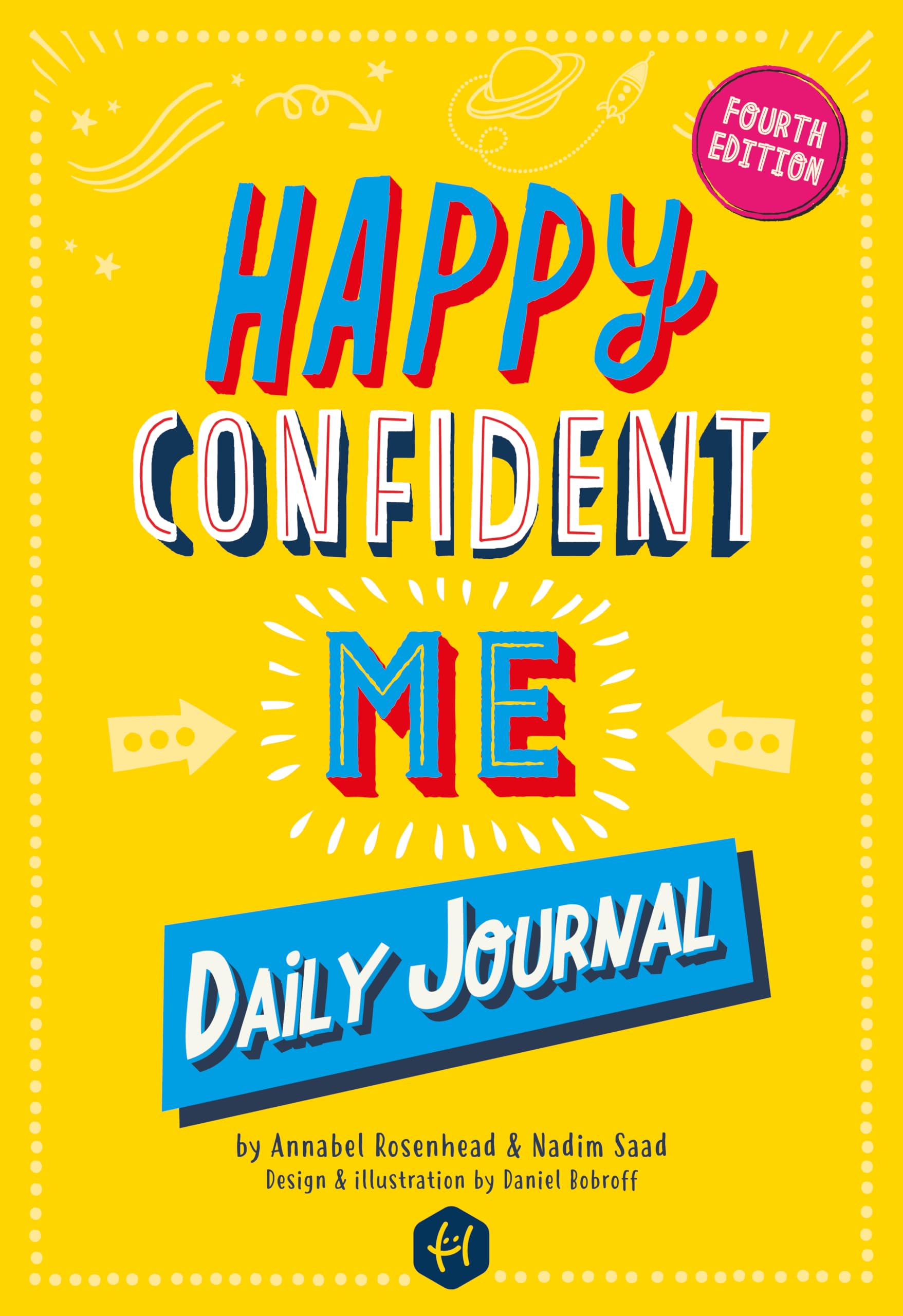
Happy Confident Me Journal

Happy Confident Me Journal

Building a daily habit

Doodle Score 9.4/10
Check Price

Worth Noting

  • No lock or closure
Pages
148
Format
Daily guided prompts
Dimensions
6 x 8.75 inches
Reading Age
7 to 10 years
Read the full review

A day's entry takes about two minutes. There is a short block where a child circles the feelings that fit the day, a gratitude line, and a prompt that keeps the writing small enough to finish before bedtime. For a seven- to ten-year-old who stares at a blank page, that structure is the whole difference between a diary that gets used and one that does not.

The circling is the clever part. A child who cannot explain why the day went badly can still tick sad and tired, and what they write afterwards tends to be more honest for it. The prompts sit on the right side of thoughtful without tipping into teachy, and the reading age the publisher gives, seven to ten, lands where the writing actually sits.

We send people here when the point is the routine. It is also the least expensive thing on this page, which makes it the low-risk way to find out whether a nightly entry sticks at all: 148 pages is months of use, and there is nothing to break, lose or jam. If a child takes to it, you are replacing a cheap book rather than a whole gift set.

The format is guided from the first page to the last, which is the point and also the limit — a child who wants to write stories, draw maps or keep something entirely their own will want blank paper instead. Think of it as a shared bedtime ritual more than a private book.

Bottom line: When the goal is the habit rather than the hiding place, this is the one we name: two minutes a night and no blank-page panic.

#6

Axolotl Diary with Lock

Axolotl Diary with Lock

Axolotl fans, ages 6 to 8

Doodle Score 9.4/10
Check Price

Worth Noting

  • Dotted pages rather than lined
  • Chunky 1.5-inch-thick cover
Pages
160
Ruling
Dotted
Closure
Lock and two keys
Paper Size
A5
Read the full review

A plush axolotl cover with glitter suspended in the plastic that shifts when you shake it, a lock, two keys, a multicolour pen, and the lowest price of any lockable diary here. For a child in the middle of an axolotl phase, the theme does most of the persuading before the lock is even mentioned.

The pages are dotted rather than lined, which suits doodling and the bullet-journal layouts older kids copy off the internet better than it suits long written entries. There are 160 of them, double-sided, in an A5 book that is chunky in the hand because of the plush and the glitter layer.

The lock is where these sets get untidy: boxes have turned up with a key missing, or with the lock itself absent, so open the parcel and check before you wrap it. We like the two-key arrangement — put one away somewhere the child does not know about, because the whole point is that a sibling cannot open it.

What it is not is a long-term diary. The glitter and the fuzz are the entire appeal, and a nine-year-old who has moved on from axolotls will want something plainer within a year. As a birthday present with a bit of theatre to it, though, it earns its place.

Bottom line: We choose it for the axolotl-mad six- to eight-year-old: plush, glittery, genuinely lockable, and cheap enough to be a second present.

#7

Nsrzua DIY Journal Kit

Nsrzua DIY Journal Kit

Cheap craft gift

Doodle Score 9.4/10
Check Price

Worth Noting

  • Small pieces need supervision
  • Decorating supplies run out before the journal
Color
Purple
Pieces
123
Included
Pens, stickers, stencils
Age Range
8 to 14 years
Read the full review

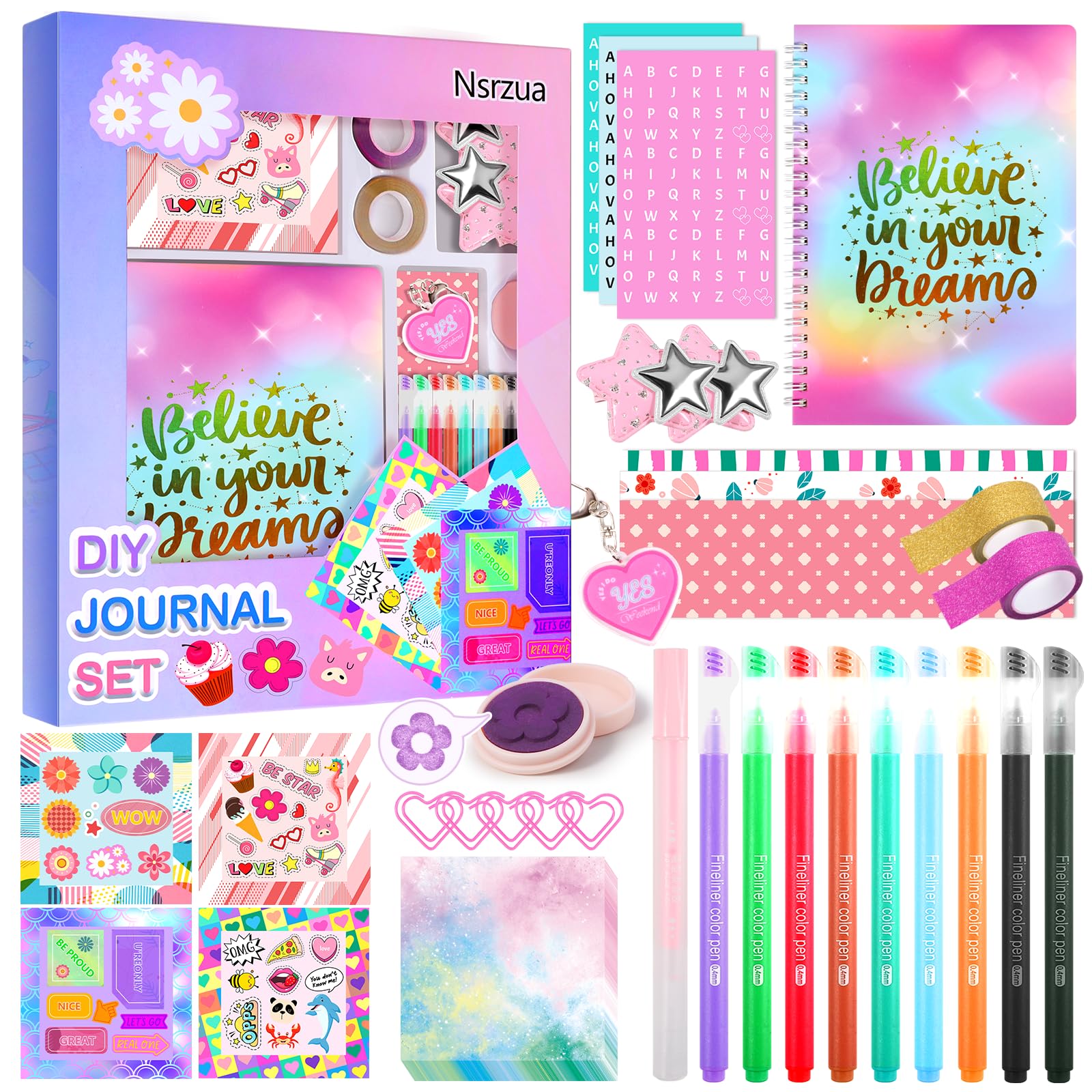
The box is the biggest here and holds 123 pieces, and it is the cheaper of the two kits on this page. Most of what is inside is decorating material — colourful pens, stickers, stencils — with the journal as the surface everything lands on. For a child who likes arranging and colour-coding, that is a good afternoon in a single parcel.

It presents well. At 13.4 by 11 inches the box feels like a proper present rather than a padded envelope, and the purple theme runs through the set consistently enough that it photographs better than most things in this price bracket.

Be realistic about the pieces. Over a hundred small items means small items on the floor, some supervision with glue and glitter, and a set that is used up faster than the book inside it. The journal itself is the least remarkable part of the kit; buy this for the supplies and the afternoon, not for the diary.

We reach for it when the budget is tight and the child is crafty. If the point is the diary rather than the decorating, the Nollh kit is better made, and the Butterfly hardback costs about the same as this kit with far more pages to show for it.

Bottom line: The cheap, generous kit we keep for a crafty kid's birthday: 123 pieces, a big box, and a journal to decorate.

#8

CAGIE Combination Lock Diary

CAGIE Combination Lock Diary

Older kids and teens

Doodle Score 9.2/10
Check Price

Worth Noting

  • Supplied pen can arrive dried out
Cover
Faux leather
Pages
192
Closure
Three-digit combination lock
Paper Size
A5
Read the full review

The three-digit dial is both the reason to consider this one and the reason to think twice. There is no key to lose and the code is settable, but small combination locks can stick or reject a number they accepted yesterday, and when that happens the diary stays shut. A key lock has its own failure, but at least it fails with a spare in the drawer.

Refillable is what tips it for us. The faux-leather cover, the pen loop and the bookmark outlive the paper, and 192 pages on an A5 page with a hundred grams of weight disappears into a school bag. We recommend it for the ten-plus crowd who want a diary that looks like a grown-up's rather than a gift set.

Two practical notes. Keep the reset instructions somewhere other than inside the diary, since that is the first place anyone who wants in will look, and treat the lock as privacy from casual snooping rather than real security. Refills are the point of buying this one, so decide before you order whether you will actually buy them.

Bottom line: We steer older kids and teens here for the refillable core and leather-look cover, provided they will remember a three-digit code.

How We Tested the Best Diaries for Kids

We started with the diaries that surface first in a plain search — big retailers, stationers, a couple of specialty shops — then cut the list down to things we could hand to a specific age. No board-book entries, nothing with a page count that would be full by October, and nothing priced like a keepsake. That left 14, running from simple key-locked notebooks to combination and electronic locks.

Each one went home with a kid for three months, from the last weeks of summer through the fall, then came back to us for inspection. We paid attention to where they were actually used: propped on the kitchen table during homework, under the covers after lights-out, in the back seat on the drive to school, and at a sleepover where three friends were invited to try to crack the lock.

At each stage we wrote down what happened rather than what the packaging promised. We counted how many tries it took a determined eight-year-old to get in, and checked whether a kid could reset a forgotten combination alone or needed an adult with the original code — two diaries failed that one and were retired early. We bent covers back to see whether spines cracked, erased hard to see whether paper tore, and read a page aloud to judge whether the line spacing and margins matched the age printed on the label. Every box was inventoried on arrival (pen, stickers, keys, pouch) and again in November, because missing accessories turned out to be one of the most common complaints.

Last, we judged whether it was worth handing over as a gift: cover design, print quality, whether it arrived in something you'd wrap without apologizing for it. Anything abandoned before Halloween didn't make the cut.

How to Choose Diaries for Kids

Key, code, or a flap that just closes

The lock is the feature parents care about and the one most likely to disappoint. A key lock has one moving part and a child can work it alone; check that the set includes two keys and keep the spare out of the diary. A three-digit dial has nothing to lose, but a code can be forgotten and small dials can stick. A magnetic flap, like the Butterfly's, keeps pages tidy and nothing more.

Under eight, we choose a key. From nine or ten, a dial is fine if the child will remember the number.

Pages, paper and how long it lasts

Page counts here run from 60 to 192, which is the difference between a two-month book and one that lasts a school year of on-and-off writing. Paper matters as much: thick, acid-free stock takes fineliner and marker without ghosting through, and a flat-opening spiral is the better shape for drawing and sticking.

If your child writes most days, buy pages first. If they decorate, a smaller spiral journal with supplies is the more useful buy, even though it fills up faster.

Blank pages, prompts, or a project

Three formats for three different children. A plain ruled diary suits a child who already writes. A guided journal with a short daily prompt suits the one who freezes at an empty page, and it gives a parent something to talk about at bedtime. A kit — plain journal plus pens, stickers and tape — suits the child who likes making things.

Match the format to how your kid already plays and writes rather than to the cover they point at in the aisle. A blank book for a reluctant writer usually stays blank.

What's in the box, and what wears out

Open the box before you wrap it. Sets can arrive with a key or a whole lock missing, and a UV pen does nothing until a battery is fitted. Supplied pens are the first thing to fail, so treat them as a bonus and put a decent one in the loop.

Covers show wear differently: plush collects crumbs and does not wipe clean, while hardbacks scuff at the corners. Check the size against the bag it will live in too — a plush A5 is chunkier than a hardback of the same page size.

Frequently Asked Questions

Final Verdict

Our recommendation is the Harry Potter lockable diary. The lock works with small hands, the invisible-ink pen keeps the pages filling, and the whole set feels like a proper object rather than a party favour — which is why it takes the top spot over diaries with more pages and lower prices.

If the child is six or seven and does not know Hogwarts yet, take the plush cat diary instead: same key-lock idea, softer landing. And if privacy is not the point at all, the Happy Confident Me journal will get more writing out of a reluctant kid than any locked book here.