STEM & Learning

Best Ant Farms of 2026

An ant farm looks like a simple gift until you realize the box may not include the ants. Some kits ship with a voucher, some expect you to catch a queen yourself, and that difference can turn a present into homework. A good one earns its place by making tunneling visible, surviving daily handling, and giving you a reason to check on it every morning.

For the past four months, my team and I have lived with 14 ant farms—on kitchen counters, a classroom shelf, and a very patient home office desk. We compared how each kit handled ant sourcing, whether the habitat stayed sturdy after repeated lid openings, and whether the lighting actually let us see tunnels without washing out the view. Some were excellent educational gifts; others were plastic boxes with a booklet. The picks below are the ones worth your money, whether you're buying for a curious kid or yourself.

#1

wtsyant Ant Farm Castle
wtsyant Ant Farm Castle

Hands-off sand setup

Doodle Score 8.6/10
Check Price

Worth Noting

  • Limited room for a growing colony
Habitat
Sand
Dimensions
10.8 x 5.8 x 1.6 in
Water System
Automatic, 10-day refill
Recommended Age
3 years and up
Read the full review

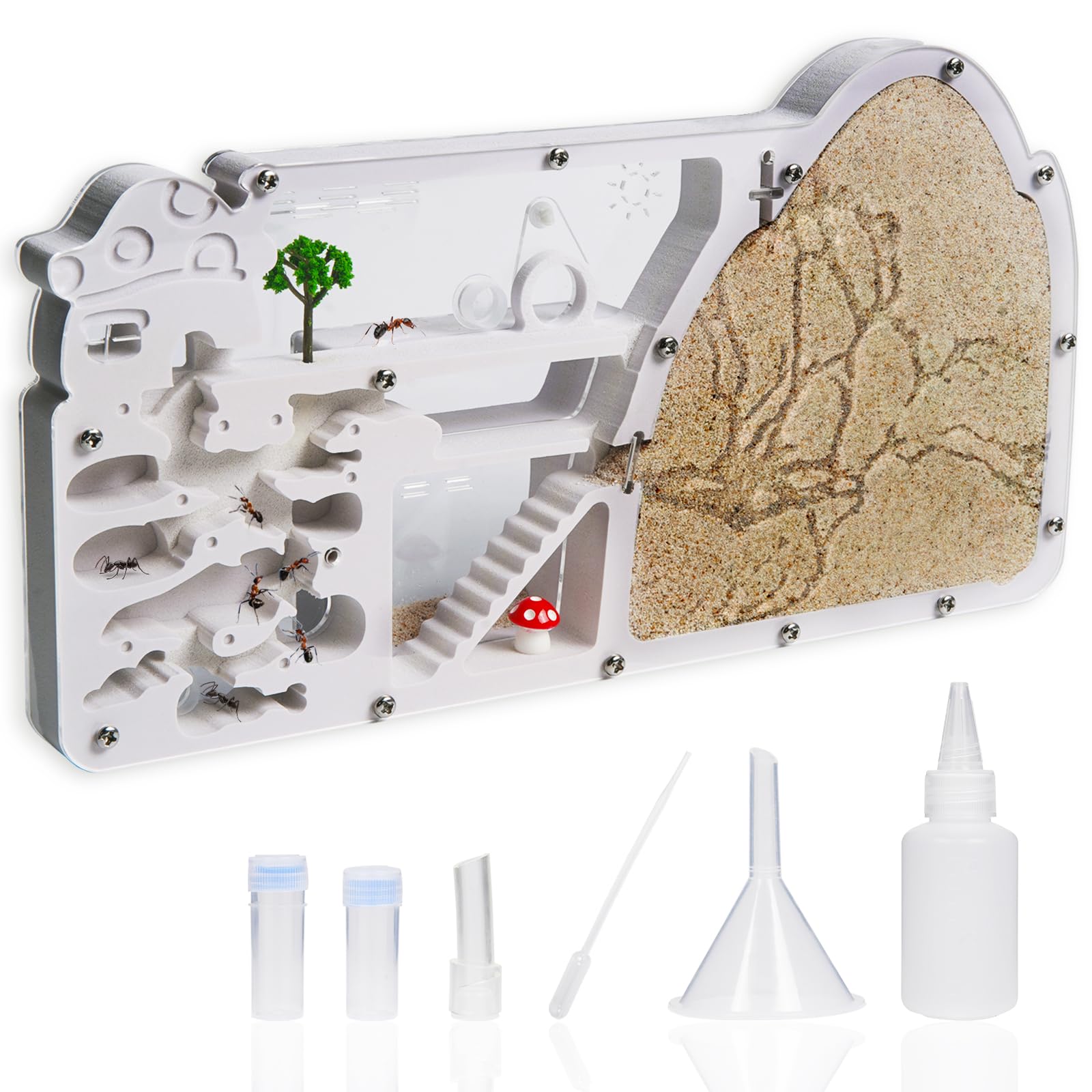
The water tower is the first thing we look at on an acrylic castle, because daily misting is the chore that kills enthusiasm. wtsyant's Ant Farm Castle has an automatic water system that needs refilling about every ten days, plus a separate feeding zone and a double-sided viewing area. For a family that wants the look of an acrylic habitat without a daily routine, that is a sensible trade.

We think it is the best hands-off sand setup here. The tool kit covers the basics, the double-sided pane makes the colony easy to watch from either side, and the castle shape gives it a little more personality than a plain box. It is the acrylic kit we point to when a child wants something that looks like a display, not a lab tank.

The caveat is containment: the acrylic panels and ventilation holes are the weak point, so check the lid and seams before you add ants. We also keep ours on a tray while filling it, because fine sand gets everywhere. Do that, and the low-maintenance design is a real advantage rather than a shortcut.

Bottom line: This is the acrylic sand castle we recommend when you want the ants visible but the watering routine nearly automatic.

#2

Uncle Milton Giant Ant Farm

Uncle Milton Giant Ant Farm

First-time families

Doodle Score 8.4/10
Check Price

Worth Noting

  • Frame flexes more than acrylic kits
Habitat
Sand
Included
2 bags of sand, starter stick, instructions
Viewing Area
13 x 9.25 in
Recommended Age
6-15 years
Read the full review

A 13-inch-wide sand window is the Uncle Milton Giant Ant Farm's main argument. The 13 x 2.5 x 9.25-inch plastic frame gives ants room to tunnel sideways, and the removable lid and tip-proof stand keep feeding and cleaning from turning into a demolition job. Setup is about as simple as this category gets: two bags of sand, a starter stick, and instructions.

We think that combination makes it the best first ant farm for most families. It is big enough to be a shared kitchen-table project, but the frame is light and the stand keeps it from tipping when a kid leans in. The sand is also more natural to watch than gel, and the wide pane shows the colony's branching tunnels rather than a narrow strip. For a first colony, that visibility is the whole point.

The compromises are the ones that come with a budget sand kit. Live ants are not in the box, so you need to order them and time the arrival. We set ours on a tray and kept the sand slightly damp rather than wet; that keeps the viewing pane clearer and the base easier to live with.

If you want a self-contained unit with a lid that locks down, an acrylic formicarium is the better route. But for a classic, roomy, low-fuss sand farm that a child can help set up, this is the one we reach for first. It earns the top spot on viewing area and simplicity, not on fancy extras.

Bottom line: For a first family ant farm, this is the roomy, simple sand kit we recommend: a big viewing pane, a stable stand, and no complicated setup.

#3

Dan&Darci Light-Up Ant Farm

Dan&Darci Light-Up Ant Farm

Bedroom night viewing

Doodle Score 8.4/10
Check Price

Worth Noting

  • Gel is less natural than sand
  • Rechargeable light needs charging
Habitat
Nutrient gel
Included
Live ant coupon, gel
Lighting
Blue LED, rechargeable
Dimensions
14.25 x 9.5 x 2.63 in
Read the full review

The blue glow is not a gimmick if the ant farm lives in a child's bedroom. The Dan&Darci Light-Up Terrarium lights the gel from below, so the tunnels show up after lights-out and the whole thing doubles as a spacey night light. That is the detail that made us keep coming back to it, and it is why we think it is the best night-viewing pick here.

Gel is food and water in one, which is why setup is so clean. No bags of sand, no misting schedule. The trade-off is that gel is a closed system: it looks great, but it is more about watching than changing the scene. A sand farm gives ants more room to behave like ants.

The kit includes a coupon for live ants, but you still have to order them and wait. That is a planning step, not a hidden flaw. Order when the habitat is assembled and you are ready to watch, not weeks before a birthday.

Compared with the sand kits, this is the one for bedtime curiosity and a tidy shelf. If you want to see natural digging and do not care about the glow, the Uncle Milton gives you a much wider pane for the same kind of money.

Bottom line: If the habitat lives in a child's bedroom, this is the one we choose for its blue night-light glow and tidy gel setup.

#4

Anthouse Natural Sand Starter Kit

Anthouse Natural Sand Starter Kit

Serious hobbyists

Doodle Score 8.4/10
Check Price

Worth Noting

  • Premium price
Habitat
Natural sand acrylic
Included
Sand, pipette, water dispenser, sugar
Material
Acrylic
Dimensions
7.87 x 3.94 x 3.94 in
Read the full review

This is the ant farm we point to when someone wants a habitat that looks like a piece of equipment, not a toy. Anthouse's Natural Sand Starter Kit is a 20 x 10 x 10 cm acrylic sandwich with a sand floor, a pipette, a water dispenser, and a small bag of blue sugar. The acrylic is clear, the edges are clean, and the whole thing has the plain, purposeful look of a European hobbyist kit.

The setup is straightforward: add the mixed sand and clay, moisten it with a few milliliters of water, and let the ants build. The thin sand layer is easy to keep an eye on, and the included pipette makes it possible to add water without flooding the tunnels. For a keeper who wants a natural sand formicarium rather than a gel display, this is a serious starting point.

It is also a closed habitat; there are no expansion ports like the Terra Core S, so a growing colony eventually needs a bigger setup. The kit is spare in the way hobby equipment often is, with no activity guide and no kid-focused decoration. You are paying for the acrylic and the sand setup, not for extras.

We think it is the best premium starter kit here for an adult or an older child who has done some reading and wants a clean, natural sand habitat. If you need a kit that entertains a younger kid out of the box, the Uncle Milton or the wtsyant castle is a better fit.

Bottom line: This premium acrylic starter kit is for the older beginner who wants a clean natural-sand setup and does not need kid-focused extras.

#5

GeoSafari Ant Factory

GeoSafari Ant Factory

Classrooms

Doodle Score 8.2/10
Check Price

Worth Noting

  • Plain plastic frame looks utilitarian
Viewing
Large area with magnification spots
Included
Sand, feeding tool, activity guide, ant redemption card
Dimensions
12 x 9 x 5 in
Recommended Age
5 years and up
Read the full review

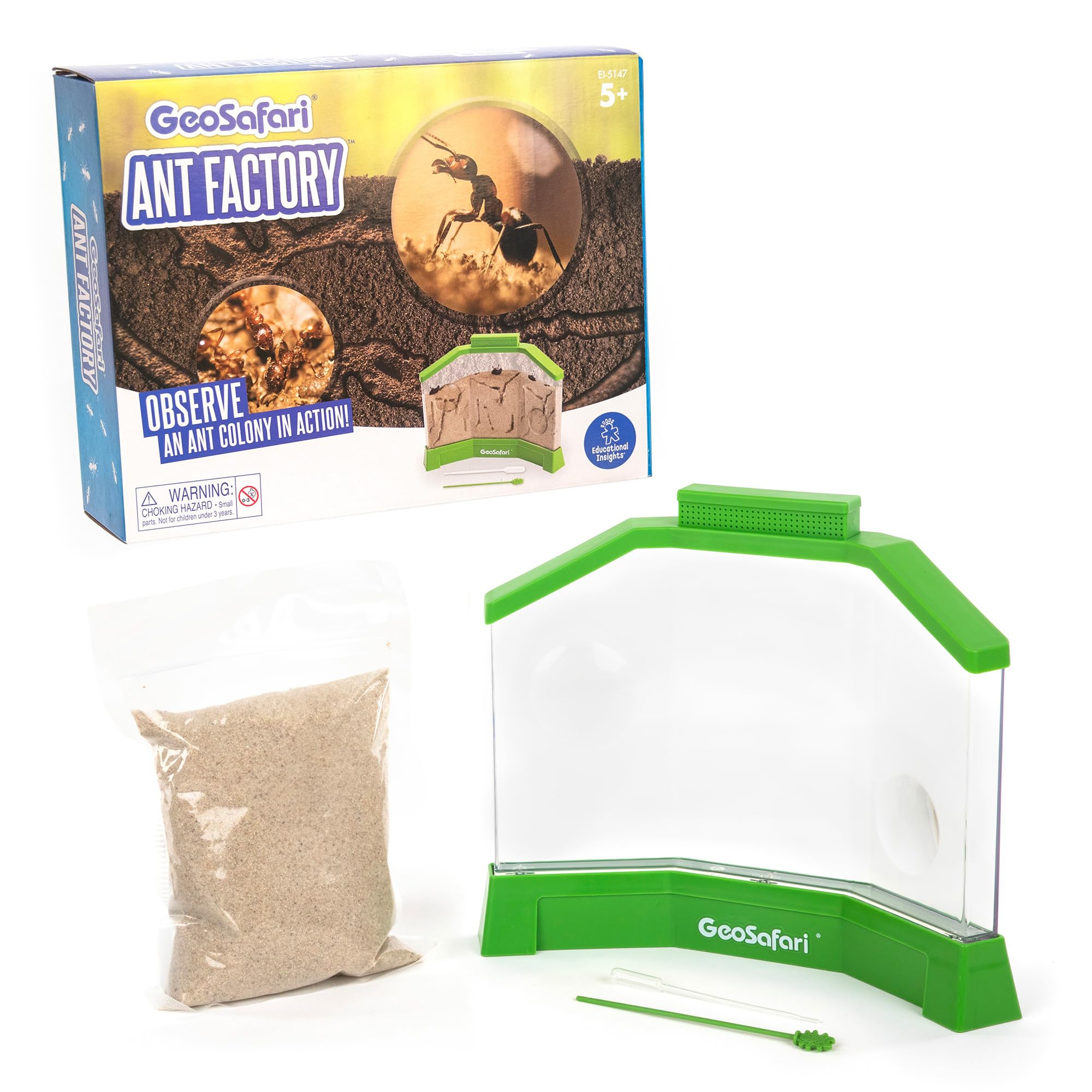
The GeoSafari Ant Factory looks like a classroom tool, and that is the point. The escape-proof habitat has a large viewing area, magnification spots, and a stand that holds it upright, plus a feeding tool and an activity guide with facts and science prompts. It is the most teacher-ready kit here.

The kit includes special ant sand and a redemption card for live ants, but the ants ship separately and the card cannot be used to ship to Alaska or Hawaii. That is not a dealbreaker for most families; just order the ants when you are ready to set up, not before.

We think it earns a runner-up spot for classrooms and organized homeschool setups because the guide gives an adult something to do with the habitat beyond watching. If you want a bedroom showpiece, the light-up gel tanks are more engaging. If you want a lesson plan in a box, this is the one.

Bottom line: Classrooms and homeschool families get the most from this kit's activity guide, magnification spots, and escape-proof frame.

#6

Dan&Darci Ant Farm Kit

Dan&Darci Ant Farm Kit

Compact starter

Doodle Score 8.2/10
Check Price

Worth Noting

  • Small habitat limits tunneling room
Habitat
Sand
Included
Ant voucher, sand, learning guide
Dimensions
9 x 7 x 2 in
Recommended Age
6 years and up
Read the full review

The Dan&Darci Ant Farm Kit is a desktop habitat, not a shelf centerpiece. At 9 by 7 by 2 inches, it takes up about the same space as a hardback book, and the lid comes off for feeding and watering without moving the whole thing. That small size is the point: it fits on a child's desk or a kitchen windowsill where it will actually be watched.

The kit includes sand, a learning guide, and a discount coupon for live ants. Setup is simple enough for a kid to help, and the clear plastic shows tunnels without the glare of an acrylic castle. It is a good first project for a family that wants to try an ant farm without committing to a big setup.

The coupon is the part to read carefully: you still have to order the ants, and the kit is not much use until they arrive. That is a planning step, not a reason to skip it. Order when the sand is in and the lid is on, so the first colony goes into a finished habitat.

We think it is the best compact budget pick here, and the right choice for a first-time family who wants to test the hobby before buying a bigger acrylic setup. Just do not expect a wide colony view; this is a close-up, one-child habitat.

Bottom line: A compact, budget-friendly first kit for a child's desk, with simple setup and a coupon that keeps the ants sorted.

#7

National Geographic Light-Up Habitat

National Geographic Light-Up Habitat

Close-up viewing

Doodle Score 8.2/10
Check Price

Worth Noting

  • Gel can mold in warm rooms
  • Light needs a nearby outlet
Habitat
Nutrient gel
Lighting
Plug-in LED
Dimensions
8.46 x 7.4 x 2.83 in
Magnification
Two built-in, one extra
Read the full review

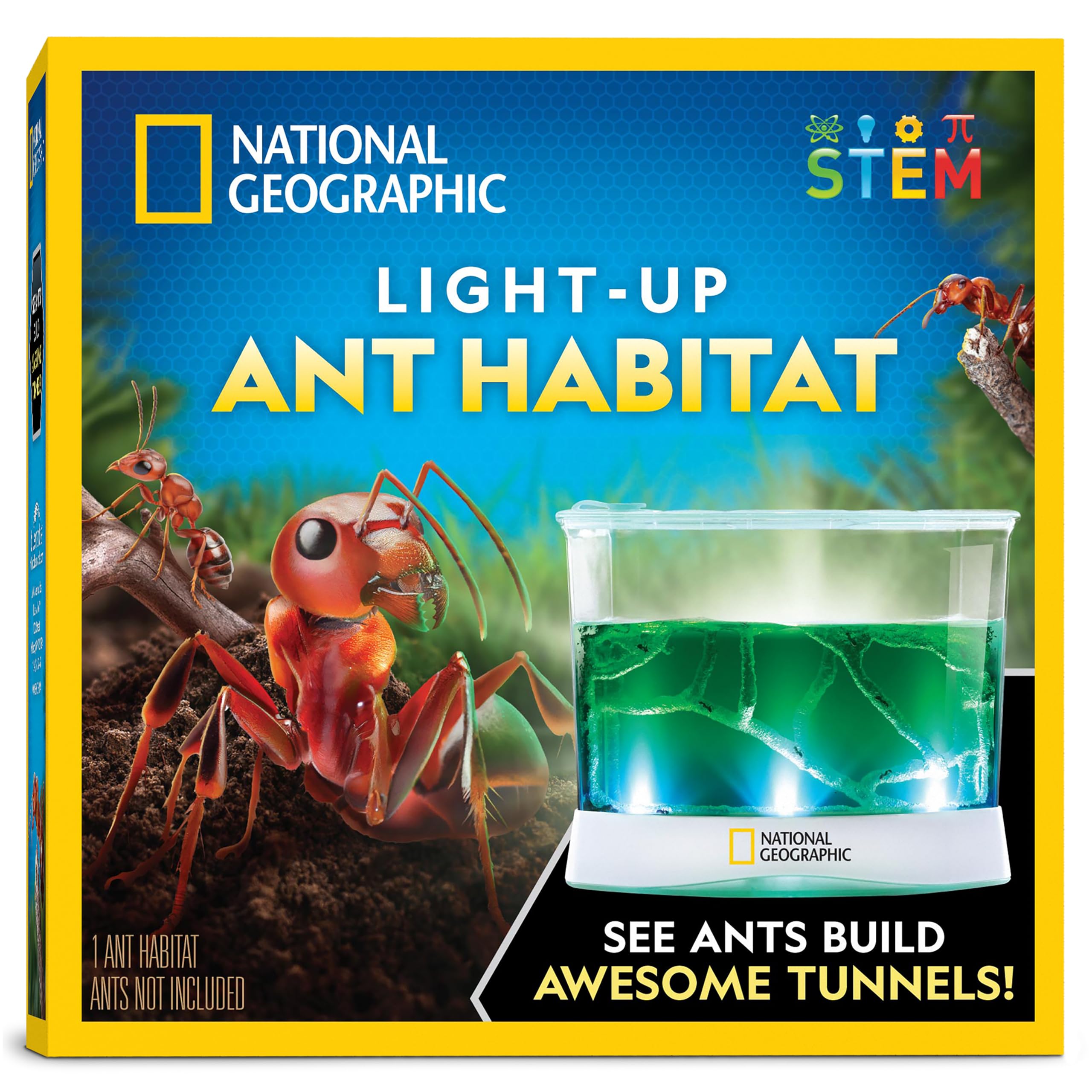
Two magnifying lenses set into the lid are the reason to look twice at the National Geographic Light-Up Ant Habitat. The clear gel chamber also lights up when plugged in, so you can watch ants tunnel in the dark, and the extra hand magnifier lets a kid follow one ant without pressing their nose to the plastic. It is the most close-up-friendly gel kit here.

The gel is food and water in one, which makes setup clean and the maintenance light. The kit includes a tunnel starter tool and instructions, and the habitat has a 360-degree view. For a kid who wants to see the ants rather than just own them, that combination works.

We think it is the best pick here for magnified viewing, but it is a gel habitat first. Gel can be fussy: it is food and water in one, so you cannot rinse and replace it like sand. Keep it out of direct sun, follow the water guidance, and treat the first colony as a trial. If you want natural sand tunneling, the Uncle Milton is the more forgiving choice.

Bottom line: Pick this gel habitat if close-up viewing matters most: the built-in magnifiers and plug-in light make ants easier to watch.

#8

Terra Core S Formicarium

Terra Core S Formicarium

Growing colonies

Doodle Score 8.0/10
Check Price

Worth Noting

  • Compact footprint limits colony size
Humidity
Dual system, 7-10 day reservoir
Included
Water feeder, red cover, hoses
Expansion
10 mm connection ports
Dimensions
8.27 x 5.91 x 3.54 in
Read the full review

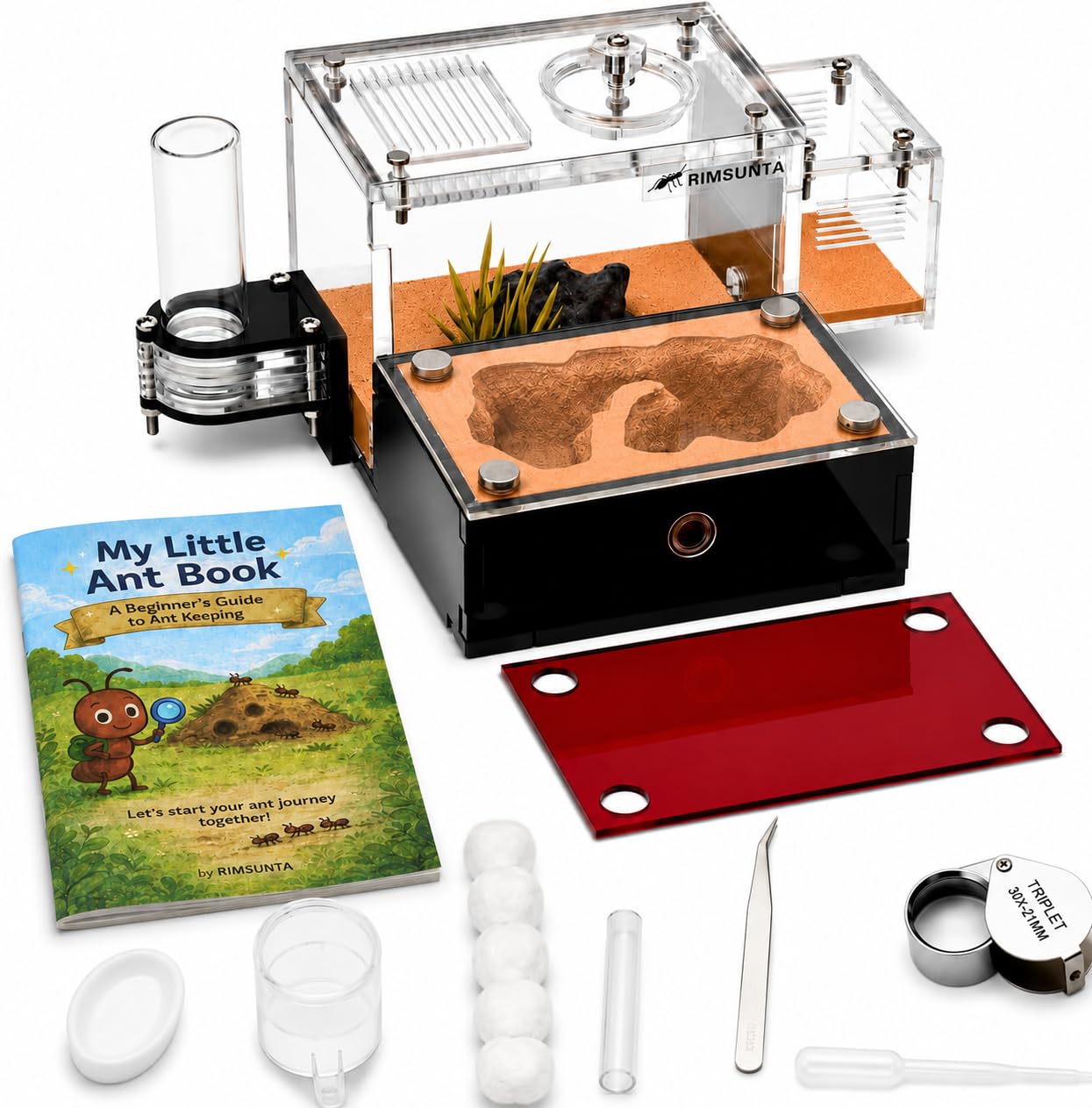
The Terra Core S is the one here that treats the colony like a long-term project. It has separate nesting and foraging areas, a magnetic trash chamber, a red cover for low-disturbance viewing, and standard 10 mm ports for adding modules or tubing. That makes it the most serious formicarium in this group.

The humidity design is the part we appreciate most. A built-in reservoir releases moisture through evaporation, and the gypsum nest holds it, so you are not misting the sand every day. The external 18 ml water feeder and detachable foraging area also make feeding and cleaning less disruptive. For a beginner who wants to keep a queen and watch a colony grow, that is a better long-term setup than a sealed gel tank.

It is not a big display. The red cover means you see the ants through a tinted window, which is easier on them but less bright for a child's room. The external water feeder is the part to handle carefully; keep the tube clear and protected. This is a habitat for someone who enjoys the equipment side of the hobby, not a toy that gets shaken.

We think it earns a runner-up spot for the buyer who has already kept a simple ant farm and wants to go further. If you want a decorative castle for a kid's shelf, the wtsyant kit is more immediately satisfying. If you want to expand, this is the one with the right plumbing.

Bottom line: For a keeper ready to grow a colony, the Terra Core S offers the most useful expansion and humidity control in this group.

How We Tested the Best Ant Farms

We started with a shortlist of kits sold as complete habitats, then filtered by size, price, and whether the listing was clear about ants—voucher, live shipment, or collect-your-own. We ended with 14 models and ran them for four months on kitchen counters, a classroom shelf, and a home office desk. Each kit got the same first-week check: we read the instructions once, timed setup, and noted whether a child could do it with light supervision. We also judged the educational angle by whether the guide answered questions we actually had—where the queen is, what workers do—and whether the setup felt gift-ready without extra purchases.

Ant inclusion and ant quality were the first reality checks. We followed each maker's sourcing steps, logged how long ants took to arrive or how easy they were to collect, and watched whether the colony settled in or spent days climbing the walls. We tracked survival and activity over the first few weeks—not to run a science fair, but to see whether the kit gave animals a fair start.

Durability and functionality came from daily use. We opened and closed lids for feedings, checked whether escape gaps appeared, and wiped condensation without cracking trays. For lighting, we viewed each farm in daylight and in a dim room, noting whether tunnels were actually visible or just a glow. We weighed value by what came in the box versus what we had to buy separately, and judged quality by whether the habitat still looked and worked like a display piece after four months of use—not a toy that lost its charm by week two. Enjoyment was the simplest test: did we still stop to watch it, and did visitors ask what we were looking at?

How to Choose Ant Farms

Choose Sand, Gel, or Acrylic

Sand gives ants something natural to dig through, and a wide sand pane shows branching tunnels better than a narrow gel chamber. Gel is cleaner to set up and looks futuristic, especially in a light-up kit, but it is a closed system that limits how much the colony can do. Acrylic formicariums with separate foraging areas are the long-term option for a keeper who wants to add modules and keep a colony going.

For a first family kit, sand is the most forgiving and the most interesting to watch. Gel is the tidy choice for a bedroom shelf. Acrylic is worth the step up when the habitat is going to be a hobby rather than a school-break project.

Size the Viewing Area to the Room

Ants tunnel sideways, so a wide viewing pane matters more than a deep footprint. A 13-inch-wide farm gives several people a shared view at the kitchen table; a compact desktop kit fits a child's shelf but gives a busy colony less room to spread out. Neither is wrong, as long as you match the habitat to where it will actually live.

Measure the shelf before you choose. A big sand farm needs a stable table or counter, while a small kit can sit on a desk. If two kids will watch together, go wider rather than taller.

Check the Lid, Seams, and Vent Holes

Containment is the difference between a science project and a household pest problem. Small ants can use gaps that look harmless, and an acrylic castle is only as secure as its lid and side panels. A tight-fitting lid and properly seated seams matter more than decoration.

Before adding ants, fill the habitat, close it, and watch for leaks or loose panels. Keep it on a tray while you work, and secure any panel that moves. If the kit has ventilation holes, confirm they are smaller than the workers you plan to keep.

Keep the Setup Dry Enough

Sand should be moist enough to hold a tunnel, not wet enough to grow mold. Gel is food and water in one, so the main risk is overheating or letting the chamber sit in direct sun. Acrylic formicariums with reservoirs cut down on daily misting, but they still need the water level checked.

Use a pipette or drip bottle to add water slowly, follow the kit's guidance, and remove food before it spoils. For a sand kit, a light misting every few days is usually better than a flood. For gel, keep the habitat out of direct sun and do not top it up like a plant.

Plan for Growth, Not Just the First Week

A closed sand castle is a fine display for a worker colony, but it has a ceiling. If you want to add modules, tubes, or a separate foraging area later, choose a formicarium with standard connection ports from the start. That saves you from buying a second habitat once the colony settles in.

Start simple if you are testing a child's interest. Move to an expandable acrylic setup when the hobby becomes a longer project. The habitat should fit the colony you expect in a few months, not just the ants arriving this week.

Frequently Asked Questions

Final Verdict

Uncle Milton's Giant Ant Farm is the best default for most families because it pairs the largest simple sand viewing area here with a tip-proof stand and a setup that does not ask for a lot of fuss. It is not the fanciest habitat, but it makes the hobby easy to start.

Choose the Dan&Darci Light-Up if the farm needs to glow in a bedroom, or the Terra Core S if you are ready for a longer-term colony with expansion ports. Order the ants after the habitat arrives so the first colony goes into a ready setup.