STEM & Learning

Best Camera for Kids of 2026

The trouble with handing a kid a camera is that the good ones cost too much to lose and the cheap ones take pictures that aren't worth keeping — and either way, it ends up on the pavement. A kids' camera fixes the part you can't control: a body they'll actually carry that survives being swung by the strap, buttons sized for small fingers, a screen that's theirs instead of your phone. What it doesn't fix by itself is the photo. Plenty shoot soft, washed-out images and bury the useful settings behind menus a six-year-old will never find.

We've spent the last four months putting 14 of them through real use with real children. Ignore the megapixel count on the box: the sensors are tiny, and that number is marketing once you open the files on a laptop. Shutter lag and a screen you can read outdoors matter far more, since a kid who presses the button half a second late has already lost the moment. The picks below survived the drops and still turned out pictures worth printing.

#1

ETIKEZ Funshot 20

ETIKEZ Funshot 20

Ready-made kit

Doodle Score 9.4/10
Check Price

Worth Noting

  • Long-term reliability is unproven
Kit
3 rolls, 32GB card, USB-C
Prints
Thermal black-and-white
Screen
2.4 inches
Battery
4 hrs
Read the full review

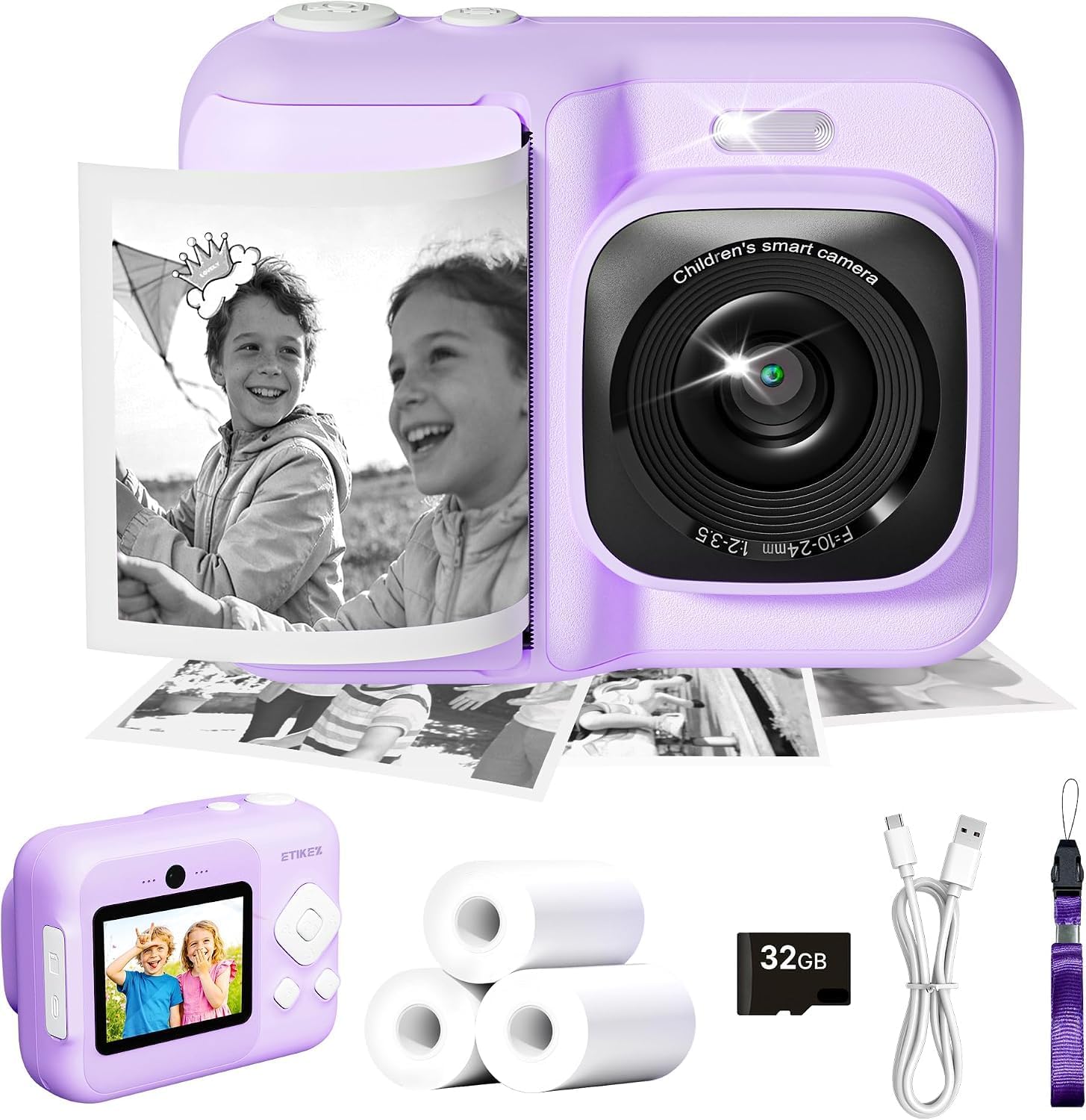
The Funshot 20 arrives as a kit rather than a camera: three rolls of BPA-free thermal paper, a 32GB card, a USB-C cable and a lanyard, so a child can shoot, save and print on the first afternoon without anyone hunting through a drawer for an accessory.

Three rolls is the detail that matters, because it matches the most generous paper bundle in this group. USB-C is the quiet second win: it is the cable already plugged in on the kitchen counter, rather than the micro-USB the older designs use. Around that sits a sensible specification — a 2.4-inch screen, 1080p video, 6x zoom, games, an MP3 player, a soft plastic shell and a claimed four hours per charge.

The honest caveat is history. This is the newest name in the group and the one we can say least about over a year of hard use, which matters in a category where a camera that stops charging is the most common disappointment. If you want a known quantity with the same paper bundle, the Gofunly covers the same ground with more behind it.

Bottom line: The most complete instant-print kit here, with three rolls, a card and USB-C charging, though it is the least proven of the group.

#2

VTech KidiZoom Duo FX

VTech KidiZoom Duo FX

Rough handling

Doodle Score 9.2/10
Check Price

Worth Noting

  • Runs on four AA batteries, not a rechargeable pack
  • Photos are soft, especially indoors
Zoom
4x
Screen
2.4 inches
Stills
8 MP front, 2 MP selfie
Batteries
4 AA
Read the full review

There is more camera here than anywhere else in this group. At 14.4 ounces and just over six inches wide, the Duo fills a child's hands instead of hiding in them, and set beside the H11 it feels like a different class of object entirely. That size is the first thing to be honest about, because it is also the reason a four-year-old will set it down rather than carry it.

What the bulk buys is the most creative camera in the set. An 8MP front camera and a 2MP selfie lens, a 2.4-inch screen plus a viewfinder, 4x zoom, and more than 80 effects, frames and stamps, including an AR avatar mode, a puppet theater and a cartoon studio. Five games are built in, along with a voice recorder and an MP3 player that reads from a microSD card you supply.

Durability is why it earns a place. The body is built around knocks in a way the thin plastic shells here are not, and it is the camera we hand over without watching where it lands. The 3-to-9 age range suits it, and the microSD slot tops out at 32GB, which is worth knowing before you buy a bigger card. The 90-day warranty is shorter than we like at this price.

Buy it for the child who treats a camera like a hockey puck, or for a household that wants a recognizable brand standing behind the toy. If your kid is careful and a pocket matters more than a viewfinder, the H11 does the same job at a fraction of the weight. Neither of those is a knock on the Duo; it is simply the camera for the rougher kid.

Bottom line: For the kid who has already broken something this year, the Duo is the camera we recommend: it takes knocks and keeps a child busy with effects and games.

#3

Gofunly H3 Instant Print

Gofunly H3 Instant Print

Instant prints

Doodle Score 9.2/10
Check Price

Worth Noting

  • Printing can jam or stop before a roll is finished
Paper
3 rolls included
Prints
Thermal black-and-white
Screen
2.4 inches
Battery
1000 mAh, 4-5 hrs
Read the full review

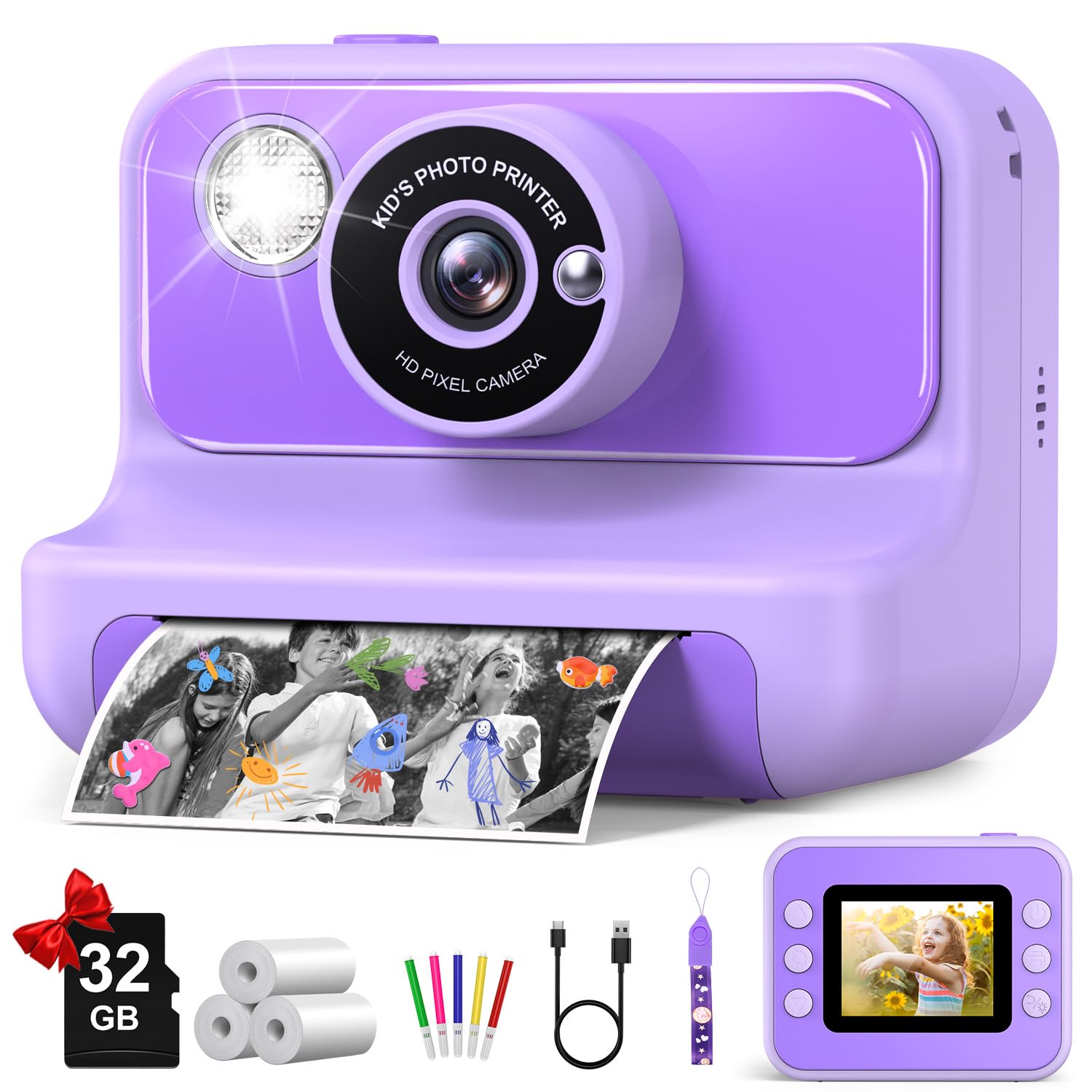
Press the shutter and the H3 starts printing: a small black-and-white copy of what is on the screen, while the color version is saved to the 32GB card. The print is the souvenir and the card is the photo that survives, and that split is the whole appeal of an instant camera for a child who wants something to hold.

The H3 is the instant model here we recommend. The 1000 mAh battery is rated for four to five hours of shooting, which is more than a day out, three rolls ship in the box, and the 2.4-inch screen is big enough to frame with. The 21 frames, eight mirror effects and 10x zoom give a child more to fiddle with than the plainer instant models, and the case and lanyard are already in the kit.

The paper is the part to plan for. Every print is monochrome and small, and a child can work through a whole roll in an afternoon of enthusiasm, so order refills when you order the camera rather than after the first roll runs out. When printing misbehaves it tends to be the paper feed rather than the photographs, and the color files on the card are unaffected either way.

Bottom line: The instant camera we actually recommend: it shoots for most of a day, ships with three rolls of paper, and puts a print in a kid's hand.

#4

goopow H11 Kids Camera

goopow H11 Kids Camera

First kids camera

Doodle Score 9.0/10
Check Price

Worth Noting

  • Some units stop working within months
  • Two-inch screen is cramped for reviewing photos
Video
1080p
Screen
2 inches
Weight
3.7 oz
Battery
Rechargeable, 1.5-2 hrs
Read the full review

The H11 weighs 105 grams and measures about 4.2 by 2.7 by 1.9 inches, which is small enough to disappear into a coat pocket and light enough that a four-year-old can wear the lanyard all afternoon without complaining. That matters more than it sounds. The camera a child actually carries is the camera that gets used, and the heavier models here are the ones a parent ends up holding by lunchtime.

The controls are the other half of why it works. Photo, video and playback sit behind a handful of buttons around a two-inch screen, and the games are the kind a five-year-old works out by pressing things rather than reading a menu. The 32GB card, a card reader and the lanyard come in the box. The battery is rated for one and a half to two hours of shooting and charges over USB, which covers a morning at the zoo and a top-up in the car.

So the top spot goes to the least dramatic camera in the group. It is the lightest, one of the simplest to hand over, and it sits in the middle of the price range, and nothing else here combines those three as cleanly. The VTech survives more, the Gofunly prints, and the Lecran takes better photos, but each of those asks something back: weight, paper, or a child old enough to look after a proper camera.

The compromises are real but predictable. Photos go soft once the light drops, so evening shots indoors come out grainy and the occasional one blurs, and the two-inch screen is fine for framing and cramped for reviewing. Neither is a reason to spend more on a first camera; both are the reason this one is cheap enough to hand over without flinching.

Bottom line: We hand the H11 to a four-year-old before anything else here: it is light, the buttons make sense to a kid, and a scratch on it does not sting.

#5

YEEHAO DHC-LCL5

YEEHAO DHC-LCL5

Tight budgets

Doodle Score 8.8/10
Check Price

Worth Noting

  • Battery life is short and inconsistent
  • Some units fail to switch on
Card
32GB included
Screen
2 inches
Stills
48 MP dual lens
Weight
7.76 oz
Read the full review

Least expensive is not the same as least sensible. The YEEHAO is the cheapest camera in this group, and it still arrives with a 48MP dual-lens setup, a front-facing selfie camera, a 32GB card and a silicone case that wraps the body. For a gift where you are not certain the interest will stick, that is a strong hand to play.

It is simple in the way that matters. The two-inch screen and the short menus mean a child can find the shutter and the playback without help, and the games and 16x zoom are there for the afternoons when taking photos gets old. The silicone case is a genuine extra rather than packaging: it covers the body without hiding the buttons, and it is the first thing to put on before the first outing.

Where it gives ground is the pictures. They are soft, low-light shots are softer, and the 48MP figure on the box does not translate into files that hold up when you zoom in. That is the trade you make at this price, and for a kid's scrapbook or a wall of prints on the fridge it is a fair one.

Bottom line: The one to buy when you are not sure the hobby will last: the least expensive camera here, and it still has a selfie lens and a case.

#6

Dafotil CP02

Dafotil CP02

Second camera

Doodle Score 8.8/10
Check Price

Worth Noting

  • Prints come out pale unless held very steady
Zoom
16x digital
Prints
Thermal black-and-white
Screen
2.4 inches
Battery
1500 mAh
Read the full review

The numbers on this listing do not survive contact with the prints. The CP02's spec table manages to list both a 1MP sensor and a 48MP maximum image size, and the photos come out like neither: soft, pale, and sharp only if the camera is held very still. Treat the resolution badge as decoration.

What you get for the least money in the instant-print group is a complete kit. A 2.4-inch screen, 16x zoom, a 1500 mAh battery rated for four to five hours with the printer off, a 32GB card, games, a music player, and the same filters and frames the others have. The thermal printing works exactly the way it does on the more expensive models, which is the point.

That makes it a second camera rather than a first one. If you are buying for a classmate's party, a younger sibling who wants what the older one has, or a child whose interests change with the season, the CP02 does the job at the lowest risk. If the camera is the main present, put the money into the Gofunly instead and get the battery and the paper bundle with it.

Bottom line: A cheap, cheerful instant camera for a second child or a classmate's birthday, as long as you keep expectations for the prints low.

#7

Lecran DC403

Lecran DC403

Tweens and teens

Doodle Score 8.4/10
Check Price

Worth Noting

  • No shockproof shell or bumpers for drops
Zoom
16x digital
Screen
2.5 inches
Stills
44 MP
Weight
9.52 oz
Read the full review

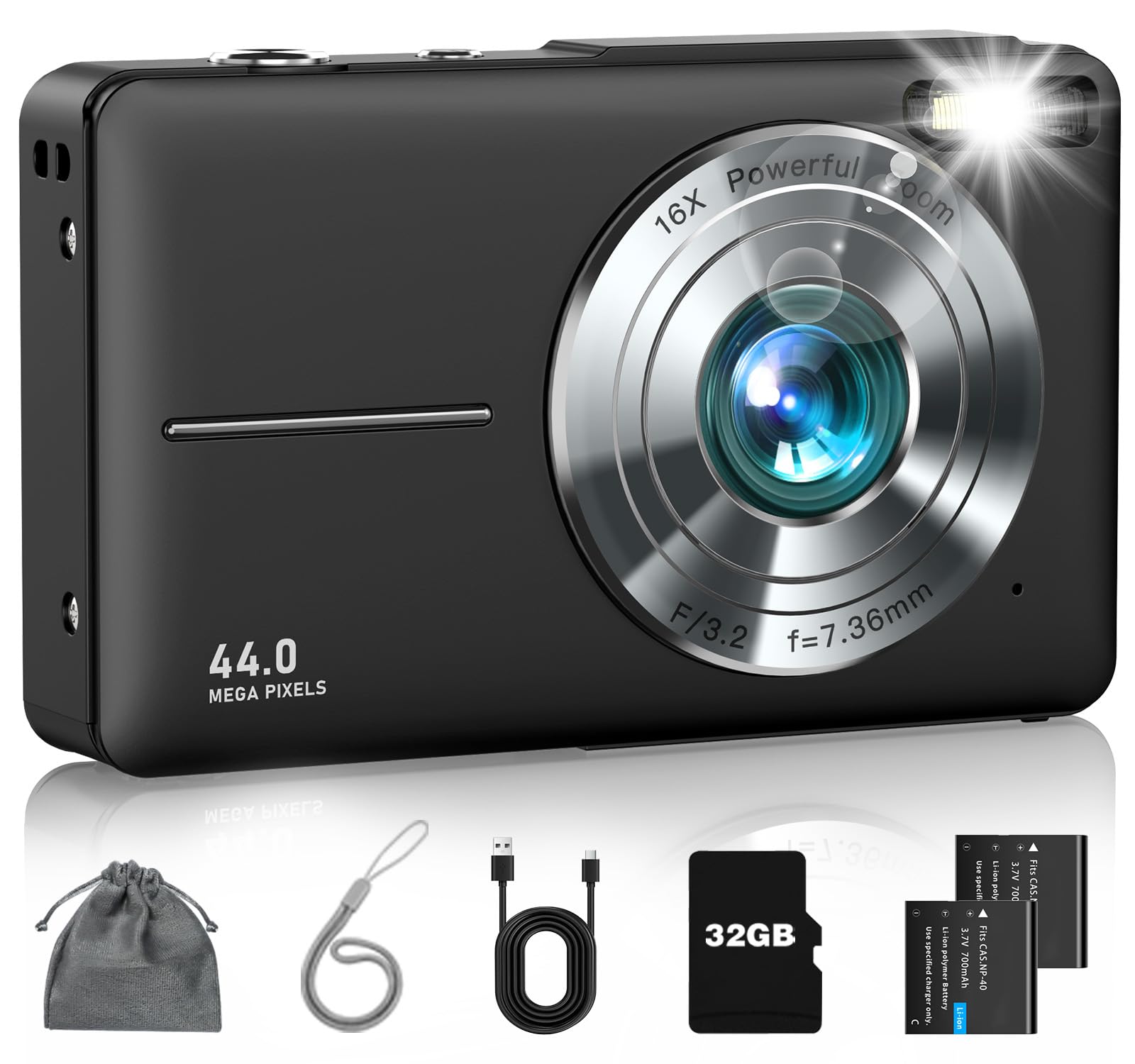
Some children outgrow the cartoon shell long before they outgrow taking pictures. The Lecran is the camera for that moment: a plain black point-and-shoot with a 2.5-inch screen, 16x digital zoom and anti-shake, and a body that looks like something an adult would carry. That last part is most of the reason a ten-year-old will actually use it rather than leave it next to the toy cameras.

It is also the best of these for pictures. In daylight the shots come out sharp and the colors are right, which is exactly the condition a kid photographs in. Two rechargeable batteries and a 32GB card are in the box, so one battery charges while the other is in the camera — a small thing that becomes a big one halfway through a trip. The menu has the usual filters and a date stamp, and it is simple enough that a first-time photographer can find their way around.

What it is not is rugged. There are no shockproof claims here and no rubber bumpers, the way the toy cameras in this group have them, and the menus ask a little more of the child than a one-screen toy does. A seven-year-old who has used a camera before will be fine. A four-year-old handed this first will get frustrated, and the camera will get dropped.

Bottom line: For a ten-year-old who wants a camera that looks like a camera, this is it: sharp pictures in daylight and none of the toy styling.

How We Tested the Best Cameras for Kids

We started with about 40 cameras marketed to kids and cut anything that needed a phone app or a subscription to get photos off the card, anything with a screen too small to frame a shot, and anything priced so far above the pack that it made no sense as a first camera. That left 14, tested over four months.

Each one went to kids between four and ten with no instructions — in backyards, on a road trip to the grandparents', at a birthday party, and on ordinary after-school walks. Could they turn it on, take a picture, and find it again without an adult stepping in? We also noted which ones they reached for unprompted: the cameras that looked like scaled-down real ones got carried around, and the chunky character-covered ones sat on the table.

Picture quality got the closest look. We shot the same three scenes on every camera — a sunny backyard, an indoor room lit by one lamp, and dusk — then opened the files at full size on a laptop and looked for smearing, muddy color, and indoor grain. Durability was less polite: each camera was dropped from counter height onto a wood floor and from waist height onto pavement, then checked for cracked screens and card doors that no longer latched. We charged overnight and let kids shoot until the camera died, noting which made it past lunch and which ran on AA batteries.

We weighed each camera with its strap and watched a four-year-old and a nine-year-old hold it; a light body that shook on every shutter press counted against it. Ease of use came down to buttons — whether the shutter felt different from the power button by touch, and whether a kid who can't read yet could still find their photos. Games and filters were fine until they crowded the home screen. After four months, we checked whatever was still in rotation for mushy buttons, loose battery doors, and scratched screens.

How to Choose the Right Camera for Kids

Match the camera to the child, not the age on the box

Almost every camera here claims a range like 3 to 12, which tells you very little. What separates them is weight and the number of decisions between a child and a photo. The lightest model in this group is 105 grams and the heaviest is 14.4 ounces, and for a preschooler that gap decides whether the camera goes everywhere or stays in the bag.

For a three- to five-year-old we look for one obvious shutter button, a lanyard and a soft shell. From about six, games, frames and a selfie lens start earning their place, because they keep the camera interesting on a rainy afternoon. By ten, plenty of kids want something that doesn't look like a toy, and the plain point-and-shoots here take the better picture.

Rechargeable or AA: the battery decision

Most of these run on a built-in lithium battery rated between 1.5 and 5 hours, which is roughly a morning out. The VTech runs on four AA cells instead. That's the more expensive habit over a year, but cells swap in seconds and a child is never waiting on a cable.

The failure we watch for is the charging port. A lithium camera that stops accepting a charge is finished, and that is the most common way a kids camera dies. We count the warranty as a real feature: the shortest here is 90 days and the longest is two years, and the two-year model costs no more than the rest of the mid-range.

What instant printing actually costs you

Thermal printing needs no ink and no film, so the only consumable is paper. It also prints in black and white only — the color version stays on the memory card, and that is the detail to be clear about before the box is open. Expect small monochrome prints, not a Polaroid.

The roll is the thing that runs out. A child can go through one in an afternoon of enthusiasm, so order refills when you buy the camera and check how many rolls are in the box: three is the most generous bundle here, and the difference between a camera that prints on Christmas morning and one that doesn't.

Cards, cables and getting the photos off

Most of these ship with a 32GB microSD card already installed, and that is the right size: thousands of kid-sized photos, none of these cameras needs more. Check the stated maximum before buying a bigger card, because the VTech tops out at 32GB, and put the card in before the first use so nothing ends up in internal memory.

Transfer is the step that gets forgotten. A card reader or a USB cable does it, and the cable is in most boxes but not all of them. Copy the photos off once a month — a child's camera fills up with hundreds of near-identical pictures of the dog, and the good ones are hard to find afterwards.

Frequently Asked Questions

Final Verdict

Most families should buy the goopow H11 and stop reading. It is the lightest camera here, the simplest for a small child to work alone, and it costs less than the premium picks — the combination that gets a first camera carried instead of abandoned in a drawer.

Change the requirement and the answer changes with it. For the child who is hard on everything they own, the VTech KidiZoom Duo FX is the one that survives. For a ten-year-old who wants to be taken seriously, the Lecran DC403 takes the better picture. And if the fun is in holding the print, the Gofunly H3 gives you the most paper and the longest battery to go with it.