Games & Puzzles

Best Family Party Games of 2026

The fastest way to kill a family game night is to open a box that promises 'fun for all ages' and then spend 15 minutes decoding the rulebook while the kids wander off. The right party game fixes that: everyone learns it at the table, the jokes land with a second grader and a grandparent, and turns move fast enough that nobody starts stacking the cards. We played 16 family party games over four months with kids, parents, and a few skeptical grandparents to find the ones that actually hold a table.

The keepers shared a few traits that don't show up on the box: rules you can teach in under five minutes, real laughter instead of polite giggles, and cards big enough for a 7-year-old to hold without fumbling. A family game also has to survive juice spills, enthusiastic shuffling, and someone suggesting 'just one more round.' The picks below are the ones that passed all of that—and the ones I'd still choose when the table includes a kindergartner and a grandparent.

#1

Taco Cat Goat Cheese Pizza
Taco Cat Goat Cheese Pizza

Mixed-age parties

Doodle Score 9.6/10
Check Price

Worth Noting

  • Slap pile can sting hands
  • Cards can bend during rough play
Ages
8 and up
Format
Slap-match card game
Players
2 to 8
Play Time
15 minutes
Read the full review

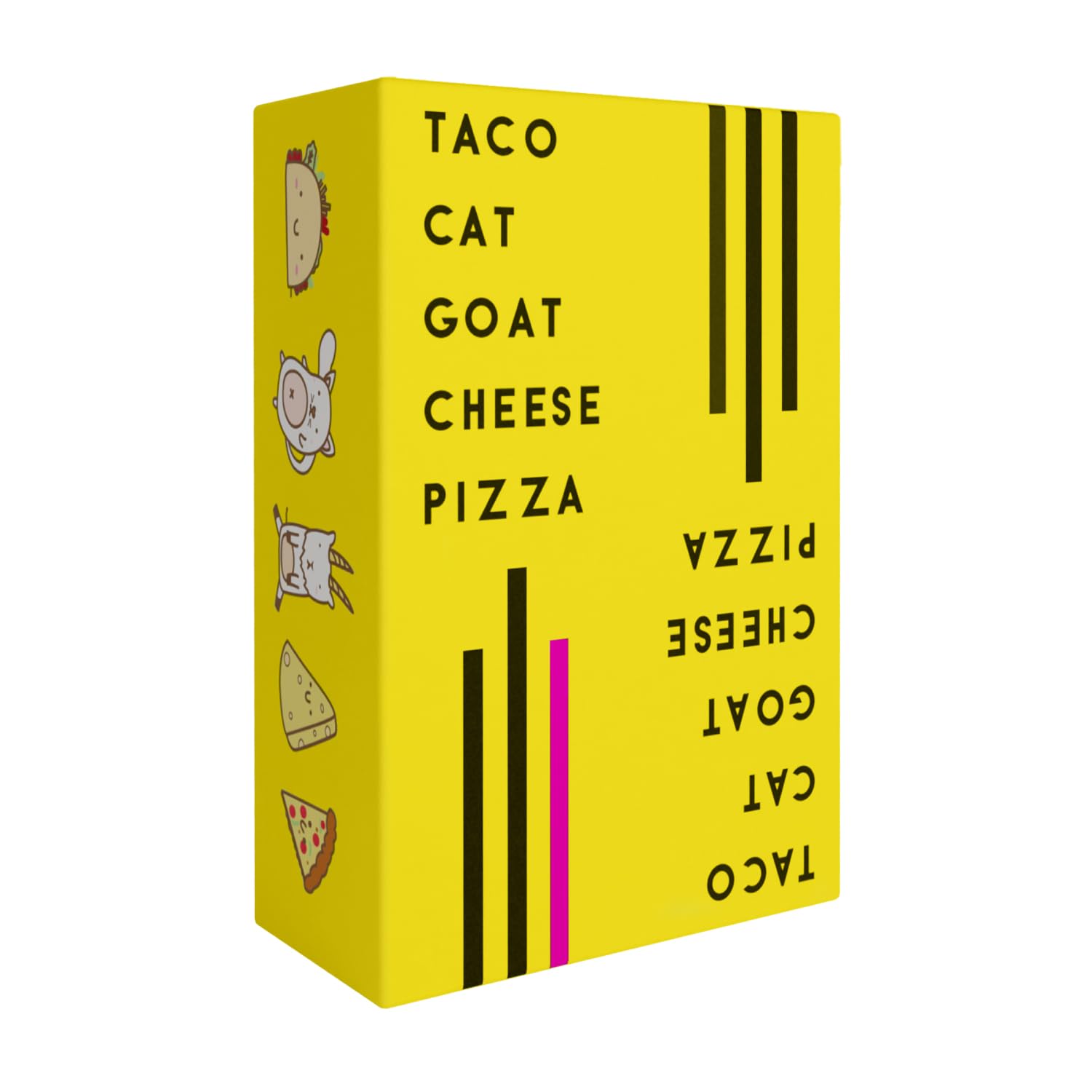
Taco Cat Goat Cheese Pizza is the game we reach for when the table includes a third-grader, a teenager, and a grandparent who claims not to like games. Players chant the title as they flip cards, and when the spoken word matches the card, everyone races to slap the pile. The last hand in takes the cards; the first player out wins. We like that there is almost no explanation phase, because a practice round teaches the rhythm faster than the rules sheet.

What earns it the top spot is not complexity but the way it collapses the age gap. The rules take a minute to explain, the 2-to-8 player range covers a family dinner or a birthday party, and a round runs about 15 minutes. We found that the action cards add just enough disruption to keep the chant from becoming automatic. It is also the easiest of these to explain to someone who has just walked in the door.

It is not the pick for a quiet table or a group that dislikes slapjack. Taco Cat rewards a fast hand and a loud room, and the fun depends on everyone being willing to get a little physical. For a calmer mixed-age night, SKYJO is the better fit; for a word game, Blank Slate. But when the goal is a room full of laughter in the first five minutes, this is the one we choose.

Bottom line: We recommend Taco Cat Goat Cheese Pizza as the default family party game: it gets mixed ages laughing in one round, and its tiny box goes anywhere.

#2

SKYJO

SKYJO

Calmer game nights

Doodle Score 9.6/10
Check Price

Worth Noting

  • A round can hinge on lucky draws
Ages
8 and up
Players
2 to 8
Play Time
About 30 minutes
Skill Focus
Luck and light strategy
Read the full review

The first thing to know about SKYJO is that you are trying to finish with the fewest points, not the most. That inversion is simple enough for a child to grasp and just unusual enough to make adults pay attention. Each turn is a small decision: take a card from the pile or flip one, then decide whether it improves the row in front of you. The game plays two to eight and takes about half an hour.

We like SKYJO best when the group spans generations and the goal is conversation as much as competition. The rules are short, the turns are quick, and the mix of chance and small decisions keeps younger players in the game. It is less of a spectacle than Taco Cat or Jenga; there is no pile slap or tower collapse, just a table of people watching their scores climb. That makes it the one we choose for a long dinner or a rainy afternoon.

The 150-card deck is compact, and the included notepad handles the running score. Bring a pen for the notepad, and keep it where the next round can find it. Because play stays on the table, it is also easier to manage beside food than a game that sends players around the room.

Bottom line: For a calmer family night, SKYJO is our pick: easy enough for kids, strategic enough for adults, and roomy enough for eight.

#3

UNO Card Game

UNO Card Game

Large family groups

Doodle Score 9.6/10
Check Price

Worth Noting

  • Cards are smaller than a standard deck
Ages
7 and up
Cards
112 cards
Players
2 to 10
Accessibility
Colorblind symbols
Read the full review

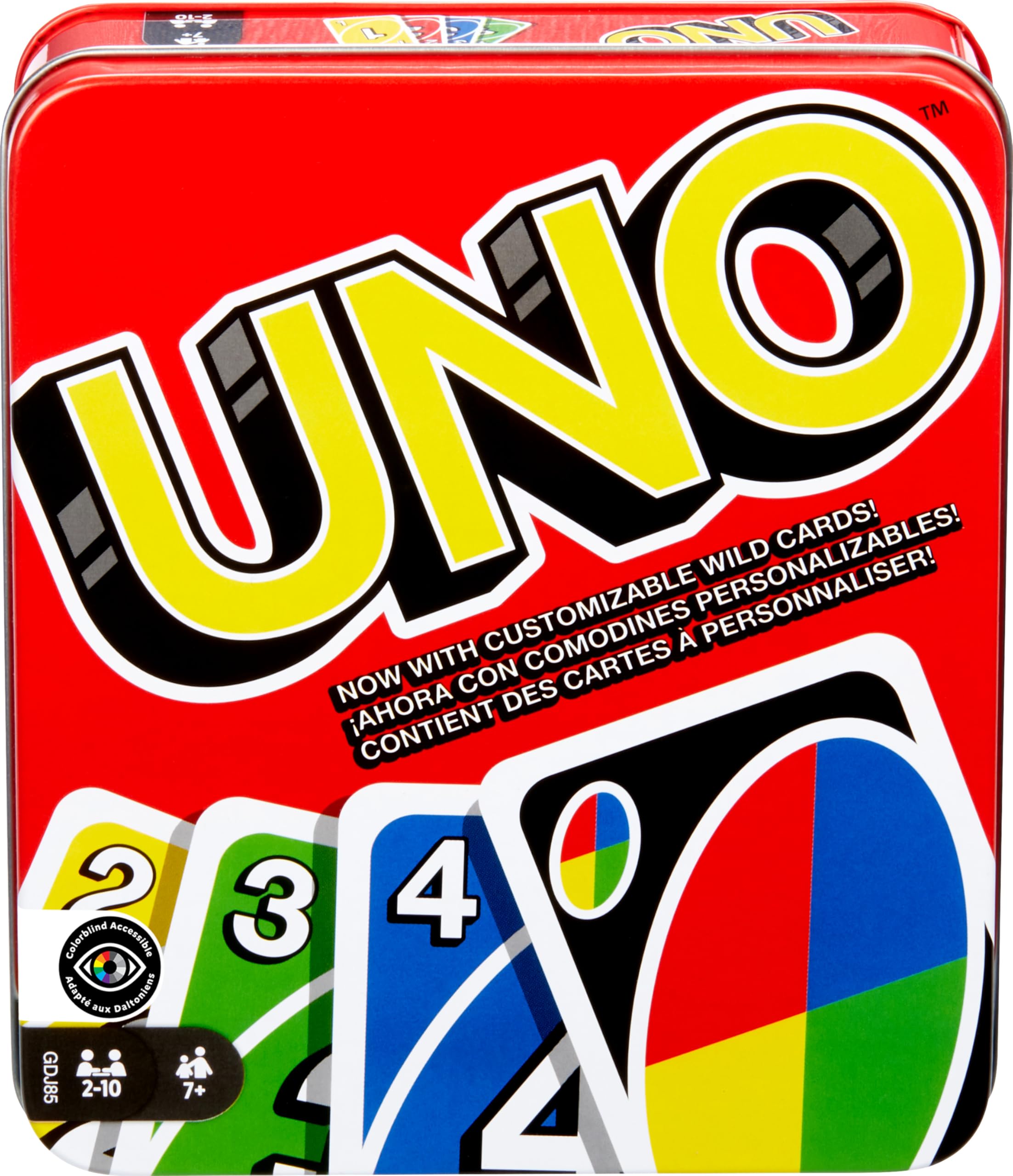
The version of UNO we recommend is the one with special symbols printed on each card, so players with color blindness can identify red, green, blue, and yellow without relying on hue alone. That sounds like a small detail. It is not, because UNO's whole loop is matching colors and numbers, and an inaccessible deck quietly excludes people from the table.

The set includes 112 cards and a metal tin that keeps a loose deck together in a bag, a car, or a drawer. The 2-to-10 player range is wide enough for a family of four or a full party table, and the rules are the ones most people already know. Three blank wild cards let a family write its own house rules, which is a nice touch if your group has a long-running joke or a rule that makes the game faster.

We still put UNO below Taco Cat for pure laughter, but it has a different job: it is the game everyone already understands, the one that works with a mixed group and does not ask anyone to be clever. The scoring to 500 gives a longer session some shape, and the tin makes it the easiest of these to throw in a bag. It is the budget pick we recommend without hesitation.

Bottom line: UNO remains the family card game we recommend without hesitation when the group is large, the budget is small, and nobody wants a rules lesson.

#4

Blank Slate

Blank Slate

Word-game families

Doodle Score 9.6/10
Check Price

Worth Noting

  • Requires writing, so pre-writers sit out
Ages
8 and up
Players
3 to 8
Contents
8 slates, 250 cards
Play Time
30 minutes
Read the full review

Blank Slate starts with a phrase missing a word and a table full of people trying to finish it the same way. You write your answer on a dry-erase slate, reveal it, and score when your word matches someone else's. The instructions are short, the slates wipe clean, and a round moves quickly.

The best moments come when two people land on the same oddball answer rather than the obvious one. We like that the game rewards a shared sense of humor instead of a big vocabulary; a child and an adult can match on a silly word and both feel clever. It plays three to eight, and it works as well with a small family table as it does with a party.

The 250 double-sided word cue cards give it more replay value than a one-note word game, and the eight slates mean a full table can play without waiting for a board to come around. It is a tabletop game in the best sense: everyone stays seated, everyone writes, and the laughter comes from the reveal. It is the rare word game that gives the quiet player a reason to speak up.

Bottom line: Blank Slate is our word-game pick for families: quick to teach, funny without being mean, and anyone who can write can join.

#5

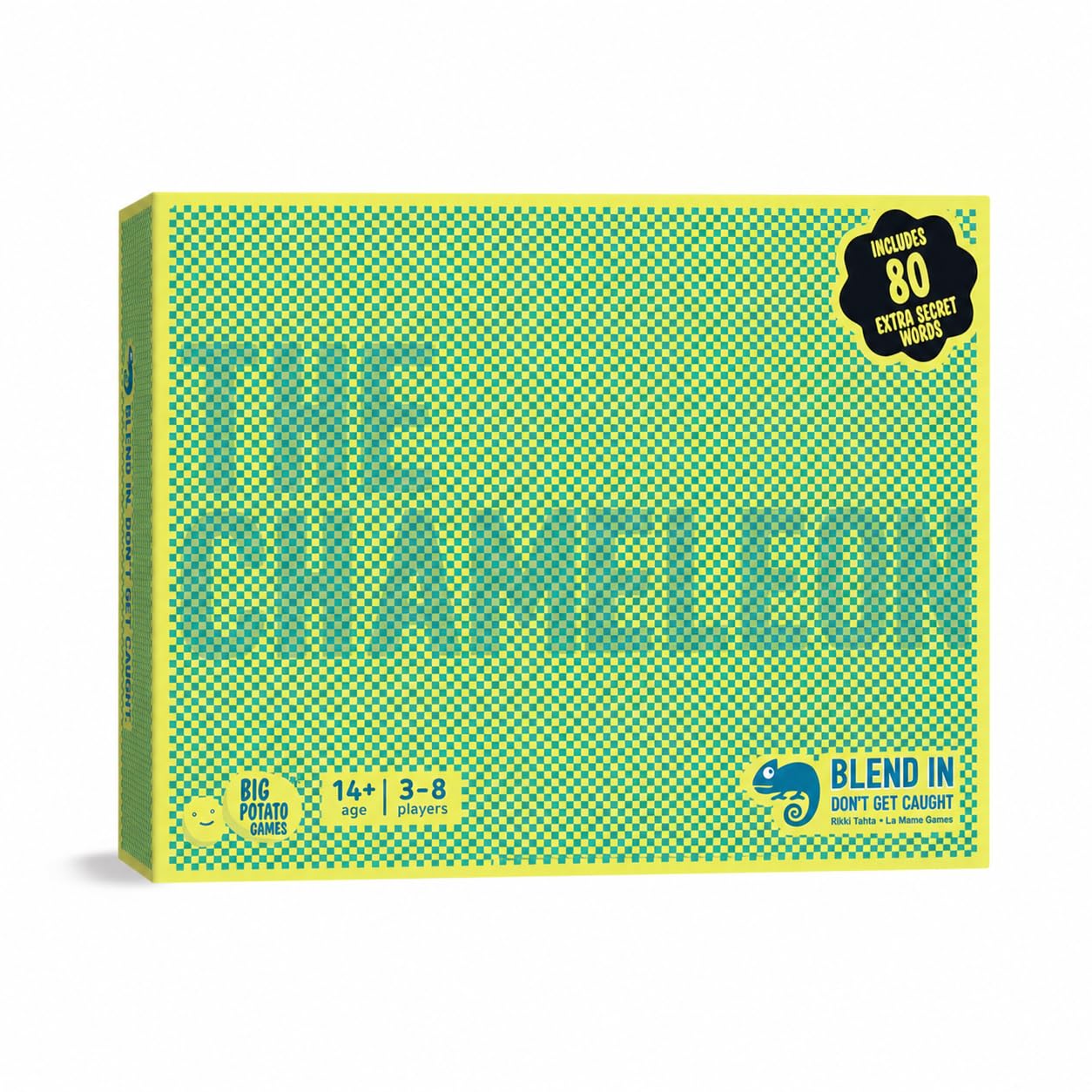
The Chameleon

The Chameleon

Teens and adults

Doodle Score 9.6/10
Check Price

Worth Noting

  • Not suitable for younger children
Ages
12 and up
Topics
800 topics
Players
3 to 8
Play Time
15 minutes
Read the full review

One word can turn you into the suspect in The Chameleon. Everyone gets a secret word except one player; each person says a single clue, and the table votes on who sounds like they are bluffing. Get too specific and the Chameleon learns the word; get too vague and you look guilty.

The twist we appreciate most is that the Chameleon still gets a chance to guess the word after being caught. That keeps the bluff alive after the vote and gives the imposter a second route to the win. The result is a game that stays tense without needing a long rules explanation.

With 800 topics and 15-minute rounds, The Chameleon has more staying power than a typical party bluffing game. It is also the most social pick here: the game is less about the cards than about watching how each person chooses a clue. We recommend it for families with teens who enjoy a little deception and for adult tables that like a fast social game.

Bottom line: The Chameleon is the pick for families with teens: a fast bluffing game that asks for one word per turn and rewards a good poker face.

#6

Jenga

Jenga

No-reading groups

Doodle Score 9.6/10
Check Price

Worth Noting

  • Resetting the tower takes longer than dealing cards
Ages
6 and up
Blocks
54 wood blocks
Players
1 or more
Storage
Carry tube with sleeve
Read the full review

No reading, no scorepad, no secret word: Jenga asks only that you pull a block and place it on top without bringing the tower down. That is why it works with a six-year-old and a grandparent at the same table, and why it still gets pulled out after the novelty of newer games wears off.

The 54 wooden blocks come in a tube with a stacking sleeve, which makes storage and transport easier than a loose cardboard box. We like the tube for keeping the set together between game nights, and the handle makes it easy to carry to a backyard or a friend's house. The stacking sleeve also gives the first setup a repeatable start.

What we enjoy most is the shift in the room as the tower rises. A game that starts as a simple dexterity test becomes a group negotiation about which block is safe to touch. It is not a deep strategy game and it does not pretend to be. It is a shared piece of tension, and that is enough. When the tower falls, the round ends with a laugh and a pile to rebuild, which is the whole bargain.

Bottom line: Jenga is the family party game we choose when nobody wants to read rules: a wooden tower that turns a quiet table into a room full of held breath.

#7

Tapple

Tapple

Fast word rounds

Doodle Score 9.4/10
Check Price

Worth Noting

  • Timer button can stick
Ages
8 and up
Players
2 to 8
Play Time
15 minutes
Categories
144 categories
Read the full review

The Tapple wheel is a simple idea with a loud ticking clock at its center. A category card goes in, a letter is pressed, and players shout a word that fits before hitting the timer for the next person. The pressure is the point.

The 144 categories range from food to things at a party, and the portable wheel stores its own cards. We like that it needs no writing and no scorepad; a child who can read the category can play alongside adults, and the built-in timer keeps turns from turning into speeches.

Where Tapple earns its place is in the gap between a full game and a filler. A round can last 15 minutes, and you can house-rule the categories if your family has a favorite topic. We found it especially good with a wide age spread because the clock levels the playing field; a quick-thinking eight-year-old can beat an adult who freezes.

Tapple is not a game for a table that wants to take its time. It is loud, fast, and a little chaotic, and that is why it works as a party warm-up rather than the main event. If your family likes word games but hates being put on the spot, Blank Slate is the gentler choice.

Bottom line: Tapple is the fast word game we bring out when the group needs a jolt: pick a category, beat the timer, and pass the wheel before it catches you.

#8

Exploding Kittens Party Pack

Exploding Kittens Party Pack

Teen card nights

Doodle Score 9.4/10
Check Price

Worth Noting

  • Humor is too edgy for some families
  • Takes a round or two to learn
Ages
7 and up
Players
2 to 10
Contents
120 cards
Play Time
15 minutes
Read the full review

Exploding Kittens is built on a simple threat: draw a kitten and you are out unless you have a defuse card. The Party Pack adds the Imploding Kittens expansion and enough cards for ten players, so it turns a small card game into a full-table event.

The loop is straightforward: play cards, avoid the kitten, and try to make someone else draw it. The illustrations are deliberately ridiculous, which gives the table something to react to even between turns. The 120-card deck fits the larger group and still packs into a small box.

We like it most with teenagers and older elementary kids who enjoy a bit of backstabbing. The Party Pack takes up little shelf space, and the 15-minute rounds make it easy to fit in before dinner. It is a game that asks players to enjoy a little chaos, not one that rewards careful planning.

It earns its place here because it does something the other card games do not: it turns a big table into a chain of small betrayals. If your group already likes take-that card games, the ten-player capacity makes it an easy yes.

Bottom line: Exploding Kittens Party Pack is the pick for older kids and teens who like a little chaos: fast rounds, absurd art, and room for ten at the table.

How We Tested 16 Family Party Games

We started by pulling together a shortlist from bestseller lists, retailer reviews, and the games families kept recommending in group chats and at school pickup. We filtered out anything that required an app, needed more than eight players to work, or looked likely to put younger kids in an awkward spot. That left 16 games, which we played over four months.

Testing happened where these games actually live: Friday pizza nights with kids ages 6 to 13, a rainy school break when everyone was stuck inside, and a Sunday lunch with grandparents at the table. We timed how long it took a first-time player to read the rules and teach the group, and noted whether we were still flipping pages after five minutes. We watched turn length, how often someone reached for a phone, and whether the laughter came from the game itself or from people making jokes about the game. We also paid attention to whether players had real choices to make, or were just drawing a card and reading it aloud.

Family-friendly meant reading every card and prompt before kids saw them; anything with thinly veiled innuendo or a joke that only worked for adults got cut. We handed the decks to a 7-year-old to hold, shuffle, and pick up off the table, noting when small cards slipped from fingers or a larger deck felt clumsy to manage. After each session, we checked for bent corners, scuffed cards, and components that felt flimsy—then packed everything back into the box to see if it would survive the trip to a friend's house.

How to Choose Family Party Games

Start with the youngest player

Age ranges on the box are a useful floor, not a guarantee that every child at the table will enjoy the same game. A game that depends on writing, like Blank Slate, leaves pre-writers on the sideline; a bluffing game like The Chameleon needs the kind of abstract clue-making that usually arrives later. We look for a game where the youngest player can take a real turn, not just watch. If the group spans eight to adult, Jenga and Taco Cat are safer starting points than a word game that requires writing.

Match the player count to the table

Player counts are the first practical filter for a reason: a game that seats eight can still feel crowded if everyone needs to see one small pile. Taco Cat, SKYJO, and Tapple all top out at eight, while UNO stretches to ten. For a family of four, a game that starts at three can be fine, but check the minimum; The Chameleon needs at least three, and Blank Slate does too. If your group regularly grows, choose the wider range and split into teams when the table gets tight.

Choose energy or conversation

Some family nights want a room that gets loud; others want a table that can hear itself think. Taco Cat is the clearest choice for the first kind: the slap race creates instant noise and a little physical comedy. SKYJO, Blank Slate, and The Chameleon are better for the second, because the pleasure is in the clue, the match, or the bluff rather than the pile. Neither style is better, but matching it to the mood prevents the common mistake of buying a loud game for a quiet family or a quiet game for a birthday party.

Plan for the reset, not just the rules

The rules explain the first ten minutes; storage and cleanup decide whether the game comes out again. A metal tin, a carry tube, or a wheel that stores its own cards makes a real difference when the game lives in a closet. Word games need working dry-erase markers, and timer games need a battery check before the table sits down. We pay attention to how a game resets because the best family game is the one that is easy to start a second time.

Frequently Asked Questions

Final Verdict

Start with Taco Cat Goat Cheese Pizza. It is the game that most reliably turns a mixed-age family table into a laughing, slapping group in one practice round, and its small box makes it easy to keep on hand. If your family prefers a calmer table, choose SKYJO; if the youngest players are not ready for a slap game, choose Jenga.