Games & Puzzles

Best Handheld Games for Kids of 2026

The moment a handheld game proves itself is rarely the moment it comes out of the box. It's the 40-minute wait at the dentist, the rainy Saturday when the tablet is charging, the third hour of a car ride when the back seat gets quiet. A good one turns that dead time into something kids choose on purpose — and it has to be sturdy enough to live in a backpack without falling apart.

Over the past four months, my team and I put 14 handheld games in front of a small panel of kids ages 5 to 10, and we watched which ones got replayed without a prompt. Gameplay and fun were the easy part to spot; quality showed up after the first drop, and difficulty mattered more than any box copy. We also weighed whether each one felt like a gift worth handing over, whether the volume had a low setting parents could live with, and whether the value held up after the novelty wore off. Screen size and sound get the attention, but in small hands the controls are what make or break the whole thing — and the picks below are the ones that held up.

#1

Bop It!

Bop It!

Active family play

Doodle Score 9.6/10
Check Price

Worth Noting

  • Some units stop working soon after arrival
Age Range
8 years and up
Batteries
2 AAA required (included)
Game Modes
Solo and pass-it
Form Factor
Handheld
Read the full review

Bop it, twist it, pull it — the commands are the whole trick, and they turn a small plastic gadget into a group activity. The pass-it mode is what makes it more than a solo reflex test: a child can play alone, then hand it to a friend or parent without a screen or a rulebook. The 8-and-up label is sensible; younger kids can join, but the pace is the challenge.

Portability is the other reason it stays in the bag. It is light, battery-powered, and shaped to hold in two hands, so it works in a car, a waiting room, or a rainy afternoon at home. We were also struck by how quickly the game explains itself; there is no setup beyond batteries. The plastic shell feels lighter than the old-school version, so it is a toy to keep in a case rather than toss loose in a backpack.

The game's weak spot is reliability. A number of units stop working soon after arrival, so buy from a seller with an easy return option. Test it with a fresh set of batteries on day one and keep the receipt. If it works, the mix of solo and pass-it play makes it the best default here for families who want one handheld that handles a car trip and a living-room challenge. For a quieter, puzzle-first kid, Flipslide is the better fit.

Bottom line: Bop It is our top pick for kids because it works solo or as a pass-it party game and is simple enough to start in seconds.
#2

Simon Handheld Game

Simon Handheld Game

Classic memory

Doodle Score 9.4/10
Check Price

Worth Noting

  • Volume control is awkward for quiet rooms
Players
1
Gameplay
Watch, remember, repeat
Age Range
8 years and up
Dimensions
10.51 x 10.51 x 1.61 inches
Read the full review

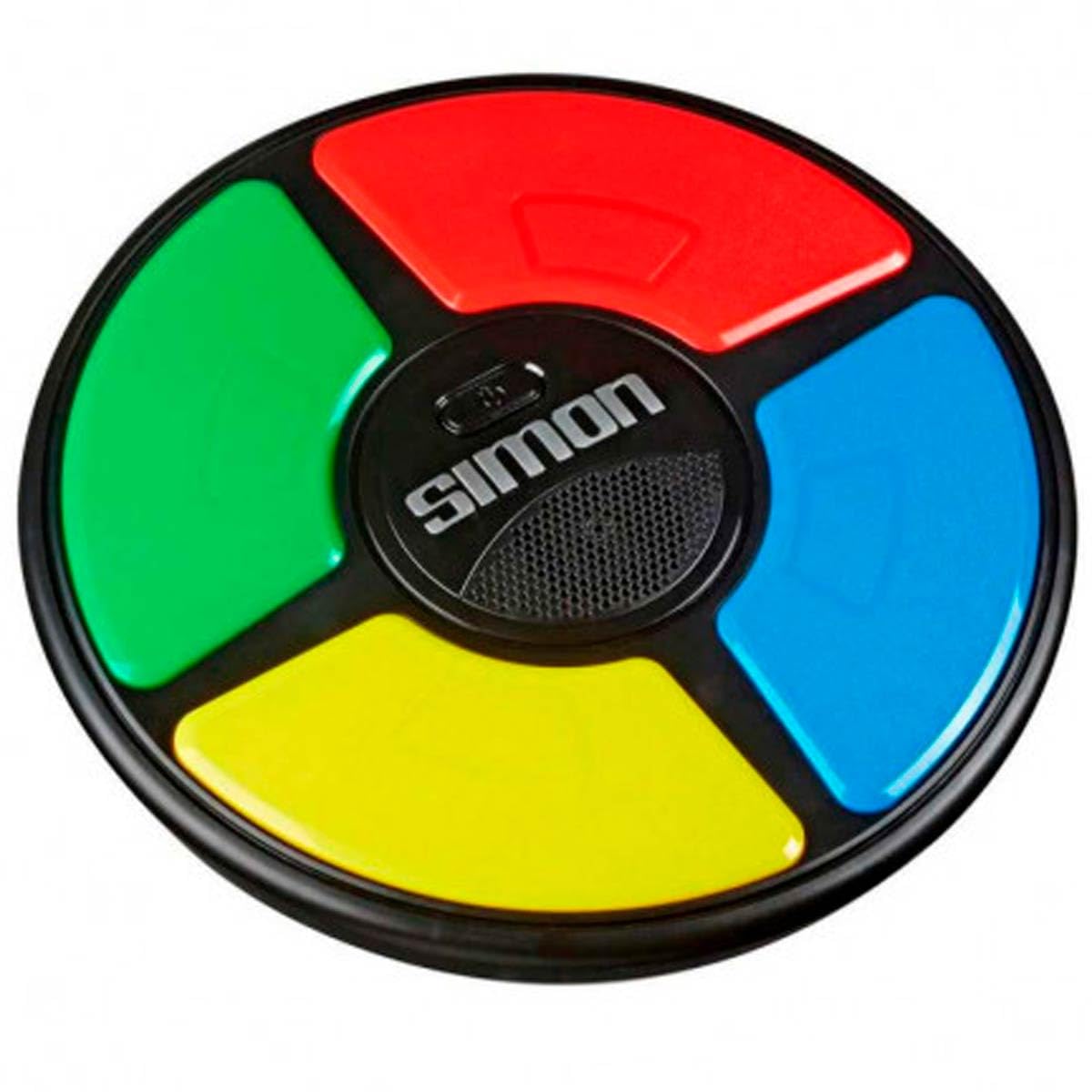
Watch, remember, repeat: the loop is still the whole appeal of Simon. The colored pads light up in a sequence, the sequence gets longer and faster, and the solo high-score chase is the part we kept coming back to.

It is also a good family game because the rules need no explanation. A child can play against a parent, or a group can take turns seeing who lasts longest. The lights and sounds are clear, and the four-pad layout is easy to read across a table. The unit is bigger than a pocket toy — about the size of a small plate — so it is a bag game rather than something a kid carries in a jacket.

That size is the main caveat. The footprint makes it less travel-friendly than Flipslide or BrainBolt, and the plastic build has a hollow feel that does not match the nostalgia. We also like that it needs no setup beyond batteries, so it is ready when the family is. Still, as a pure memory challenge for 8-year-olds and up, it is the classic here, and the one we reach for when the goal is a shared challenge rather than solo entertainment.

Bottom line: Simon remains the classic memory challenge we choose for family turn-taking, provided you have bag space for its larger body.

#3

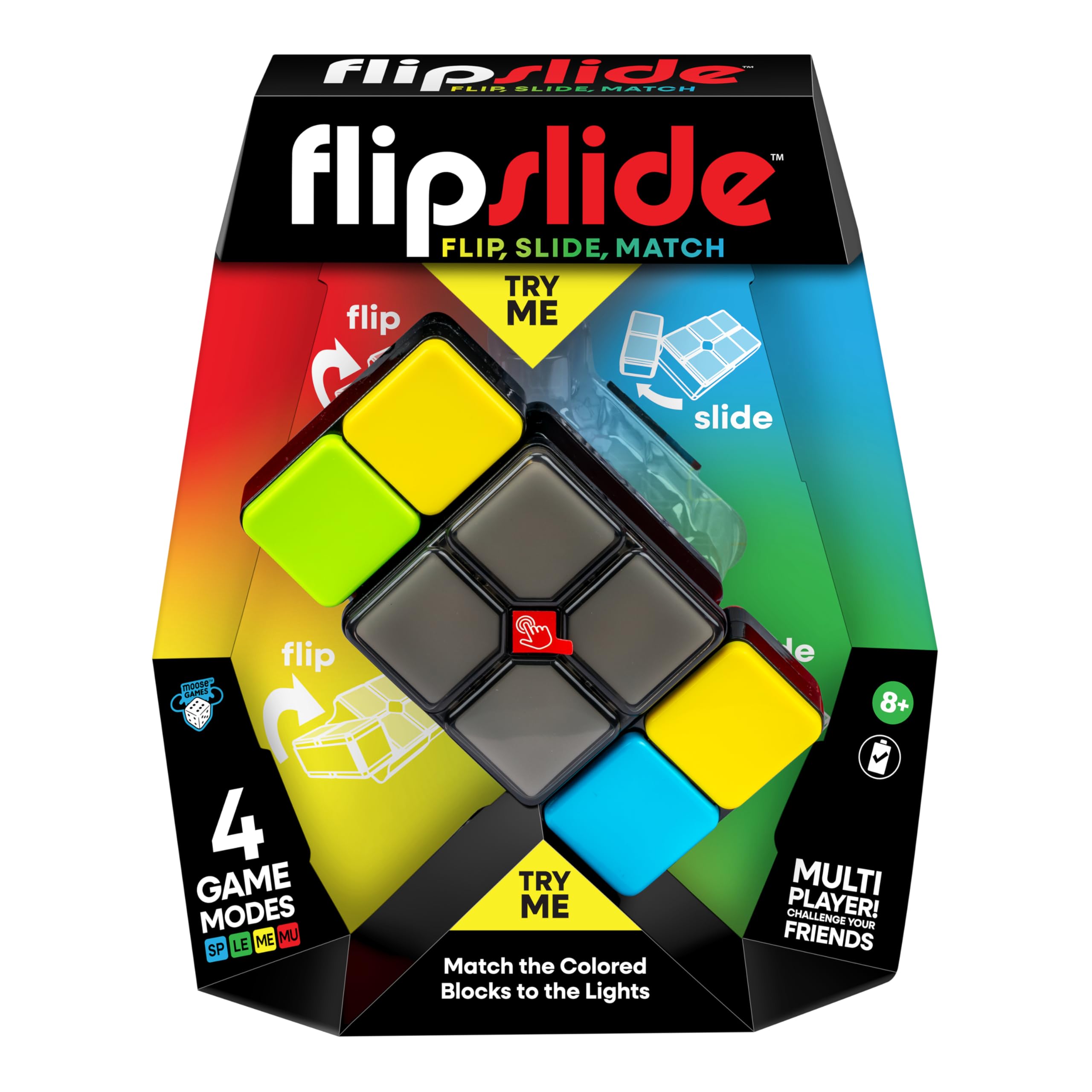
Flipslide

Flipslide

Solo travel

Doodle Score 9.2/10
Check Price

Worth Noting

  • No mute control for quiet settings
  • Some units stop responding
Players
Up to 4
Age Range
8 to 15 years
Batteries
2 LR44 included
Game Modes
Speed, Multiplayer, Level, Memory
Read the full review

A four-mode puzzle that fits in a glove box is a useful thing to have on a long drive, and Flipslide is the one we reach for. Its flip-and-slide game is part Simon, part Rubik's Cube: you watch the lights, flip to find the color, and slide to match. Speed, Multiplayer, Level, and Memory modes give it more staying power than a one-trick travel toy, and the level mode lets a kid work up to harder patterns without a screen.

What surprised us was how small it is. It lives in a glove box or a jacket pocket, and the buttons have enough resistance to feel deliberate. The solo mode is the main event, because that is where handhelds earn their keep; the multiplayer mode is a bonus for siblings. The plastic is light, so it is not the toy to leave at the bottom of a bag with keys.

The trade-off is the learning curve. Difficulty ramps nicely, but younger kids may need help with the color-matching at first, and the fast modes can feel punishing until they get the hang of it. If you want a calmer puzzle, Super Slide is the quieter choice; if you want a fast, budget travel game that keeps a kid busy, Flipslide is the one.

Bottom line: For travel, Flipslide is the one we pack: four fast puzzle modes in a pocketable unit, with no mute button for quiet places.

#4

LeapFrog Game and Go

LeapFrog Game and Go

Preschoolers

Doodle Score 9.2/10
Check Price

Worth Noting

Age Range
24 months and up
Batteries
3 AAA included (demo)
Form Factor
Handheld
Learning Focus
Numbers, letters, shapes
Read the full review

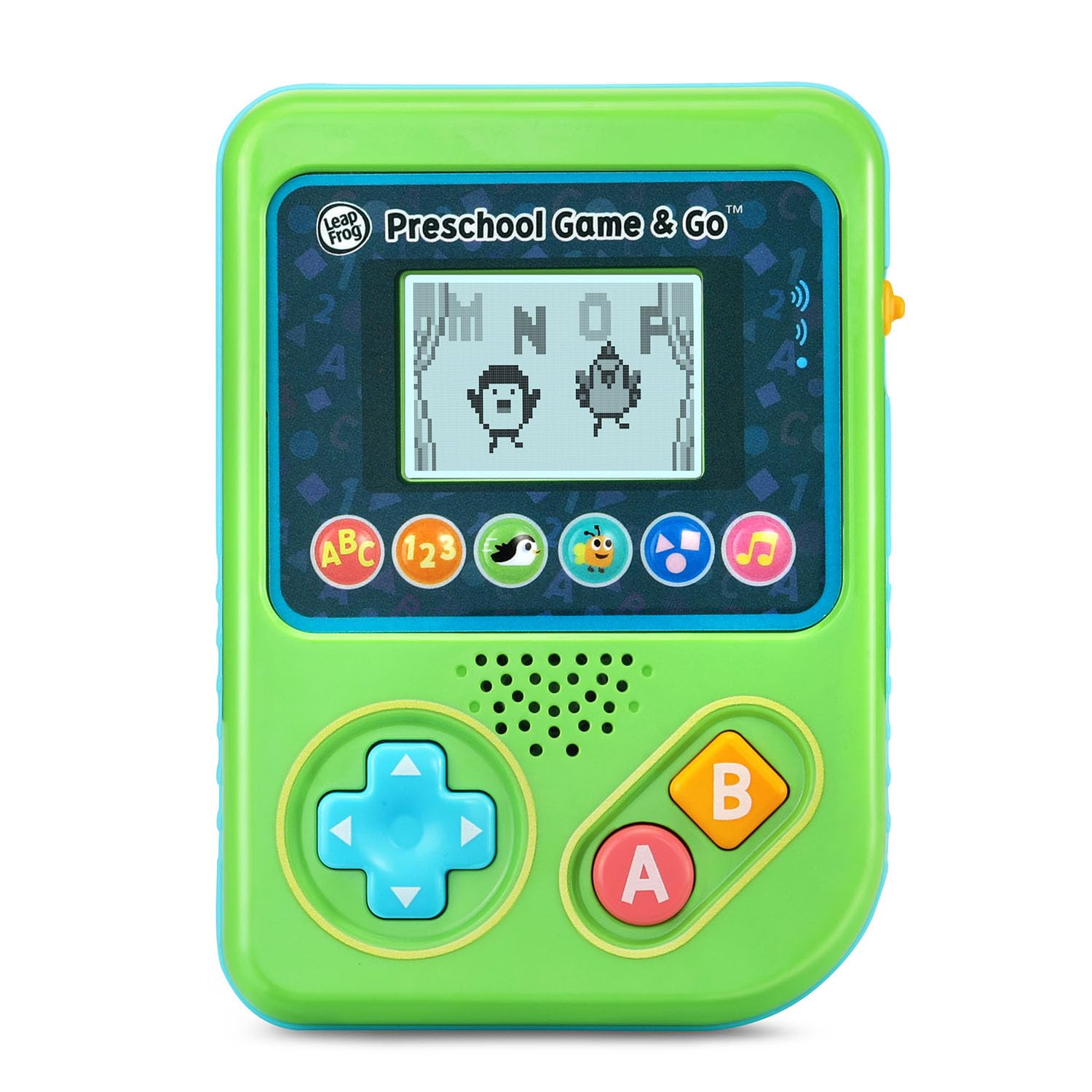
Age two is early for a handheld, but that is exactly where the LeapFrog Game and Go starts. Its games are built around letters, numbers, shapes, and music, and the controls are simple enough that a preschooler can work them without a parent hovering. We liked that it looks like a little handheld console but does not need a library of cartridges or a Wi-Fi connection; the games are already inside.

What we appreciated is how the learning is woven into simple actions: pop bubbles to hear letter sounds, collect coins to count, slide and jump to gather letters. That is a better fit for a 3- or 4-year-old than a memory game with a timer, because the pace is gentle and the feedback is immediate. The 4.1 by 5.6 inch body is sized for small hands, and the two volume settings help for car rides.

The ceiling is low. By kindergarten, many kids will want more challenge, and the games are basic compared with a tablet. But that is the point: this is a first handheld that keeps play contained and understandable. If you need one device for a 2- to 4-year-old, this is the one we recommend; for an older kid, Bop It or Flipslide will hold attention longer.

Bottom line: The LeapFrog Game and Go is the first handheld we hand to a 2- to 4-year-old, thanks to simple learning games and small-hand controls.

#5

GiiKER Super Slide

GiiKER Super Slide

Premium brain teaser

Doodle Score 9.2/10
Check Price

Worth Noting

  • Pieces can shift if carried loose in a bag
Modes
2
Age Range
6 years and up
Challenges
500+
Form Factor
Handheld
Read the full review

A premium sliding puzzle needs to earn its keep, and the GiiKER Super Slide does it with 500+ challenges and a board that clicks through each move. The goal is to slide the red block into the detection zone, but the path is the puzzle: two modes, progressive levels, and a satisfying automatic check when you solve it. The magnetic pieces stay in their tracks during play, which keeps the puzzle from falling apart mid-solve.

The progression won us over. Early levels teach the movement, and later ones demand real planning; that makes it a better long-term buy than a one-and-done brain teaser. The acrylic board feels solid in hand, and the automatic detection gives a satisfying end to each solve. It is a solo game, so it will not settle a sibling argument, but it is the one we pick when we want quiet, screen-free focus.

The price is the hurdle. This costs more than most handhelds here, so it is a considered purchase rather than an impulse add. For a patient 8- or 9-year-old who enjoys logic puzzles, it earns the premium; for a younger kid or a busy car toy, Flipslide is the safer spend. Keep it in the box or a pouch, and the sliding action stays smooth.

Bottom line: We think Super Slide is worth the premium for puzzle-loving kids who want 500+ screen-free challenges that grow harder.

#6

GiiKER Super Decoder

GiiKER Super Decoder

Compact code-breaking

Doodle Score 9.2/10
Check Price

Worth Noting

  • Color clues can be hard to distinguish
Levels
600
Players
1-2
Age Range
5 to 12 years
Mute Mode
Yes
Read the full review

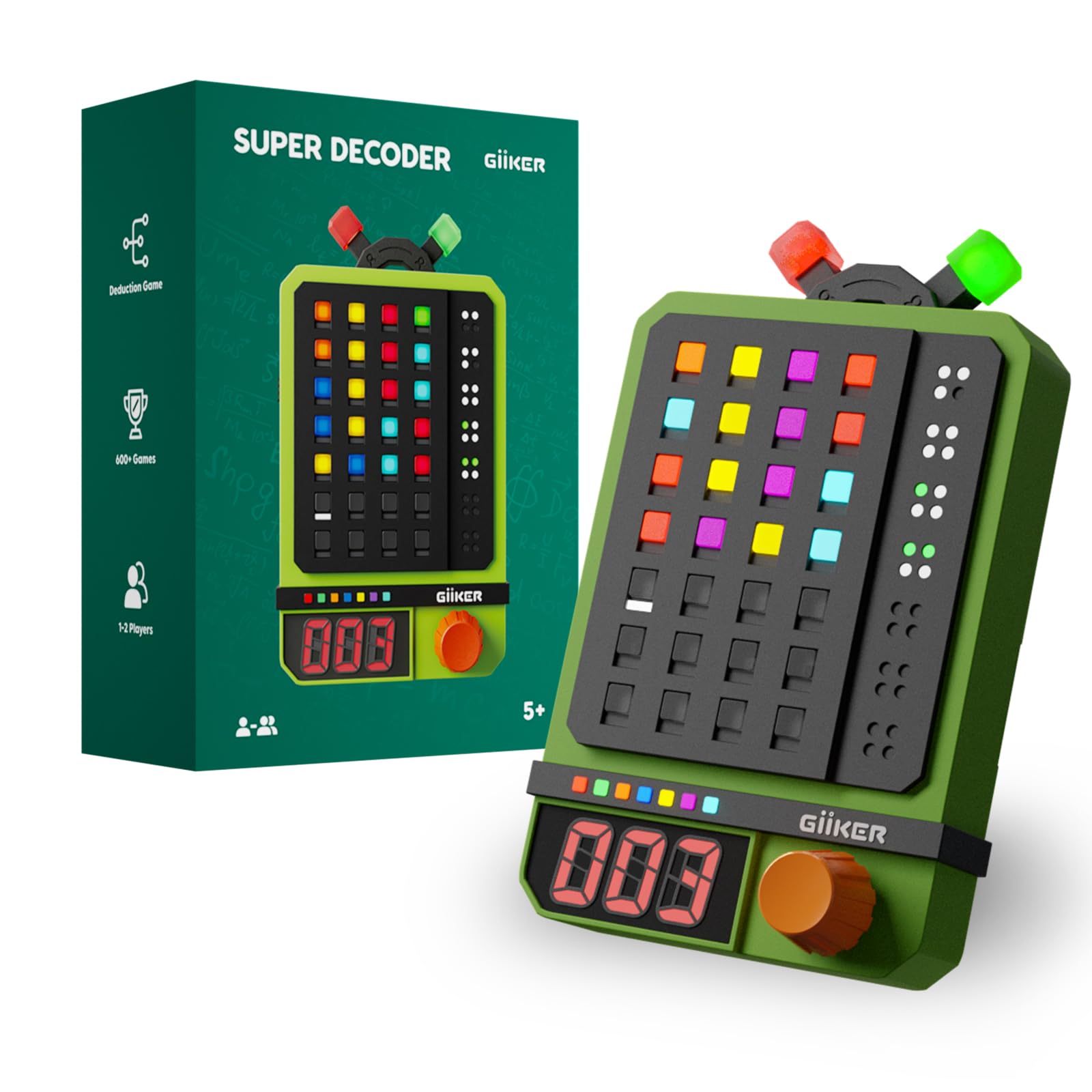
Cracking a four-color code in seven moves or fewer is the hook, and Super Decoder shrinks that puzzle into a pocketable unit. You read the clues, twist and press the control to enter a color guess, and work toward the secret sequence. The 600 levels are split into 100 easy and 500 advanced, so there is a long runway for a kid who gets hooked.

We found the size the best part. It is smaller than a phone, easy to hold in two hands, and self-contained, which makes it a strong choice for a car trip or a restaurant wait. The mute mode is a real plus for quiet settings, and the two-player mode lets one person set a code for the other.

The logic is more abstract than a sliding puzzle or a memory game. Younger kids may need a parent to explain the clue system, and the screen is small, so the feedback takes a little getting used to. That is the boundary: it rewards patience more than reflexes.

At the premium end of this group, it is a considered purchase rather than an impulse add. For a 7- or 8-year-old who likes deduction and does not need flashing lights, it is a smart, quiet travel game. For a first handheld, LeapFrog or Flipslide is the easier entry point.

Bottom line: We like Super Decoder for puzzle-minded kids who want a quiet, compact deduction game, though the color clues will not work for everyone.

#7

Arcade Classics Pac-Man

Arcade Classics Pac-Man

Retro arcade

Doodle Score 9.0/10
Check Price

Worth Noting

  • Joystick can feel stiff at first
  • Cabinet is bulky for a pocket
Screen
Full color
Players
1
Age Range
8 to 15 years
Batteries
3 AA included
Read the full review

A miniature arcade cabinet with a full-color screen is an easy thing for a kid to pick up, and the Pac-Man unit looks the part. The molded cabinet, joystick, and classic maze all sell the retro illusion, and the dots, ghosts, and power-ups are all there. For a kid who has seen Pac-Man in a retro arcade or a parent's phone, it is an immediate hook.

The controls are simple — a joystick and a couple of buttons — and the full-color screen makes the maze easy to follow. We enjoyed the optional sound for a quiet house, and the cabinet shape is comfortable for two-handed play. A child used to a touchscreen will need a few rounds to adapt.

It is a nostalgia piece more than an all-purpose travel game. The screen and stick are the parts to watch over time, but for a retro-minded kid or a family that wants a shared slice of arcade history, it is a fun also-consider. It runs on three AA batteries, so pack spares for a long trip, and do not expect it to replace a dedicated handheld for long car rides.

Bottom line: We recommend the Pac-Man mini arcade for retro-minded kids, but its stiff joystick and bulky cabinet keep it off the everyday-travel list.

#8

Educational Insights BrainBolt

Educational Insights BrainBolt

Memory practice

Doodle Score 8.8/10
Check Price

Worth Noting

  • Build feels less substantial than Simon's
Players
2
Age Range
7 years and up
Batteries
3 AAA required
Game Type
Memory
Read the full review

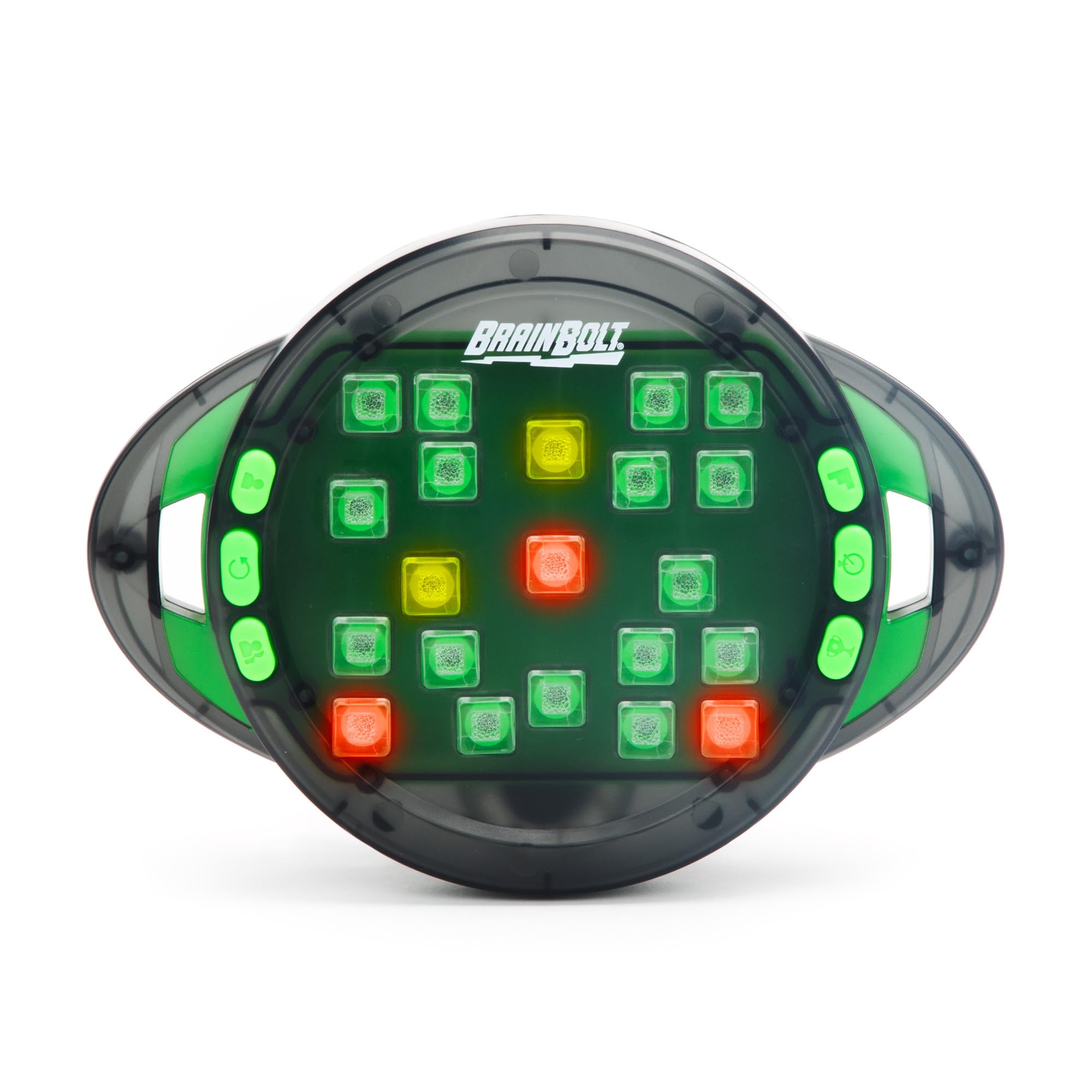
A memory game does not need a big body, and BrainBolt proves it with a compact LED grid that fits in a backpack. The loop is familiar: watch the sequence, repeat it, and try to beat the timer. The two-player mode adds a little family play, but the solo challenge is the main event.

The challenge is real. The sequences come quickly, and the game does not coddle a kid who loses focus; that is good for a child who likes to be pushed, and less good for one who gets frustrated. The buttons are responsive, and the LED display is easy to read in a car or at a table.

We found the portability the main draw. It is light enough to toss in a backpack and does not need a screen, so it is a decent alternative to a tablet for short waits. The game is simple to understand, and the controls stay out of the way.

It does one thing well, but it does not feel as versatile as Bop It. For a family that wants a compact memory trainer for a car ride, it is a sensible also-consider; for a main gift, the larger Simon is the safer choice.

Bottom line: We see BrainBolt as a compact memory trainer for short trips, though it is a supporting pick rather than a main gift.

How We Tested the Best Handheld Games for Kids

We started by pulling together a shortlist from parent forums, retailer best-sellers, and the toys that survived our own kids' toy bins, then filtered out anything with sharp edges, vague age grading, or a price that felt hard to justify. That left 14 handheld games, which we ran through four months of school runs, waiting rooms, rainy weekends, and a couple of long road trips.

Each unit went to a rotating panel of kids ages 5 to 10, and we logged the same things every week: whether a kid picked it up without being told, how long it took to learn the first level, and whether they asked for it again after a sibling had a turn. We also checked what came in the box — batteries included or not — and whether it felt substantial enough to hand over as a birthday gift. A simple tally of how many weeks each game stayed in rotation before it got buried under the seat became our value read.

Quality testing was mostly about real life: we dropped each one from kid height onto a wood floor, wiped sticky fingerprints off the screen, and checked whether battery doors and magnetic closures stayed put after a shake. We ran every mode to see whether extra features added play or just clutter, and we watched how small hands reached the buttons and whether the controls responded without a hard press. Screen size got judged by whether a kid could see the whole play area without holding the unit at arm's length, and sound got judged in a quiet room and a moving car — we noted tinny speakers, crackle at high volume, and whether there was a headphone jack or a mute switch.

How to Choose Handheld Games for Kids

Match the game to the kind of play

Some kids want to move: Bop It turns a handheld into a reaction game with commands to bop, twist, and pull. Others want a puzzle to solve quietly, which is where Flipslide and Super Slide fit. Memory and reflex games such as Simon and BrainBolt suit a child who likes beating a score, while LeapFrog's preschool games are built around letters, numbers, and shapes. Pick one primary mode first. A game that tries to do everything often ends up doing none of it especially well.

Decide whether it is solo or social

A handheld that only works with a group is a poor fit for a car ride, and a solo puzzle can fall flat at family game night. We look for a clear solo mode first, then a pass-it or two-player option as a bonus. Bop It and Flipslide handle both; Simon and Super Slide are better for turn-taking or solo focus. If the main setting is a sibling trip, a multiplayer mode earns its keep. If it is a waiting room, solo play matters more.

Check the travel footprint

Handheld does not mean pocket-sized. Simon is roughly the size of a small plate, while Super Decoder is smaller than a phone; both are portable, but they suit different bags. Before you buy, picture where the game will live: a glove box, a backpack pocket, or a shelf at home. Button layout matters too. A compact puzzle with small controls can be harder for a young child than a larger unit with a clear grip. Measure the space you have, not just the screen.

Plan for batteries, sound, and build

Battery type and count vary across this group, and some units ship with demo batteries rather than a fresh set for regular use. Check the label before a trip and pack the right size. Sound is the other practical detail: Flipslide has no mute control, which makes it a poor seatmate in a quiet room, while Super Decoder includes a mute mode. Build quality matters most around buttons, joysticks, and battery doors. Test a new game on arrival, because an early fault is much easier to return than a slow decline.

Treat the age label as a starting point

Age ranges are useful for safety and for judging the pace, but they are not a promise that a child will click with the game. A 6-year-old who loves logic puzzles may take to Super Slide, while an 8-year-old who wants action may prefer Bop It. We look at reading demands, timer pressure, and how much help the game gives. A gentle preschool game can be outgrown in a year; a deeper puzzle can last longer. Match the challenge to the child, not just the number on the box.

Frequently Asked Questions

Final Verdict

If you want one handheld that works for a solo kid, a pair of siblings, and a family room, Bop It is the pick. It is the most flexible game here, and the pass-it mode gives it a social life that most handhelds lack.

For travel, Flipslide is the better pocket companion, while LeapFrog is the right first device for a preschooler. Simon remains the memory classic, and Super Slide is the premium choice for a patient puzzle kid. Start with the child's attention style, and the choice gets simple.