Games & Puzzles

Best Travel Games for Kids of 2026

The picture is good: a tray table, a deck of cards, a kid who forgets to ask how much longer. The reality is pieces rolling down the aisle, a rulebook nobody can parse with the seatbelt sign on, and a game that ends in six minutes or grinds on for forty. Travel games are won or lost on what the box never tells you — card size in small hands, bulk in a carry-on, whether a grown-up can teach it while the drink cart rolls past. The right one turns dead time into the best part of the trip.

I've dragged plenty of games through airports that never came out of the bag twice. Over four months, my family and I played through 14 travel games on gate seats, in the back of a car, and at one memorably slow restaurant table, and we kept reaching for the small, quick-to-teach ones that made the adults laugh too. Nobody warns you that the box is almost never the right container. The picks below are built for cramped seats, not a coffee table.

#1

UNO Card Game

UNO Card Game

Families, any age

Doodle Score 9.6/10
Check Price

Worth Noting

  • Cards run smaller than a standard UNO deck
Age
7 years and up
Players
2-10 players
Contents
112 cards in a metal tin
Packed Size
1.96 x 5.9 x 6.69 inches
Read the full review

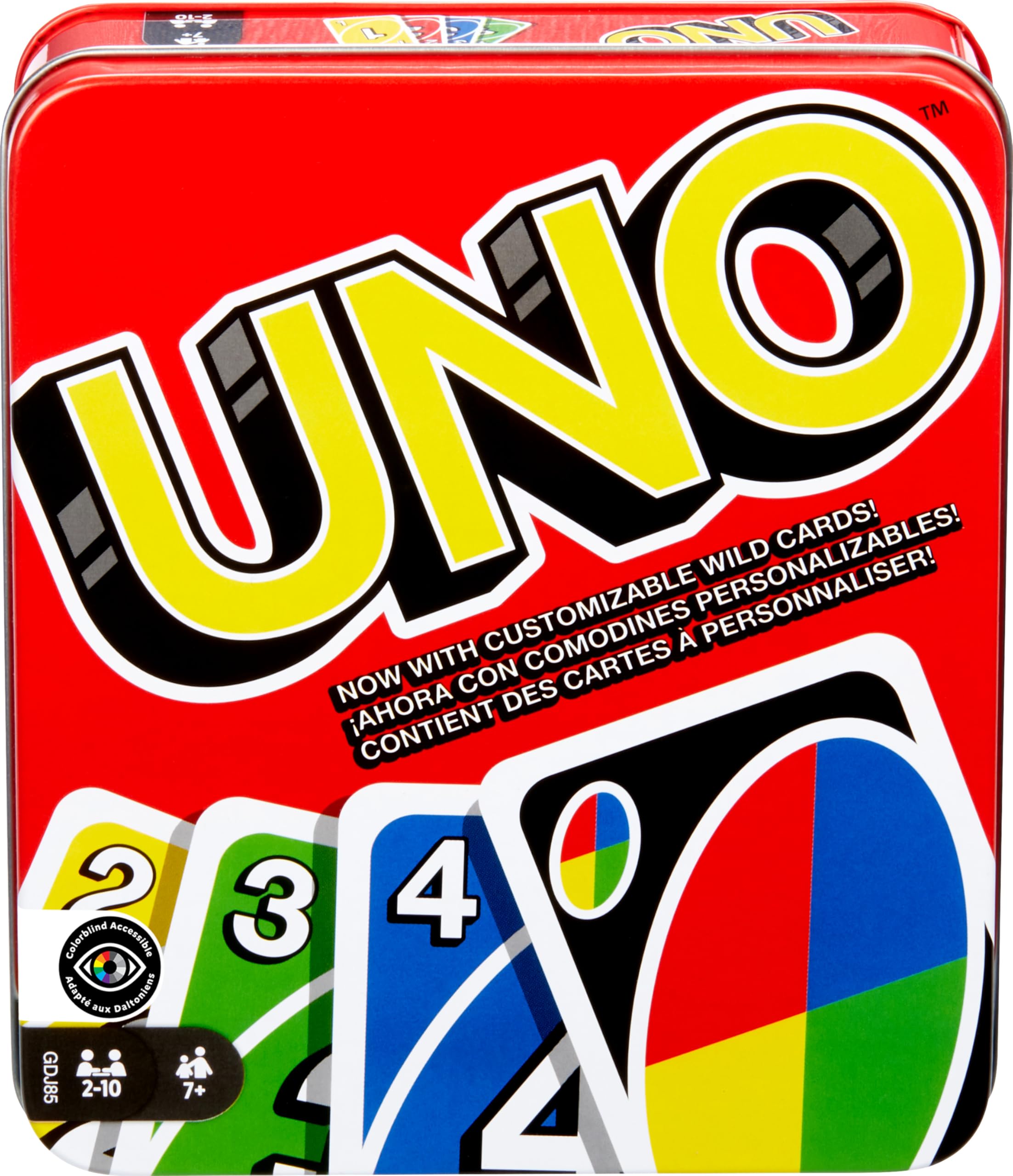
The tin does most of the travelling work here. Cards that ride loose in a bag come out dog-eared and gritty; this deck arrives squared up in a metal box that shrugs off being sat on. That box is a big part of why UNO is our default — it is the one game here you can bury under a suitcase and still play properly at the other end. The tin is roomier than 112 cards need, though, so treat it as a suitcase item rather than a jacket-pocket one.

Range is what wins it the top spot. Two players works, ten works, and there is no reading involved: you match a colour or a number, so a five-year-old can sit between an older sibling and a grandparent and hold their own. The cards also carry symbols alongside the colours, which means a colourblind player is not guessing which one is red. We paid close attention to that detail and it earns its place at a crowded table more than any action card does.

Three blank wilds are thrown in for house rules, and the appeal is that you write them in pencil. A rule that says draw three if you say the word banana is funny for one trip and insufferable by the next, so the ability to rub it out is the feature. Scoring to 500 gives you a long game for a rainy afternoon or a single hand between stops, and we have played it happily both ways.

Bottom line: The deck we pack first: a metal tin that survives the bottom of a bag, rules a five-year-old can follow without reading, and seats for up to ten players.

#2

Monopoly Deal Card Game

Monopoly Deal Card Game

Older kids

Doodle Score 9.6/10
Check Price

Worth Noting

  • Cards are text-heavy for younger players
Age
8 years and up
Players
2-5 players
Contents
110 cards and reference cards
Playing Time
15 minutes
Read the full review

Fifteen minutes is the whole pitch, and it holds. The board game's problem was never the idea — it was the two-hour commitment and a table you had to leave standing overnight. Deal reduces the whole thing to 110 cards and a race to three complete property sets, and it finishes while everyone still wants another hand.

We think it is the sharpest of these for older kids. Rent, change and the ten-million-dollar bill are all part of the fun, and an eight-year-old who has played once starts hoarding action cards for the right moment. Stealing a completed set off your sister is a genuine event at the table, and the round is short enough that nobody has to sit through a slow defeat the way they do with the board version.

Portability is good rather than great: it arrives in a cardboard box, so move the deck into a zip pouch before it goes in a bag and the cards stay square. It plays two to five, and it is noticeably better at three and up, when the steal and swap cards have more people to work on. Two works, but it is a thinner game.

Bottom line: For the eight-and-up crowd, this is the sharpest fifteen minutes in the guide: real decisions, real rivalry, and no board to set up or clear away.

#3

Taco Cat Goat Cheese Pizza

Taco Cat Goat Cheese Pizza

Big groups

Doodle Score 9.6/10
Check Price

Worth Noting

  • The slap pile can bend cards
Age
8 years and up
Weight
3.2 oz
Players
2-8 players
Playing Time
15 minutes
Read the full review

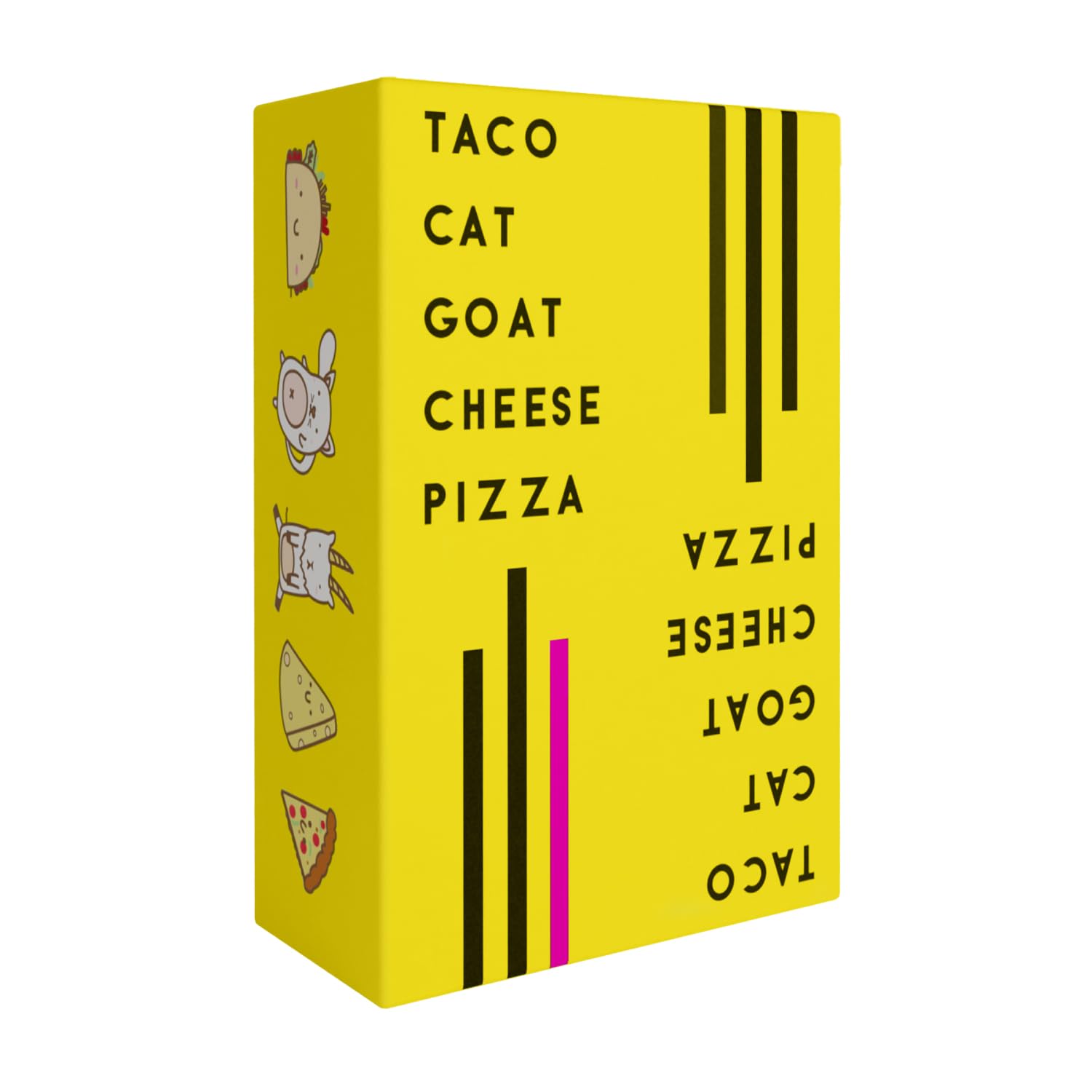
This is the loudest thing in the guide and that is the recommendation. Players chant the game's name one word at a time as they turn cards, and when the spoken word matches the picture, everyone slaps the pile. We watched a table go from what are the rules to shrieking in about ninety seconds, which is faster than anything else here manages.

It seats two to eight, it is one small deck in a box, and rounds are short enough that a losing streak lasts a minute. The slap rule is the whole game, and it is also the cost: hands collide and rings catch. Agree on a soft slap for the youngest player at the table and it keeps all of the fun without anyone going home with a sore knuckle.

What surprised us is how well it works across ages. A five-year-old playing with bent rules is still in the game, and a thirteen-year-old is not embarrassed to be playing it. Not one for a quiet row on a plane, but for a rental kitchen or a picnic table after dinner, it is the deck we hand over first.

Bottom line: The one to bring when the group is mixed and restless: a single small deck that has everyone shouting within a minute and laughing well past that.

#4

Regal Games 6 Card Game Set

Regal Games 6 Card Game Set

Ages 4 to 6

Doodle Score 9.6/10
Check Price

Worth Noting

  • Cards are thinner than a premium deck
Age
4 to 12 years
Players
2-6 players
Contents
6 classic card games
Card Size
Oversized for small hands
Read the full review

Most card games assume a child can hold a fan of cards and read what is printed on them. This set does not. The cards are oversized, the symbols are big and bright, and Go Fish, Old Maid, Crazy 8's, Slap Jack, War and Garbage Monster all work for a four-year-old with an adult sitting alongside.

Six decks in one tin is the practical part: a rainy week will not burn through them, and you can move from Old Maid to Slap Jack the moment attention runs out. But we appreciate that the classics are genuinely classic. A grandparent does not need to learn anything, which is not true of most of the games in this guide.

One thing to check: the packaging hedges with games may vary, so count the decks when the tin arrives rather than at a picnic table. Beyond that, this is the set for the under-six crowd — it gets played rather than admired, and it is the one we hand to a child who is not yet ready for the rest of this list.

Bottom line: The set for a household with a four-year-old: six classic decks, cards big enough for small hands, and enough variety to cover a whole trip.

#5

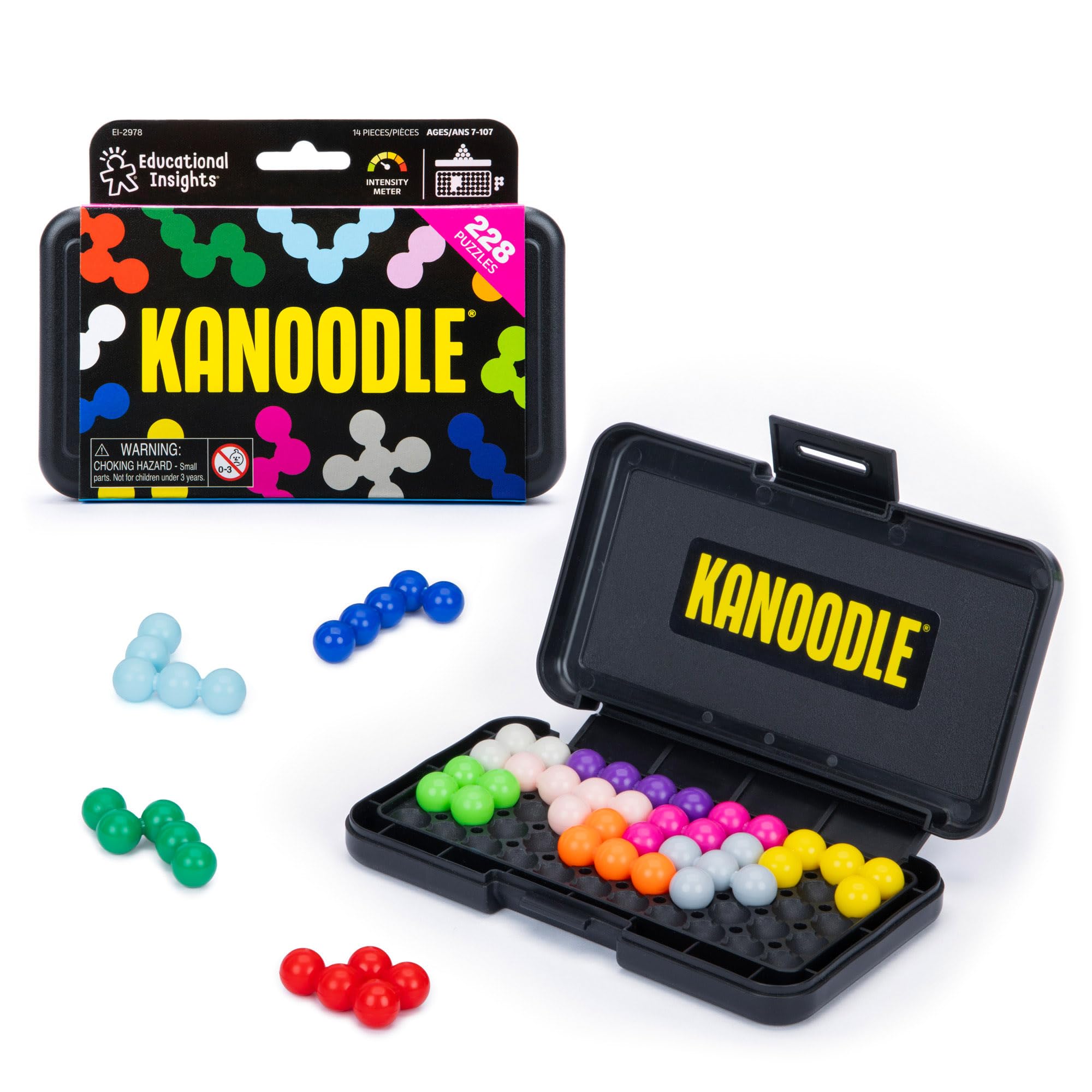
Educational Insights Kanoodle

Educational Insights Kanoodle

Solo play

Doodle Score 9.4/10
Check Price

Worth Noting

Age
7 years and up
Case
Doubles as the board
Players
1 player
Challenges
228 puzzles
Read the full review

Not every child wants to play with the group, and a car is a bad place to negotiate it. Kanoodle answers that directly: a solo puzzle with 228 challenges, twelve chunky pieces and a case roughly the size of a phone, with nobody needing to agree on rules first.

The case is the board. You fit the pieces into it to copy the shapes in the little guide, flat in 2D or built up in 3D, and everything goes back inside when you are done. That means nothing rolling under a seat and nothing to count before you leave a restaurant, which is more than most of this list can claim.

We rate it on the difficulty ladder. The opening puzzles are gentle enough that a six-year-old clears them alone, which builds the habit, and the back half is hard enough that an adult on a long flight keeps going. Our advice is to skip ahead if the early rounds feel easy — the book is a menu, not a course. It is the only thing here that needs no table, no second player and no adult watching.

Bottom line: The quiet-hour pick: 228 puzzles, twelve pieces and a case that doubles as the board, all small enough to disappear into a backpack.

#6

Guess Who? Card Game

Guess Who? Card Game

Two players

Doodle Score 9.4/10
Check Price

Worth Noting

  • Needs a table for two rows of twenty cards
Age
5 years and up
Players
2 players
Contents
40 face cards, 20 mystery cards
Packed Size
0.75 x 3.62 x 5.63 inches
Read the full review

The plastic frames were always the worst part of Guess Who? — they tip, the little windows stick, and the whole thing demands a table. The card version replaces all of it with forty face cards and twenty mystery cards. Each player lays out a row and asks yes-or-no questions until one character is left standing.

Five-year-olds can play it properly within a round or two. The questions are the game, and that is the part we did not expect to enjoy: a child who opens with is it a boy learns by the third round to ask something narrower. It is deduction that quietly teaches you to interrogate better, and it works as well with a grandparent as with a sibling.

For two people — a parent and one child, two siblings, a kid and a grandparent — this is the one we reach for, because UNO and Monopoly Deal both technically play with two but are better with a crowd. Short rounds, a small box, and nothing to lose down the side of a seat.

Bottom line: The best two-player pick here for the five-to-eight set: no board, no frames, and a round short enough that the loser gets a rematch.

#7

Moose Games Flipslide

Moose Games Flipslide

Car rides

Doodle Score 9.2/10
Check Price

Worth Noting

  • Units can stop responding
Age
8 to 15 years
Modes
4 game modes
Players
Up to 4 players
Batteries
Included
Read the full review

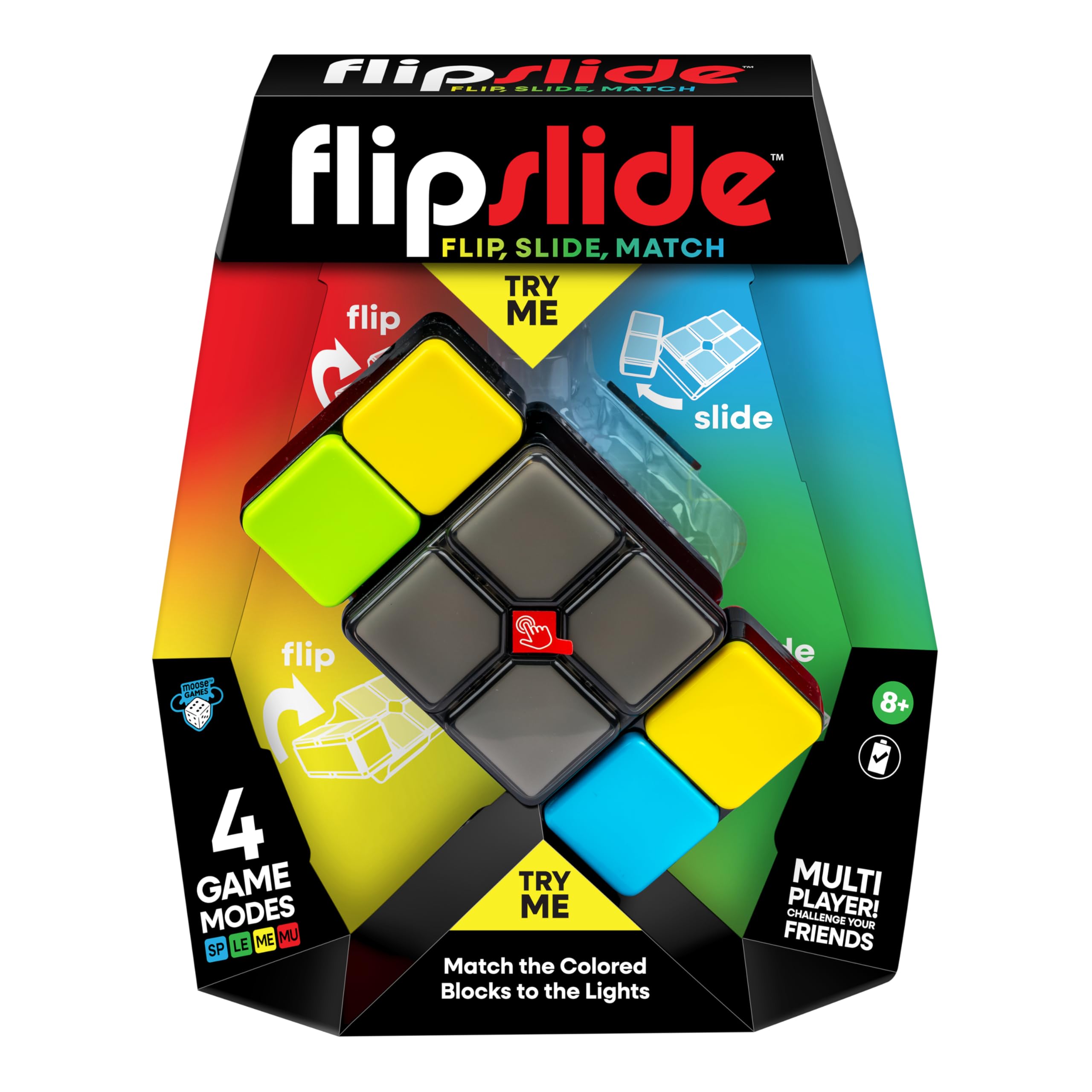
The first thing to know about Flipslide is that you cannot turn it down. There is no mute and no volume control, so a puzzle you hand a child in the back seat announces itself to everyone in the row. In a car with the radio on that is fine; on a plane it is a genuine problem.

The game itself is a cousin of Simon: lights around the edges, and you flip and slide the unit to match the colours before time runs out. Speed, Level, Memory and a hot-potato multiplayer mode are the four options, and Level is the one that earns its place — the difficulty ramps slowly enough to keep a nine-year-old coming back to beat their own score.

Batteries are included, which is a small mercy when it comes out of the box on a motorway. What we would watch — what we watched for — is the unit itself. It can go unresponsive, and when that happens the game is a paperweight, so put it through its paces in the first week while returning it is still easy.

Taken as a travel toy rather than a travel game, it is the one here that works when there is nobody to play with and nowhere to put a board. Buy it for the car and the waiting room, not for the flight.

Bottom line: A genuinely addictive light-and-reflex puzzle for the car, as long as you can live with a game that cannot be turned down.

How We Picked and Played Our Way Through 14 Travel Games

We started with roughly forty candidates — every travel-sized game we could find that claimed to fit in a backpack pocket — and cut anything bulky, anything with more than a few dozen pieces, and anything whose rules ran past a single page. That left 14 games, from straight card decks to magnetic and tile-based sets, which we played over four months in the places these things actually get used: a row of airport gate seats, the back seat of a car on a nine-hour drive, a restaurant booth during a very long wait for food, and a hotel room after lights-out.

Every game got the same treatment. I taught it to a 7-year-old and a 10-year-old, timed how long that took, then handed over the rules to see whether they could run it themselves; anything I had to keep re-explaining got marked down. We dealt the cards and watched small hands fan, shuffle, and pick them up off a tray table, measuring each deck against a kid's palm. We timed rounds and counted how much of a round was spent waiting for a turn, since a game that stalls is a game that ends in a screen. And we noted which jokes landed once and which got quoted at dinner three days later.

Bulk mattered as much as play. Each game went into a tote pocket and then into a carry-on to see how much room it truly ate, and we judged whether the box was worth keeping or whether the pieces needed a zip bag. We also watched functionality in the wild: whether a component did double duty, whether anything rolled under a seat, whether the game still worked after two pieces went missing. Then we kept playing the good ones at home long after the trips ended, because the real test is whether anyone asks for it again when there's nothing to wait for.

How to Choose Travel Games for Kids

Start With Who Is Actually Travelling

Player count is the first filter, and it is the one shoppers get wrong most often. A game listed for two to eight players is usually a group game that tolerates two; a game built for exactly two is the better buy when your trip is one adult and one child. For a family of four, look for something that plays well at three and up, because that is the number you have when one child loses interest halfway through.

Solo options are not a failure of the family game. A one-player puzzle buys the adults twenty quiet minutes, and it is the only thing in the bag that works when nobody agrees on anything.

The Container Matters More Than the Box Art

Cards in a cardboard box arrive bent; cards in a tin or a hard case usually do not. Look at what closes the game, not just what is inside it. A tin is the single most useful travel feature in this category, and a case that does not latch is worse than no case at all, because you pack it anyway and find the pieces loose in your bag two hours later.

If the game comes in cardboard, plan to move it into a zip pouch before you leave. It takes a minute and it doubles the life of the deck.

Work Out Your Flat Surface Before You Pack

Three surfaces matter: a lap, an airplane tray table, and a hotel table. A game that lays out a row of cards in front of each player needs a table and will not work on a lap. A deck game needs room for a discard pile and two hands of cards, which a tray table can just about give you.

Puzzles need nothing at all, which makes them the safest pick for a flight. Match the game to your worst surface, not your best one.

Reading Age Is Not the Same as Age Rating

The number on the box is the manufacturer's minimum, not a promise your child will enjoy it. What actually decides whether a game gets played is whether it needs reading: UNO can be played by a five-year-old who cannot read a word, while Monopoly Deal's cards are all text and land better at eight.

If you are travelling with a pre-reader and an older child, pack one of each rather than hunting for a single game that covers both.

Batteries, Volume and the Rest of the Cabin

An electronic game is only as good as its off switch. Anything without a volume control or a mute will be heard by everyone around you, and a handheld that switches itself on inside a bag is worse than one that stays home. Check whether batteries are included; a game that needs two AAs and does not have them is a toy you cannot play until you find a shop.

Frequently Asked Questions

Final Verdict

Pack UNO. It covers the most situations — a tin that survives the bag, rules that need no reading, and seats for a whole table — and it is the one we restock first when a deck goes missing.

Add Kanoodle if a child would rather be alone with a puzzle, and take Monopoly Deal instead if everyone travelling is eight or older and wants a game with teeth.