Games & Puzzles

Best Puzzles for Kids of 2026

A kids' puzzle has one job that's harder than it sounds: be easy enough to finish and interesting enough to start again. Go too young and the pieces are on the floor before the box is open; go too old and it becomes a parent project. I've watched promising boxes turn into dust collectors, so over the past three months our team tested 14 puzzles with kids from toddlers to tweens. The good ones bought us quiet, focused time—and survived being dumped, rebuilt, and hauled around in the box.

Thick pieces that don't peel, a difficulty level that matches the age on the box, and a box that actually holds its pieces—a missing lid is a fast track to lost pieces—separate a gift that gets played with from one that migrates under the sofa. We also watched for the fun factor: did kids want a second build, or wander off halfway? Our picks range from first floor puzzles to bigger challenges for older kids, so the right one depends on your child, not the age sticker alone.

#1

Ravensburger Disney Princess 60
Ravensburger Disney Princess 60

Beginner jigsaw

Doodle Score 9.6/10
Check Price

Worth Noting

Pieces
60
Material
Cardboard
Piece Size
Larger pieces
Recommended Age
4–7 years
Read the full review

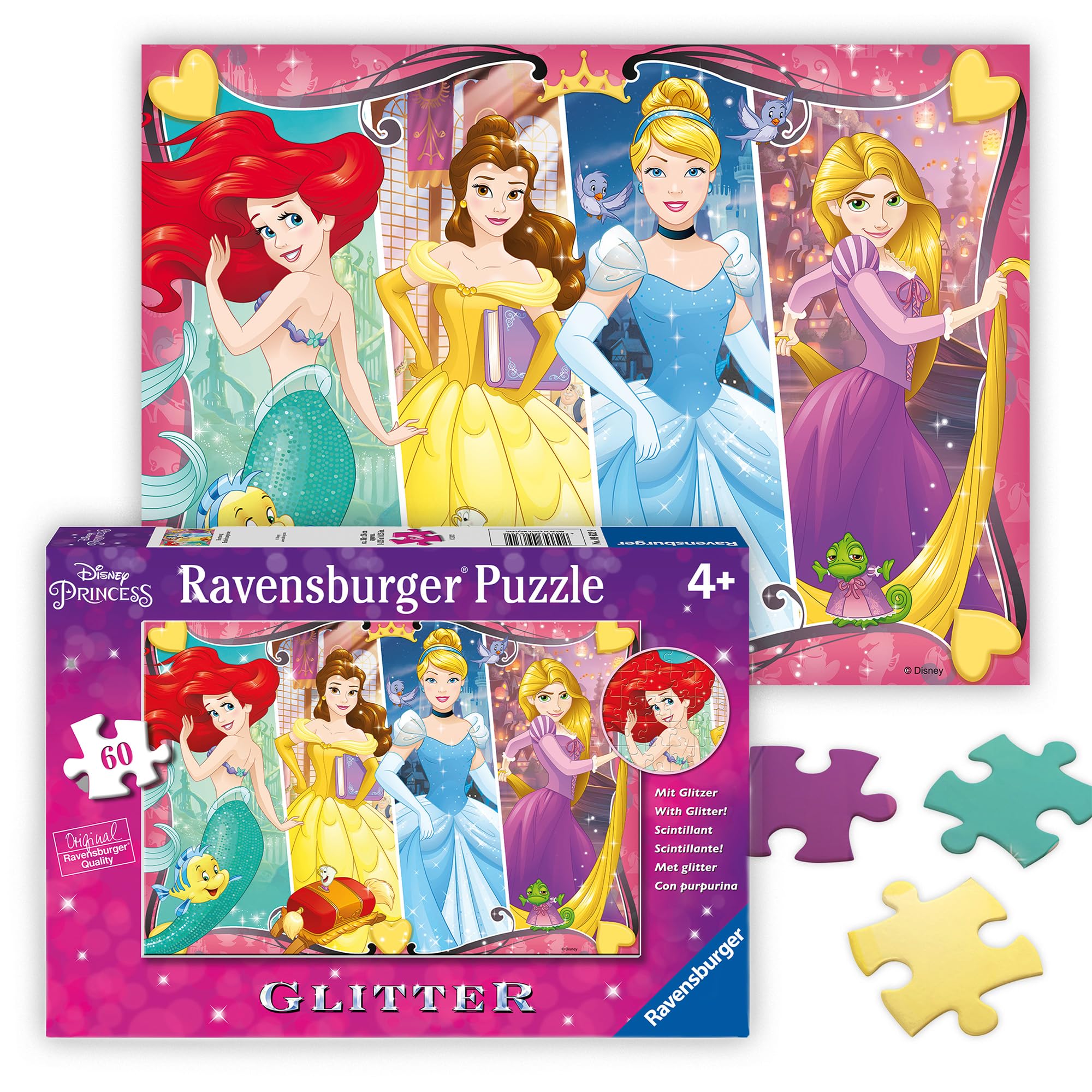
This is the jigsaw we hand to a child who has outgrown peg puzzles but is not ready for a 200-piece scene. The 60 pieces are large enough for small hands, and the picture splits into separate princess scenes, so a child can finish a face or a dress and feel a section is done.

The glitter is the detail we appreciate most. It sits under a sealed surface rather than shedding across the table, and the colors stay bright. Pieces fit together with enough resistance to stay put but not so much that a 4-year-old needs an adult to press every join.

At 60 pieces, it is a genuine step up without becoming a long afternoon. The finished puzzle is modest in size, which makes it easy to leave out on a coffee table between sessions. We recommend it for the 4-to-7 range, especially for a child who wants a picture that looks like the box.

Bottom line: This is our first jigsaw for a 4-to-7-year-old: 60 pieces, sealed glitter, and a picture that breaks into manageable princess scenes.

#2

Ravensburger Realm of Giants 200

Ravensburger Realm of Giants 200

Older puzzle fans

Doodle Score 9.6/10
Check Price

Worth Noting

Pieces
200
Material
Cardboard
Item Dimensions
13.25 x 9 inches
Recommended Age
8–12 years
Read the full review

A 200-piece dinosaur puzzle has to solve two problems at once: enough pieces to feel like a real challenge, and enough visual variety that an 8-year-old does not stall out. This Ravensburger does both, with a T-Rex and other dinosaurs set across bright landscape bands.

The color zones are the practical help. A child can sort sky, foliage, and dinosaur skin before hunting for exact fits, which keeps a 200-piece puzzle from turning into a pile of brown and green. The pieces are thick, the joins hold, and the finished picture is sturdy enough to move without falling apart.

We recommend it for the 8-to-12 crowd, and for younger puzzle lovers who have already finished a 100-piece jigsaw and want more. It is a table puzzle, not a travel one, and it needs a clear surface that can stay out for a few sessions. That is the trade-off for a puzzle with enough scale to feel like an achievement.

Bottom line: We recommend this 200-piece dinosaur jigsaw for an 8-to-12-year-old ready for a bigger table project that still has clear color clues.

#3

Kanoodle Brain Teaser

Kanoodle Brain Teaser

Travel brain teasers

Doodle Score 9.4/10
Check Price

Worth Noting

  • Early challenges may feel too easy
Pieces
12
Weight
3.2 oz
Challenge Count
228
Recommended Age
7 years and up
Read the full review

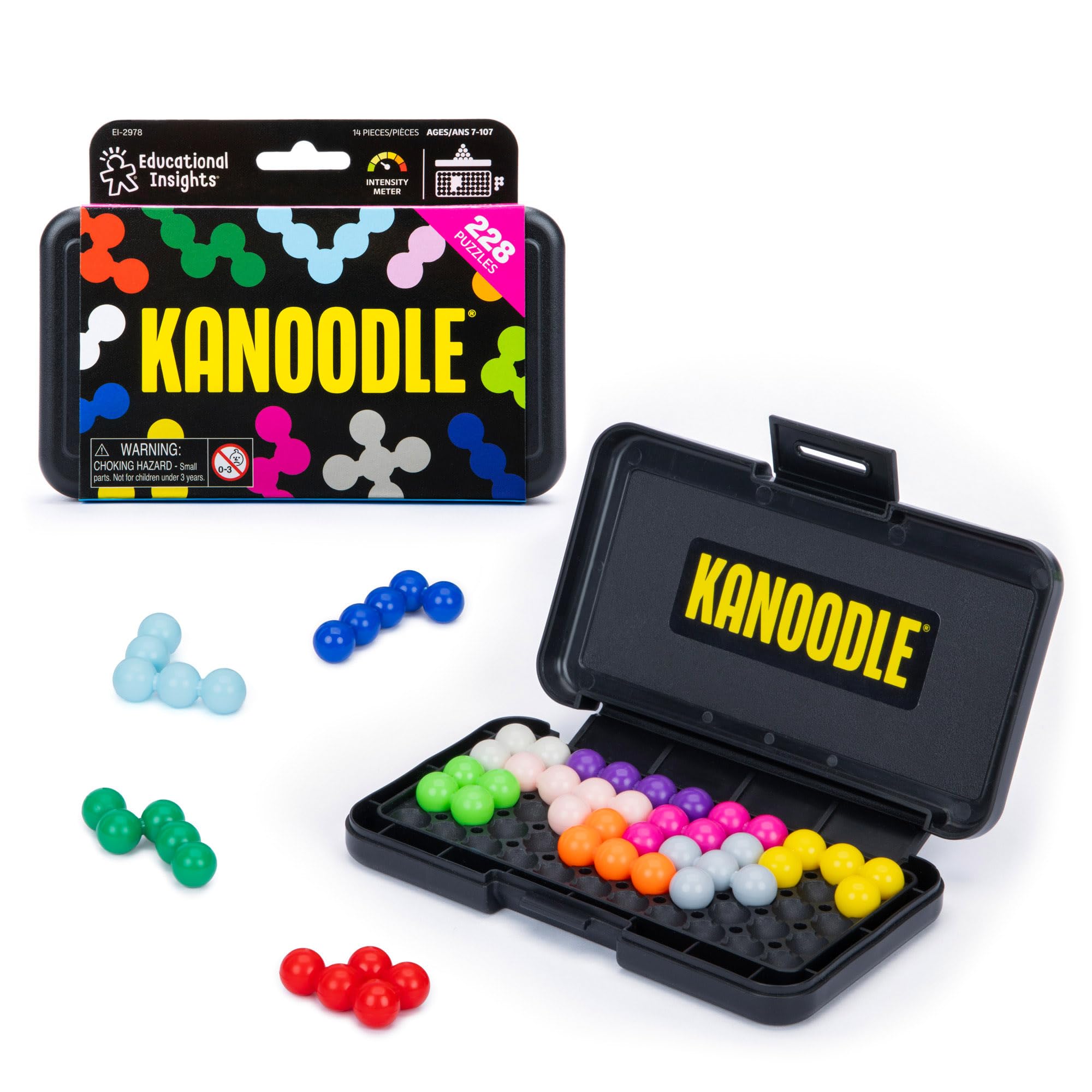
The case is the clever part: it flips open into the board, holds all 12 pieces, and has room for the guide, so the whole puzzle travels as one package. With 228 challenges in both 2D and 3D, there is far more here than the pocket-size box suggests.

We made Kanoodle our top pick because it is the rare puzzle that fits a backpack, a restaurant table, and a wide age range without feeling like a compromise. The early 2D layouts build confidence; the later 3D builds are the ones that keep older kids and adults coming back. A child can work alone, and the answer is either right or wrong, which cuts down on requests for help.

The 7-and-up age recommendation is worth respecting. The pieces are small, the case is not toddler-proof, and a younger sibling in the room needs supervision. For the child it is meant for, though, the combination of challenge and tidy storage is hard to beat in this group.

Bottom line: We recommend Kanoodle as the best all-round puzzle here for ages 7 and up: 228 challenges, a case that holds everything, and enough depth to keep going.

#4

Melissa & Doug Pattern Blocks

Melissa & Doug Pattern Blocks

Preschool pattern play

Doodle Score 9.4/10
Check Price

Worth Noting

  • Storage box has no lid
Material
Wood
Wooden Tiles
120
Pattern Boards
5 double-sided
Recommended Age
3–6 years
Read the full review

Five double-sided boards and 120 wooden tiles give this set more pattern play than the compact box suggests, and that range is why we choose it first for the 3-to-6 crowd. The shapes are familiar, the colors are bright, and the boards move from simple animal pictures to denser geometric designs, so the same box can serve a 3-year-old and a 6-year-old.

A child can start without instructions. A toddler can sort by color or shape, a 4-year-old can fill a board, and an older child can copy a design or make a new one. The wooden tiles have enough weight to stay put, and the matching boards give the play a clear shape without making it a one-answer task. The tiles are smooth and colorful, and the boards are clear enough that a child can work from the picture.

Bottom line: We choose this for preschoolers who learn by handling shapes; 120 tiles and five boards give them room to copy, sort, and invent.

#5

Melissa & Doug First Shapes

Melissa & Doug First Shapes

First puzzle play

Doodle Score 9.4/10
Check Price

Worth Noting

  • Printed stickers can peel with heavy use
Grip
Jumbo wooden pegs
Material
Wood
Puzzle Pieces
5
Recommended Age
12 months–2 years
Read the full review

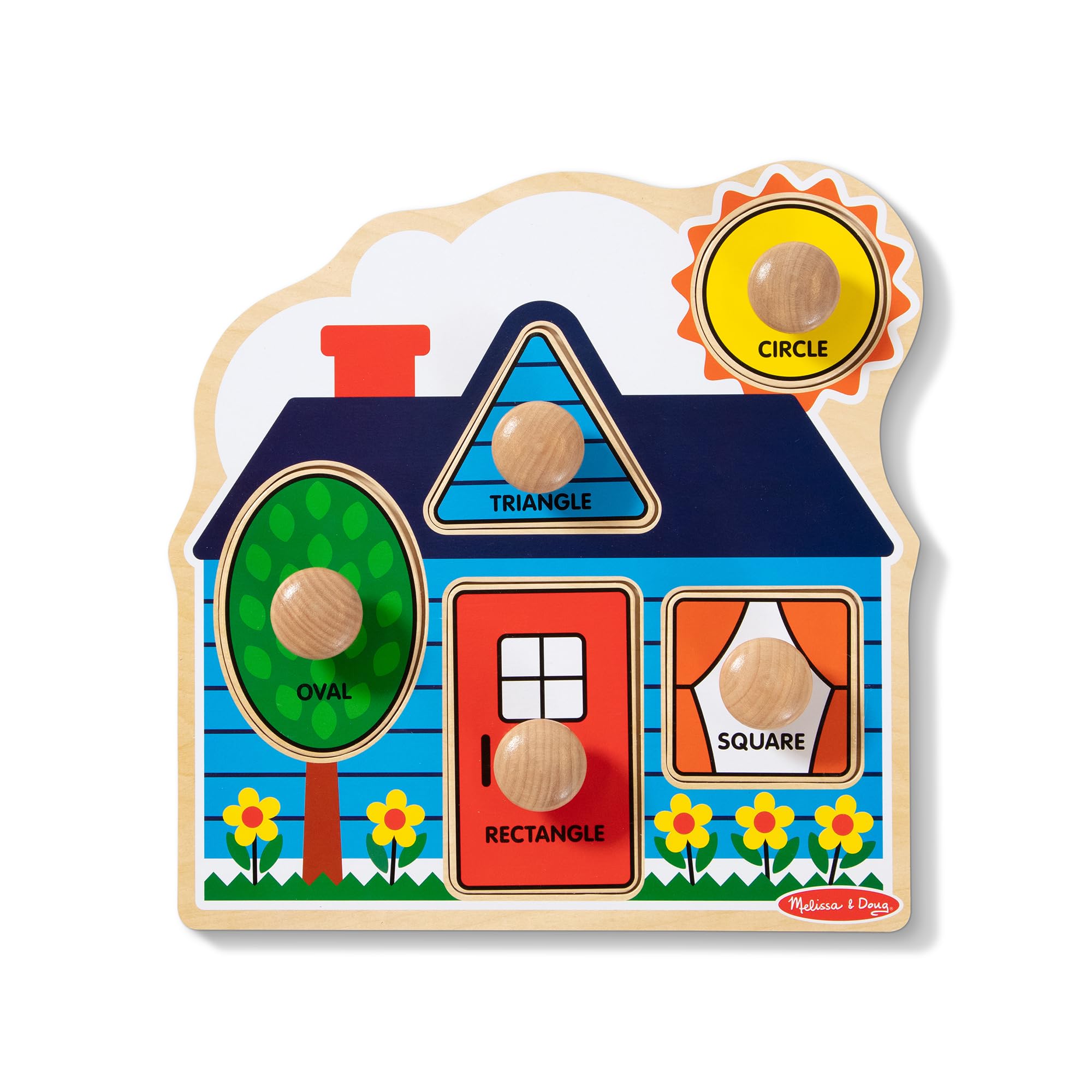
The jumbo wooden knobs are the reason this puzzle works for a 1-year-old: they give a whole hand something to grab instead of a flat piece to pinch. The board has five thick shapes, each with a bright picture underneath, so the puzzle teaches matching as well as shape names.

The picture-matching does the quiet teaching. A toddler can see the circle printed in the circle well and line up the piece without knowing the word for it. The pegs are large enough for a 12- to 24-month-old to lift, and the pieces are thick enough to survive being dropped, banged, and chewed. The recessed wells also make cleanup part of the play.

That is why it earns the first-puzzle spot rather than a decorative shelf toy. It gives a very young child a real win with only five pieces, and the matching pictures let them reset the game alone. For a child still mouthing everything, the chunky wood and recessed wells are the practical part.

Bottom line: We hand this to a 1- or 2-year-old first: the jumbo knobs and matching pictures let a toddler succeed with almost no help.

#6

Coogam Wooden Tangram

Coogam Wooden Tangram

Budget brain teaser

Doodle Score 9.4/10
Check Price

Worth Noting

  • No storage bag for loose pieces
Pieces
40
Weight
8 oz
Material
Basswood
Board Size
7 x 10.6 inches
Read the full review

The Coogam set is the budget brain teaser of the group: 40 wooden blocks and a board, with example shapes to copy and plenty of room to invent your own. It looks simple on the table, and then a child tries to make the pieces fit.

We like the open-endedness. There is no single right answer staring back from a card, so a child can build a figure, take it apart, and try a different arrangement. The basswood pieces are smooth, the colors are bright, and the board is small enough to move from the table to the floor.

The challenge is real. Several shapes look like they should fit and do not, which is the point, but it also means a younger child may need a first turn with an adult or an older sibling. The pieces are small enough to disappear into a carpet, so this is a table toy first.

For the price, it is the one in this group we are happiest to have as a spare. It suits a child who likes to fiddle and solve by trial and error more than one who wants a finished picture. That narrow role is exactly why it lands in also-consider rather than the top tiers.

Bottom line: We keep this as the budget pick for kids who like open-ended brain teasers; 40 wooden pieces and many solutions make it a good trial-and-error toy.

#7

ThinkFun Gravity Maze

ThinkFun Gravity Maze

Logic-building challenges

Doodle Score 9.2/10
Check Price

Worth Noting

  • Towers need assembly before first play
Pieces
75
Weight
1.1 lb
Challenge Cards
60
Recommended Age
8–15 years
Read the full review

Gravity Maze asks a child to build a marble run that actually works. The set has nine towers, three marbles, a target piece, a game grid, and 60 challenge cards that start simple and end in layouts that take real planning. It is part construction toy, part logic puzzle, and the marble is the referee.

We like it most for the 8-to-12 builder who wants proof of success. A run either lands the marble in the target or it does not, so a child can test, adjust, and try again without an adult confirming every step. That self-checking loop is why it earns a runner-up spot over the more open-ended building sets in this group.

The setup is not instant: the towers need to be assembled before the first challenge. Several towers also use close green and yellow shades, so a colorblind child may need labels or a helper. Those are planning details, not reasons to skip it, but they change how smoothly the first session goes.

Bottom line: Our pick for the builder in the family: Gravity Maze makes a child test a marble run and fix it, which is more satisfying than another open-ended kit.

How We Tested the Best Puzzles for Kids

We started with a shortlist of puzzles recommended by preschool teachers, toy-store staff, and parents, then narrowed it by age range, piece count, material, and storage style. Each of the 14 puzzles went home with a family on our team for three months and lived where puzzles actually live: the living-room floor, the kitchen table after school, and the back seat on a rainy weekend. We watched kids open the box, sort pieces, ask for help, and decide whether to keep going.

Age fit and difficulty got tested in real time. We noted whether the piece count matched the age on the box, how often kids needed an adult to step in, and whether the build felt too easy by the second sitting. A good puzzle kept them engaged long enough to finish but left them wanting to rebuild it; a bad one ended with pieces swept into a pile. We also tracked the fun factor—whether kids chose the puzzle over a screen or wandered off after ten minutes.

Quality checks were hands-on: we flexed pieces at the corners, dropped a few onto a wood floor, and packed each puzzle back up to see whether the lid stayed on and pieces stayed together. After every session we counted the pieces back in, which made missing pieces easy to catch and showed us which boxes had no lid or a flimsy insert. For the gift concern, we wrapped a few boxes and handed them over to see whether the packaging survived tape, handling, and a kid's eager opening. The ones that held up were the ones kids asked to do again.

How to Choose Puzzles for Kids

Match the challenge to the child

Age labels are a starting point, not a guarantee. A 3-year-old who still mouths pieces needs a chunky wooden puzzle with a few large pieces; a 5-year-old with jigsaw experience can handle 60 pieces, especially when the picture has clear sections. We start with what the child has already finished, not what the box says. The useful test is whether the puzzle can be completed with a little struggle and a little help. If it is finished in two minutes or abandoned in five, the piece count is wrong.

Choose the format before the piece count

Decide whether you want a picture to complete or a problem to solve. Jigsaws have a single finished image and a satisfying end; brain teasers and tangrams are open-ended and replayable, but they need a child who enjoys trial and error. A pattern-block set bridges the two, because a child can copy a board or invent a design. For a first puzzle, pick the format that matches how the child already plays, then use piece count to tune the difficulty.

Check storage, piece size, and print

Storage is part of the purchase, not an afterthought. A box with a lid and compartments keeps a 60-piece jigsaw together; a wooden tray without a lid needs a zip bag or a lidded tub from day one. Check the edges and printed surfaces too, because wooden pieces can splinter or peel after heavy toddler use. If a set arrives with pieces missing, count them before the return window closes. A puzzle that cannot be completed is not a bargain.

Buy for the place it will be used

Where the puzzle will live should decide the size and the pieces. A brain teaser with a case, like Kanoodle, earns its place in a backpack or restaurant bag; a 200-piece jigsaw needs a table that can stay clear for a few sessions. Marble runs and loose tangram pieces are table toys first, not car toys. We look at the setting before we look at the theme, because the best puzzle in the wrong room becomes clutter.

Frequently Asked Questions

Final Verdict

Kanoodle is the puzzle we recommend first for most families with a child aged 7 or older. It has the widest challenge range here, the case keeps every piece together, and it works at a restaurant table or in a backpack. For a younger child, start with the Melissa & Doug First Shapes puzzle; for a 3-to-6-year-old who likes patterns, the Melissa & Doug Pattern Blocks set is the better fit. The right answer changes with age, not with piece count alone.