Games & Puzzles

Best Family Board Games of 2026

The worst family board game is the one abandoned halfway through: someone is confused by the rules, a younger player is bored, or the cards are too small to read from across the table. A good one keeps a mixed-age table leaning in, with turns that move, laughs that land, and setup that doesn’t eat the evening. Our team gathered 18 family board games and spent six months playing them at weeknight dinners, rainy Sundays, and holiday gatherings. I wanted games sturdy enough for repeat use and easy enough to teach from the box.

Family-friendly doesn’t mean simplified to nothing: the best games give kids real choices without handing the win to luck. We played full sessions with mixed ages, noting whether the humor felt natural or forced and whether cards survived shuffling and small hands. Card size mattered more than I expected; a slightly larger card can be the difference between a game that works across a living room and one that only works around a coffee table. These picks earned repeat requests, not just polite first plays.

#1

Bananagrams Classic

Bananagrams Classic

Travel and wordplay

Doodle Score 9.8/10
Check Price

Worth Noting

  • Rewards strong spellers; younger kids need a handicap
Players
2 to 8
Age Range
7 years and up
Play Time
15 minutes
Tile Count
144
Read the full review

There are no turns in Bananagrams, which is the entire design and the reason it works with a family that agrees on nothing. Everyone builds a personal crossword from the same 144 tiles at the same time, and when someone uses all their letters the round advances and every player takes another tile. Nobody sits watching, nobody waits, and a full game can be done in fifteen minutes.

It is also the most quietly educational game here. Spelling, letter patterns and a bit of triage under time pressure: we have watched a reluctant speller work through vowel combinations for twenty minutes without noticing they were practicing. The banana-shaped pouch is a genuine asset too, soft, roomy enough for all 144 tiles, and smaller on the shelf than any box in this guide.

The catch is that this is a race, and a race has a winner who spells better. The gap between a nine-year-old and an adult is real and does not close on its own. Our fix is an outright handicap: fewer starting tiles for the youngest, or a child playing as a pair with an adult. A few rounds in, everyone has found their level. If your family will not accept that sort of fudging, this is a game for the older half of the table.

Everything about the package suits travel: the pouch, the weight, the fact that it goes in a backpack for a restaurant table or a cabin weekend. Two players works better than we expected, a straight duel with no downtime between hands. The one group it will not win is people who simply do not enjoy word games.

Bottom line: The word game we hand to people who claim they hate word games: fast, portable, and played without a single turn.

#2

Splendor

Splendor

Tweens and adults

Doodle Score 9.8/10
Check Price

Worth Noting

  • Ten and up; younger kids play at random
  • Caps at four players
Players
2 to 4
Age Range
10 years and up
Play Time
30 minutes
Components
40 tokens, 90 cards, 10 nobles
Read the full review

Splendor is the most expensive game here by a wide margin, and the case for it starts with the box: 90 development cards, 40 plastic gem tokens, ten noble tiles and cards with a glossy finish that have survived a lot of shuffling. It is the one pick that feels like a designed object rather than a printed board.

That price is justified, in our view, because the game underneath is the best pure strategy on this list. Three actions a turn, take tokens, buy a card, reserve a card, and the whole thing is an engine: cheap cards give you permanent gems, permanent gems buy better cards, and the first player to fifteen prestige points wins. After the shuffle there is no luck left to blame, so the ten-year-old who plans properly will beat the adult who does not.

Ten and up is the honest line. The arithmetic is easy; the skill is reading three rows of cards and working out which gem you will need two turns from now, and a seven-year-old will mostly be choosing at random. We have had more success teaching a nine-year-old who plays a lot of games than an eleven-year-old who does not. The number on the box is a guide to patience, not to ability.

Four players is the ceiling, and with four the board tightens up nicely; with two it is a quiet duel we like just as much. Thirty minutes is realistic once everyone knows the rules, and the first play runs longer, so start this one early in the evening rather than at bedtime.

Bottom line: Our pick for the family that wants a real strategy game: thirty minutes, no luck left to blame, and a ten-and-up line we agree with.

#3

SEQUENCE Original

SEQUENCE Original

Big family nights

Doodle Score 9.6/10
Check Price

Worth Noting

  • Only three chip colors, so four-plus means teams
  • Folding board and small cards feel cheap
Players
2 to 12
Age Range
7 years and up
Board Size
19.75 x 15.25 in
Components
135 chips, 2 card decks
Read the full review

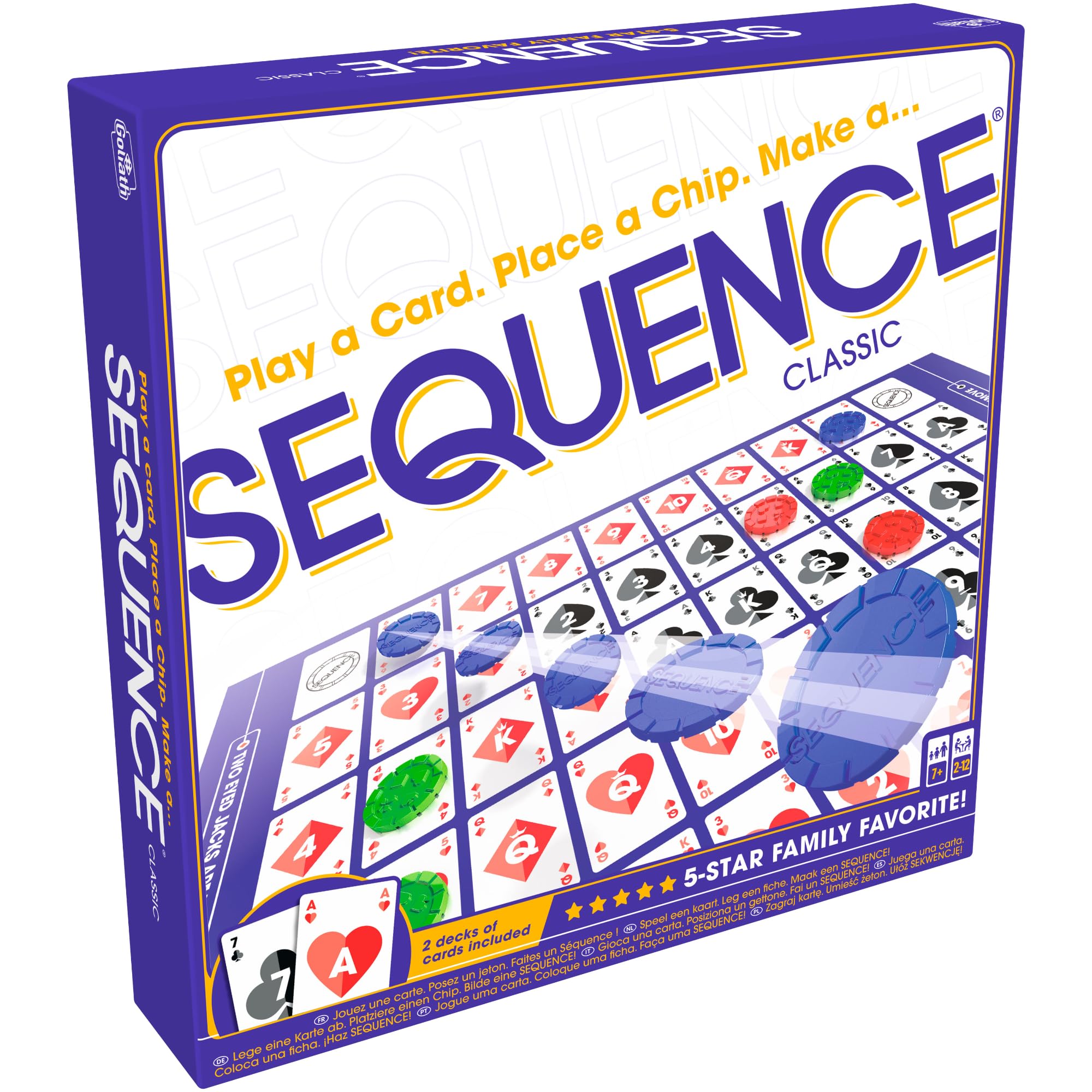
Two decks of cards, 135 chips and a board that folds in half, and SEQUENCE seats anywhere from two players to twelve. That range is why it is our top pick. Most family games quietly cap at four, which turns a family of five into a rotation of spectators; this one handles a two-player evening and a table split into teams without changing anything except the seating.

Play is as simple as it gets: lay a card, cover the matching space with a chip, race to five in a row. Two decks go into the game, so plenty of spaces matter to more than one player, and blocking someone is often as useful as extending your own line. The detail the box does not lead with is the chip count. Three colors ship in the box, so a fourth individual player joins a team. That turned out to be an improvement for us, because teams are how the youngest player gets into a game with adults without the adults visibly easing off.

Components are where the money went missing. The folding board creases along its hinge, the cards are smaller than a standard deck, and the chips are light plastic. We think of them as functional rather than lovely, and at a midrange price with this many players in the box, we minded less every time we opened it. It is also a dining-table game rather than a coffee-table one: the board runs roughly twenty inches by fifteen.

What keeps it at the top is the teaching. One explanation covers the rules for a seven-year-old and a seventy-year-old, and after that the game is about reading the board rather than remembering exceptions. We have had a table of eight arguing over a blocked line and two adults playing the same box quietly after dinner. Few games here stretch that far.

Bottom line: Start here if your game night spans several ages: SEQUENCE seats up to twelve, teaches in minutes, and gives a seven-year-old a real shot at beating the adults.

#4

Taco Cat Goat Cheese Pizza

Taco Cat Goat Cheese Pizza

Rowdy party nights

Doodle Score 9.6/10
Check Price

Worth Noting

  • Cards take real damage from slapping
  • Flat with only two players
Weight
3.2 oz
Players
2 to 8
Age Range
8 years and up
Play Time
15 minutes
Read the full review

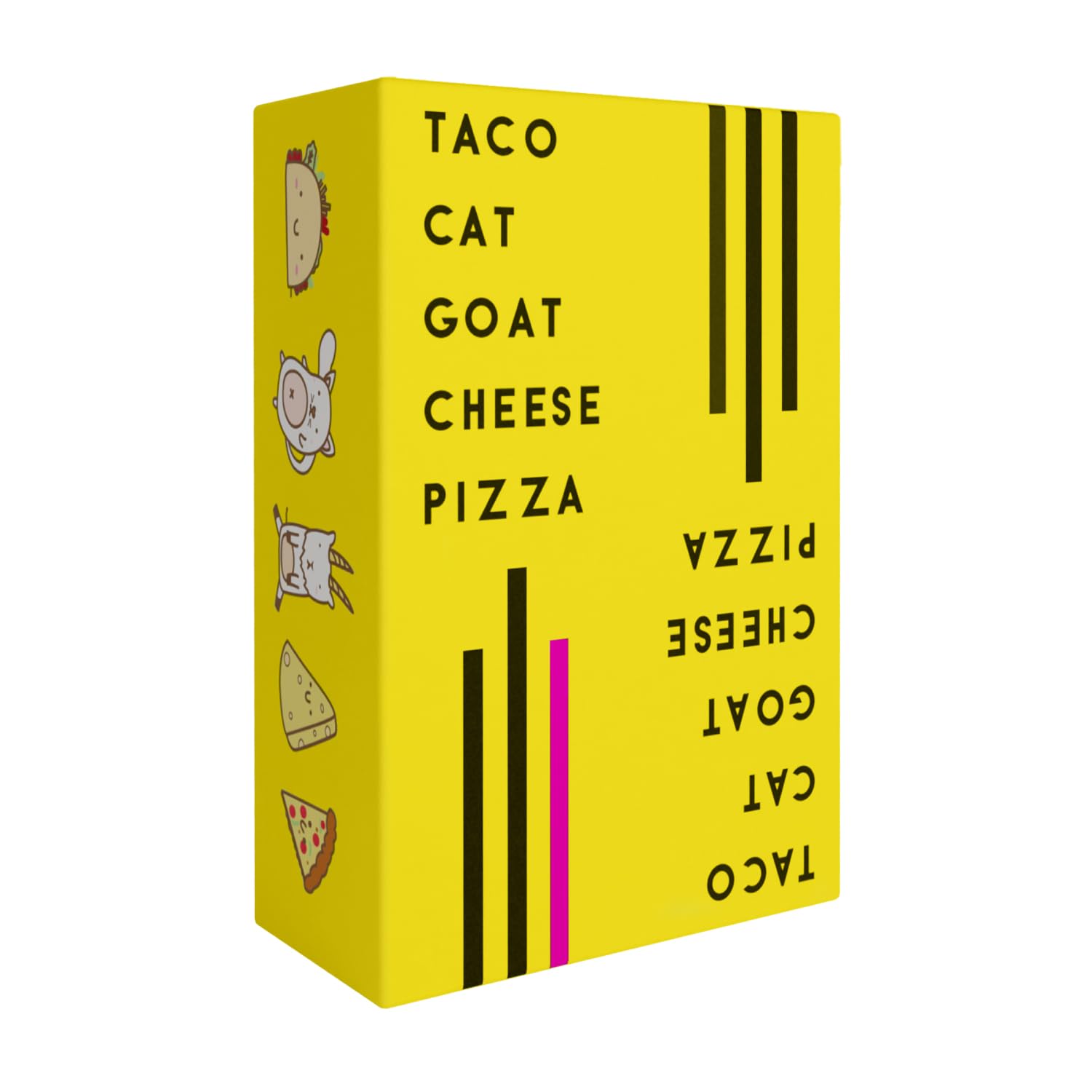
Five words, one pile in the middle, and every hand hovering a few inches above it. Taco Cat Goat Cheese Pizza is a reflex game: you chant the title in order as you flip cards, and the moment the word you say matches the card that lands, the whole table slaps the pile. Last hand in takes the cards. Rounds end in well under a minute, so nobody has time to drift.

We did not expect this to be the game that pulls in adults who claim not to like games. It is the one we have laughed hardest at: the chant speeds up as the pile grows, someone fumbles a word, and six people slap at once. Kids pick up the rhythm faster than grown-ups do, and that reversal is exactly what a family game needs to stay fun for the people who usually lose.

The slapping is the point and also the caveat. Cards take a beating, hands get hit, and it is a loud game that wants a solid table and no open drinks nearby; our copy's edges went soft long before the deck stopped being playable. Three players is the practical minimum. With two it is a duel with no drama.

The box says eight and up, but the reading is minimal and the five words are printed on the cards, so we have watched six-year-olds hold their own. What actually decides whether a child enjoys it is temperament: if losing a slap-fight ruins an evening, this is not the game for them.

Bottom line: We bring this out when the table needs to be laughing inside a minute: simple, loud, and at its best with three or more players.

#5

Rummikub

Rummikub

Thinking families

Doodle Score 9.6/10
Check Price

Worth Noting

  • Four-player ceiling; a fifth sits out
  • Plastic racks feel lighter than the tiles
Weight
1.1 lb
Players
2 to 4
Age Range
8 years and up
Read the full review

SEQUENCE uses chips on a board; Rummikub uses numbered tiles on racks, and the racks are what change the game. You hold a hand nobody else can see, and every turn is a small puzzle: lay runs and groups, then rearrange what is already on the table if that gets you further. That last part is the hook. The table is shared property, and a strong player will rebuild other people's lines to make room for one tile.

It is the most traditional game here and the one grandparents ask for by name. The rules take two minutes of explanation, runs of consecutive numbers in one color and groups of the same number in different colors, and the first round is the teach round for everybody. Eight and up is about right. Younger children can match and sequence, but the rearranging is where it gets away from them.

Physically it is a plain set: chunky plastic tiles that rattle pleasantly, four blue racks, no board at all. The racks feel lighter than the tiles deserve and we handle them carefully, but they have held up. There is nothing to crease and nothing to bend, which counts for more than pretty pieces in a house with children.

What we keep coming back to is the pace and the thinking: turns are short, nobody waits on a dice roll, and the game exercises exactly the pattern-spotting teachers like without ever announcing itself as educational. Four players is the ceiling, though, and a fifth has to sit out, which is the one thing that keeps it from being our answer for a big family.

Bottom line: Of the four-player games here, this is the one we suggest to a family with a grandparent at the table: short turns, a shared board, and rules anyone can pick up in a round.

#6

Candy Land

Candy Land

Preschool first games

Doodle Score 9.6/10
Check Price

Worth Noting

  • No decisions at all; adults are passengers
  • Cards are stiff and hard to shuffle
Players
2 to 4
Age Range
3 years and up
Play Time
15 minutes
Reading Required
None
Read the full review

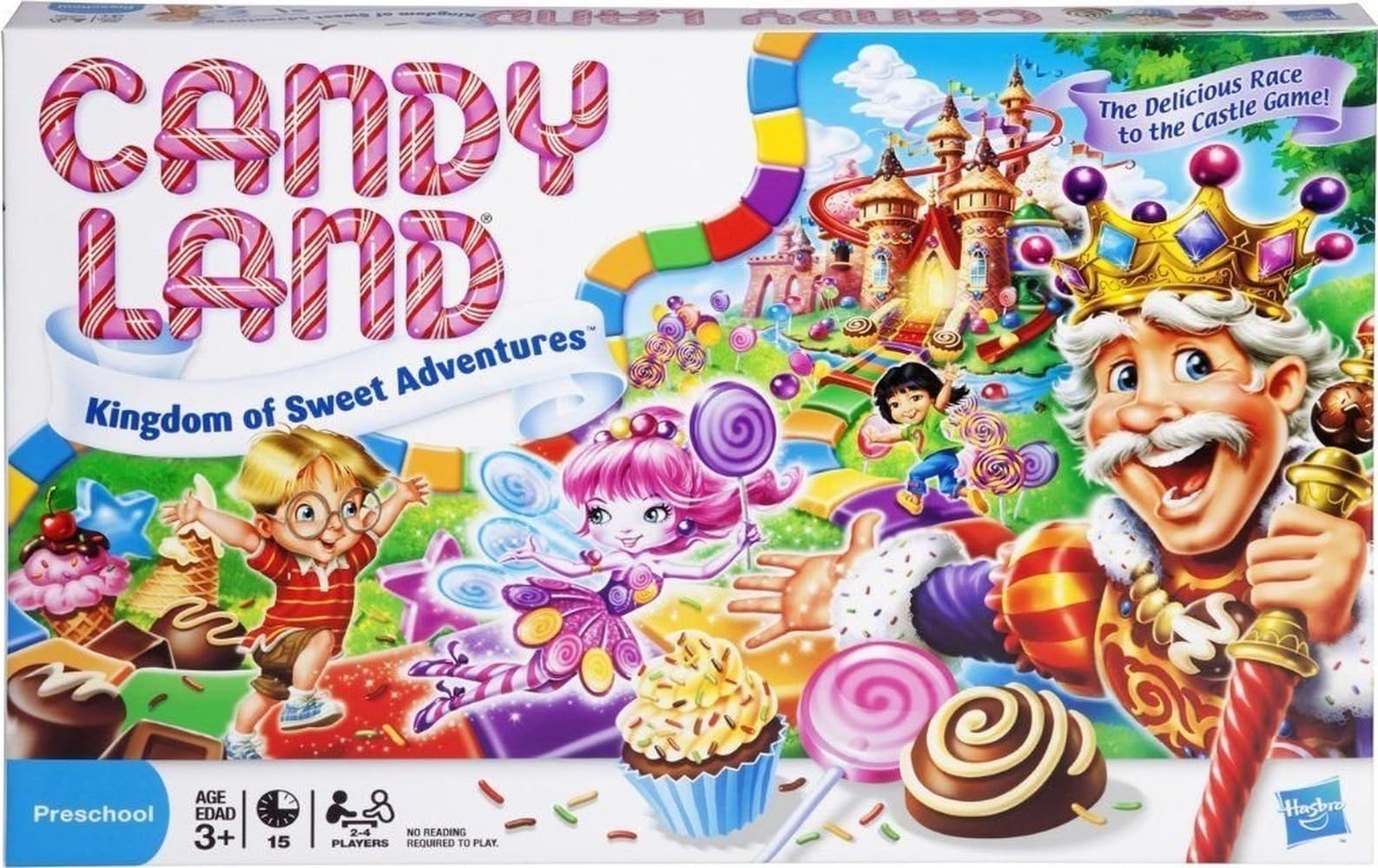
No reading, no counting, no decisions. Candy Land asks a three-year-old to draw a card, match a color and move a gingerbread pawn, and that is the entire game. It is the only pick here a preschooler can play without an adult translating the rules, and on a wet Tuesday afternoon that is worth more than any amount of strategy.

What it teaches is the unglamorous, essential stuff: taking turns, waiting, moving a piece without wiping out the board, and losing without a meltdown. The cards carry colors only, so a child who cannot yet read a number still plays unaided, and the illustrations do most of the work of holding attention. We have also used it as counting practice, one space per colored square.

Adults will be bored, and we will not pretend otherwise. There is no strategy at all: you draw what you draw, and one card can undo a good run. That is a feature for a four-year-old learning to handle setbacks and a chore for the grown-up shuffling for the fourth game in a row. Buy it as a first game and a hand-me-down, not as the thing that carries a whole evening.

One physical note: the deck is stiff and slightly oversized, easy for small hands to grip and mildly annoying for an adult to shuffle. And it does age out. The box tops out around six, after which most children want the games further up this list.

Bottom line: The first game we hand a three-year-old: no reading, no decisions, and exactly the right lessons about taking turns and losing.

#7

UNO

UNO

Budget family staple

Doodle Score 9.6/10
Check Price

Worth Noting

  • Cards run smaller than the classic deck
  • Thin and flat with only two players
Cards
112
Players
2 to 10
Storage
Metal tin
Age Range
7 years and up
Read the full review

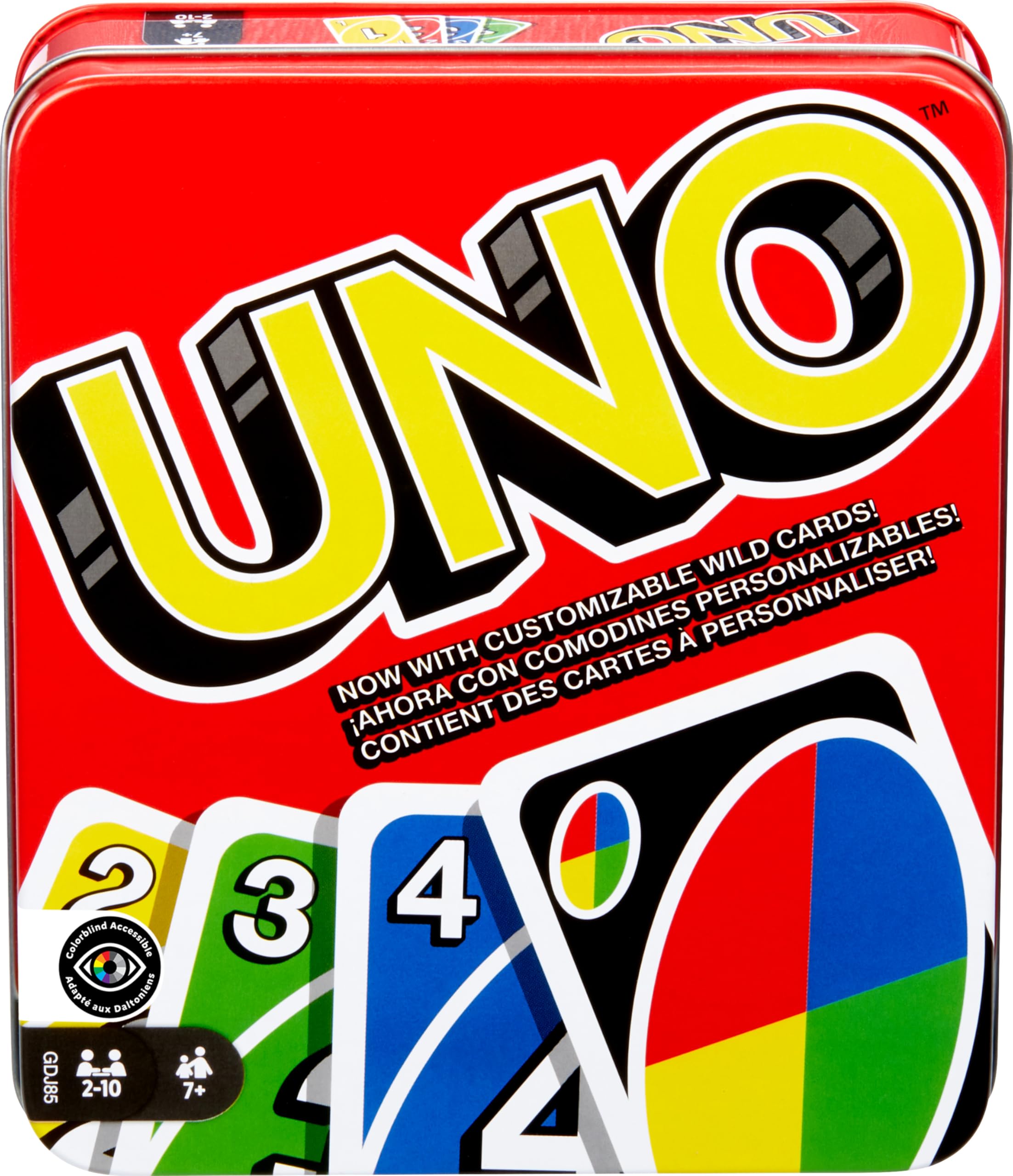
The tin is the first thing we noticed: a real metal box instead of the cardboard sleeve the deck used to come in, and the reason this copy has survived being thrown in a bag. The second is the symbols. Every card carries a small graphic marking its color alongside the color itself, so a colorblind player can read the deck without asking for help.

The game needs no introduction: match color or number, stack action cards, shout when you are down to one. It is the least expensive way here to seat ten people at a table, and the three blank wild cards are a small stroke of genius, since house rules get written on and wiped off for the next game. Scoring to five hundred turns a handful of rounds into a proper evening instead of a filler.

We keep a deck in the house because it works with any mix of ages and needs no teaching; a seven-year-old and a grandparent can play the same hand. It is also the one that survives being played badly, with rough shuffling, bent corners and a drink set down on the pile. Two players is the flat version of it, and four or more is where it comes alive.

The catch is the card size. This edition runs smaller than the deck most of us grew up with, which makes it easy to pack in a suitcase and slightly awkward to fan in an adult hand. If you want the classic big cards, another edition will do; if you want a deck that lives in the glovebox, this is the one.

Bottom line: Ten players, zero teaching, and a tin we actually trust to keep the deck together: this is the UNO edition to buy.

#8

Jenga

Jenga

Physical party fun

Doodle Score 9.6/10
Check Price

Worth Noting

  • Needs a large flat table and steady hands
  • Rebuilding the tower outlasts many rounds
Blocks
54 wood
Players
1 or more
Storage
Tube with handle
Age Range
6 years and up
Read the full review

Jenga demands something none of the other games here do: a flat, stable table, a steady hand and room for a tower that gets alarmingly tall. That is the whole cost of entry, and it is why we do not suggest it for a carpet picnic or a living room with a wobbly coffee table.

What you get back is a game any age can join without reading a rule. Pull a block, stack it on top, do not topple the tower. The 54 blocks are hardwood and have kept their edges through a lot of play, and the stacking sleeve squares up the first tower every time, which is worth knowing because a crooked start spoils a round before it begins.

It is a short game with a long reset. Building the tower takes longer than many rounds do, and when it goes, it goes loudly and everything stops. We treat it as a five-minute spectacle between other games rather than the main event, which suits it, and it doubles as a solo patience exercise when nobody else is around.

For a party where the ages are wide and the rules need to be zero, the sight of a nine-year-old and a grandfather both holding their breath is worth the shelf space. Clear the glassware off the table first.

Bottom line: Worth the shelf space for the mixed-age crowd that will not read a rulebook, as long as you have a big flat table and do not mind a loud ending.

How We Played and Picked the Best Family Board Games

We started with a long list of widely available family games, then narrowed it by player count, age range, table footprint, and price. That left 18 games, which our team played over six months at weeknight dinners, rainy Sundays, and holiday gatherings with kids and adults at the same table. Each title got at least three sessions, including one teach-from-the-rulebook attempt without a video tutorial.

During play, we watched actions rather than labels: whether turns stalled while someone reread the rules, whether younger players got real decisions instead of busywork, and whether the table laughed with the game or at it. We set up and packed away each game twice, timing the process and noting whether inserts, bags, or stacks of cards made cleanup a chore. We also handled cards with adult and kid hands, spread them across the table, and checked whether faces and text were readable from a few feet away; card size came up repeatedly.

For quality, we looked at boards that lay flat, pieces that survived normal drops, and cards that held their edges after shuffling. We played repeated sessions to see whether the humor wore thin, and we mixed ages to judge whether the game was genuinely family-friendly rather than just labeled for families. The final picks are the ones that kept getting requested after the review period ended.

How to Choose Family Board Games

Count your table before you shop

Player count decides whether a game gets a second outing. A box that says two to four really means two to four pawns or racks; put five people around it and somebody becomes a spectator. Team play is the workaround, and it is built into some games and not others. SEQUENCE ships with three chip colors and plays up to twelve in teams, while Splendor and Rummikub stop hard at four.

The trap is counting the people in your house instead of the people who will sit down. A family of five with one adult who would rather watch is a four-player table. Count the ones who stay for a second game.

Match the game to the youngest player

Age ranges describe rule complexity, not fun, and the distance between a game a four-year-old can play unaided and one a seven-year-old can play well is enormous. The useful question is what the youngest player has to do alone. Candy Land asks for color matching and nothing else; Bananagrams asks for spelling; Splendor asks for a plan two turns ahead.

Pick one notch below the youngest child's limit and let them grow into it, otherwise the box sits on the shelf for two years. Where a child is close but not quite there, teams and handicaps do the work: fewer starting tiles in Bananagrams, a partner on a Rummikub rack.

Think in minutes, and count the waiting

Listed play times are optimistic on the first night and roughly honest afterwards, but the number that matters more is how long each player waits between turns. A thirty-minute game with four players gives everyone about seven minutes of decisions and twenty-three of watching. That is fine for a ten-year-old with a plan and fatal for a six-year-old.

Games where everyone plays at once, like Bananagrams, or where a round ends in seconds, like Taco Cat, keep the whole table involved and therefore work across a wider age spread than anything turn-based.

Decide how much luck and how much meanness

There are three useful positions. Pure luck, as in Candy Land, means a three-year-old can win and no adult can help it, which is why it is a first game rather than a family-night one. Luck plus decisions, as in UNO, SEQUENCE and Taco Cat, keeps everyone close and lets a child beat an adult on a good night. Planning with almost no luck, as in Splendor, rewards whoever thinks hardest, which is right for a house of ten-plus children and wrong where the youngest is six.

The other dial is how hard the game lets players hit each other. Sending someone back to the start in UNO and slapping a pile in Taco Cat are a joke to some children and a genuine grievance to others. Buy for the child you have.

Check the footprint and what it is made of

A game that needs a clear forty inches of table will not come out on a coffee-table evening. Boards are the space hogs, with SEQUENCE's folding board running roughly twenty inches by fifteen, while card and tile games pull up a foot or less. Durability runs the other way: folding boards crease along the hinge, card decks soften at the corners and chips disappear into sofas.

If a game will travel, buy the version that comes with a tin or a pouch. If it lives at home, spend the money on the board and the pieces you will touch every week.

Frequently Asked Questions

Final Verdict

If your game night mixes ages and runs past four people, buy SEQUENCE. It seats the whole table, teaches in minutes, and gives a seven-year-old a real chance against an adult, which is the pair of things that decides whether a game comes back out of the box.

For four or fewer players who are all ten and up, Splendor is the better game and worth the extra money. And if there is a three-year-old in the house, start with Candy Land and work up from there.