Games & Puzzles

Best Board Games for Kids of 2026

A rainy Saturday with kids in the house tends to become a screen-time negotiation. A good board game ends that argument before it starts: it pulls everyone to the table, gives the youngest player a real shot at winning, and gets asked for again the next day. A bad one hands you twenty minutes of rulebook, cards sized for adult hands, and someone in tears before the first round is over.

Over the past six months, my family and I have played our way through 16 games, from five-minute card games to longer strategy picks. The ones that stuck had rules I could teach in under a minute, enough luck to keep the race close, and jokes that land with kids instead of at them. One thing I've learned: the age on the box is a rough guide at best. What actually decides it is whether small hands can manage the pieces and whether the game still holds up on the tenth play. The picks below survived all of it, including one juice spill.

#1

Sorry!

Sorry!

Family game night

Doodle Score 9.6/10
Check Price

Worth Noting

  • Board and cards feel thin against older editions
Players
2-4
Contents
Gameboard, 12 pawns, 45 cards
Recommended Age
6 years and up
Read the full review

The deck does most of the teaching. A six-year-old draws a card, counts the squares, and moves a pawn, and the parts that make Sorry! worth playing — holding a card back, choosing the moment to send somebody home — start turning up a few games in without anyone explaining them. Of the classics we played with kids, this needed the shortest rules talk before everyone was actually taking turns.

Four is the right number at the table. With two it turns into a duel and loses the pile-on comedy; with four the revenge cards land on whoever was winning. That's the real argument for Sorry! over a skill game with a first-grader — the luck stops an adult running away with it, so a kid three pawns behind still has a reason to keep drawing. We also like that the whole thing fits into a normal sitting, which is not something we can say for every game in this roundup.

The step up from a preschool game is gentle: a few words on the cards, a count along the track, and one rule about sliding. A four-year-old can play on a team; a six-year-old can play to win. That's the range this box covers, and it's why it's the one we tell people to buy before anything else on this page.

Bottom line: We recommend Sorry! as the family-night default: simple cards, a clear race home, and enough revenge to keep a nine-year-old at the table.
#2

Candy Land

Candy Land

First game, ages 3+

Doodle Score 9.6/10
Check Price

Worth Noting

  • Cards are stiff and awkward to shuffle
Players
2-4
Reading
None required
Playing Time
About 15 minutes
Recommended Age
3 years and up
Read the full review

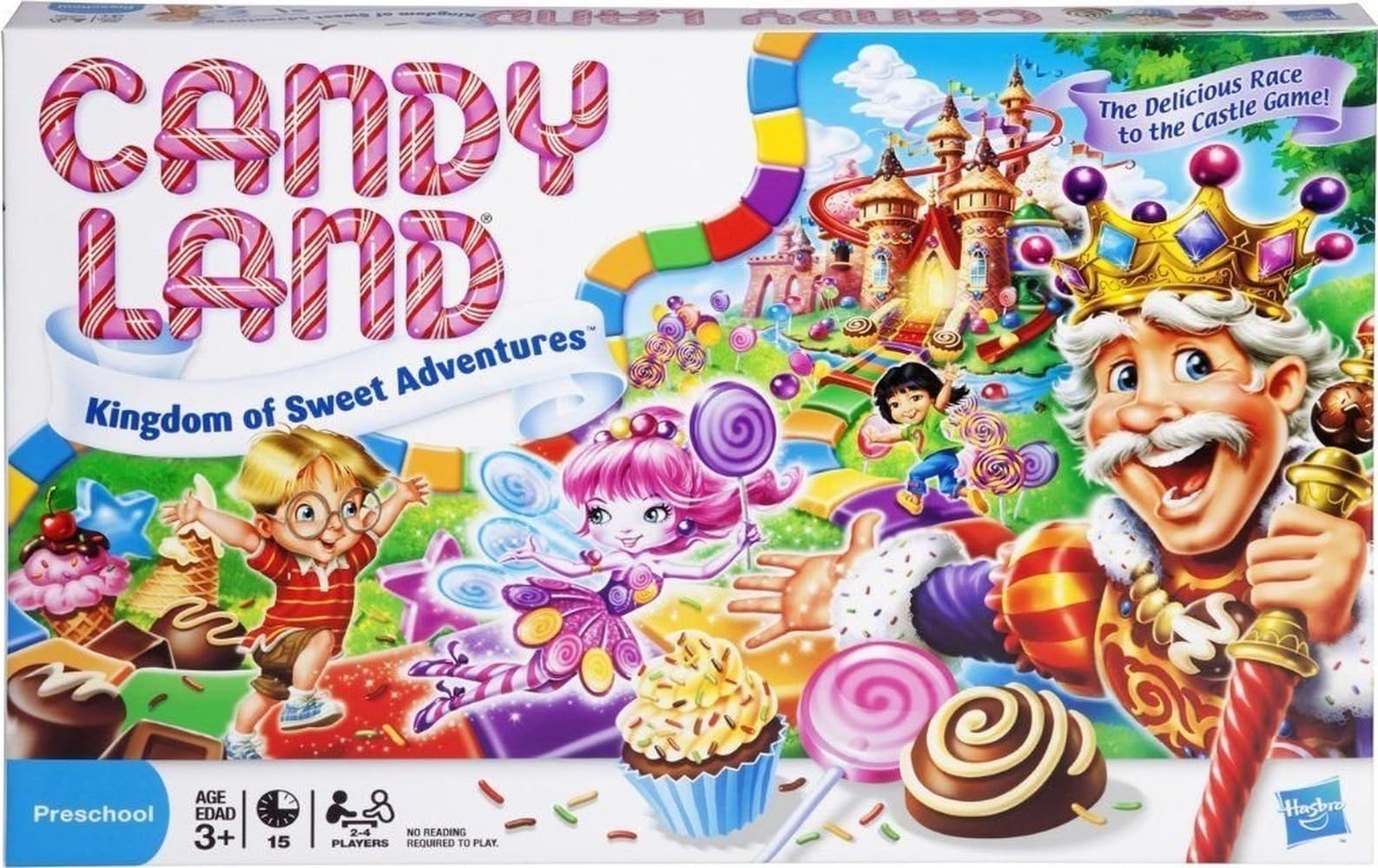
Candy Land asks a three-year-old to do exactly one thing: match a color and move to the next square of that color. That sounds like nothing, and it's precisely why the game works — a preschooler takes a complete turn with no help, no reading, and no adult narrating what happens next.

The turn-taking is the actual product. Waiting while three other people draw is genuinely hard at three, and the fifteen-minute length means the waiting ends before it becomes a meltdown on the floor. The setback cards do quiet work too: getting sent back down the path is a small, safe rehearsal for losing your temper in front of other people.

What it doesn't do is grow. By six or seven a reading kid has seen everything the board offers — there are no decisions, only draws — and it turns into a game for a younger sibling. That's the whole shape of it: a first game, bought once, played hard for two years, then handed down.

Bottom line: If there's a three- or four-year-old in the house, this is the game to buy first: no reading, no counting, and a turn a child can take alone.

#3

Zingo

Zingo

Pre-readers

Doodle Score 9.6/10
Check Price

Worth Noting

  • Tiles can jam inside the zinger
Players
2-6
Contents
6 cards, 72 double-sided tiles
Recommended Age
4-10 years
Read the full review

The zipper is the hook. Tiles slide out of the Zingo Zinger two at a time, and the small ceremony of pulling the handle holds a four-year-old at the table while everyone else checks their cards. Under the gimmick it's bingo with pictures and words, which is why a pre-reader plays the real game rather than a watered-down version of it.

Two sides on every card is the detail that stretches the box: one side pictures, the other words, so the same game works for a four-year-old matching images and a seven-year-old reading the word tiles. We got more play out of it across a wider age span than the preschool label suggests, and the vocabulary work happens without anyone announcing that it's educational.

It's the priciest game here, and that's the honest trade. With a four-year-old and a six-year-old at the same table, the two-sided cards earn the difference; for one child who already reads fluently, a cheaper matching game does the same job. Buy it for the age span, not for the zipper.

Bottom line: For a four- or five-year-old who isn't reading yet, Zingo is the one we reach for: matching, vocabulary, and a zipper that makes the draw feel like a treat.

#4

UNO

UNO

Travel and crowds

Doodle Score 9.6/10
Check Price

Worth Noting

  • Cards are smaller than a standard deck
Players
2-10
Storage
Tin
Contents
112 cards
Recommended Age
7 years and up
Read the full review

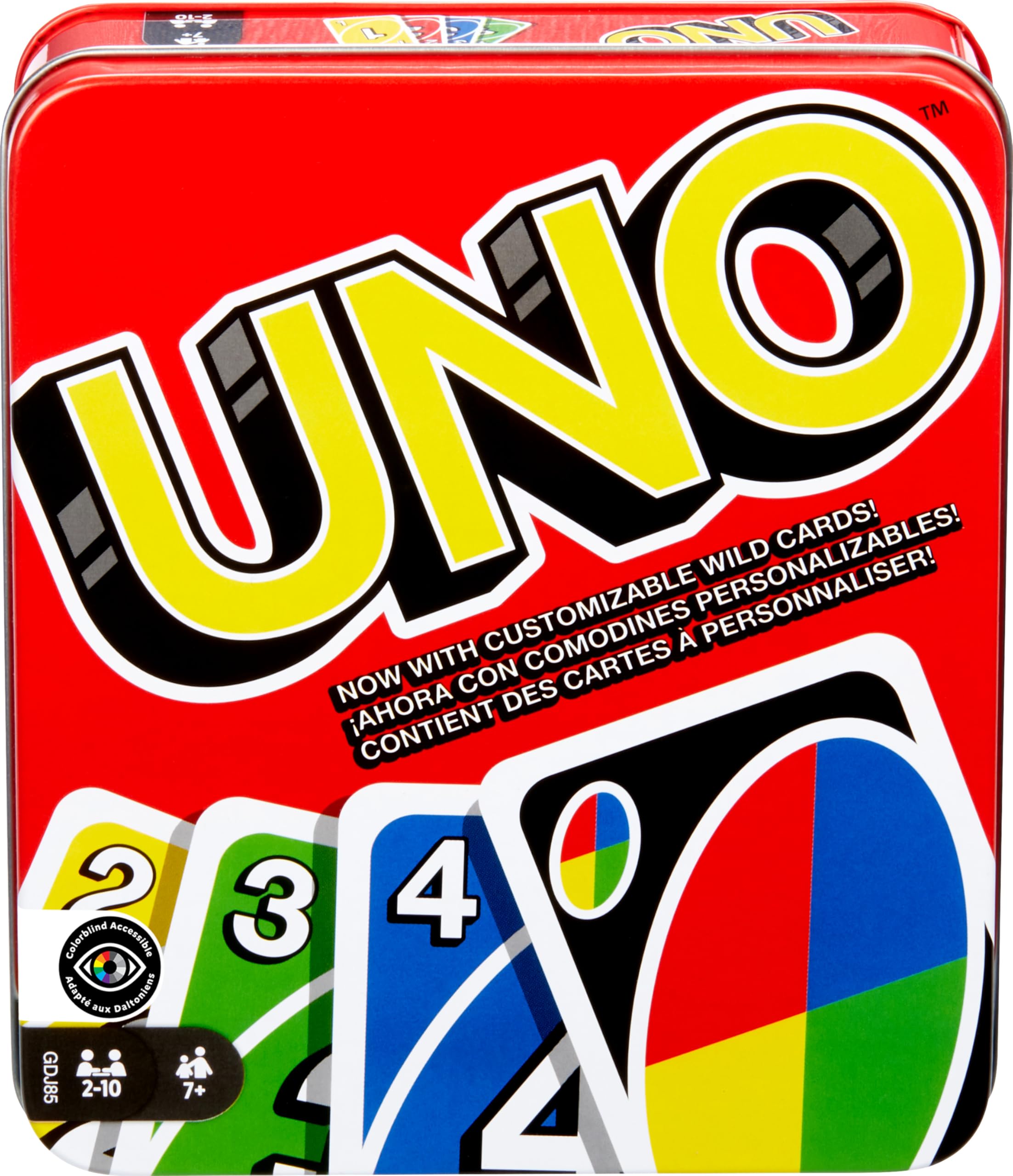
UNO earns its place in the bag rather than on the shelf. The rules survive being half-remembered — match a color or a number, shout when you're down to one — and the deck plays as well with two people at a kitchen table as with eight in the back of a car. It's the game we take when we don't know who'll be there.

The colorblind-accessible deck is the reason to pick this edition over a cheaper one. Every card carries a symbol marking its color, so a kid who can't separate red from green plays on the same terms as everybody else, with no house rules and no quiet workaround. There are also three blank Wild cards you write on, erase, and rewrite, which turns house rules into part of the game instead of an argument.

Depth is what you give up. There's a little strategy in holding a Draw Two until it hurts, but the cards decide more than the players do, and an eight-year-old works that out quickly. For a deck that lives in a bag, that's the point: a fast hand settles nothing and nobody minds losing it.

Bottom line: We keep UNO in the bag rather than the shelf: it seats up to ten, costs little, and the colorblind symbols mean nobody at the table sits out.

#5

Rummikub

Rummikub

Older kids

Doodle Score 9.6/10
Check Price

Worth Noting

  • Plastic tiles feel light and clicky
Players
2-4
Tile Material
Plastic
Recommended Age
8 years and up
Read the full review

Rummikub is the one here that adults play after the kids have gone to bed. Numbered tiles, runs and groups, and a rule that lets you rearrange what's already on the table on your turn — that last part is what separates it from every other matching game in the cupboard.

The eight-and-up label is honest rather than defensive. Younger players can hold a rack and lay a simple run, but once the table fills with rearranged sets, an eight-year-old is fine and a six-year-old is lost. As a game for a nine-year-old and two adults, it's the strongest thing in this set for genuine thinking, and the one that draws in the adult who says they don't like games.

The tiles are plastic and light in the hand — no heft, no satisfying click — which is the trade for a set that shrugs off being dropped. And the box stops at four players, so a family of five pairs up, which works out fine when one of the five is small.

Bottom line: Rummikub is our pick for a nine- or ten-year-old ready for real strategy — and the one here that adults will still play once the kids are in bed.

#6

Taco Cat Goat Cheese Pizza

Taco Cat Goat Cheese Pizza

Parties

Doodle Score 9.6/10
Check Price

Worth Noting

  • Cards bend and scuff from the slap pile
Players
2-8
Playing Time
15 minutes
Recommended Age
8 years and up
Read the full review

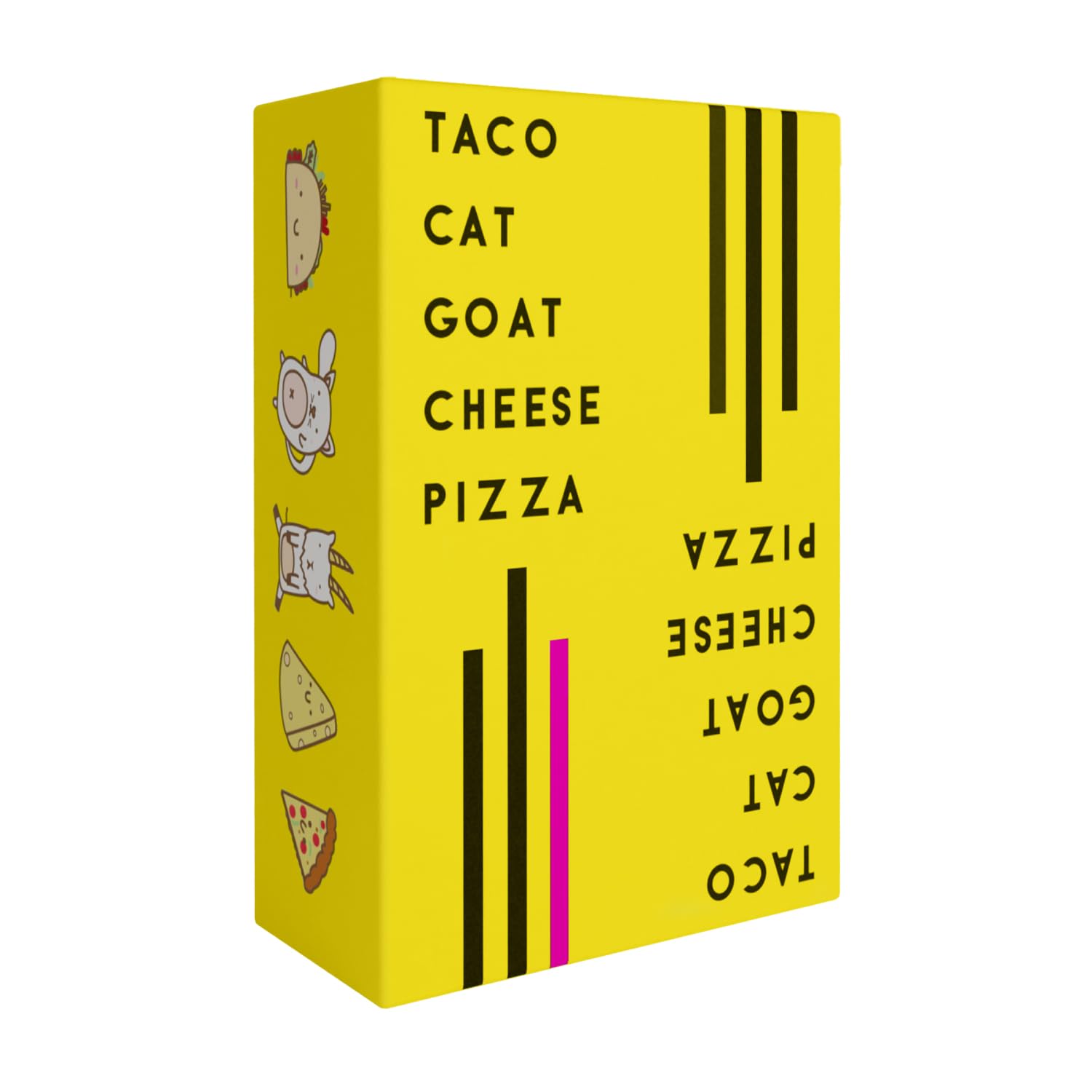
The whole game is a chant. Players take turns flipping a card and saying the next word in the title — taco, cat, goat, cheese, pizza — and when the spoken word matches the card on the pile, everybody slaps it at once. That's the game. It takes about ninety seconds to teach, which is why it works at a birthday party where half the kids haven't seen it before.

What the box doesn't tell you is how physical it gets. Slap pile means hands landing on hands, so short nails and a sturdy table are worth sorting out before the first round rather than after. The cards take the same beating; a deck that gets slapped all evening shows it at the corners.

Six to eight players is where it sings: enough people that the pile is chaos, few enough that everyone's hands fit around it. At two it's a curiosity rather than a game. We take it over a board game for a mixed-age party where the point is noise and nobody is keeping score.

Bottom line: Buy this for a loud table of six or more: it's the funniest game here, and a full round is over before anyone gets bored.

#7

Regal Games 6-Deck Set

Regal Games 6-Deck Set

Mixed-age families

Doodle Score 9.6/10
Check Price

Worth Noting

  • Thin card stock creases quickly
Players
2-6
Contents
Six card decks
Recommended Age
4-12 years
Read the full review

Six decks in one box — Go Fish, Crazy 8's, Old Maid, Slap Jack, Garbage Monster, and War — and the cards are oversized, which matters more than it sounds. A five-year-old holding a fan of standard cards loses half of them; big cards make Go Fish something a kid does without an adult holding the hand for them.

The value is coverage rather than quality. Old Maid works at four, Crazy 8's at six, and Slap Jack keeps an eight-year-old going long after the others drift off, so one box buys a few years and then gets handed down. It's also the box we take to a restaurant, because a hand of Go Fish is quieter than it sounds.

Which deck you reach for matters more than the set's description suggests. Go Fish and Old Maid are matching and holding, so they're the entry points; Crazy 8's adds a rule to track; War is pure chance and a lot of shuffling. With one child rather than several, buy a single good deck — six thin ones is a set for a household, not a person.

As a gift for a house with kids at different ages, though, it's the box we hand over most readily: six games that need no explanation, in a package that costs about what one board game does. Nobody will call it a favorite, and it will be the thing pulled out on a rainy afternoon when the good games have been played to death.

Bottom line: For a household with kids at different ages, six familiar decks in one box is the practical buy — one gift that works from four upward.

How We Tested the Best Board Games for Kids

We started with a long list of about 60 titles pulled from publisher catalogs, bookstore shelves, and the games that keep reappearing at other people's houses. From there we cut anything that needed an app, anything with a setup that ran past five minutes, and anything built for one narrow age band. That left 16 games, played over six months.

Testing happened where these games actually live: the kitchen table after school on a Tuesday, a rainy Sunday with grandparents at one end and a 5-year-old at the other, a sleepover with four kids and no adult referee, and a couple of long car rides. We played each game at least three times. The second and third plays told us more than the first — a good rulebook only gets read once.

Along the way we timed how long the rules took to read aloud and whether I could reteach them from memory a week later, and we counted how often play stopped so someone could ask what a card meant. Small hands got a vote: we watched whether a 6-year-old could fan, hold, and shuffle without creasing the cards, and whether the tokens were easy to pick up off a rug. We also noticed who was still at the table at the end — games that eliminated a kid in the first ten minutes rarely came back out. Laughs counted too, the real ones that came from a rule or a lucky draw rather than the box copy.

After each session the game went back in the box the way a kid does it, and we checked corners, card edges after a few dozen shuffles, and whether the insert held up. One lost a fight with a spilled juice. The rest are still on the shelf.

How to Choose Board Games for Kids

Match the game to what the child can do alone

Reading is the real dividing line, not age. Candy Land asks for color matching and nothing else, which is why a three-year-old can play it without help. Sorry! needs a child to read a word or two on a card and count squares along a track. Rummikub assumes fluent numbers and the patience to scan a table that keeps changing. The age on the box is a rough proxy for those demands, nothing more.

Before you buy, watch a child take one turn with a borrowed copy. If they need you to tell them what to do every time around the table, the game is a year early — and a game that's a year early is the one that ends in tears on the kitchen floor.

Count the players before you buy

Most family board games top out at four, which suits a nuclear family and falls apart at a table with grandparents and cousins. Card games fill that gap: UNO handles up to ten, Taco Cat up to eight, and both still work with two, which is not true of a four-seat board game with half the seats empty.

The trap is the phrase family game. It usually means two to four players, and that number sits on the back of the box in smaller type than the age. If your game nights regularly run to six, buy one card game that scales rather than two board games that don't.

Aim for a game that ends while everyone still wants more

Fifteen minutes beats thirty for anything with a four- or five-year-old at the table, and it's a sensible ceiling for older kids on a school night. Short games get replayed. Long games get abandoned mid-board, and an abandoned game is one nobody asks for again.

Luck matters as much as length. A pure skill game lets the adult win every round, and a child who never wins stops asking to play; a pure luck game bores a nine-year-old by the second hand. The sweet spot is one real decision per turn — when to play the revenge card, which run to break apart — sitting on top of a draw that can undo it.

Expect thin cardboard, and decide what matters

Reissued classics are built to a price. The board is thinner than the one you remember, the cards bend at the corners, and the insert is a folded bit of plastic. None of that makes them bad buys, particularly at the bottom of the price range, but it changes how much care the box needs.

Storage is where the money goes further. A tin or a tube earns its keep if the game travels — UNO's tin lives in a bag — while a box that stays on a shelf doesn't need one. What we check before buying a game as a gift is whether the pieces will survive being carried around in something else.

Frequently Asked Questions

Final Verdict

Sorry! is the one we put in front of a six- or seven-year-old first. It explains itself in a minute, plays through to a finish, and lets a kid beat an adult often enough that they ask for a rematch. That combination is rarer than it sounds.

If the household is younger than that, Candy Land is the better buy — a three-year-old can run a turn alone and the box knows it's a first step. And if you want one game that outlives the picture-book years, add Rummikub: the same tiles go from a nine-year-old learning runs to adults playing seriously after bedtime. Buy Sorry! for this year and Rummikub for the next five.