Games & Puzzles

Best Board Games of 2026

A board game has one job: get everyone off their phones and into the same room. But the gap between a game that looks fun on the shelf and one that actually lands at the table is wide—too many rulebooks read like tax forms, and too many "family" games bore the adults by round two. The right pick fixes that. It teaches in minutes, keeps a table of mixed ages engaged, and gives strategic players enough room to plan a few moves ahead without freezing out the casual crowd.

Over the past six months, I've played 18 board games with family, friends, and neighbors—on weeknights after dinner and during holiday weekends when the table stayed set for hours. We noted whether anyone asked for a rematch, how long it took to teach and set up, and whether the components survived a dozen shuffles. The keepers had a little luck, a little strategy, and a rulebook you didn't need to reread mid-game. The picks below earned their shelf space.

#1

Secret Hitler

Secret Hitler

Adult game nights

Doodle Score 9.8/10
Check Price

Worth Noting

  • Costliest game in this guide
Ages
17+
Players
5-10
Components
Wooden pieces, foil-inlaid boards
Read the full review

Open the box and the production announces itself: wooden pieces, boards with foil inlay, and small envelopes holding each player's secret role. At the price it sits at, that matters. This is the one game in the guide that feels like furniture rather than packaging.

The game is a hidden-role deduction fight. Two sides, most of the table unsure which one they are on, and every conversation a calculation about whom to trust. Rounds are short enough that a bad loss costs minutes rather than an evening, and because roles rotate, the quiet one who got accused all night becomes the one doing the accusing.

What decides it is the guest list. Five is the printed minimum and the game is thin at five; at seven to ten it fills a room properly and it is the loudest box here. Plan on a practice round, because the rules are simpler than anyone believes until they have played one. Keep it away from family night, too: the 17-plus grade is there for the theme and for the fact that the whole game is lying convincingly to people you like.

Bottom line: The best thing here for a loud adults-only room: short rounds, gorgeous wooden bits, and more bluffing than anything else on this list.

#2

Azul

Azul

Modern family nights

Doodle Score 9.6/10
Check Price

Worth Noting

  • Four players is the hard ceiling
Ages
8+
Tiles
100 resin
Players
2-4
Play Time
30-45 minutes
Read the full review

The first thing anyone does with Azul is pick up a tile. They are thick resin, cool and a little weighty, and they come out of a linen bag in handfuls. We point most families here before any classic on the shelf, and the rules are the reason: you can teach this in the time it takes to deal out four player boards.

Each turn you draft tiles from the shared factory displays and push them into a pattern row, and the game lives in what you leave behind. Take too many and the surplus drops into your penalty line; take too few and the next player gets exactly the set they wanted. It plays well head to head and better with three, and a round lands inside 45 minutes, which is about right for a school night.

The rulebook is longer than the game really needs, but one read-through and a practice round is usually enough for the pattern to click. The eight-and-up grade is honest, though. A six-year-old can move tiles around but cannot plan a wall, and the scoring will punish that every time, so if your youngest is still in single digits this is one for after bedtime.

Bottom line: The game we recommend to most families: a five-minute teach, real decisions on every turn, and tiles you will want to leave out on the table.

#3

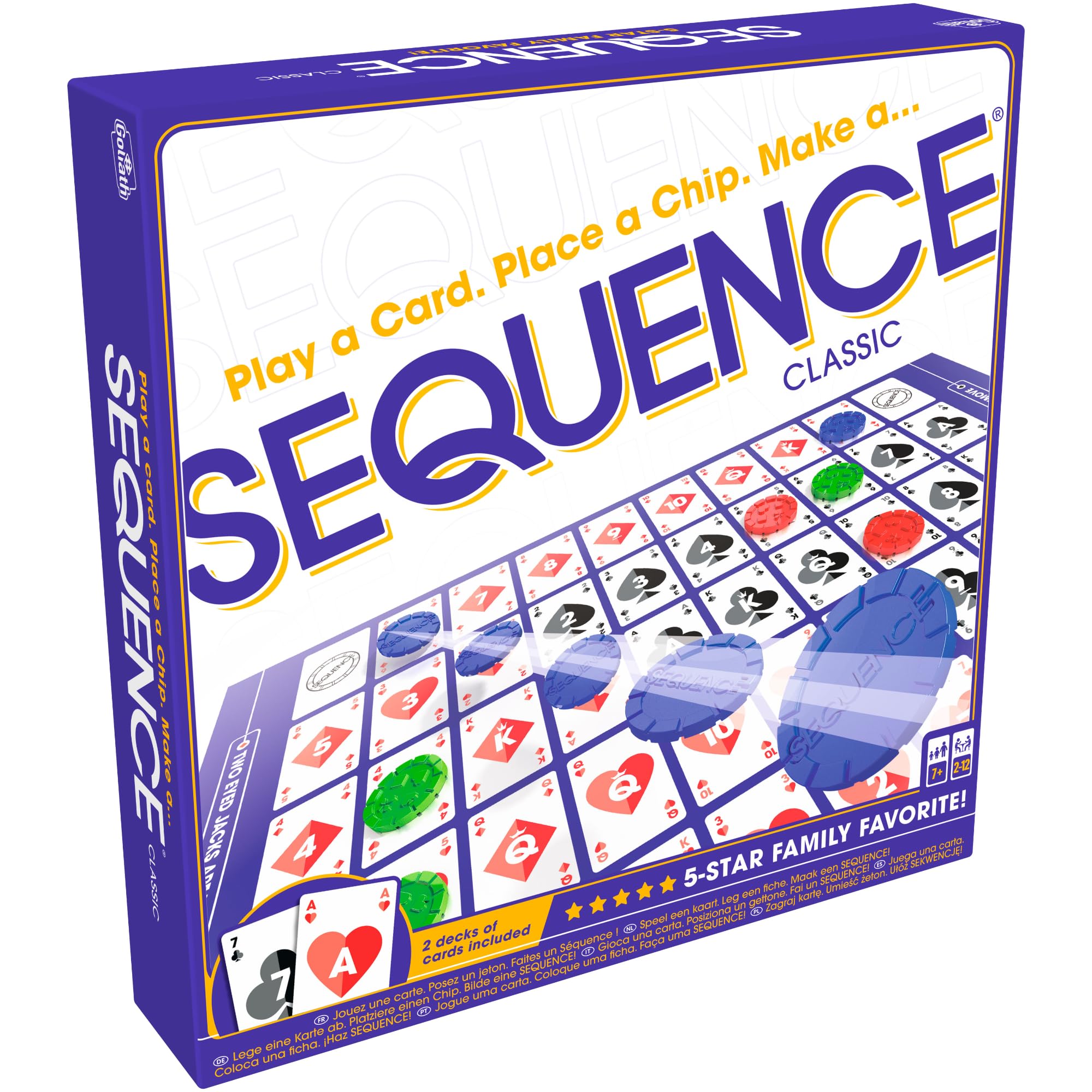
Sequence

Sequence

Big groups

Doodle Score 9.6/10
Check Price

Worth Noting

  • Flimsy folding board and undersized cards
Ages
7+
Board
Folding, 19.75 x 15.25 in
Chips
135 in three colors
Players
2-12
Read the full review

Sequence's trick is the guest list. The box says two to twelve players, and the game underneath is simple enough that a seven-year-old and a grandparent can play the same hand: play a card, cover the matching space, first to five in a row wins. That range is why it comes out at almost every kind of gathering.

The piece count tells you how the range really works. There are 135 chips in three colors, so up to three of you play individually and a fourth player joins a team. That is the honest shape of the twelve-player promise, and teams turn out to be the best part of it: a sharp player and a distracted one on the same side, both with a stake in the row.

The folding board and the cards are where the money went missing. The board creases along its folds, the cards are noticeably smaller than the deck you remember, and the whole thing feels lighter than the box art suggests. None of that has stopped it being what we reach for when the table gets crowded. At this size you are buying the player count and the rules, not the paper stock.

Bottom line: The one to buy when the table regularly runs six or more: cheap, quick to teach, and just strategic enough to keep the adults in their seats.

#4

Jenga

Jenga

Party crowds

Doodle Score 9.6/10
Check Price

Worth Noting

  • Rebuilding eats more time than the round does
Ages
6+
Blocks
54 hardwood
Players
1 or more
Storage
Carry tube
Read the full review

Someone is holding their breath over a tower leaning two inches off plumb, and the room has gone quiet. That moment is the product, and it is why Jenga still earns shelf space in a house full of better-designed games.

Fifty-four hardwood blocks and a plastic stacking sleeve are the whole thing, and the tube-shaped box with a handle means it travels to a rented cabin without shedding pieces in the trunk. It is also the most genuinely all-ages game here: a six-year-old and a grandparent are on exactly equal footing, because there is no reading, no hidden information and no arithmetic. Solo play is real, too, which is more than most boxes here can claim.

The catch is the rhythm. A round ends in three seconds of clatter and then you are rebuilding, and the rebuild takes longer than the round did, a fact that matters more on a Tuesday than at a party. If you want depth to fill an evening, this is not it. If you want twenty minutes that pull a room together before dinner, nothing here does it faster.

Bottom line: The party game we keep on the shelf for mixed company: nothing to teach, anyone can play, and the crash is the entertainment.

#5

Rummikub

Rummikub

Mixed-age tables

Doodle Score 9.6/10
Check Price

Worth Noting

  • Four players maximum
Ages
8+
Skills
Sequencing and pattern recognition
Players
2-4
Read the full review

Rummikub looks like a rummy card game and plays like something else, because you are allowed to take apart what is already on the table. Runs get rebuilt, numbers get moved between melds, and a player who looked stuck for three turns can rearrange half the board and go out. It rewards the person who sees the second step rather than the one holding the best tiles.

Two to four players, eight and up, and it is the calmest game in this guide: no timer, no buzzer, no crash. It is the one we put in front of a grandparent and a ten-year-old on the same afternoon, and the one most likely to end in a conversation rather than an argument.

The components are honest where it counts and thin where they are not. The numbered tiles have proper weight and click when you stack them; the four racks are light plastic, and they are the one part of the box that feels cheaper than what it holds. That is the trade that keeps a tile game affordable, and it is the right one, because the tiles are what your hands are on all night.

Bottom line: The tile game we hand to a table spanning eight to eighty: simple melds, real thinking, and enough luck that nobody gets shut out.

#6

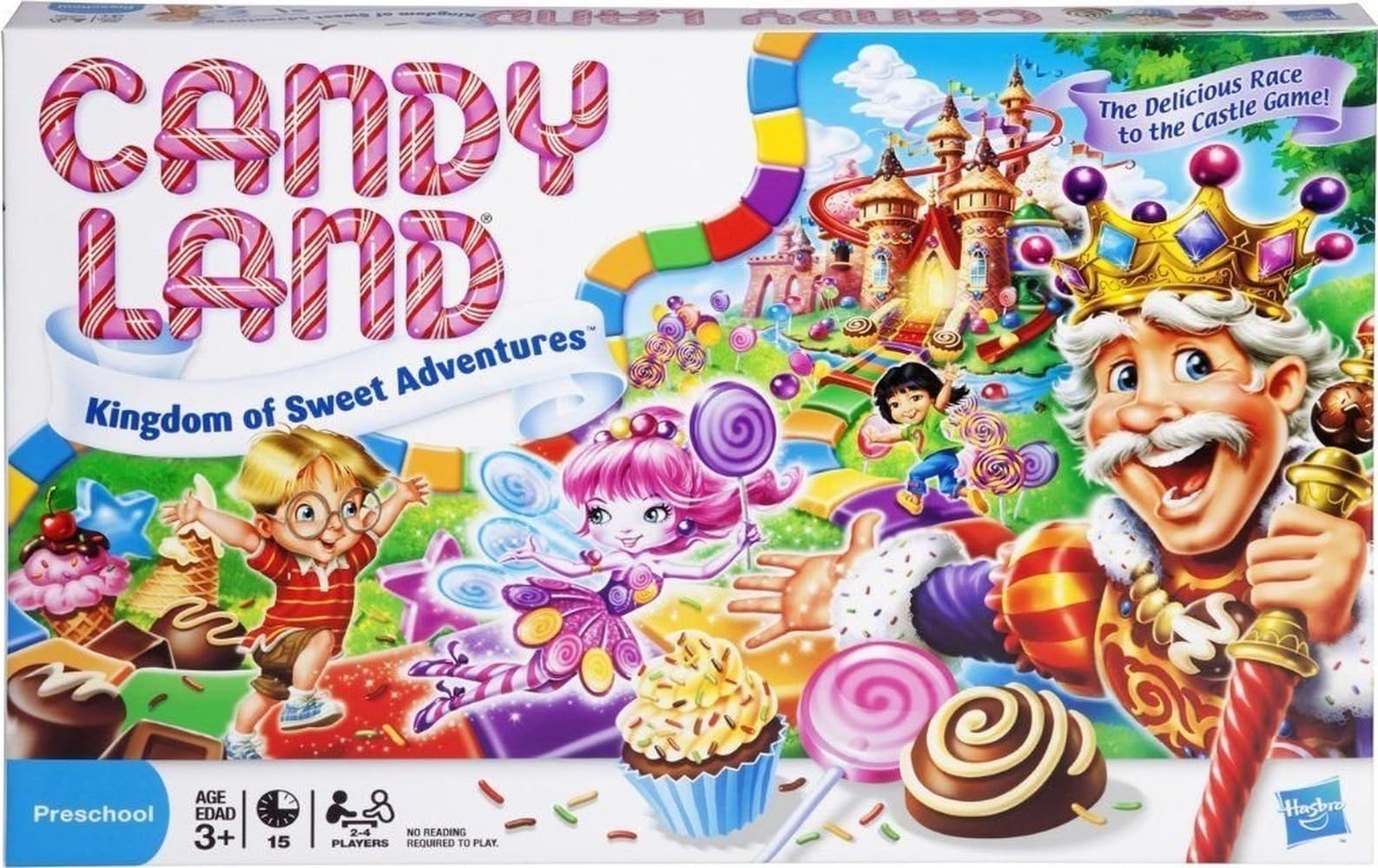
Candy Land

Candy Land

Preschoolers

Doodle Score 9.6/10
Check Price

Worth Noting

  • Stiff cards are hard for small hands to shuffle
Ages
3+
Players
2-4
Reading
Not required
Play Time
15 minutes
Read the full review

Candy Land asks nothing of a child except that she can match a color, and that is the entire recommendation. No reading, no counting past the spaces on the card, no waiting through another player's long turn, just a gingerbread pawn on a path and a card to draw. A round is over in about fifteen minutes, which is roughly the attention span you are buying for.

The luck is the feature, not the flaw. A preschooler beats an adult on the same terms the adult beats her, and there is no way for a grown-up to quietly sandbag a round to keep the peace. Turn-taking and losing-with-grace land more easily over this board than over any game here with real decisions in it.

Be honest about the lifespan. The manufacturer's range tops out at six, and by five most children have worked out that the game plays itself. That is two or three good years, which is more than most toys manage, and after that it becomes the box you keep for the next three-year-old in the family.

Bottom line: Buy it for a three- or four-year-old and accept it is a two-year game: no reading, no decisions, and a real chance the smallest player wins.

How We Played, Tested, and Ranked Board Games

We built the shortlist from publisher catalogs, hobby-shop recommendations, and the games that kept surfacing on family shelves, then filtered by price, player count, and age range so a party game wasn't competing against a two-hour strategy epic.

Over six months, we tested 18 games across weeknight dinners, weekend gatherings, and a rainy cabin trip with kids and adults at the same table. I read each rulebook cold, timed setup and teach time, and played at least three sessions per game with different groups. We noted how often someone asked for a rematch, whether a first-timer could take a turn without hand-holding, and whether the game kept moving or stalled between turns.

Gameplay got judged by the table: did the choices feel meaningful, or did the dice decide everything? Family-friendly meant watching a 9-year-old and a 45-year-old play the same round without either checking out. To test ease of learning, I read each rulebook cold and timed how long it took to teach a first-timer before we could start without flipping back. Setup and cleanup got their own stopwatch—how long to lay out, how much table space it hogged, and whether everything fit back in the box without a fight. Game quality came down to repeated shuffles, card corners, and how the box held up in a closet. Strategy was measured by whether final scores stayed close and whether experience actually mattered.

How to Choose Board Games

Count the people, not the player range

Every box prints a player range and almost every range is optimistic. The figure to check is how many sets of pieces are inside. Azul ships four player boards, Rummikub four racks, and Sequence three colors of chip, which means a fourth player joins a team rather than starting a row of their own. A range that tops out at twelve is a team game at eight.

Decide what your normal night looks like — a couple, a family of four, a rotating crowd of eight — and buy for that number plus one. Secret Hitler's five-player minimum is the clearest example of the trap: a box that sits unopened because only three of you play is worse value than any component upgrade.

Match the age grade to the youngest player

Age grades are about reading and small parts first and decision-making second. A three-year-old can handle a color-matching race with no reading at all; an eight-plus strategy game assumes a player who can plan two moves ahead and lose without a scene. Read the grade as the point where the game starts being fair, not the point where it stops being fun.

The expensive mistake is one game for a household with a four-year-old and a ten-year-old. A game simple enough for the four-year-old will lose the ten-year-old by round two, and the reverse is unplayable. Two boxes, one for each end of the shelf, costs less than buying the wrong big game twice.

Treat teaching time as part of the play time

A forty-minute game with a fifteen-minute teach is a fifty-five-minute commitment, and the teach is what decides whether anyone asks to play again. Games built on a deck of cards and one action per turn teach themselves. Hidden-role games usually need a practice round before the rules make sense to anybody at the table.

Add the setup. A game that has to be sorted, shuffled and rebuilt between rounds suits a long evening, not the twenty minutes before dinner. Our rule: if a new player cannot be dealt into a round mid-game, the game has to be very good to justify the first night.

Handle the pieces before you commit

Mass-market games have thinned out over the years: folding boards that crease, cards smaller and stiffer than the ones you remember, light plastic where there used to be wood. It rarely breaks a game outright, but it changes how often the box comes off the shelf.

The pieces also decide storage. A tube with a handle goes in a car trunk; a deep box with an insert survives on a shelf. If the game will travel, buy for the travel. If it lives on the same shelf for a decade, spend the extra on tiles and blocks that feel worth handling.

Frequently Asked Questions

Final Verdict

Azul is the board game we buy first for a family. Five minutes of rules, a real decision on every turn, and pieces that make it feel like a gift rather than a box of cardboard — it covers a couple or a family of four, and it is the one non-gamers ask to play again.

If your table regularly runs six or more, Sequence is the practical answer, teams and all. For an adults-only crowd of seven-plus, Secret Hitler is the box that gets requested twice in one night.