Building & Blocks

Best Building Sets for Kids of 2026

A good building set buys you a quiet Saturday morning and a kid who’s proud of what they made. The wrong one buys you tears over a tower that collapses, a floor full of tiny pieces, and a box that gets shoved to the back of the closet by Tuesday. I’ve watched my own kids—and my friends’ kids—circle through both versions. What separates them isn’t the number of pieces on the box; it’s whether the pieces actually hold, whether the set invites repeat builds, and whether the whole thing feels worth the space it takes up.

Over the past five months, my team and I tested 12 building sets with kids ages 4 to 10, building on living room floors after school and on weekend mornings, then packing everything back up. We looked for magnets that held when a tile wall got bumped, counted how many builds each set inspired before the novelty wore off, and paid attention to the size of each piece underfoot and in a storage bin. Cute themes pulled kids in, but the sets that lasted were the ones where quality and value lined up. The picks below are the ones worth clearing shelf space for.

#1

LEGO DUPLO Brick Box 10913
LEGO DUPLO Brick Box 10913

Toddlers 18 months+

Doodle Score 9.8/10
Check Price

Worth Noting

  • Only 65 pieces, so builds stay small
Pieces
65
Storage
Brick-shaped storage box
Special Pieces
Car with moving wheels, windows, flowers
Recommended Age
18 months+
Read the full review

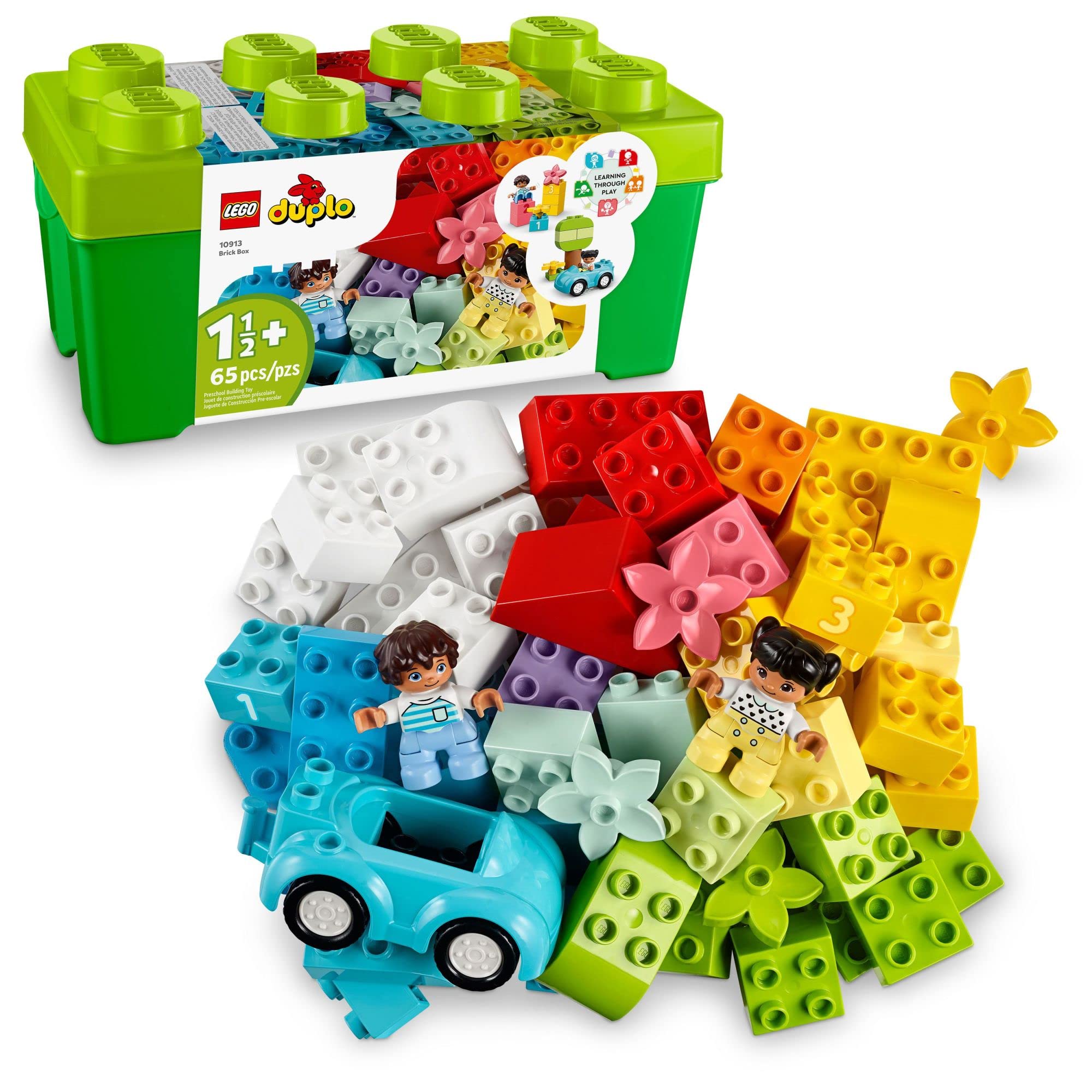
Eighteen months is the number on the box, and it's honest. These are the fat DUPLO bricks — big enough for a fist to grab and easy to pull apart, which is the whole point at that age. A toddler who can't yet build a wall can still click two bricks together and hear it work.

What we appreciate most is how much play is packed into 65 pieces. There's a car with moving wheels, windows, flowers and figures, plus an idea booklet showing a street, a baker's shop and a tree — enough to build a small scene with a toddler rather than for one. The box is brick-shaped and closes, so tidying up is part of the play instead of a job afterwards.

Where it stops is around three and a half, when kids start wanting walls and roofs that line up and reach for an older sibling's classic bricks. Up to then it's the set we buy for a first or second birthday, and the one that gets tipped out and refilled every single day.

Bottom line: For a first set, start here: chunky bricks rated from 18 months, with a car, flowers and a box that holds everything.

#2

MAGNA-TILES Classic 32-Piece

MAGNA-TILES Classic 32-Piece

Premium magnetic tiles

Doodle Score 9.8/10
Check Price

Worth Noting

  • Premium price for only 32 tiles
Pieces
32
Shapes
5 shapes in 6 colors
Weight
2 lb
Recommended Age
3+
Read the full review

Nothing about this set is clever. No wheels, no figures, no gears — 32 squares and triangles in six translucent colors, and that's the lot. We think it's the best-made tile here: thick plastic, smooth edges, and enough weight that a placed tile stays where it's put.

They take a beating. Tiles get dropped, stood on and tipped out of a bucket, and these have kept their shape and their grip through it; a finished house survives being carried across the room, which is not true of every tile in this group.

What 32 tiles build is a doll's house floor, a rocket, a garage for two cars — small, finished things rather than sprawling ones. That suits a child who plays with what they've made and leaves it on a shelf. If yours wants a castle they can sit inside, the hundred-tile box is the better buy.

Bottom line: The best-made tiles here, and the smallest box — worth it as a first magnetic set you plan to add to.

#3

LEGO Classic Creative Brick Box

LEGO Classic Creative Brick Box

First brick set

Doodle Score 9.6/10
Check Price

Worth Noting

  • Lots of small bricks in the mix
Pieces
484
Storage
Plastic storage box
Works With
All LEGO sets
Recommended Age
4+
Read the full review

Four hundred and eighty-four pieces is a lot of raw material for one box, and it's the reason this is the set we hand to almost any kid over four. You get windows, toy eyes, a green baseplate, and 18 tires with rims, so the first thing built doesn't have to be a house — it can be a car, a tiger, or a car with a tiger in it. Every brick is the ordinary classic kind, which means it clicks into whatever is already in the toy bin.

Value is where it wins against everything else here. Set it beside the toddler boxes and the magnetic tiles and you're getting several times the building material for similar money, with nothing in the box that only does one job. We also like that the storage box arrives with room left in it. That sounds like a complaint and isn't: there's space to tip the loose bricks from other sets in, so the whole collection lives in one place.

The baseplate is smaller than the box suggests — about 3 by 6 inches, roughly a coaster. It's there to park a car or sit under a small house, not to hold a build, so plan on the floor or a table being the real build surface. It's the one shortcut in an otherwise generous box.

Bottom line: The set we hand to almost any kid over four: 484 bricks, wheels, windows and eyes, and a box that keeps them together.

#4

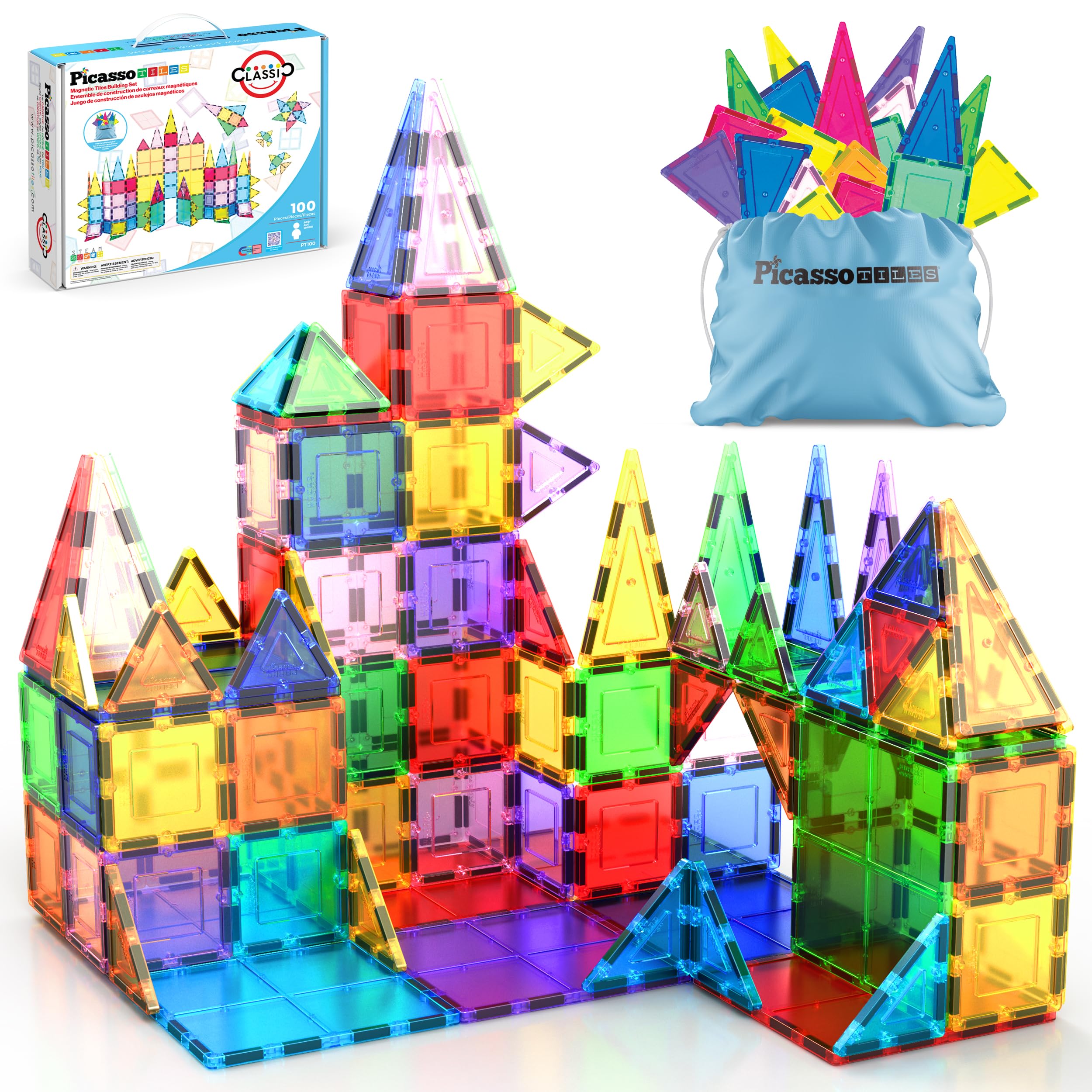
PicassoTiles 100-Piece Magnetic Tiles

PicassoTiles 100-Piece Magnetic Tiles

Big magnetic builds

Doodle Score 9.6/10
Check Price

Worth Noting

  • No bin or bag for 100 loose tiles
Pieces
100
Weight
5.5 lb
Block Type
Magnetic tiles
Recommended Age
3+
Read the full review

The first thing we did with the hundred tiles was see how much of the box we could get into one structure. The answer is most of it: 100 tiles is enough for a castle wall with towers, which is the thing small tile sets can't do and the reason kids drift away from them. Tiles are also the fastest building toy there is — a wall goes up in seconds, and a three-year-old can help.

The catch is the magnets. They're not uniform: a flat wall of squares and triangles holds well, but build a tall tower and you'll find joints that let go when you carry it. Our fix was to build low and wide and let the height come at the end. That's an adjustment rather than a flaw, and it's part of the trade for this many tiles at this price.

Set against the premium brand, this is the set we recommend first, because volume matters more than finish with magnetic tiles — a hundred pieces lets two kids build at once and lets a build actually get big. What you give up is the box: there's no bin or bag, just an instruction manual, so plan on a tub to throw them in.

Bottom line: Buy this one for volume: a hundred tiles at roughly what the premium brand asks for 32, so the builds get genuinely big.

#5

Melissa & Doug 100 Wooden Blocks

Melissa & Doug 100 Wooden Blocks

Wooden blocks for 2+

Doodle Score 9.6/10
Check Price

Worth Noting

  • Blocks don't interlock, so builds rely on balance
Pieces
100 blocks
Shapes
9 shapes in 4 colors
Material
Solid wood
Recommended Age
2+
Read the full review

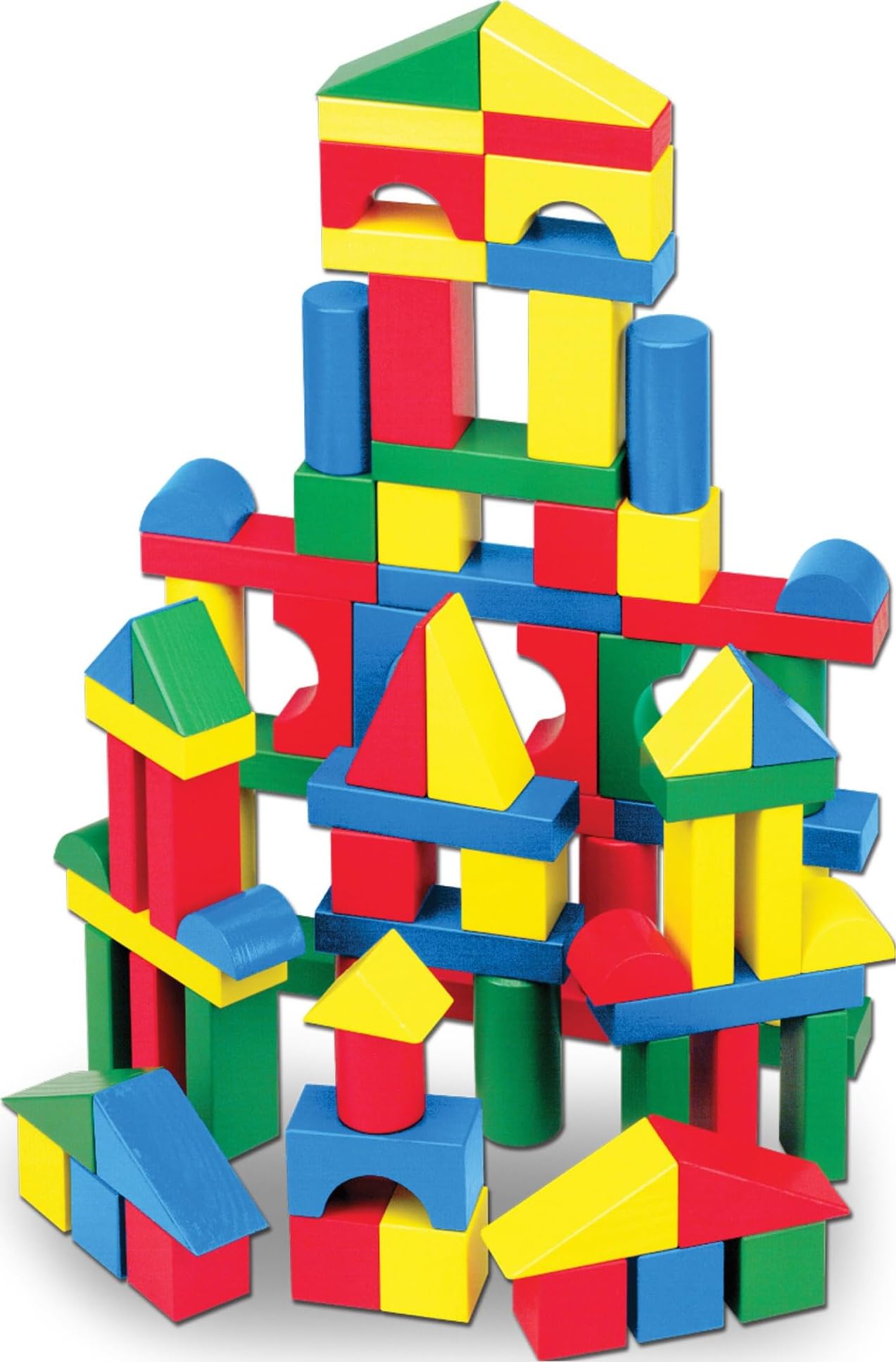
There's a particular kind of play that starts around age two: stack three blocks, knock them down, laugh, repeat. This box is built for it. A hundred solid wood blocks in nine shapes and four colors, small enough for a toddler's hand and big enough that a tower of five is genuinely tall.

The finish is what sold us. The blocks are painted in four bright colors, the edges are rounded, and the wood is smooth enough that a child who still mouths everything isn't chewing splinters. The paint holds up to the usual treatment — thrown, stood on, used as pretend food.

Shapes matter more than the count here. Nine shapes means arches, cylinders and triangles, not just cubes, so the towers get doors and the bridges actually span. The box is sturdy cardboard with a lid — fine on a shelf, though a shallow tub is easier for a two-year-old to dig in.

As a first building set, this is the one we reach for: no instructions, no wrong way to do it, and nothing to click means nothing to snap. It's also the set that gets handed down, because there's nothing in it to wear out.

Bottom line: Our pick for the youngest builders: a hundred smooth wood blocks that stack, get chewed and come back for more.

#6

Brain Flakes 500-Piece Set

Brain Flakes 500-Piece Set

Piece-count value

Doodle Score 9.6/10
Check Price

Worth Noting

  • Discs take a firm push to click
Pieces
500
Storage
Yellow storage jar
Block Type
Interlocking discs
Recommended Age
3+
Read the full review

Brain Flakes are what you get when you strip a building set down to a single part. Every piece is the same plastic disc with slots around the rim; press two slots together and they lock into a lattice. Five hundred of them in 12 colors arrive in a yellow jar with a booklet for a flower, a rainbow ball and a tree.

We weren't expecting much and were won over. With only one shape, a child stops hunting for the right piece and starts thinking about structure — triangles, spheres, a Ferris wheel — and 500 discs go a long way. That's why this is the set we suggest for a classroom, a waiting room, or two siblings who need one toy to share.

Cleanup is the other half of the deal. Five hundred loose discs scatter, and a rimmed tray or a bowl on the table saves a lot of floor time; the jar is for storage, not for playing out of.

Bottom line: Five hundred identical discs make this the best value in piece count here — and a genuine engineering toy at five.

#7

MEGA BLOKS First Builders 150-Piece Bag

MEGA BLOKS First Builders 150-Piece Bag

First birthday gift

Doodle Score 9.6/10
Check Price

Worth Noting

  • Connections are loose, so carried builds fall apart
Pieces
150
Storage
Zippered storage bag
Block Size
Large, easy-grip
Recommended Age
1+
Read the full review

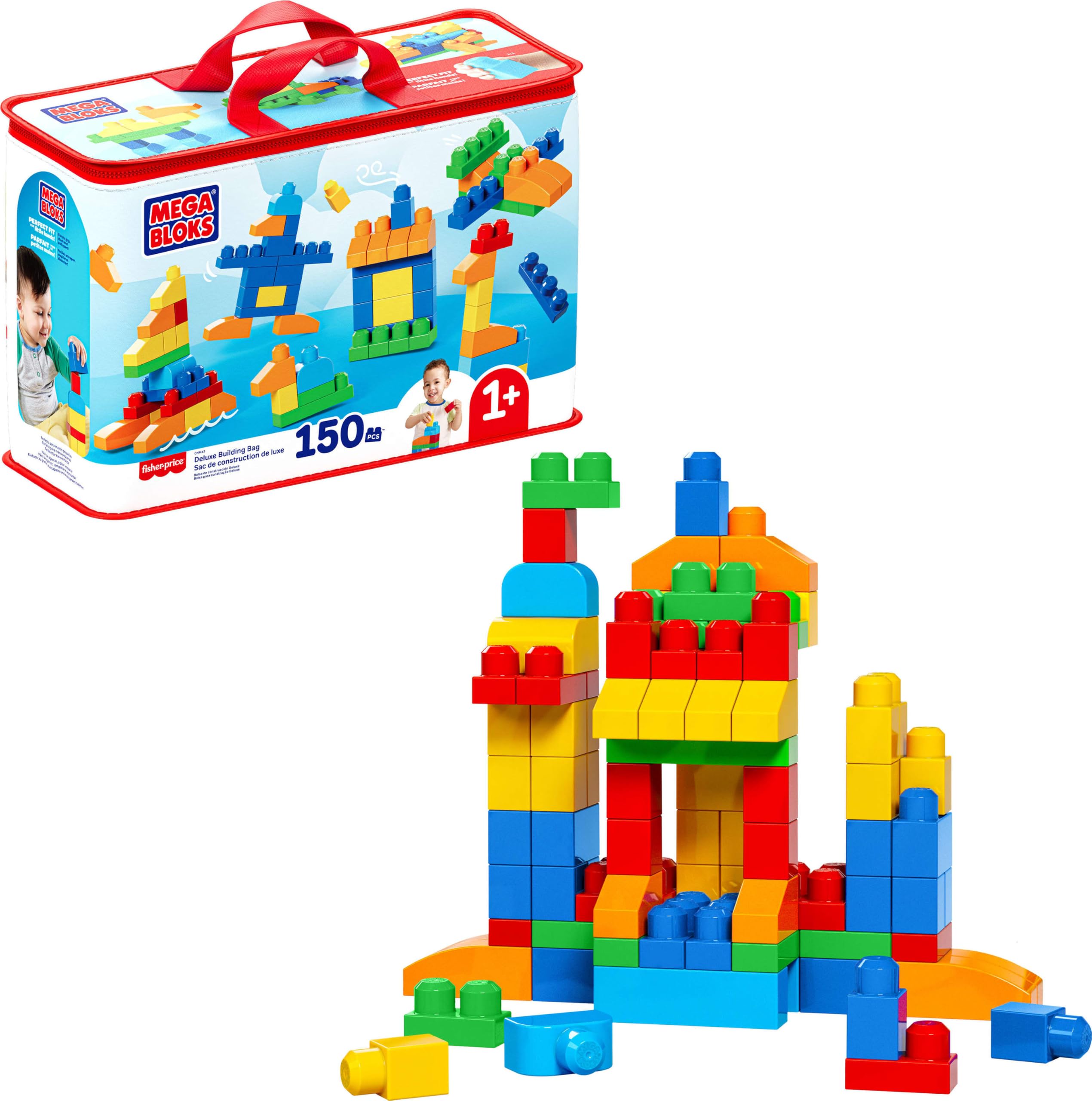
Tipping out the bag is the moment you learn what you've bought. A large share of the 150 pieces are single-stud blocks — the big squares with nothing on top to connect to — so the bag looks huge and builds smaller than the count suggests. For a one-year-old that's fine: they stack, they get knocked down, they go back in.

The blocks themselves are the right size for that age. They're chunky enough for a whole hand, the corners are rounded, and the zippered bag stands up on its own — trivial until you're trying to get a floor's worth of blocks picked up one-handed.

Where it sits in the range is just before DUPLO. It's the set for a first birthday, when the job is gripping, stacking and pulling apart rather than building anything in particular. Once a child is two and wants walls that stay walls, the DUPLO box does that better.

For the money, it's the biggest bag of toddler blocks here, and the bag itself earns its place — it stands up, holds everything, and keeps the pieces in one place between sessions. Expect to move up to a proper brick system once the walls start needing to stay up.

Bottom line: The bag to buy for a first birthday: 150 big, grippy blocks for grabbing and stacking, in a bag that holds the lot.

#8

Lincoln Logs 100th Anniversary Tin

Lincoln Logs 100th Anniversary Tin

Classic log building

Doodle Score 9.4/10
Check Price

Worth Noting

  • Sparse tin: only 111 logs for a premium price
Pieces
111
Storage
Collectible tin
Material
Stained maple wood
Recommended Age
3+
Read the full review

The tin is the first thing you notice. It's a big, square keepsake box with the anniversary artwork on the lid, and it's the reason this works as a gift — there's something to hand over. Inside are 111 maple logs, stained green, brown and red like a cabin wall.

The logs use the old notch system: no studs, no clutch, nothing to press hard. They hold each other by gravity and the shape of the cut, which is why a three-year-old can pen a toy animal in before they can build a proper wall. The insert shows the Meeting House, and building it is a project to do with an adult rather than alone.

What we like most is the hand-off. This is a set an adult can build alongside a small child without reading instructions aloud, and the one that comes back out when grandparents visit. The pieces are wood and they feel like wood — heavier and quieter than plastic, and the finished cabin looks like something.

Bottom line: A keepsake tin and 111 maple logs: the set adults and small children build together, if you can accept the piece count.

How We Put 12 Building Sets to the Test

We started by pulling together a shortlist of 12 sets from the usual suspects—magnetic tiles, classic bricks, and a few oddball kits—filtering out anything with a piece count that looked inflated by tiny connectors or a price that didn’t match what was in the box. Then we handed them over to a rotating crew of kids ages 4 to 10 and watched them build on the living room floor after school, on weekend mornings, and during playdates. We didn’t test in a lab; we tested next to the couch, where a set has to survive being stepped over and packed away.

Each set got judged on how it actually played. We timed how long kids stayed with a single build and whether they came back to it the next day. We watched whether they followed the instructions once and then invented their own builds. For magnetic sets, we built a wall of tiles and gave it a gentle nudge to see if the magnets held; for brick-style sets, we checked whether pieces gripped tightly enough to carry a finished model across the room without shedding parts. We also counted every piece before and after testing, measured the footprint of the finished builds and the size of individual pieces, and noted whether small parts were easy for a 4-year-old to handle or a hazard underfoot.

We weighed value by comparing the price per piece and how often the set got pulled out again after the first week. Cuteness counted too—not as a gimmick, but whether the theme made kids want to name the build and show it off. The sets that scored highest were the ones that kept kids engaged, held up to repeat builds, and didn’t leave me fishing tiny pieces out of the rug.

How to Choose Building Sets for Kids

Fit the pieces to the hands

The age on the box is a size rating more than a maturity rating, so read it that way. Under three, you want bricks a fist can grip and that won't disappear into a mouth: the big-brick sets here start at 12 or 18 months, and that's the whole reason they exist. From four up, classic bricks are fine and the models get more interesting.

The trap is the piece count. A 484-piece box rated 4+ is mostly small bricks, so buying it for a three-year-old means an adult does the building and the child does the watching. Match the count to the child, not to what looks generous on the listing.

Open-ended box or themed kit

A themed set builds one thing beautifully and then becomes spare parts, which is either the best value in the room or a slow disappointment. Children who follow instructions and put the result on a shelf get more from a model kit. Children who invent get more from plain bricks, discs or tiles.

A rough test: if the finished model gets taken apart inside a week, buy open-ended next time. The boxes that stay in rotation tend to be the ones where the child decides what the pieces become.

Tiles, bricks, logs or discs

Each material asks something different. Bricks reward planning and give you detail — windows, wheels, hinges. Magnetic tiles are fast: a wall goes up in seconds and comes down just as fast, which suits younger or less patient builders, and the magnet grip varies between sets, so press a few together before you commit to a big build.

Wooden blocks teach balance and can't really break. Logs and interlocking discs are one-shape systems, so a child stops hunting for the right piece and starts thinking about what structure will hold. If you already have bricks at home, a one-shape set adds more variety than another brick box.

Plan for the pile

Ask what the set comes in before you buy it. A lidded box, a zippered bag, a jar or a tin changes how much of it ends up under the sofa, and it changes whether a child can tidy up alone. The hundred-tile box here ships with nothing but an instruction manual, so budget for a tub.

Whatever the storage, a rimmed tray on the table does more for a big set than any bin, because it catches the pieces while they're in use rather than after they've scattered.

Frequently Asked Questions

Final Verdict

The LEGO Classic Medium Creative Brick Box is the set we point most families to: 484 pieces, wheels, windows and a storage box, for less than the magnetic tiles cost with far more building in it. It's the one that keeps working as a child grows, and the one that absorbs every other brick in the house.

If there's a toddler at home, start with the DUPLO box and move up around three and a half. If the appeal is big translucent structures rather than walls and wheels, the hundred-tile PicassoTiles set buys more building than the premium 32-piece box.