Building & Blocks

Best Blocks for Toddlers of 2026

Blocks look like the simplest thing on the toy shelf until you actually shop for them. Wooden sets feel lovely in the hand and then splinter after a few good chews, and magnetic tiles that skimp on magnet strength produce towers that slide apart the second a toddler adds a fourth story — the meltdown that follows is never really about the tower. What you want is a set that holds together, survives a mouth and a hardwood floor, and stays cheerful enough to be worth coming back to after nap time.

The other thing I've learned from sitting on the floor with two-year-olds: fewer, chunkier pieces get far more play than a 200-piece set that only stacks one way. My team and I have spent the past six months living with 14 sets — wooden, foam, and magnetic — scattered across our living rooms, and the ones that earned a permanent spot in the toy rotation were the ones a toddler could carry, clack together, and knock down without anybody's help. The standouts are below.

#1

LEGO DUPLO Brick Box 10913
LEGO DUPLO Brick Box 10913

First building set

Doodle Score 9.8/10
Check Price

Worth Noting

  • Sixty-five pieces will not build anything large
Pieces
65
Storage
Brick-shaped box
Includes
Car, windows, flowers, 2 figures
Recommended Age
18 months+
Read the full review

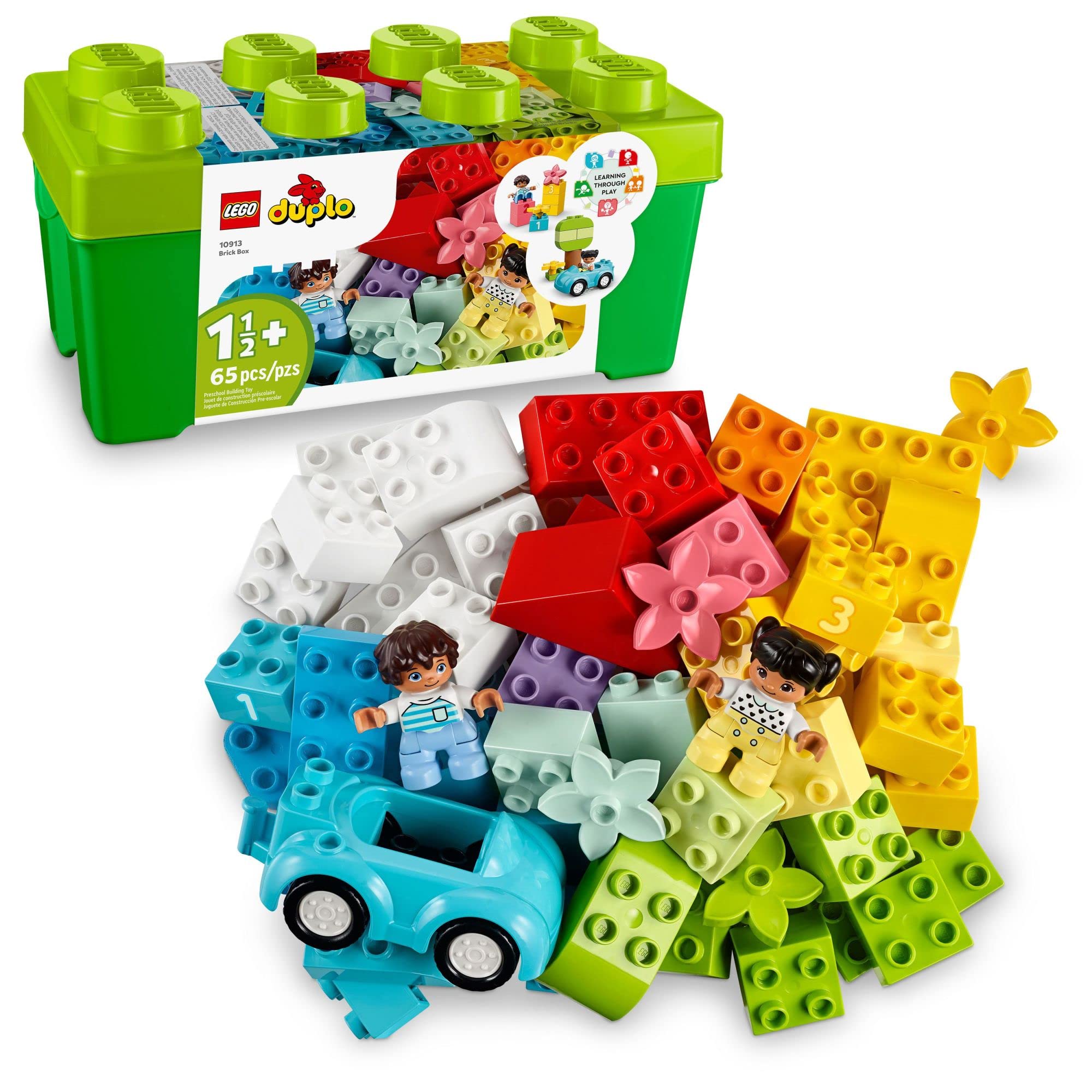
The click is the whole argument. DUPLO bricks take a deliberate push to seat and then hold hard enough that a tower survives being carried across a room, and they let go with a twist rather than a yank — about the amount of force a two-year-old can actually produce. Of everything here, this is the set we hand to a toddler who has stopped mouthing bricks and started trying to build something.

Sixty-five pieces does not sound like much next to the hundred-piece bags on this list, but the mix is chosen well: a little car with working wheels, windows, flowers and two figures. Those extras do more than the brick count suggests, because they give a first build a reason to exist — a house for the figures, a road for the car. We also like that it all goes back into the brick-shaped box, which is sturdy enough to be the storage rather than a sleeve you throw away.

Age is the thing to check. LEGO rates this from 18 months, and the bricks are big enough that a child who still puts things in their mouth is at far less risk than with the smaller connecting sets here. The figures are the smallest pieces in the box, so they are worth a look before you hand it over to a determined chewer.

What you give up is volume. Sixty-five bricks build a small house or a low wall, not a castle, and a child who takes to it will want a second DUPLO set inside a year. That is the design working as intended — these bricks combine with every other DUPLO set — but plan for the expansion rather than expecting this box to be the whole collection.

Bottom line: The set we recommend first: real bricks that click and hold, sized for an 18-month-old, with a car, two figures and a box that survives the playroom floor.

#2

MAGNA-TILES Classic 32-Piece

MAGNA-TILES Classic 32-Piece

Magnetic builds, 3+

Doodle Score 9.8/10
Check Price

Worth Noting

  • 32 tiles run short on bigger builds
  • Highest cost per piece here
Colors
6
Pieces
32
Material
Translucent ABS plastic
Recommended Age
3 years+
Read the full review

Tiles build differently from bricks. There are no studs to line up and no push to seat — two pieces meet, the magnets pull, and the join snaps shut. A three-year-old who cannot click two bricks together can build a four-sided box on the first try, which is why this is the set we reach for when a child gets frustrated by bricks.

The 32 pieces break down as 14 small squares, 2 large ones, 8 equilateral triangles, 4 right triangles and 4 isosceles, in six translucent colors. That is a starter, not a collection: enough for a small house, a pyramid or a garage for a couple of cars, and not much more.

Three is the right starting age, and the reason is mouthing rather than ability — the tiles are flat and small enough that a two-year-old can get one into their mouth. Keep them for a child who has stopped putting toys between their teeth. What we like most is that the flat faces let a child build something with walls and a floor, which stacked blocks simply cannot do.

The catch is cost per tile. This is the priciest way here to start with magnetic tiles, and thirty-two pieces run out fast once a child works out they can build upward. If you already know tiles will be a hit in your house, a bigger set goes further for the money. If you are not sure, start here.

Bottom line: For a three-year-old who has stopped mouthing pieces, these are the most satisfying tiles here — 32 panels that reward planning as much as stacking.

#3

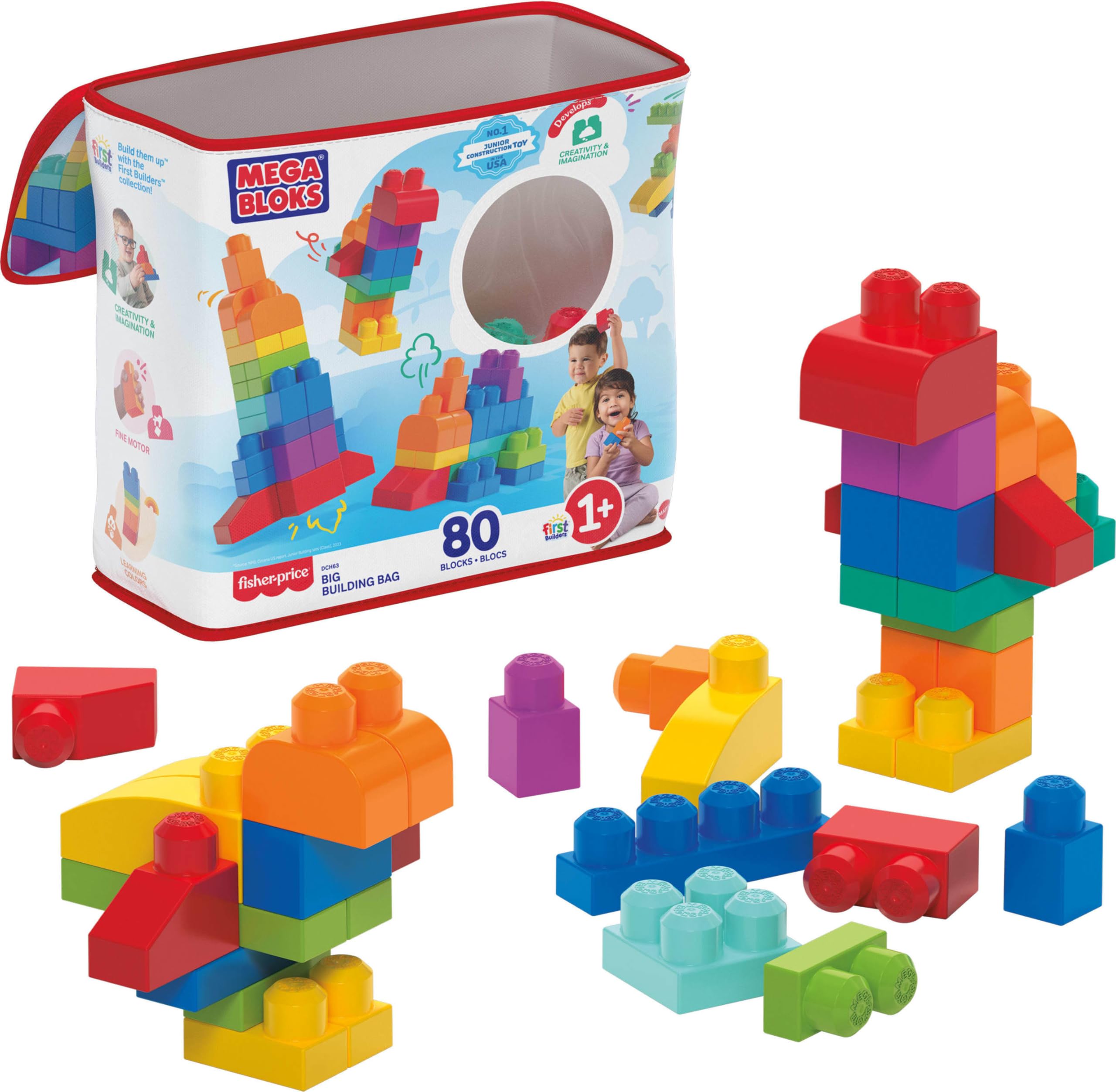
MEGA BLOKS First Builders Big Building Bag

MEGA BLOKS First Builders Big Building Bag

Bulk starter bricks

Doodle Score 9.6/10
Check Price

Worth Noting

  • Simple shapes keep builds to towers and walls
Pieces
80
Shapes
10
Storage
Reusable bag
Recommended Age
1 year+
Read the full review

Eighty large bricks in ten shapes and nine colors, in a bag with a handle — that is the whole pitch, and for a one-year-old it is a good one. This is the least expensive way here to put a floor's worth of big bricks in front of a child who is still working out that two pieces can go together.

We think it is the right first set for a child who is more interested in pulling things apart than in building. The bricks are wide enough for a small hand to grab and shallow enough that separating them does not need adult help, and at eighty pieces there are enough spares that losing a few does not end the game.

The bag earns its place. It is a proper reusable sack with a handle, big enough that a toddler can help scoop bricks back into it, and it takes up less shelf space than a rigid tub. Picking up stops being a job you do alone after bedtime.

The one thing to know is variety. Ten shapes and nine colors sound generous until you start building: these are chunky, simple bricks, and the results are towers, walls and a chair for a doll rather than anything with a roof. A four-year-old will want the tighter, more varied bricks of DUPLO. At eighteen months that barely registers, which is the age this bag is really for.

Bottom line: Our value pick: bricks big enough for a one-year-old's hands, in a quantity that fills the floor, and a bag that makes tidying a two-minute job.

#4

Melissa & Doug 100 Wooden Blocks

Melissa & Doug 100 Wooden Blocks

Classic wooden stacking

Doodle Score 9.6/10
Check Price

Worth Noting

  • Nothing clicks together, so towers topple
Colors
4
Pieces
100
Shapes
9
Recommended Age
2 years+
Read the full review

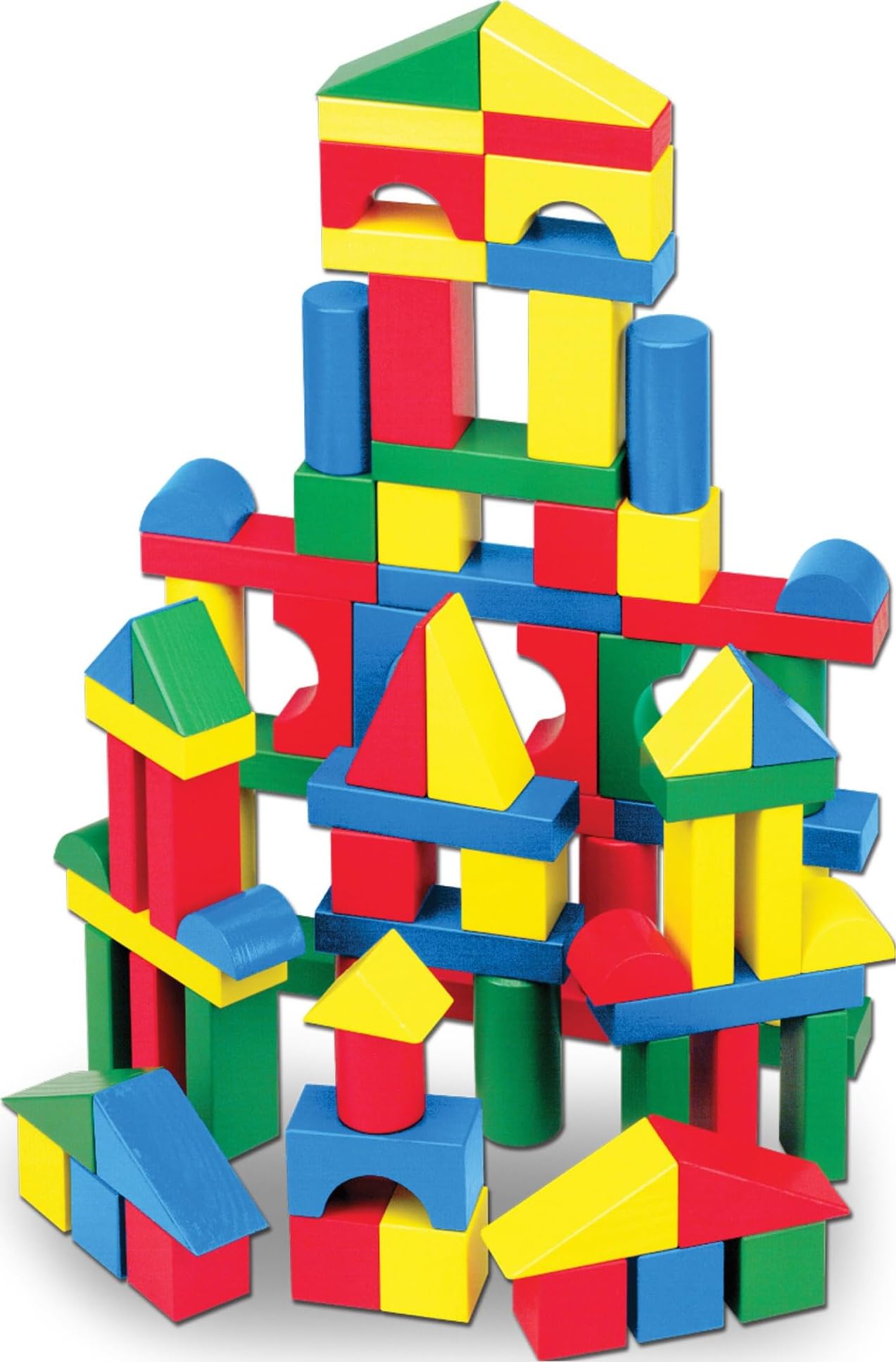
A hundred wooden blocks in four colors and nine shapes, with nothing to click, nothing to charge and no wrong way to put them together. It is the plainest thing on this list, and for a lot of toddlers the plainness is the point: the tower falls because it is a tower, not because a plastic joint gave way.

The blocks are solid wood with rounded edges, and the paint holds up to the treatment a two-year-old gives a toy, chewing included. We paid close attention to the edges, because splinters are the usual failure of cheap wooden sets, and these came out smooth. The hundred pieces store in the sturdy cardboard box they arrive in.

Play here is balancing, sorting, counting and demolition. A two-year-old stacks three and knocks them down; a four-year-old builds a bridge with a gap underneath. A hundred pieces means two children can play at once without a fight over the good shapes, which matters more than it sounds on a rainy afternoon.

Buy it for the child who wants to build and rebuild rather than to drive or connect. It is also the quietest set here in practice: wood on a rug makes a thud, not the rattle of a hundred hollow bricks, which is worth something at seven in the evening.

Bottom line: Buy these for the plain pleasure of stacking and knocking down: a hundred wooden blocks that reward balancing and survive a toddler's teeth.

#5

B. toys One Two Squeeze Soft Blocks

B. toys One Two Squeeze Soft Blocks

Babies and teething

Doodle Score 9.6/10
Check Price

Worth Noting

  • Stack-only design, outgrown around age two
Pieces
10
Storage
Recycled-fabric bag
Material
Soft fabric and plastic
Recommended Age
6 months+
Read the full review

Every block in this set is soft enough to chew, drop on a toe or throw at a sibling without anyone crying. That is the entire case for buying them, and at six months it is a strong one.

Ten blocks, each with a number, an animal, a shape and a texture, plus a squeak when squeezed. We think this is the set to buy first — before bricks, before tiles — because a baby can mouth them, bang them together and stack two of them long before they have the grip for anything that clicks. They also land quietly, which is not a small thing when a child's favourite game is sweeping a tower off a table.

The bag is made from recycled fabric, has a handle, and squashes into a changing bag. Ten blocks is deliberately few: enough to stack and count, not so many that a one-year-old is overwhelmed by the mess they can make.

Past about eighteen months the limits show, because these blocks only stack. A child who wants a house or a car needs something that grips. Think of this as the first year's set rather than the only set you will buy.

Bottom line: Soft enough to chew, quiet when it lands, and ten of them are plenty at this age — the first block set we point to for a baby.

#6

MEGA BLOKS ABC Musical Train

MEGA BLOKS ABC Musical Train

Train-loving toddlers

Doodle Score 9.6/10
Check Price

Worth Noting

  • Wagons can uncouple when pushed hard
Pieces
50
Features
Letters, music and sounds
Batteries
1 AAA (included)
Recommended Age
18 months+
Read the full review

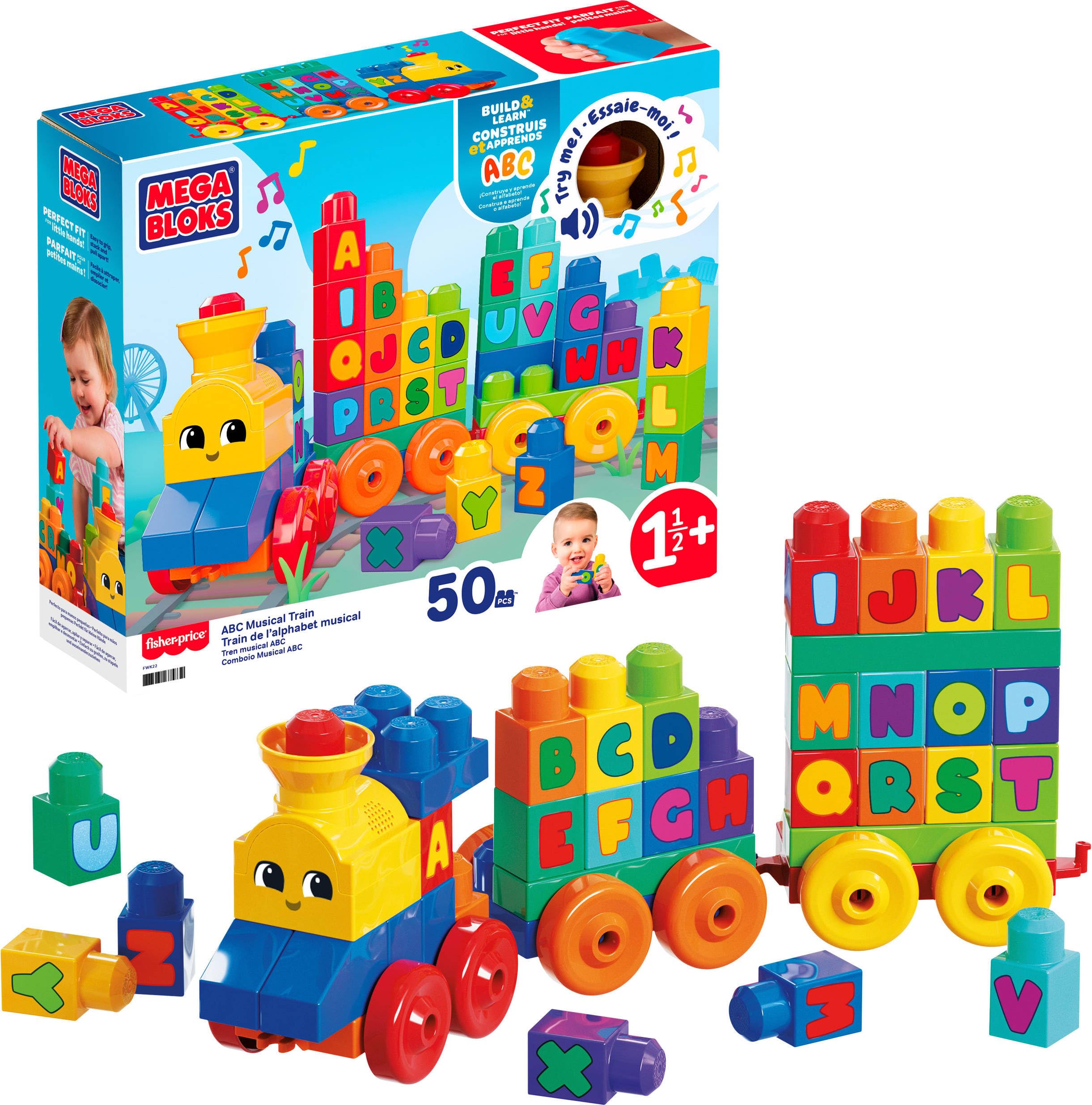
It toots, it plays the alphabet song, and it rolls across the floor. The train is the part that gets played with, and the bricks are what keep a toddler at it once the novelty of the sound wears off.

Fifty pieces make a locomotive with a smokestack and wagons on rolling wheelbases, plus letter bricks for the alphabet. It takes one AAA battery and comes with it, so the thing works the moment it leaves the box — a detail that matters more at a birthday party than it should.

We like it as a second MEGA BLOKS purchase rather than a first. The bricks are the same big, easy-to-grip ones as the bulk bag, so the two sets combine, and the train gives a toddler something to build for: a reason to put bricks together instead of tipping them out. The sounds are short and quiet enough that an adult in the same room will not mind them.

The weak point is the couplings. Push a built train along carpet and the wagons can come uncoupled, which frustrates a child who is pushing hard; on a hard floor at a gentler speed it holds. If your toddler's play is more demolition than driving, the plain bag is the better buy.

Bottom line: A train that rolls, sings the alphabet and takes the same big bricks as the bag — worth it if your toddler's day revolves around wheels.

#7

Fisher-Price First Blocks & Rock-a-Stack

Fisher-Price First Blocks & Rock-a-Stack

Sorting for babies

Doodle Score 9.6/10
Check Price

Worth Noting

  • Both toys are outgrown by about three
Storage
Carry bucket
Includes
10 blocks and 5 rings
Recommended Age
6 months+
Educational Focus
Sorting, stacking, motor skills
Read the full review

Two toys in one box: a bucket of ten shape blocks with a sorting lid, and the five-ring stacker on a rocking base. Between them they cover most of what a baby does in the second half of their first year.

The bucket is dump-and-fill first and shape sorting later — a six-month-old empties it, a one-year-old works out that the square goes through the square hole. The ring stacker is the older toy and still the better one: the rocking base means a half-stacked tower rocks instead of collapsing, which keeps a baby at it longer than a fixed post does.

No batteries, no assembly, and everything wipes clean. The bucket has a carry handle, so it travels, and the whole thing solves the problem of what to bring to a first birthday.

Where it stops is about age three, when a child wants to build rather than sort. Up to that point this is the most useful box here for the money, and the one we recommend to anyone buying for a baby rather than a toddler.

Bottom line: Two classics in one box for a baby who is still dumping and filling — the most useful gift here for the months before real building starts.

#8

PicassoTiles 100-Piece Magnetic Tiles

PicassoTiles 100-Piece Magnetic Tiles

Large magnetic collections

Doodle Score 9.6/10
Check Price

Worth Noting

  • Magnet grip varies from tile to tile
Pieces
100
Material
Plastic
Expansion
Add sets to build bigger
Recommended Age
3 years+
Read the full review

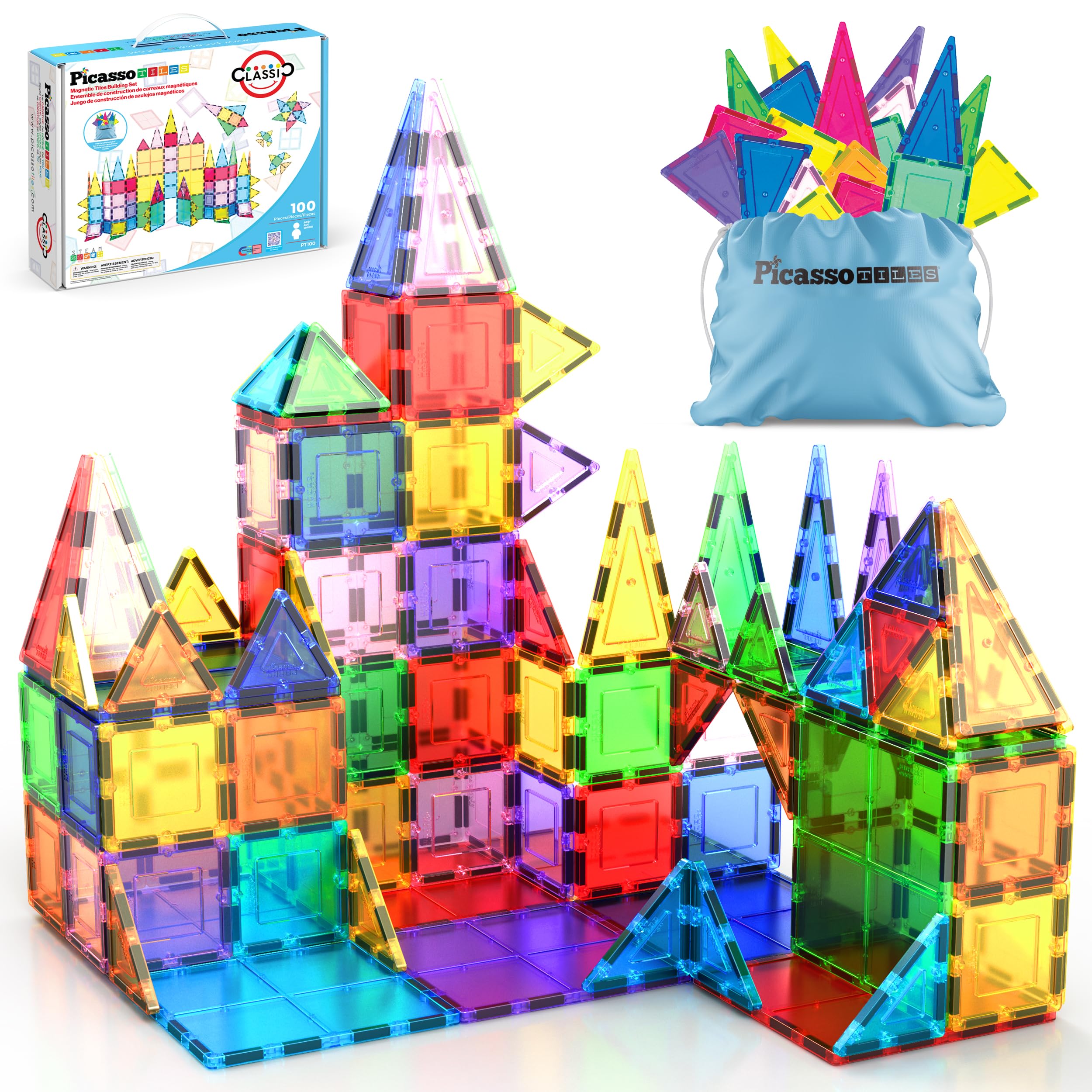
A hundred tiles is a different proposition from a starter set: enough squares and triangles to build a house a child can sit inside, or a wall that runs the length of a room.

The pieces are translucent plastic in clear colors — squares and triangles in several shapes — and they are rated from three. The set scales: add a second box and the builds get bigger rather than duplicated, which is why a hundred pieces is not as excessive as it first sounds.

The magnets are the thing to watch. Grip varies across a set: some tiles snap together and hold a wall upright, others let go under the weight of three or four pieces, and a child who builds high will meet both. On a fridge door they are fine; in a tower, a mixed bag. The payoff is the flat sides — a child who has only stacked before can suddenly make a room, and we liked the way the light comes through the colors.

If you already know tiles get played with in your house, this is the set that goes furthest for the money here. If you are buying tiles for the first time, start smaller and add this when the first set runs out.

Bottom line: The set to buy if magnetic tiles are already a hit in your house: a hundred pieces that build something a child can sit inside.

How We Tested 14 Sets of Toddler Blocks

We started by rounding up every block set sold for roughly ages 1 to 3 that we could get our hands on, then narrowed the field by checking piece size (nothing that slid through a cardboard toilet paper tube), material, piece count, and whether the set came with a storage bag or bin a toddler could actually manage. That left 14 sets, which we rotated through our homes for six months.

Testing happened wherever blocks actually end up: the living room rug before daycare, the kitchen floor while dinner was on the stove, and a tote bag hauled to a restaurant twice a week. We built on carpet and on hardwood to see which bases stayed put, watched how long a toddler stuck with each set before wandering off, and noted which pieces got grabbed first — usually the biggest ones, and always the ones that made the best noise when banged together.

Every set took the same abuse: dumped from coffee-table height, stepped on in socks, mouthed under supervision, washed in the sink with dish soap, and packed and unpacked a dozen times. For magnetic sets, we counted how many tiles a base could hold before the tower slipped and tried lifting a chain of eight to see whether the magnets carried their own weight. We also tracked color and finish — whether edges chipped down to bare wood, whether shades faded after washing, and whether the pieces still looked distinct once they were spread across the rug.

How to Choose Blocks for Toddlers

Start with the age on the box

Age ratings on blocks are about small parts more than ability. A set rated from 18 months, like the DUPLO box or the MEGA BLOKS train, uses pieces too big to be a mouthful. Magnetic tiles and most connecting sets are rated from three, because the pieces are flat, small and easy to get into a mouth.

The trap is buying for the birthday instead of the child. A tall two-year-old who still mouths everything is not ready for tiles; a small three-year-old who has stopped is. Watch what your child does with a single piece for a minute before you decide.

How the pieces hold, and how they let go

Bricks have clutch, tiles have magnets, wooden blocks have gravity. Clutch matters more than piece count: a brick that needs an adult to separate it turns play into a request for help, which is how a good set ends up in the cupboard. Tiles snap together with no lining up at all, which is why they suit a child who gets frustrated by studs.

Magnet strength varies from piece to piece within a set, so expect the occasional wall that will not stay up with the same tiles that held yesterday. If your child gives up easily, start with pieces that separate with a twist or a pull and bring in tiles once they have the patience for a four-sided build.

Wood, plastic or soft

Soft blocks belong to the first year: they can be mouthed, thrown and fallen on, and they make almost no noise. Wooden blocks are the most open-ended thing you can buy and the least forgiving, because nothing holds and a tower is a balancing act. Plastic bricks and tiles are the ones that build structures a child can keep.

Match the material to the stage rather than to the playroom's look. A lovely wooden set is wasted on a baby who wants to chew it, and a soft set is pointless for a four-year-old who wants a roof that stays on.

Pick the system, not just the box

Every set here belongs to a system, and the system matters more than the first box. DUPLO combines with DUPLO, MEGA BLOKS with MEGA BLOKS, and a tile set grows by adding more of the same tiles. Your first purchase is really a choice of what you will be buying into for the next three years.

So buy a modest set from a system you can afford to add to, rather than the largest single box you can find. A medium set that doubles later beats a big one that dead-ends, and the child will not notice the difference in the meantime.

Frequently Asked Questions

Final Verdict

Buy the LEGO DUPLO Brick Box first. It behaves like real building — bricks that click and hold, a car and two figures to build around, and a box that holds everything — and it stays useful from eighteen months to about four.

If money is tight or the child is barely one, the MEGA BLOKS bag puts more bricks on the floor for less. And if your toddler is three, has stopped mouthing pieces, and likes to plan a build before starting it, the magnetic tiles are the better buy.