Outdoor Play

Best Kids Bikes of 2026

There's a moment every kids bike gets judged by: someone lets go of the seat, and the kid keeps going — wobbly, but upright. That moment depends on the bike more than most parents expect. A heavy frame, a brake lever a small hand can't squeeze, or a seat set too high turns a five-minute triumph into a scraped knee and a kid who wants to go back inside. A good bike gets out of the way. It's light enough to steer, stable enough to trust, and simple enough that the child can stop it without help.

My team and I have spent six months with 12 kids bikes, from balance models to 20-inch pedal bikes. We assembled every one at a kitchen table after bedtime, then turned them loose in driveways, on sidewalks, and around a park loop. The pattern was clear: the bikes kids asked to ride again the next day were the light ones, with brake levers small hands could actually pull and a frame sized to their inseam rather than their age. Everything below earned its place.

#1

Strider 12 Sport

Strider 12 Sport

First balance bike

Doodle Score 9.6/10
Check Price

Worth Noting

  • The most expensive balance bike in this guide
Tires
12 in. foam rubber
Rider Age
1-4 years
Bike Weight
6.7 lb
Seat Height
11-17 in.
Read the full review

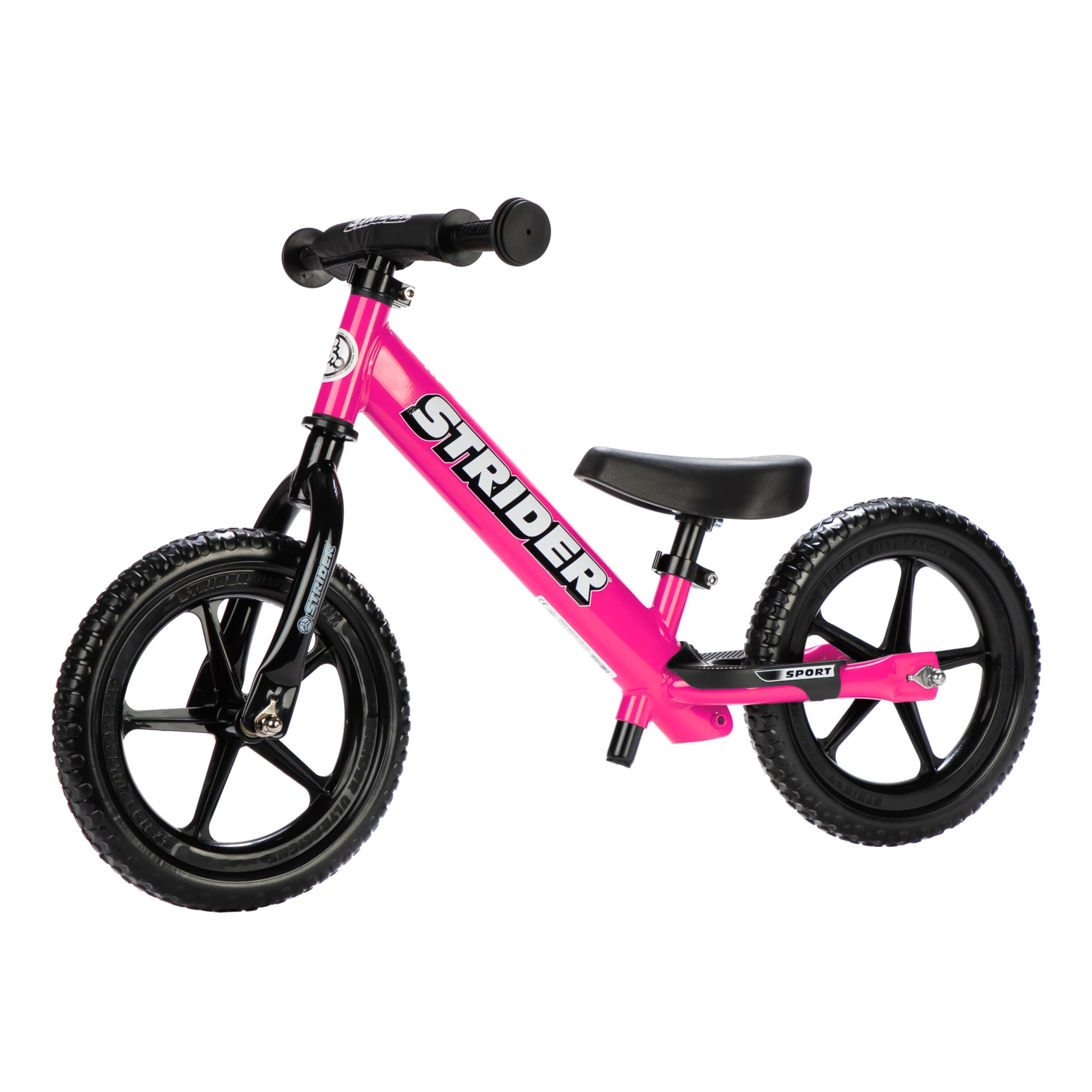
Seat height runs from 11 to 17 inches on the Strider 12 Sport, which the maker lines up with a 12-to-18-inch inseam — in practice, a child from about 18 months to four years. That one figure is why it takes the top spot here. A balance bike only does its job when both feet reach the ground with a slight bend in the knee, and this one keeps that true long after a fixed-height bike has been outgrown.

At 6.7 pounds it is light enough for a toddler to pick up alone, which we care about more than frame material: a kid who can right their own bike keeps riding it. The 12-inch foam rubber tires cannot go flat, and that is the detail we appreciate most, because a flat on a small wheel is the repair that quietly ends a bike's career at the back of a garage. It arrives with the tools and an extra seat post, so the growth range is built into the box.

There is no brake, which is right at this stage — feet do the stopping — and nothing on it needs maintaining beyond a check of the bolts. Assembly is straightforward with what is included, and the ride is a long, stable glide rather than the wobble you get from a bike that is too tall for its rider.

The case against it is price: it costs more than any other balance bike in this guide, by a wide margin. If the bike will pass through two or three kids, that difference pays itself back. If it will not, the KRIDDO runs 24 months to five years on 12-inch puncture-resistant tires for far less, and it is the one we point budget-minded parents toward.

Bottom line: We recommend the Strider 12 Sport as the default first bike: a seat that spans 11 to 17 inches, 6.7 pounds, and tires that never need air.

#2

SEREED Baby Balance Bike

SEREED Baby Balance Bike

First birthday gift

Doodle Score 9.6/10
Check Price

Worth Noting

  • Runs small; taller two-year-olds are cramped
Wheels
4 x 6.7 in.
Rider Age
12-24 months
Bike Weight
3.5 lb
Max Rider Weight
55 lb
Read the full review

Four wheels rather than two is the entire idea here. The SEREED sits on a 6.7-inch wheel at each corner and stands up on its own, so a one-year-old can climb aboard, shuffle across the rug, and get off again without the bike deciding to lie down underneath them.

The frame is aluminum and the whole thing weighs 3.5 pounds, light enough for a child to drag around by the handlebar. It is rated to 55 pounds, more than most kids weigh by the time they have outgrown it. The wheels are fully enclosed, so there are no spokes or chain to catch a finger or a pant leg, and the steering stops at 135 degrees so the bar cannot swing around and tip a small rider.

What we keep coming back to is how little there is to go wrong. Nothing on it needs adjusting, there is no tire to inflate, and assembly is a short job. The limitation is the fit window: 12 to 24 months, and a tall two-year-old will look folded up on it. If your child is closer to three, go to the KRIDDO instead; if you are buying for a first birthday, this is the one that gets used on day one rather than leaning against the wall until spring.

Bottom line: Four fixed wheels and 3.5 pounds make the SEREED the most forgiving thing a new walker can sit on, and the one we hand over first.

#3

JMMD 6-in-1 Toddler Bike

JMMD 6-in-1 Toddler Bike

One-bike families

Doodle Score 9.4/10
Check Price

Worth Noting

  • Hand brake is stiff for a small child
  • Many parts to track between modes
Modes
6 in 1
Rider Age
18-60 months
Wheel Size
12 in.
Max Rider Weight
55 lb
Read the full review

One frame, six configurations: a push trike with a parent handle, a tricycle, a balance bike, and a pedal bike with training wheels among them. If you have priced a push trike for year one and a pedal bike for year three, the JMMD's appeal is obvious before you read another word.

The push handle is the part that earns its keep. It rotates 135 degrees and steers the front wheel, so you are driving from behind rather than leaning over the bars, which on a crowded sidewalk is the difference between a walk and a wrestling match. A button under the middle of the frame folds it, and that is how it goes into a trunk.

We like that the 12-inch tires are rubber and puncture-proof rather than foam, because the same wheels have to work once the pedals go on and grip matters more with a drivetrain underneath. The hand brake is the weak link: small hands, especially a three-year-old's, struggle to pull the lever hard enough, so plan on the parent handle doing the stopping until they grow into it.

The trade-off is complexity. Six modes mean parts to keep track of and swap, and a bike that does everything is rarely as simple as one that does a single job. It is built for the 18-month-to-five-year window and a 55-pound rider, not beyond. For a family that would otherwise buy three bikes, that is a fair exchange.

Bottom line: One purchase that covers the push-trike, balance, and pedal years, so we think it earns its keep for a family that is tired of buying bikes every spring.

#4

Umatoll Baby Balance Bike

Umatoll Baby Balance Bike

Tight budgets

Doodle Score 9.4/10
Check Price

Worth Noting

  • Seat sits very low; tall toddlers outgrow it
  • No warranty stated on the listing
Rider Age
12-24 months
Wheel Size
6 in.
Bike Weight
3.3 lb
Seat Positions
3
Read the full review

Three seat positions on a balance bike this small is unusual. The Umatoll's seat clicks down for a new walker and back up a notch or two as they stretch out, and the range it covers runs roughly from a first birthday to a second.

At 3.3 pounds it is the lightest bike in this guide, on an aluminum frame rated to 55 pounds, and we were struck by how much an adjustable seat changes the useful life of a bike this simple — most of the four-wheelers here sit at a single height. The rear wheels light up as they roll, with no batteries, which is exactly the sort of thing that gets a hesitant 15-month-old back on.

The compromises are size and support. The seat's lowest setting is very low, so a taller two-year-old will be cramped, and the listing states no warranty at all. If you want lights and a seat that moves at the smallest outlay in this guide, it is the obvious pick; the glow wheels are what kids notice and the seat is what parents end up using.

Bottom line: The cheapest balance bike here we are comfortable recommending, and the only one at this size with a seat that clicks into three heights.

#5

Gamfeiny Baby Balance Bike

Gamfeiny Baby Balance Bike

Reluctant toddlers

Doodle Score 9.4/10
Check Price

Worth Noting

  • Wobbly for a light one-year-old on uneven ground
  • Small footprint; older toddlers overhang it
Wheels
4, rear light-up
Rider Age
10-36 months
Bike Weight
4.6 lb
Steering Limit
135°
Read the full review

The rear wheels on the Gamfeiny light up in color as they roll, and there are no batteries to replace. For a toddler who needs a reason to get on, that is the reason.

Otherwise this is a conventional four-wheel baby balance bike: carbon steel, 4.6 pounds, a 135-degree steering stop, fully enclosed wheels, and a 10-to-36-month window that runs wider than most of the baby bikes here.

It goes together with buckles and no tools, which is worth knowing if the box arrives the night before a birthday.

Our reservation is stability. On carpet and smooth floors it is fine; on a sidewalk with a light 12-month-old it can feel wobbly, and the fix is not in the bike — it is another month or two of leg strength. The size range has the same shape of problem: 10 to 36 months sounds generous, but the bike is small, and a two-and-a-half-year-old will be looking over the handlebar. Buy it for the lights, and expect a two-year-old to get more out of it than a one-year-old.

Bottom line: Buy it for the light-up wheels if your toddler needs a reason to get on, and expect the ride itself to be average for the money.

#6

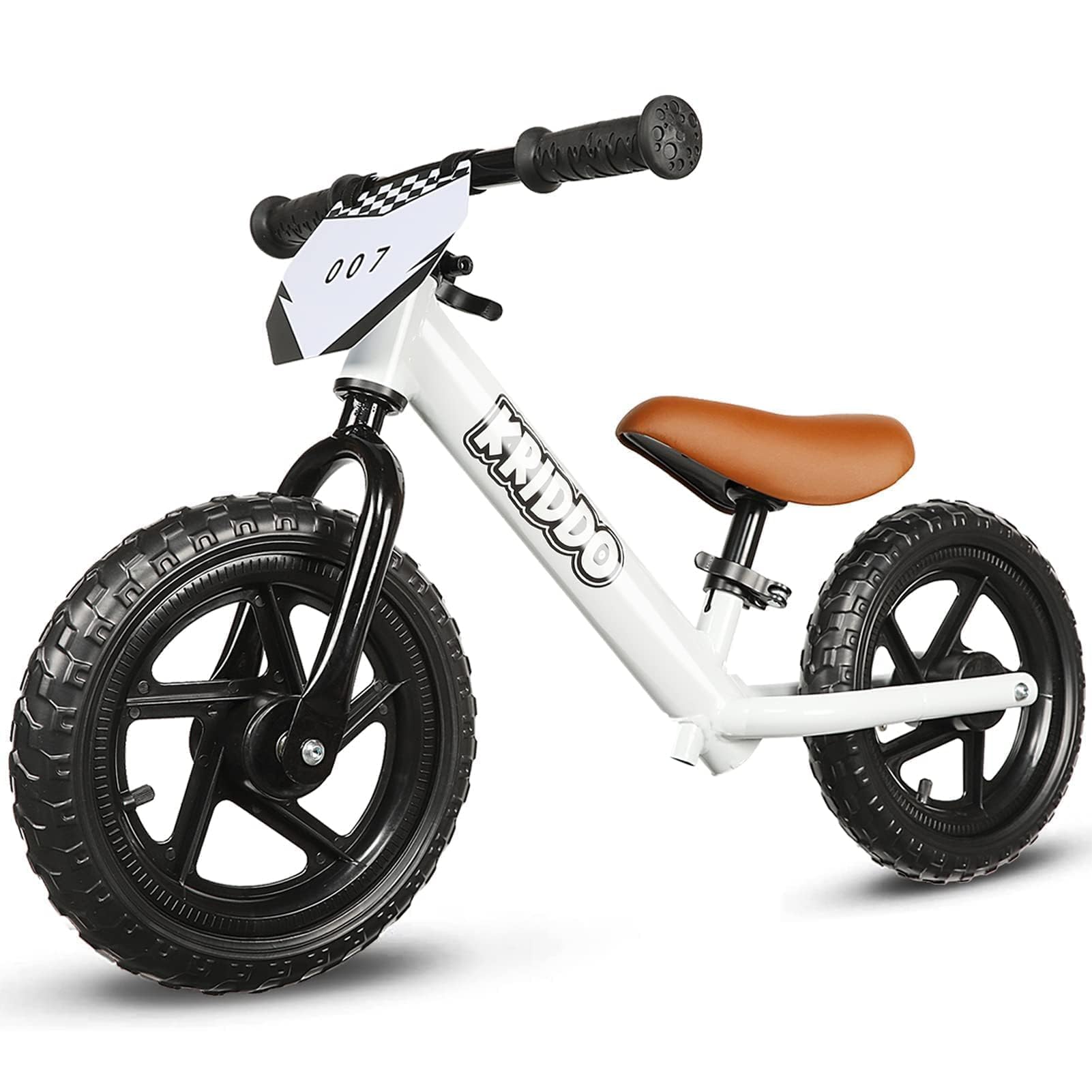
KRIDDO Toddler Balance Bike

KRIDDO Toddler Balance Bike

Budget 2-5 glider

Doodle Score 9.2/10
Check Price

Worth Noting

  • 6.6 lb is heavy for a small two-year-old
  • Twitchy on loose gravel with a light rider
Rider Age
24 months-5 years
Wheel Size
12 in.
Bike Weight
6.6 lb
Max Rider Weight
110 lb
Read the full review

The KRIDDO is the balance bike we point to when a family wants one bike to run from a second birthday to a fifth. The seat and the handlebar both move on quick releases, the frame is carbon steel, and the 12-inch tires are puncture-resistant, so the thing that usually ends a kids bike early, a flat nobody gets around to fixing, is off the table.

It is rated to 110 pounds, roughly double what a five-year-old weighs, which is what lets the same bike go to a younger cousin without an argument. We were also impressed by the small stuff: a removable plate the child decorates with the three included sticker sets, so the bike feels like theirs before they can even ride it.

Two things to know. At 6.6 pounds it is heavier than the Strider, and a small two-year-old will notice that on a slope. And the ride can get twitchy on loose gravel — on pavement and packed dirt it tracks straight, but a light rider on a rough surface gets more wobble than the heavier bikes here. Neither matters if most riding happens on a driveway or a park path, which is where most of it happens.

Bottom line: This is the balance bike we point to when the budget is real but the kid is ready to glide: 12-inch tires, 110-pound capacity, and a seat that keeps rising.

#7

WEIZE Girls Kids Bike 14-Inch

WEIZE Girls Kids Bike 14-Inch

First pedals, age 4

Doodle Score 9.0/10
Check Price

Worth Noting

  • Heavy at 19.2 lb for a small four-year-old
  • Assembly instructions are skimpy
Brakes
Hand and coaster
Wheel Size
14 in.
Bike Weight
19.2 lb
Rider Height
36-47 in.
Read the full review

The WEIZE is the bike a four-year-old points at: a basket, handlebar streamers, a bell, and a doll seat behind the saddle for a stuffed passenger. We think the kit is genuinely part of the value at this age, since a bike a child is excited to get on gets ridden, and one that looks like a hand-me-down does not.

Underneath the decorations it is a sensible first pedal bike. The 14-inch wheel suits roughly 36 to 47 inches of height, there is a coaster brake and a front hand brake, the training wheels come off, the chain is enclosed, and the seat post adjusts without tools through about 3.5 inches. The coaster brake is the one that matters: a beginner stops by pushing the pedals backward, an instinct they already have.

Weight is the honest caveat. At 19.2 pounds it is a lot of bike for a small four-year-old, and that shows up when they have to right it after a tip-over. A tall five-year-old will not notice; a petite three-year-old will. Check the front brake before the first ride, too — a caliper that drags or will not pull straight is an adjustment rather than a defect, but it needs doing before they are rolling.

What it has over the other pedal option here is completeness. You are not buying a basket, a bell, and a doll seat separately, and the 110-pound capacity means it survives a younger sibling before it goes to the curb.

Bottom line: For a four-year-old who wants the basket and the streamers, this is the pedal bike we start with, provided the standover height suits your kid.

#8

Dynacraft Hot Wheels BMX

Dynacraft Hot Wheels BMX

Character fans

Doodle Score 9.0/10
Check Price

Worth Noting

  • Sound unit and speedometer break easily
  • Chain guard is a known weak point
Brakes
Coaster
Tire Width
1.95 in.
Wheel Size
18 in.
Max Rider Weight
89 lb
Read the full review

Twist the right grip and the handlebar makes engine noises; there is a speedometer with buttons that chirp. On a Hot Wheels bike that is the feature that sells it, and it is the feature that breaks first.

The bike underneath is better than the gimmick suggests. An 18-inch wheel with 1.95-inch tires, a coaster brake, a steel frame, training wheels in the box, and an 89-pound capacity — that is a proper step-up bike for a kid who has outgrown a 14-inch.

Eighteen inches is a big jump from a 16, and the standover height matters more than the age on the box. Measure the inseam, then check the seat's lowest setting against it. A bike that is slightly too big is the one that hangs in the garage.

What gives us pause is durability in the details. The chain guard is the piece that tends to give up first, and the sound unit and speedometer are plastic extras that will not survive a crash, though the bike still rides without them. If your kid wants the noises, buy it knowing the noises are the first casualty. If they do not, lighter and simpler bikes in this guide do the same job.

Bottom line: A character bike that genuinely rides well, and the one we point to when the kid wants engine noises more than a race frame.

How We Tested the Best Kids Bikes

We started by pulling together roughly 60 kids bikes sold by major retailers and specialty shops, then narrowed by wheel size, published weight, brake type, and whether replacement parts — tubes, brake pads, training wheels — were actually available. Weight eliminated more contenders than anything else; a bike that outweighs its rider is a bike that stays in the garage. That left 12 models, from balance bikes to 20-inch pedal bikes, which we tested over six months.

Assembly came first, since that's how most of these arrive. We built each bike solo with only the tools in the box and timed it, noting where the instructions lost us and which parts needed a shop visit to true a wheel or adjust a derailleur. Then we weighed every bike on a luggage scale and measured the seat-height range against each child's inseam before handing it over.

Riding happened in driveways, on sidewalks, across a grassy park, and up one long, gentle hill. We watched whether kids could reach the brake levers and how far the bike traveled after they squeezed — first from walking pace, then from a jog. We judged balance by how often a rider put a foot down in a slow turn, and stability by letting them coast over cracks and off curbs. Over six months we left bikes outside, dropped them, and checked for rust, loose bolts, stretched cables, and worn pads. A few needed real adjustments, and we noted which stayed true and which rattled — and whether the hardware still felt worth the money by the end.

How to Choose Kids Bikes

Fit comes before the age on the box

Seat height is the number that decides whether a bike gets ridden. Put the child on with the seat at its lowest: for a balance bike, both heels should reach the ground with a slight bend in the knee. The Strider 12 Sport states this plainly as 11 to 17 inches of seat height for a 12-to-18-inch inseam, which is the clearest fit statement in this guide and the reason one bike covers such a spread of kids.

For a pedal bike, have them straddle the top tube with both feet flat. The trap is the age range printed on the box: 'ages 2 to 5' describes the full travel of an adjustable seat, not the child in front of you. Measure the inseam first and read the seat's lowest setting second.

Balance bike, convertible, or training wheels

Training wheels teach a child to pedal and steer. They do not teach balance, and that lesson still has to be learned separately when the wheels come off, which is why we start almost every kid on a no-pedal bike around 18 months and move to pedals once they can coast with their feet up.

A convertible like the JMMD 6-in-1 sidesteps the choice by being a push trike, a balance bike, and a pedal bike in one frame — worth it if you would rather buy once. The exception is a confident four-year-old with a sibling to chase: they take to a 14-inch bike with training wheels quickly, provided the bike is light enough to handle.

Weight decides who actually rides it

Compare weights before anything else. The baby balance bikes here start at 3.3 pounds, the 12-inch gliders sit around 6.5 to 7 pounds, and the 14-inch pedal bike in this guide is 19.2. A bike that weighs two-thirds of what the kid weighs is one they cannot pick up after a fall, and that ends more afternoons than any other single thing.

Steel frames cost less and weigh more; aluminum costs more and saves a couple of pounds. For a small or cautious rider, take the lighter bike and accept the price.

Tires, brakes, and the first hour

Foam and EVA tires cannot go flat, which is why nearly every baby balance bike uses them: they are stiff, quiet indoors, and fine on pavement and packed dirt. Puncture-resistant rubber on a 12-inch bike gives noticeably more grip on grass and gravel, which matters once a child starts going faster than a walk.

On pedal bikes, a coaster brake — push the pedals backward — is the one a beginner uses without thinking, so look for it alongside a hand brake rather than instead of one. Then spend an hour before the first ride: front calipers on kids bikes often arrive out of adjustment, and a brake that drags or will not pull straight needs fixing, not returning.

Buy for the growth range, not this summer

Adjustable seat posts and handlebars turn a one-season bike into a hand-me-down. Look at how much travel the post has: the WEIZE's moves about 3.5 inches, the Strider's spans 6, and that gap is roughly another year of riding. A tool-free clamp is worth having too, because you will move the seat three or four times a year.

Weight capacity matters less than it looks for one child and more for two. The KRIDDO's 110-pound rating is what lets it pass from a first kid to a second without a wobble.

Frequently Asked Questions

Final Verdict

The Strider 12 Sport takes the top spot because it fits a child properly for three years, weighs almost nothing in their hands, and never needs a tire repaired. That combination is why it is the bike we hand over first.

If the budget will not stretch that far, the KRIDDO delivers the same 12-inch format with a longer growth range for far less. And if your child is already four and asking for pedals, skip both and start with the WEIZE 14-inch.