Outdoor Play

Best Electric Bikes for Kids of 2026

A kid on an electric bike feels like the coolest person on the block; a parent watching feels like a walking insurance policy. The right kids’ e-bike gives a child a real taste of independence — and gives you a machine you can trust at the speeds they’ll actually ride. Over the past six months, my team and I have spent time with eight kid-size e-bikes, and the difference between a great one and a frustrating one rarely comes down to top speed or price.

What surprised me was how much the small stuff mattered: whether the battery still held a charge after a month of after-school rides, whether the bike felt stable on gravel, and whether the seat and handlebars could grow with a fast-growing kid. Kids notice appearance immediately — color, decals, that “real motorcycle” look — but the ones they kept choosing for pure enjoyment were fun without feeling sketchy. A good kids’ e-bike should feel like a bicycle first and a toy second. The eight options below survived six months of driveway laps, park paths, and the occasional tumble.

#1

Razor MX350

Razor MX350

Older kids

Doodle Score 9.2/10
Check Price

Worth Noting

  • Battery and chain durability are weak points
  • The frame runs small for taller riders
Rider Age
8+ years
Top Speed
14 mph
Bike Weight
55.1 lb
Battery Range
Up to 60 min
Read the full review

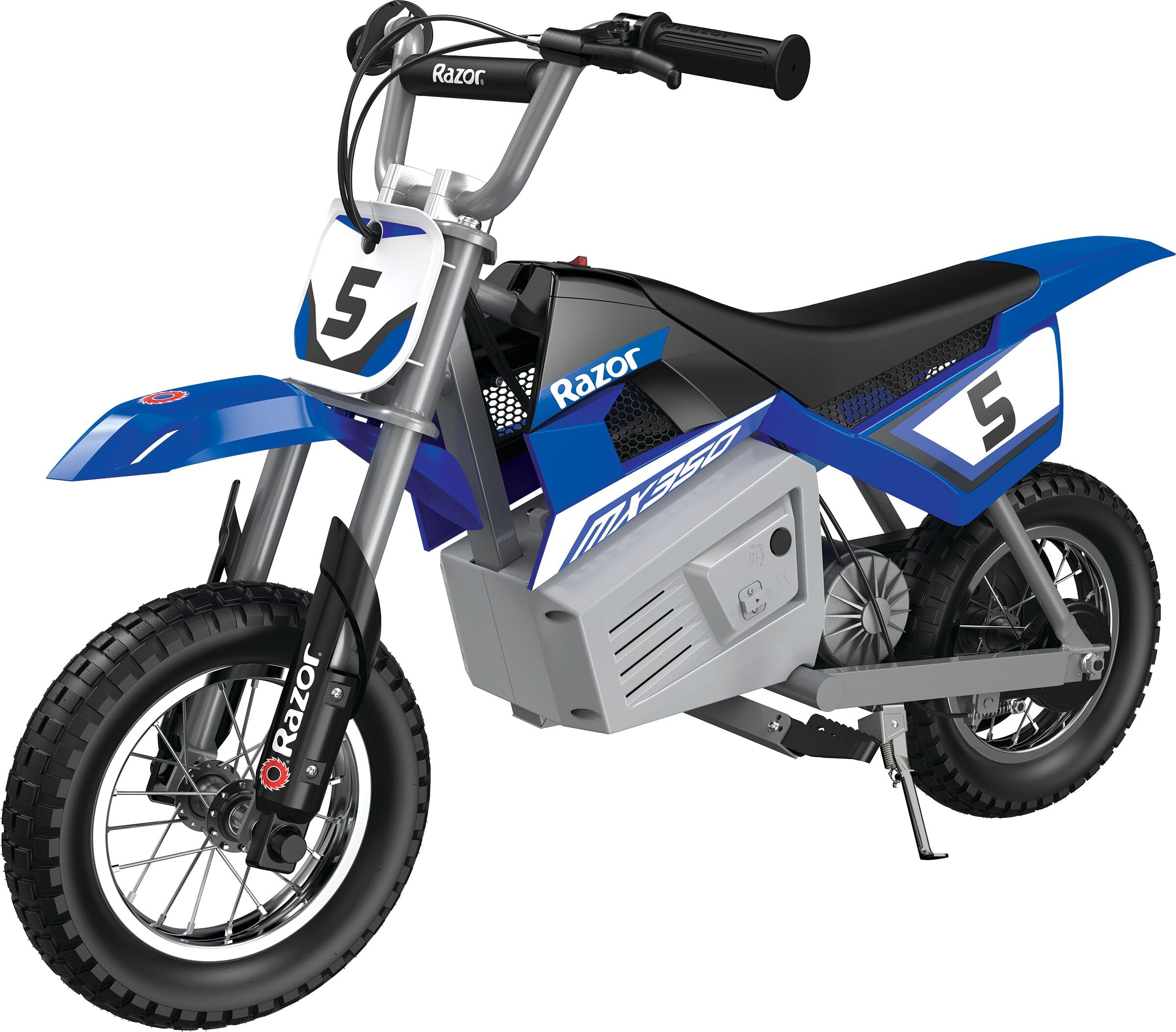
The first thing a kid notices about the Razor MX350 is that it looks like a real dirt bike, not a toy. Spoked 12-inch wheels, riser handlebars, a chain-driven motor, and a retractable kickstand sell the motocross look. That matters: a bike a child is proud to park in the garage gets ridden more than one that looks like a plastic scooter.

We think it is the right pick for an 8-year-old who has outgrown a balance bike and wants something that feels serious. The high/low switch lets you limit the top speed to 14 mph, and the hand-operated rear brake is easy to reach. At 25 kg, though, it is not a bike a child can pick up alone, and it is best kept to supervised rides on open ground rather than tight sidewalks.

The 200-pound capacity means it can carry an adult for a quick demonstration, and the 60-minute low-speed run time is enough for a park session. This is the least toy-like bike here, and that is its appeal. If you want a lighter, more adjustable first dirt bike, the Hiboy DK1 is the more forgiving choice; if you want the classic Razor feel and have the space for it, the MX350 delivers.

Bottom line: We recommend the Razor MX350 for older kids who want a real dirt-bike feel, with the caveat that its 25 kg frame demands space and supervision.

#2

STACYC 12eDRIVE

STACYC 12eDRIVE

Premium balance bike

Doodle Score 9.0/10
Check Price

Worth Noting

  • Premium price for a short size window
  • Rigid fork limits rough terrain
Rider Age
3-5 years
Bike Weight
17 lb
Power Modes
3 modes
Battery Range
Up to 60 min
Read the full review

At 17 pounds, the STACYC 12eDRIVE is light enough for a 3-year-old to pick up, which is the whole point of a first electric balance bike. The aluminum frame, 12-inch wheels, and low standover height make it easy to straddle, and the bike starts in non-powered mode so a child can push, balance, and coast before touching the throttle.

The three power modes are the feature we appreciate most. Low and medium are gentle enough for a driveway, and the top mode is still a balance-bike experience rather than a miniature motorcycle. The 60-minute run time is enough for short sessions, and the 75-pound weight limit is the real boundary: this is a bike for 3-5-year-olds, not a hand-me-down for an older sibling.

For a family that wants the lightest, most confidence-building first electric bike, it earns its place; for a budget balance bike, the Hiboy BK1 does the same job for less.

Bottom line: We recommend the STACYC 12eDRIVE for families who want the lightest, most confidence-building first electric balance bike and will pay for it.

#3

XCAR Kids Motorcycle

XCAR Kids Motorcycle

Toddlers

Doodle Score 9.0/10
Check Price

Worth Noting

  • Training wheels and 3.1 mph cap make it toddler-only
Rider Age
3-8 years
Top Speed
3.1 mph
Training Wheels
Included
Max Rider Weight
66 lb
Read the full review

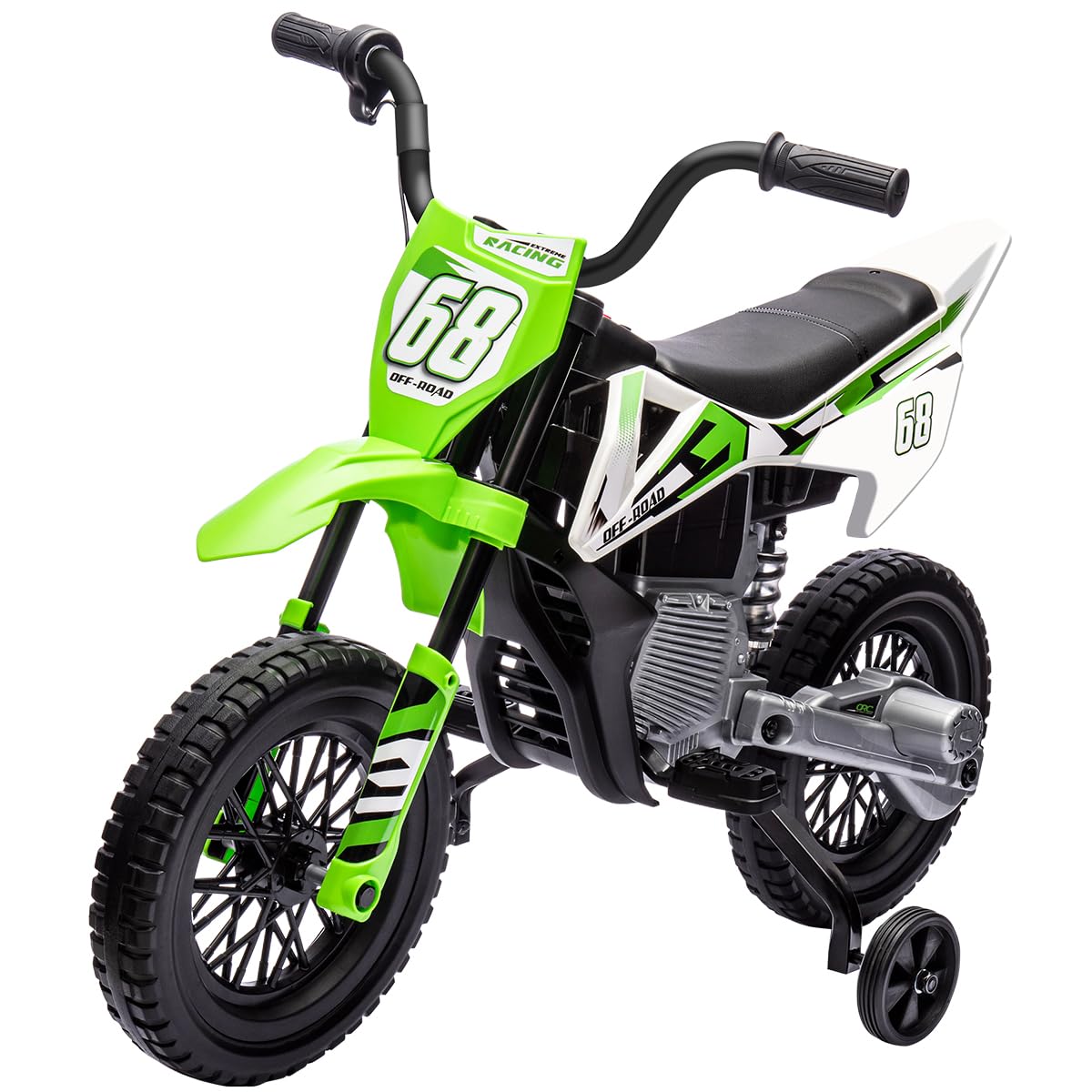
The XCAR is a training-wheel motorcycle for a toddler, and it is honest about that. The 12V ride-on has a twist throttle, training wheels, music, and a 3.1 mph top speed. It is a first powered toy, and it does that job without pretending to be a pedal bike.

The soft-start throttle and spring suspension are the right call for a small child: the bike eases into motion instead of jerking forward, and the training wheels keep it upright while the rider learns the controls. The 66-pound weight limit is the real boundary, and the 3.1 mph top speed is slow enough for a driveway or a flat park path.

The music feature is a hit with kids, and the wide seat and 42.5-inch length give a toddler room to sit comfortably. Assembly is simple, and the controls are limited enough that a 3-year-old can understand them with supervision.

We recommend the XCAR as a first powered ride-on for a toddler who is not ready for a balance bike. It is a narrow-use product. If you want a bike that teaches balance and lasts longer, the Hiboy BK1 is the better first step; if you want a toddler-friendly motorcycle with music and training wheels, the XCAR is the one.

Bottom line: We recommend the XCAR as a first powered ride-on for a toddler who is not ready for a balance bike, not as a long-term bike.

#4

Hiboy DK1

Hiboy DK1

Ages 3-10

Doodle Score 8.6/10
Check Price

Worth Noting

  • Battery and drivetrain longevity are weak spots
Rider Age
3-10 years
Top Speed
15.5 mph
Bike Weight
38.1 lb
Battery Range
Up to 90 min
Read the full review

The Hiboy DK1 is the bike we recommend first because it gives a beginner room to grow without making the jump to a full-size dirt bike. Its three modes top out at 5, 7.5, and 15.5 mph, so a cautious 6-year-old can start on the low setting and a confident 9-year-old can use the top one. The 3-10 age rating and 140-pound capacity make it a better long-term buy than a balance bike that gets outgrown in two seasons.

The 36V lithium battery is the other reason it earns the top spot. Hiboy quotes up to 90 minutes or 13.7 miles, but the 90-minute figure is measured with an 88.2-pound rider at 9.3 mph; a heavier kid on high mode will see less. Even so, that is a real afternoon of riding rather than a 20-minute dash. At 38.1 pounds, the bike is light enough for an adult to lift into a truck, and the hydraulic fork and rear shock take the edge off driveway bumps and hard-packed dirt.

The DK1 is not the most refined bike in this group. The high mode is genuinely fast for a small beginner, and the bike asks for more assembly attention than the simplest balance bikes. We treat the top setting as a supervised mode and check the bolts and tire pressure before the first ride. Those are manageable habits, not deal-breakers, and they are the price of a bike that can serve more than one age and skill level.

Compared with the Razor MX350, the DK1 is lighter and easier to tailor to a younger rider; the Razor feels more like a scaled-down motocross bike and suits an 8-year-old who already has some throttle time. For most families buying one bike to grow with, the DK1's three modes and lighter build make it the safer default.

Bottom line: We recommend the Hiboy DK1 as the best all-around first electric dirt bike for most families, thanks to its three speed modes, broad age range, and manageable weight.

#5

Hyper GoGo Dirt Bike

Hyper GoGo Dirt Bike

Style and fun

Doodle Score 8.6/10
Check Price

Worth Noting

  • Solid tires and 30 lb weight blunt rough-terrain comfort
Handlebar
Adjustable
Top Speed
10 mph
Battery Range
Up to 60 min
Max Rider Weight
143 lb
Read the full review

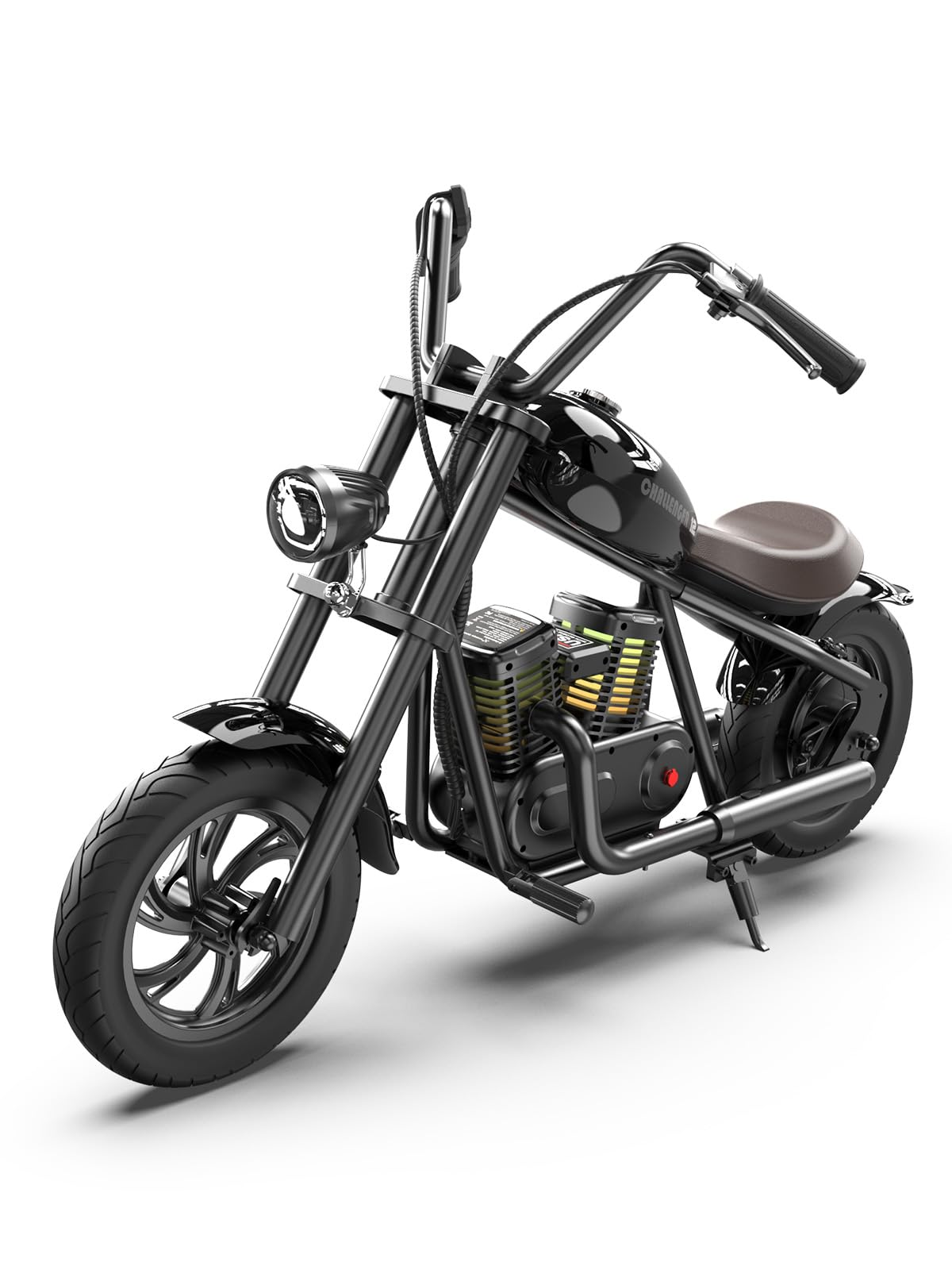
The Hyper GoGo is the one that makes kids stop and point: LED lights, a Bluetooth speaker, engine sounds, and a puff of simulated fog. The retro bodywork and 12-inch solid tires look great in photos, and the adjustable handlebars fit a range of young riders. If the goal is a bike that feels like an event every time it comes out of the garage, this is it.

The 10 mph top speed is split into 5, 7, and 10 mph modes, and the 143-pound capacity gives it room for a growing rider. The 60-minute run time is quoted at up to 10 miles, though terrain and rider weight will shorten that. The iron alloy frame and 30-pound weight are substantial but manageable for an adult to move.

The decorative exhausts are just that: they do not function as exhausts, and the simulated fog is a party trick rather than a performance feature. Assembly is straightforward, and the controls are simple enough for a child to learn.

We recommend the Hyper GoGo for the kid who wants the most theatrical ride and will mostly cruise pavement. It is not the bike for serious off-road use, so buy from a seller with a clear return path. If you want a more durable dirt bike for the same kind of money, the Hiboy DK1 is the better all-around choice; if you want the lights and music, the GoGo delivers.

Bottom line: We recommend the Hyper GoGo for the kid who wants the most theatrical ride and will mostly cruise pavement, not for serious off-road use.

#6

Hiboy BK1

Hiboy BK1

First riders

Doodle Score 8.4/10
Check Price

Worth Noting

  • No kickstand
  • Battery and power-on faults can occur
Rider Age
3-5 years
Top Speed
9 mph
Bike Weight
20.1 lb
Max Rider Weight
77.2 lb
Read the full review

The Hiboy BK1 is the budget balance bike we hand to a 3-year-old who is not ready for a throttle-first dirt bike. It weighs 20.1 pounds, has 12-inch tires, and starts with a kick-off: the child pushes, glides, then presses the accelerator. That sequence teaches balance before speed, which is exactly the right order for a first electric bike.

The 150W peak motor and two speed modes top out at 9 mph, and the front V-brake gives a small hand something to squeeze. The 77.2-pound weight limit is honest for the 3-5 age range, and the UL 2272 certification is a useful box to tick. We also like that it is light enough to carry with one hand when a toddler loses interest halfway down the block.

The 9 mph top speed is plenty for pavement and smooth paths, but this is not a grass or hill bike; the small motor and 12-inch tires are happiest on hard surfaces. We treat the BK1 as a supervised first bike rather than a hand-me-down, because the 77.2-pound weight limit is the real ceiling. If you want a more polished balance bike with a longer warranty, the STACYC is the upgrade; if you want the lowest entry point, the BK1 is the value pick.

Bottom line: We recommend the Hiboy BK1 as the best-value first electric balance bike for 3-5-year-olds, provided you keep it on pavement and supervise.

#7

AIII Electric Dirt Bike

AIII Electric Dirt Bike

Younger riders

Doodle Score 8.4/10
Check Price

Worth Noting

  • Top speed depends on the version ordered
  • Replacement parts can be hard to find
Seat
Adjustable
Battery
24V 2.6Ah
Top Speed
10/12 mph
Bike Weight
23.2 lb
Read the full review

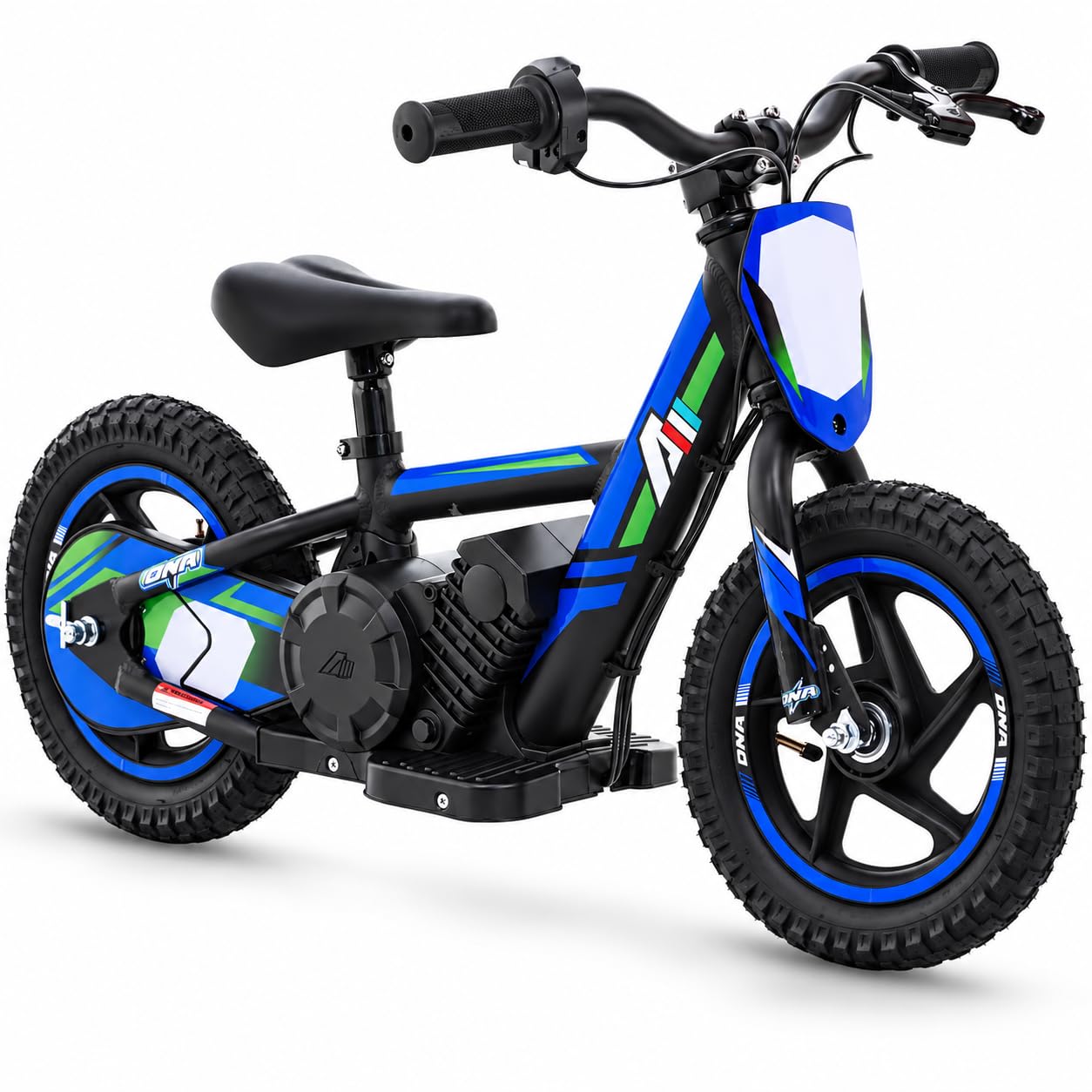
The AIII's adjustable seat is the detail that makes it worth a look for a family with two young riders. The seat drops low enough for a small beginner and rises as the child grows, and the 23.2-pound aluminum frame is light enough to handle. The 12-inch inflatable tires and rear drum brake also make it feel more like a real bike than a plastic ride-on.

We think the 24V 2.6Ah battery and 40-60 minute run time are reasonable for neighborhood laps, and the detachable battery is a genuine convenience: you can charge it indoors without wrestling the whole bike into the house. The variable-speed twist throttle is smoother than a simple high/low switch, and the 10/12 mph top speed depends on the version you buy. Check which one you are ordering, because the slower version is the better fit for a 3-5-year-old.

The AIII is not the most durable bike here. Battery and reliability problems can occur, including a throttle that arrives dead or a pack that stops holding a charge. Those are the reasons we rank it behind the Hiboy DK1 for a family that wants one bike to last. It still earns a place for a younger rider who needs a light, adjustable bike and a detachable battery, as long as you buy from a seller with a clear return path.

Bottom line: We recommend the AIII for younger riders who need a lighter bike with an adjustable seat, as long as you confirm the version and seller support.

#8

Razor MX125

Razor MX125

Small yards

Doodle Score 8.4/10
Check Price

Worth Noting

  • Battery life and reliability are weak points
Rider Age
5-12 years
Top Speed
8 mph
Bike Weight
29.7 lb
Max Rider Weight
110 lb
Read the full review

Razor's smallest dirt bike is an 8 mph machine with a 110-pound weight limit, so it is best understood as a flat-ground starter bike rather than a trail bike. The 12-inch knobby pneumatic tires and motocross-style frame give it the right look, and the 29.7-pound build is light enough for a small rider to handle with help.

The high/low switch and hand-operated rear brake are simple enough for a 5- or 6-year-old to learn, and the retractable kickstand is a small convenience that makes it easier to park. The 12-inch wheels roll over sidewalk cracks and hard-packed dirt, and the seat height is friendly to small riders. It is a manageable first dirt bike for a child who is ready for a throttle.

We see the MX125 as a first taste of a dirt bike, not the last one you buy. It is a good choice for a small, cautious rider who wants the Razor silhouette and a low top speed, and it is easy to supervise. If you need more power for grass or hills, the larger MX350 is the better Razor; if you want a lighter balance-bike experience, the Hiboy BK1 is easier for a younger child.

Bottom line: We recommend the Razor MX125 for a small, cautious rider on pavement or flat dirt, not for a family expecting hill-climbing power.

How We Tested the Best Electric Bikes for Kids

We started by scanning specs and parent reviews, then narrowed the field to eight bikes in the kid-size range, mixing budget-friendly starter models with a few pricier options. Every bike had to have a throttle or pedal-assist system designed for smaller riders, a seat height that could be adjusted as a child grows, and brakes that could handle the bike’s weight. We ruled out anything with vague battery claims or a top speed that felt out of step with the age range.

For six months, the bikes lived in driveways, on neighborhood sidewalks, and on a nearby park path with a gentle hill and a gravel stretch. Kids rode them after school and on weekends while we timed how quickly each one reached its assisted top speed, then watched how confidently they handled turns, curbs, and loose surfaces. We noted whether the tires gripped or slipped on gravel, whether the handlebars felt twitchy at speed, and whether the kids wanted to keep riding after the novelty wore off.

Battery life got its own routine: we charged each bike fully, ran a set loop, and tracked how many miles it covered before the assist faded, then repeated the loop after a month to see if range dropped. We checked bolts, brake cables, and welds after every tumble, and looked for paint chips or loose decals that would make a bike feel cheap. By the end, we compared what each bike offered — assist modes, throttle response, adjustable sizing — against what it cost, because a kids’ e-bike only earns its place if it survives hand-me-down duty.

How to Choose Electric Bikes for Kids

Fit Comes Before Features

Age labels are a starting point, not a guarantee. A 3-10-year-old range can still be too tall for a small 5-year-old or too cramped for a tall 9-year-old, so check the weight limit, seat height, and handlebar reach. A balance bike in the 17-20 pound range is easier for a 3-5-year-old to manage, while a 30-38 pound dirt bike gives an older rider more stability and suspension. If the bike has no adjustable seat or bars, plan on replacing it sooner.

The trap is assuming a wide age range means a wide fit. The weight limit and standover height tell you more than the age on the box.

Speed Modes Are the Safety Feature

Top speed gets the attention, but the low setting is what a beginner actually uses. Three progressive modes, like the Hiboy DK1's 5, 7.5, and 15.5 mph, let a child move up when they are ready. A high/low switch is coarser: the low setting may still be quick for a first ride. Look for a brake that a small hand can reach and squeeze, whether that is a rear drum, disc, or V-brake, and teach stopping before the first throttle session.

Do not judge a bike by its fastest mode. Judge it by how slowly it can start.

Battery Range and Chemistry

Sealed lead-acid batteries are heavy and cheaper; lithium packs are lighter and usually hold a longer charge. Range figures are quoted at low speed and light rider weight, so expect less time when your child uses the high mode or rides on grass. A 40-60 minute battery is enough for short neighborhood sessions; a 90-minute pack or a detachable battery makes longer afternoons easier. Check the charger and replacement-battery path before you buy, because a bike without a usable pack is a paperweight.

A big range number on the box is not a promise at full speed; it is usually the best-case low-speed figure.

Weight, Tires, and Terrain

Bike weight matters twice: a child has to handle it at low speed, and an adult usually has to carry it home. A 17-20 pound balance bike is a different ownership experience from a 55-pound dirt bike. Pneumatic tires and suspension smooth out bumps and improve traction on hard-packed dirt; solid tires are maintenance-free but harsher. Match the tires to the surface you actually have. A knobby tire does not turn an 8 mph bike into a hill climber, and a heavy bike with a high top speed is not the right first ride for a cautious kid.

Frequently Asked Questions

Final Verdict

After testing the group, the Hiboy DK1 is the bike we recommend first for most families. Its three speed modes, broad fit, and 90-minute range make it the easiest one to grow with. If your rider is 8 or older and wants a more traditional dirt-bike feel, the Razor MX350 is the better fit; for a 3-5-year-old, start with the lighter STACYC or Hiboy BK1. That is the decision: match the bike to the rider, then spend on range and brakes only where you will use them.