Outdoor Play

Best Hoverboards for Kids of 2026

A hoverboard looks like the simplest gift you'll ever buy — step on, lean forward, go. Then your kid steps on for the first time, the board twists a quarter turn under them, and the learning curve announces itself. Over the past six months, my team and I have handed nine kid-sized hoverboards to children ages six to twelve and lived with the result: driveway wobbles, dead-battery walks home, Bluetooth speakers nobody asked for. The boards that earned a spot here stayed steady under a shaky beginner, held a charge through a whole Saturday, and felt solid enough that I'd let a kid ride solo.

Top speed isn't the number to fixate on — it's how the board behaves at half that speed, when a nervous rider leans too hard and the gyroscopes do all the work. Value matters just as much: a modest board that survives three summers beats a fancy one that quits after a puddle. Below are picks for first-timers, for kids who've outgrown their starter, and for anyone who wants a gift that's still getting used in September.

#1

Gyroor G13

Gyroor G13

Most families

Doodle Score 9.0/10
Check Price

Worth Noting

  • 6.5-inch tires stop at gravel and deep grass
Top Speed
7.75 mph
Wheel Size
6.5 inches
Max Rider Weight
176 lb
Range Per Charge
Up to 8 miles
Read the full review

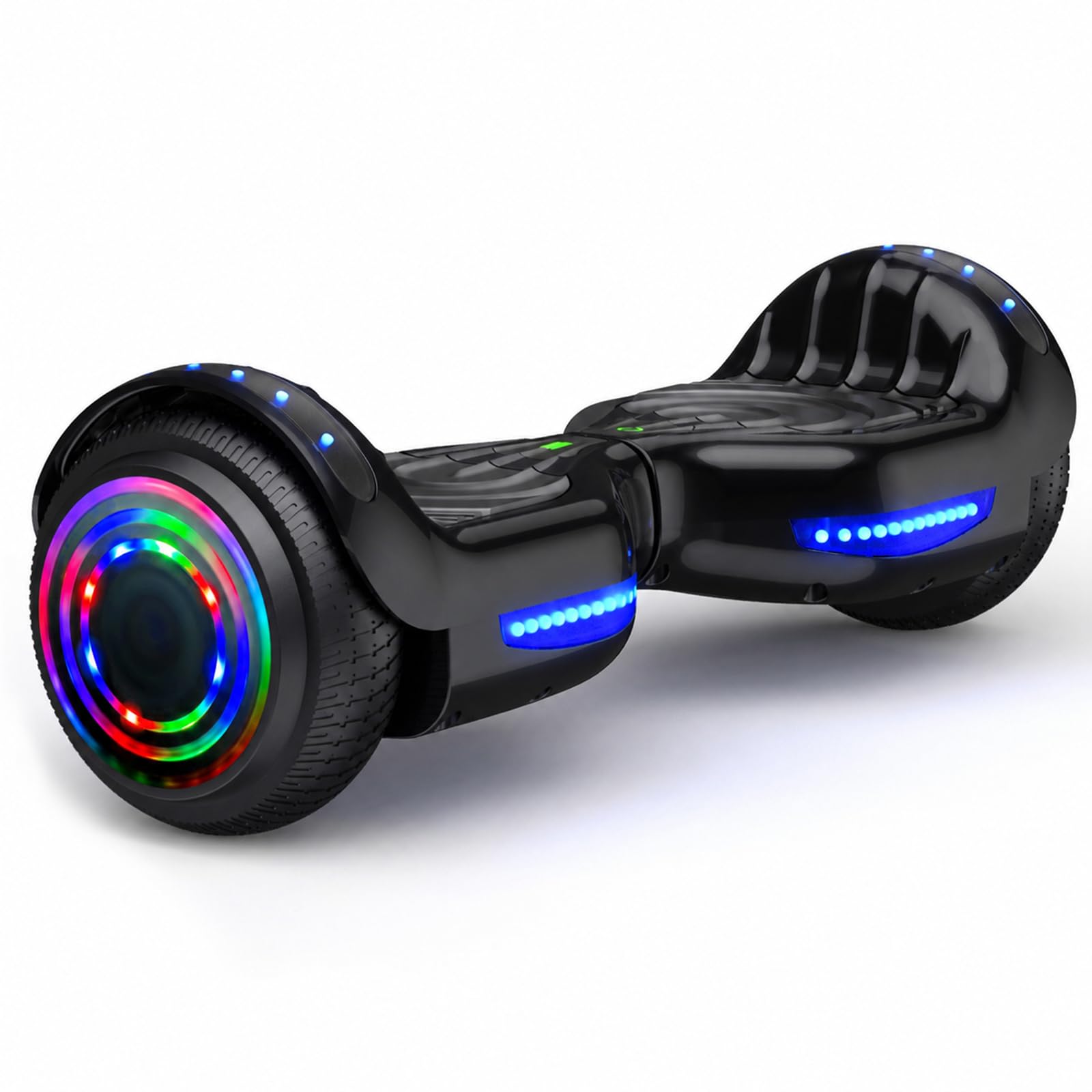
Eight miles of listed range in a board that weighs about 13.5 pounds is the trick most families are trying to pull off, and the Gyroor G13 gets both numbers right. Add a 176-pound rider limit and UL 2272 certification and you have the board we hand to a family that hasn't narrowed anything else down yet. That weight limit matters more than it looks: a 9-year-old today is a 13-year-old in four years, and this is one of the few boards here that keeps working through that.

The 6.5-inch tires are where it earns its keep. Pavement, packed dirt and a mown lawn are all comfortable, and the dual 250-watt motors keep it from bogging down when the grass gets thick. We watched that transition closely, because a board that stalls on a slope is the fastest way to end a kid's interest. The self-balancing response never felt twitchy in our time with it — forgiving under a light rider, which is exactly what you want on a first board.

The extras are fun rather than filler. Bluetooth connects without fuss, so a queue of songs is ready before the ride starts, and the headlights and glowing wheels make the board easy to spot at dusk. Gyroor covers the battery for six months and the controller for a year, the most generous split in this group, and the board will take the company's K2 seat attachment later if your family wants a go-kart — a separate purchase and, honestly, a different kind of toy.

Bottom line: We recommend the G13 to most families: it's the rare kid-sized board that's light enough to carry and still rated to 176 pounds.

#2

Gyroor Warrior G2

Gyroor Warrior G2

Bigger kids

Doodle Score 8.8/10
Check Price

Worth Noting

  • Battery life varies from board to board
Wheel Size
8.5 inches
Board Weight
30 lb
Recharge Time
2 hours
Max Rider Weight
220.5 lb
Read the full review

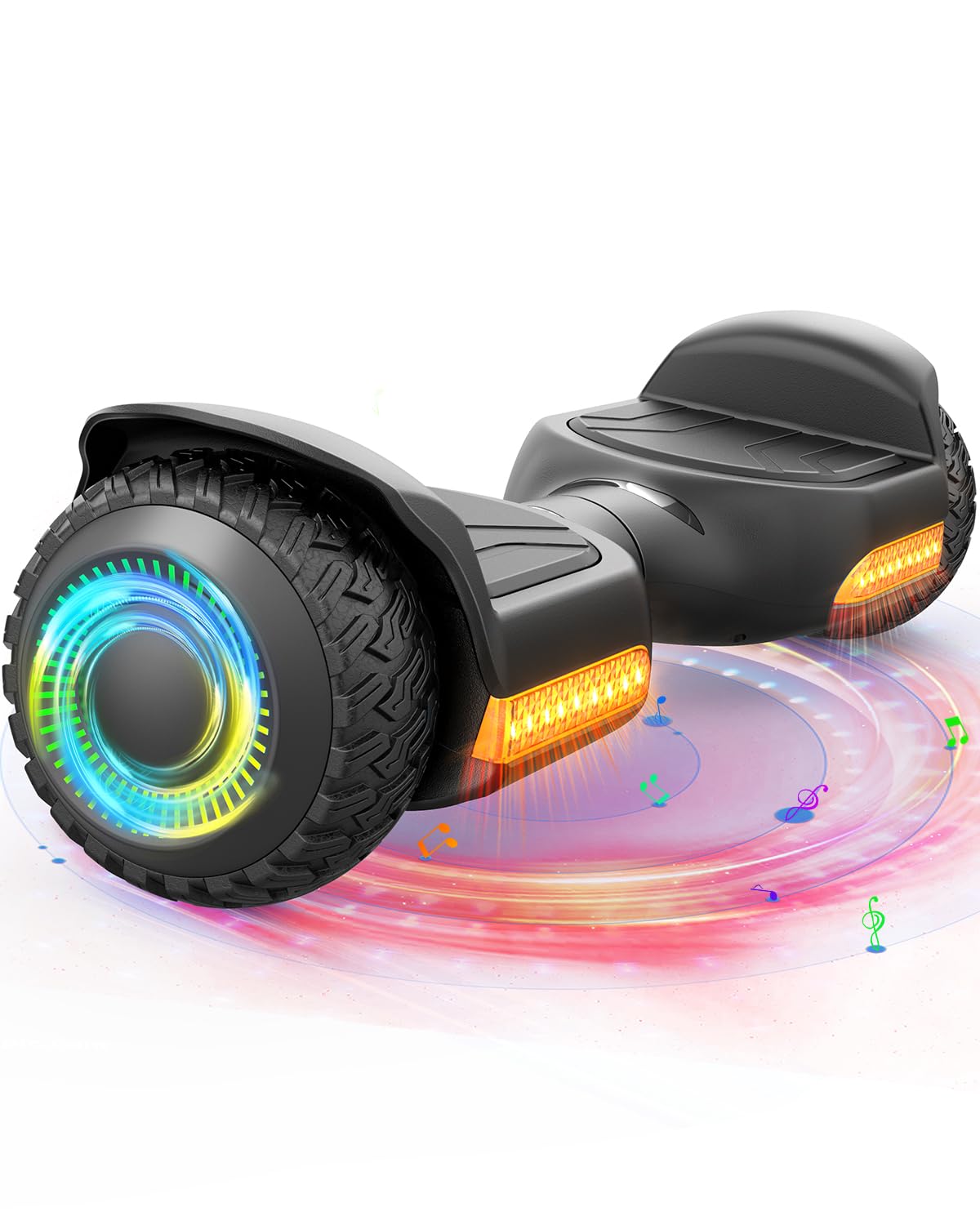
Thirty pounds is the number that decides whether the Warrior G2 belongs in your house. That's more than twice the weight of our top pick, and it's why this board ends up with older kids and with parents who don't mind lifting it into a trunk.

What the weight buys is the best rough-ground ride in this group. The 8.5-inch tires are far more planted than the 6.5-inch wheels on the smaller boards — gravel, tree roots and a choppy lawn stop being events. The frame is rated to 100 kilograms, so a 12-year-old, a teenager and a fair number of adults can all ride the same board without testing its limits. If your kids are 10 or older and the riding happens on real ground rather than a driveway, this is the one we point to.

A two-hour recharge is the quickest here, which matters more than it sounds when two kids are waiting their turn. Speed can be dialed back while a beginner finds their feet, and that's the single most useful thing a parent can control on a board this capable. The Bluetooth speaker and LEDs come along for the ride, and the app adds light colors and a speed readout — pleasant, but nobody is buying this for the app.

Bottom line: Buy the Warrior G2 if your rider is big enough for a 30-pound board: the 8.5-inch tires and higher weight limit are worth the extra money.

#3

Emaxusa Spider

Emaxusa Spider

Style-first kids

Doodle Score 8.6/10
Check Price

Worth Noting

  • Six-hour recharge is the slowest here
  • Three-month warranty is short
Top Speed
6.2 mph
Wheel Size
6.5 inches
Recharge Time
6 hours
Recommended Ages
6 to 12 years
Read the full review

A hoverboard with a spider printed across the deck and LEDs glowing underneath is not a subtle object, and the Emaxusa leans into that harder than anything else here. If half the appeal for your kid is riding and the other half is being seen riding, this is the board that gets the reaction.

The bones back up the paint: UL 2272 certification, a non-slip footpad, rubber tires and a 6.2 mph top speed that is the tamest in this group. We like that pairing for a first board — a kid who's busy showing off doesn't need another four miles an hour underneath them. Bluetooth and the light-up wheels are the sort of extra that gets used constantly for a week and then quietly becomes part of the ritual.

There's no published maximum rider weight, which is the one gap worth closing before you order. On a board this size it costs a small rider nothing, since everything in this class carries a young child comfortably; it's the 12-year-old at the top of the age range where the number starts to matter. The built-in speaker is the kind of thing kids ask for by name, and the whole board stores on a shelf between rides.

Bottom line: We point style-first kids to the Emaxusa: the spider graphics and lights are the draw, and the 6.2 mph top speed keeps it tame.

#4

Hoverstar Kids 7-12

Hoverstar Kids 7-12

Younger riders

Doodle Score 8.2/10
Check Price

Worth Noting

  • Range of roughly 2.5 to 3.7 miles per charge
  • 90-day warranty is among the shortest here
Top Speed
8.7 mph
Wheel Size
6.5 inches
Max Rider Weight
165 lb
Range Per Charge
Approximately 2.5–3.7 miles
Read the full review

Most hoverboards are sized for a 10-year-old and sold to a 7-year-old. The Hoverstar is built the other way around: a 20.5-inch frame, 6.5-inch solid tires and 12 pounds of board, light enough that a second-grader can haul it back to the garage alone. That's the reason it earns a place here, and it's why we reach for it first when the rider is on the small side.

The rest of the numbers are honest about what the board is. Dual 300-watt motors take it to a listed 8.7 mph, and it's rated for riders up to 165 pounds and inclines up to 15 degrees. Both figures are generous for the size — 8.7 mph is quick on a board this light, and it's worth deciding where your kid rides before they discover that on a hill. UL 2272 certification and a non-slip deck round out the basics.

Range is where it gives ground. A charge is listed at roughly 2.5 to 3.7 miles, which is a driveway-and-sidewalk amount rather than a whole-afternoon one, and a two-to-four-hour recharge makes one session a day realistic. For a young rider doing laps near the house, that's plenty. For a kid trying to keep up with an older sibling around the neighborhood, it isn't — and at that point the bigger Gyroor is the better spend.

Bottom line: For a small 7- or 8-year-old, the Hoverstar is our pick — 12 pounds, a kid-sized frame, and a price that leaves room for a helmet.

How We Tested the Best Hoverboards for Kids

We started with a list of roughly 30 kid-sized hoverboards and cut it down with the things that filter out a bad purchase fast: UL 2272 certification, a stated weight limit with some headroom above your average 8-year-old, replacement tires and footpads you can actually reorder, and a price that matched what came in the box. That left nine boards, which we ran for six months on driveways, a quiet cul-de-sac, and the sidewalk on the walk to school.

Every board got the same first hour. I unboxed it without reading the manual, calibrated it, then put a 7-year-old on for their first ride while I counted how many times they stepped off to reset and whether the deck drifted or spun while they stood still. We set a slalom of cones on the cul-de-sac to see which boards tracked a turn and which wobbled through it, and I rode each one at its slowest setting down our sloped driveway, because that's where stability problems show up first.

Battery life was measured, not guessed: full charge, timed ride until the board slowed to a crawl, and a note of how long the charger took. After about 20 charge cycles we checked whether range had slipped and whether the board held its charge overnight. For sound, we played the same three songs at max volume from three feet away, then compared ride time with the speaker on and off — a loud speaker is thin comfort when it costs you 15 minutes of range. Shells got scuffed on curbs on purpose, and we checked for cracks, loose screws, and footpad wear after every session. The last data point was the least scientific: which board the kids grabbed first.

How to Choose Hoverboards for Kids

Match the board to the kid, not the other way around

Hoverboards get sold as one-size toys and they aren't. A 12-pound board like the Hoverstar suits a second-grader; a 30-pound board like the Gyroor Warrior G2 is a different object entirely, and a small child will spend more time wrestling it into the car than riding it. The practical test is simple: if your kid can't pick it up and carry it ten feet, you'll be doing that job every time it comes out.

Then check the rider weight limit against where your child will be in a couple of years, not just today. A 165-pound rating covers most kids through elementary school; a 100-kilogram rating lets the same board pass down to a teenager or an adult. Buying slightly above your child's current size is usually the smarter move, as long as the board is still light enough to handle.

Wheel size decides where it can go

Six and a half inches is the standard kid size, and on pavement, packed dirt and a mown lawn it's perfectly good. What it isn't is an off-road tire, whatever the listing calls it — gravel is where a 6.5-inch board starts to feel sketchy, and deep grass will slow it down. Eight-and-a-half-inch tires are what make rough ground genuinely comfortable, and they're worth the extra weight and money only if your kid will actually ride on it.

Treat the range figure as a best case

Listed range is measured under friendly conditions: smooth ground, a light rider, warm weather. Grass, hills and a cold morning all pull it down, and a board rated at eight miles won't deliver eight miles of a kid hammering it around a cul-de-sac. Pick a range that matches how your family actually rides — the gap between a three-mile board and an eight-mile board matters far less on a driveway than it does on a neighborhood loop.

Storage is where batteries really die. Charge the board to full before you put it away for the season and top it up roughly once a month; a pack left flat all winter is the most common reason a working hoverboard doesn't come back out in spring.

Certification and the safety basics

UL 2272 covers the whole electrical system — battery, charger and motor controller together — and every board here carries it. It's the first thing to look for and the one thing we won't compromise on, because the alternative is an uncertified pack charging in a child's bedroom. Add a helmet, keep the first sessions on grass or carpet, and stay inside the stated weight limit; the self-balancing response gets vague when a rider is over it.

Are Bluetooth and lights worth paying for?

They're nice, not necessary. A speaker makes a board more fun, and lights make a kid visible at dusk, which is a real benefit on a sidewalk after dinner. But we won't trade range, weight or certification for either. A cheaper board with a shorter feature list that fits your kid properly beats a heavier one with a light show every time.

Frequently Asked Questions

Final Verdict

For most families, the Gyroor G13 is the board to buy. It carries a child at about 13.5 pounds, still manages a listed eight miles, and is rated to 176 pounds — so it works now and keeps working when your kid grows. That combination is why it sits above the flashier boards here.

Two situations change the answer. If your rider is 10 or older and will be on gravel, roots and real ground, spend up on the Gyroor Warrior G2 and its 8.5-inch tires. And if the rider is small enough that a 30-pound board is a two-person job, the 12-pound Hoverstar does the same work for less — just know its range is measured in laps, not miles.