Games & Puzzles

Best Trading Card Games of 2026

Trading card games are equal parts strategy, luck, and community—and that's exactly what makes them so hard to shop for. You want a game you can learn without a mentor, cards that feel worth collecting, and a fair shot at pulling something rare. But the hobby is also plagued by counterfeits, lopsided rarity distributions, and boxes that cost more than they deliver. A good TCG fixes all of that: it gives beginners a clear path in, rewards collectors with quality cards, and keeps matches close enough to want a rematch.

My team and I have been playing and collecting for years, but for this guide we went deep: 14 different products—starter decks, booster bundles, and full boxes—over four months. We played sealed games at kitchen tables, drafted with friends, and hauled decks to local game nights. The best ones earned their spot by balancing beginner-friendliness, card quality, and a hit rate that feels honest. One thing I've learned: the most expensive box isn't always the most fun—sometimes a simple starter deck teaches you more about the game, so here are the ones we'd buy again.

#1

MTG Final Fantasy Starter Kit

MTG Final Fantasy Starter Kit

First-time players

Doodle Score 9.6/10
Check Price

Worth Noting

  • Casual deck power limits tournament use
Ages
13+
Decks
Two 60-card decks
Players
2
Rare Cards
5 Rare and 1 Mythic per deck
Read the full review

The first thing we look for in a starter kit is whether two people can sit down and play without a deck-building session first, and this one clears that bar. You get two 60-card Final Fantasy decks—Cloud and Sephiroth—plus a guide that walks you through the essentials. We think that combination is the best default here: one purchase, two players, and a clear path from opening the box to actually playing.

The theme does real work. Each deck includes 5 Rare cards and 1 Mythic Rare Legendary Creature with a traditional foil, so there is something to chase even after the first game. We like that the decks are prebuilt but still show off Magic's card types and keywords; it is a better teaching tool than a pile of random boosters. The cards are also nice to look at, which matters if you are buying for a Final Fantasy fan who might collect before they compete.

Compared with the other starters here, it has the broadest theme hook and the simplest two-deck structure. The Lorcana box is gentler for families, and Turtle Team-Up is better for a group, but neither does the classic one-on-one Magic lesson as directly. For a pair starting from zero, this is the one we hand over first.

Bottom line: We recommend this as the default first TCG purchase: two complete decks, a clear learn-to-play path, and enough foil rarity to make the box feel like a gift.

#2

Disney Lorcana Gateway

Disney Lorcana Gateway

Family game night

Doodle Score 9.6/10
Check Price

Worth Noting

  • Guided path may feel slow to veterans
Ages
8+
Decks
Two prebuilt decks
Format
Guided gateway game
Players
2
Read the full review

The Gateway box is built around a smart teaching idea: it introduces Lorcana in stages instead of handing a new player the whole rulebook at once. Two prebuilt decks are ready to play, and the guided setup unlocks different gates as you go, adding songs, items, and Floodborn glimmers in manageable waves.

We like that structure for a family table because it gives a younger player a series of wins before the full game opens up. The Disney characters are the hook, but the pacing is the real design work: nobody has to memorize every keyword before the first turn. The cards themselves feel sturdy and colorful, which matters when the box is likely to be handled by kids.

It is not a full constructed Lorcana collection, so think of it as a bridge rather than a destination. For a Disney family, that makes it the easiest recommendation here: the two decks are ready to play, and the box is sturdy enough to survive repeat sessions. When the guided gates are done, you can move into regular Lorcana products without wasting the cards.

Bottom line: For families with a Disney fan, we think Gateway is the gentlest way in: staged rules, two ready decks, and art that gives younger players a reason to care.

#3

Star Wars Unlimited Starter Set

Star Wars Unlimited Starter Set

Quick two-player games

Doodle Score 9.6/10
Check Price

Worth Noting

  • Boosters sold separately for deck building
Cards
110 cards
Decks
Two ready-to-play decks
Players
2
Play Time
20 minutes
Read the full review

A starter set earns its name when it includes the stuff that usually costs extra later, and this one is unusually complete: two ready-to-play decks, 110 cards, 40 counters, two playmats and posters, two folded deckboxes, and a quickstart rulebook.

We think that completeness is the reason to choose it over a bare two-deck box. The Clone Wars frame gives the decks a clear identity—Ahsoka Tano against General Grievous—and the 20-minute play time makes it realistic for a weeknight game. The 10-card exclusive playsets are the quiet collector bonus: they are not in booster packs, so the starter has value beyond its rulebook.

It is a focused two-deck product, and the box is honest about that scope. For a self-contained game with a Star Wars fan, we have not seen a more complete box in this group.

Bottom line: We reach for this when a Star Wars fan wants a complete two-player game tonight; the playmats, counters, and quickstart rulebook make it feel finished, not partial.

#4

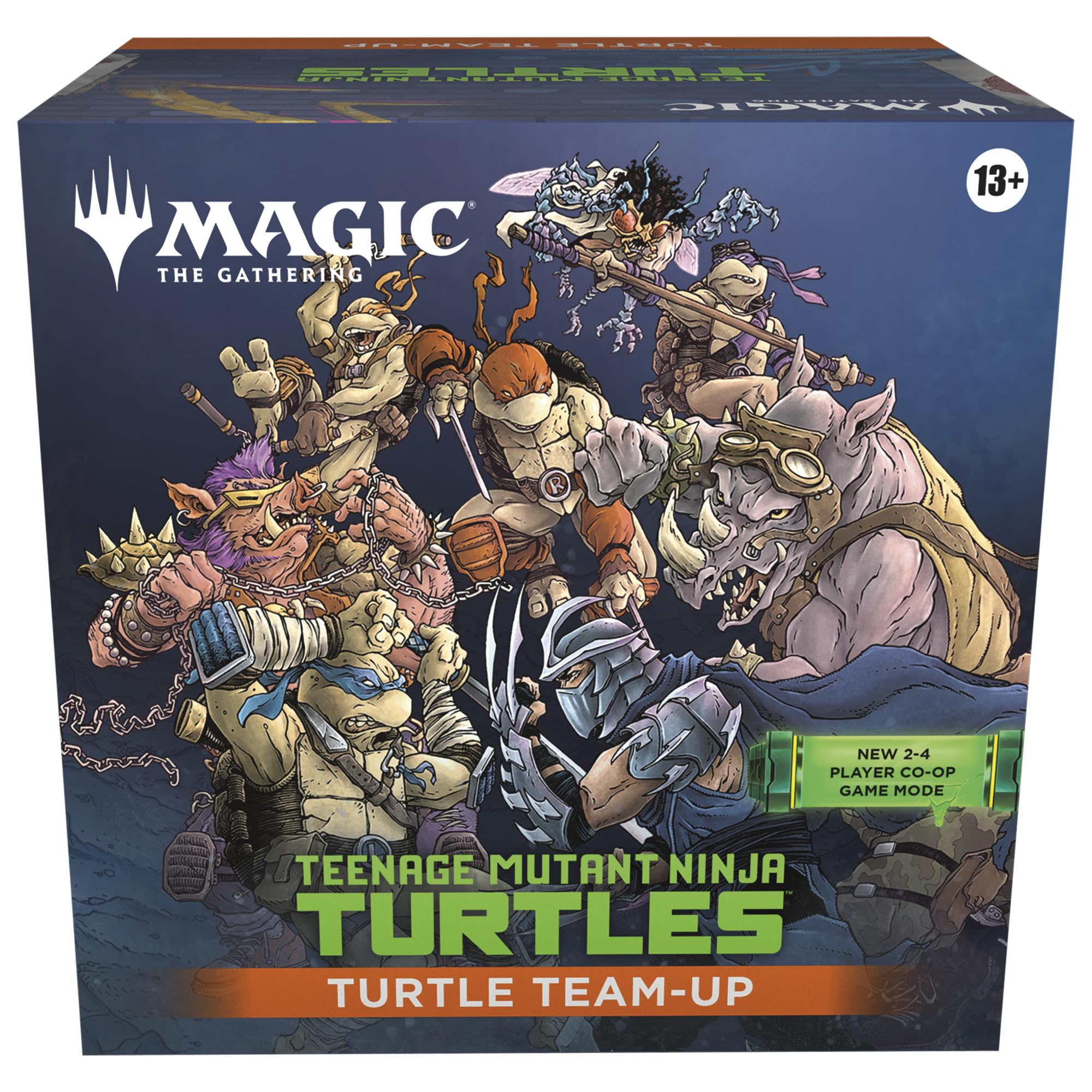
MTG TMNT Turtle Team-Up

MTG TMNT Turtle Team-Up

Co-op groups

Doodle Score 9.4/10
Check Price

Worth Noting

  • Co-op rules differ from standard Magic
Ages
9+
Decks
Four 60-card decks
Players
2–4
Boosters
4 Play Boosters
Read the full review

Cooperative Magic sounds like a contradiction until you see what Turtle Team-Up is doing: 2–4 players each take one of four 60-card hero decks and fight the scenario together. We like that for a group because nobody has to lose repeatedly while learning the stack, and the box also includes four Play Boosters for tweaking the decks after the first session.

The four decks give each player a clear role, and the villain scenario gives the table a shared problem instead of a free-for-all. The TMNT art is playful, but the bigger draw is the format: it turns Magic into a group activity that a beginner can join without slowing everyone down.

The four decks also mean nobody has to sit out the first game, which is the practical reason we keep coming back to it for groups. If your table wants a shared win rather than a duel, this is the box that makes Magic feel like a team game.

Bottom line: We like Turtle Team-Up for a group that wants to learn Magic side by side; four hero decks and a co-op villain scenario turn rules questions into table talk.

#5

Pokémon Mega Dream ex Box

Pokémon Mega Dream ex Box

Collectors chasing hits

Doodle Score 9.2/10
Check Price

Worth Noting

  • Premium price for ten packs
Set
MEGA Dream ex
Packs
10 packs
Players
2+
Cards Per Pack
10
Read the full review

Ten packs, ten cards per pack, and a high-class set built around hits: that is the pitch for MEGA Dream ex, and it is aimed at collectors rather than first-time players. The box is sealed and the packs are the main event; there are no decks or rulebook here.

We think the density is the appeal. Ten packs give you a real opening session, and the set's art and special variants are the reason to choose this over a generic bundle. The cards are also the kind of thing you want to sleeve and show off, not just shuffle into a deck. If you are buying for a Pokémon fan who enjoys the ritual of opening packs, this box has more occasion built in than a six-pack bundle.

The boundary is language and set knowledge. This is a Japanese high-class pack, so check that your local scene accepts the cards before buying for play. For a collector who wants the hit density and the display box, those caveats are easy to live with.

Bottom line: We recommend this collector box for anyone chasing flashy pulls from a high-class set; the ten-pack format delivers a proper opening session, provided you accept the premium buy-in.

#6

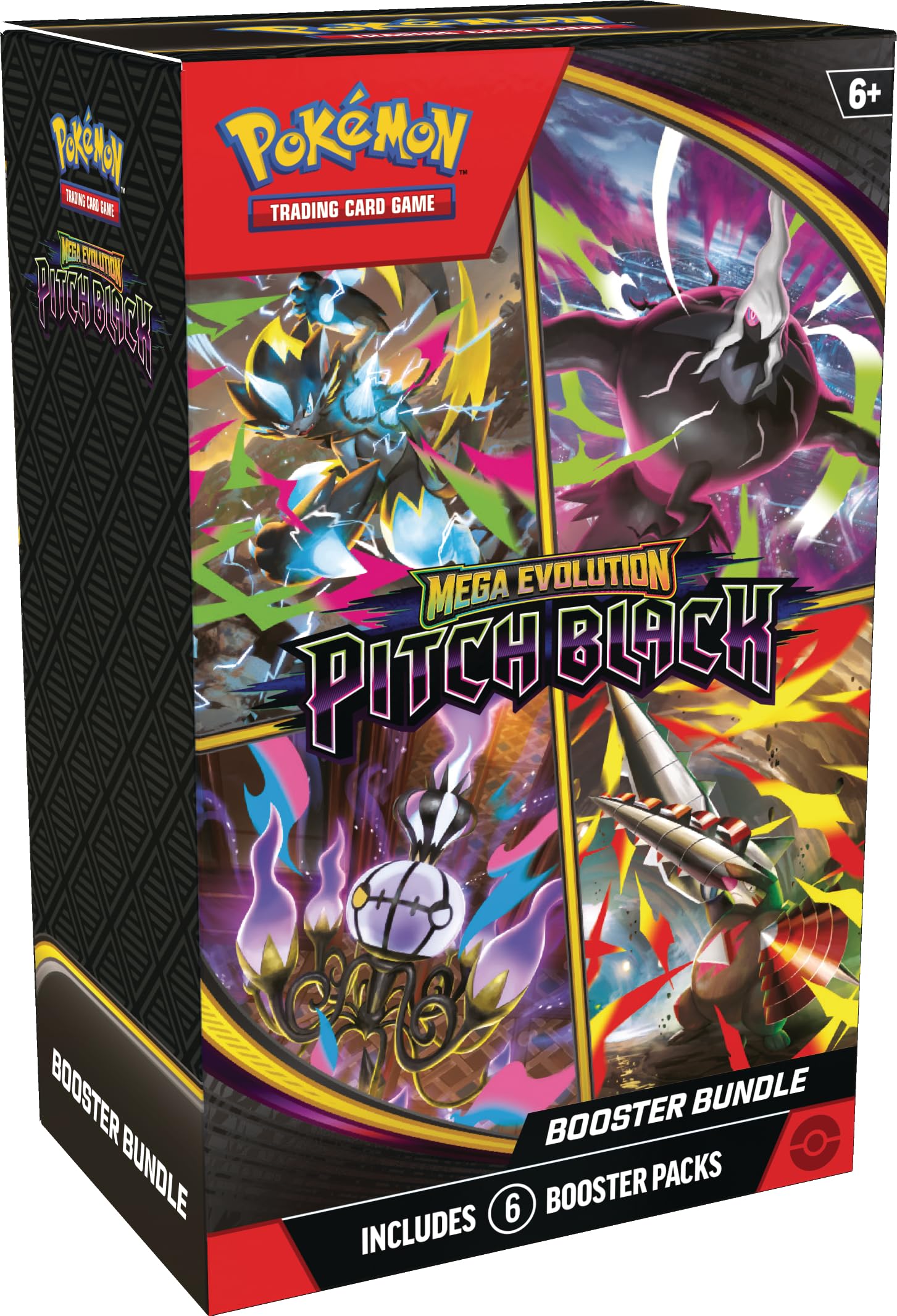
Pokémon Pitch Black Bundle

Pokémon Pitch Black Bundle

Low-commitment collectors

Doodle Score 8.6/10
Check Price

Worth Noting

  • Hit quality varies from bundle to bundle
Set
Mega Evolution—Pitch Black
Ages
6+
Packs
6 booster packs
Players
2
Read the full review

Six packs is a useful size for a Pokémon collector who wants a taste of a new set without committing to a full box. The Pitch Black bundle is sealed, current, and pitched as an entry point to the new Chaos Rising expansion—no decks, no rulebook, just the packs.

We like that it gives you a real opening session and a few tradeable duplicates without the storage burden of a booster box. The Mega Evolution frame is the draw if you are already following the set, and the bundle is small enough to bring to a friend's house or tuck into a gift bag.

The bundle is small enough to work as an add-on for a collector who already plays, and that is exactly the role we see for it: a taste of the set, not a full case. We think it earns its spot for anyone who wants the fun of opening packs without clearing shelf space.

Bottom line: We see this as the low-commitment Pokémon pick: six sealed packs from a current set give you a fun opening without the commitment of a full box.

How We Chose and Tested the Best Trading Card Games

We started by narrowing the field to 14 products from the major trading card games, including starter decks, booster bundles, and full booster boxes. We picked them based on price tier, availability, and whether they promised a complete play experience for one or two players. Over four months, we played every product at least five times—at kitchen tables, local game stores, and a few chaotic draft nights with friends.

To judge value and hit count, we opened the full contents of each bundle and box, recording every rare, foil, and alternate-art card. We noted how many 'hits' a typical box delivered and whether the distribution felt fair for the price. For card quality, we compared card stock thickness, print clarity, and how well foils held up after a month of shuffling. We also ran an authenticity check: side-by-side comparisons with known genuine cards, looking at holo shine, text sharpness, and the feel of the card back.

Beginner-friendliness got its own test: we handed starter decks to three people who had never played a TCG and watched how quickly they grasped the rules without help. We timed how long it took them to play a full game and asked what confused them. For playability, we kept notes on how balanced the mechanics felt, whether matches dragged or ended too soon, and if we wanted to shuffle up again. We'll keep playing these decks and updating as new sets release.

How to Choose Trading Card Games

Match the box to your player count

A two-player starter is the cleanest way into a head-to-head game: two decks, one rulebook, and no deck-building before your first match. That is why the Final Fantasy starter and the Star Wars Unlimited set are easy recommendations for pairs. If your table is bigger, look for a multiplayer or co-op product instead; Turtle Team-Up handles 2–4 players with four decks and a shared villain scenario. Buying a two-deck starter for a family of four usually means somebody waits.

Know what a starter kit actually contains

The word starter is doing real work. A starter kit should include ready-to-play decks and enough counters or playmats to begin; the Star Wars set is the most complete example here. A booster bundle or box is not a starter, even when the art looks inviting—it is a stack of random cards that assumes you already have a deck. If you are buying for a beginner, put the teaching product first and the packs second.

Choose the complexity you can teach

Rules density matters more than the age printed on the box. Guided products such as Lorcana Gateway introduce card types in stages, which is easier for a younger or less experienced player than a full rulebook. Magic and Star Wars reward readers who are comfortable with keywords and timing. We prefer to start someone on a simpler box and add complexity later rather than hand a newcomer a collector box and hope the theme carries them.

Treat sealed packs as a gamble

Booster packs are random, so value changes from box to box and a chase card is never guaranteed. That makes a bundle the better sampler and a box the better choice for someone who enjoys the opening ritual; neither is a shortcut to a competitive deck. If you are buying sealed product online, stick to official storefronts and be ready to return anything that arrives with a broken seal.

Buy the theme, then check the shelf life

A licensed theme is a legitimate reason to choose one game over another: Final Fantasy, Disney, Star Wars, and Teenage Mutant Ninja Turtles all give a new player a familiar hook. The practical question is what comes next. Starter kits are fixed decks, while games with current booster sets—Pokémon, Magic, Lorcana, and Star Wars Unlimited—give you room to expand. If you plan to play at a local store, check that the set is legal there before you invest in a collector box.

Frequently Asked Questions

Final Verdict

For most households, the MTG Final Fantasy Starter Kit is the one to buy first. Two complete decks, a learn-to-play guide, and a theme that works as both game and collectible make the first session easy to arrange. If your table is younger or more Disney-inclined, Lorcana Gateway teaches in gentler stages; if four players want to learn together, Turtle Team-Up is the co-op alternative. The booster boxes are for collecting and drafting after you already know how to play.