Games & Puzzles

Best Card Game Starter Decks for Beginners of 2026

A starter deck should be the easiest way into a card game, but too many are a confusing rulebook and a box missing half the counters you need. The right one is a complete, playable game in a box: a balanced deck, a rulebook you can follow, and enough tokens to get through your first match. That's the fix—curiosity becomes a game you can actually sit down and play.

Over the past four months, I've shuffled through 14 starter decks with my team. We played each one at kitchen tables and during a weekend game day, teaching friends who had never touched the game before. We paid attention to what shoppers actually ask: whether the deck is worth the money, if the cards hold up after repeated shuffling, whether a beginner can learn it, if it plays well out of the box, and whether there's anything worth collecting later. A great deal can still be a bad first purchase if it's missing cards or skips the basics. The picks below got the fundamentals right.

#1

Magic: The Gathering Final Fantasy Starter Kit

Magic: The Gathering Final Fantasy Starter Kit

First two-player game

Doodle Score 9.6/10
Check Price

Worth Noting

  • Built for casual play, not tournaments
Players
2
Decks Included
2, 60 cards each
Rares Per Deck
5 plus 1 foil mythic
Recommended Age
13+
Read the full review

Two complete 60-card decks, a learn-to-play guide, and a foil mythic in each half of the box. The decks are the reason this is our top pick: beginner boxes usually hand you a 20-card teaching deck that gets retired once the training wheels come off, while here you get two full builds, one for Cloud and one for Sephiroth, so the first game you play is the game you'll still be playing next year.

We set it up with two people who had never played Magic, and the guide carried them: it walks through the turn structure and the first game reached a winner without anyone reaching for a phone. Final Fantasy fans get the better end of the deal, too. The art is the argument for choosing this over a plainer Magic starter, and five rares plus a shiny legendary creature in each deck is a genuinely respectable first binder.

Magic's keyword vocabulary is the honest obstacle — expect to look up trample, vigilance and first strike for the opening couple of games — and the cards are tuned for kitchen-table play rather than tournaments. Neither point changes our recommendation, because what you're buying here is two decks that work against each other and a friend who knows how to play by the end of the evening.

Bottom line: If you want two people playing real Magic on the first night, this is the box we tell you to buy.

#2

Disney Lorcana Rise of the Floodborn Starter Deck

Disney Lorcana Rise of the Floodborn Starter Deck

Younger Disney fans

Doodle Score 9.6/10
Check Price

Worth Noting

  • Single deck; a second player needs their own
  • Paper playmat rather than a real one
Players
2+
Deck Size
60 cards, 2 foil
In The Box
11 damage counters, paper playmat, booster
Recommended Age
8+
Read the full review

Sixty cards, eleven damage counters, a paper playmat and a bonus booster pack. This is the least expensive way into a trading card game on this page, and the one we hand to an eight-year-old who already knows the characters before they know the rules.

The rules are the gentle part: cards are easy to read, the goal is straightforward, and the two ink colors in this deck give it a clear plan without asking a new player to hold five interactions in their head. The art is why it works on a reluctant player. Over 200 original Disney illustrations across the set, and the two foil cards in the deck are the ones that get shown off at the dinner table.

What it isn't is a two-player box. You get one deck, so the second player needs their own starter, and that's the trade for the low entry price. The playmat is a paper sheet rather than a mat, and ours stopped coming out of the box after the first week. Everything else earns its place — especially as the first card game a child actually asks to play again.

Bottom line: The gentlest first card game for a Disney-obsessed kid, as long as someone else at the table buys a deck too.

#3

Digimon Starter Deck Wolf of Friendship

Digimon Starter Deck Wolf of Friendship

Cheap second deck

Doodle Score 9.6/10
Check Price

Worth Noting

  • One 54-card deck; needs a second
Deck Size
54 cards
Play Time
30 minutes
In The Box
2 memory gauges
Recommended Age
6+
Read the full review

One deck, 54 cards, two memory gauges. That's the whole box, and it's the first thing to understand: on its own this is half a game, because somebody at the table needs cards of their own.

As that second deck, we like it a lot. It's cheap enough that buying two isn't painful, it carries the lowest stated age in this group at 6+, and a game runs about half an hour, which is exactly the length a younger player can hold focus for. The shared memory gauge is the nicest physical gimmick of any game here — one counter that slides between the players, so every turn you can see how much room your opponent has left.

The deck itself spreads across common, uncommon, rare and super rare, so a new player sees the full range of card power in a single purchase rather than a flat starter list. If you already own a Digimon deck, this is the easiest way to get a friend playing; if you don't, treat the pair as one purchase and skip the extra booster packs until you know anyone likes it.

Bottom line: Buy two of these rather than one — it's the cheapest route to a second deck and the shortest game here.

#4

Star Wars: Unlimited Shadows of the Galaxy Starter Set

Star Wars: Unlimited Shadows of the Galaxy Starter Set

Two proper decks

Doodle Score 9.6/10
Check Price

Worth Noting

  • No board or guided first game
In The Box
2 playmats, 2 deckboxes, 40 counters
Decks Included
2, 60 cards each
Exclusive Cards
10 per deck
Recommended Age
12+
Read the full review

If the Hoth intro box is the tutorial, this is the real thing: two 60-card decks, the Mandalorian against Moff Gideon, with 10 cards in each that don't appear in booster packs at all.

Alongside the 120 cards you get 40 counters, a quickstart rulebook, two playmats that double as posters and two folded deckboxes — the sort of thing you don't think about until your first deck is loose in a drawer. It's a complete package rather than a sampler, and the exclusive cards give the two decks identities you can't rebuild from packs.

We found the pair unusually well matched for a starter product. Our games came down to the last few turns instead of one side running away with it, which is exactly what you want when one player is learning and the other isn't. It's also the wordiest box here: there's no scripted first game, so somebody has to read the quickstart rules properly before the first hand is dealt.

The honest boundary is that it assumes a little confidence. There's no board and no hand-holding, so a total newcomer is better served by Hoth. If both players have played a card game before — any card game — this gives you more deck for the money and a pair you can keep playing after the first evening.

Bottom line: For a pair who want two complete decks of the real game and don't need a tutorial, this is the better Star Wars buy.

#5

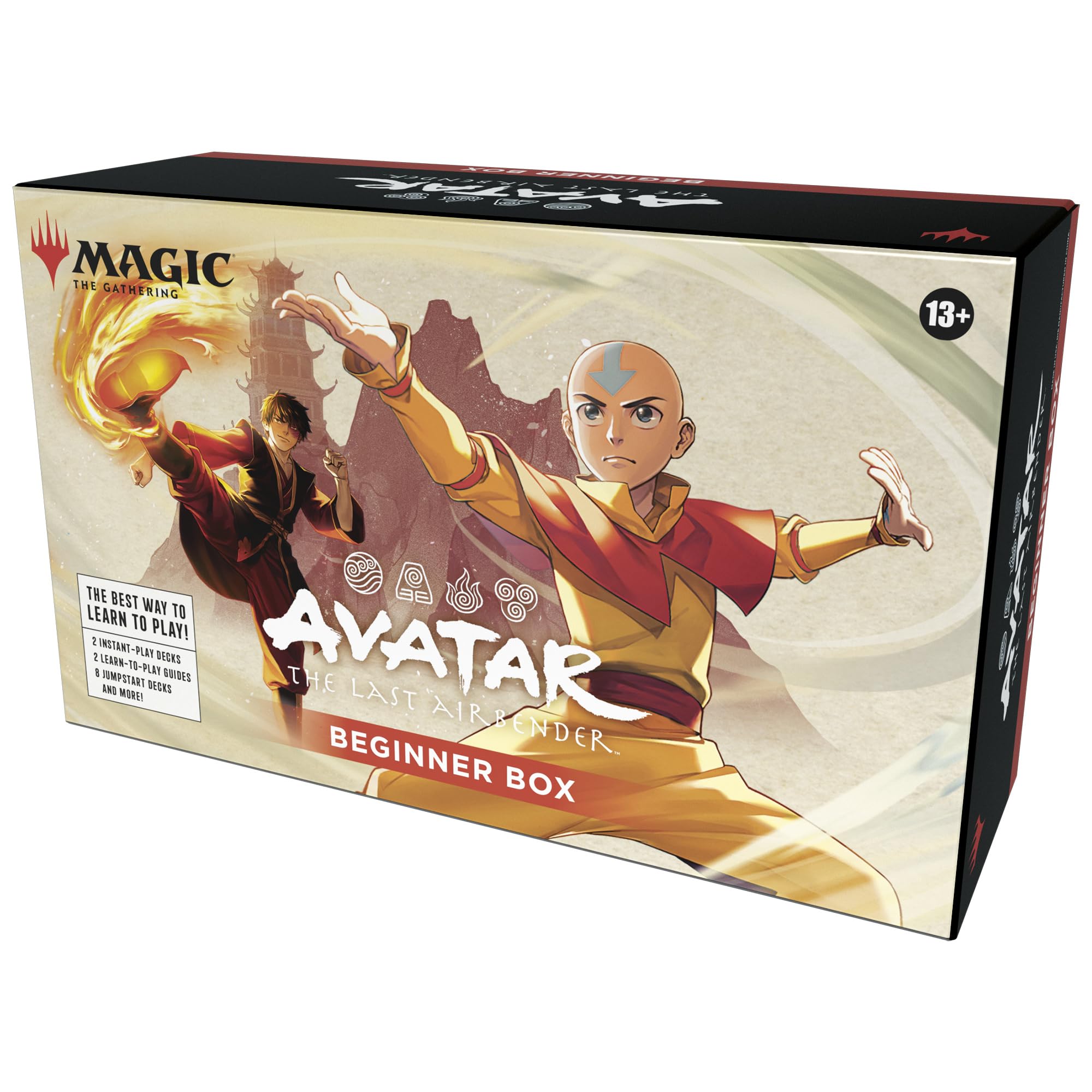
Magic: The Gathering Avatar Beginner Box

Magic: The Gathering Avatar Beginner Box

Guided first games

Doodle Score 9.4/10
Check Price

Worth Noting

  • No rares or foils in the box
  • Stated age 14+, highest in this group
Deck Size
20 cards, combine to 40
In The Box
2 playboards, 2 spindowns
Decks Included
2 tutorial decks plus 8 half-decks
Recommended Age
14+
Read the full review

The first game in this box is scripted, and that's a compliment. You start with two 20-card decks, Aang against Zuko, each with its own step-by-step booklet, two playboards printed to show where cards and lands go, and two spindowns for life totals. Nobody has to read a rulebook cover to cover before the first turn; you follow the page in front of you and the game happens anyway.

We think it's the most thorough teaching tool in this group, and the second act is what really sold us. Once the tutorial is done, the box opens into eight themed 20-card half-decks — combine any two into a 40-card deck, which is a first lesson in deckbuilding without asking a beginner to build from scratch. That's a smarter ramp than handing someone a fixed 60 and hoping.

Two things to know before you buy. There are no rares or foils in here, so treat it as a teaching box rather than the start of a collection, and the eight half-decks travel bundled inside two sealed card packs — open everything and sort before you decide a deck is missing. At the highest price in this group it's a box for someone intimidated by rules, not for someone who just wants to start playing.

Bottom line: Buy this when the person you're teaching is nervous about rules — the scripted first game is the best teacher here.

#6

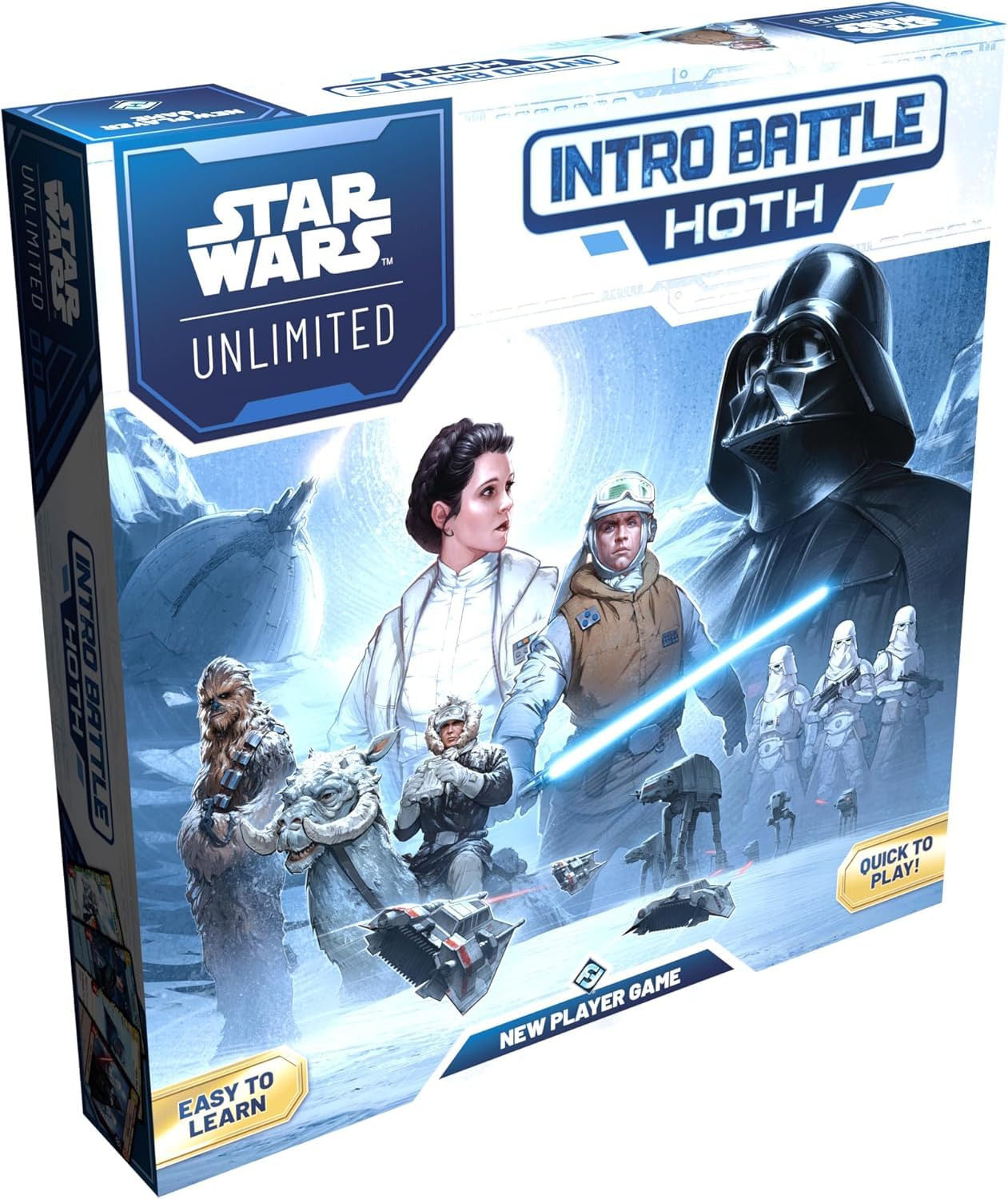
Star Wars: Unlimited Intro Battle Hoth

Star Wars: Unlimited Intro Battle Hoth

Board-game night

Doodle Score 9.4/10
Check Price

Worth Noting

  • Two fixed decks, no deckbuilding inside
Cards
104 plus 6 reference
In The Box
Game board, 57 damage counters
Decks Included
2 pre-built
Recommended Age
12+
Read the full review

The board is the thing. Yes, you get 104 cards split into Vader's Imperials and Leia's Rebels, but what changes the evening is the printed play area, the 57 damage counters, the initiative counter and a rulebook thin enough to read standing up. Two people who have never touched a trading card game can sit down with this and be playing inside ten minutes, because everything they'd otherwise have to remember is printed in front of them.

We like it best as the introduction it claims to be. Games run about half an hour, the Vader deck is the more forgiving of the two, and the box is compact enough to throw in a bag for a trip. The Hoth theme does real work as well: recognizable characters give a skeptical adult a reason to care about a card they've never seen before.

Where it stops is where the wider game starts. There are two fixed decks and no deckbuilding inside, so once you've played the pair a few times you're looking at the Shadows of the Galaxy set or boosters to keep going. For the price of an evening's entertainment that's a fair trade — just don't buy it expecting a hobby in a box.

Bottom line: The one to buy if the table is skeptical about card games — the board and counters make it feel like a board game.

#7

Yu-Gi-Oh! 2 Player Starter Set

Yu-Gi-Oh! 2 Player Starter Set

Existing Yu-Gi-Oh fans

Doodle Score 9.4/10
Check Price

Worth Noting

  • Barely resembles modern competitive Yu-Gi-Oh
Players
2
Decks Included
2
Recommended Age
6+
Read the full review

Yu-Gi-Oh is the hardest of these games to walk into cold, and this box is a two-deck attempt to fix that from the ground up. Two decks, one purchase, a booklet that explains how a turn fits together.

What you get is enough to get cards on the table and attacks declared, and the booklet does describe how to play rather than assuming you already know. It's a 2024 product, which matters here — it's the current teaching set rather than a decade-old starter that predates half the mechanics people actually use.

The gap is the game itself. Modern Yu-Gi-Oh is a chain-building, special-summon-heavy affair, and the cards in a starter set look almost nothing like what gets played at a locals night. That's the honest limit: this teaches the vocabulary and the shape of a turn, not the game you'll meet across a table from an experienced player.

So here's who it's for. If a friend plays, or your kid has the anime on in the background and wants in, this is an inexpensive way to get two decks and practice without an opponent who already knows more than you do. If you're simply after a first card game for the household, buy one of the Magic boxes instead — you'll spend the evening playing rather than reading.

Bottom line: Worth it only if you specifically want to learn Yu-Gi-Oh — as a general first card game, the Magic boxes teach better.

How We Tested the Starter Decks

We started by pulling together every current starter deck we could find from the major card-game publishers, then narrowed the list by price, beginner-friendliness, and whether the box promised a complete playable deck. That left us with 14 decks, which we tested over four months. Before any cards hit the table, we checked each deck against its contents list, counting cards, tokens, counters, and rulebooks; anything missing got noted right away.

Testing happened where these games actually get played: kitchen tables, a living-room coffee table, and one long weekend game day with friends who had never played a card game like this. We timed how long it took to open the box, read the rulebook, and deal the first hand. Then we played each deck at least three times, mixing experienced players with total beginners, and watched for the moments where the rules clicked or the game stalled.

After each session, we shuffled every deck repeatedly and checked the cards for edge wear, corner fraying, and that cheap-feeling flex that shows up after a few games. We also compared what came in the box—deck, tokens, playmat, rulebook—against what the deck cost, and noted which ones included foil or alternate-art cards that might matter to collectors. A deck that felt like a stripped-down sampler rather than a full game got marked down, no matter how nice the cards looked.

How to Choose Card Game Starter Decks for Beginners

One deck is half a game

Search for a starter deck and you'll mostly find single-player products: a 60-card Lorcana deck, a 54-card Digimon deck. They are exactly what the name says and still not enough to play, because somebody at the table needs cards of their own. This is the trap that catches most first-time buyers.

If you're buying for two people, a two-deck box costs less than two singles and arrives balanced against itself, so neither player starts with an advantage. If you already play and want to teach someone, one of the cheap singles is the smarter buy: it's a complete, ready-made opponent you can hand over.

Tutorial decks or a full 60-card build

There's a real trade-off here. Short 20-card decks with scripted guides get a nervous beginner to a finished game fastest — the Avatar beginner box is the extreme version, walking you through Aang against Zuko before opening up eight half-decks you combine into 40-card decks. Full 60-card builds skip the hand-holding but give you the game people actually play, with nothing to unlearn later.

Pick the teaching route for a child or a reluctant adult who needs a win on the first night. Pick the 60-card box for someone who will happily read a rulebook and wants the deck to still matter in six months.

What comes in the box besides cards

Counters, spindowns, playmats and boards are the difference between playing tonight and hunting through kitchen drawers for dice. A playboard with printed card zones is genuinely useful for a first game — the Hoth intro box feels most like a board game because of it — while a paper playmat is a nicety you can skip without missing anything.

Check that damage counters or a life counter are included. If they aren't, a couple of ten-sided dice do the same job, but you'll want them before the first game rather than halfway through it.

Match the game to the player, not the age on the box

Printed ages run from 6+ to 14+ across this group, and they don't line up with difficulty. Digimon says 6+ and plays short and visual; Yu-Gi-Oh also says 6+ but asks a new player to absorb far more card text per turn. Lorcana at 8+ is the gentlest read here, and both Magic boxes sit at 13+ and 14+ because their cards carry more rules text.

For a younger child, weight the amount of reading on the cards over the number in the corner. A game with three lines of text per card is a better first purchase than one that technically allows a six-year-old but expects them to parse eight.

Where the box leads after the first month

A starter deck can be a doorway or a dead end, and it's worth deciding which one you're paying for. Teaching boxes — the Avatar beginner box especially — are excellent value for the first few evenings and then hand you back to the wider game. Two-deck boxes like the Final Fantasy kit and the Shadows of the Galaxy set give you decks you can keep playing and improve card by card.

If you're not sure anyone will stick with it, buy the teacher. If you're confident, buy the real game.

Frequently Asked Questions

Final Verdict

Our pick for most people is the Magic: The Gathering Final Fantasy Starter Kit. Two complete 60-card decks, a guide that actually works, and a first game that is the real game rather than a tutorial you outgrow — that combination is why it sits at the top.

If you're teaching someone who freezes at the sight of a rulebook, the Avatar beginner box earns its higher price with the best scripted first game here. And if nobody in the house has ever played a trading card game, the Star Wars Unlimited Hoth box is the one that feels like a board game and asks the least of everyone at the table.