Building & Blocks

Best Construction Toys of 2026

A construction set looks like a sure thing on a birthday table — bright box, big promise — and then the tower collapses for the third time because the magnets are too weak to hold an edge or the bricks won't grip. What separates the sets that get hauled out every rainy Saturday from the ones that end up in the donate bin isn't the picture on the box; it's whether the pieces hold up under a kid's actual hands. A good one turns a boring afternoon into an engineering project, and then survives being stepped on, stuffed into a bin, and dumped out again next week.

Between my own kids and my team's, we've stress-tested more construction sets than I can count, and over the past six months we ran 14 more through the same wringer. One thing I've learned the hard way: piece count is a terrible way to judge a set. Forty chunky pieces that click together cleanly will get more play than two hundred that don't, and a set that won't connect to the bricks you already own is a closed loop. Below are the ones that earned repeat play — and the ones we'd hand to a friend without a second thought.

#1

Tonka Steel Classics Mighty Dump Truck

Tonka Steel Classics Mighty Dump Truck

Outdoor hauling

Doodle Score 9.8/10
Check Price

Worth Noting

  • Mostly plastic body despite the steel name
Weight
5.5 lb
Dump Bed
Real steel
Truck Size
17 x 8 x 11 inches
Recommended Age
3 years and up
Read the full review

We took the Mighty Dump Truck outside with a pile of pea gravel and a kid who does not play gently. The steel dump bed is the part that matters: it takes a shovel load and tips without flexing. At 17 inches long and 5.5 pounds, it has enough size to feel like a real work truck without being too much for a 3-year-old to push.

The rest of the truck is a mix of steel and sturdy plastic. The plastic cab keeps the weight down, and the big wheels roll over grass and packed dirt. We liked that the dumping action is simple enough for a preschooler to work alone: load it, tip it, go back for more.

What we appreciate most is the way it invites outdoor play. It is not a display toy; it is for gravel, sand, and the occasional mud puddle. We kept it by the back door, which is the highest compliment we can give an outdoor toy. The trade-off is the material mix: the Steel Classics name suggests more metal than you actually get.

Bottom line: We recommend this for the kid who plays in dirt: the steel dump bed and big wheels turn a pile of gravel into a job site, and it takes knocks.
#2

MAGNA-TILES Builder 32-Piece Set

MAGNA-TILES Builder 32-Piece Set

Construction-site play

Doodle Score 9.8/10
Check Price

Worth Noting

  • Premium price for a 32-piece set
Cranes
2 extendable
Vehicle
Car chassis
Piece Count
32
Recommended Age
3 years and up
Read the full review

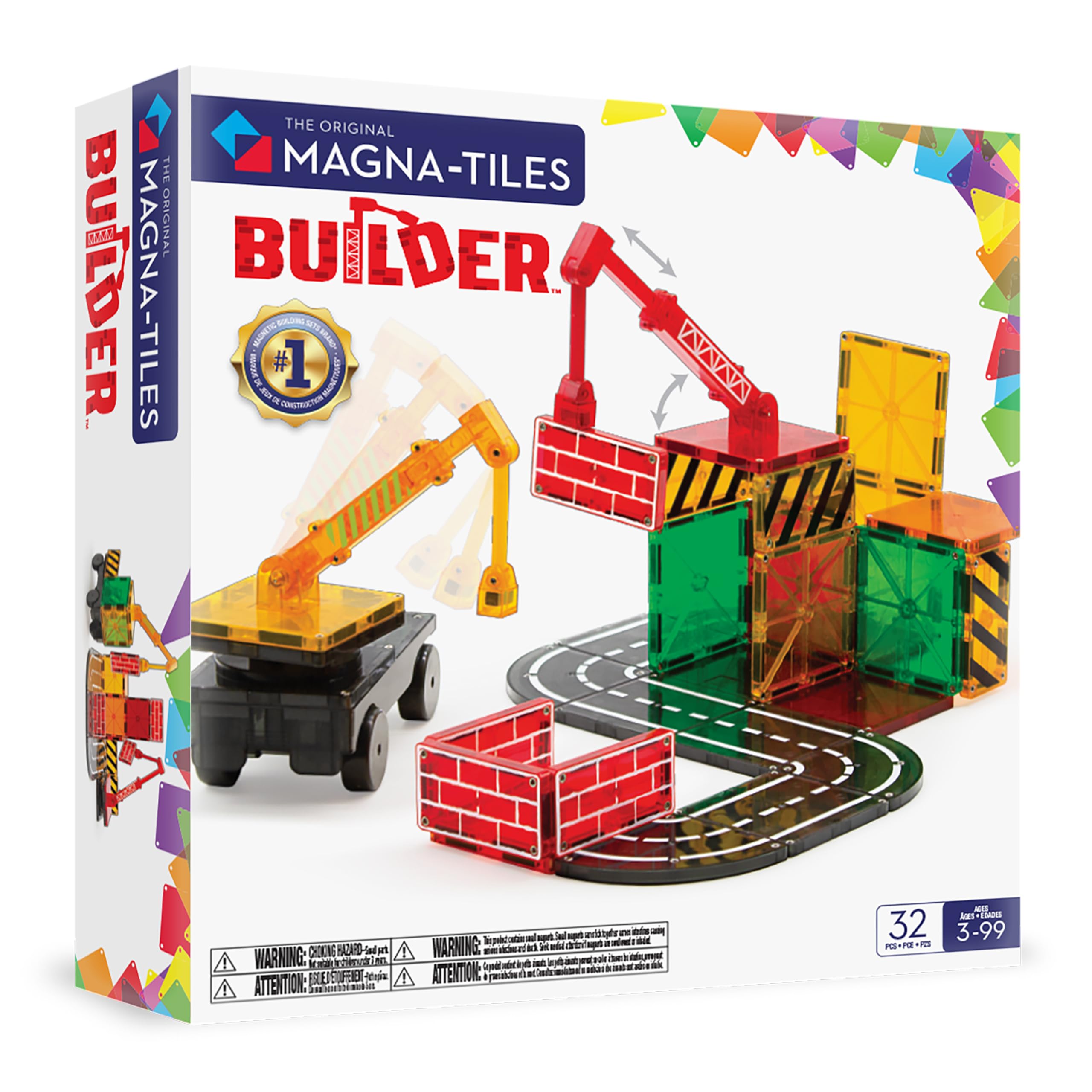
The two extendable cranes are what make this Magna-Tiles set feel like a construction site rather than another box of squares. The 32 pieces include road squares, road quarter-circles, small squares and rectangles, a spinner, a car chassis, and the cranes. We liked that the cranes attach to the tiles and extend, so a child can hook a load and swing it.

This is the set we reach for when the play needs a story. A child can build a road, park the car, and use the cranes to move a cargo piece from one tile to another. The cranes give the set a job beyond making a shape. It also slots into a larger Magna-Tiles collection, which makes it a useful add-on rather than a standalone world.

The 32-piece count is enough for a small site, not a full city. We think it works best as an add-on for a child who already has a few magnetic tiles, not as the only set in the house. If you want volume for the same rough budget, PicassoTiles is the better buy; if you want cranes, this is the one.

Bottom line: We recommend the Builder set for the child who wants cranes, roads, and a car in one magnetic kit; it is the most construction-specific Magna-Tiles set here.

#3

LEGO Classic Large Creative Brick Box

LEGO Classic Large Creative Brick Box

All-around building

Doodle Score 9.6/10
Check Price

Worth Noting

  • Open bin has no sorting dividers
Storage
Plastic storage bin
Piece Count
709
Compatibility
All LEGO sets
Recommended Age
4 years and up
Read the full review

The plastic storage bin is the first clue that this is a set meant to stay out, not go back in the box after one build. Inside are 709 pieces, including eight kinds of windows and doors, six tires and wheel rims, and two green baseplates. We liked that most of the box is standard bricks rather than specialty pieces that do one trick.

That is why it earned the top spot. A 4-year-old can push two bricks together and make a wall; an older kid can raid the windows and wheels for a house, a cart, or a spaceship. The set is compatible with other LEGO, so it grows instead of becoming a closed collection. We kept coming back to it because it gives the most possible starting points, not the most impressive single model.

The one thing we wish were different is the bin: it is deep and undivided, so a small brick can sink to the bottom. We ended up using a couple of shallow trays for the tiny pieces. The bin is still useful for carrying the set between rooms, and the wide opening makes dumping it out easy. That is a storage annoyance, not a reason to skip the set, especially if you already have a LEGO habit in the house.

Bottom line: We recommend the LEGO Classic box as the default construction toy: enough standard bricks, windows, wheels, and baseplates to keep a 4-year-old building and a 10-year-old inventing.

#4

PicassoTiles 100 Piece Magnetic Tiles

PicassoTiles 100 Piece Magnetic Tiles

Magnetic free play

Doodle Score 9.6/10
Check Price

Worth Noting

  • Magnetic pull varies between tiles
Color
Multicolor
Piece Count
100
Building Type
Magnetic tiles
Recommended Age
3 years and up
Read the full review

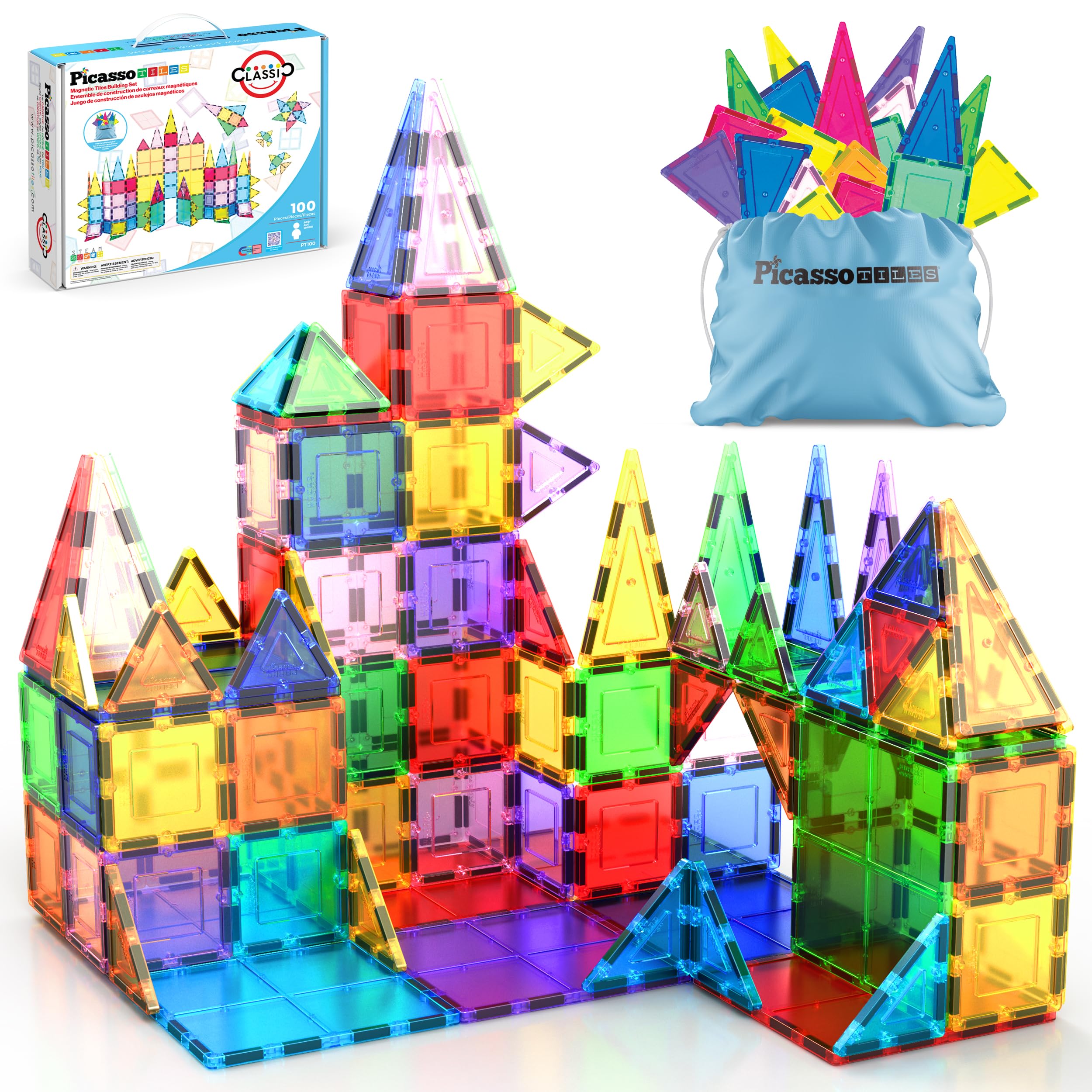
A hundred tiles is a lot of magnetic building for the money, and that is the reason this set earned a runner-up spot. The pieces are light enough for a 3-year-old to lift, and they snap together with enough hold for a garage, a rocket, or a low dollhouse. We liked that the set does not come with a single prescribed model; the child decides what the pile becomes.

Magnetic tiles are the most forgiving construction toy here for small hands. There are no stiff studs to press and no instructions to follow, so a preschooler can get a wall standing in seconds. The tiles also work on a fridge or a magnetic board, which makes them useful in a small apartment where floor space disappears.

The set is all flat tiles, so it wants floor or table space; on a bumpy rug the builds wobble. We kept ours in a shallow bin and pulled it out on the kitchen floor. If you want a premium starter set with cranes and roads, the Magna-Tiles Builder is the step up; for sheer volume, this is our pick.

Bottom line: We recommend this set for families who want a big magnetic collection without paying premium prices; it is the easiest construction toy here for a 3-year-old to start with.

#5

Melissa & Doug 100 Wooden Building Blocks

Melissa & Doug 100 Wooden Building Blocks

Toddler stacking

Doodle Score 9.6/10
Check Price

Worth Noting

  • Blocks do not lock together
Shapes
9 classic shapes
Material
Solid wood
Piece Count
100
Recommended Age
2 years and up
Read the full review

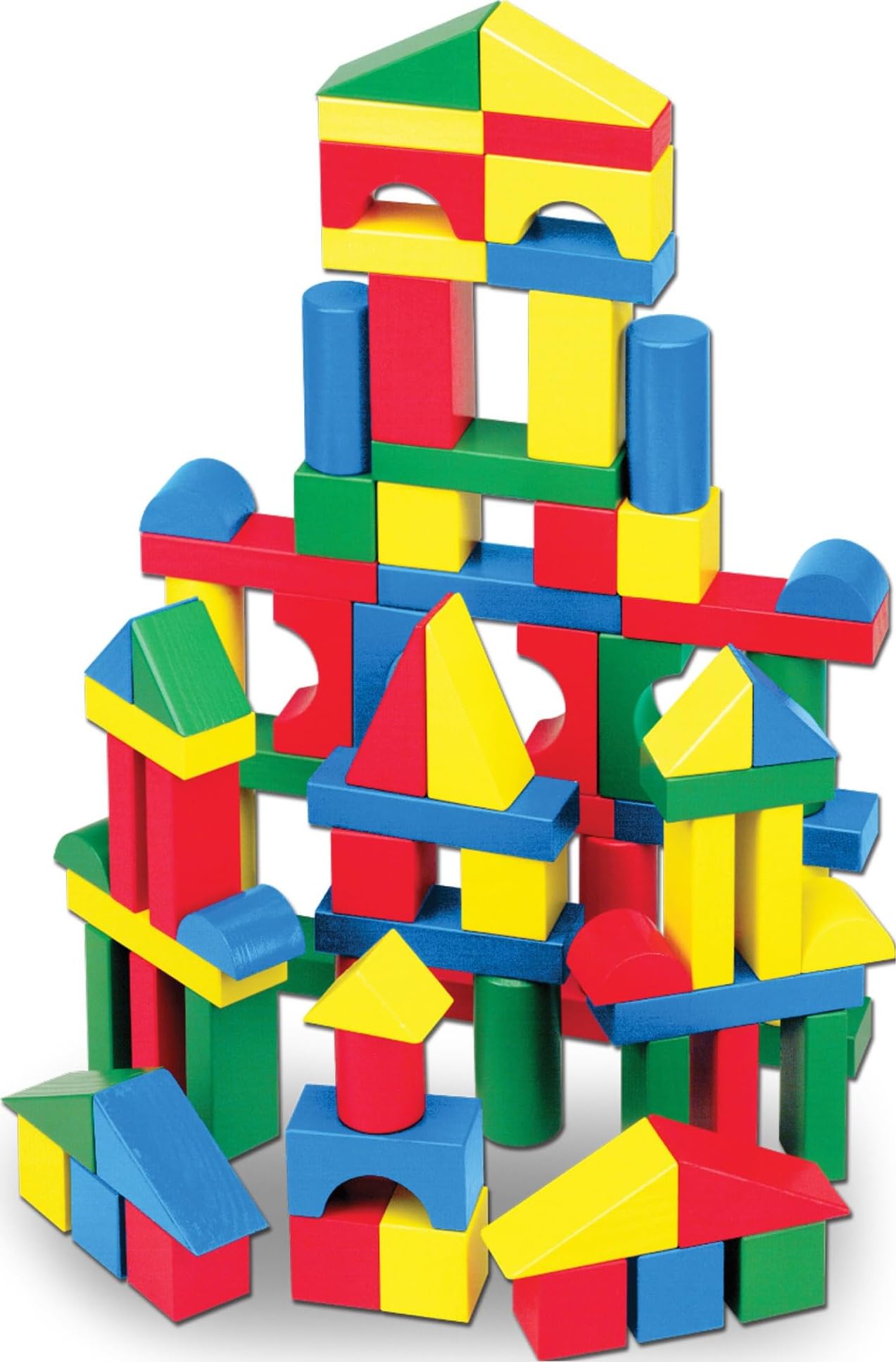
The youngest builder in the room is usually the one who gets left out of the LEGO and magnetic-tile sets. This box of 100 solid wood blocks is the answer: four colors, nine classic shapes, and edges rounded enough that we did not wince when a toddler carried one around the room. The box is small enough to keep on a shelf, which matters when the play area doubles as a living room.

We liked the weight of them. They are light enough for a 2-year-old to lift with one hand, but solid enough that a tower does not shiver every time the floor vibrates. The set is deliberately low-tech: no magnets, no instructions, no batteries. A child stacks, balances, and knocks down, then does it again. That is exactly the right first construction loop.

The cardboard storage box is basic, but it does the job between play sessions. If you want a set that holds together for older builders, the LEGO Classic box is the better next step. For a toddler who is still learning to place one block on another, this is the set we reach for first.

Bottom line: We recommend these as the first construction toy for a 2- or 3-year-old: smooth wooden blocks, a big pile, and no frustration with magnets or stiff bricks.

#6

Tonka Steel Classics Bulldozer

Tonka Steel Classics Bulldozer

Digging and pushing

Doodle Score 9.6/10
Check Price

Worth Noting

  • Only pushes; cannot haul loads
Material
Steel and plastic
Operation
Kid powered
Blade Width
12.8 inches
Recommended Age
3 years and up
Read the full review

The blade is the whole story: at 12.8 inches wide, it pushes a real path through sand or gravel instead of just looking like a bulldozer. We liked the low, wide stance; a toddler can lean on the back and the truck stays planted. The articulated blade moves up and down and angles, so the child can grade a road or shove a pile into a corner.

This is a one-job truck, and that is fine. It clears a path, grades a road, and shoves a pile into a corner. The steel-and-plastic build has enough heft to feel serious without being too heavy to carry. The blade has enough resistance to feel like it is doing work, but not so much that a small child gives up.

The only real limitation is the job description: if your child wants to load and transport, this will sit idle while the dump truck works. For pure pushing and grading, it is the best tool in this set. We kept it with the Tonka dump truck and the two covered most of the backyard jobs.

Bottom line: We recommend this for sandbox and gravel-pit play: the wide articulated blade moves real material, and the low stance suits a toddler who leans into the push.

#7

CAT Construction Fleet 10-Inch Dump Truck

CAT Construction Fleet 10-Inch Dump Truck

Budget sandbox play

Doodle Score 9.4/10
Check Price

Worth Noting

  • 10-inch size may feel small for older kids
Wheels
Free-rolling
Dump Bed
Tilting
Truck Length
10 inches
Recommended Age
3 years and up
Read the full review

The CAT dump truck is the one we reach for when the play moves to the sandbox and we do not want to risk a nicer truck. At 10 inches long, it is small enough for a 2-year-old to carry by the cab and big enough to take a decent load of sand.

The tilting bed works with a simple lift, and the plastic body has survived the usual drops and shoves. It is not in the same league as the Tonka for heft, but it also does not feel like a disposable party favor.

The wheels are the weak point. They roll fine on packed dirt and smooth floor, but they can drag on thick carpet and bind in wet sand. We found that annoying when the play moved inside, less so at the beach.

That makes this a specialized truck rather than the only one in the toy box. It is the one we leave outside, the one that can get scratched, and the one we hand to a toddler who wants to dump and fill without a lesson. If you want a truck that feels like an heirloom, the Tonka is the step up.

Bottom line: We recommend this as the cheap, light dump truck for sand and water play, with the caveat that its wheels are happiest on packed dirt, not thick carpet.

#8

Klutz LEGO Gear Bots

Klutz LEGO Gear Bots

STEM building

Doodle Score 9.2/10
Check Price

Worth Noting

  • Papercraft parts need careful folding
Book
64 pages
Models
8 kinetic creatures
LEGO Elements
62
Recommended Age
8 to 12 years
Read the full review

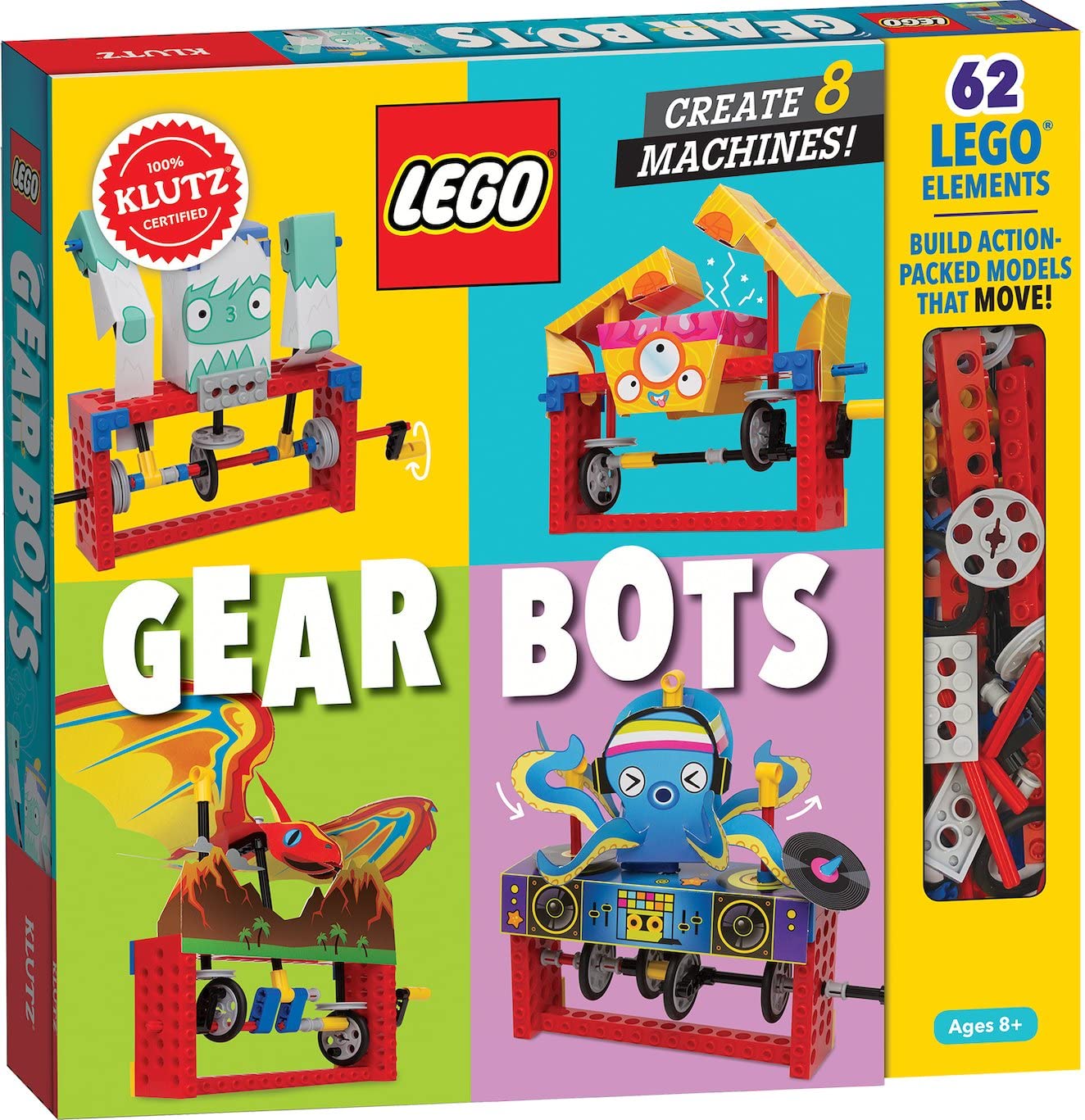
The first thing to know about Gear Bots is that it is an activity kit, not a free-build box. Inside are 62 LEGO elements, 10 sheets of papercraft, and a 64-page book that walks through eight kinetic creatures.

The book is the best part. It explains axles, cams, and cranks while the child is building, so the mechanism is not hidden behind a finished model. We liked that the projects look like toys, not worksheets: a waddling creature, a spinning machine, a nodding figure.

The process is one-at-a-time: a child builds one creature, plays with it, then takes it apart to build the next. That suits a kid who enjoys the building more than the keeping, and it is worth knowing before you buy if your child likes a finished model on the shelf.

The kit is best for a patient 8- to 12-year-old who likes to tinker. It is not a construction toy for a younger builder who wants a truck to push around the yard, and it is not a free-build box for a kid who wants to make their own designs. We think it earns its place as the STEM pick in this group.

Bottom line: We recommend Gear Bots for an 8- to 12-year-old who likes to know how things work; it turns a pile of LEGO parts into eight moving machines, one at a time.

How We Tested Construction Sets

We started with a shortlist built from manufacturer specs, age recommendations, and price, then cut anything with a piece count that didn't match its stated age range or a material that felt flimsy straight out of the box. That left 14 sets, which we lived with for six months rather than a single afternoon. Most of the testing happened on living room rugs and playroom floors, during rainy weekends, after-school hours, and one long holiday break with a rotating cast of kids from three to ten years old.

Each set got the same treatment. We counted how many pieces one edge magnet or clutch joint would hold before a stack slid apart, and we checked whether that grip held after a week of repeated building and tearing down. Wheeled bases went across both a low-pile rug and bare hardwood to see if they rolled straight or veered. We dropped assembled towers from coffee-table height and looked at the seams afterward, then stepped on stray pieces in socks the way everyone eventually does.

For creativity and fun, the real measure was what happened after the instructions got abandoned — whether kids kept building original things or drifted away once the pictured model was done. We also paid attention to the smaller stuff: whether colors were consistent piece to piece, whether the minifigures and animals were charming enough to name, and whether a six-year-old could sort everything back into the bin alone without losing half the set to the couch cushions.

How to Choose Construction Toys

Start with the building format

Interlocking bricks, magnetic tiles, wooden blocks, and toy trucks are four different kinds of play. Bricks reward planning and hold together; magnetic tiles are faster for small hands and better on flat surfaces; wooden blocks are for stacking and knocking down; trucks are for role-play in dirt. A 3-year-old who gets frustrated with stiff studs may take to magnetic tiles, while a 5-year-old who wants a house with windows will get more from a brick box.

Our default is the LEGO Classic box because it covers the widest range of building, but it is not the first set for every child. If the child is 2 or 3, start with wooden blocks or a larger magnetic tile set and add bricks when the small pieces are safe.

Match the age, not just the piece count

Age labels on construction toys are about small parts and frustration as much as safety. A 2-year-old needs large, smooth pieces that are easy to stack; a 4-year-old can press bricks together but may still need help with tiny specialty pieces; an 8-year-old can follow a mechanism book and work through a multi-step build. Buying up a level because the piece count looks better often backfires.

The practical move is to choose a set the child can mostly finish alone. Melissa & Doug's wooden blocks suit a toddler; LEGO Classic starts at 4; Klutz Gear Bots is for 8 to 12. If the child is near the bottom of the age range, plan to sort the small pieces into a separate cup before the first build.

Check the connection and the working parts

A construction toy is only as good as its connections. Bricks should press together without a fight and stay together when a wall is moved. Magnetic tiles should hold a low wall but may need extra support on tall, thin towers. Toy trucks should roll on the surface where the child actually plays; thick carpet and wet sand are the two places wheels most often bind.

We test the action before the look: build a small wall and carry it, push the truck across carpet and packed dirt, and work the dump bed or blade with one hand. If a preschooler cannot work the main action alone, the toy will lose its appeal quickly.

Plan for storage and expansion

Loose pieces migrate. A set with a deep, undivided bin is easier to dump out than a shallow tray, but it is harder to find one small brick. Wooden blocks and magnetic tiles are heavy enough to stay in a box; LEGO bricks are small enough to need a sorting cup or two. Decide where the set will live before you buy, because a construction toy that has no home becomes floor clutter.

Expansion matters more for some formats than others. LEGO Classic is compatible with other LEGO sets, so a bin can absorb new pieces. Wooden blocks expand with more blocks of the same size, and toy trucks are a collection rather than a system. If you are adding to an existing collection, check the format before you chase a bigger piece count.

Decide what kind of construction play you want

There is a difference between building a model and running a job site. A brick box is for making a thing; a dump truck or bulldozer is for moving material; a magnetic crane set is for both. If your child already has a bin of bricks, a vehicle adds a new story. If your child has never built before, a truck is an easier entry point than a 700-piece set.

We put the money into the format the child already reaches for. A construction-obsessed kid who lines up trucks will use the Tonka dump truck more than a brick box; a kid who builds houses will get more from LEGO or Magna-Tiles. The best set is the one that gets played with after the box is open.

Frequently Asked Questions

Final Verdict

Start with the LEGO Classic Large Creative Brick Box. It gives the widest range of building for the money, and it is the set that grows from a 4-year-old's first wall to an older child's invented house or cart. If the child is younger, the Melissa & Doug wooden blocks are the better first step; if the play is mostly outdoors, the Tonka Mighty Dump Truck is the one to own.

The decision is that simple: match the format to the child, then buy the set that fits the way they already play.