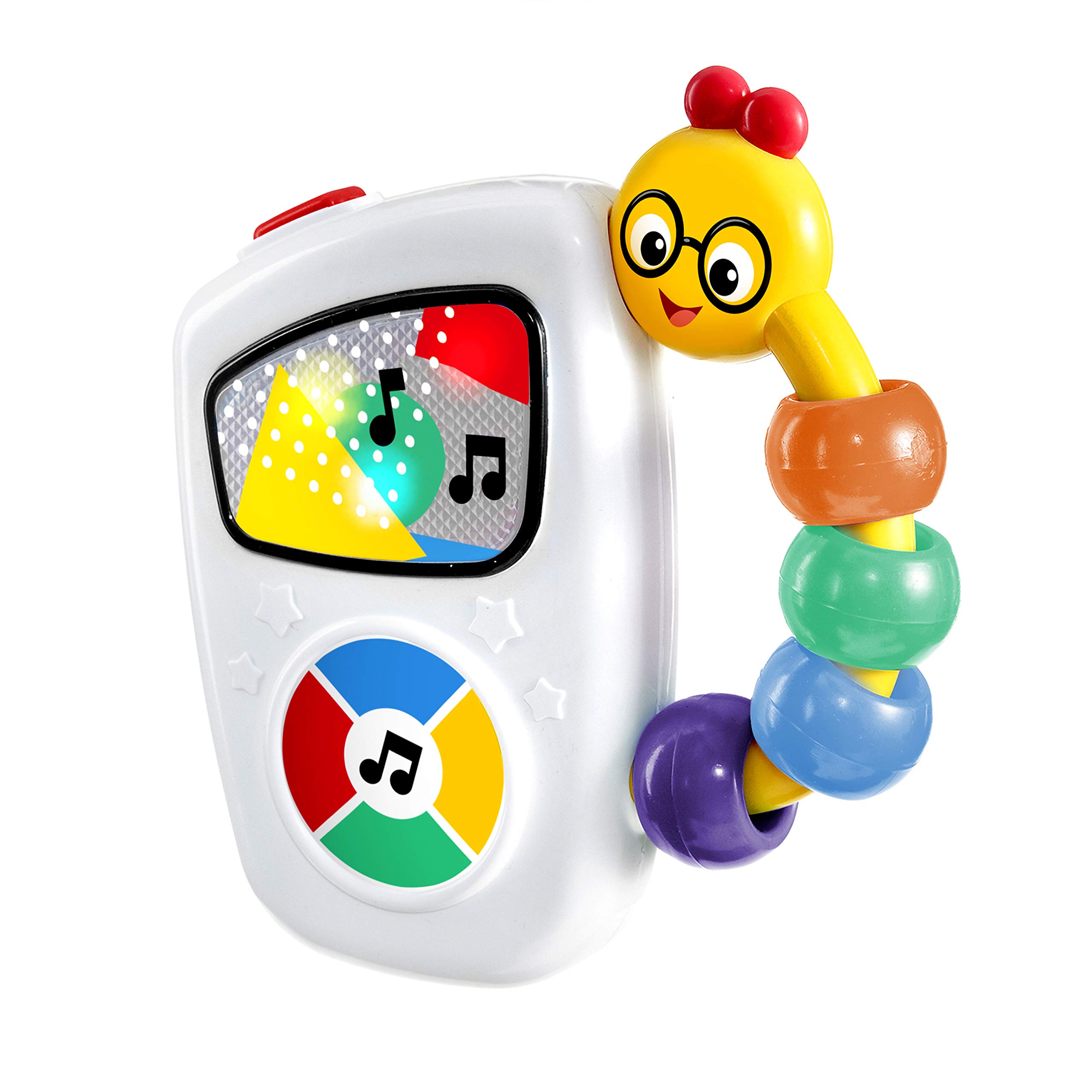
Baby Einstein Take Along Tunes
What We Like
- One button a baby can press alone
- Ten orchestral tunes instead of a nursery loop
- Two volume settings for shared rooms
- Small and light enough for a diaper bag
Worth Noting
- Hard plastic body with no soft edges
- Tunes
- 10 classical pieces
- Volume
- 2 settings
- Batteries
- 2 AA (included)
- Recommended Age
- 6–36 months
Read the full review
Ten classical melodies, one button, and a shell about the size of a small paperback — that is genuinely the whole toy. Press the large central button and the Take Along Tunes plays a Chopin or Mozart theme while the lights flash in time with the melody, and two volume settings let you take it down a notch. It weighs almost nothing, which is the point.
That single button is why we put it first. A six-month-old can hit it by accident and be rewarded with music, which is the earliest version of cause and effect a toy can teach, and a two-year-old can carry it by one corner while it plays. The choice of music is the rest of the argument: orchestral melodies are much easier to hear for the fortieth time than a chirpy nursery loop, and the lower volume setting keeps the toy in the living room instead of the cupboard.
It also takes punishment. Ours has been dropped, sat on, and dragged along a kitchen floor, and it still plays. There is nothing to assemble and nothing to lose, which is more than most toys here can say.
What it cannot do is let a child make music. Ten tunes, one button, and no way to play a note yourself is fine at a first birthday and starts to pinch around three, when being the one who makes the sound matters more than hearing it. That is the point where we hand over the Magic Touch Piano.
Bottom line: Our default answer for a first musical toy: one button a baby can work alone, ten orchestral tunes, and a shape that disappears into a diaper bag.