Baby & Toddler

Best Toddler Climbing Toys of 2026

The couch was never the problem — it was just the only thing in the living room at the right height. Toddlers climb because their bodies are asking them to, and a good climbing toy gives them somewhere to do it that doesn't end with a lamp on the floor. What you're buying is a safe outlet for that urge: sturdy enough to hold a two-year-old at the top of an arch, small enough to live indoors, and open-ended enough to stay interesting.

I've watched plenty of these get abandoned by week three, so I pay attention to which ones survive. Over the past eight months, my team and I have lived with 11 toddler climbing toys — arches, foam blocks, slides, and a few wheeled sets — in playrooms, living rooms, and a backyard. The surprise: the weight limit and age range on the box matter less than how solidly the thing sits on the floor, since a set that shifts underfoot gets avoided fast. These are the ones still getting climbed on.

#1

LOL-FUN Foldable Pikler
LOL-FUN Foldable Pikler

Small rooms

Doodle Score 9.6/10
Check Price

Worth Noting

  • 110 lb limit suits one child at a time
  • Unsealed wood marks from spills
Storage
Breaks down at 2 screws
Material
Wood with water-based paint
Play Setups
5-in-1
Maximum Load
110 lb
Read the full review

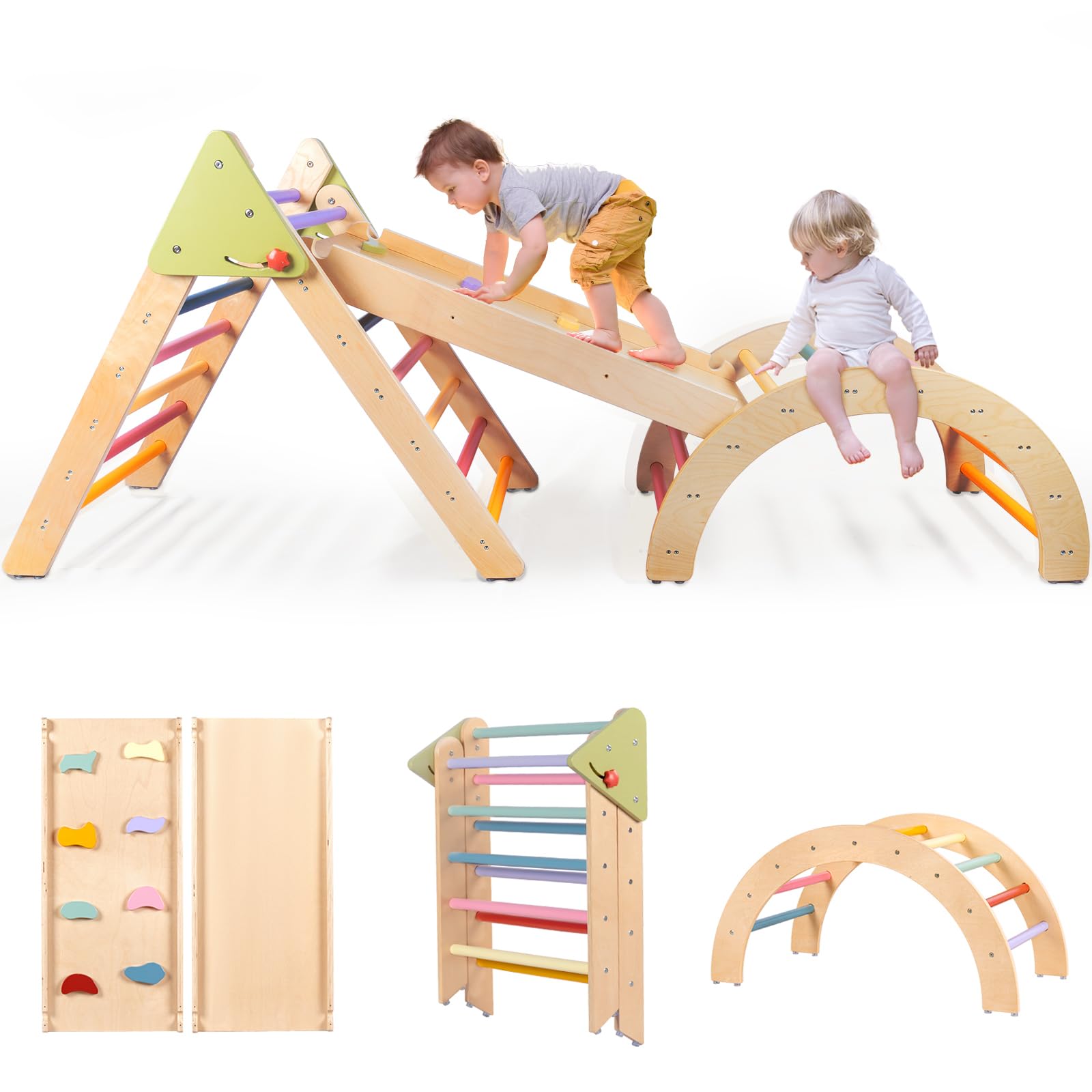
This is the cheapest wooden set here, and we think it is the one to buy if you want to try the Pikler idea before committing to a bigger frame. The wood is solid with a water-based finish, one side of the triangle carries eight rainbow grips, and the other side flips into a slide. Rubber strips under the base keep it from walking across a wood floor while a child climbs, and it comes apart at two screws if you need it out of the way.

The limits are worth knowing before you order. At a 110-pound maximum it is a one-child-at-a-time set, so it will not absorb two siblings the way the BlueWood does, and the wood is not sealed, so wipe up juice promptly. What you get in exchange is the same climbing, rocking and sliding for noticeably less money, on a footprint that suits the corner of a living room.

Bottom line: We think this is the wooden set to try first if you are not ready to spend much: real wood, a slide, and a 110-pound limit that suits one child.
#2

Step2 Woodland Climber II

Step2 Woodland Climber II

Backyard play

Doodle Score 9.4/10
Check Price

Worth Noting

  • Large footprint needs a yard or big basement
Material
Double-walled plastic
Warranty
3-year limited
Age Range
24 months–6 years
Footprint
75 x 47 x 53.75 inches
Read the full review

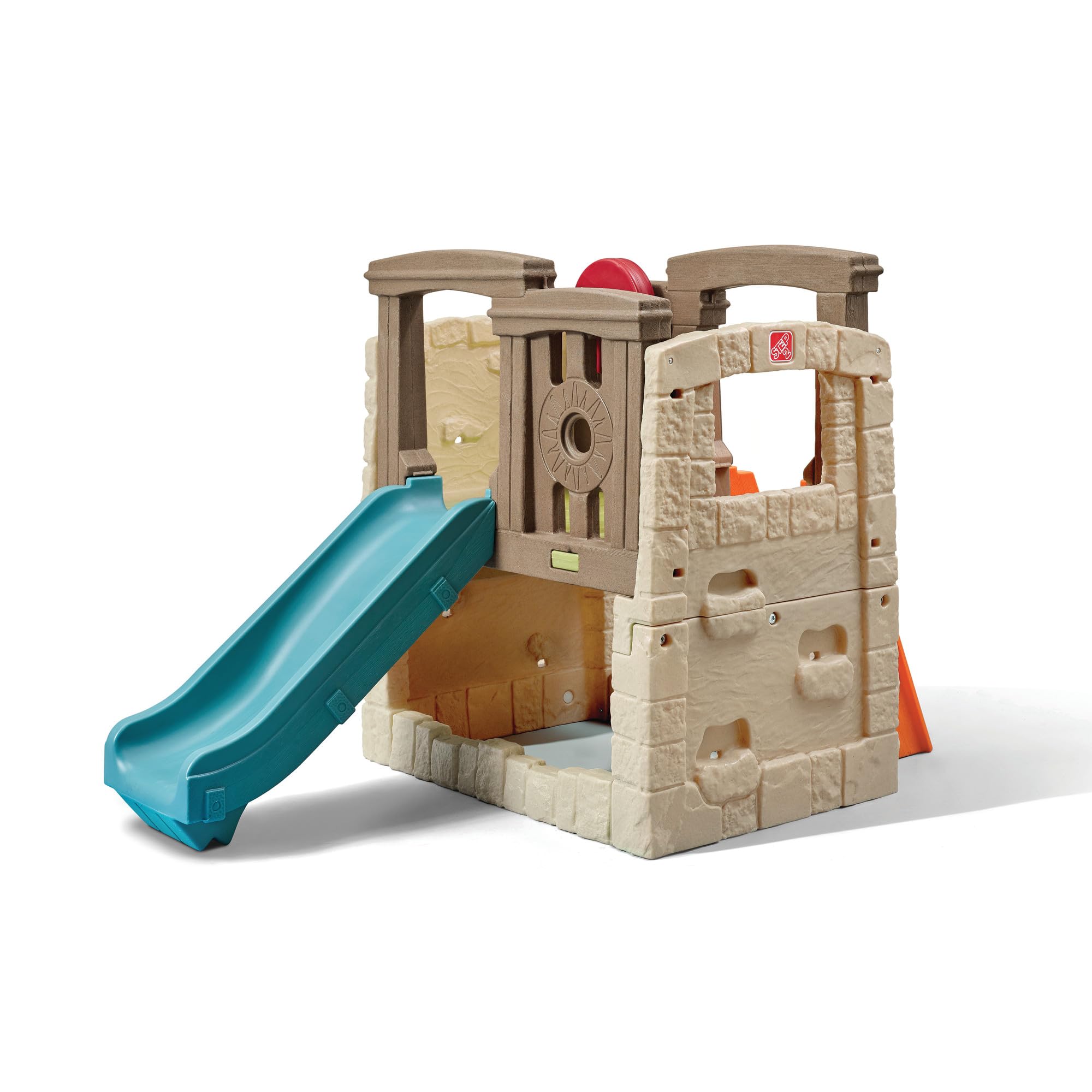
Give a two-year-old a climbing wall, a slide and a hideout in one structure and you have bought yourself a summer. The Woodland Climber II is the most complete outdoor set here, rated from 24 months to six years — the widest useful window of the yard-sized picks.

It measures 75 inches across, 47 deep and just under 54 tall, which is a serious claim on a lawn or a basement floor. What that buys is a double-walled plastic structure with two climbing walls, a platform, a ladder, a slide, two steering wheels and an open hideout underneath that swallows a surprising amount of outdoor toy clutter. Step2 backs the panels with a three-year limited warranty and sells them as resistant to chips, fading and peeling.

Setup takes two people, and because the panels are labelled the build is slow rather than difficult. Once it is up, we think it justifies the space: the layout keeps a two-year-old busy at ground level with the hideout and the ladder while a five-year-old works the climb and the slide, which is more than most toddler climbers manage.

Site it in shade if you can. Plastic this size heats up in direct afternoon sun, and a slide that is too hot to sit on ends play fast. Check the ground is level before you start, too — a wobble under a structure this big is hard to fix afterwards.

Bottom line: Our pick for a yard: a slide, climbing wall and hideout that keep a two-year-old busy and still fit a five-year-old.

#3

Simplay3 Wobble Disk

Simplay3 Wobble Disk

No-assembly play

Doodle Score 9.4/10
Check Price

Worth Noting

  • Climbing height is only 9.5 inches
Use
Indoor and outdoor
Assembly
None required
Age Range
24 months–5 years
Dimensions
24.5 x 25 x 9.5 inches
Read the full review

One molded piece of plastic, no assembly, two toys in one: sat one way it is a bowl-shaped rocker with molded grip handles, flipped over it is a low mound for clambering and jumping off. At 9.5 inches tall and about two feet across it fits a playroom, and because it is weatherproof it goes from the playroom to the driveway and back.

Spinning, rocking and climbing over the same object covers a lot of energy in a small space, and that is the case for it. The one-piece build means nothing to tighten, lose or put together, which is why it is the pick for a grandparent's house or a rental where a wooden frame is not practical. The wobble is the point, though, so it suits a steadier two-year-old better than a new walker, and 9.5 inches is a low climb rather than a frame.

Bottom line: We keep coming back to this one for small spaces: no assembly, indoor or out, and a rocker that flips into something to climb.

#4

BlueWood Pikler Triangle Set

BlueWood Pikler Triangle Set

Indoor family climbing

Doodle Score 9.2/10
Check Price

Worth Noting

  • Indoor only, so it stays out of the yard
Material
FSC-certified solid wood
Age Range
24 months–6 years
Play Setups
7-in-1
Maximum Load
160 lb
Read the full review

A 160-pound load rating is the first thing we check on a wooden climbing set, because it decides whether the thing is a solo toy or a frame the whole family uses. Here it means two or three children can be on it at once, and an adult can perch on the lower rung without anything complaining. The wood is FSC-certified and solid, and the handles bolted to the triangle are the detail we appreciated most — they give a hesitant climber something to hold at the exact moment balance gets interesting.

Seven setups is the other reason this is our top pick. The triangle, ramp and arch rearrange into a slide, a rocker, something to crawl under and something to balance along, so the same pieces serve a two-year-old pulling up and a five-year-old building a fort. The listed range runs from 24 months to six years, and it is built like it means it.

Budget an afternoon and a cordless drill for assembly. The screws go into solid wood and the last few are hard going by hand, so the drill turns a frustrating build into a quick one. The wood arrives mostly smooth; a couple of minutes with a sanding block on any rough edge is worth doing before the first climb.

What settles it for us is range. The frame a two-year-old pulls up on is still a fort at five, and the load rating means siblings share it instead of queuing for a turn. If your child is still crawling, start with foam and come back to this when they are steady.

Bottom line: We recommend the BlueWood set first: seven setups, solid wood, and a frame steady enough that two children can climb while an adult sits on it.

#5

TODIBY 6-Piece Foam Climber

TODIBY 6-Piece Foam Climber

Babies and crawlers

Doodle Score 9.2/10
Check Price

Worth Noting

  • Listed age range oversells how long it lasts
Pieces
6
Cleaning
Wipe-clean cover
Material
Foam with PU leather cover
Age Range
12 months–10 years
Read the full review

The product photos make this look like a climbing frame. It is not, and that gap between picture and box is where expectations get broken. What arrives is six small foam shapes — two stairs, two half-moons, a square and a slide — each light enough to lift one-handed and sized for a child who is just pulling up rather than one who is already running.

As a first climbing toy, we think it is the right call for roughly nine to eighteen months. The foam is firm enough to stand on and soft enough that a topple onto carpet is a non-event, and the Velcro strips on the larger pieces stop a stair stack sliding apart mid-climb. The PU covers wipe clean with a damp cloth, which matters more than it sounds once a child is climbing straight after lunch.

Two things to know before ordering. The listed age range runs to ten years, which is optimistic — by three this is a low obstacle course rather than a climb. And it ships vacuum-compressed, so give the pieces a few hours to plump back into shape before you judge the size.

Bottom line: Buy it for a crawler just pulling up: we think it is the softest start here, and by three it is an obstacle course rather than a climb.

#6

ElegantCrafts Pikler with Cushion

ElegantCrafts Pikler with Cushion

First birthday gift

Doodle Score 9.2/10
Check Price

Worth Noting

  • Cushion is thin for a real tumble
  • Stated age range stops at four
Included
Cushion, arch, ramp, ladder and two wooden cars
Material
FSC-certified pine
Age Range
12 months–4 years
Play Setups
9 combinations
Read the full review

The cushion is what separates this set from the other wooden triangles. It is a pad that drapes over the arch and the rungs, and for a one-year-old who is falling as often as climbing, something soft over the frame counts for a lot.

The rest of the box is generous: a triangle, an arch, a ramp, a ladder and two little wooden cars, rearranging into nine or so setups. The pine is FSC-certified, the edges are sanded, and the colors are bright without being garish — it reads as nursery furniture rather than gym equipment.

Assembly is straightforward but the hardware deserves attention. The ramp's steps can work loose and pop out mid-climb, so check and retighten them regularly, and do not overtighten into pine.

For a child just starting to climb, we think this is the gentler choice than the taller BlueWood set: lighter, softer-edged, and easier to live with in a small room.

Bottom line: We recommend this set for a first birthday: the cushion takes the sting out of early falls, and the configurations grow with a one-year-old.

#7

Best Choice Products 5-Piece Foam Set

Best Choice Products 5-Piece Foam Set

Budget foam course

Doodle Score 9.2/10
Check Price

Worth Noting

  • Cover seams can come apart
Pieces
5
Weight
9 lb
Material
Foam with vinyl cover
Age Range
12 months–7 years
Read the full review

The foam holds its shape; the covers are the part to watch. Seams on the vinyl can come apart on the wedges that get climbed on most, so give the stitching a once-over when the box arrives and keep an eye on the pieces that take the most traffic.

What you are buying is five foam shapes covered in wipe-clean vinyl, nine pounds in total, light enough that a determined two-year-old can drag them across the room. Rearranged into a course they get climbed, jumped off and rebuilt, and the surface wipes down after snacks.

Expect them to be smaller than the listing photos imply — these are toddler-scale blocks, not a climbing frame, and they stop being interesting somewhere around three.

Against the TODIBY set, we think the bigger pieces here go further with a two-year-old, and they cost less for the same wipe-clean foam. For a crawler who is only just pulling up, start smaller.

Bottom line: Our budget foam pick: five wipe-clean shapes that build a course for a two-year-old, as long as you check the seams.

#8

Eezy Peezy Climbing Dome

Eezy Peezy Climbing Dome

Older toddlers

Doodle Score 8.8/10
Check Price

Worth Noting

  • Does not come apart once assembled
  • Stated for ages three and up
Weight
27 lb
Material
UV-protected plastic
Age Range
36 months–10 years
Assembled Dimensions
70.07 x 65.53 x 46.65 inches
Read the full review

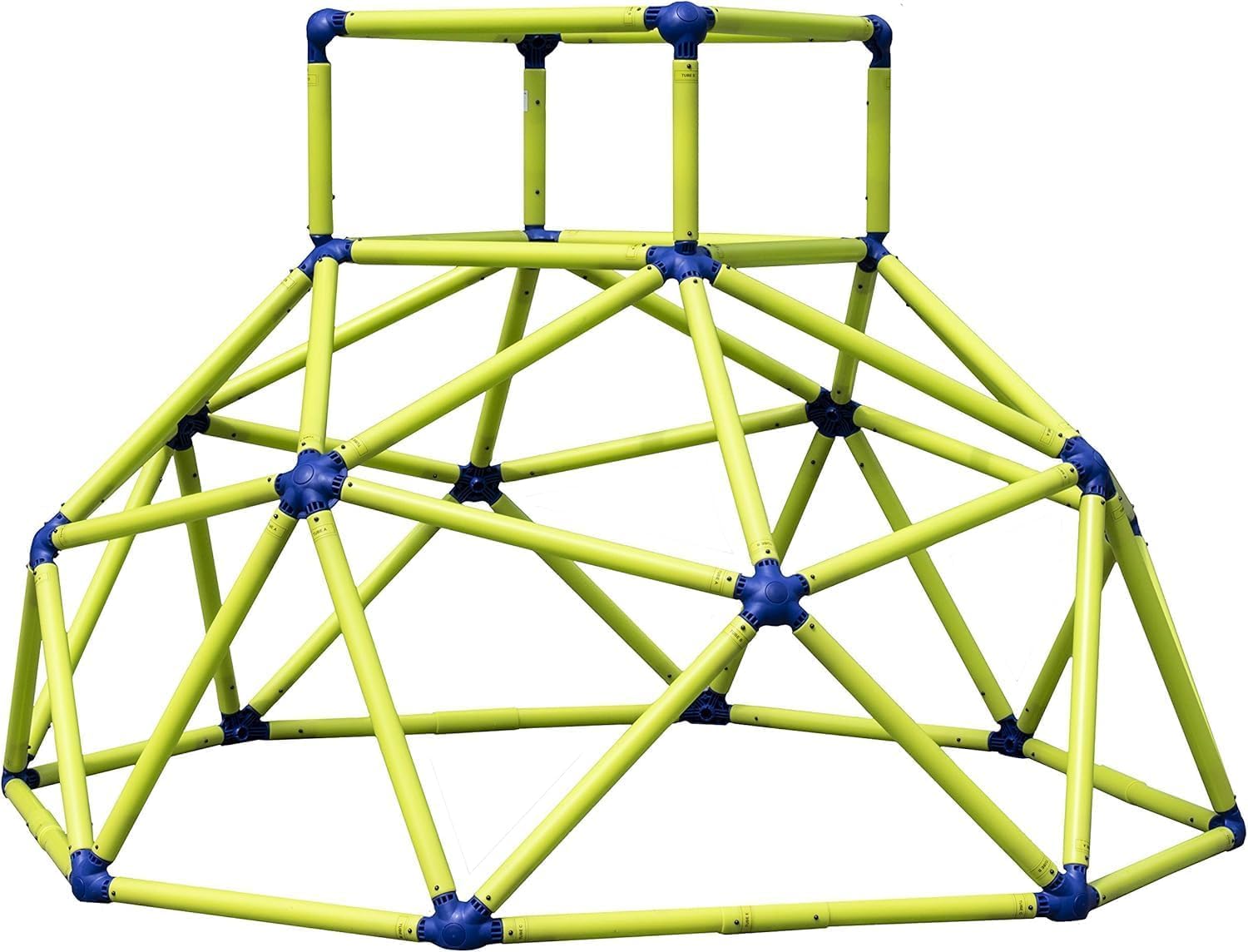
Assembly is the part to plan around. The dome is built from interlocking plastic tubes joined by connectors with double self-locking springs, and the build is either an afternoon that goes smoothly or a fight that leaves your thumbs sore — there does not seem to be much middle ground. Set it up where you want it to stay, because taking it apart again is a harder job than putting it together.

What you end up with earns the effort: a dome roughly 70 inches wide and 65 deep, close to four feet at the top, at 27 pounds, in UV-protected plastic that holds up outdoors. Toddlers climb the outside, sit inside it and hang off the bars, and the open tube structure means there is always a next handhold within reach.

For a three-year-old who has outgrown a low wooden triangle and wants height, we think a dome gives more to climb than anything else here for the money. Just treat it as a fixture — choose the spot before you start, because this is a toy you build once and live with.

Bottom line: For a three-year-old with a yard and a head for heights, we think this dome gives the most climbing of anything here.

What Eight Months of Daily Climbing Taught Us

We started by pulling every toddler climbing toy we could find with a published weight limit and a footprint under roughly four feet wide, then cut the list to 11 by eliminating anything with vague safety claims or mounting hardware that only worked screwed into a wall. Each one arrived at a home with a toddler in it and stayed assembled in a playroom, living room, or backyard for the full eight months.

Assembly was a Saturday-morning job done solo with a two-year-old underfoot. We timed each build, counted the steps, noted whether tools came in the box and whether the pieces were labeled, then took each one apart and rebuilt it to see if the screw holes held and whether it packed flat enough to slide behind a couch or into a car trunk for a weekend away.

Every set got thirty-minute sessions with a two-year-old and a four-year-old, morning and again before dinner, and we watched for the same things each time: whether a kid could get up and down without a hand, whether the frame creaked or crept across the floor mid-climb, and whether they came back to it unprompted the next day. On the wheeled sets we rolled them over carpet and hardwood, then checked whether the casters actually locked once a child was on top.

After each session we checked joints and hardware for loosening, and once a month we wiped everything down and looked at foam seams, chipped edges, and whether the surfaces turned slippery in socks. Age-appropriateness came down to whether the youngest could use it unassisted and the oldest still wanted to, and value was simply how many months of daily play the price bought.

How to Choose Toddler Climbing Toys

Match the climb to your child's stage

The mistake we see most is buying for the age on the box rather than the child in front of you. A crawler who is just pulling up needs something a few inches off the floor, which means foam — the TODIBY pieces are built for exactly that stage. A steady two-year-old wants rungs and a slope, which is where a wooden Pikler frame earns its keep. A three-year-old who climbs the furniture wants height and a dense pattern of handholds, and that is dome territory.

Buy one stage ahead at most. A frame that is too tall gets ignored rather than grown into, and a set that is too low gets abandoned by an active three-year-old within a month.

Measure the floor, not the photo

Product photos flatter scale. The Step2 Woodland Climber II runs 75 inches across and the Eezy Peezy dome 70, and both need a genuine yard or a large basement. The wooden Pikler sets want a corner with clear swinging room at the foot of the ramp, and the foam sets need a patch of floor roughly the size of an area rug.

Before you order, tape the footprint out on the floor and walk around it. If you cannot walk around it, the toy ends up against a wall where half of it cannot be used and the slide points at a bookcase.

Wood, plastic or foam: think about the landing

Material matters less for durability than for what happens when your child comes off it. Foam is the sensible choice for a child who falls more often than they climb, which is why the foam sets here are the ones rated from 12 months. Wood gives a rigid frame a two-year-old can trust underfoot. Plastic tends to be molded into slides, platforms and domes rather than frames, so it suits bigger fixed structures.

Whatever you pick, check that it stays put. Foam shapes slide on hard floors and want a rug or mat underneath; wooden frames with rubber feet stay where they are put on tile.

Check the load rating and how many can climb at once

Load ratings across this group run from 110 to 160 pounds, and that single figure tells you whether siblings can climb together. The LOL-FUN set's 110-pound limit makes it a one-child toy. The BlueWood's 160 pounds is what allows two or three children on the frame at the same time, and it is why that set costs more than the smaller wooden ones.

If you have two children close in age, this is the specification worth paying for. If you have one, put the money into height or configurability instead and skip the heavier frame.

Plan the build and where it lives

Wooden sets arrive flat with a bag of screws, and a cordless drill turns that into a short job rather than a long one. Large plastic playsets go together faster with two adults. The dome is a two-person build that does not come apart again, so choose its spot before you open the box.

Watch the word foldable. On a wooden set it can mean two screws out and a loose pile of parts rather than a hinge, so check what storage actually involves before you count on tucking it behind a sofa.

Frequently Asked Questions

Final Verdict

Our default is the BlueWood Pikler set. It is the one that lasts from a second birthday to a sixth, holds two or three children at once, and rearranges into enough shapes to stay interesting through the toddler years.

If your child is still crawling, start with the TODIBY foam set and move up when they are steady on their feet. With a yard and a bigger budget, the Step2 Woodland Climber is the outdoor answer.