RC & Vehicles

Best RC Construction Vehicles of 2026

A rainy Saturday, a pile of sand, and a cardboard box that becomes a job site — that's the pitch, and when it works, an RC construction vehicle is one of the most absorbing toys a kid can own. The trouble is that plenty of them look like excavators on the box and behave like shopping carts on the floor: the bucket won't lift wet sand, the tracks spin uselessly on grass, and the battery quits before the kid does. What you're actually paying for is a machine that can push, lift, and haul something real.

Over the past six months, my team and I ran 12 of them through a full backyard season — sandbox, gravel driveway, patchy lawn, and the living room rug on rainy days. One thing I'd tell a first-time buyer: look at the bucket and the tracks before anything else, because a metal bucket on real pivot pins shrugs off hits that strip a molded plastic one's gears. The picks below are the ones still working once the novelty wore off.

#1

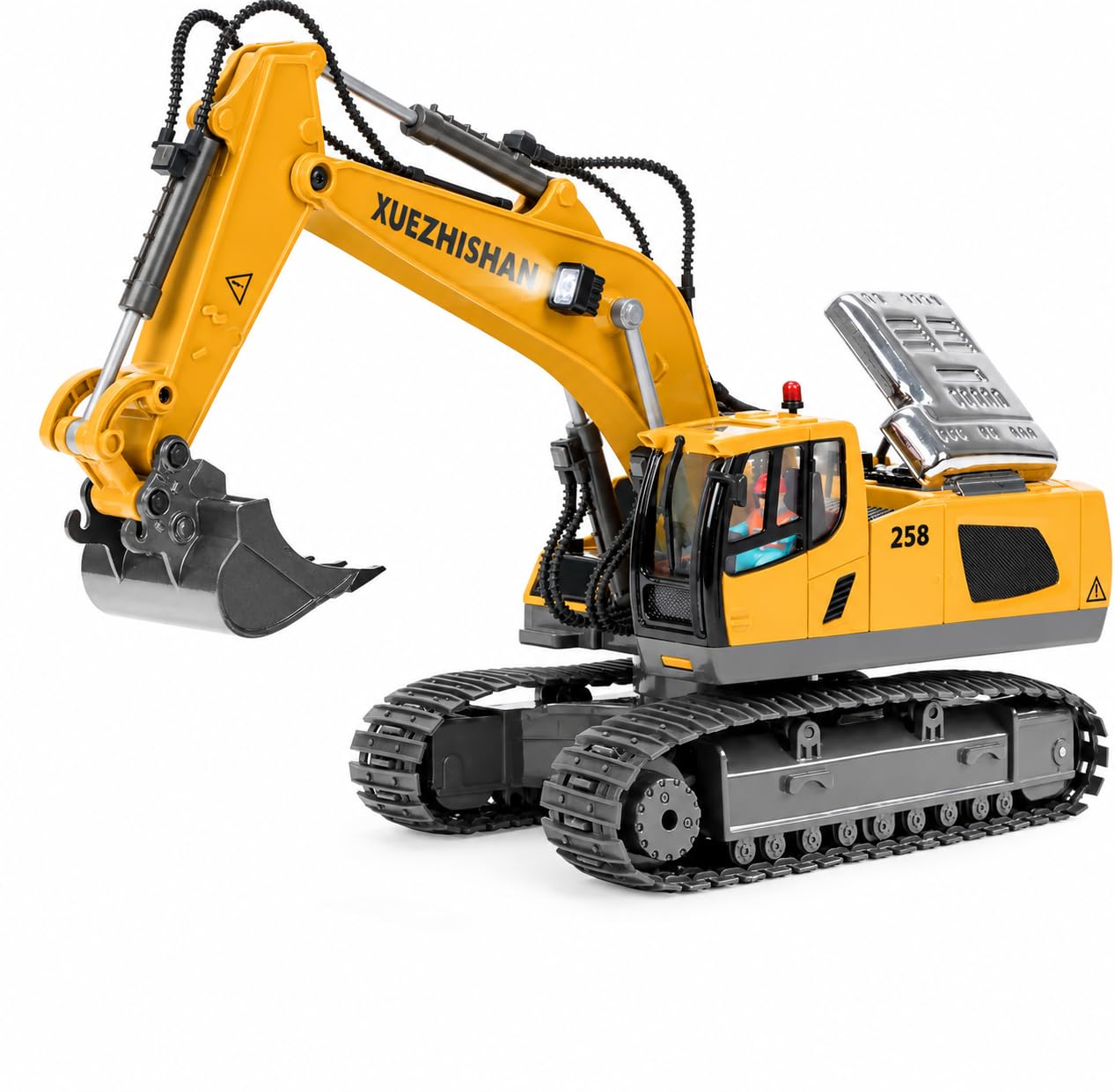
Samtop RC Excavator

Samtop RC Excavator

All-round digging

Doodle Score 9.2/10
Check Price

Worth Noting

  • Compact 1:20 scale moves less material
Scale
1:20
Control
11-channel
Batteries
2 rechargeable
Cab Rotation
680°
Read the full review

The 680-degree cab swing and 11-channel control are what sold us on the Samtop as the default choice. The tracks, steering, cab, and digging arm each have their own input, so a child can scoop, swing, and dump in one sequence instead of resetting the arm every time. That makes a small sandbox feel like a jobsite rather than a remote-control car with a bucket attached.

At 1:20, it is small enough to run in the house and big enough to move a useful scoop of loose sand. We also like the two rechargeable batteries: keep one on the charger while the other digs, and the session doesn't end at the first low-voltage warning. The included play mat is a nice extra, but it is not a substitute for a real sandbox.

The one thing we noticed after a long session is that the controller asks for a little patience; this is not the first remote we hand to a three-year-old. For the six-to-twelve-year-old who wants realistic digging, though, the extra channels are what make the scoop-and-swing sequence satisfying.

Bottom line: We recommend the Samtop for six-to-twelve-year-olds who want real scoop-and-swing digging: 11-channel control, a 680-degree cab, and two batteries keep a sandbox session moving.

#2

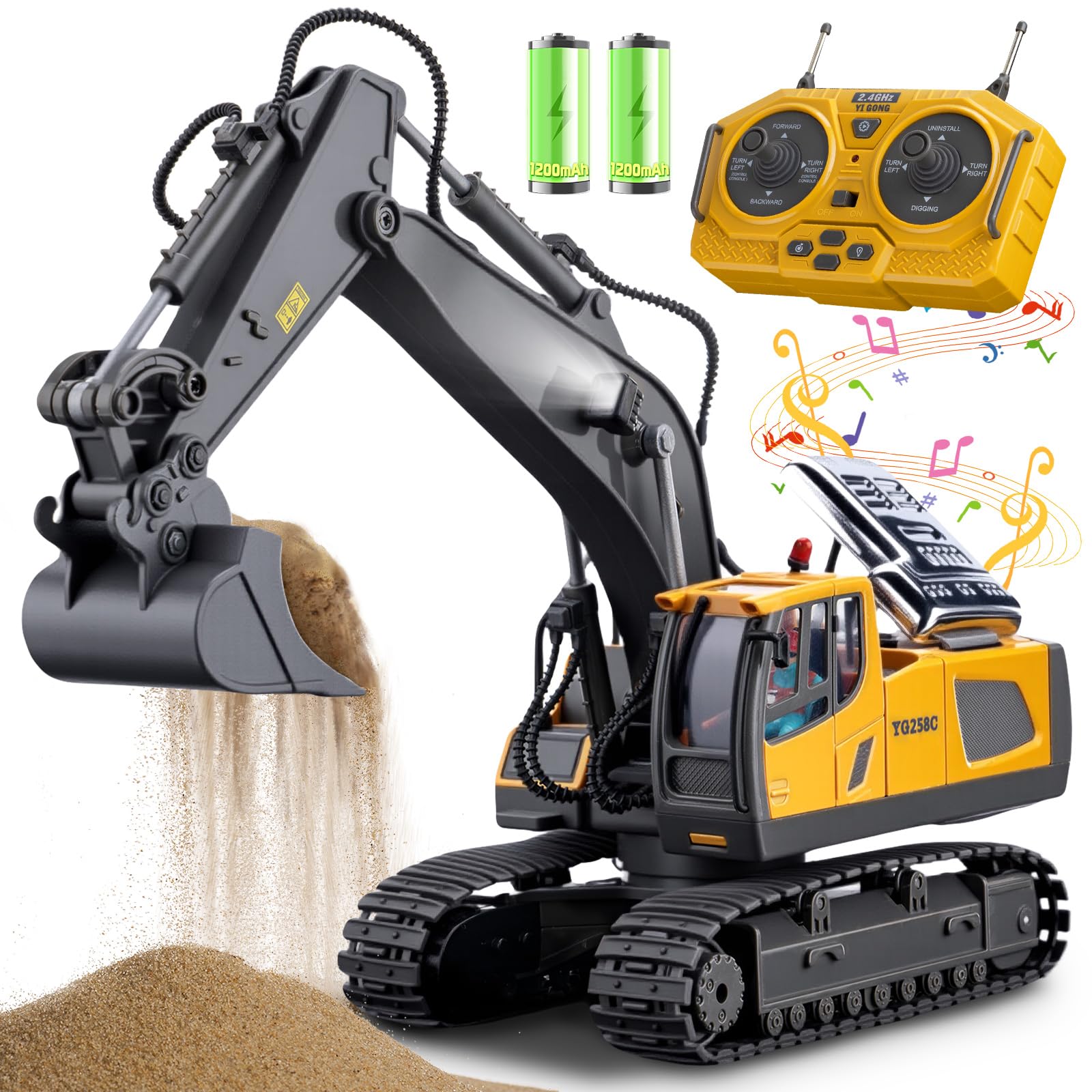
JOYIN RC Excavator

JOYIN RC Excavator

Younger kids

Doodle Score 9.0/10
Check Price

Worth Noting

  • Basic digging action
Control
2.4GHz
Age Range
3-12 years
Batteries
2 x 600mAh rechargeable
Dimensions
10 x 5 x 3 inches
Read the full review

A 10-inch excavator sounds almost too small, but that is the point of the JOYIN: it fits on a rug, a balcony, or the edge of a sandbox without needing a dedicated construction zone. The two 600mAh rechargeable batteries are a sensible inclusion for a first excavator, and the 2.4GHz remote keeps the controls familiar.

We recommend it as the budget first excavator because it does the two things a child wants immediately: it drives, and the arm scoops and lifts. The lights add a little evening-play appeal, and the small body is easy for a young child to follow. It isn't a scale model, but that simplicity is why it gets picked up so often.

The weak point is the track fit. Rough turns and gritty sand can pop a track off, and pressing it back on is part of the routine; keep it out of wet, packed sand and check the tracks after outdoor sessions. That caveat is easy to live with for indoor and light outdoor play, but a child who wants to bulldoze through a real pile of dirt will want a larger machine.

Bottom line: We recommend the JOYIN as a budget first excavator: it drives, scoops, and comes with two batteries, with the understanding that its tracks need a little care.

#3

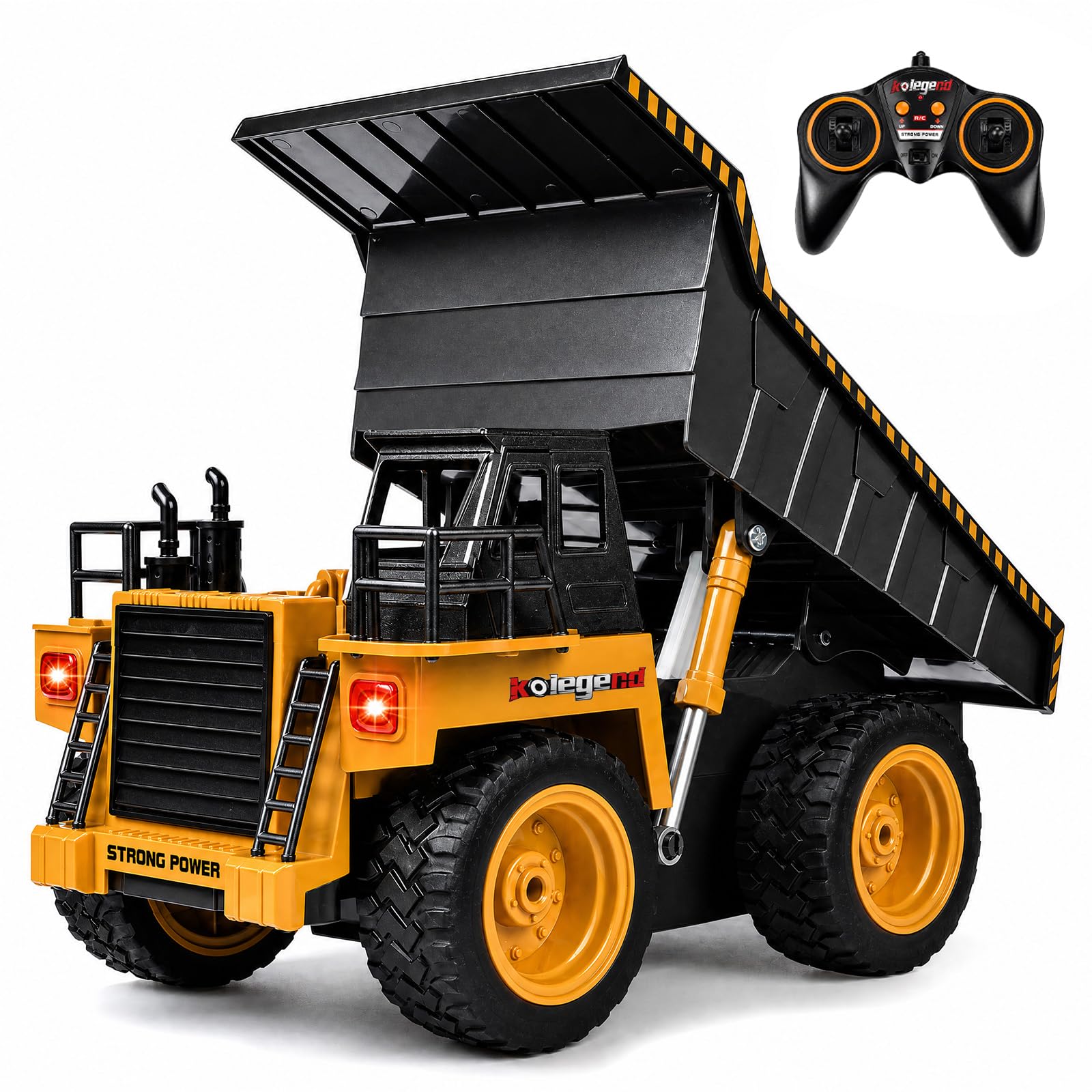
Kolegend RC Dump Truck

Kolegend RC Dump Truck

Hauling loads

Doodle Score 9.0/10
Check Price

Worth Noting

  • Only one battery included
Drive
4WD
Scale
1:18
Battery
7.4V rechargeable
Dump Bed
Working
Read the full review

A construction site needs a hauler, and the Kolegend dump truck is the one we pair with the excavators. It has a working bed, four-wheel drive, and rubber tires that make it more useful on grass and gravel than the smaller trucks here. The metal cab adds a little visual weight, so it doesn't look like a hollow shell next to a digger.

The 1:18 scale is the sweet spot for us: big enough to carry a meaningful load of sand or blocks, small enough that a child can steer it around a patio. The 7.4V rechargeable battery and 2.4GHz remote keep the controls familiar, and the dump action is simple enough for a young driver to work with a little help. It isn't a fast truck, but it doesn't need to be.

We recommend it as the support vehicle for a construction collection rather than the first purchase. It turns solitary digging into a loading-and-hauling game, and that is the role where it earns its keep. If your child already has an excavator, this is the piece that makes the site feel complete.

Bottom line: We recommend the Kolegend dump truck as the hauler for a construction fleet: four-wheel drive, a working bed, and a rugged 1:18 body make it a natural partner to an excavator.

#4

KidsFaves RC Excavator

KidsFaves RC Excavator

First-time drivers

Doodle Score 8.8/10
Check Price

Worth Noting

  • Slow pace won't thrill experienced drivers
Scale
1:20
Age Range
6-18 years
Batteries
2 rechargeable
Cab Rotation
680°
Read the full review

If the driver is still learning what a trigger does, the KidsFaves is the excavator we hand over first. The travel speed is deliberate, the remote responds without a hair-trigger surge, and the 680-degree cab swing lets a child turn the whole machine without reversing out of a corner. That makes the first ten minutes a lot less frustrating.

It is a 1:20 machine with a metal bucket and two rechargeable batteries, and the 11.8-inch body is big enough to feel substantial without taking over the yard. The lights and sounds are there for atmosphere, though the digging action is the reason to choose it. We also appreciate that the two batteries make a second session possible without waiting for a full recharge.

For a first excavator, the calm pace is a feature, not a flaw: it gives a child room to plan the scoop instead of chasing the controller. The 680-degree swing keeps the play interesting once the basic controls click.

Bottom line: We recommend the KidsFaves as a first RC excavator: its deliberate pace, responsive remote, and 680-degree swing give a new driver room to learn.

#5

Double E EC160E Excavator

Double E EC160E Excavator

Small spaces

Doodle Score 8.8/10
Check Price

Worth Noting

  • Small scale limits digging volume
  • Battery life can be inconsistent
Scale
1:26
Control
2.4GHz
Arm Rotation
720°
Cab Rotation
330°
Read the full review

At 1:26, the Double E EC160E is the excavator that fits on a coffee table and still looks like a Volvo. The 10-inch body is detailed enough to leave out as a model, with a metal shovel, rubber tracks, and a cab that turns 330 degrees. We liked it most in a small indoor jobsite, where a bigger 1:16 machine feels like overkill.

The digging arm rotates 720 degrees, and the 2.4GHz remote gives it enough control to scoop and swing around a tray of sand. The smaller scale is the point: it turns a corner of a room into a workspace, and the rubber tracks leave a light footprint on hard floors.

It is more of a second RC than a first one. The controls take some getting used to, and a child who already understands a trigger and a steering stick will get more from it. For a three-year-old, the simpler JOYIN is the better handoff.

Our recommendation is narrow but clear: choose the EC160E when space is the constraint. It gives a small apartment or a hard-floor playroom a real working excavator without the footprint. If you have a yard and a child who wants a full-size jobsite, choose the Samtop or the Kolegend 1:18 instead.

Bottom line: We recommend the Double E EC160E for small spaces and indoor jobsites: it packs a metal bucket and the Volvo look into a compact 1:26 package.

#6

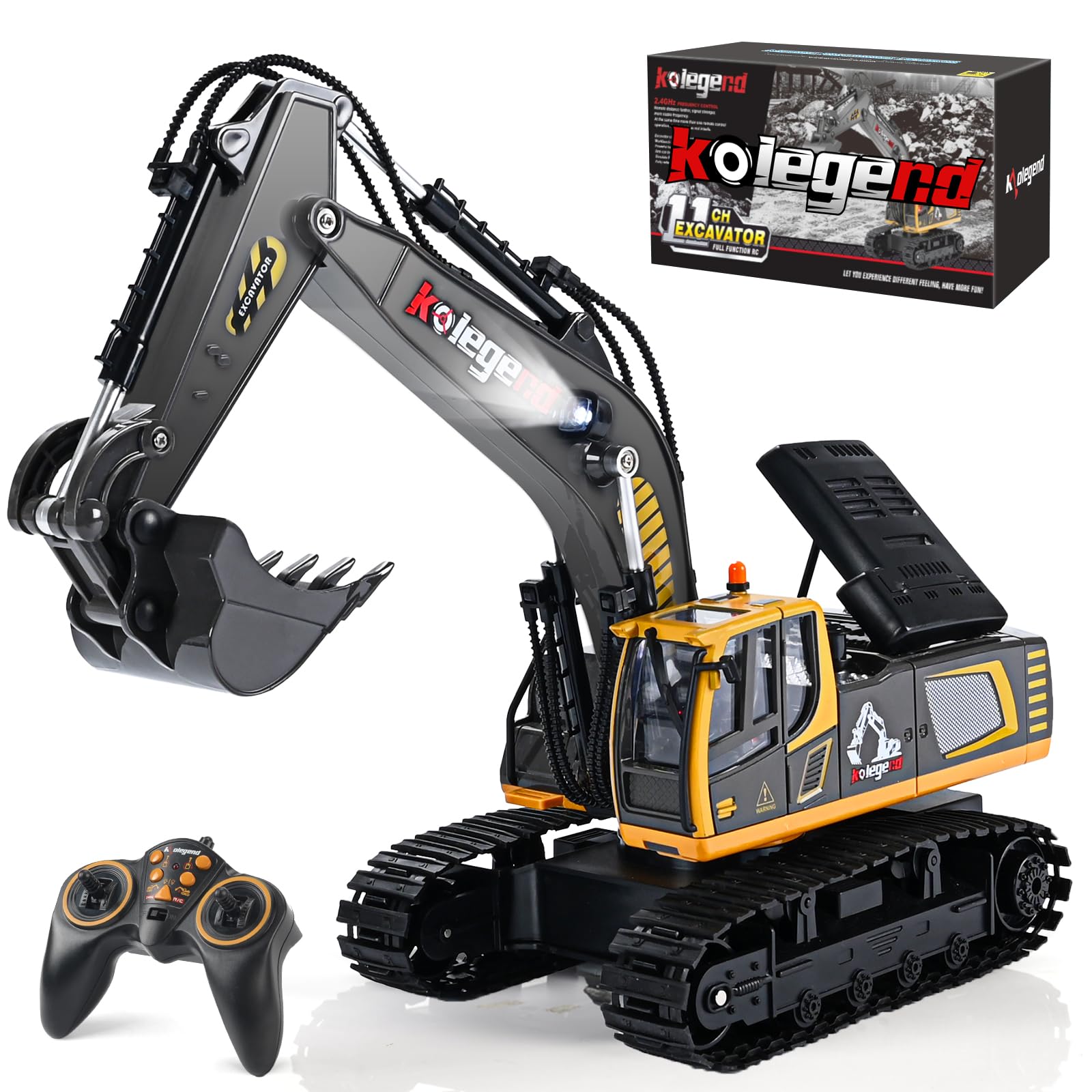
Kolegend 1:18 Excavator

Kolegend 1:18 Excavator

Real digging

Doodle Score 8.6/10
Check Price

Worth Noting

  • Eight-and-up controls need patience
  • Battery life is only average
Scale
1:18
Bucket
Metal
Control
11-channel
Batteries
2 rechargeable
Read the full review

The metal bucket is the first thing we noticed on the Kolegend, and it changes the feel of the toy. Instead of a plastic scoop that skips over the surface, this 1:18 excavator has a shovel with enough weight to bite into loose sand and mulch, and the rubber tracks give it a more planted stance than the smallest models here.

The 11-channel layout is the other reason it earns a spot. It gives the arm and cab enough separate motion to make scoop-and-turn play feel deliberate, and the two rechargeable batteries are welcome when a digging session runs long. The learning cards are a small bonus rather than the main event; we care more about the metal bucket and the 1:18 footprint, which is large enough to see but still manageable indoors.

For a kid who actually wants to dig, the extra realism is worth the fuss, and the metal bucket gives the toy a purpose beyond driving in circles. This is not a crash-and-bash truck; it rewards a child who wants to scoop, turn, and dump.

Bottom line: We recommend the Kolegend 1:18 for the child who wants a metal bucket and realistic digging; it is a more serious excavator, provided the driver is old enough for its controls.

#7

Double E 3-in-1 Excavator

Double E 3-in-1 Excavator

Older builders

Doodle Score 8.6/10
Check Price

Worth Noting

  • Short runtime in heavy digging
Scale
1:16
Control
17-channel
Attachments
Metal shovel, drill, grab jaw
Control Range
100 feet
Read the full review

The box is the pitch with the Double E 3-in-1: a metal shovel, a drill, and a grab jaw all fit the same 1:16 excavator. That is a lot more than a bucket on a stick. We spent our first session swapping the drill in and out just to see what it could chew through, and the answer is cardboard, loose dirt, and anything else soft enough for a toy.

We recommend it for older kids because the 17-channel controller and three separate motors ask for more planning than a simple scoop-and-lift machine. The reward is a construction vehicle that can dig, drill, and grab, and the 100-foot range means the operator can stay back while it works. This is the most versatile excavator in the group, and also the one that takes the most practice.

The 1.5-pound body is manageable, but this is still a toy rather than an outdoor contractor. It has the size and weight to feel substantial without becoming a burden to carry to the sandbox. For a child who wants a project rather than a basic digger, the extra setup is part of the appeal.

Bottom line: We recommend the Double E 3-in-1 for older kids who want a real project: the metal shovel, drill, and grab jaw make it the most versatile digger here.

How We Tested 12 RC Construction Vehicles in the Dirt

We started with a shortlist of roughly 40 machines from brands we already trusted and a few we didn't, then cut anything with a battery you couldn't replace, a controller limited to a single mode, or a footprint too wide for a doorway. That left 12, running from compact sandbox diggers to larger tracked excavators and dump trucks. Each one got six months of genuine use rather than a bench test.

Testing happened where these toys actually live: a sandbox, a gravel driveway, a patchy lawn with a slope, a mulch bed full of roots, and a low-pile rug indoors. We timed every battery from full charge to first slowdown and again to full stop, running continuous dig-and-haul cycles instead of one polite lap. We loaded each bucket with wet sand and small gravel to see whether the arm stalled or lifted, tipped a full bed to check it emptied cleanly, and drove each machine from carpet to hardwood to grass to find where the tracks lost grip.

Durability got its own abuse: repeated runs off a six-inch curb, deliberate collisions with a buried root, and a loaded bed dumped hard on purpose. After each session we checked the tracks for stretching, thrown treads, and chewed lugs, and opened up anything that had started clicking. We weighed and measured every truck to see whether a kid could carry it and whether it fit in a car trunk, then compared what came in the box — batteries, charger, spare pins — against what it cost. The last measure was the least scientific: which ones the kids asked for again, and which ones the adults kept driving after the kids walked away.

How to Choose RC Construction Vehicles

Start With the Job, Not the Body Style

An excavator is the most engaging first construction vehicle because the arm gives a child something to do beyond driving. A dump truck is the natural second purchase: it gives the excavator somewhere to put the load and can haul blocks or sand on its own. If you are buying one toy, make it the digger; if you are building a fleet, add the truck after. We start with the excavator because it creates the loading-and-hauling game that makes a second vehicle worthwhile.

Channels and Digging Action

Channel count is shorthand for how many motions the controller can manage separately. An 11-channel excavator can swing the cab, work the arm, and drive the tracks with less mode-switching; a 17-channel 3-in-1 adds attachments and more ways to get tangled. More is not automatically better. A young child will do better with a simple scoop-and-lift machine, while an older builder can grow into the Samtop or the Double E. A metal bucket is worth having if real digging is the point; plastic skips and wears.

Scale, Space, and Surface

Scale is a footprint decision. A 1:26 excavator around 10 inches long is a desk or apartment toy; a 1:16 machine is a yard toy that can move a real scoop of sand. The trap is assuming the larger number means the larger toy: 1:16 is bigger than 1:26. Check the listed length and weight, then picture where it will turn. Rubber tracks are happiest on hard floors and packed sand; loose dry sand is where these dig best, while wet, packed sand can clog tracks and bucket joints.

Batteries, Charging, and Track Care

Two batteries are worth more than one larger pack. One can charge while the other works, and that matters more in a digging toy than a runtime claim on the box. Check how the pack comes out: a screwdriver is common, and a child will need help with it. Tracks are the other wear point. Grit works into the links, tracks slip off, and a machine that ran well on carpet starts clicking in sand. Brush out the tracks after outdoor play and keep the toy out of puddles.

Age, Controls, and Rough Play

Age ranges are a rough guide, not a promise. A young child can drive a simple truck, but an 11-channel excavator asks for more patience; the eight-and-up labels on the Kolegend and the 3-in-1 Double E are there for a reason. Metal buckets and cabs add realism, but plastic bodies still take the knocks. If the child is rough on toys, choose the simpler machine with fewer small linkages, and keep the more detailed excavator for supervised digging sessions.

Frequently Asked Questions

Final Verdict

For most families, we recommend the Samtop. Its 11-channel controls and 680-degree cab turn scooping and swinging into a real sequence, and the two batteries keep the sandbox session moving. If the driver is younger or the budget is tighter, the JOYIN is the easier first step; if you are building a full construction site, the Kolegend dump truck is the natural partner. The compact Double E EC160E is the space-saving exception, not the default.