Outdoor Play

Best Push Ride-On Toys of 2026

A push ride-on toy buys something rare on a toddler walk: forward motion without a negotiation. The good ones turn a slow loop around the block into the day's highlight, and give a parent a handle to steer with when little legs get tired. The not-so-good ones arrive with missing hardware, rattle over every sidewalk seam, or feel tipsy the moment a kid leans sideways. What you're really shopping for is a well-made, good-looking ride-on that's fun enough to use daily and simple enough to assemble before naptime ends.

I've spent the last six months with 12 of them, and my team and I put each through the same routine: morning sidewalk loops, driveway turns, and inevitable kitchen-table assembly. The pattern was clear. Maneuverability matters more than any feature list; a toy that's hard to steer or tips on a curb cut stops getting used. Value shows up later, in whether the wheels still roll smoothly and the frame stays tight after months of daily rides. Below are the ones that earned their spot.

#1

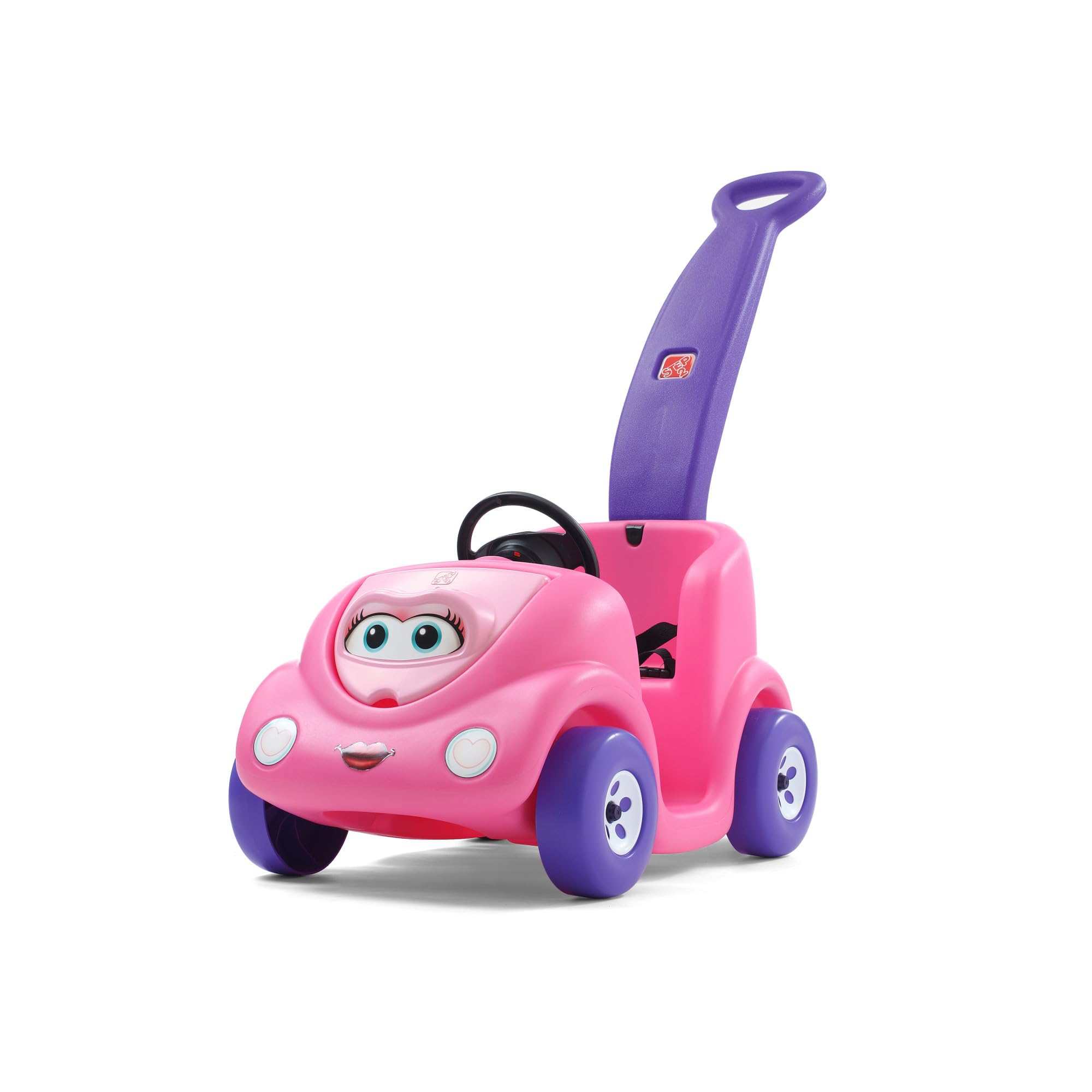
Step2 Push Around Buggy
Step2 Push Around Buggy

Budget outdoor use

Doodle Score 9.4/10
Check Price

Worth Noting

  • Loud plastic wheels on pavement
Max Weight
50 lb
Item Weight
14.2 lb
Parent Handle
Extra-wide, folds down
Recommended Age
18 months - 3 years
Read the full review

The Push Around Buggy is the cheapest full-size push car in this group, and it makes exactly one concession to get there: the wheels. On a paved sidewalk it rattles and thumps loudly enough to bury a toddler's chatter, and that is the single thing we warn people about before they order.

Get it onto grass, playground rubber, or a packed park path and the trade stops mattering. That's the calculation worth making: if the buggy lives in the yard or the park, the noise is a non-issue, and you've saved real money on a car with the same fifty-pound capacity, the same folding rear handle, and the same latching belt as our top pick.

We also appreciate how little there is to go wrong. One molded shell, four plastic wheels, a horn, cup holders, and a compartment under the hood that a toddler can reach and open without help. No modes to switch, no accessories to lose, and nothing to reassemble when it tips over. The flip side is the seat, which is small, and a box that stops at three years where the Whisper Ride II runs to four — for a second birthday, three years is plenty.

This variant is pink top to bottom with a sheet of stickers to dress it up, which is delightful for some households and a hard no for others. The same car in blue is our top pick if the color scheme isn't for you.

Bottom line: We point tight budgets here for yards and playgrounds; it's the cheapest full-size push car in the group and the loudest on a sidewalk.

#2

Radio Flyer Stroll 'N Trike

Radio Flyer Stroll 'N Trike

Sunny long strolls

Doodle Score 9.4/10
Check Price

Worth Noting

  • Push handle can work loose over time
Canopy
Removable UV canopy
Stages
4
Max Weight
49 lb
Recommended Age
12 months - 5 years
Read the full review

Take the accessories off the Stroll 'N Trike and you have an ordinary steel trike. Leave them on and it's the closest thing here to a stroller your toddler rides instead of sits in: a removable UV canopy, a padded wraparound tray, a headrest, footrests for the stage when feet don't reach the pedals, and a height-adjustable push handle with a foam grip.

The canopy and tray are what make it the answer for long, hot, slow walks — the kind where you're out for an hour and the shade moves. The footrests matter more than they sound. Before a child can reach the pedals, dangling legs are what make a trike miserable, and these give them somewhere to go.

Four stages take it from a 12-month-old passenger to a five-year-old pedaling alone, the longest run of anything here, and its 49-pound capacity is the highest among the trikes. Just steer with respect: turns want to be wide and slow, and a rider who leans hard to one side can tip it, so keep a hand on the handle.

It's also a big object — 36 inches long and 37 tall — so plan on a garage corner rather than a closet shelf. What you get for that footprint is the only toy in this group that a five-year-old still rides without a parent behind them.

Bottom line: We take this one for long, hot walks: canopy, tray, and footrests turn a trike into a stroller substitute that still works at five.

#3

Step2 Whisper Ride II

Step2 Whisper Ride II

Daily neighborhood walks

Doodle Score 9.2/10
Check Price

Worth Noting

  • Screws or decals can be missing from the box
Max Weight
50 lb
Parent Handle
Extra-wide, folds down
Assembled Size
45.5 x 19 x 34 inches
Recommended Age
18 months - 4 years
Read the full review

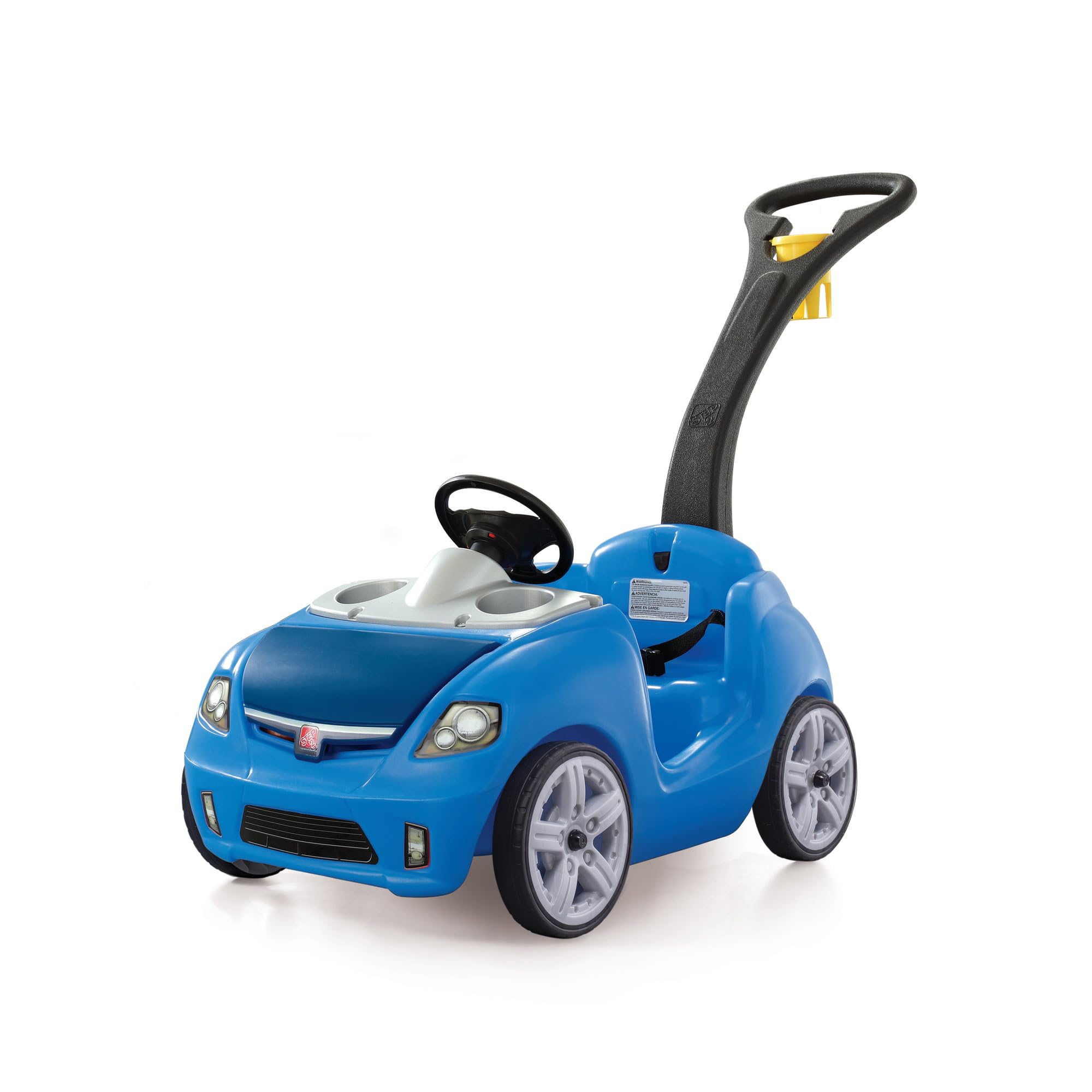
Plastic wheels are where a push car gives itself away, and it's the first thing we listen for. The Whisper Ride II is the quiet one of this group on a paved sidewalk, and that single difference is why it's the car we hand to anyone planning a walk every day.

The rest of the package backs that up. The rear grip is wide enough for two hands and folds down flat, so it disappears into a hall closet or the back of a small SUV. The belt latches in one motion, the horn and steering wheel keep a passenger busy, and there's more storage than we expected: a compartment under the hood plus six cup and snack holders around the shell. Fifty pounds of capacity keeps it in service past the second birthday.

What you're paying for is refinement, not size. It's the same double-walled plastic idea as the cheaper Step2 buggy, but the ride is settled enough to talk over, and settled wheels are what turn a toy into something you take out on purpose. On gravel or a rutted park path it won't be silent — no hard-wheeled car is — so if your route is mostly off-pavement, save the money and take the buggy instead.

If the pushing years are the whole plan, this is the simplest way to spend them. If you want something that also pedals, the newyoo trike is the one to look at; if you want a canopy over your passenger's head, go Radio Flyer.

Bottom line: Our default for daily walks: the quietest-rolling car here, with a wide folding handle, a latching belt, and storage for a snack run.

#4

newyoo TR007 Trike

newyoo TR007 Trike

Growing toddlers

Doodle Score 9.2/10
Check Price

Worth Noting

  • Play in the link between handle and steering
  • 35-pound limit caps it at the toddler years
Frame
Carbon steel
Modes
5
Max Weight
35 lb
Parent Handle
Rotates 135 degrees
Read the full review

Five modes sounds like a spec-sheet brag until you're the one deciding whether to buy a push trike this spring and a balance bike next. The TR007 answers both: a parent-steered push trike now, then a pedal trike, then a balance bike, with the seat and handlebar clicking through height positions and the pedals moving between three mounts.

Steering is what earns it a place. The rear handle rotates 135 degrees and turns the front wheel, so the trike goes where you point it — not something we can say for every toy on this page. A carbon steel frame gives it a planted feel that none of the all-plastic cars in this group match, and the seat and bars adjust as your rider grows through the toddler years.

The handle is the detail to check before you commit. It tops out low; if you're tall, stand behind one before you buy, because a stooped push wears thin on a long walk.

Then there's the payoff. Once your child stops wanting to be pushed, the pedals and seat reconfigure and this becomes a bike they ride themselves — a second life none of the cars here can offer. That makes it a different purchase from a push car, and a better one if you have the garage space and want to skip buying again next spring.

Bottom line: We rate it the one that keeps earning after the push stage ends — push trike, pedal trike, then balance bike.

#5

Best Ride On Cars G-Wagon

Best Ride On Cars G-Wagon

Indoor car lovers

Doodle Score 9.2/10
Check Price

Worth Noting

  • Push bar bolts can work loose
  • Footrest absent from the listed box contents
Max Weight
40 lb
Item Weight
11.4 lb
Recommended Age
18 months - 3 years
Safety Features
Removable guardrails and backrest
Read the full review

Toddlers don't care about build quality; they care that their car looks like the one in the driveway. On that measure the G-Wagon wins the group — the guardrails, the spare tire on the tailgate, the realistic steering wheel, and the horn-and-music dashboard do more for it than any single feature.

It's also by far the smallest car here, 24.5 inches long against 45.5 for our top pick. That cuts both ways: it turns inside a kitchen, fits a hallway, and drops into a trunk with no folding at all, but a tall three-year-old will be cramped, and the 40-pound limit is the lowest of the cars in this group.

The hardware is where it gives ground. The push bar bolts together instead of latching onto the shell, so those bolts are the part to check before a walk rather than after one. Buy it for the reaction it gets, and treat the engineering as the price of the styling.

One thing to confirm before ordering: the footrest in the photos doesn't appear on the box-contents list, which names the push bar, safety bars, steering wheel, backrest, spare tire, and hardware but no footrest. If you're buying for a younger rider who needs one, ask before you order.

Bottom line: We keep it on the list for looks and guardrails rather than hardware; it makes most sense as a second car that lives indoors.

How We Tested the Best Push Ride-On Toys

We started with a shortlist of push ride-ons sold for toddlers, filtering by seat height, handle adjustability, age range, replacement-part availability, and price so the group covered both budget and upgrade picks. We ordered 12 and logged every box against its parts list before assembly; if a bolt or cap was missing, we noted it before reaching for the hex key. Each one was assembled solo at a kitchen table, with a stopwatch running, then checked for wobble by pushing down on the seat and handle.

For six months, the ride-ons lived in our garages and hallways and came out for morning sidewalk loops, driveway turns, park-path rides, and indoor laps on hardwood and rug. We watched how easily a toddler could climb on and push off, whether the handle steered smoothly with one hand, and how the toy handled curb cuts, tight corners, and a leaning rider. We also listened: a good ride-on makes wheel hum, not a plastic clatter that sends the dog running. Appearance got checked after real life—juice spills, dusty wheels, a hose-down.

At the end of six months, we inspected wheels, frames, handles, and fasteners for cracks, loosening, or rust, and compared that wear against price to judge value. The toys that scored best were not the ones with the most buttons; they were the ones still rolling straight, steering easily, and getting pulled out of the closet without a fight. We'll keep using them and update if anything changes.

How to Choose Push Ride-On Toys

Who Actually Steers

On most push cars the wheel your toddler spins is connected to nothing — the toy goes where your hands point the rear handle, and the spinning wheel is theatre. That's fine, but don't buy on the promise of steering. A push trike with a steering column inside the handle is different: the newyoo's handle rotates 135 degrees and turns the front wheel, so the trike goes where you point it.

If steering matters to you, look for a handle that visibly connects to the front axle, and give that joint a wiggle before you trust it. A loose link is the difference between driving and herding.

Wheels Decide Your Walks

Hard plastic wheels are the loudest thing about this category, and the difference is audible within a block. The Whisper Ride II is the quiet one of this group on pavement, and the Radio Flyer trike's foam tires roll quietly too. A cheaper car with hard wheels rattles over every sidewalk seam and announces you to the whole street.

If your walks are on pavement, pay for quieter wheels. If the toy mostly lives on grass, spend the money on capacity or a canopy instead — the noise simply stops being part of the experience.

How Long It Stays Useful

Two numbers predict the lifespan: weight capacity and stage range. The cars here run from 40 to 50 pounds and most stop at three or four years old. The trikes go further because the parent handle and footrests come off, leaving a pedal trike a five-year-old still rides.

So choose by what you want the purchase to be. If you want the best two years of pushing, a car is simpler and cheaper. If you want one purchase to cover several years and a second skill, buy the trike that grows.

The Handle, and the Adult on the End of It

You'll push this thing hundreds of times, so handle height deserves more attention than any child-facing feature. The Radio Flyer's handle adjusts; the rest sit at a more or less fixed height. Stand behind the assembled toy rather than judging from a photo.

A folder is worth having if the car rides in a trunk, and a wide grip is worth having if two adults share the pushing. Tall pushers should test the top setting first — a stooped walk gets old quickly.

Assembly and the First Week

Almost everything here ships flat, and the box is where disappointment usually starts: hardware and decals are the pieces that go missing. Build it the week it arrives, not the night before a birthday, and check the parts against the contents list as you unpack.

Then tighten the handle bolts again after the first few walks. That joint carries every ounce of load you put on it, and it's the one that works loose.

Frequently Asked Questions

Final Verdict

The Whisper Ride II is the one we point to first: quiet enough for a daily walk, wide-handled, and big enough to last to four, with storage that holds a snack and a water bottle. Spend less and the Push Around Buggy does the same job on grass, at the cost of a rattling sidewalk ride.

If you want the toy to outlive the pushing years, the newyoo trike is the better purchase — accepting a 35-pound ceiling and a handle that sits low. For a shadeless park and an hour outdoors, take the Radio Flyer.