Outdoor Play

Best Balance Bikes of 2026

The day my nephew traded his pedal bike and training wheels for a 10-pound frame with no pedals or chain, he stopped needing an adult jogging behind him. That's the whole trick of a balance bike: kids push off with their feet, coast, and learn to lean into a turn before anyone hands them a crank and asks them to pedal at the same time. Which is also why the wrong one can stall everything — a bike that's too tall, too heavy, or too tippy turns a confident toddler back into a passenger.

We spent six months with 11 balance bikes on driveways, sidewalks, and park paths, with riders from about 18 months to 4 years old. The thing first-time buyers miss is that seat-height range matters more than wheel size — one your kid can straddle flat-footed today and still ride next summer beats a flashier model they'll outgrow by August. Below are the ones that held up, stayed upright, and got picked over the scooters in the garage.

#1

Strider 12 Sport

Strider 12 Sport

Everyday first bike

Doodle Score 9.6/10
Check Price

Worth Noting

  • Premium price next to simpler 12-inch bikes
  • Tops out around age 4 for taller kids
Age Range
1–4 years
Tire Type
12 in. foam rubber
Bike Weight
6.7 lb
Seat Height Range
11–17 in.
Read the full review

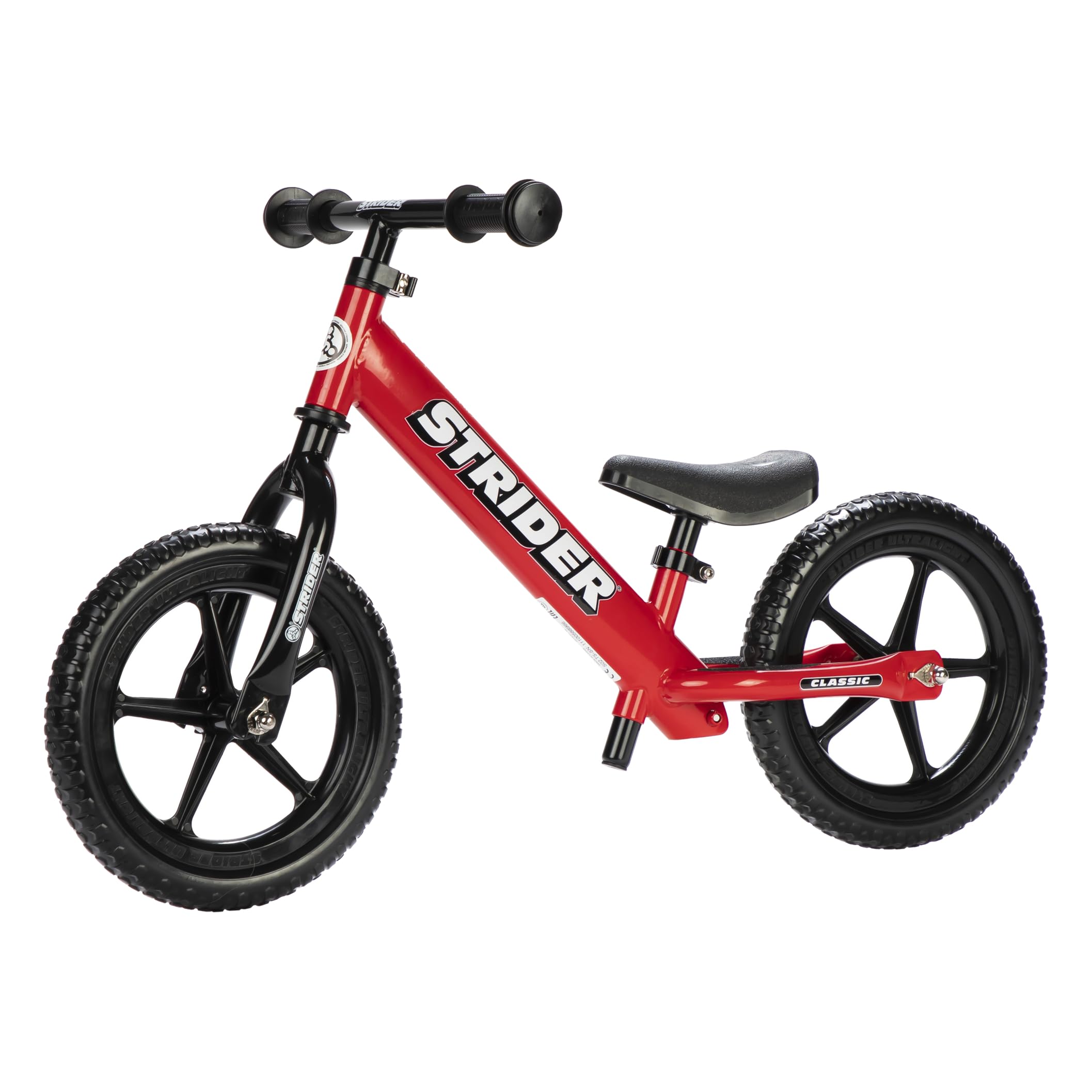
The Strider 12 Sport's 11-to-17-inch seat range covers the whole first-bike stretch, from a toddler's first tiptoes to a preschooler's last glides. That range, not a long feature list, is the reason it earns the top spot. The steel frame weighs 6.7 pounds, the 12-inch foam rubber tires never need air, and the bike is rated for riders up to 60 pounds.

What sold us is how little there is to fuss with. The seat and handlebars adjust without a fight, and the no-pedal layout lets a child walk, then glide, then lift both feet without a training-wheel detour. We especially like the foam tires for pavement, packed dirt, and the usual neighborhood mix; they won't puncture, and they don't need a pump. The ride feels planted without feeling heavy, which is the balance a first bike needs.

It is not the least expensive way into a balance bike, and the extra money buys range and simplicity rather than a fancy component list. The 60-pound rider limit is generous for the age group, but the Sport still tops out around age four; a taller five-year-old will need a bigger frame. The foam tires also trade some grip on wet grass for their no-maintenance life.

None of that changes our recommendation for the typical family. The Sport is the one we keep coming back to because it removes the usual reasons a first bike sits in the garage: it fits a small toddler, grows through preschool, and doesn't demand tire maintenance. Set the seat so both feet are flat before the first ride, then raise it as the child's stride lengthens.

Bottom line: We recommend the Strider 12 Sport as the default first balance bike for families who want one light, low-maintenance bike to last from toddlerhood through preschool.
#2

Strider 12 Classic

Strider 12 Classic

Small toddlers

Doodle Score 9.6/10
Check Price

Worth Noting

  • Tall 3-year-olds outgrow it sooner
Age Range
1–3 years
Bike Weight
6.5 lb
Max Rider Weight
60 lb
Seat Height Range
11–16 in.
Read the full review

The Strider 12 Classic costs less than the Sport and tops out an inch lower in seat height, at 16 inches. It uses the same walk-then-glide geometry, a 6.5-pound steel frame, and 12-inch foam rubber tires that never need air. For a petite 1-to-3-year-old, that lower seat range is the point.

The bike is easy to straddle, the handlebar height is friendly for little arms, and the foam tires roll over pavement and packed dirt without drama. We like the built-in footrest for the stage when a child wants to lift their feet and coast. The 60-pound weight limit is generous for the age group, and the simple frame has fewer places for dirt to collect than a molded plastic body.

The Classic shares the Sport's geometry but stops at 16 inches, and it does without the Sport's slightly more polished details. The lower entry price is the trade, and the foam tires give up some grip on wet grass, though most toddler riding happens on pavement.

We still recommend it for the family who wants the Strider fit and does not need the extra inch. Set the seat at the lowest height that lets both feet touch, and plan to pass it to a younger sibling when the legs outgrow it.

Bottom line: We point budget-minded families to the Strider 12 Classic when a petite 1-to-3-year-old needs the Strider fit without the Sport's premium.

#3

Retrospec Cub

Retrospec Cub

Petite toddlers

Doodle Score 9.6/10
Check Price

Worth Noting

  • Seat stops at 14.5 inches
Age Range
18 months–3 years
Bike Weight
10 lb
Max Rider Weight
50 lb
Seat Height Range
11–14.5 in.
Read the full review

The Retrospec Cub's 11-inch minimum seat is one of the lowest here, and the frame is shaped for an easy step-through. A small 2-year-old can climb on without a parent lifting them, and the low center of gravity helps the bike feel steady at walking pace. The 12-inch airless tires are puncture-proof, so there is no pump to remember.

The trade is weight. At 10 pounds, the Cub is the heaviest bike in this group, and a small rider will feel that when they try to pick it up or push it uphill. The upside is a planted ride and a 50-pound limit that covers the intended 18-month-to-3-year window. The seat and bars adjust quickly.

We recommend the Cub when fit matters more than portability: a petite toddler who needs both feet flat will get more confidence from the low seat than from a lighter frame. If your child is already tall for their age, the KRIDDO or Strider Sport gives more room to grow.

Bottom line: We recommend the Retrospec Cub for short 18-month-to-3-year-olds who need a very low seat and an easy step-through frame.

#4

WETIFY Baby Balance Bike

WETIFY Baby Balance Bike

Light-up first bike

Doodle Score 9.6/10
Check Price

Worth Noting

  • Small for taller 3-year-olds
Age Range
10–36 months
Wheel Size
6.8 in.
Bike Weight
4.6 lb
Frame Material
Carbon steel
Read the full review

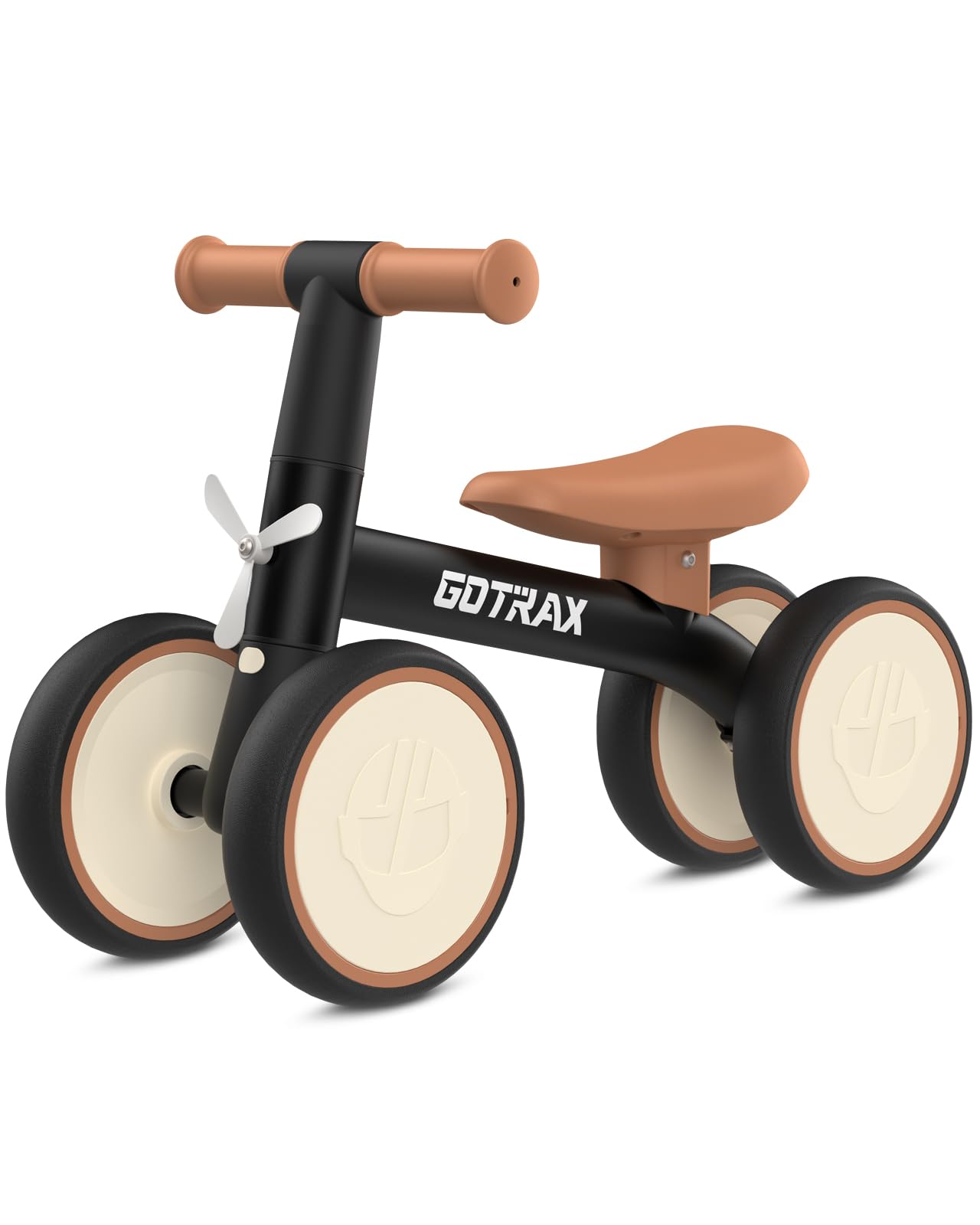
The WETIFY's 10-to-36-month range and 4.6-pound steel frame make it a four-wheel baby bike that can stay in rotation past the first year. The light-up rear wheel is powered by the wheels themselves, so there are no batteries to chase, and the lights give a hesitant toddler a reason to push again. The seat is soft, the grips are small enough for little hands, and the 135-degree steering limit keeps the front wheel from diving under.

The WETIFY is still a four-wheel baby bike, not a long-distance machine. It shines indoors and on smooth pavement, and the tool-free assembly makes it easy to move between rooms. The frame feels substantial for its weight, and the enclosed wheels are a detail we appreciate around crawling siblings. The tool-free assembly is the practical bonus: it moves from living room to trunk without a toolbox.

Bottom line: We like the WETIFY for its light-up wheels and longer 10-to-36-month fit, making it a four-wheel baby bike that doesn't feel like a one-year toy.

#5

Gotrax Baby Balance Bike

Gotrax Baby Balance Bike

Indoor riding

Doodle Score 9.6/10
Check Price

Worth Noting

Age Range
12–24 months
Wheel Size
7 in.
Bike Weight
5.9 lb
Max Rider Weight
66 lb
Read the full review

The Gotrax is built around 7-inch EVA wheels that are wider and quieter than the small hard wheels on many baby bikes. The 45-degree steering limit keeps the front end from swinging too far, and the 5.9-pound frame is light enough for a toddler to push and for a parent to move with a foot. It is a first ride-on with a low, stable stance.

We like the soft TPR handle and curved seat: a 1-year-old can sit down without a hard edge digging in. The 66-pound rider limit is generous for the 12-to-24-month range, and assembly takes minutes with the locking system. The bike feels sturdy in the hand without feeling like a piece of furniture.

The bike is small by design, and the 12-to-24-month range is honest: a tall 2-year-old will be ready for a 12-inch two-wheeler. The EVA wheels are quiet on floors, but they pick up grit and small stones outside, so this is happiest indoors or on a swept patio.

We recommend the Gotrax as an indoor-first baby bike for a new walker. The quiet roll and steering limit make it easy to use in a hallway or living room, and the soft seat is kind to a diapered rider. For mixed terrain, the Radio Flyer's air tires are the better tool.

Bottom line: We recommend the Gotrax as an indoor-first baby bike, with quiet 7-inch wheels and a 45-degree steering limit that suits 1-to-2-year-olds.

#6

SEREED Baby Balance Bike

SEREED Baby Balance Bike

1-year-olds

Doodle Score 9.4/10
Check Price

Worth Noting

  • Short useful life for tall 2-year-olds
Age Range
12–24 months
Wheel Size
6.7 in.
Bike Weight
3.5 lb
Max Rider Weight
55 lb
Read the full review

The SEREED is the one we reach for when a child is just steady on their feet: four wheels sit close together, and the 3.5-pound aluminum frame is light enough to lift by the handlebar with one hand. The seat is low, the grips are soft, and the 135-degree steering limit keeps the front wheel from swinging into a jackknife. Fully enclosed wheels mean there are no spokes or open gaps near little ankles.

We like that the SEREED doesn't ask a 1-year-old to balance before they can walk confidently. They sit, push with their feet, and get the connection between steering and moving. It is rated for 12 to 24 months and up to 55 pounds, which is a realistic window for a first birthday gift, and assembly is straightforward enough that you can have it ready before the cake comes out.

The SEREED is also easy to live with: the wipe-clean seat and handlebar shrug off snack spills, and the bike stands on its own when a toddler climbs off. For a first birthday, the built-in steering stop matters more than any light-up feature: it keeps the front wheel from tucking under during a slow turn.

Bottom line: We choose the SEREED baby bike for new walkers because four wheels, a 3.5-pound frame, and a low seat make the first ride feel less like a leap.

#7

Radio Flyer Air Ride

Radio Flyer Air Ride

Mixed terrain

Doodle Score 9.4/10
Check Price

Worth Noting

  • Air tires require pressure checks
Age Range
18 months–5 years
Tire Type
12 in. rubber air
Bike Weight
7.9 lb
Frame Material
Steel
Read the full review

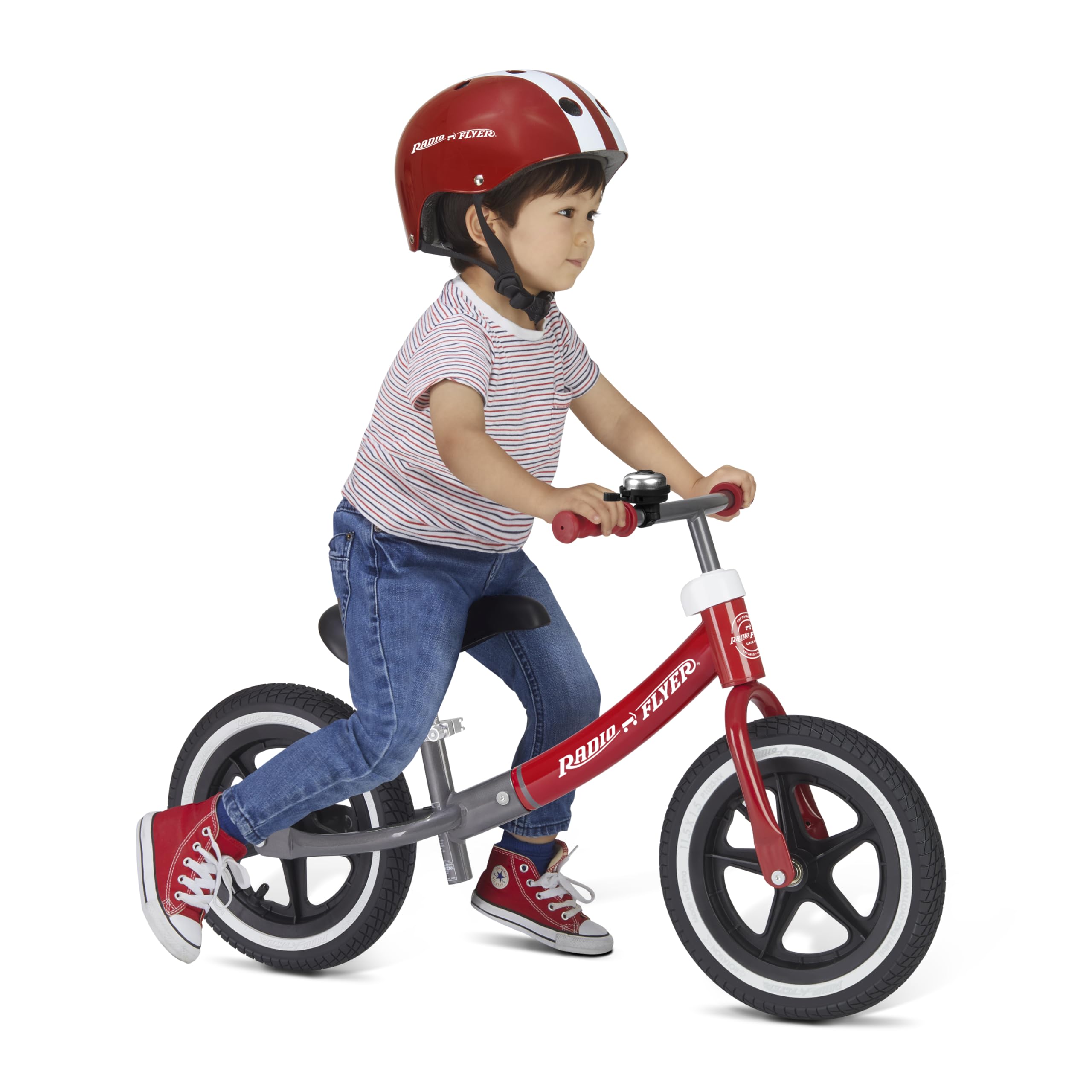
The Radio Flyer Air Ride rolls on 12-inch rubber air tires, which is the feature that separates it from every foam-tire bike here. The steel frame feels substantial without being immovable at 7.9 pounds, the seat adjusts without tools, and grip tape on the frame gives a child a place to rest their feet while gliding. The 18-month-to-5-year range is generous for a bike this planted.

We like the ride quality on mixed surfaces. The air tires soften chip-seal paths and packed grass in a way foam wheels do not, and the low step-over makes it easy for a toddler to climb on. The handlebars need a firm tighten; if they work loose, steering feels vague. For pavement-only families, a foam-tire bike is simpler. On a gravel path, the difference between these tires and foam is obvious within a few feet.

Bottom line: We recommend the Radio Flyer Air Ride for families who ride on gravel, grass, or uneven sidewalks, because its real air tires smooth out what foam wheels transmit.

#8

KRIDDO Toddler Balance Bike

KRIDDO Toddler Balance Bike

2–5-year-olds

Doodle Score 9.2/10
Check Price

Worth Noting

  • Less planted on uneven ground
Age Range
2–5 years
Tire Type
Never-flat
Bike Weight
6.6 lb
Max Rider Weight
110 lb
Read the full review

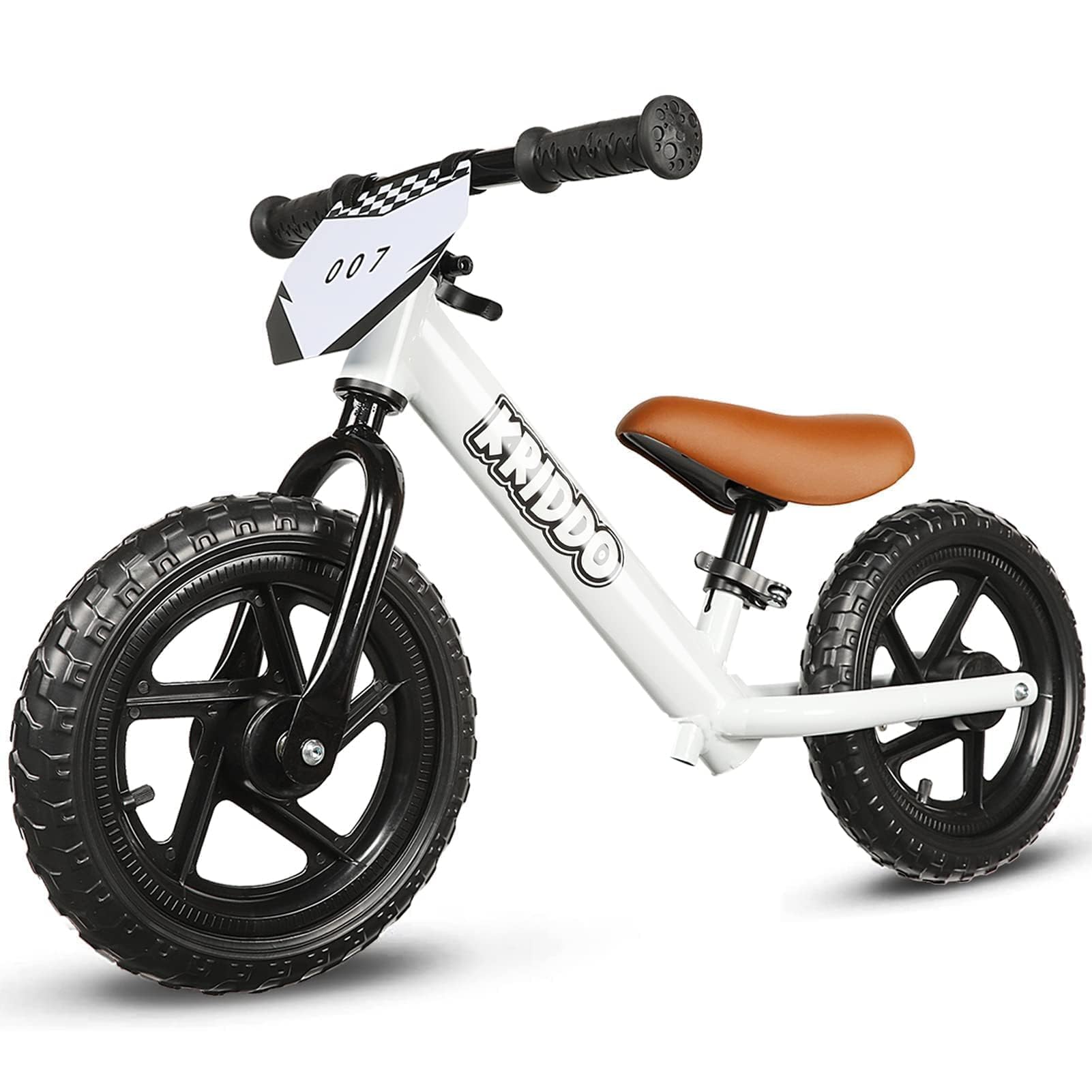
The KRIDDO's 2-to-5-year window and 110-pound capacity give it a longer runway than the 12-inch bikes aimed at first birthdays. The carbon-steel frame weighs 6.6 pounds, the seat and handlebars adjust without tools, and the bike comes with a removable name plate and three sets of stickers. For a gift, that personalization is a nice extra, but the growth range is the real pitch.

We found the 12-inch never-flat tires roll easily on sidewalks and packed grass, and the low frame lets a child straddle it without a top tube in the way. The wide rubber grips and soft PU seat are comfortable for short rides. Assembly is straightforward; just check the seat clamp before the first ride, because a loose clamp lets the seat settle.

The KRIDDO is the pick for a taller or heavier preschooler who still wants a balance bike, and the customizable plate gives it a personality the plain steel bikes lack. The low frame and wide tires suit pavement and smooth paths. The name plate is the detail kids grab first, but the seat height is what parents will adjust most.

Bottom line: We recommend the KRIDDO for families who want a balance bike that stays useful from age two to five, with a 110-pound limit and tool-free growth adjustments.

How We Tested the Best Balance Bikes

Every bike here started as a contender in a field of about 30 models I pulled from manufacturer specs, retailer listings, and parent forums. I filtered first on seat-height range — the low end tells you whether a small 2-year-old can reach the ground, the high end tells you whether the bike survives a growth spurt — then on claimed weight, tire type, replacement-part availability, and price. That left 11 bikes, which we assembled ourselves and rode for six months.

We built each one at the kitchen table using only the tools in the box and timed the process; a couple needed a second set of hands to line up the fork and stem, and one arrived with the steering limiter already set. Every finished bike went on a luggage scale, because a pound matters when the rider weighs 25. Then we dropped the seat to its lowest position and had our smallest tester swing a leg over to see whether she could stand flat-footed or whether the bike tipped under her.

Real riding happened on driveways, a stretch of sidewalk, and a paved park path, including a few wet mornings after rain. I watched whether kids pushed off and lifted their feet to coast, how quickly they were willing to lean into a turn, and which bikes they came back to without being asked. After each session I checked grips, bolts, and headsets for loosening, inspected the paint where the frame had been dropped on concrete, noted whether foam tires slid where rubber held, and asked whether the higher-priced bikes were actually buying air tires and a lower seat or just nicer graphics.

How to Choose Balance Bikes

Fit the seat to the child, not the age label

Measure the child's inseam from crotch to floor in shoes, then compare it with the seat-height range. The Strider 12 Sport covers 11 to 17 inches, which is why it can last from a 1-year-old's first steps to a preschooler's glides; the Retrospec Cub starts at 11 inches but stops at 14.5, so it suits a shorter run. Leave about an inch of growth below the child's inseam.

Age labels are approximate. A tall 2-year-old can fit a bike sold for ages 1 to 4, while a petite 3-year-old may still need the lowest seat. Fit the seat first and treat the age range as a starting point.

Four wheels or two?

A four-wheel baby bike is for a child who is walking but not yet confident on two wheels; the SEREED and WETIFY sit low, have enclosed wheels, and use a steering limiter to keep the front end from jackknifing. Move to a two-wheel balance bike once the child can straddle it, walk it along, and lift both feet for a second.

The two-wheeler teaches the lean-and-glide balance that transfers to a pedal bike; the four-wheeler teaches steering and sitting without asking for balance first. Don't rush the switch just because the child turns two.

Tires decide where the bike feels at home

Foam and EVA tires are maintenance-free and quiet, which makes them the right choice for sidewalks, driveways, and indoor play. They do not have the grip or cushioning of air tires on gravel or grass. The Radio Flyer Air Ride uses 12-inch rubber air tires and is the pick here for mixed terrain, but those tires need pressure checks and can lose air.

Airless puncture-proof tires, like the Retrospec Cub's, sit between the two: no flats, but a firmer ride. Match the tire to the surface the child actually rides, not the surface on the box.

Weight is a child-size specification

A balance bike should be light enough for the child to pick up, push, and steer without help. Most 12-inch bikes here land around 6 to 7 pounds; the baby bikes are closer to 3.5 to 6 pounds, and the Retrospec Cub is a heavier 10 pounds. That extra weight can make a small rider feel more planted, but it also makes the bike harder to handle.

We prioritize a weight the child can manage over the most rugged build, unless the bike will live on rough ground.

Adjustability, assembly, and hand-me-downs

Look for a seat and handlebar that adjust without tools, plus a maximum rider weight that covers the child's likely size. The KRIDDO is rated to 110 pounds and adjusts through a long range; the Strider 12 Sport is lighter and simpler but tops out at 60 pounds. Check the seat clamp and handlebar bolts after the first ride, then periodically.

A bike that fits now but stops growing in a year is not a bargain; one that fits a younger sibling later is.

Frequently Asked Questions

Final Verdict

The Strider 12 Sport is the balance bike we recommend first. Its 11-to-17-inch seat range and 6.7-pound frame cover the longest stretch of early childhood here, and the foam tires keep maintenance low. If your child is still a new walker, the SEREED's four wheels give a steadier start; for gravel and grass, choose the Radio Flyer Air Ride; for a petite toddler who needs the lowest seat, the Retrospec Cub is the fit-first alternative.