Games & Puzzles

Best Toys for Quiet Play of 2026

Quiet toys have a design problem: the ones that make the least noise tend to be the first ones abandoned. A good one has to be absorbing enough to hold a kid through a restaurant wait or a rainy Saturday, and quiet enough that you don't regret bringing it along. The best of them manage that without screens or batteries, and they buy you something genuinely rare — a stretch of calm where everyone in the room is happily occupied and nobody is asking you to fix anything.

I've spent four months with 16 of these, from magnetic tile sets to puzzles to the small, fidgety things that end up living in a coat pocket, mostly on the living room rug but also in the back seat and at a restaurant table. One thing first-time buyers rarely hear: small doesn't automatically mean portable. A set with a hundred loose pieces and no lid becomes a liability the moment it leaves the house, and magnets — the quietest, most engrossing thing going — are only as good as their hold. The picks below are the ones that survived all of it.

#1

Melissa & Doug Water WOW!
Melissa & Doug Water WOW!

Toddler travel

Doodle Score 9.6/10
Check Price

Worth Noting

  • Pages scuff with heavy scrubbing
  • Four pages is a short book
Included
Refillable water pen
Dimensions
6.1 x 10.04 x 1.18 inches
Reusable Pages
4
Recommended Age
3+ years
Read the full review

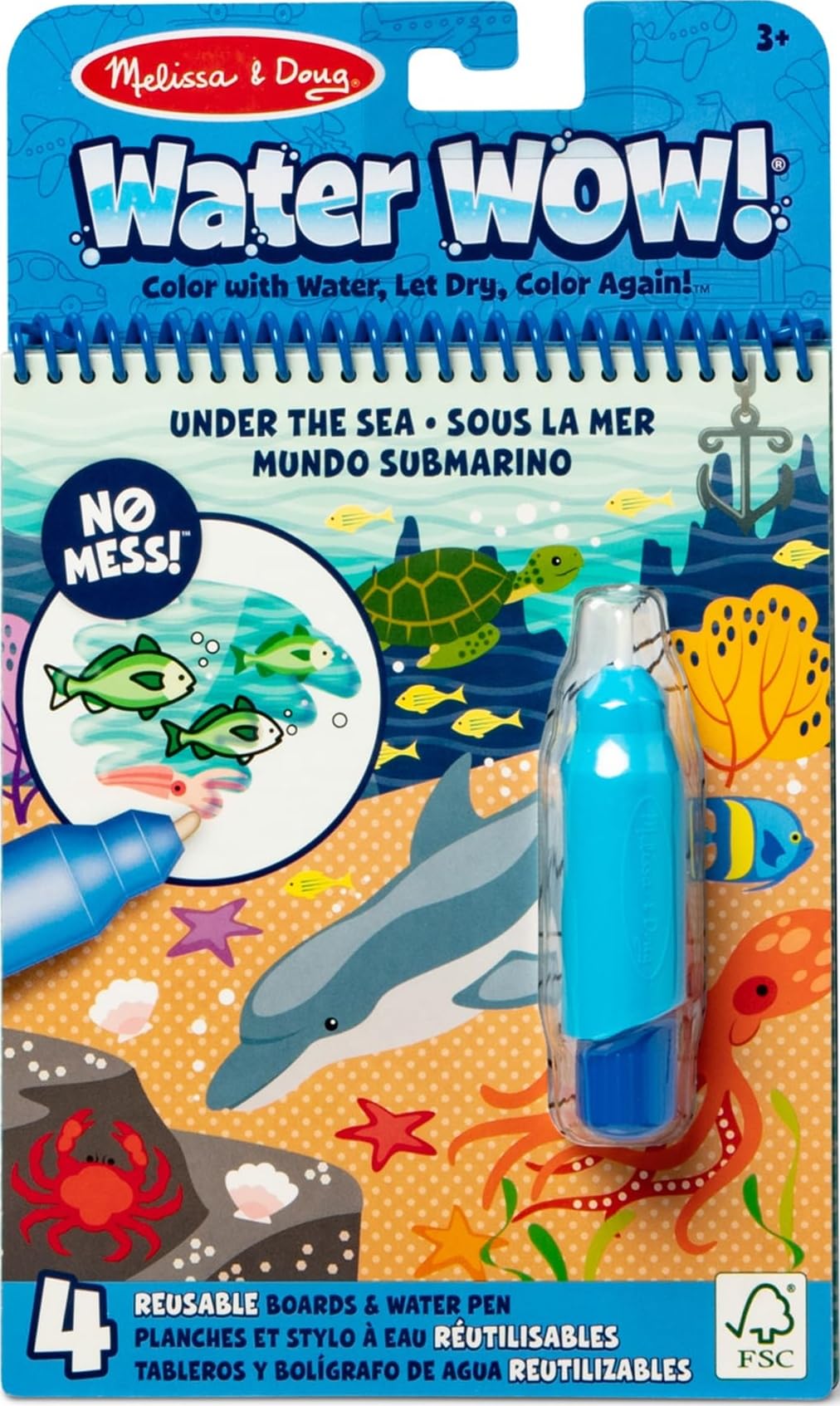
The pen is the whole system. Unscrew the cap, fill it from a tap or a water bottle, screw it back, and the four ocean pages come up in color wherever the nib passes. Let a page dry and it goes blank again, which is the trick that lets one thin book cover an entire restaurant meal.

Filling it is the routine nobody warns you about. A pen topped up at home covers a good stretch of drawing, but once it runs dry the activity is finished until you find water, and a car park is not a tap. We started filling ours before leaving the house, and it now goes in the bag next to the wipes. The pen stores in the book's spine, and the pad is 6.1 by 10 inches and light enough to forget you packed it.

For three- and four-year-olds this is the mess-free pick we recommend with the least hesitation. There is no ink, no paint, and no cleanup past wiping the pen cap, and the pages are stiff enough to draw on in a lap — which matters more than it sounds when the alternative is balancing a tray on a plane. Older children will outgrow the pictures before they outgrow the format.

Bottom line: The one we hand a preschooler before a flight: water only, no mess, and four pages that blank themselves once they dry.

#2

Brain Flakes 500

Brain Flakes 500

Creative building

Doodle Score 9.6/10
Check Price

Worth Noting

  • Pieces are stiff to snap at first
Colors
12
Pieces
500
Storage
Yellow-cap jar
Recommended Age
3+
Read the full review

Five hundred interlocking discs arrive in a yellow-lidded jar. Tip them into a shallow tray before the first build and the set becomes far easier to live with: you can see the colors, and cleanup turns into a sweep instead of a hunt across the rug.

The building is different from blocks in a way that matters for quiet play. Every piece is the same disc, so there are no studs to align and no wrong way round; the joints flex, which means a half-finished structure bends when it gets knocked rather than exploding across the floor. Fewer collapses, fewer tears, less noise.

The idea booklet covers a flower, a rainbow ball and a tree, and after that children mostly invent. What we found is that the flat, symmetrical builds come together quickly while the tall ones need a base laid down first — the same lesson any construction toy teaches, just without a sheet of instructions spelling it out.

Volume and hush together are what earn it a place: 500 pieces in 12 colors mean three children can build at one table without anyone running out of a color, and the sound of the whole thing is a soft click. If your shelf is full of activities that get finished once, this is the one that comes back out.

Bottom line: Buy it for the volume: 500 discs, 12 colors, and a sound no louder than a click, which is what makes it the building set we keep out.

#3

Melissa & Doug 100 Wooden Blocks

Melissa & Doug 100 Wooden Blocks

Open-ended building

Doodle Score 9.6/10
Check Price

Worth Noting

  • Loud crash when a tower comes down
Colors
4
Pieces
100
Shapes
9
Recommended Age
2+ years
Read the full review

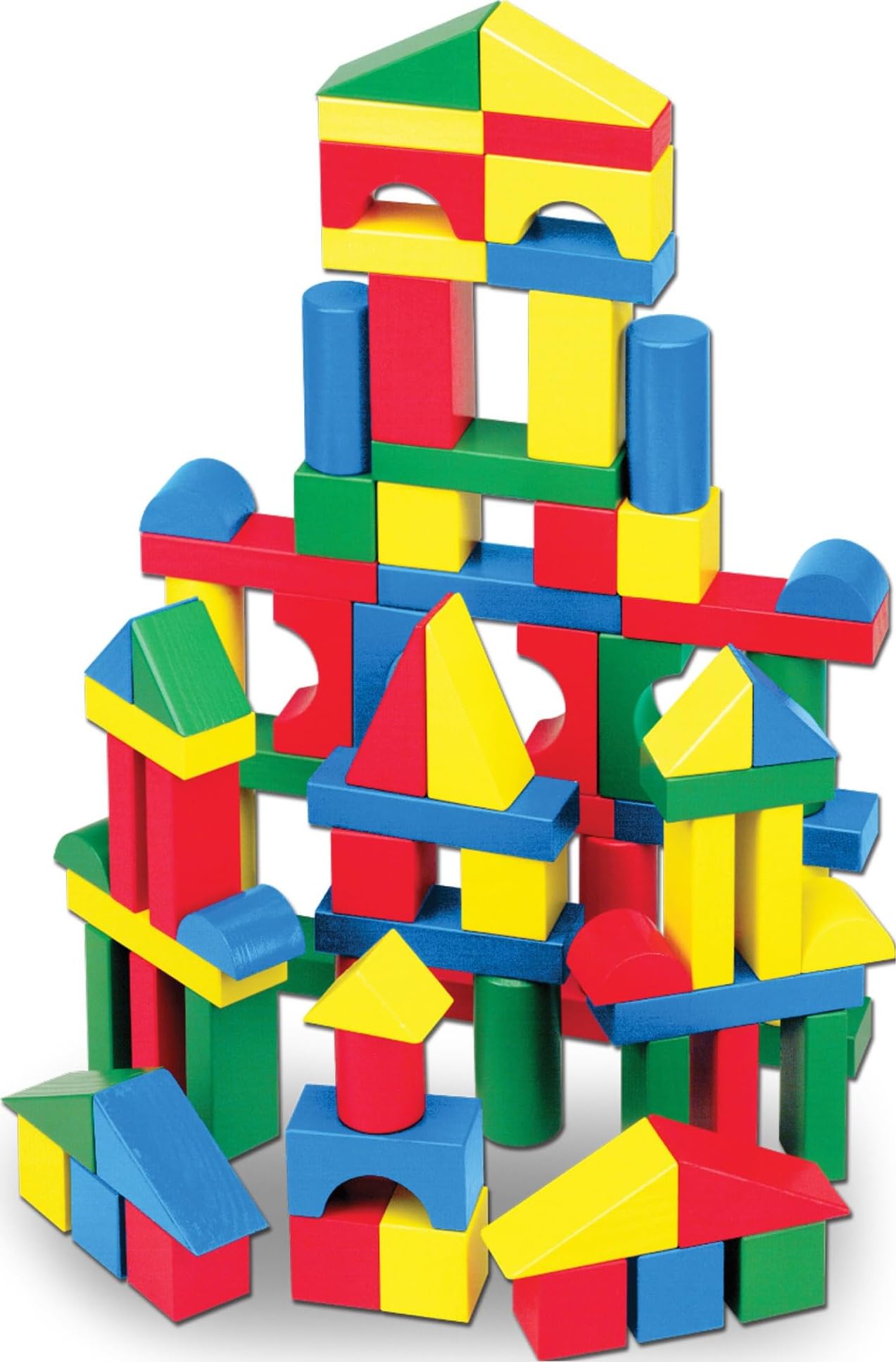
A hundred blocks in nine shapes is the most old-fashioned thing in this roundup, and among these picks it is the one that gets rebuilt most often. The pieces start as towers and end up as roads, castle walls, shop counters and birthday cake — a second life that the activity pads never get.

The finish is what we appreciate most. The wood is smooth, the edges are rounded, and four colors across nine shapes give two children enough variety to build side by side without one of them hoarding the long pieces. The cardboard box it ships in is sturdy enough to be the storage rather than the thing you throw out, and at 8.86 by 12.6 by 3.74 inches it fits on a shelf.

Building with them is nearly silent — a click of wood on wood — and the pieces are light enough in the hand that a dropped block is a clatter rather than a bang. What the set asks for is floor space and a grown-up who does not mind the aftermath.

It is also the least breakable thing here: solid wood, no batteries, no coating to scratch, no magnets to lose, and a stated age of two and up that matches what the pieces will take. If you want one toy that survives three children and outlasts the fad, this is the one.

Bottom line: The set to buy if you want one toy that outlasts everything else here: 100 solid wood blocks, a box that stores them, and a stated age of two and up.

#4

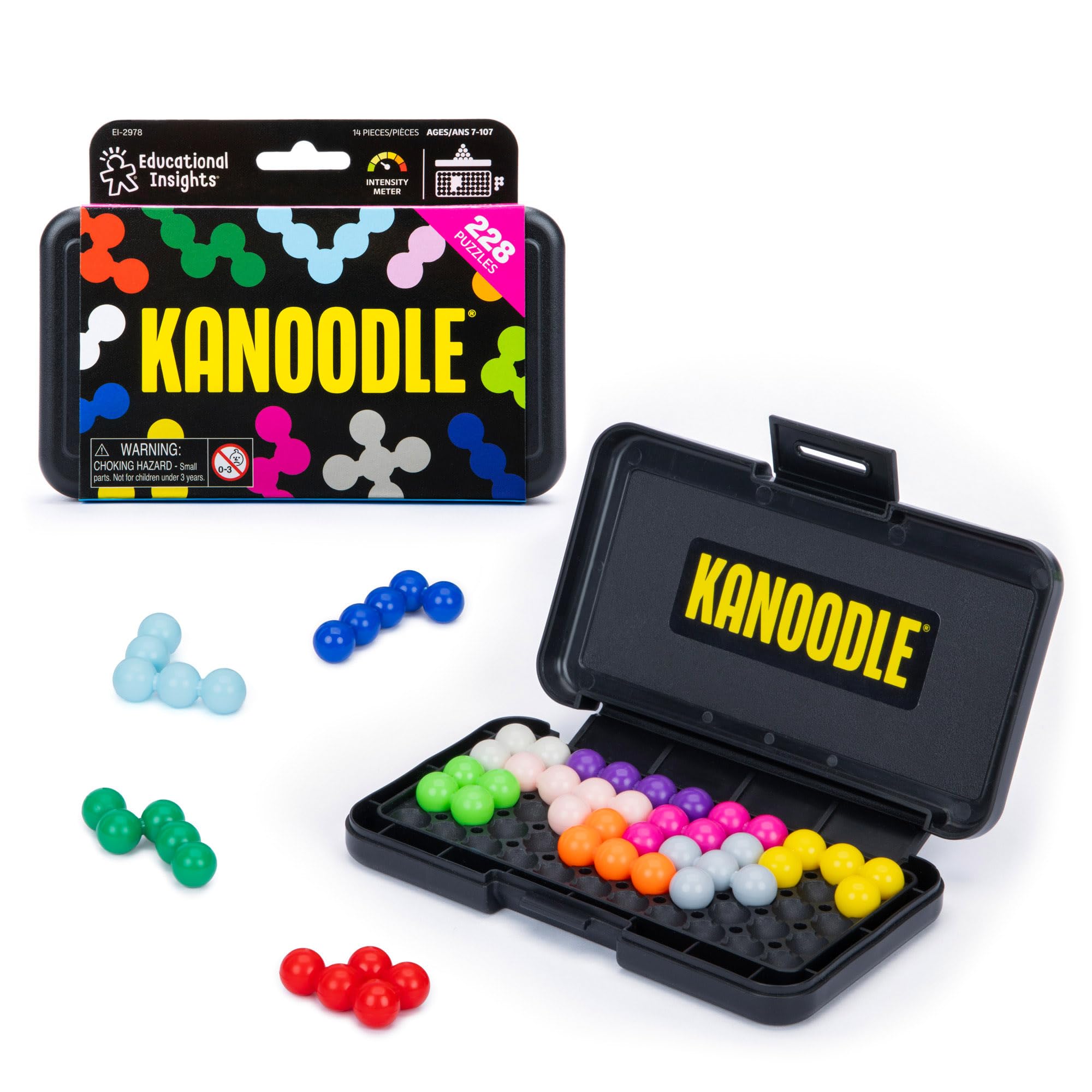
Educational Insights Kanoodle

Educational Insights Kanoodle

Solo puzzle play

Doodle Score 9.4/10
Check Price

Worth Noting

  • Single player only
Weight
3.2 oz
Puzzle Pieces
12
Recommended Age
7 years and up
Puzzle Challenges
228
Read the full review

Two hundred and twenty-eight puzzles fit in a case the size of a paperback, and that ratio is why the Kanoodle is the first thing we put in a bag for a flight. Twelve colored pieces, a case that doubles as the board, and a guide that shows a starting arrangement to fill in — first flat, then in three dimensions, where the pieces have to stack as well as fit.

What sold us is how completely it absorbs a child with no input from us. The loop of try, rotate, fail, retry runs silently, and that is what quiet play actually means — not a toy that is quiet, but a child who is absorbed. It is also the widest age spread here: the puzzles run from beginner to expert, and adults in the house end up taking it over after bedtime.

The difficulty ramp deserves a word. The opening pages of the book are easy enough that a sharp nine-year-old will clear them in an evening, and the seven-and-up rating is really about the 3D challenges rather than those first 2D ones. With a five- or six-year-old, plan on working through the early puzzles together — that turns out to be part of the appeal rather than a chore.

Everything closes up with the pieces inside, and at 3.2 ounces it disappears into a coat pocket or a seat-back pouch. The case matters more than it sounds: a puzzle with its pieces loose in a bag is a puzzle you spend the first ten minutes of dinner reassembling before anyone can play.

Bottom line: If your child is seven or older, this is the quiet-play toy we point to first: 228 puzzles, twelve pieces, and no screen, no noise, no sprawl.

#5

Bluey Aqua Art

Bluey Aqua Art

Budget water pad

Doodle Score 9.4/10
Check Price

Worth Noting

  • Pages scuff with hard use
Pages
8 (4 art, 4 story)
Included
Refillable water brush pen
Pad Size
6 x 7.5 inches
Read the full review

This is the lowest-priced way into water-reveal play in this group, and the Bluey cover does a lot of the persuading. You get a spiral-bound pad with eight pages — four art sheets and four story sheets — plus a refillable brush pen. At 6 by 7.5 inches it is smaller than the Melissa & Doug pad, so it is a one-child, one-lap activity rather than a shared one.

We used it alongside the Melissa & Doug pad and the difference is the pen, not the paper. The Bluey brush has a finer tip and gives up water more slowly, so small hands press and re-wet before the colors come up strongly; the fix is to soak the brush head properly the first time rather than half-fill it. What you get in exchange is twice the pages and a character a three-year-old reaches for unprompted — which, in the business of keeping a child quiet, is not a small thing.

Reuse works exactly as it should: the colors fade back to line art as the page dries, and the story sheets give a child something to narrate once the coloring is finished. Two of these in a bag cover a longer trip than one, and the pad is thin enough that the second one costs almost no space.

Bottom line: The budget water pad we hand over when a Bluey fan needs occupying: eight pages, a fine brush, and nothing to clean up.

#6

Janod MagnetiBook

Janod MagnetiBook

Tidy travel set

Doodle Score 9.4/10
Check Price

Worth Noting

  • Magnets let pieces slide when bumped
  • Design cards bend easily
Format
Book-shaped storage case
Contents
30 magnetic tiles, 10 cards
Dimensions
7.48 x 1.58 x 10.24 inches
Recommended Age
3 to 8 years
Read the full review

This is the most expensive pick here, and the case is what you are buying. A book-shaped box opens flat, holds 30 magnetic animal pieces and 10 design cards, and closes with everything inside — it packs like a book and stores on a shelf without a tub of loose parts rattling around.

The play is mix-and-match. A card suggests an animal, the child assembles it from magnetic-backed pieces, and nothing stops a dog turning up with a duck's head; the silly combinations are where the set earns its keep. We liked that the cards are only suggestions, because a child who follows them exactly will work through the whole set in an afternoon.

Where it sits is the honest question. Stated for 3 to 8, it is realistically a 3-to-5 activity; older children fiddle with it rather than build a project. For a four-year-old on a plane or in a waiting room, though, the self-contained case is worth the premium over a loose set of magnets — this is the version we reach for when the bag is already full.

Bottom line: For a gentle three- to five-year-old on the move, the neatest thing here: 30 magnetic pieces and 10 cards that close into their own case.

#7

HABA Town Maze

HABA Town Maze

Ages 2 to 5

Doodle Score 9.2/10
Check Price

Worth Noting

  • Back panel can peel with heavy handling
  • 1.2 pounds is a lot for a small bag
Weight
1.2 lb
Players
1
Dimensions
10 x 8.75 x 0.5 inches
Recommended Age
2 to 5 years
Read the full review

Nothing comes off this board. The magnetic wand is tethered to the frame, the colored balls run under a sealed clear cover, and the whole thing is one wooden slab measuring 10 by 8.75 inches — which makes it the only pick here a two-year-old can use in a car seat without you counting pieces afterward. That single design decision is worth more than any feature list at this age.

The job is to walk each ball along its track to the matching destination with the wand. The balls move slowly enough for a toddler to track them, which is what makes the toy work at two: hold the wand flat, keep contact, steer, and a ball arrives where it should. There is a real progression here, from batting at the balls to steering one to planning a route around the tangle in the middle.

Magnet grip is the part to understand before buying. The wand needs to sit fairly flat against the surface; tip it and the ball drops back to the start, which frustrates a two-year-old still working out the hold and bothers a four-year-old not at all. The tracks vary in difficulty too, so the stated two-to-five range covers a wide spread of actual ability rather than one narrow stage.

Bottom line: Our pick for a two- or three-year-old: one sealed board, a tethered wand, and nothing to lose between the car seat and the table.

#8

Genialba LCD Writing Tablet

Genialba LCD Writing Tablet

Siblings drawing

Doodle Score 9.2/10
Check Price

Worth Noting

  • Faint in low light
  • Screen can crack with rough handling
Pack
2 (pink and blue)
Screen
8.5 inches
Weight
5.29 oz
Battery
Replaceable, rated 6 months
Read the full review

Two tablets in one box is the argument, and it is a good one: one pink, one blue, so siblings stop negotiating over a single screen. We think that is the reason to pick this over a paper pad — not the drawing, which is limited, but the arithmetic of two children and one quiet restaurant table.

What the screen does is narrower than it looks in the photographs. Lines come out in a single color band that shifts across the surface rather than in colors a child chooses, and pressing harder changes a line's thickness rather than its shade. One button wipes it all clean, which is the part children find irresistible and the reason it gets used in bursts all evening.

The body is thin plastic and light enough to forget in a bag, and the stylus is tethered by a stretchy band so it stays with the frame — a small detail that decides whether the thing is still usable in three months. As a spare for the second child, who usually inherits nothing, the two-pack makes more sense than one better tablet.

Bottom line: Buy it for the pair, not the picture quality: two thin drawing tablets that keep siblings scribbling and wiping without a scrap of paper.

How We Tested 16 Quiet-Play Toys

We built the shortlist from catalogs, parent forums, and hundreds of customer reviews, then filtered hard on piece count, age range, price, and whether the set actually packs into something with a lid or a case. Sixteen toys made the cut, and each one went through the same four months of use.

Most of that time happened on the living room rug during the after-school lull, but every toy also traveled: a three-hour drive, a restaurant booth while we waited on food, and a folding table at a family gathering. We ran each session until a kid walked away on their own, noted how long that took, and then watched whether they came back to it later in the week without being asked.

Magnet strength got its own check. We built a tower, then hung pieces off the side until the joints gave, counting how many would hold before the whole thing sagged — a set that can't survive a tower collapse gets rebuilt once and then ignored. Durability came from a messier process: drops from table height onto tile, a couple of deliberate stomps, and a week shoved in a backpack. We also weighed and measured every set once packed, because a toy labeled portable and a toy that actually fits in a tote bag are two different things. Value sorted itself out by the fourth week, when it was clear which sets were still being rebuilt into new shapes and which had settled to the bottom of the bin.

How to Choose Toys for Quiet Play

Start with the age, then the challenge

A toy that is too easy is a five-minute distraction and one that is too hard is a fight. The number on the box is a safety floor first, so treat it as a minimum and then ask where independent play actually starts. The Kanoodle is rated seven and up, and its earliest 2D puzzles are well within a five-year-old's reach with an adult sitting alongside; the difficulty only becomes real in the 3D section. At the other end, the HABA maze is stated for two, and a two-year-old will need a few sessions before holding the wand flat makes sense.

Buy for the child in front of you rather than the one arriving next Christmas. A set that is slightly too advanced and used with you beats one that is outgrown by February.

Count the pieces before you decide where it travels

Loose parts decide where a toy can go. Five hundred discs are a table toy; a sealed board with a tethered wand is a car-seat toy. The best containment designs are the boring ones — a case that shuts with every piece inside, a magnetic backing that keeps tiles on the board, a single wooden panel with nothing to detach. Before buying anything for a journey, picture the floor of the car and the gap between the seats.

The trap is the phrase travel toy, which usually means it fits in a bag rather than that it fits an airplane tray table. Pack for the lap, because that is the surface most children end up using anyway, and favor pads and one-piece boards over anything that needs to lie flat.

Know where the noise comes from

Almost everything in this category is silent while it is being used; the noise comes from the payoff. A water pad makes none at all, a puzzle piece makes a click, and a hundred wooden blocks make a crash at the end of every build. None of that is a defect, and it is the thing to plan around: for a shared hotel room at bedtime, choose the pad; for a wet afternoon when nobody is sleeping, blocks and disc sets buy you far more minutes.

Listening to how a toy ends tells you more than how it starts. The M&D blocks and the Brain Flakes set are quiet for the entire build and loud only in the final second, which is a very different proposition from a toy that beeps.

Judge replay value, not the first ten minutes

Every toy here works the first time. The question is the fourth time, and the design answers it before you buy: a water pad is limited by its page count, a single-player puzzle by the size of its puzzle book, and an open-ended builder by nothing at all. Our rule is to buy the one with the longest second life for the shelf space it takes, rather than the one that looks best unwrapped.

That is why a puzzle book with 228 challenges and a 500-piece construction set sit above prettier one-and-done kits in this list. Novelty fades fastest in toys with a fixed set of pictures.

Frequently Asked Questions

Final Verdict

The Kanoodle is the pick we recommend first, on one condition: the child is around seven or older. It is silent, it fits in a coat pocket, and it keeps giving because the puzzle book gets harder as the solver does.

Shop for a toddler and the answer changes. The Water WOW pad covers three to five with nothing but water, and the HABA maze is the right call at two, when a tethered wand and a sealed board beat anything with parts. Between those three, most families have the quiet-play shelf covered.