Dolls & Figures

Best Paper Dolls for Kids of 2026

A sheet of paper dolls looks simple until you sit down with a child and realize the whole afternoon depends on it. The tabs have to hold, the outfits have to survive being peeled off and reapplied, and the artwork has to be interesting enough that the set doesn’t end up under the couch by dinner. I grew up cutting dolls from the back of activity books, and I judge a set by whether it survives real play, not a careful once-over. The right one turns a rainy afternoon or a birthday gift into hours of storytelling; the wrong one leaves you with torn tabs and a bored kid.

Over three months, my team and I tested 16 paper doll sets with preschoolers through early elementary kids, noting how easily the pieces cut, how well the tabs stick, and how much pretend play each set sparked. We also handed several to families as gifts and watched which boxes came back out. Value mattered, but so did content: a set with three outfits gets old fast. The picks earned their place.

#1

Little House Paper Dolls

Little House Paper Dolls

First paper dolls

Doodle Score 9.6/10
Check Price

Worth Noting

  • Outfits and props need extensive cutting
Dimensions
9.25 x 0.25 x 11.25 inches
Reading Age
4–7 years
Print Length
24 pages
Read the full review

The dolls punch out cleanly, and the two-sided backdrop — the inside of the cabin on one side, the yard on the other — is what turns a stack of printed paper into a place. We set it up on the table and the small props did the rest: a cradle for baby Carrie, a kitchen table, a loaf of bread, a violin case. Of everything we looked at, this is the set that most convincingly stops being a book and starts being a scene.

HarperCollins lists it for ages four to seven, and the heavy paper is the reason it survives that age group. The figures pop out; almost everything else, from the outfits to the tiny accessories, needs scissors, and the outlines do not leave much margin. Doing all of it in one sitting is a chore — do it while someone reads aloud, and laminate the sheets before cutting if you want the tabs to hold up through a year of dressing.

Twenty-four pages does not sound like much until you see how densely they are used. The outfits are modest and period-correct, the drawings are detailed enough that a child will notice the squirrel in the yard, and the props come from scenes in the book rather than from a generic dress-up kit. That is the trade: the best of these sets as a companion to a read-aloud, and a quieter toy for a child who has never met Laura.

Bottom line: This is the paper doll book we recommend first: sturdy punch-out dolls, a two-sided cabin backdrop, and enough props to fill a Big Woods afternoon.
#2

Madeline Paper Dolls

Madeline Paper Dolls

Younger readers

Doodle Score 9.4/10
Check Price

Worth Noting

  • Twelve pages of outfits go quickly
Dimensions
9.06 x 0.08 x 12.05 inches
Reading Age
5–8 years
Print Length
12 pages
Read the full review

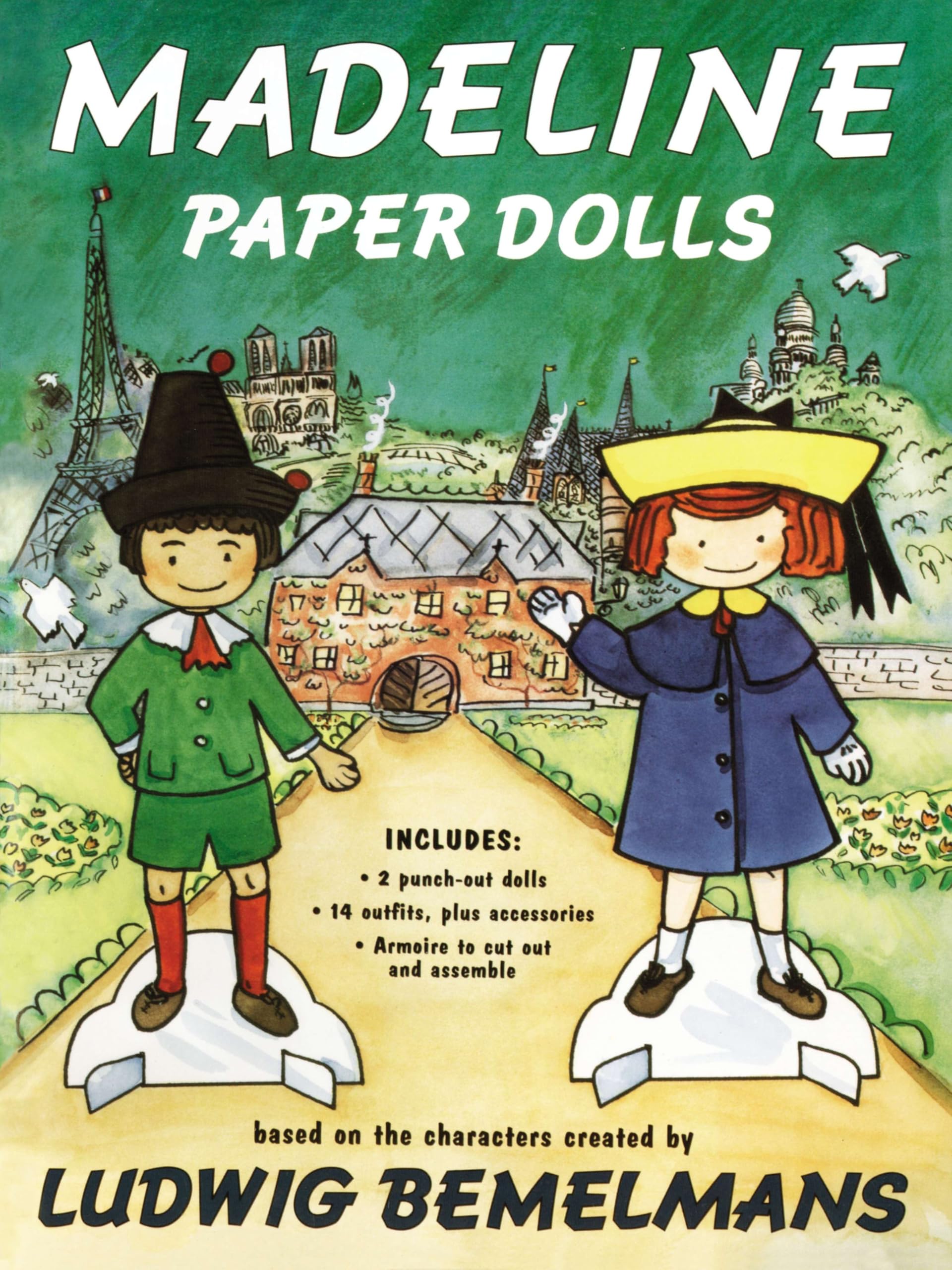
Five to eight is the range this set is published for, and it is the range where paper dolls start working: old enough to manage a tab, young enough to want the same story again tomorrow. Twelve pages, thin enough to slide into a bookshelf gap, with the outfits held on by folding tabs rather than static cling or adhesive — a nice, unglamorous, traditional paper doll.

It is the right first paper doll book for a Madeline reader. Short enough that the cutting does not turn into a project — twelve pages against the thirty-two of the Little Women set — and small enough not to overwhelm a child who has never dressed a paper doll before. An adult still holds the scissors; there is no way around that part, but it is a single sitting rather than an evening.

The tabs are the thing to know about. They slip on a doll that gets undressed and redressed a dozen times, and a younger child loses patience before the third outfit. Folding the tab firmly around the shoulder before sliding an outfit on helps more than you might expect, and so does dressing one doll at a time instead of laying out the entire wardrobe at once.

Bottom line: Our pick for a Madeline reader in the five-to-eight range: twelve pages of outfits, a short cutting session, and tabs that need a firm fold.

#3

Tiger Tribe Vintage Kit

Tiger Tribe Vintage Kit

Coloring and design

Doodle Score 9.2/10
Check Price

Worth Noting

  • Tabs can tear with repeated dressing
Book
48 spiral-bound pages
Dolls
2 with stands
Sticker Sheets
4
Colored Pencils
12
Read the full review

The case is the feature a listing photo never sells: a book-shaped box with compartments, a magnetic closure, and room for the twelve colored pencils, the two dolls, and every outfit once it is cut. In a category where loose pieces end up in a shoebox by the second week, that counts for a lot. Inside there is a 48-page spiral-bound book, four sticker sheets, well over a hundred printed outfits, and a second set drawn in outline for coloring.

We think this is the strongest kit here for a child who wants to design the outfit rather than just wear it. The color-in clothes sit alongside the printed ones, so a six-year-old can make a dress that matches a mood and a nine-year-old can spend an afternoon on a single ball gown. The cutting is the price of admission: between the printed outfits, the color-in versions, and the stickers, this is the longest session in the group, and the outlines are detailed by design.

Two small things we appreciated. The spiral binding lets the book lie flat while a child colors, which matters more than it sounds when a pencil case is competing for the table. And the outfits are colorful enough that the color-in versions do not look like the poor relation — the printed wardrobe is genuinely attractive on its own, so the coloring is a bonus rather than a filler activity.

Bottom line: The kit we reach for when a child would rather color than cut: two dolls, a compartment box that keeps the pieces together, and outfits to color and wear.

#4

Little Women Paper Dolls

Little Women Paper Dolls

Older kids

Doodle Score 9.2/10
Check Price

Worth Noting

  • Detailed outfits take an adult's patience
Series
Dover Paper Dolls
Dimensions
8.27 x 0.2 x 11.02 inches
Reading Age
10 years and up
Print Length
32 pages
Read the full review

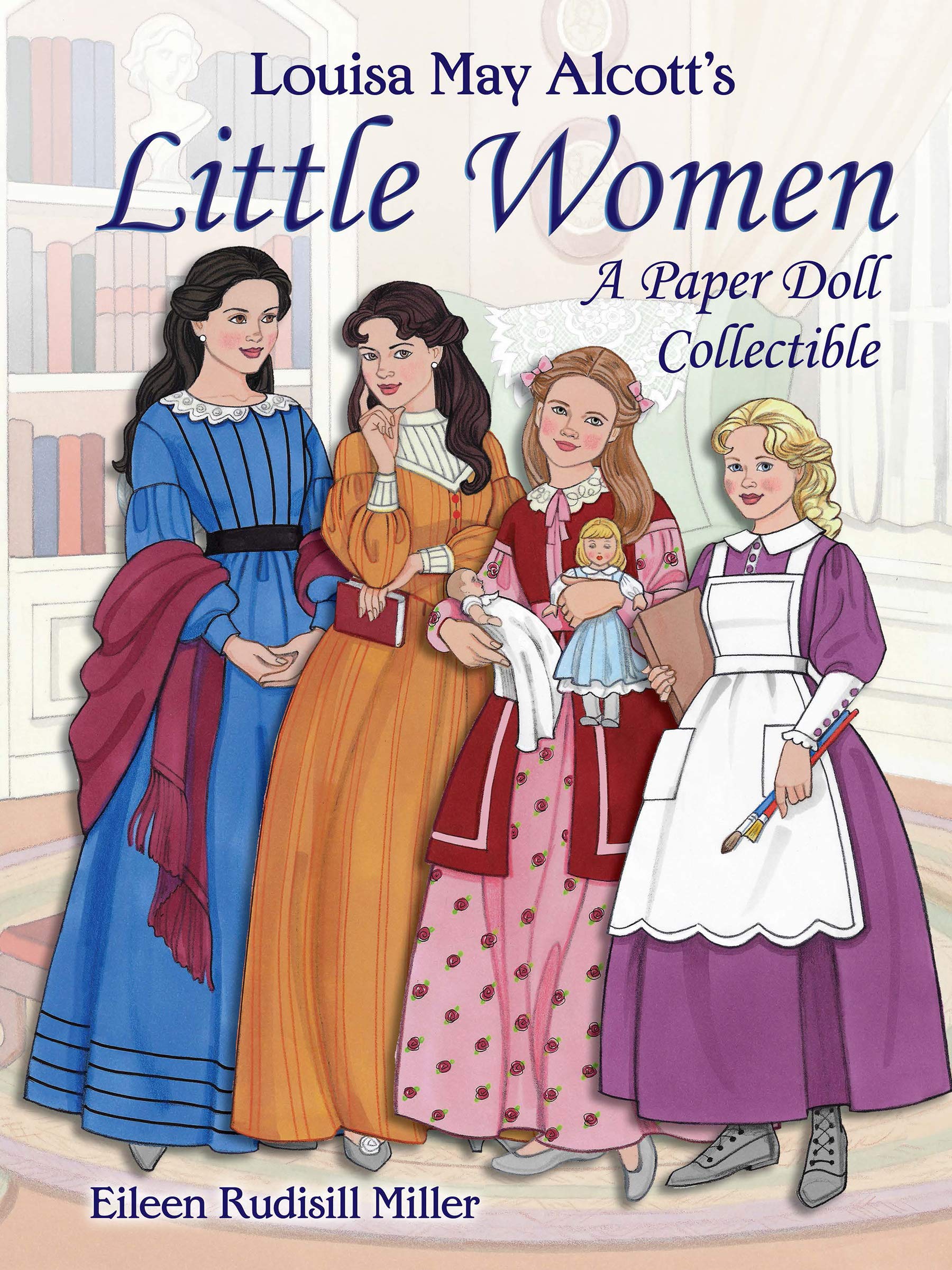
This is the set that asks the most of whoever holds the scissors. Thirty-two pages of outfits, drawn at the scale of the March sisters, with the bonnets, shawls and trim that period dress implies, and the outfits come free of the sheet only by hand. If paper doll preparation in your house is usually a ten-minute job, this one is not that.

What you get for it is the most detailed wardrobe here. Four sisters, their dresses, and the small accessories that make period dressing convincing, spread over the largest page count in this group. Dover's paper is substantial and the drawings hold up to a close look, which is not something we can say for every set at this size.

Dover prints it for ages ten and up, and that is honest. A seven-year-old can play with it once an adult has done the cutting, but the outfits are drawn for hands that can manage a narrow tab, and much of the pleasure is in details a younger child will not notice. This is a set for a child who already knows the story and wants to dress it.

For a ten-year-old who has read the book, or an adult keeping a small collection, this is the one here we recommend without a caveat beyond the scissors. It is also the set most likely to be kept rather than used up — the drawings are handsome enough that the finished dolls earn a place on a shelf instead of going back in the drawer.

Bottom line: We recommend it for an older reader or a collector: thirty-two pages of March sisters in period dress, detailed enough to reward patient cutting.

#5

Anne of Green Gables Paper Dolls

Anne of Green Gables Paper Dolls

Book lovers

Doodle Score 9.2/10
Check Price

Worth Noting

  • Eight pages of outfits run out fast
Dimensions
13.58 x 9.92 x 0.71 inches
Reading Age
8–12 years
Print Length
8 pages
Read the full review

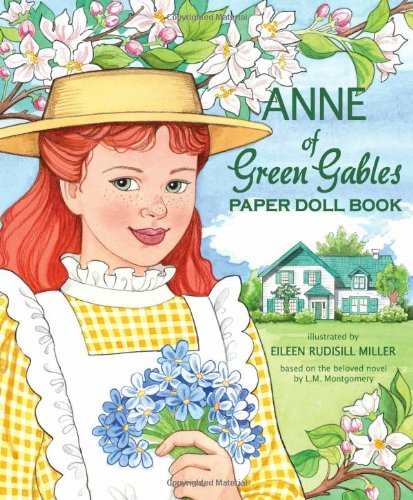
Anne and Diana are the reason to buy this one. Eight pages from Paper Studio Press, published for readers of eight to twelve, with the two friends in period dress and a wardrobe that belongs to the world of the novels rather than to a generic dress-up theme. If a child has just finished the book, this lands as an extension of it rather than as merchandise.

Eight pages also means the cutting is manageable. Set it beside the Little House collection or the Little Women set and the prep is a fraction of the work — there is simply less to cut. What you give up is wardrobe. There are fewer outfits here than in any other set we recommend, so a child who wants to change a doll ten times in an afternoon will run out of options.

As a gift for a girl who has read the novel, or as a small extra slipped in alongside a copy of it, this is the one we point to. It is a companion to the story more than a toy in its own right, and for the right child that is exactly the point. For a household that wants a big shared wardrobe and years of play, one of the larger books is the better buy.

Bottom line: We like it for an Anne reader in the eight-to-twelve range: Anne and Diana in period dress, though eight pages of outfits run out faster than the stories do.

#6

eeBoo Musician and Artist

eeBoo Musician and Artist

Repeat, mess-free play

Doodle Score 9.0/10
Check Price

Worth Noting

  • Only two dolls in the set
  • Smaller wardrobe than the cut-out kits
Dolls
2 with stands
Clothing
Reusable electrostatic vinyl
Age Range
5 years and up
Doll Height
7.75 inches
Read the full review

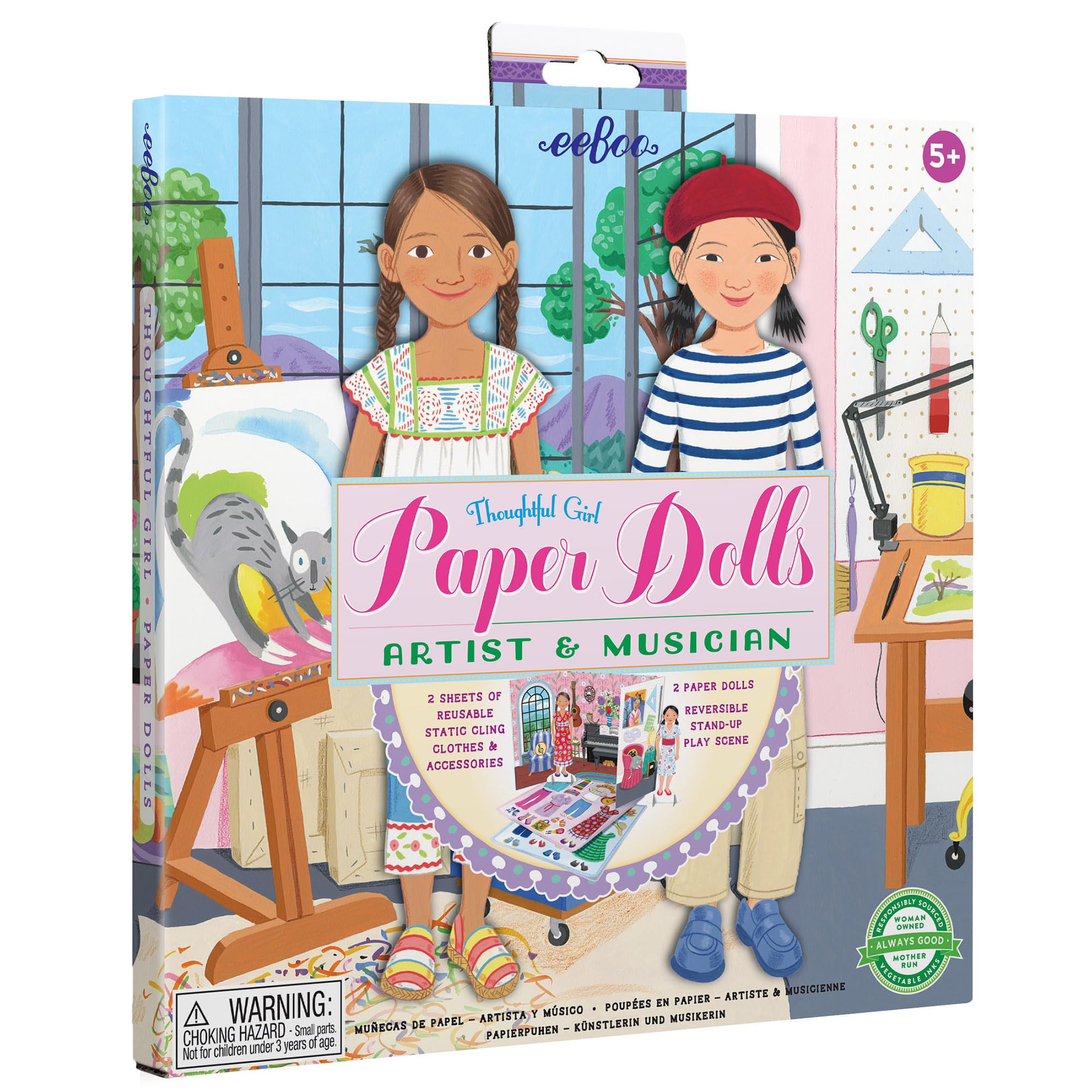
Every other set on this list begins with scissors. This one does not. The outfits are printed on electrostatic vinyl, and they press onto the doll and peel away again with a fingernail. Two dolls, 7.75 inches tall, on heavy board with stands; a foldable scene; a wardrobe of outfits for a musician and an artist. It is made for ages five and up from FSC-certified paper and vegetable-based inks, which is the kind of detail that matters more to some households than others.

Static cling plays differently from paper tabs. The outfits hold while a child dresses and re-dresses, there is no tab to fold or tear, and the board dolls stand up in their stands so both hands are free. The habit worth building is flat storage: press the sheets back onto their backing or into a folder, because vinyl that gets crumpled into a bag is vinyl that stops clinging. The dolls themselves are the sturdiest in this group, and the printed scene gives the set somewhere to live on a table.

That trade — a premium over the books here, a smaller wardrobe than the Tiger Tribe kit, no cutting at all — is exactly why this is our pick for repeat play and for trips. A five-year-old can work it alone in the back seat and a parent never has to be the wardrobe department. The two characters are a musician and an artist rather than princesses, which is worth knowing if your child has firm opinions about that sort of thing.

Bottom line: Buy this if you want paper dolls with no scissors and no parent required: the vinyl outfits press on and peel off, which makes it our pick for repeat play.

#7

Barbie Fabric Fashions

Barbie Fabric Fashions

Barbie fans

Doodle Score 8.6/10
Check Price

Worth Noting

  • Five permanent markers need supervision
Dolls
4 with stands
Markers
5 permanent
Age Range
3 years and up
Fabric Outfits
2 sheets
Read the full review

Four paper dolls, two sheets of fabric outfits that peel and stick, five markers, ribbons and gems: this is the Barbie set that behaves more like a design studio than a dress-up book. We like it best for the child who wants to make the outfit — coloring the fabric, peeling it off the sheet, pressing it onto a doll, then adding a ribbon trim — rather than the one who just wants to change a dress.

The fabric is the point. It has a bit of give and a matte surface that takes marker differently from printed paper, and the outfits are adhesive and interchangeable across all four dolls, so a child can restyle without hunting for the one doll a particular dress was printed for. The four characters are styled artsy, casual, sporty and party, which covers most requests for a specific Barbie look.

The package doubles as the storage case, and with this many loose pieces that is not a marketing line — it is the difference between a set that gets used again and a bag of fabric scraps. What it asks in return is a table covering and an adult nearby for the markers, since five permanent pens and a paper backdrop are a combination that rewards supervision.

Bottom line: For a Barbie household that wants a design session rather than another dress-up book, this is the set we hand over: four dolls, peel-and-stick fabric, markers and ribbons.

How We Tested the Best Paper Dolls

We started by gathering paper doll sets that were widely available, clearly labeled by age, and sold at a range of prices—then narrowed the field to 16 sets that represented different paper weights, tab styles, and illustration formats. Over three months, my team and I put them through ordinary play rather than a single careful inspection: kitchen-table sessions on rainy Saturdays, after-school quiet time, and a few birthday gift drop-offs where we watched children open the sets without an adult setting the stage.

Cutting was the first test. Adults and kids used blunt child scissors on each sheet, and we noted whether the outlines were clear, whether small pieces tore at the corners, and whether the dolls and outfits came free without ragged edges. We also paid attention to age fit—some sets looked charming but required precision a 4-year-old couldn't manage, while others left older kids bored by simple shapes.

Once cut, every doll was dressed and undressed repeatedly across several play sessions. We watched whether the tabs held through normal handling, whether they lost tack after a few changes, and whether the paper creased or tore at the shoulders and waists. Each set was packed back into a bag or envelope between sessions, then checked for bent corners and loose pieces.

We rated enjoyment by how long kids stayed engaged and how often they returned to a set without prompting. Content mattered too: we counted outfits, looked for mix-and-match variety, and noted whether the artwork gave kids enough story to build on. For gift appeal, we watched which sets drew other children in and which felt flat once the wrapping came off. Value came down to paper weight, piece count, and whether the set survived three months of use.

How to Choose Paper Dolls for Kids

Decide who does the cutting before you buy

Nearly every set here arrives as flat sheets. The dolls in the Little House book punch out, and a few kits include die-cut stands, but the clothes, tabs, and accessories almost always need scissors, and the outlines are tight because the outfits are drawn to scale. A 24-page book is an evening of work; a 32-page one is longer; the 12-page Madeline set is the shortest job in this group.

The trap is the phrase punch-out. It usually applies to the figures, not the outfits, so a set advertised as punch-out can still hand you an hour of cutting. If the child is under six, plan to prep the whole thing yourself and present it finished.

Understand how the outfits attach

Paper dolls use one of three systems, and the choice matters more than the artwork. Folding tabs are the classic method: authentic, cheap, and inclined to slip off a doll that is dressed a dozen times. Static vinyl, as on the eeBoo set, presses on and peels off with no tabs to tear, which is why it suits independent play. Adhesive fabric, as on the Barbie set, gives a different surface and a more designed result, but it rewards a child who wants to build an outfit rather than swap one.

Match the system to the child. A five-year-old playing alone does better with vinyl; a nine-year-old who likes the ritual of tabs gets more from paper.

Weigh the wardrobe against the mess

A kit with 130 outfits and another 130 to color sounds like better value than an eight-page book, and it isn't necessarily. Every piece has to be cut, stored, and found again, and a large wardrobe tends to collapse into an un-sorted pile. Our experience is that sets with fewer, more distinctive outfits get played with more than sets where the choice is overwhelming.

For a first set, fewer pieces are better. For a child who has worn out a small book, the bigger kits are the natural next step.

Storage decides whether the set survives

Loose paper dolls do not survive a toy box. The sets that last have somewhere to put the pieces: the Tiger Tribe kit's compartmented case with a magnetic closure, the Barbie package that doubles as a carry case, or a fold-flat scene that keeps the backdrop flat instead of creased.

If your set comes in a plain book, a zippered pouch and a small rigid folder do the same job. Keep static-cling outfits flat against their backing, not folded into a bag.

Match the set to a book your child knows

The literary sets here — Little House, Madeline, Little Women, Anne of Green Gables — play longer with a child who has met the characters. Published age bands are a decent guide: four to seven for Little House, five to eight for Madeline, eight to twelve for Anne, ten and up for Little Women, whose fine period detail really does want older hands.

If the child does not know the story, choose on the figures and outfits instead. A beautiful set from an unread book is still a good paper doll; it just loses the second life as a companion to a read-aloud.

Frequently Asked Questions

Final Verdict

Start with the Little House collection. It has the sturdiest dolls in this group, a backdrop that gives the clothes somewhere to go, and enough props that a child keeps finding new ways to play. The cutting is one evening's work with someone reading aloud beside you, and it is worth it.

If nobody in your house wants to hold scissors, buy the eeBoo set instead. Fewer outfits and a higher price, but no prep and clothing a five-year-old can change alone.