Dolls & Figures

Best Animal Figurines of 2026

A good animal figurine has a hard job: survive a child’s grip, look right on a shelf, and invite a story the moment it’s picked up. I’ve watched a whole herd get ignored because one elephant wouldn’t stand, and I’ve seen a tiny tiger become the star of a dinner-table saga. The right one fixes that small problem—it stays upright, feels good in the hand, and makes play or display feel easy. Over the past five months, my team and I have lived with 14 animal figurines, from chunky to delicate, to sort out which are worth keeping.

Scale is the quiet decider: a figurine that charms online can be too small for small hands or too large for your shelf, so we watched palm-fit and footprint, not just listed measurements. We also checked seams, paint rub, and whether legs and tails snagged during play. The picks below are the ones that made quality, value, cuteness, and playfulness feel effortless.

#1

Fisher-Price Little People Farm Animals
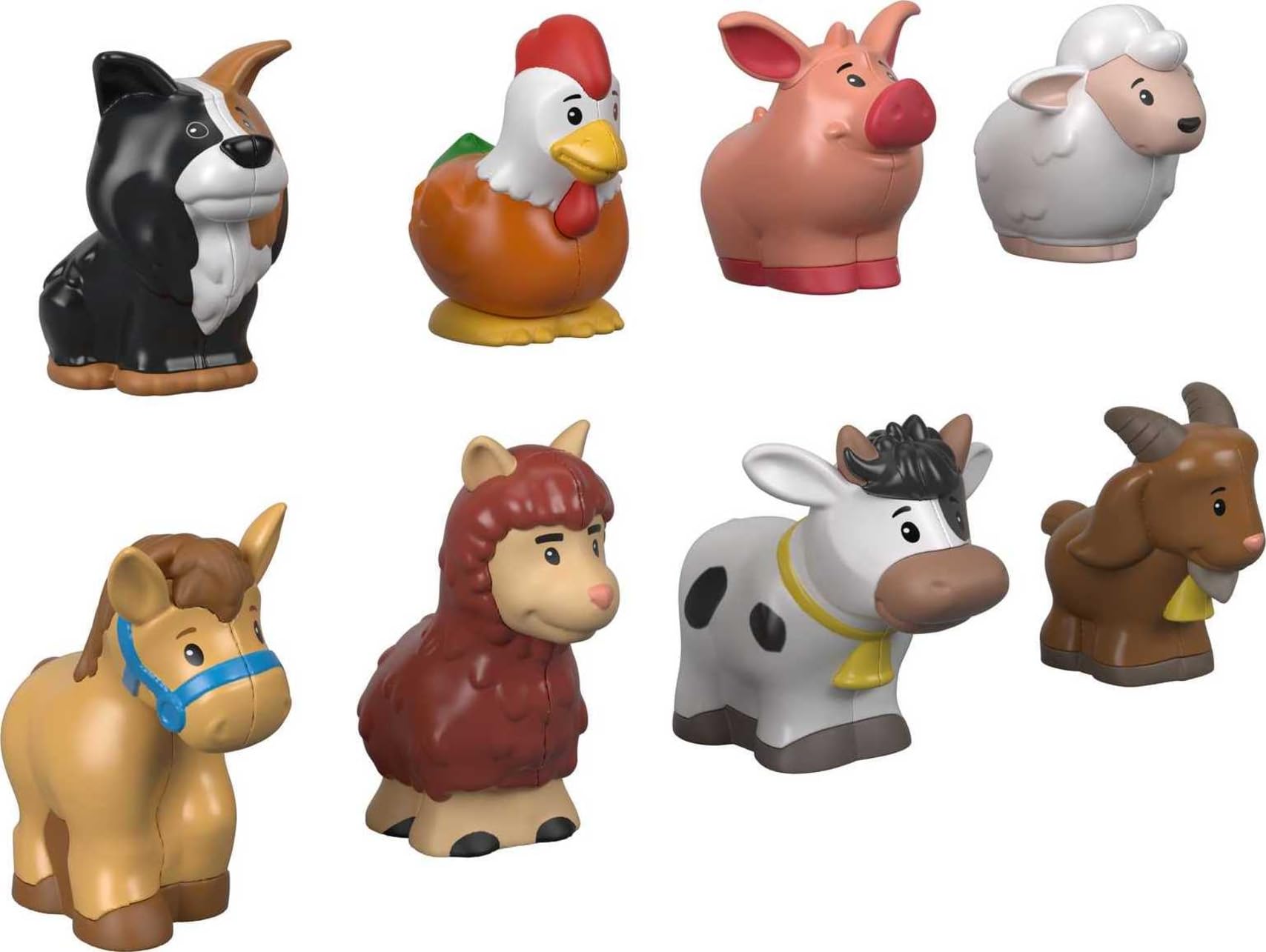
Fisher-Price Little People Farm Animals

First animal figures

Doodle Score 9.8/10
Check Price

Worth Noting

  • Cartoon styling rather than realistic animals
Animals
Llama, chicken, cow, goat, horse, pig, sheep, dog
Material
Plastic
Recommended Age
12 months to 5 years
Figures Included
8
Read the full review

Eight animals, a llama, a chicken, a cow, a goat, a horse, a pig, a sheep and a dog, with no batteries, no buttons and no songs. This is the set we reach for when the child is one, because there is nothing on any of these figures to refill, recharge or put back together.

That is the appeal, and it is not a small one. A one-year-old can grab the cow by a leg, chew an ear and drop it on the kitchen floor, and it comes back for more. The plastic is dense and wipes clean, and the figures are chunky: the cow fills a toddler's fist, which is exactly what you want at that age. Ours have been through a car seat, a bath and a sandpit and look no worse for it.

Where the set gives ground is realism. These are Little People animals, with the big smiles and rounded silhouettes the line is built on, so a five-year-old who wants a tiger that looks like a tiger will be disappointed. The barn playset they are designed to match is sold separately and is not needed. Eight farm animals is a small world, but it is one a one-year-old can actually hold.

Bottom line: For a first birthday this is the animal set we choose: eight chunky farm figures, no batteries, and nothing to take apart or charge.

#2

Schleich Wild Life Jungle Set

Schleich Wild Life Jungle Set

Play and display

Doodle Score 9.6/10
Check Price

Worth Noting

  • Standard scale rather than jumbo, so 3 and up
Material
PVC
Named Species
Asian elephant, tiger, giant panda, hyacinth macaw, monkey
Recommended Age
3 to 14 years
Animals Included
5
Read the full review

Five animals in one box, an Asian elephant, a tiger, a giant panda, a hyacinth macaw and a monkey, and the reason this set leads the guide is that it does both jobs at once. It is a play set on the floor and a display piece on the shelf. The stripe work on the tiger is the tell: the paint is clean at the edges rather than stamped on in one flat color, and the eyes sit where they should.

Schleich molds these in solid PVC, so each animal has real weight in the hand. The elephant feels like a small object rather than a toy. That weight is also why they stand: set them on a table and they stay put, which is a lower bar than it ought to be in this category and one plenty of cheaper sets miss. The scale is standard figurine size, not jumbo, which is right for a collection and means a two-year-old can lose the monkey under the couch in about four seconds.

The box says 3 to 14, and the low end is about right. The pieces are solid but small enough that a mouthy toddler is not the audience. For a four- or five-year-old starting a collection, five species is a better first buy than five dinosaurs, because the panda and the macaw give a kid something to work out: they do not live anywhere near each other, and reasoning through why is half the play.

Bottom line: We recommend this set for a four- to eight-year-old who wants animals that look real: five species, solid weight, and paint that survives play.

#3

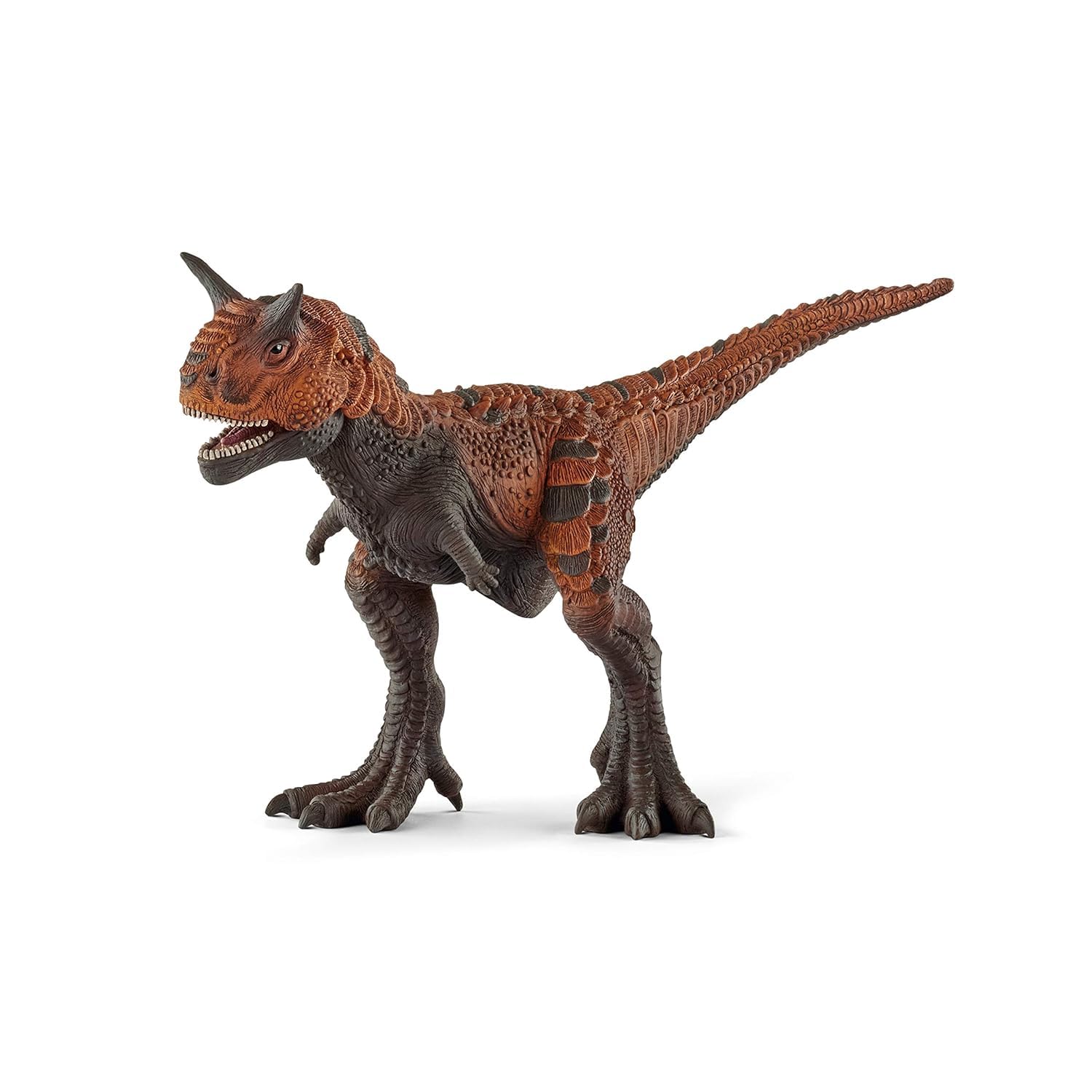
Schleich Carnotaurus

Schleich Carnotaurus

Dinosaur lovers

Doodle Score 9.6/10
Check Price

Worth Noting

  • About 5 inches, smaller than the photos suggest
Size
5.1 inches
Material
PVC
Movable Jaw
Yes
Recommended Age
4 to 12 years
Read the full review

The jaw is the whole trick. It hinges open wide and closes with a snap, and it turns a figure into a toy, the one kids pick up first and put down last. The sculpt earns the gimmick: a heavy body, a matte finish and a face with actual teeth rather than a smile.

What sold us is the weight. At 0.16 kg it has the heft of a paperweight, which is why it survives a drop and why it does not slide across the table mid-scrap. The claws are molded in a slightly flexible plastic, so they give instead of snapping, a small detail that matters in a house where dinosaurs travel in backpacks and get sat on.

The one thing to watch is the hinge. The jaw can pop off, and refitting it takes a patient adult and a couple of tries. Schleich rates this 4 to 12, and that tracks: a four-year-old who can pronounce Carnotaurus gets more out of it than a three-year-old who cannot. It is a supplement to a set rather than a starter collection on its own.

Bottom line: This is the dinosaur we hand to a kid who already knows the names: convincing, heavy, and built to be carried around the house.

#4

Learning Minds Jumbo Safari Set

Learning Minds Jumbo Safari Set

Kids under three

Doodle Score 9.6/10
Check Price

Worth Noting

  • Seams can crack after months of play
  • The zebra tends to lean rather than stand
Material
Vinyl
Set Dimensions
7.87 x 4.33 x 8.66 inches
Recommended Age
18 months to 6 years
Animals Included
8
Read the full review

Eight animals, none of them small enough to disappear under a cushion. The giraffe, the elephant and the crocodile are chunky, one-hand-at-a-time figures, and that size is the reason to buy: this is the safari set for a child still in the grab-and-taste stage. Eight is enough for a stampede and few enough that a toddler can learn all the names.

The material is vinyl rather than hard plastic, slightly soft and matte with rounded edges. It is the sort of thing that bounces off a coffee table instead of chipping the table. The feet are wide and the animals stand, and there are no moving parts, no batteries and no small accessories to lose at the bottom of the toy box.

We hand this to a household with a one- or two-year-old without a second thought, and that is the recommendation. The trade-off is longevity. Cracks can open along the seams where the parts are joined after months of play, and the zebra tends to lean rather than stand square. Neither bothers a child young enough to throw things, which is exactly the child this set is for.

Bottom line: Buy this one for a one- or two-year-old: eight animals big enough to grab with both hands and soft enough to bounce off a coffee table.

#5

Aigybobo Farm Animal Learning Set

Aigybobo Farm Animal Learning Set

Counting and matching

Doodle Score 9.6/10
Check Price

Worth Noting

  • ⚠️ Animals are small for a mouthing baby
  • Barn lids are fiddly to refit
Pieces
20 (10 animals, 10 barns)
Material
Plastic and vinyl
Set Dimensions
12 x 5.5 x 3 inches
Recommended Age
12 months to 3 years
Read the full review

The mistake shoppers make with this set is reading it as a farm animal collection. It is not, quite. The ten animals are hollow vinyl finger puppets that live inside ten numbered barns, and the real subject is matching, counting and stacking. The animals are the handles.

As a learning toy, it is clever. The barns are printed with numbers, the animals are sized for a toddler's finger, and a two-year-old can spend a genuinely long time putting the cow in its house and taking it out again. The colors are strong, the pieces are light, and a child can carry a whole barn across a room without dropping it.

Two cautions and one check. The animals are small, small enough that a mouthing one-year-old needs you nearby even though the box starts at twelve months, and the lids are fiddly to refit, which frustrates some toddlers more than it teaches them. The check: run a finger inside each hollow animal before the first play, because molding can leave a scrap of plastic inside a leg. Even so, it earns its place. Animal names, colors and counting in one quiet box that packs into a bag.

Bottom line: A clever counting toy more than a collection: ten numbered barns and ten finger-puppet animals that teach colors and numbers, with small pieces to watch.

#6

Terra by Battat Sea Animal Tube

Terra by Battat Sea Animal Tube

Sensory bins

Doodle Score 9.2/10
Check Price

Worth Noting

  • Two-inch pieces, so strictly 3 and up
Species
12
Figure Size
2 inches
Recommended Age
3 years and up
Figures Included
60
Read the full review

Sixty figures, twelve species, in a cardboard tube, and it is the least expensive way here to put a pile of animals in front of a child. That arithmetic is why the tube stays on our shelf rather than in a drawer.

What you get is small: each figure is about two inches, molded in hard plastic with simple paint, a color on the back, a dark eye, a mouth line, and that is it. They stand, they sort, they count, and they survive a bath. In a sensory bin of rice or water they are exactly the right size. In a two-year-old's mouth they are not, which is why the box says three and up.

Sixty figures across twelve species also means duplicates, and that is the quiet advantage: a handful of dolphins can be a pod, a counting line or a party bag, where a single dolphin is just a dolphin. The trap is scale. These are much smaller than the animals Terra sells individually, so do not buy the tube to fill a gap in a shelf of larger figures. As a starter set or a bath toy, nothing here covers more ground for less.

Bottom line: If you need a lot of animals for very little, this is the tube we buy: sixty sea figures for bins, baths and sorting, provided everyone is past the mouthing stage.

How We Picked and Play-Tested Animal Figurines

We started by gathering a shortlist of animal figurines across a range of sizes, materials, and set formats, then filtered out anything with rough seams, unstable feet, or photos that suggested scale would be a gamble. That left 14 figurines, which we tested over five months in the places they actually live: the playroom floor, a backyard sandbox, and a few real shelves where display matters as much as play.

Size got checked first, because it drives everything else. We set each figurine in a child’s palm, beside a cereal box on a shelf, and inside a standard storage bin, noting whether it felt too tiny to grip or too bulky to store. Ease of use came next: could a kid pick it up by the tail without dropping it, stand it back up after a knock, and set it down without a wobble? We watched how often testers reached for each one, whether they named it, carried it to dinner, or ignored it after the first ten minutes.

Quality and value took longer. We dropped each figurine from table height, wiped painted details with a damp cloth, and wiggled tails and any moving parts to see what loosened or chipped. We noted whether seams showed, whether paint rubbed off on fingers, and whether the figure still looked good after sand and repeated handling. At the end, we asked which ones testers would happily keep, gift, or add to a growing collection—that was our real value check. The winners earned their place through durability, charm, and the kind of cuteness that still invites play after months.

How to Choose Animal Figurines

Scale Decides More Than Anything Else

If the child is under three, buy big: jumbo vinyl animals that take two hands to carry, and nothing that can vanish under a couch cushion. Above three, standard figurine scale, where an adult animal sits comfortably in a palm, unlocks the detail and species variety that make a collection worth having.

The trap is photography. A two-inch miniature photographs like a museum piece on a phone screen, and words like mini, tube or assortment in a listing are your warning that the animal will be far smaller in a child's hand than it looks on the page. Settle the scale first, then shop within it.

Look at the Paint and the Eyes

Realism lives in two places: the eye and the paint edges. A convincing figure has a shaped, painted eye rather than a printed dot, and its markings follow the sculpt instead of sitting flat across it. The stripe work on the tiger in our top pick is the standard we hold other sets to.

Species lists are the other tell. If a safari assortment includes an animal that does not belong on that continent, the set was assembled from whatever molds were available rather than from a plan, and the same care usually shows in the faces.

Solid, Hollow or Soft, and Whether It Stands

Molding tells you how a figure will age. Solid PVC gives weight and a flat, stable stance. Hollow plastic, common in budget safari sets, is light, cheap to make and prone to splitting along the seam where the two halves are joined. Soft vinyl bounces, is kinder to furniture and wears at the joins instead of cracking outright.

Whichever you buy, stand the whole set on a flat table before the first play. A figure that leans on day one will lean on a shelf a year later, and it is far easier to return it then than to live with it.

Set or Single?

A set gets you a world; a single figure gets you the animal the child actually asked for. Start with five to eight animals in one box, then add singles. Five different species give more play than five dinosaurs, and one good single is how you fill the specific gap when a camel or a mammoth is the whole point.

Watch for sets that pad their count with duplicates. A tube of sixty figures is multiples of everything, which is wonderful for sorting, counting and party bags and mildly insulting to a child who wanted one of each.

Age Ratings and Small Parts

Age bands are a decent guide and a poor guarantee. A twelve-month label on a set whose animals are small enough to mouth is a mismatch worth noticing, and the old test still works: anything that slides through a toilet-paper tube is too small for a child who still tests the world with their teeth.

For a first set, buy one-piece figures with no hinges, no detachable parts and nothing to refit. Save articulated jaws and thin legs for a four-year-old who has stopped chewing the evidence.

Frequently Asked Questions

Final Verdict

Start with the Schleich Wild Life jungle set. Five species, solid weight and clean paint make it the box that plays and displays, and it is the one we give a four-year-old who is ready to begin a collection.

If the child is still a toddler, buy the Learning Minds jumbo safari instead: bigger animals, softer plastic and a set that survives being thrown. And if the deciding factor is how far the money stretches, the Terra sea tube puts the most animals in front of a child for the least.