Arts & Crafts

Best Kids Guitars of 2026

A kids guitar has one job that matters more than any spec sheet: it has to make a kid want to pick it up again tomorrow. The wrong one does the opposite — it slips out of tune before the first chorus, the strings bite into small fingers, and the body is either too bulky to hug or so tiny it sounds thin. What you're really shopping for is a beginner instrument that sounds decent, feels manageable in small hands, and can survive being leaned against a bunk bed. Get those right, and the enjoyment follows; get them wrong, and the guitar becomes furniture.

Over the past six months, my team and I have tested 12 kids guitars, and the differences come down to a few things you can't see online. Price and quality don't always line up: a cheap guitar with a solid build and stable tuners beats a prettier one that won't hold pitch. We also learned that beginner-friendly is about string action, scale length, and whether a kid can tune it without an adult stepping in. The picks below are the ones that got out of their own way.

#1

LeapFrog Strum and Count

LeapFrog Strum and Count

Toddlers

Doodle Score 9.6/10
Check Price

Worth Noting

  • Not a chord-learning instrument
Size
7.3 x 14.4 x 2.2 inches
Batteries
3 AA required
Fret Keys
8
Recommended Age
18 months to 5 years
Read the full review

The LeapFrog Strum and Count doesn't look like a serious instrument, and that's exactly why toddlers take to it. It's 14.4 inches long and 1.2 pounds, so a 2-year-old can carry it around by the neck. The squirrel tail is the detail that sells the whole thing: move it and the guitar switches between acoustic, electric, and barnyard sounds, which turns strumming into a cause-and-effect game.

The eight fret keys introduce numbers and colors, and the neck lights up as they play. We like that the toy doesn't try to teach proper chords; instead, it lets a child strum the strings to finish a song or make up their own noise. The volume is manageable, which is not always true of musical toys, and the wooden body is built for the kind of drops and sits that toddler toys get.

For a child from 18 months to about 5, this is the guitar we recommend first. It is sturdy, cheerful, and simple enough that they can work it without help. The trade-off is that it won't teach tuning, chords, or string control, so it's a bridge to a real instrument rather than a substitute. It also runs on three AA batteries, and the included set is only for demo use; plan on fresh batteries for regular play. If your child is already asking to learn songs, skip this and go for a junior acoustic.

Bottom line: For a toddler, we pick the LeapFrog: it's the rare toy guitar that survives daily play, teaches numbers and colors, and doesn't drive the grown-ups up the wall.
#2

Donner 30-Inch Electric Kit

Donner 30-Inch Electric Kit

Electric starters

Doodle Score 9.0/10
Check Price

Worth Noting

  • Practice amp is basic
Size
30 inches
Pickup
Single-coil
Included
Amp, bag, tuner, picks, cable
Scale Length
500 mm
Read the full review

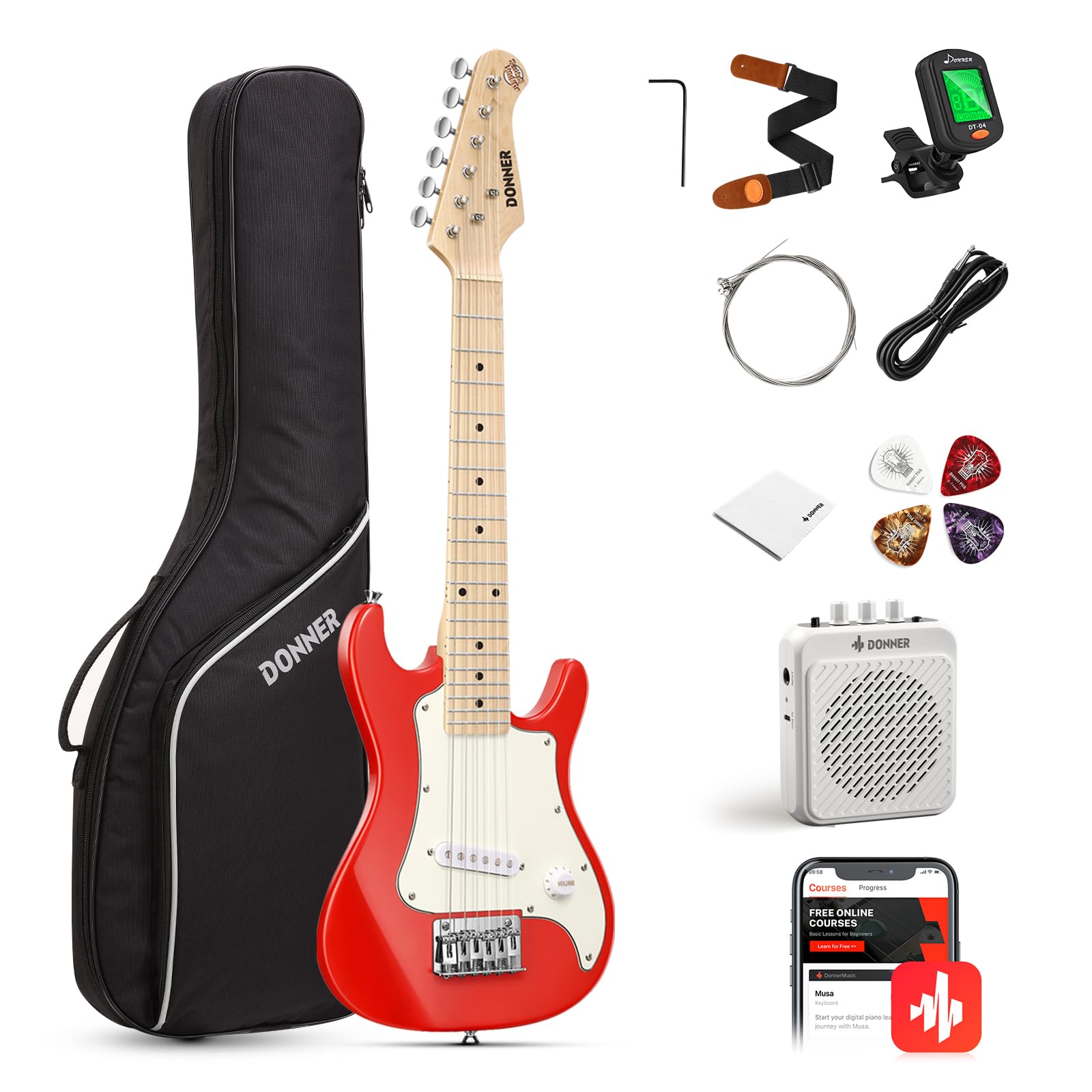
A kid who asks for an electric guitar usually wants the whole scene: the strap, the cable, the amp, and the feeling of plugging in. The Donner 30-inch kit delivers that scene better than any other electric here. The guitar is a real single-coil instrument, not a toy with a speaker, and the bundle includes the amp, gig bag, tuner, picks, cable, strap, and an extra set of strings.

The 30-inch body and 500 mm scale are the practical part. The guitar weighs 5.97 pounds, which is light enough for a 7- or 8-year-old to hold standing up, and the neck is shaped for smaller hands. The rounded frets are designed to be comfortable, and the matte finish gives small hands some grip. The single-coil pickup gives a bright, familiar electric tone, and the amp has both clean and distortion channels, so a beginner can make a satisfying noise without adding pedals.

The kit is the reason to choose this one over a bare mini guitar. The gig bag is padded enough for storage, the tuner is a useful extra, and the cable and strap mean the child can play the day it arrives. The amp is small and basic, but it's enough for a bedroom or a lesson. As with any new electric, check the tuning and intonation when it arrives.

If you want the simplest possible start, an acoustic is less fuss. But for a child who is excited by the electric-guitar idea, the Donner kit is the most complete and convincing package here. It gives them the sound and the gear without asking you to buy a separate amp and cable.

Bottom line: We recommend the Donner kit for the kid who wants an amp and a real pickup; the 30-inch body is comfortable and the bundle is complete.

#3

Lexibook Disney Princess Guitar

Lexibook Disney Princess Guitar

Preschool play

Doodle Score 9.0/10
Check Price

Worth Noting

  • Tuner not included
Size
21 inches
Strings
6 nylon
Included
Learning guide
Recommended Age
3 years and up
Read the full review

The Lexibook Disney Princess guitar is 21 inches long and weighs 1.3 pounds, which makes it closer to a ukulele in size than a student guitar. That's not a criticism; it's the reason a 3-year-old can hold it comfortably. The pink and purple finish with Belle, Cinderella, and Rapunzel is the hook, and the six nylon strings are a step up from the plastic strings on some toy guitars.

For a Disney-obsessed preschooler, this is a lovely first strum. The strings can be tuned, and the included learning guide gives a parent a place to start. The size is easy for small hands and the body light enough to carry around. It is still a toy, though: the 21-inch scale is tiny, and it won't take a child through real chords or songs.

If your child is 3 or 4 and wants a guitar because they've seen one on a screen, the Lexibook is a sweet, low-stakes choice. It looks the part, feels manageable, and gives them something to strum while they sing. If they're closer to 6 and asking for lessons, skip it and choose a 30-inch nylon-string or the Yamaha instead.

Bottom line: The Lexibook is a sweet first guitar for a Disney-obsessed preschooler: small, light, and simple enough to strum without a lesson.

#4

Yamaha JR1 FG Junior

Yamaha JR1 FG Junior

Serious beginners

Doodle Score 8.8/10
Check Price

Worth Noting

  • Costs more than the budget picks
Size
3/4 size
Included
Gig bag
Scale Length
21.25 inches
Top Material
Spruce
Read the full review

The first thing we noticed about the Yamaha JR1 is that it doesn't feel like a toy wearing a guitar costume. The 3/4-size body is small, but the spruce top, the 21.25-inch scale, and the tidy fretwork make it read as a real acoustic. A child can wrap an arm around it without fighting a full-size body, and the shorter scale means chords sit closer together.

That combination is why it earns our top spot for a child who is ready to learn. The difference that matters most is tuning: the JR1 settles into pitch and stays there long enough for a practice session, which is not something we can say for every inexpensive guitar here. The sound is bright and clear rather than boxy, and the neck is narrow enough for smaller hands.

The gig bag is a useful inclusion, and the guitar is light enough to move between rooms, though at 4.9 pounds it isn't a featherweight. We also like that it takes normal steel strings, so it can grow with a player instead of becoming a dead-end toy. The action is comfortable for a beginner, and the neck is narrow enough for smaller hands.

The trade-off is size: this is really for older children and young teens rather than a 4-year-old. If your child is still in the strum-and-pretend stage, a toy will serve better. For a child who has asked for lessons and will be expected to practice, the JR1 is the one that won't need replacing before they can play a song.

Bottom line: We recommend the Yamaha JR1 first for a child ready to learn: a real 3/4-size acoustic with a spruce top, manageable scale, and tuning that holds far better than the budget kits here.

#5

KidKraft Lil' Symphony

KidKraft Lil' Symphony

Pretend play

Doodle Score 8.8/10
Check Price

Worth Noting

  • Won't hold tune for practice
  • No strap button
Size
24.61 x 8.98 x 2.95 inches
Weight
2.2 lb
Material
Wood, metal, plastic
Recommended Age
3 years and up
Read the full review

The KidKraft Lil' Symphony looks like a miniature acoustic, with a wooden body, a colorful finish, and six strings that actually make a sound. At 24.61 inches long and 2.2 pounds, it's sized for a 3- or 4-year-old to hold on their lap or stand on the floor. The paint and trim are the details that make it feel like a real instrument rather than a plastic prop.

The strings can be adjusted, and KidKraft includes an extra set, which is a nice vote of confidence in a toy. The wooden body is sturdy enough for the way small children handle things, and the size is easy to carry. The sound is toy-like, but it's enough for strumming along to a song.

We choose the KidKraft for pretend play, photos, and the first thrill of holding a guitar, not for learning chords. If your child is mostly interested in dressing up and performing, this is a charming pick. If they're asking for lessons, put the money toward a real junior instrument.

Bottom line: The KidKraft is the wooden toy guitar we choose for pretend play and photos, not for learning chords; it looks the part and takes a knock.

#6

VEVOR 30-Inch Classical

VEVOR 30-Inch Classical

Small beginners

Doodle Score 0.0/10
Check Price

Worth Noting

  • Tuning drifts between sessions
  • Too small for older beginners
Size
30 inches
Strings
Nylon
Included
Gig bag, tuner, capo, picks
Scale Length
50 centimeters
Read the full review

Nylon strings are the quiet advantage of a classical guitar for a young beginner. They feel softer on fingertips than steel, and they don't produce the same bright snap that can make a small acoustic sound harsh. The VEVOR 30-inch classical is built around that idea, with a basswood body, a 50-centimeter scale, and six nylon strings.

The size is the other reason it works. At 30 inches, it's smaller than a 3/4-size acoustic, so a 6- or 7-year-old can reach the end of the fretboard without stretching. The body is light at 2.5 pounds, and the included gig bag makes it easy to take to a lesson or a grandparent's house. The kit also includes a tuner, capo, picks, strap, dust cloth, and an extra set of strings, which is a lot of useful gear for a starter package.

We like the high-precision tuning pegs and the comfortable string-to-fret spacing; the guitar feels less like a toy than its price suggests. The finish is tidy, and the nylon strings are forgiving for small fingers. The capo is a nice extra, though a young beginner won't need it immediately. The tuner is the accessory that matters most, because nylon strings stretch and need checking.

The VEVOR is the one we point to for a smaller beginner on a tight budget. If your child is older or ready for a serious practice routine, the Yamaha is the better long-term buy. For a first nylon-string instrument that won't overwhelm a small player, this is a sensible place to start.

Bottom line: The VEVOR is the nylon-string we point to for smaller beginners on a budget, provided you accept that it will need frequent tuning.

How We Tested the Best Kids Guitars

We started by pulling together a shortlist of kids guitars sold at mainstream retailers, then filtered it by scale length, body depth, age recommendations, and setup information — the specs that tell you whether an instrument will actually fit a child. We also looked at price against materials and hardware, because a low price only counts as value if the guitar holds up. From that list, we brought in 12 guitars and spent six months living with them in our homes, with kids ages five to eleven putting them through after-school practice, weekend lessons, and the kind of idle strumming that happens on a bedroom floor.

Size and build quality came first. We measured each guitar's body depth and scale length, then watched kids hold them seated and standing to see whether their fretting hand could reach the first few frets and whether the body dug into their ribs. We ran fingers along fret ends and checked bridges, nuts, and tuner buttons for sharp edges or loose fittings. For durability, we let the guitars be leaned against beds, knocked off low stands, and dragged between rooms; after each bump we checked for cracks, wobbling tuners, and bridges lifting at the corners.

Sound quality and musicality were judged by ear, not by spec: we played open chords, single notes, and simple melodies, listening for buzz, dead spots, and whether the tone was warm enough to encourage practice or thin enough to sound like a toy. For beginner suitability, we watched how hard kids had to press to fret a note, whether they could tune the guitar with a clip-on tuner, and whether the instrument made them want to keep going. Tuning stability got its own check: we tuned each guitar, played for 20 minutes, then rechecked pitch, and repeated the process after a day and after a week of normal use. Finally, we compared what each guitar cost against how it sounded, felt, and held tune — the only fair way to judge value.

How to Choose Kids Guitars

Start With Size, Not Age

A guitar that's too big is hard to hold, and one that's too small will be outgrown quickly. For a toddler, a 21- to 26-inch toy guitar like the LeapFrog or Lexibook is about right; for an early-elementary child, a 30-inch model such as the VEVOR or Donner gives them a real fretboard without a full-size stretch. A 3/4-size acoustic like the Yamaha JR1 suits older children and young teens. If you're between sizes, choose the smaller guitar that fits their reach now; a child who can reach the first fret comfortably will practice more.

Tuning Stability Is the Deal Breaker

A beginner guitar doesn't need to sound like a studio instrument, but it does need to hold pitch through a short practice session. Budget acoustics often arrive with strings that stretch and tuners that slip, and a child can't learn chords if the guitar is out of tune every few minutes. Nylon strings settle more slowly than steel, so expect to tune a new classical guitar often at first. If a guitar won't stay close after a week of settling, return it rather than fighting it.

Nylon, Steel, or Electric?

Nylon strings are softer on fingertips, which makes them the easier first experience for many younger children; the VEVOR is our budget example. Steel strings sound brighter and are the norm on the Yamaha JR1, but they ask more from a beginner's fingers. An electric guitar like the Donner is easier to press in some ways, but it adds an amp, a cable, and volume control to the setup. Match the string type to the child's tolerance for sore fingers and to the sound they want.

Look at What's in the Box

A gig bag, tuner, strap, picks, and spare strings can make the difference between playing on day one and waiting for another order. The Donner and VEVOR kits are generous here; the Lexibook includes a learning guide but no tuner, so budget for one. Check the bag and strap too: these are common weak points on starter kits, and a torn case or a strap that won't hold makes the guitar harder to live with. A clip-on tuner is the first accessory we add to any guitar that doesn't include one.

Decide Whether You're Buying a Toy or an Instrument

This is the choice that matters most. A toy guitar like the KidKraft or LeapFrog is for pretend play, singing along, and getting comfortable with the shape of a guitar; it won't teach chords or tuning. A real junior instrument like the Yamaha JR1 or VEVOR is for a child who has asked for lessons and will practice. Buying a toy for a child who wants to learn can lead to frustration, and buying a real instrument for a child who just wants to dress up can lead to a broken guitar. Be honest about the stage they're in.

Frequently Asked Questions

Final Verdict

The Yamaha JR1 is the kids guitar we recommend first because it behaves like a real instrument: the 3/4-size body and 21.25-inch scale fit older children, and it holds tune well enough for actual practice. It costs more than the toy and budget picks, but it's the one that won't become a decoration.

For a toddler, the LeapFrog is the better fit; for a kid who wants an amp, the Donner kit is the more exciting choice; for a small nylon-string on a budget, the VEVOR is the sensible compromise. If your child has asked for lessons, buy the Yamaha and skip the toy aisle.