Arts & Crafts

Best Harmonica for Kids

A harmonica is about the simplest instrument a kid can pick up: you breathe in or out, a little metal reed vibrates, and a note falls out. That simplicity is also why the cheap ones are such a gamble — stiff reeds that wheeze instead of ring, cover plates with edges you can feel, a comb that swells after one afternoon in the yard, and a booklet written for someone who already plays. A good one gets a kid honking out a recognizable tune the same day, and it costs less than a takeout dinner.

I've kept a harmonica in the glove box since I was seven, so I have opinions about which ones sound like music and which sound like a kazoo with a cold. Over the past three months, my team and I put 14 of them in front of kids ages four to ten, and the split was obvious within a week: the harmonicas that demanded too much breath got abandoned, and the ones that stayed in tune got confiscated at bedtime. Buy in the key of C, favor a plastic comb over wood, and don't pay extra for a fancy case. The picks below are the ones that kept getting played.

#1

East top Kids Harmonica

East top Kids Harmonica

First harmonica

Doodle Score 9.6/10
Check Price

Worth Noting

  • Sold only in the pink-silver finish here
Key
C
Holes
10
Body Size
4.01 x 1.06 x 0.74 in
In The Box
Plastic case, cleaning cloth, instructions
Read the full review

Ten holes, key of C, a 0.8 mm reed plate and a four-inch body: the East top is an ordinary diatonic harmonica in a package built around a child, which is exactly why it is the one we hand over first. The pink-silver finish is lacquered metal with a small engraved design on one side, and the box includes a plastic case, a cleaning cloth and a printed instruction sheet, so a birthday present is complete without a trip to the music shop.

What matters is how little a child has to fight it. The reeds speak on a light breath, so a six-year-old gets a note on the first try instead of a wheeze, and the layout is the standard 10-hole pattern every beginner video assumes. It is also the size of a real harmonica rather than a shrunken toy — 4.01 by 1.06 by 0.74 inches and about a hundred grams — so it fills a child's grip without disappearing into it.

Nothing about it is precious. The case is a simple shell, the finish wipes clean, and it is cheap enough that a harmonica left on a bus is an annoyance rather than a tragedy. Our one reservation is color: this listing is the pink-silver version only, and a kid with strong opinions will have strong opinions about that. If pink is a dealbreaker, the Focusound below is about the same money and, for a very young child, the better design anyway.

Bottom line: Our default pick: a real 10-hole C harp sized for children, sold with a case, cloth and instructions, at a price that makes a lost harmonica survivable.
#2

Hohner Special 20

Hohner Special 20

Serious young players

Doodle Score 9.6/10
Check Price

Worth Noting

  • Costs far more than a first harp needs to
  • Printed booklet is thin on real instruction
Key
C
Reeds
20 brass
In The Box
Zip case, pouch, polishing cloth
Reed Plates
0.9 mm, recessed
Read the full review

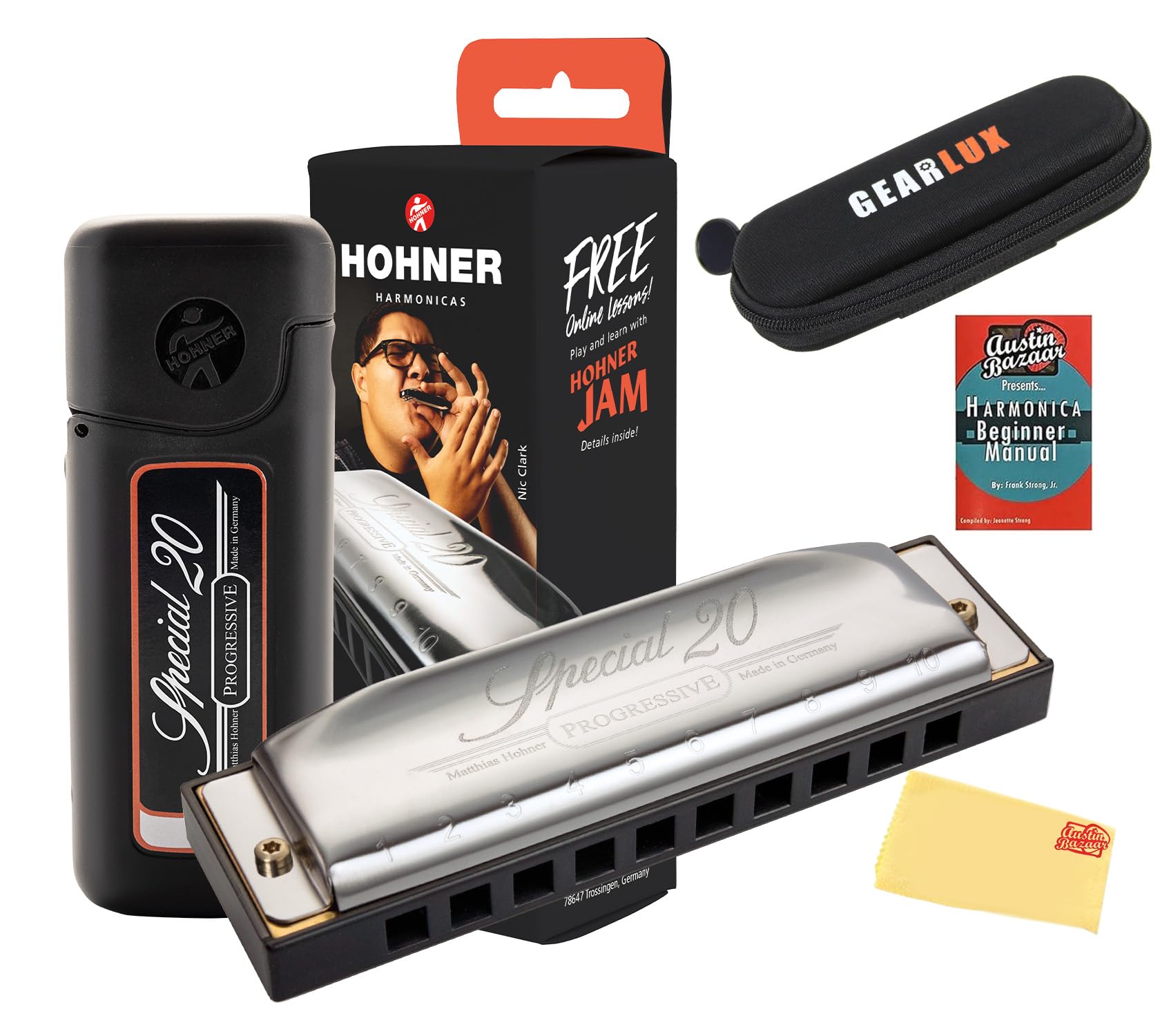
The Special 20 is the most expensive harmonica in this group by a wide margin, and it earns the gap with details you feel the moment you pick it up: reed plates recessed into the comb so the mouthpiece sits smooth against the lip, 20 brass reeds on 0.9 mm plates, and a plastic comb that will not swell no matter how wet the playing gets.

For a child who is already hooked, that adds up to an instrument that stops getting in the way. Bends come easily, notes stay clean, and the recessed plates are gentler on a lip still learning how hard to press. It is the harmonica here that a kid can keep into their teens, which is the argument for the money: this is a buy-once purchase rather than a fifth-birthday present.

We found the bundle is where it slips. You get a zip case, a pouch and a polishing cloth, which is generous; the printed booklet is the weak link, and the digital beginner's guide is the part worth using. And be honest about the child: a five-year-old will not hear the difference between this and the East top. Buy it for the kid who has shown a year of interest, not a week of it.

Bottom line: Buy it for the kid who is already hooked: recessed reed plates, a smooth mouthpiece and brass reeds that bend easily, at a price that reflects it.

#3

Focusound Panda Harmonica

Focusound Panda Harmonica

Young children

Doodle Score 9.4/10
Check Price

Worth Noting

  • Soft storage bag instead of a hard case
Key
C
Holes
10
Safety
ASTM F963 toy standard
In The Box
Storage bag, cleaning cloth, manual
Read the full review

Rounded covers and an ASTM F963 toy-standard certificate: the Focusound is the only harmonica here that reads as though it was designed around a child's face rather than adapted for one. It is still a proper instrument — 10 holes, diatonic in C, brass reeds on an ABS comb under a stainless cover — but the edges are smooth, the body is small, and it arrives with a storage bag, a cleaning cloth and a beginner's manual.

The detail we keep coming back to is not in the headline specs: the hole spacing is full-size and only the body is smaller. A child learns the same mouth positions as on a grown-up harp and can move to a full-size model later without relearning anything. That turns out to matter more than the finish or the packaging, and it is why this one suits a four-year-old as well as a seven-year-old.

Two practical notes. The storage bag is a soft pouch rather than the hard shell most of the others ship with, so it keeps dust off but will not save the harp inside a packed backpack. And the cover screws are worth a glance every few weeks — on a harmonica that gets thrown in a toy box they can work loose, and a child young enough to mouth the instrument is the one who will find them.

Bottom line: For toddlers and early graders, this is the one we hand over: rounded edges, a stated toy-safety certificate and a body scaled to small hands.

#4

Fender Blues Deluxe

Fender Blues Deluxe

Older kids

Doodle Score 9.4/10
Check Price

Worth Noting

  • Slick polished chrome is hard to grip
  • Adult sizing and finish, not a child's design
Key
C
Holes
10
Weight
4.66 oz
Warranty
1 year limited
Read the full review

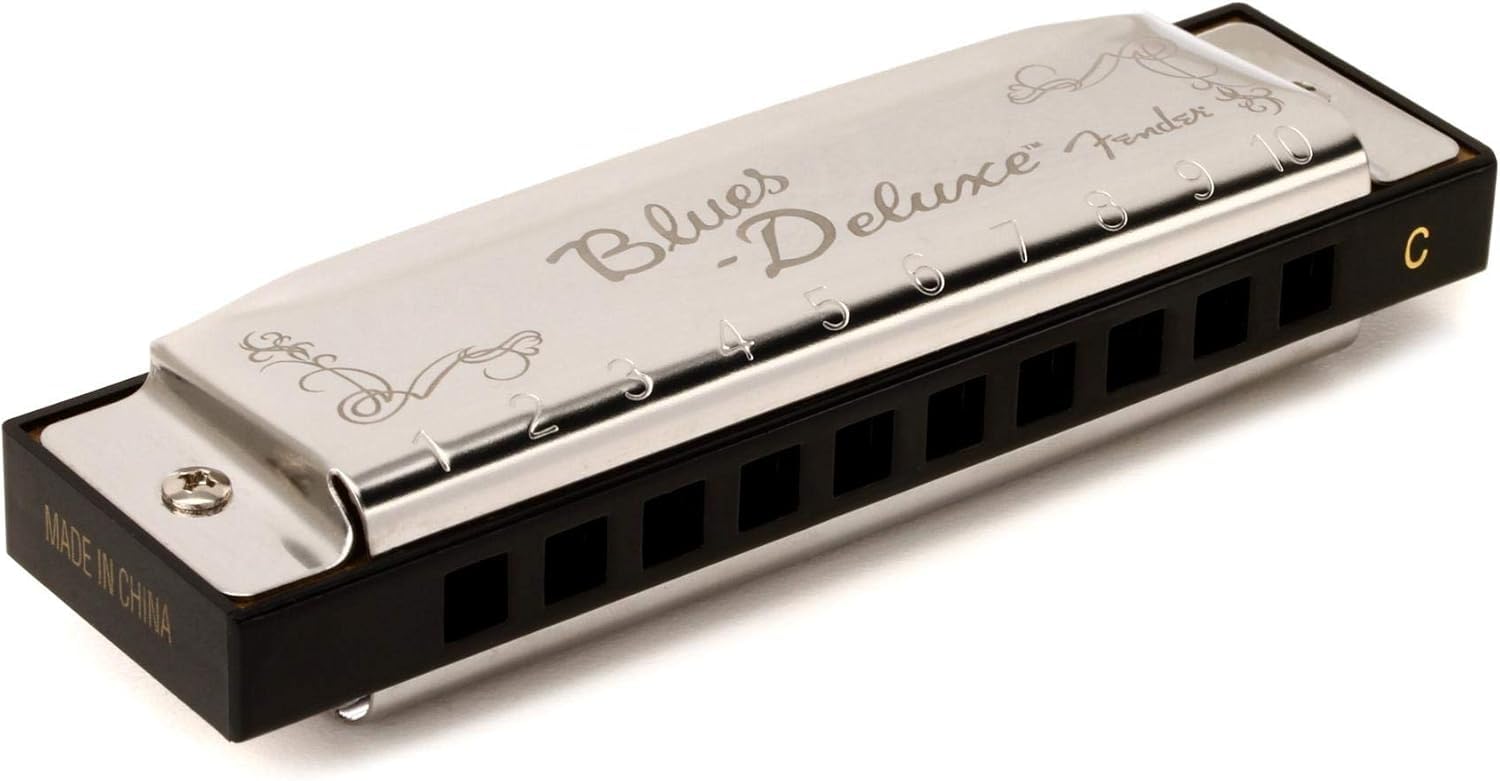
The Fender Blues Deluxe is not a children's harmonica and does not pretend to be. It is a chrome-covered adult blues harp — polished covers, a molded comb, 132 grams, a one-year warranty — and for a nine- or ten-year-old who has decided they are serious, that is the appeal. It looks like an instrument, it feels like one, and there is no cartoon styling to outgrow.

We are comfortable recommending it to a family that wants one harmonica to survive past the novelty stage. Ten holes in C, a bright tone, standard layout: a kid who learns here can play along with a guitar in C without transposing anything in their head, and the covers sit comfortably under a hand that is still small. The case in the box is basic, but it does the job.

Two caveats, both practical and both five-minute fixes. Polished chrome is slick under a sweaty hand, so expect some fumbling before a child finds a grip. And check the key stamped on the box before you wrap it — a harp in the wrong key does turn up, and a G harp played against a C tutorial is a fast route to a frustrated kid.

Bottom line: The pick for a kid past the toy stage: a real chrome blues harp in C with a warranty, and nothing babyish to outgrow.

#5

Conjurer WH1001

Conjurer WH1001

Budget first harp

Doodle Score 9.4/10
Check Price

Worth Noting

Key
C
Holes
10
Weight
2.82 oz
In The Box
Hard case, cleaning cloth, instructions
Read the full review

Red covers, brass reeds, and a price at the bottom of this group: the Conjurer is what we reach for when a kid wants to join in and we do not want to wince. It is a 10-hole diatonic in C, around 80 grams, with a polished red finish that reads as a real instrument rather than a toy, and it ships with a hard case, a cleaning cloth and printed instructions.

What it gets right is the unglamorous stuff. Notes come out clean, the draw is easy enough for small lungs, and the case is a hard shell rather than a bag, so it survives a school backpack. It is also the least painful way to find out whether a child is genuinely interested: hand one over, and if it is still being played a month later, you know exactly where the next harmonica goes.

Our verdict is that this is the best value in the group, with one honest caveat: nothing here is child-specific. The covers are standard metal and the shape is an adult harp in a bright color. For a seven-year-old who wants to make noise on a camping trip that is plenty. For a three-year-old who still mouths everything, put the extra toward the Focusound and its rounded edges instead.

Bottom line: The best value here for a kid who just wants to play: clean tone, an easy draw, a hard case, and a price that makes experimenting cheap.

#6

Koogel Kids Harmonica 2-Pack

Koogel Kids Harmonica 2-Pack

Siblings and gifts

Doodle Score 9.2/10
Check Price

Worth Noting

Key
C
Holes
10
Body Size
4 x 1 x 0.9 in
Pack Size
2
Read the full review

Two harmonicas, one pink and one blue, each in its own translucent case, with a small pamphlet apiece. The Koogel set is the least instrument-like thing on this page — the shells are see-through plastic and the whole thing looks like it came out of a party bag — which is exactly why it works in a house with more than one child. Nobody has to share a mouthpiece.

Ten holes in C, four inches long, ABS body: this is a toy-grade harmonica and it sounds like one next to the East top. But toy-grade here still means real reeds in something close to tune, not a whistle with holes painted on it. For a five-year-old honking out something that resembles a tune, the gap between this and a proper harp is smaller than the price difference suggests.

Where it earns its place is the arithmetic: two playable harps for less than one of most others here, plus a spare that can live in the car or at a grandparent's house. Our one caution is the molding — the seam on the translucent shell can come out a little sharp, so run a thumb around the edge before it goes to a toddler. Beyond that, treat them as a season's worth of fun rather than an heirloom.

Bottom line: The sensible buy for siblings or party favors: two playable C harps in their own cases, so nobody has to share a mouthpiece.

#7

Hohner Blues Band

Hohner Blues Band

Stocking stuffers

Doodle Score 9.2/10
Check Price

Worth Noting

  • Small body will be outgrown by older kids
Key
C
Reeds
20 brass
Weight
2.4 oz
Reed Plates
0.9 mm
Read the full review

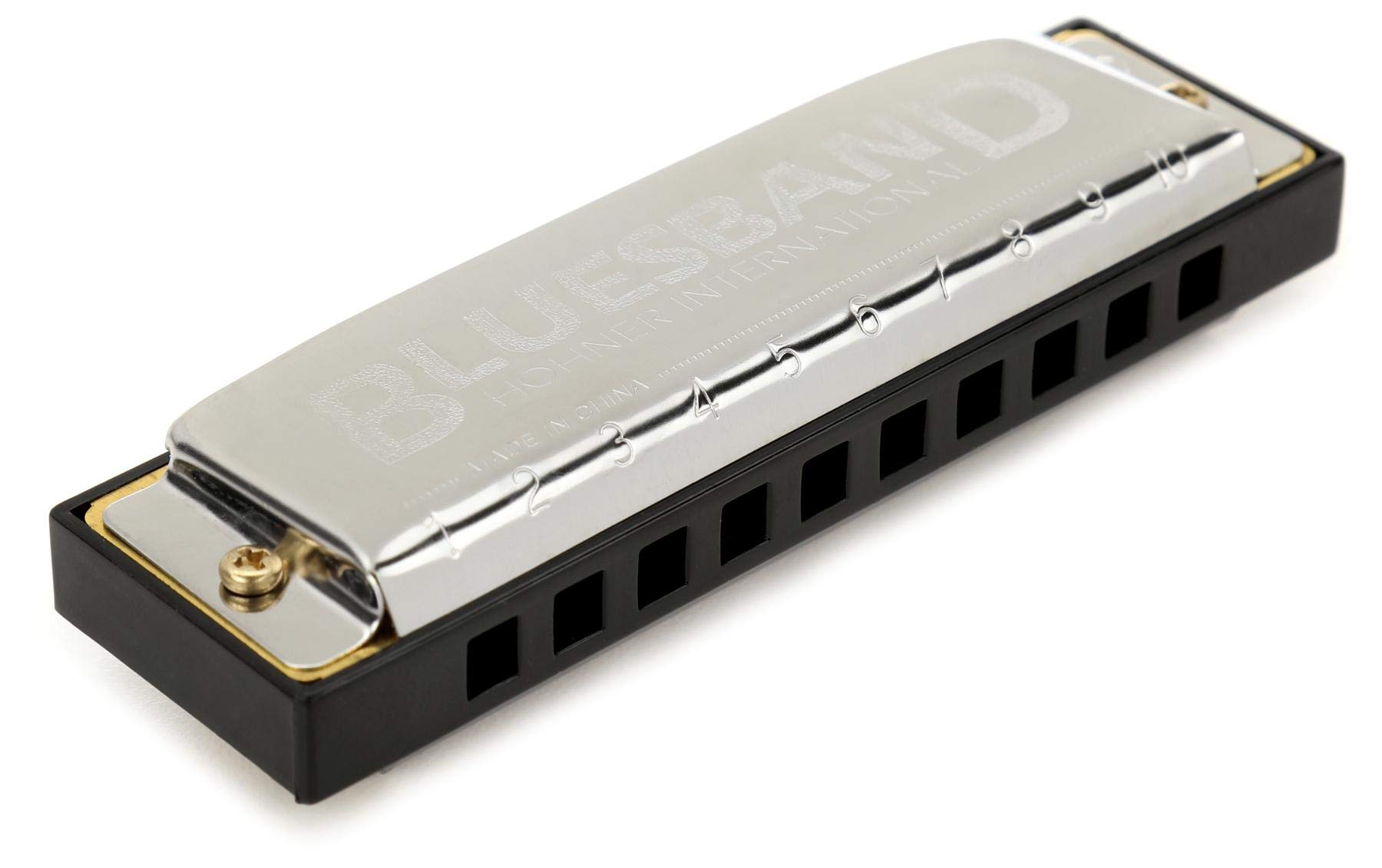
The Blues Band is the harmonica a lot of adults remember from being eight: a small chrome Hohner with 20 brass reeds, 0.9 mm reed plates and a plastic case. It sits at the bottom of Hohner's range, and it plays like what it is — a proper harmonica built to a price rather than a toy shaped like one.

For small hands we found it genuinely well judged. At 2.4 ounces it is light enough to carry all day, compact enough to fit a coat pocket, and bright enough to be heard across a playground. A three-year-old can get something that sounds like music out of it within minutes, which is more than most first instruments manage.

The catch is the reeds. A harmonica that lives in a pocket, gets dropped on concrete and played with sticky hands can lose a note — the draw on a single hole is the usual casualty — and this is the model here where that question hangs heaviest. It is not a reason to avoid it. It is a reason to keep it in its case and to think of it as a two-year instrument rather than an heirloom.

So buy it as a stocking stuffer, a first harp for a five-year-old, or a second one that lives in the car. It is the least expensive way into a Hohner, it plays in tune, and it is small enough to go everywhere. Just do not expect it to be the last harmonica you buy.

Bottom line: The classic first harp: small, bright, and cheap enough to hand to a five-year-old without a lecture about being careful.

How We Tested 14 Harmonicas With Kids Ages 4 to 10

We started with roughly 40 harmonicas pulled from music stores, big-box toy aisles, and the usual online listings, then narrowed to 14. Wooden combs were out — leave one on the porch overnight and it swells and splinters — and so was anything that couldn't tell us what the cover plates and reeds were made of. We kept instruments actually pitched in C, the key most beginner songbooks assume, and spread the picks across what parents realistically spend so we could tell whether more money bought a better instrument.

Testing ran three months, and most of it happened away from a bench: at the kitchen table after school, in the back seat on the way to practice, in the backyard, and through one long rainy Saturday. A four-year-old and a nine-year-old each tried to hold a single clean note while we watched for who ran out of air, who got dizzy, and who quietly handed it back. Every harmonica went through at least three kids, since one enthusiastic child can make almost anything sound decent.

We recorded each one and listened back for the wheeze and rattle that separate an instrument from a party favor, checking tuning against a tuner app on day one and again at the end. Durability got the driveway treatment — dropped, carried loose in a backpack, rinsed and shaken dry — and we watched for rusted covers and notes that drifted. Each instruction booklet went to a kid on their own, and we timed how long before they asked for help. We also ran a thumb along every edge and screw for sharp spots, and re-tested the ones that held tune to make sure it wasn't a fluke.

How to Choose the Right Harmonica for Kids

Ten holes, key of C, no buttons

Start here and most of the market falls away. A 10-hole diatonic in C is what beginner books, video teachers and school music programs assume, and C is the key an open-chord guitar is already in. Chromatic harmonicas with a slide button, 16-hole models and painted toy harps with four holes all look tempting and none of them will play the song your child is trying to learn.

One more check before you wrap it: find the key stamped on the instrument or its case. A harp in the wrong key does turn up now and then, and it is the most avoidable disappointment in this category.

Breath effort beats brass

A harmonica that leaks air is harder to play than a good one, and a five-year-old does not have the breath to bully a leaky instrument into tune. The clues are unglamorous: an ABS plastic comb, cover plates that sit tight, and reed plates around 0.8 to 1.0 mm. A wooden comb is traditional and lovely, and it swells when it gets wet, which is the last thing you want in a pocket instrument.

Smooth or rounded cover edges are worth paying a little for while the player still puts everything in their mouth. The Focusound's rounded covers are the clearest example here, and the East top's light reed response is the other half of the same idea.

The parts that loosen

Every harmonica here is held together by small screws through the cover plates, and on a kids' harmonica those screws are the first thing to check. Metal covers dent, plastic shells scuff, and a case is not a luxury: it keeps pocket lint and dust out of the reeds, which is what actually stops a harmonica playing.

Our routine is a thumb over both ends once a month and a quarter turn on anything loose. It takes ten seconds and it prevents the only failure that matters to a child — a harp that suddenly will not make the note it made yesterday.

What to spend, and when to trade up

Most families end up buying twice, and that is fine. An inexpensive harp tells you whether the interest is real, and the budget picks here play in tune rather than merely making noise. Trade up when a child can draw a single clean note, plays without being asked, and wants to follow songs rather than just make sound.

That is the point where recessed reed plates and better reeds stop being marketing and start being easier playing. One rule regardless of budget: one harmonica per child, because a mouth instrument is not a sharing toy.

Frequently Asked Questions

Final Verdict

Buy the East top if you want the decision made for you: a real 10-hole C harp, sized for a child, with the case, cloth and instructions already in the box. Buy the Focusound instead if the player is three or four and still mouths everything — the rounded covers and toy-standard certificate are worth the small step up.

And if the interest survives a year, skip the next cheap harmonica and go straight to the Special 20. That is the one purchase here that a kid will still be playing as a teenager.