Arts & Crafts

Best Colored Pencils for Kids of 2026

A fresh box of colored pencils is a small peace offering: a rainy afternoon, a birthday party, a restaurant table that needs a rescue. Then real life arrives. Kids bear down hard, drop the tin, and sharpen the same pencil four times before lunch, so a set that looks generous on the shelf can be a stubby mess by the weekend. What you want is color that goes down without a fight, a core that survives a heavy hand, and a case that doesn't empty itself into a backpack.

We set out to find sets that hold up to that. Over the past three months, my family and I worked through 14 sets at the kitchen table, in school backpacks, and on the living room floor, and the differences showed up fast. A big pencil count is not the same as a good color selection; many large sets repeat shades and bury the useful ones. The keepers all shared smooth, even color, points that didn't crumble, and a sensible price per pencil. The best of them are below.

#1

Crayola Colored Pencils 36ct

Crayola Colored Pencils 36ct

Everyday kid coloring

Doodle Score 9.6/10
Check Price

Worth Noting

  • Tips can snap under heavy pressure
Safety
Non-toxic
Body Shape
Round
Age Guidance
3 years and up
Pencil Count
36
Read the full review

Plain wooden pencils, a simple cardboard box, and 36 colors: the Crayola set is not the most exciting thing in a child's art bin, and that is exactly why it earns the default spot. The round barrels are comfortable for school-age hands, the 36-color range covers everything from bright primaries to the greens and browns school projects ask for, and the age guidance starts at 3. For most families, this is the set to buy first.

There is no sharpener built in, no twisting mechanism, and no special paper required; a child can open the box and color. The HB cores hold a point well enough for ordinary coloring, and the colors lay down evenly on plain paper. The cardboard box is fine for a shelf, though it is not a travel case; a zip pouch does a better job in a backpack.

The caveat is maintenance. The points blunt with use, and a cheap sharpener can chew the wood instead of slicing it cleanly. Pair the set with a decent sharpener and keep it for a child who can sit and color rather than one who is still learning to grip. For everyone else, it is the easy yes.

Bottom line: We keep the Crayola 36 set at the top of this list for most families: 36 useful colors, a comfortable barrel, and a value that leaves room for a good sharpener.

#2

Crayola Twistables 50ct

Crayola Twistables 50ct

No-sharpening households

Doodle Score 9.4/10
Check Price

Worth Noting

  • Tips can snap if twisted too far
Sharpening
Not required
Pencil Count
50
Tip Protection
Twist-down barrel
Barrel Material
Plastic
Read the full review

No shavings, no hunting for a sharpener, no interrupted coloring session: the Twistables set solves the maintenance problem that derails a lot of young artists. The plastic barrel holds a 50-color core, and twisting the tip down protects it when the pencil goes back in the box. For a child who wants to do everything without help, that is a real kind of freedom.

We keep coming back to this set for the child who treats a pencil case like a toy box. The barrels are thick and easy to find in a bag, and there is no loose lid or shaving mess to manage. The trade-off is subtlety: the barrels do not carry color names, and several shades sit close enough together that we had to test them on scrap paper before committing.

Where it gives up fine color distinction, it buys independence. A 50-color twist set is not the choice for a child who wants to blend and shade like an artist, but it is a strong everyday set for preschoolers and early elementary kids. The plastic barrels feel different from wood in the hand, and some children will notice the extra width.

Bottom line: Twistables earn our nod for younger kids and mess-averse households: the twist-up barrels take sharpening out of the routine and let coloring start in seconds.

#3

BIC Kids Evolution Triangle 12ct

BIC Kids Evolution Triangle 12ct

Toddlers and preschoolers

Doodle Score 9.4/10
Check Price

Worth Noting

  • Only 12 colors, so older kids outgrow it
Body Shape
Triangular
Age Guidance
2 years and up
Pencil Count
12
Lead Diameter
4.3 mm
Read the full review

The first thing you notice about the BIC Kids Evolution pencils is the triangle: it sits against small fingers instead of asking them to find a round barrel. The shape gives a 2- or 3-year-old a consistent place to pinch, and the 4.3mm lead is thick enough to take preschool pressure. For toddlers, this is the set we hand over with the least worry.

The 12 colors are basic but useful, and the pencils feel substantial in a small hand. There is no special mechanism to learn and no sharpener built into the barrel; these are ordinary wooden pencils with an unusually forgiving lead. The triangular body also stops them rolling off the table, which matters more than it sounds when a child is coloring at the edge of a kitchen counter.

The ceiling is the detail: a 4.3mm lead is not the one for fine line work, and a child who wants to draw tiny shapes will want a standard pencil before long. For the 2-to-4-year-old set, that is the right trade: a thicker core and a shape that teaches the grip.

Bottom line: The BIC Evolution Triangle is our pick for toddlers and preschoolers: the chunky triangular barrel and 4.3mm lead give small hands a grip that survives real use.

#4

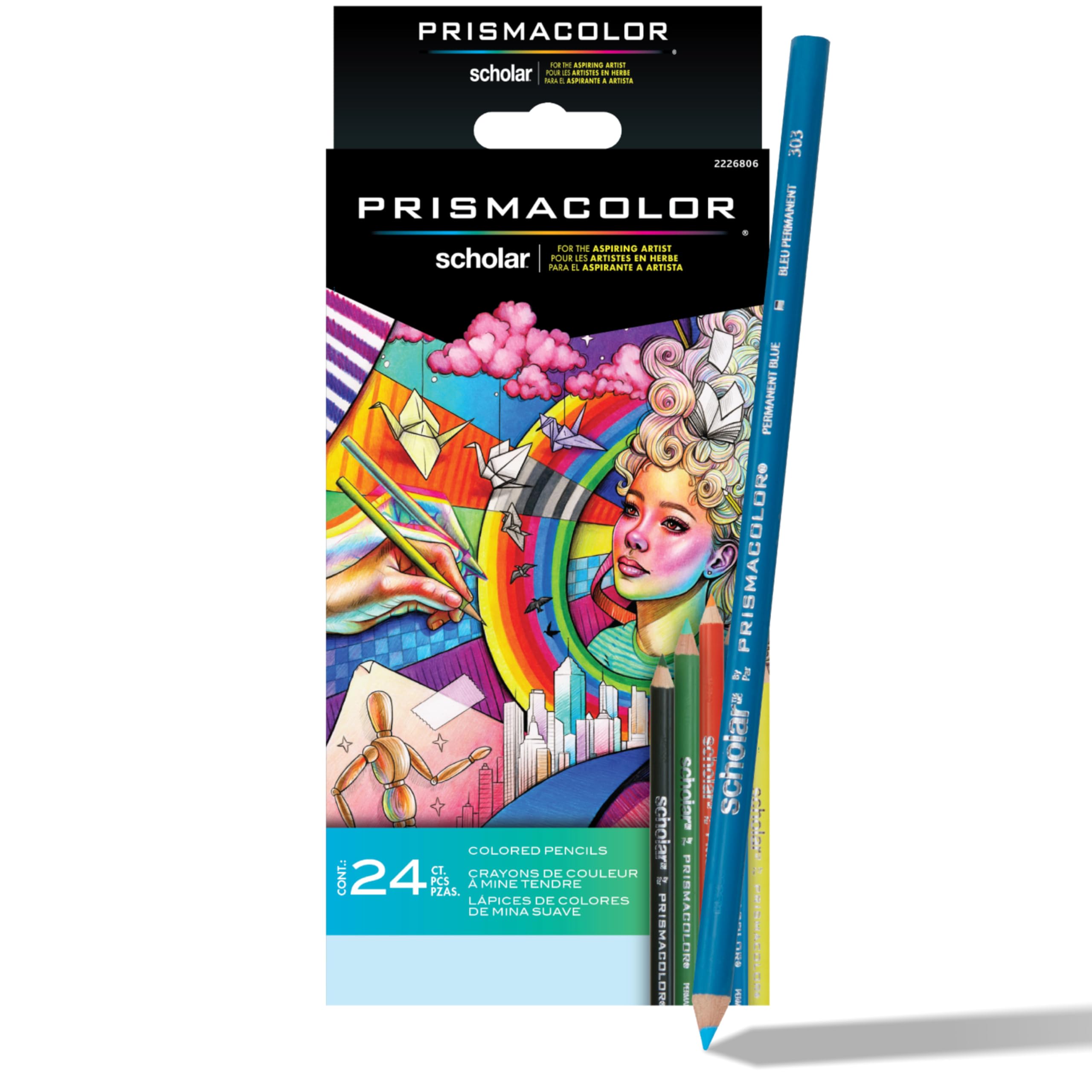
Prismacolor Scholar 24ct

Prismacolor Scholar 24ct

Older budding artists

Doodle Score 9.4/10
Check Price

Worth Noting

  • Soft cores need frequent sharpening
  • Lead can snap in the sharpener
Grip
Smooth
Best Use
Sketching and shading
Core Type
Smooth, strong
Pencil Count
24
Read the full review

Twenty-four colors looks stingy next to the 72-pencil sets here, but the Prismacolor Scholar set is not playing the same game. Its soft cores are built for layering and blending, not for filling a page with the largest possible palette. The smaller range asks a child to mix and overlap colors instead of reaching for a new pencil every time.

The cores feel creamier than the standard school pencils, and they lay color down quickly with light pressure. We found two shades can be worked together into a transition that looks deliberate rather than striped, which is the point of a set like this. The barrels are plain and comfortable, and the 24 colors cover the basics without turning the box into a decision-making exercise.

For an older child who has started to notice shading, this is the set that rewards that interest. It is not the right first pencil for a toddler or a child who bears down hard; the soft core wants a lighter touch than a chunky triangular pencil. We recommend it when the child is ready to slow down and blend.

Bottom line: When an older child is ready to blend and shade, we point them to the Prismacolor Scholar set; its soft cores make layered color easier than the standard school pencils here.

#5

Kalour 72 Colored Pencils

Kalour 72 Colored Pencils

School-age colorists

Doodle Score 9.4/10
Check Price

Worth Noting

  • Tips can break during sharpening
Barrel Shape
Round
Pencil Count
72
Lead Softness
Soft
Barrel Markings
Color name and number
Read the full review

Seventy-two colors is a lot of pencil for a child to keep track of, but the Kalour set makes the number useful: every barrel carries a color name and number, and the range includes the light, dark, and in-between shades that make shading look deliberate.

We found the soft cores pleasant for laying down color, and the larger palette is genuinely helpful once a child starts choosing shades for skin, sky, and shadow. The set is a good step up for a school-age child who has outgrown a 12- or 24-color box but is not ready for an artist-grade set. The round barrels are comfortable, and the color names make it easy to ask for a specific pencil without digging.

The 72-color range is more than a young child needs; it earns its place for the child who asks for specific shades. The soft core is also not the toughest here, so a heavy-handed colorist will spend more time at the sharpener. For a careful school-age artist, the trade is worth it.

Bottom line: A big named palette and soft, blendable color make the Kalour 72 our choice for school-age colorists who have outgrown a small set but are not ready for artist-grade pencils.

#6

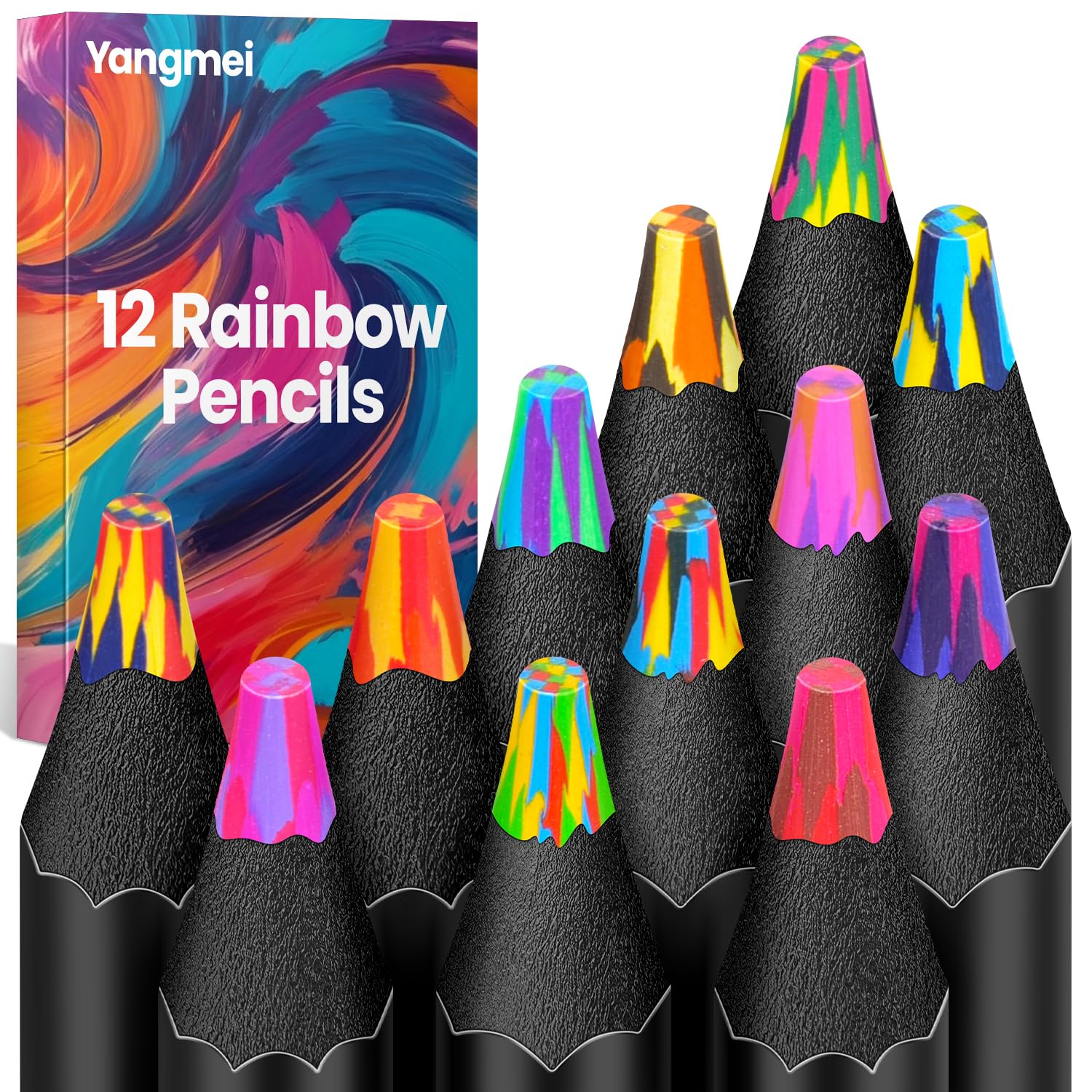
Yangmei Rainbow 12ct

Yangmei Rainbow 12ct

Fun rainbow effects

Doodle Score 9.4/10
Check Price

Worth Noting

  • Color changes are hard to control
Color Effect
Multicolor core
Pencil Count
12
Core Diameter
0.5 cm
Pre-sharpened
Yes
Read the full review

Each pencil carries a core mixed from more than one color, so a single stroke changes as the pencil moves. That is the whole appeal: a child can draw a line and get green, blue, and violet in the same pass, which makes doodles and abstract pages feel livelier than a standard pencil would.

The 12 pencils are thick, with a 0.5cm core that puts down a broad band of color. That width is the practical catch: a standard sharpener may not take the thick body, so a wide-hole sharpener makes life easier before the first point goes blunt. The colors are fun on scrap paper and journals, and the surprise is part of the draw.

We see these as a fun accent rather than a main set. They are great for doodles, abstract art, and making a plain journal page playful; they are not the pencils to buy if a child wants realistic shading or solid blocks of one color. For the right child, the surprise is the point, but keep a normal set nearby for everything else.

Bottom line: Treat the Yangmei rainbow pencils as a fun extra, not the main set: we like them for doodles and abstract art where changing color is the point.

How We Chose and Tested the Best Colored Pencils for Kids

I started with a shortlist of 40 sets sold by major retailers and art-supply shops, then narrowed it by age recommendations, core type, pencil count, packaging, and price per pencil. I cut sets with repeated shades, flimsy cases, and refill packs that cost more than the original box. That left 14 sets, which we used for three months in the places colored pencils actually live: the kitchen table after school, the back seat on weekend drives, and the floor during rainy-day projects.

Every set got the same workout. My 6-year-old and 9-year-old colored with them alongside me, pressing as hard as kids do, and I made swatches on copy paper and construction paper to see how color built up and whether light shades disappeared. I sharpened each pencil three times in a row and noted jams, cracked cores, and points that snapped on the first stroke. To check durability, we dropped open tins from table height onto hardwood and packed them uncased into backpacks for a week.

We also tracked the boring stuff: how many distinct colors a set really offered, whether the case kept pencils organized, and what the set cost per pencil once the novelty wore off. Smoothness mattered more than softness — some velvety cores smeared and wore down fast, while harder ones scratched the paper. The sets that scored best laid down rich color with normal pressure, sharpened cleanly, and still had intact points after a month of hard use.

How to Choose Colored Pencils for Kids

Match the barrel to the hand

Before color count, look at the shape. A triangular barrel gives a preschooler a consistent place to rest three fingers and keeps the pencil from rolling; BIC builds its 2-and-up set around that idea with a 4.3mm lead. Standard round pencils suit school-age children who already have a grip and want a lighter feel for long coloring sessions. A plastic twist barrel is thicker again, which some children like and others find clumsy. If your child is still gripping with a fist, start with the chunkier shape rather than the biggest palette.

Decide how much sharpening you can live with

Sharpening is the quiet cost of wooden pencils: it interrupts the activity, leaves shavings, and gives a child one more thing to manage. Twistables remove that job entirely, which is why they suit younger children and households where the art bin already looks like a disaster. Standard pencils give access to a wider range of cores and usually a lower cost per pencil. Whichever you choose, buy a sharpener that produces a clean curl rather than crushing the wood; a dull blade is often what turns a usable pencil into a broken one.

Read durability claims with the child in mind

Break resistance matters most for the child who presses hard or drops the pencil case. A thick 4.3mm lead is a genuine advantage for toddlers, while a soft artist core trades some strength for smoother laydown. Soft cores also wear down faster, so a child who likes bold color will spend more time at the sharpener. For schoolwork, a standard HB core is the safer all-rounder; for blending and shading, accept the extra maintenance. No pencil is unbreakable, and a good sharpener plus a case does as much for longevity as the lead itself.

Choose a color range you can grow into

Twelve colors are enough for a preschooler who mostly wants to fill shapes; 24 to 36 covers school projects and most home coloring without overwhelming anyone. A 72-color set earns its place when a child starts asking for specific shades, blending, or shading, and named and numbered barrels make a large set easier to navigate. More colors do not automatically mean better pigment. Look for clear, even laydown and a range that includes useful lights and darks, not just a long row of near-duplicates. Start smaller and add a specialty set later if a particular interest appears.

Frequently Asked Questions

Final Verdict

For most families, we recommend starting with the Crayola 36 set. It has the color range, comfortable barrel, and value that make it the easy default, and it leaves room for a better sharpener.

If your child is still learning to hold a pencil, we point you to the BIC Evolution Triangle; if sharpening is the daily battle, choose Twistables. For an older child ready to blend, the Prismacolor Scholar is the upgrade.