Arts & Crafts

Best Clay for Kids of 2026

Clay soft enough for a four-year-old to squish without help is usually the same clay that's a crumbly brick by the end of the week, and the stiff stuff that holds a decent sculpture fights back when small hands try to knead it. That tradeoff is the whole game in this aisle. What you actually want is clay that survives being left out overnight, sealed badly, and dropped on tile — and still feels good to play with on the third rainy afternoon. Color variety only counts if the colors stay distinct; value only counts if the tub's still usable next month.

I've scraped dried clay off a kitchen table at 9 p.m. more times than I'd like to admit, so we were picky about the boring stuff. Over the past three months, my team and I worked through 14 clays with kids from toddlers to about age ten. Container size surprised me most: a big tub of one color that actually gets used beats twelve tiny colors that harden into pebbles. The picks below earned their spot.

#1

Play-Doh 10-Pack

Play-Doh 10-Pack

Toddler starter play

Doodle Score 9.4/10
Check Price

Worth Noting

  • Contains wheat, so not for wheat-free homes
Type
Reusable compound
Contents
10 cans, 2 oz each
Age Range
2 years and up
Allergen Note
Contains wheat
Read the full review

Ten small cans, one per color, is the detail that makes this pack work in a playroom. Instead of one big lump that ends up on the floor, each 2 oz can gives a child a manageable portion and gives you an easy way to hand out colors. The 10-color spread covers the basics, from red and yellow to black and white, and kids can mix them. The cans are small, so a heavy-playing household will go through them; we think that is the right trade for a starter set, because the portions suit toddler hands and you can replace a single color.

What keeps Play-Doh at the top of this list is the feel. We found it soft enough for a two-year-old to squash and roll without much adult help, and it holds together for simple snakes, balls, and cookie-cutter shapes. It is reusable, so the play does not end when the first figure is done. That combination of softness, familiarity, and repeat play is why it is the safe default for most families.

If you want a keepsake, choose an air-dry kit from this list; Play-Doh is for the doing, not the keeping. That is exactly why we recommend it so readily: it invites repeat play, and the small cans make cleanup and storage less of a project. For a first clay, that matters more than a finished object.

Bottom line: The Play-Doh 10-pack is our default first clay for toddlers and preschoolers: soft, familiar, and easy to hand out in small cans.

#2

Sago Brothers 24-Color Kit

Sago Brothers 24-Color Kit

Guided air-dry projects

Doodle Score 9.4/10
Check Price

Worth Noting

  • Dried pieces can stay slightly flexible
Type
Air-dry clay
Colors
24 colors
Includes
3 tools and idea book
Certifications
ASTM F963-17, CPSIA, EN71
Read the full review

The 24-color kit is the reason this one earns a runner-up spot: it turns air-dry clay into a guided project instead of a lump of white material. The 72-page idea book, three tools, and 24 extra sealed bags mean a child can open one color, make a figure, and put the rest away without the whole kit drying out. We like that for families who want a finished piece to keep, not just a lump to squish.

The color range is the main draw. Twenty-four separate colors let kids mix and match without buying a separate paint set, and the sealed bags are genuinely useful for keeping unused clay soft. The kit is also labeled wheat-, tree nut-, and peanut-free, and it carries ASTM F963-17, CPSIA, and EN71 certifications. That makes it easy to hand to a child without reading a long label first, though you still need to check the age and the small tools.

Air-dry clay behaves differently from Play-Doh: pieces harden, so a mistake is harder to undo. The kit's instructions help, but younger kids may need an adult for thinner parts. Drying time varies with thickness. For a first air-dry kit with color and guidance, this is our pick.

Bottom line: For a guided air-dry project with color and tools built in, the Sago Brothers kit is the one we reach for.

#3

Crayola Model Magic 4-Pack

Crayola Model Magic 4-Pack

Mess-free modeling

Doodle Score 9.4/10
Check Price

Worth Noting

  • Thick pieces can take days to dry
  • Can crack or fall apart after drying
Type
Air-dry modeling material
Color
White
Contents
4 packs, 8 oz each
Age Range
3 years and up
Read the full review

The lightweight, almost foamy feel is what makes Model Magic different from a wet clay. It is soft in the hand, does not crumble into a mess, and leaves little residue on fingers or the table, which is the part we were struck by during cleanup. For a child who likes to squeeze and shape but not scrub, that is a real advantage.

The four 8 oz packs give you 2.5 lb of white material, and the white base is a clean canvas for markers or paint. It air-dries without baking, so a small figure can move from the table to a shelf. The trade-off is that this is a modeling material, not a detail clay: it is better for chunky animals and simple shapes than for fine features.

For the family that wants less mess and more color control, this is our pick. It is softer and lighter than the air-dry bricks here, and the white base takes paint and markers readily. For chunky figures and sensory play, that is a useful set of priorities.

Bottom line: We put Crayola Model Magic first for soft, low-mess modeling; it takes color well and cleans up easily.

#4

Ixiaoyoo 100-Color Kit

Ixiaoyoo 100-Color Kit

Party color variety

Doodle Score 9.2/10
Check Price

Worth Noting

  • Individual bags can be fiddly for small kids to reseal
Type
Air-dry clay
Colors
100 packs, 50 unique
Age Range
3 years and up
Pack Size
10 g each
Read the full review

The 100-pack count is the headline, but the number that matters is 50: this set has 50 unique colors plus 50 repeats, each in a 10 g pack. That is a lot of color variety for a child who wants to make a rainbow of small figures, and the individual packs make sharing easy at a party or a craft table.

We like the extras: three sculpting tools, a tutorial book, and extra bags for storing opened clay. The clay itself is soft and non-sticky, with little residue on hands or tables, so it suits kids who do not want a messy session. The colors are bright and easy to mix.

The individual packs are the reason this set works for a party or a classroom: you can hand one to each child and keep the rest sealed. For a child who works in small pieces, the color range is the fun. For a single large sculpture, a brick is the better format.

Bottom line: The Ixiaoyoo set is our pick for parties and color-hungry kids who want a huge selection in shareable packs.

#5

ESSENSON 24-Color Kit

ESSENSON 24-Color Kit

Animal-themed kits

Doodle Score 9.2/10
Check Price

Worth Noting

  • Some packs can arrive dry or sticky
Type
Air-dry clay
Colors
24 colors
Storage
24 containers
Includes
3 tools, 34 animal accessories
Read the full review

The 34 animal accessories are the first thing kids will grab, and they change the shape of the play: this is a kit for making a small zoo, not just a lump of clay. The project booklet gives a starting point, and the 24 colors mean the animals do not all come out the same shade. This is the kit we reach for when a child wants a play set with a theme.

The 24 containers are a practical touch that we appreciate more than the accessories. They give every opened color a place to go, which helps keep the clay soft between sessions. The clay itself is soft and low-mess, with little residue on hands or tables, and it air-dries without baking.

The kit is best for kids who like small figures and guided ideas; a child who wants to freestyle a big sculpture may find the accessories more of a distraction than a help. The colors are bright, and the tools are simple enough for small hands. For a rainy-day project with a clear theme, this is a strong choice.

Bottom line: Animal-obsessed kids get the most from the ESSENSON kit, which we chose for its accessories, storage, and guided play.

#6

Crayola Modeling Clay 2 lb

Crayola Modeling Clay 2 lb

Reusable older-kid play

Doodle Score 9.2/10
Check Price

Worth Noting

  • Won't harden into a permanent piece
Type
Non-drying clay
Colors
8 colors
Weight
2 lb
Age Range
4 years and up
Read the full review

The non-drying promise is the whole point here. This is clay you can leave out, reshape, and come back to, so it suits a kid who builds and rebuilds. The 2 lb pack comes in eight bold colors, and a little goes a long way.

The firmness is the first thing we noticed. It takes more kneading than Play-Doh, and it can feel stiff straight from the pack, especially in cooler weather. Once it warms up, it holds its shape well and is good for making thicker figures, letters, and simple structures. A younger child who wants instant softness will be happier with the top pick.

The eight colors can be mixed, and because the clay never hardens, the leftovers are not wasted. That makes it a good choice for a craft shelf or a classroom where the same tubs get used again. It is honest about what it does.

We keep this one for the kid who wants to keep shaping without the clay drying out. The 2 lb pack gives a family plenty to work with, and the eight colors are enough for most projects. For soft, instant play, choose Play-Doh; for a clay that stays workable, this earns its place.

Bottom line: We kept Crayola Modeling Clay for older kids who want a firm, reusable clay they can reshape without hardening.

#7

DAS Air-Hardening Clay

DAS Air-Hardening Clay

Teen sculpting

Doodle Score 9.2/10
Check Price

Worth Noting

  • Can crack in thin sections
Type
Air-hardening clay
Color
White
Weight
2.2 lb
Age Range
Teen and above
Read the full review

The teen-and-up age label is the first thing to notice. This is not a toddler compound; it is a proper air-hardening clay for a kid who wants to sculpt a figure and keep it. The 2.2 lb white brick is enough for a few small projects or one larger piece, and it hardens without an oven.

The texture is where DAS earns its place. It is smooth and even, rolls thin, and takes detail well, which makes it a better fit for faces, small animals, and jewelry than a soft play dough. We appreciate that it does not need baking, so the project can dry on a shelf. It also takes acrylic paint well once it is hard.

We see this as the pick for a teenager or a patient older child who wants a more serious clay. Younger kids will find it harder to work and less forgiving, and the teen label is there for a reason. If you want a family clay that a six-year-old can open and use, choose a softer kit from this list.

Bottom line: DAS is the air-hardening clay we trust for teens and patient older kids who want smooth, detailed sculpting.

#8

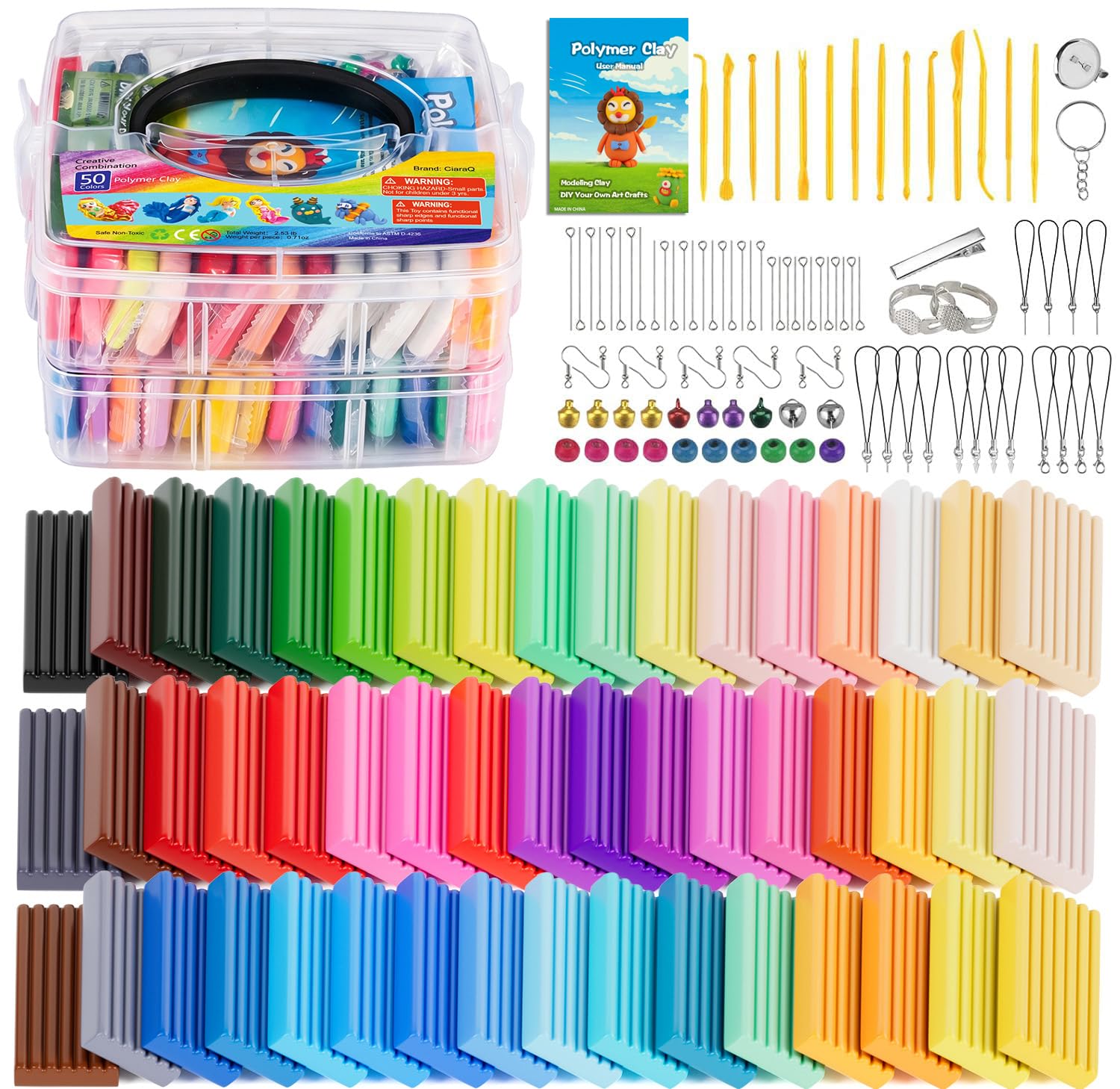
CiaraQ 50-Color Polymer Kit

CiaraQ 50-Color Polymer Kit

Polymer older-kid crafts

Doodle Score 9.0/10
Check Price

Worth Noting

  • Finished pieces can be brittle
Type
Oven-bake polymer clay
Colors
50 colors
Age Range
4 years and up
Pack Size
0.70 oz each
Read the full review

The oven-bake step is the dividing line: this is not a grab-and-play dough, and it is not the right first clay for a preschooler. For an older kid who wants to make a charm, a small figure, or a piece of jewelry, the 50-color kit is a serious step up in detail.

Each color is a 0.70 oz block, and the kit includes 14 tools and a tutorial book. Polymer clay stays soft until it is baked, so a project can wait on the table without hardening. The colors are vibrant, and the kit is labeled ASTM D-4236 compliant and free of wheat, nuts, and peanuts.

The material is not foolproof. Some blocks can arrive hard and need a lot of kneading, and if they crumble, they are difficult to bring back. The small blocks also mean a larger sculpture takes several colors. This is a kit for a kid who enjoys the process and has an adult nearby for the oven.

This is the polymer kit we point to for a crafty tween or teen who will follow package directions and work with an adult on the oven. It rewards patience with detail and color, but it is not a substitute for soft compound. If your child wants to squish and restart, choose a reusable clay instead.

Bottom line: Our polymer pick for crafty tweens and teens is the CiaraQ kit; it rewards patience and adult help at the oven.

How We Tested Kids' Clay at the Kitchen Table

We built the shortlist by working through the clay aisle and the big marketplace listings, then cutting anything with vague age guidance, a container that looked too small to actually play with, or a color assortment that was mostly one shade. That left 14 clays, which we handed off to families with kids ranging from toddler age to about ten.

Testing ran for three months, mostly at kitchen tables on rainy Saturdays and after school, plus a couple of birthday afternoons when six kids descended at once. We opened every tub fresh and noted how hard it was to get the first lump out — some needed a grown-up with a butter knife. We watched whether colors bled together when a five-year-old mashed them, whether the clay left a sticky film on hands and tabletop, and how far a crumb trail followed the kids across the floor.

Each clay got the same abuse test: a lump left on a plate overnight, a lump sealed back into its tub by a child, and a small figure left to dry for a week. We checked whether the overnight lump was still workable in the morning and whether the resealed tub had gone stiff by day three. We also measured the actual usable amount rather than trusting the label, since container size and fill level varied wildly, and timed cleanup with a damp cloth versus a scraper. The clays that made the list came back out of the tub soft in week six, not just week one.

How to Choose the Right Clay for Kids

Start With the Play Pattern

Reusable compound, air-dry clay, and oven-bake polymer are three different hobbies sharing a shelf. Reusable compound is for the child who wants to squish, roll, and start over; it stays soft and can be played with again. Air-dry clay is for a project with an end point: the piece hardens and can be painted. Polymer clay stays soft until baked and is best for older kids who want detail. We start here because buying the wrong type is the mismatch that disappoints most.

Match the Clay to the Child's Hands

Softness matters more than age on the label for younger children. A 2- or 3-year-old needs a compound that yields to little hands without a lot of kneading; a stiff clay can turn craft time into a hand-strength exercise. Older kids can handle firmer air-dry clay and polymer, which hold sharper detail. Our rule: if a child asks for help opening the pack and then gives up on the first lump, the clay is too firm. Choose the softest option for beginners, and save the firm clays for kids who already enjoy the process.

Plan for Drying and Finished Pieces

Air-dry clay is not instant. Thin pieces can harden in a day or two, while thick pieces can take several days, and the outside can feel hard before the inside is dry. Thin limbs and wings are where cracks show up, so build a little thicker than you think you need and let the piece dry slowly. Keep unused clay sealed. If the project must survive handling, choose a clay that is meant to harden, and expect some fragility in delicate shapes.

Count Unique Colors, Tools, and Storage

A big color count can be misleading. A 100-pack may contain 50 unique colors and 50 repeats, and a 10 g pack is a small amount of clay. Check the per-pack weight, not just the number of packs, and look for storage bags or containers if you want the kit to last. Tools and a project book add value for a child who wants ideas, but a child who free-styles may not need them. We prioritize a workable amount of clay and a way to keep it soft.

Check Safety Labels and Cleanup

Read the age range and the allergen line before you buy. Play-Doh contains wheat, so a wheat-free household needs a different compound. Oven-bake polymer clay is not a solo activity for young children; an adult handles the oven and follows the package directions. Small tools and accessories belong away from children who still put things in their mouths. For cleanup, a washable mat or a sheet of parchment under the project saves time, and most water-based clays wipe up with warm water.

Frequently Asked Questions

Final Verdict

Start with the Play-Doh 10-pack for most toddlers and preschoolers. It is the softest, most familiar default here, and the ten small cans make sharing and cleanup easy; just check the wheat if that matters in your home. For a keepsake project, choose the Sago Brothers kit or Model Magic. For older kids who want detail, DAS is the air-dry pick for teens, while CiaraQ is the polymer kit for a crafty tween. The right choice follows the child's play style more than the color count.