RC & Vehicles

Best Toy Motorcycles of 2026

A toy motorcycle is a simple thing that kids fall for instantly: handlebars, wheels, and the promise of speed. But anyone who has handed a kid a cheap plastic bike knows the letdown that follows—a snapped handlebar, a wheel that won't turn, or a toy that's too small to feel real. After testing 14 toy motorcycles over three months, we found the ones that balance looks, playability, and toughness.

What surprised me most was how differently kids played with each one. Some models invited pretend road trips; others ended up as shelf decorations because they were too fiddly or fragile. We paid attention to the details that matter: whether the kickstand actually holds the bike up, if the wheels roll smoothly on carpet and pavement, and whether the paint survives a tumble. Value isn't just about price—it's about how many afternoons of play you get before something breaks. The list below has the models that earned their place in the toy box.

#1

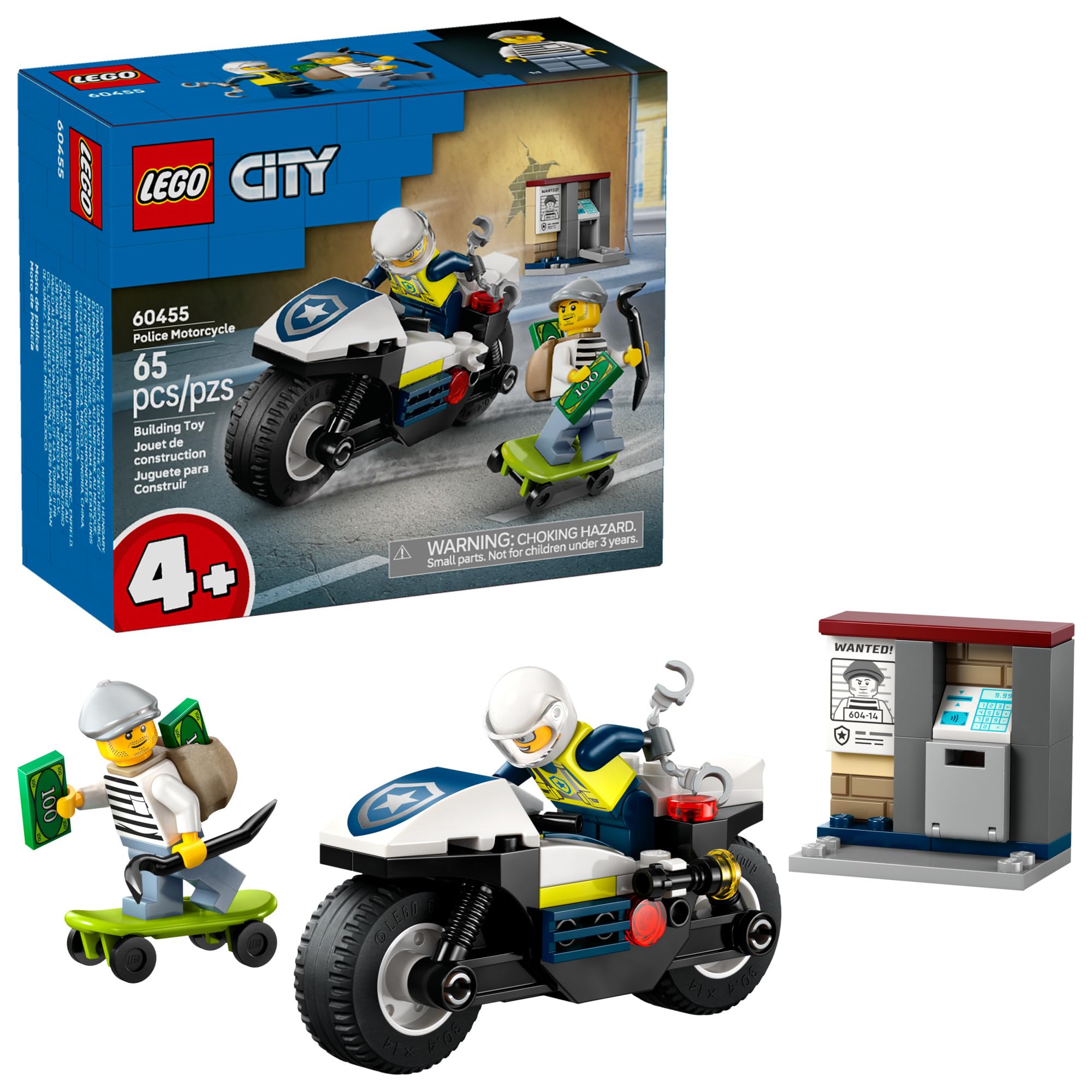
LEGO City Police Motorcycle
LEGO City Police Motorcycle

Young builders

Doodle Score 9.8/10
Check Price

Worth Noting

  • Small set finishes quickly
Pieces
65
Minifigures
2
Starter Brick
Included
Recommended Age
4 years and up
Read the full review

Some LEGO sets are an afternoon; this one is a quick win. With 65 pieces and a Starter Brick, the police motorcycle comes together fast enough for a four-year-old to stay engaged, and the finished bike is sturdy enough to zoom across the floor. The set gives you a police officer, a crook, an ATM with toy money, and a skateboard, which is a lot of story for a small box.

We liked that the build does not feel like a chore. The pictorial instructions are easy to follow, and the wide tires on the motorcycle make it feel planted when a child pushes it. The handcuffs, flashlight, crowbar, and wanted poster are the kind of extras that get picked up and used, not just dumped in a bin.

For a first LEGO set or a small gift, the quick build is the point. It gives a young child a complete chase scene without a pile of pieces to manage, and it mixes easily with other LEGO. If you want a longer build, the Technic Kawasaki is the better fit; if you want the set that gets built and played with right away, this is the one.

Bottom line: We reach for this small LEGO set with young builders: a quick, satisfying police motorcycle chase with two minifigures and plenty of story pieces, best for ages four and up.

#2

Supercross 5-Pack

Supercross 5-Pack

Everyday bike play

Doodle Score 9.6/10
Check Price

Worth Noting

  • 1:24 scale looks smaller than expected
  • Starting gates are light scenery
Scale
1:24
Rider Figures
5 removable
Bikes Included
5
Recommended Age
3 years and up
Read the full review

Five bikes in one box is the reason this set earns our top spot. Each 1:24 die-cast motorcycle arrives with a rider and a starting gate, so a child can line up a full gate and start racing without waiting for a build. The metal motors and forks give the bikes a reassuring heft, and the riders stay on well enough for make-believe jumps while still coming off when a child wants to swap them.

What we appreciated most is how little setup gets between the box and play. There is no assembly, no sticker sheet to fight, and no controller or battery to manage. The bikes are small enough to carry in a jacket pocket and sturdy enough that we did not feel we had to hover. For a child who wants a handful of bikes to race across the floor, that is exactly the right scale.

The starting gates are a nice touch for staging a race. We also liked that the set covers five named riders, which makes it feel like a starting lineup rather than five identical toys. If you need one larger showpiece, look to the Maisto; if you want the set that gets picked up most often, this is it.

Bottom line: Five die-cast bikes with removable riders make this the set we recommend first for kids around three and up; it is ready for play and collecting straight out of the box.

#3

Maisto Harley Street Glide

Maisto Harley Street Glide

Desk display

Doodle Score 9.6/10
Check Price

Worth Noting

  • No kickstand or display stand
Scale
1:12
Material
Die-cast metal and plastic
Dimensions
8.75 x 3.5 x 5 inches
Recommended Age
3 years and up
Read the full review

The first thing you notice is the scale. At 1:12, this Street Glide has enough presence to read as a model rather than a miniature, and the black finish and Harley-Davidson badging give it the look of a showroom bike. The die-cast body has a satisfying weight, and the detail around the engine and saddlebags rewards a close look.

We think it is at its best on a desk or shelf. The proportions are convincing, the paint has a clean sheen, and it holds still for display. The fine detail comes with a trade-off: this is a model to handle carefully, not a bike to send down a staircase. That is not a knock on the build; it is a reminder that the Street Glide is a replica first.

It is the kind of model that makes a desk feel intentional. If you want a play bike, the Supercross set is the better buy. If you want a Harley for the shelf, this is the one we reach for. The detail and scale do the work, and the Harley badging makes it feel like a specific bike rather than a generic toy.

Bottom line: For the shelf rather than the toy box, we recommend this 1:12 Street Glide: a detailed, licensed Harley replica with real presence, though rough play is not its job.

#4

LEGO Technic Kawasaki H2R

LEGO Technic Kawasaki H2R

Older builders

Doodle Score 9.6/10
Check Price

Worth Noting

  • Not for rough floor play
Scale
1:8
Pieces
643
Display
Kickstand
Recommended Age
10 years and up
Read the full review

The 1:8 scale is what makes this Technic Kawasaki feel like an event. It is a big, involved build with 643 pieces, and the finished model has the stance of a track bike rather than a toy that happens to look like one. The steering, suspension, two-speed gearbox, and four-piston engine are not just decoration; they give the build something to do after the last brick clicks into place.

We found the build absorbing: the instructions are clear, the mechanical sections are satisfying to assemble, and the kickstand lets the finished bike sit upright on a shelf. The custom windshield and Kawasaki tank logos add a finished look that rewards the effort.

At ten and up, it is a builder's project, and the small mechanical parts reward careful assembly. But if you want a display piece that also explains how a motorcycle works, this is the most ambitious pick here. The build time is real, and that is part of the appeal.

Bottom line: Older builders who want a real project should look at this 1:8 Kawasaki: steering, suspension, and a gearbox make the 643-piece build rewarding, and the kickstand gives it a display life. We recommend it for ages ten and up.

#5

Playskool Kid Arachnid

Playskool Kid Arachnid

Preschool superhero play

Doodle Score 9.6/10
Check Price

Worth Noting

  • Few interactive features beyond rolling
Included
Figure and motorcycle
Material
Plastic
Figure Size
5 inches
Recommended Age
3 years and up
Read the full review

The first thing we noticed is how much motorcycle there is around the figure. The five-inch Kid Arachnid sits on an oversized bike that feels made for small hands, and the whole thing stands on its own without a kickstand. There are no tiny pieces to lose, and the plastic has the kind of give that survives being dropped, dragged, and parked in the middle of a hallway.

We liked it most for the age group it targets. A three- or four-year-old can put the figure on, take it off, and push the bike without needing help, and the Miles Morales costume is easy to recognize. The wheels roll and the figure has moving arms and legs, which is enough for pretend play at this age. The simple shape gives small hands a clear place to grab.

The size and durability are the reason to choose it over a smaller die-cast bike. For a preschooler who is rough on toys, that trade makes sense. For an older kid who wants a motorcycle to race, the Supercross set gives more play for the space.

Bottom line: We like this Kid Arachnid set for preschoolers who want a superhero to ride: a chunky five-inch figure on an oversized motorcycle that stands up to rough play, though it does little beyond roll.

#6

BDTCTK Kawasaki H2R

BDTCTK Kawasaki H2R

Sound and display

Doodle Score 9.4/10
Check Price

Worth Noting

  • Fine parts make it better for display than rough play
Scale
1:12
Material
Zinc alloy, rubber, ABS plastic
Dimensions
6.7 x 2.4 x 1.8 inches
Recommended Age
3 years and up
Read the full review

The tank badge is the detail we could not stop noticing: it reads Kowalski rather than Kawasaki. That is a small thing on a shelf model, but it is exactly the kind of detail a motorcycle fan will spot from across the room. The rest of the bike is more convincing, with a zinc-alloy tank, rubber tires, and a stance that looks close to the real Ninja H2R.

We were pleasantly surprised by how much the little extras add. The front wheel steers with the handlebars, the suspension moves, and the light and sound effects give a child a reason to press and play rather than just look. The 1:12 scale is big enough to feel substantial in the hand, and the working kickstand helps it sit upright on a desk.

The lights and sound are a novelty, but the working suspension and steering are the details that keep it interesting. For a motorcycle fan who wants a detailed desk piece, it earns its place; for a child who wants a bike to race across the floor, the Supercross set is the better choice.

Bottom line: Lights, sound, and working suspension give this 1:12 Kawasaki a playful edge, and we recommend it for older kids and motorcycle fans who want a detailed desk model.

How We Tested the Best Toy Motorcycles

We started with a shortlist of more than 40 toy motorcycles from major retailers, filtering by age recommendations, materials, price, and size. We narrowed it down to 14 models that represented the range: die-cast minis, plastic ride-ons, and remote-control options.

Over three months, we handed them over to a group of kids ages 2 to 8 in living rooms, driveways, and backyards. We watched how quickly they reached for a particular bike, how long they stayed with it, and what happened when play got rough.

We timed assembly and noted which ones needed adult tools. We rolled each motorcycle across carpet, tile, and pavement to see if wheels caught or wobbled. We dropped them from waist height and rammed them into walls to check for cracks, loose parts, or chipped paint. We measured each one against a typical 4-year-old and weighed it to see if it was easy for small hands to carry.

Value came down to how each bike held up after weeks of daily play—not just the sticker price. We also checked whether the kickstand kept the bike upright and whether stickers or decals peeled after cleaning. The ones that made our list survived all of it.

How to Choose Toy Motorcycles

Start with age and small parts

Age ratings are doing real work here. A 1:24 die-cast bike and a 65-piece LEGO set both contain small pieces that are not safe for a child who still mouths toys, so the box age is a better guide than the child's excitement. For a three- or four-year-old, look for a chunky figure-and-vehicle set or a starter build with few pieces. For a ten-year-old, a Technic model with a gearbox and a kickstand is a project rather than a toy to hand down. We prefer to size up in difficulty than size down in safety.

Choose pre-built, buildable, or both

A pre-built motorcycle gives you instant play: the Supercross bikes and the Maisto Street Glide come out of the box ready to line up or display. A buildable set trades that instant start for the pleasure of construction and a model the child helped make. The difference in commitment is large: 65 pieces is a short build for a young child, while 643 pieces is a much longer project for an older builder. If the child is new to LEGO, start with a Starter Brick set; if they already build, the Technic route gives them mechanisms to explore.

Scale is a shelf decision as much as a play decision

Scale tells you how the bike will live. A 1:24 model is compact enough for a pocket or a cake topper, but it can look smaller in person than the photos suggest. A 1:12 model has more shelf presence and enough weight to feel substantial, while a 1:8 build is a centerpiece that needs real display space. Before you choose, decide whether the motorcycle will be raced across the floor, stood on a desk, or packed away in a bin. That answer matters more than the number on the box.

Look at what moves and what comes loose

Moving parts are the difference between a model and a toy. Steering, suspension, a working kickstand, or a spinning wheel give a child something to do; lights and sound add a short burst of novelty. But the same detail that makes a model convincing can also make it fragile. Check whether the rider stays on, whether the stand is included, and whether the small parts are secured. For rough play, fewer loose pieces and a simple shape are the better bet.

Count the bikes, riders, and extras

A five-pack changes the play pattern: children can hand out bikes, stage a starting gate, and trade riders, while a single display model is more about looking than sharing. Riders, starting gates, handcuffs, or a wanted poster can extend a story, but only if they stay with the bike. We pay attention to whether the extras are usable or just scenery. If the set will be played with by more than one child, multiple bikes are worth more than one larger motorcycle.

Frequently Asked Questions

Final Verdict

Start with the Supercross five-pack. It gives you the most motorcycles to actually play with, riders included, and a durable die-cast feel that makes it the easy default for kids around three and up. If your child would rather build than race, the LEGO City police chase is the better small gift; if the motorcycle is headed for a shelf, the Maisto Street Glide has the presence and detail. The Technic Kawasaki is there for the older builder who wants a project, not a floor toy.