Outdoor Play

Best Toy Baseball Sets of 2026

A toy baseball set looks simple in the box, until a 3-year-old wants to swing before you've figured out where the tee goes. The good ones buy you real backyard innings: a bat small enough to control, a ball that doesn't vanish into the hedge, and a tee that stays put after a miss. The bad ones wobble, crack at the seam, or make assembly a two-person job. What you're really buying is a little independence — the chance for a kid to step up, swing, and reset without an adult hovering.

I've spent five months with 14 sets, from chunky toddler bats to tee-and-base combos for older kids, and the pattern was clear: weight and size matter more than the box suggests, and the sets that held up had fewer parts to snap together. One bit of toy-baseball wisdom: check the balls before you fall for the bat — molded foam survives driveway concrete better than stitched plastic. The picks below are the ones that kept the game going.

#1

Little Tikes T-Ball Set

Little Tikes T-Ball Set

Toddlers 18 months+

Doodle Score 9.6/10
Check Price

Worth Noting

  • Ball count can arrive short of five
Weight
1.5 lb
Age Range
18+ months
Tee Height
Adjustable
Balls Included
5
Read the full review

The 18-month age floor and five-ball kit are what make this the set we recommend first. The tee adjusts low enough for a toddler who is still learning to stand and swing, and the oversized bat gives small hands something to grip without a lot of instruction. Five balls matter more than they sound: a toddler can hit, chase, and reset without a grown-up hunting through the grass after every swing. That combination is why it earns the top spot for the youngest beginners here.

The rest of the design is equally practical. The tee has an adjustable height, and the set hangs on a wall hook when play is over, so it does not become another pile of plastic in the yard. We appreciate that kind of built-in cleanup: the set has a place to go, which makes it more likely to come back out. The plastic is light, but that is part of what makes it easy to move from driveway to grass.

The trade-off is stability. A light base can tip on uneven ground or when a child hits the top of the tee instead of the ball. On a flat driveway or a short-cut lawn it is less of an issue, and the fix is mostly placement rather than repair. The five-ball count is the other thing to confirm when the box arrives; the set is sold as a five-ball kit, and that is the number to check before a birthday morning.

For a first tee-ball set, that is a fair exchange. The Little Tikes set does not try to be a training system; it gives a toddler a big ball, a big bat, and a tee that can start low. We kept coming back to it for the age group that needs the most help making contact, and that is the recommendation. The best sign is that it needs so little coaching: the ball is big, the bat is light, and the tee can be set at the right height.

Bottom line: This is the toddler tee-ball set we recommend first: five balls, an adjustable tee, and wall storage make it the most complete starter here.

#2

Franklin Foam Bat & Ball

Franklin Foam Bat & Ball

Indoor soft play

Doodle Score 9.4/10
Check Price

Worth Noting

  • No tee included
  • Foam can tear at the handle
Material
Foam
Age Range
3+ years
Bat Length
24 in
Ball Diameter
3.5 in
Read the full review

The oversized foam barrel and 3.5-inch ball are the whole point of this Franklin set: they give a very young child a large, soft target and a bat that is hard to miss with. At 24 inches and just over 10 ounces, the bat is light enough for a toddler to swing one-handed, and the foam ball is easy to see and track. It is a bat-and-ball set, not a tee-ball set, so it works best as a supplement rather than a first full starter kit.

We like it for indoor swings and for the stage when a child wants to hit something but cannot yet manage a tee. The foam is soft enough that an off-line swing is unlikely to damage a window or a sibling, and the big ball makes contact feel achievable. The MLB graphics are a nice touch for a kid who wants to feel like a pro, and the light weight means a toddler can carry it around without help. Think of it as the bat you leave by the door for quick park swings, not the set that teaches tee mechanics.

Bottom line: We like this soft bat-and-ball pair for indoor swings and very young beginners, but it is a supplement to a tee set, not a replacement.

#3

GoSports LotBall Set

GoSports LotBall Set

Older kids

Doodle Score 9.4/10
Check Price

Worth Noting

  • Only three balls included
Ball Type
Swerve-pitch plastic
Bat Length
33 in
Set Weight
11.7 oz
Balls Included
3
Read the full review

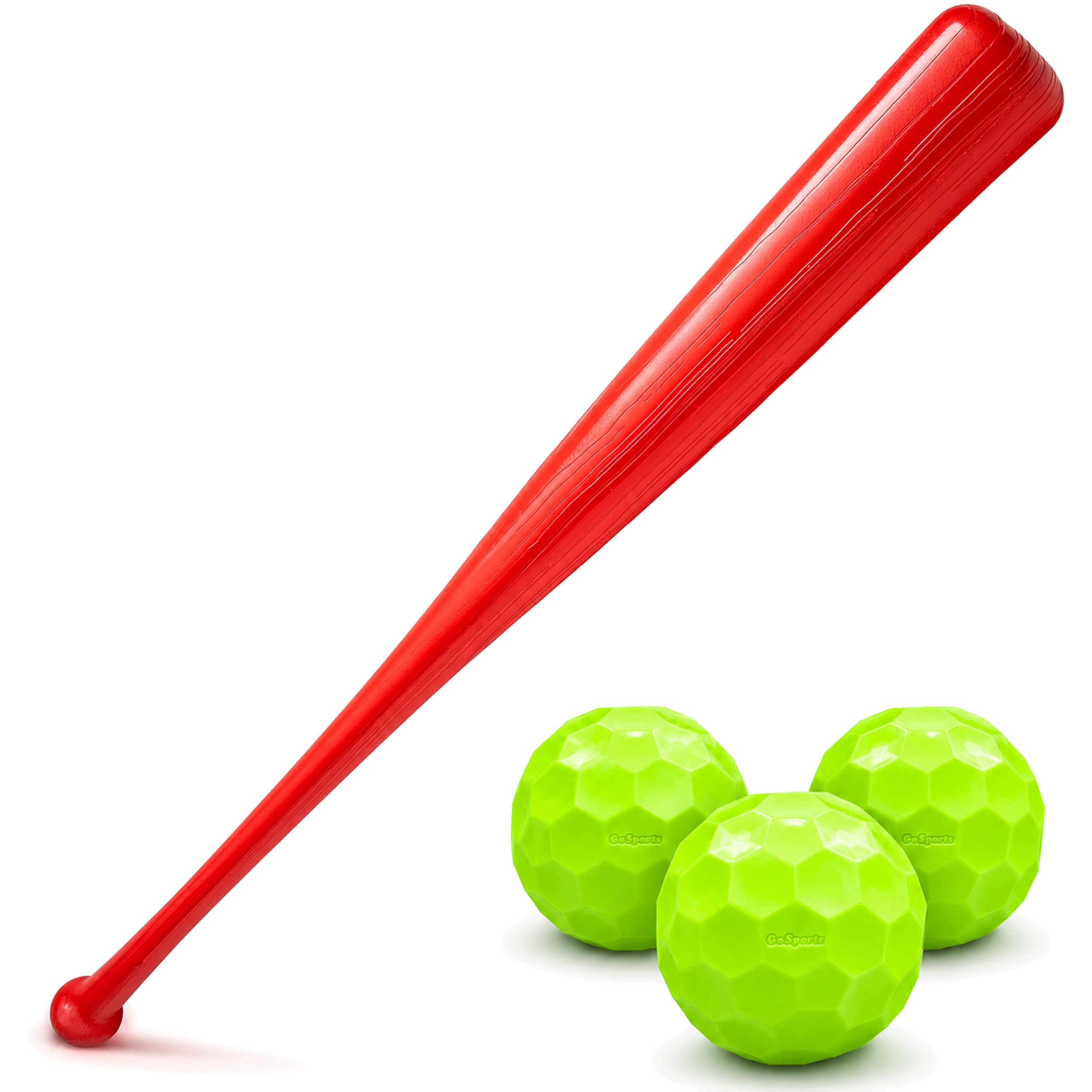
The 33-inch bat and swerve-pitch balls make this a different kind of toy baseball set. Instead of a tee, you get a long plastic bat and three hollow balls designed to curve, slide, and rise when thrown. The set is meant for grass, dirt, sand, or concrete, and it works with as few as two players. That puts it in backyard-game territory rather than toddler practice.

The long bat is the useful part for older kids. It gives a child who has outgrown the fat toddler bat a more realistic swing, and the lightweight plastic is safer than a hardball without feeling like a pool noodle. The curveball gimmick is what gets everyone involved, though; it turns a simple game of catch into something with a little showmanship, and it gives siblings of different ages a reason to play together.

We like it best as the set that comes out when the tee has been outgrown but the backyard still needs a game. It is not a trainer and it is not for toddlers; the balls need to be thrown, and the bat is long enough that a small child will drag it. For the right age, that trade-off is the fun. The curve is the hook; the long bat is what makes it feel like real baseball.

Bottom line: For older kids and adults who want curveballs in the backyard, this is the bat-and-ball set we choose over a toddler tee.

#4

Franklin Pro Style Bat & Ball

Franklin Pro Style Bat & Ball

Wiffle-style games

Doodle Score 9.4/10
Check Price

Worth Noting

  • Only one ball included
  • Ball can dent or crack with hard use
League
MLB licensed
Weight
6.4 oz
Bat Length
30 in
Balls Included
1
Read the full review

The 30-inch bat and single plastic ball are a deliberately simple combination. This is the bat you grab for wiffle-style games in the backyard, not a tee-ball trainer with a stand and a bucket of balls. The slim grip and MLB graphics make it look more like a real bat than the fat toddler models, which is the point for a kid who has moved past the beginner stage.

At 6.4 ounces, it is light enough for a school-age child to swing without dragging, and the plastic construction is safer than a metal or wood bat when the game moves indoors or into a crowded yard. The bat is balanced for a simple swing, and the 30-inch length gives older kids more reach than the toddler models.

The bat itself is not a precision piece. It has a basic grip and a hollow sound when the ball makes contact, but that is what a plastic backyard bat is. It works with plastic wiffle balls, which makes it useful if you already have a bucket of them. The MLB graphics are the part that makes a kid feel like they are using real gear.

We like it as a simple way to add a bat to an existing backyard game, not as a complete first set. For a five-year-old, the length will be too much; for an eight- or nine-year-old, it is the step up from the toddler bat. The MLB look is what sells it to the kid; the simple plastic is what keeps it in the yard.

Bottom line: Our pick for wiffle-style swings is this simple 30-inch bat and ball, provided the child is old enough for it.

#5

Ninja Blast Tee Ball Set

Ninja Blast Tee Ball Set

Adjustable practice

Doodle Score 8.8/10
Check Price

Worth Noting

  • Only three balls included
Bat Type
Soft
Age Range
3+ years
Tee Modes
Standard and hanging
Balls Included
3
Read the full review

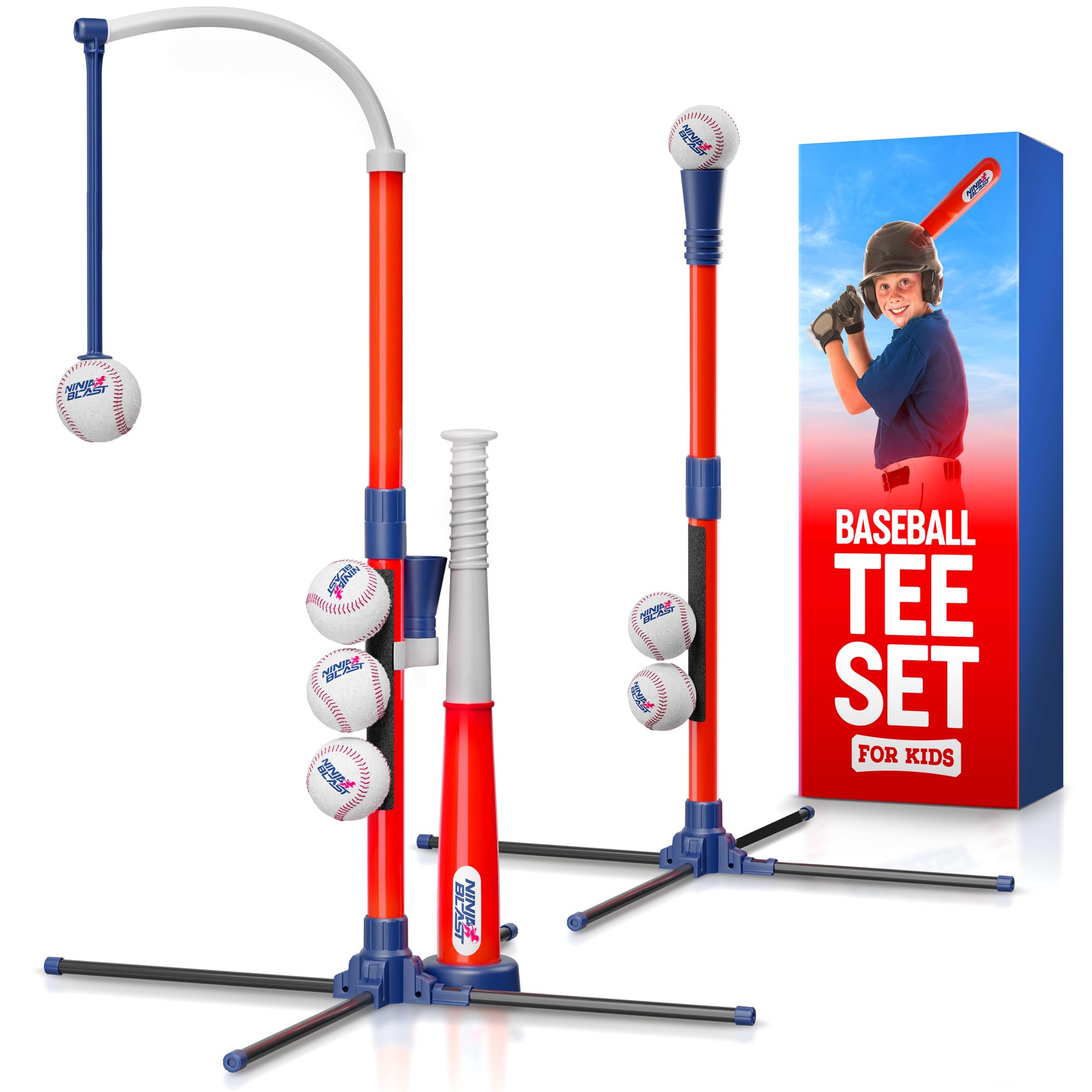
The convertible tee is the reason to look at this one. It starts as a standard batting tee, then switches to a hanging ball for a different kind of swing, and the height adjusts as the child grows. That gives a young hitter two ways to practice without buying a second set. The three soft balls and soft bat keep the whole thing light enough to move from the yard to the living room, and we like that flexibility for a child who gets bored with the same setup.

The pieces are also easy to assemble, which matters when a birthday morning has a short attention span. The standard tee is the more useful mode for a true beginner; the hanging ball is the change of pace once a child is making contact. Neither mode is built for a hard-swinging four-year-old, though. This is a light-duty set, and the tee and bat are best kept for supervised practice rather than daily backyard abuse. It suits the kid who wants to try a hanging ball before moving to a pitched ball, not the one who treats the tee like a tackling dummy.

Bottom line: The convertible standard-or-hanging tee is what earns this set our runner-up spot for adjustable practice.

#6

ToyVelt T-Ball Set

ToyVelt T-Ball Set

Large ball sets

Doodle Score 8.8/10
Check Price

Worth Noting

  • Plastic can crack with hard use
Storage
Hang-on-wall
Age Range
3–7 years
Balls Included
9
Set Dimensions
3.4 x 10 x 21.2 in
Read the full review

The nine-ball count and wall-hang storage are what separate this ToyVelt set from the usual toddler kit. Nine balls means fewer interruptions when one rolls under a car, and the stand hangs out of the way when play is done. The set is sized for ages 3 to 7 and comes with a bat and tee, so it covers the basics without a lot of extra pieces.

We think the ball count does more for a family than a fancy feature would. A toddler can hit a few, lose a few, and still have another ball ready, which keeps the game moving. The storage hook is a small thing that makes a real difference in a garage or a mudroom, and assembly is straightforward.

The catch is the tee. It is a fixed-height stand in practice, so measure the child against the 21-inch set before you buy. For a patient three-year-old on a flat driveway, that is manageable; for a tall five-year-old, the height is the bigger issue. It is a generous kit for the money, as long as the fixed tee suits your child.

The extra balls are the feature a family notices every afternoon; the height is the one to check before ordering. The set is not trying to grow through preschool, and that is fine if you are buying for a toddler who mostly wants to swing and chase.

Bottom line: We kept coming back to the nine-ball kit and wall storage, though the fixed-height tee and light plastic suit gentler play.

#7

CeleMoon Foam T-Ball Set

CeleMoon Foam T-Ball Set

Foam ball play

Doodle Score 8.6/10
Check Price

Worth Noting

  • Bat can break with hard swings
Age Range
3–5 years
Bat Length
22 in
Tee Height
22 in
Balls Included
8
Read the full review

The eight-ball foam kit and carry bag are the first things you notice about this CeleMoon set. You get a 22-inch bat, a 22-inch tee, and eight balls, which is more ammunition than most toddler sets provide. The bag keeps the whole thing together, so it can move from the yard to a grandparent’s house without a separate box of loose balls.

The foam construction is the reason to choose it for indoor or mixed-age play. The bat and balls are soft, so a missed swing is less likely to take out a lamp or a younger sibling, and the bigger balls are easier for a toddler to track. The tee sits at a fixed 22-inch height in practice, which is fine for a two- or three-year-old but short for a taller five-year-old.

The foam balls also pick up dirt and grass, so they need a quick wipe before indoor play. The carry bag helps keep the set together, though it does not keep the balls clean. The eight-ball count is the practical luxury here: you can lose two and still have a game.

We like this one for a playroom, a daycare, or a family with several small children cycling through. The soft pieces are forgiving, and the eight-ball count keeps the game going. The bag is the quiet hero: it turns a scatter of foam balls into one thing you can hang in the garage.

Bottom line: We like the eight-ball foam kit for soft indoor-outdoor play, with the caveat that the bat is not built for hard swings.

#8

Aoneky Mini Foam Bat

Aoneky Mini Foam Bat

First birthday

Doodle Score 8.6/10
Check Price

Worth Noting

  • Only one ball included
Material
Foam
Age Range
1–3 years
Bat Length
11.8 in
Balls Included
1
Read the full review

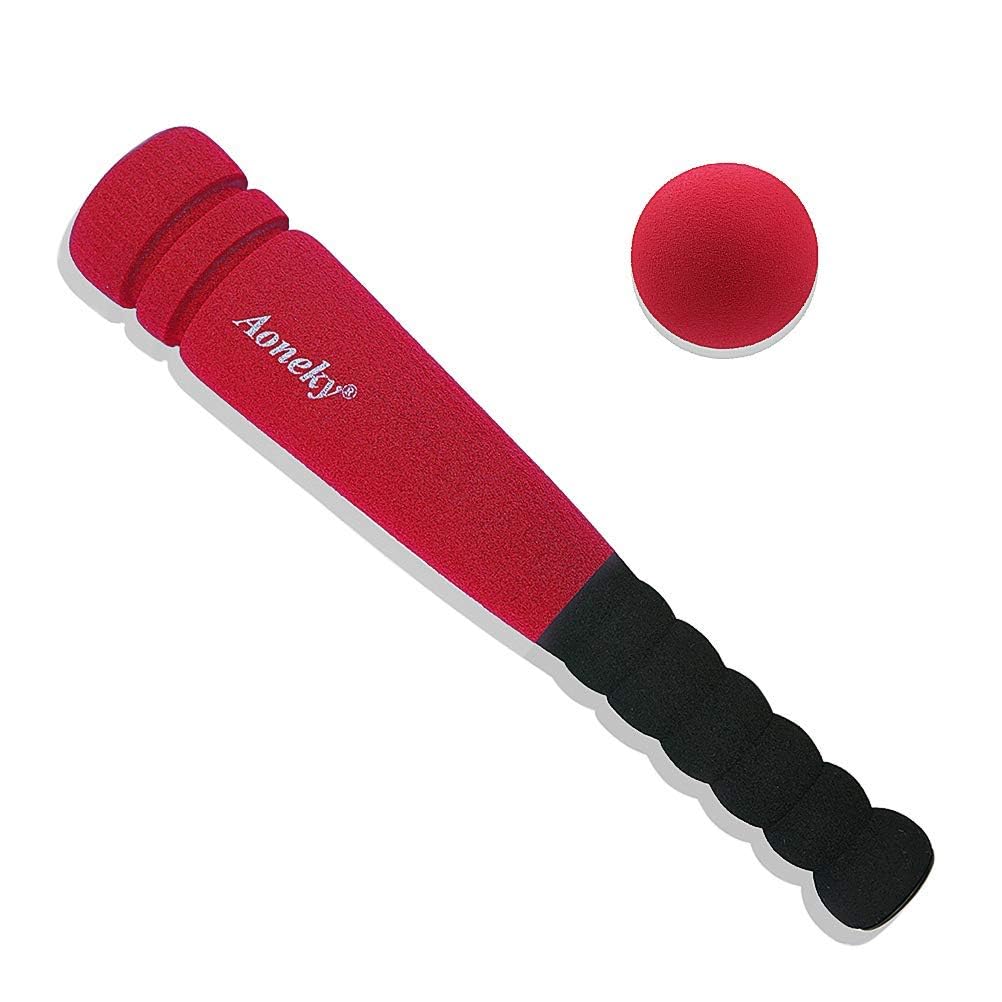
At 11.8 inches, this Aoneky bat is not a miniature version of a full tee-ball bat; it is a first bat for a child who is still learning to hold something by the handle. The foam-covered barrel and single soft ball are sized for small hands, and the whole thing weighs only a few ounces. It comes ready to use, which is the right amount of setup for a one-year-old.

The softness is the main appeal. A toddler can swing it indoors without a parent wincing, and the ball is light enough that it will not do damage when it lands on a toy or a foot. The bat is small enough that it stops being useful once a child is steady enough for a real tee, but that is the age band it is built for.

We like it as a first-birthday or early-toddler toy, not as a full starter set. The size is the point: it gives a very young child a successful swing before they have the coordination for a taller tee. If you want a set that will last through preschool, this is not it; if you want the first bat, the tiny scale is exactly right. The first swing is the whole product here; there is no tee to adjust and no assembly to delay it.

Bottom line: This is the first bat we hand to a 1- to 3-year-old, not a full tee-ball set for a preschooler.

How We Tested the Toy Baseball Sets

We started by pulling together every toy baseball set we could find that was small enough for a young child to handle and simple enough to set up without tools, then filtered the list by age range, ball count, footprint, and price. That left 14 sets, which we tested over five months in backyards, driveways, a basement playroom, and the park. We timed assembly solo, with a toddler already reaching for the bat, and noted which sets needed a second pair of hands or a screwdriver.

In play, we watched how easily a 2- to 4-year-old could step up and make contact, whether the tee adjusted down far enough for a short swing, and whether the base stayed planted after a missed hit. We weighed each set packed up and carried it one-handed to the car and park, because a set that's awkward to move tends to stay in the garage. Ball count mattered less than ball behavior: we counted how many we could lose in a single session and whether molded foam or stitched plastic held its shape after repeated hits on concrete.

Build quality showed up in the seams, the thickness of the bat barrel, and the way the tee sections locked together. We left each set assembled and used it for a week of daily swings, then checked for cracks, loose connections, and any wobble that made a kid hesitate. We also compared what each set included against what it cost, because a cheap set with three balls and a flimsy tee isn't a value if you're replacing it by summer's end. The sets that scored best were the ones that stayed stable, adjustable, and fun enough that the kids asked to play again.

How to Choose Toy Baseball Sets

Fit the set to the child, not the label

A set marketed for ages 3 to 5 can still be too tall or too short for a particular child. Look at tee height and bat length together: an 18-month set starts lower to the ground, while a preschool set assumes more coordination and a longer reach. A 30-inch bat belongs with an older child who can swing level, not with a toddler who is still dragging the barrel.

We put more weight on a stated height range than on the word adjustable. If the range is missing, treat the tee as one fixed height and measure the child against it before ordering. That one check prevents most of the frustration that comes from a set a child outgrows in a season.

Decide whether you need a tee at all

A tee gives a beginner a repeatable swing: the ball stays still, the child can aim, and the game does not stall while someone pitches. Bat-and-ball sets without a tee are useful, but they serve a different moment. The Franklin foam pair is an indoor or first-swing toy, while the GoSports LotBall set is a backyard game for older kids who can already track a moving ball.

If you are buying for a toddler, start with a tee set. A bat-and-ball set can be a supplement for quick swings in the yard, but it will not teach the same setup and contact skills. If you are buying for a school-age child who has outgrown the tee, the no-tee sets become the better fit.

Match ball softness and count to the play

Foam balls are the safer choice for indoor play and for little children who swing without much control. Plastic balls fly farther and hold up better outdoors, but they sting more and can damage windows or furniture. Ball size matters too: a 3.5-inch ball is easier for a toddler to see and hit than a standard plastic baseball.

Count is a practical feature, not a spec-sheet nicety. Five to nine balls keep practice moving when half of them end up under a car; one ball means the game stops every time it rolls away. If the set includes only one ball, plan to add a few spares in the same size and material.

Check the base, adjustment, and storage

A light tee base is the most common source of frustration. It can tip on uneven ground or when a child hits the top of the tee instead of the ball. Look for a wide base or a design you can anchor, and set it up on a flat driveway or short grass before you blame the swing. A hanging tee also needs a clean, dry ball cover to hold properly.

Storage is another small feature that earns its place. A wall hook or carry bag keeps the set together and makes cleanup less of a negotiation. Assembly should be simple enough that a birthday morning does not turn into a construction project; if a set has many small connectors, expect more chances for something to loosen.

Treat durability as part of the toy

Toy bats and balls take abuse. Hard plastic can crack, foam can tear, and self-stick ball covers can stop holding after a few muddy afternoons. That does not make every lightweight set a bad choice, but it does separate a toy that survives daily play from one that is better for occasional use.

For a toddler, softer foam is gentler but less durable; for an older child, firmer plastic is more resilient but harder on furniture and siblings. Match the material to the way the set will actually be used. A daily backyard player needs a sturdier tee and bat, while an indoor-first set can trade some toughness for safety.

Frequently Asked Questions

Final Verdict

Start with the Little Tikes T-Ball Set if you want one set for a toddler: the 18-month starting point, five balls, adjustable tee, and wall storage make it the most complete first kit here. The Ninja Blast is the alternative when you want a standard tee that converts to a hanging ball, and the Franklin foam bat is the better add-on for indoor swings. Buy for the child you have now, not the one you expect in two years.