Outdoor Play

Best Tetherball Sets of 2026

A tetherball set looks like the simplest thing in the yard: a pole, a rope, a ball. Then you serve, the pole leans, the base shifts, and someone has to stop the game to pound it back into the lawn. What you're really buying is a set that stays upright through real play and keeps the ball round enough to keep playing—so the fun doesn't depend on a perfectly level patch of grass.

We set up 10 sets in backyards over six months, from after-school games to weekend cookouts, and the differences showed up fast: assembly that needed two people, pole sections that fit loosely, balls that lost air by the second week, and ropes that frayed before the season ended. The best sets were sturdy, straightforward to put together, and genuinely fun to use—the kind you leave up because everyone keeps wandering back for another game. Value came down to whether all of that held up, not just the first afternoon.

#1

Lifetime 90029 Portable

Lifetime 90029 Portable

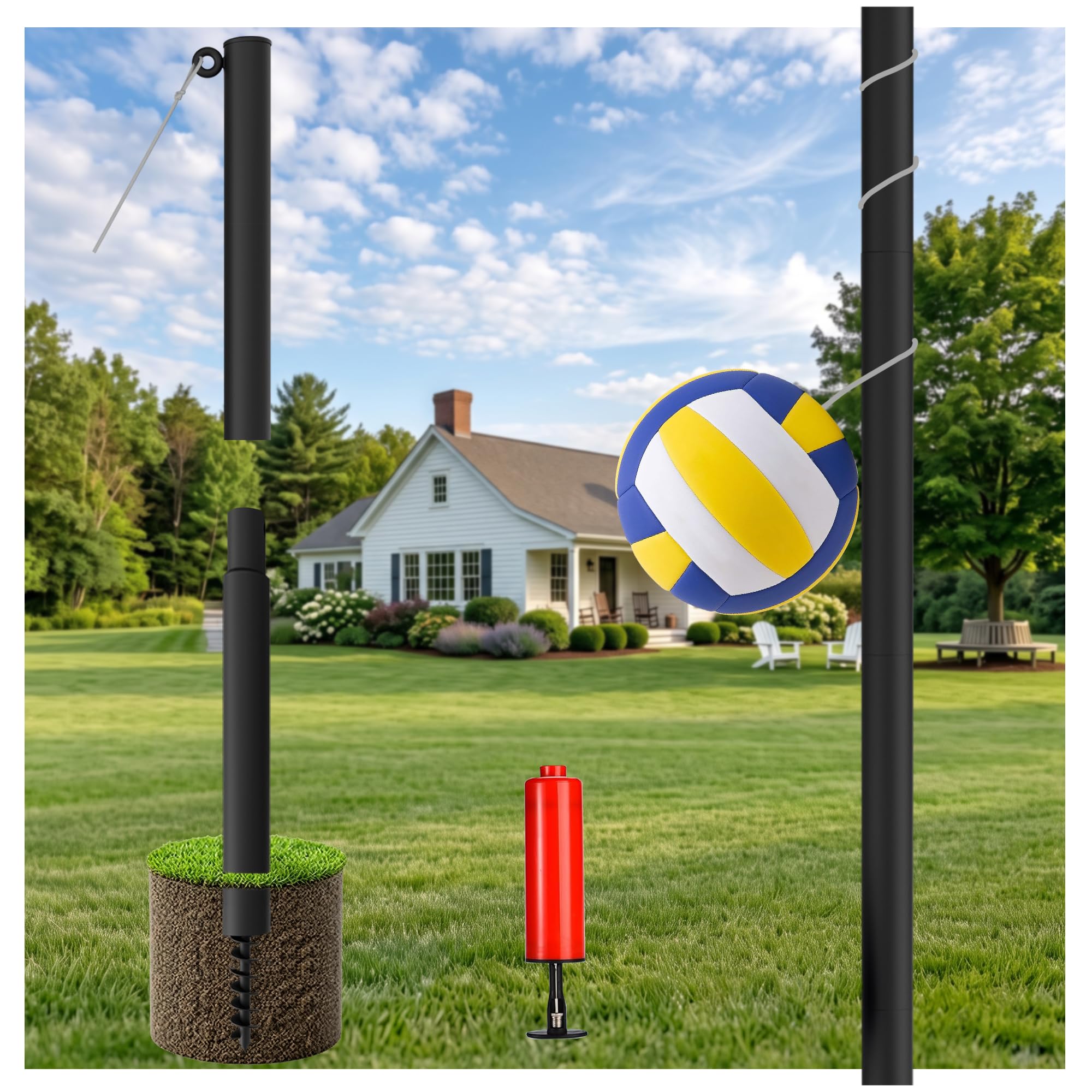
Family backyard play

Doodle Score 9.0/10
Check Price

Worth Noting

  • Pole can work loose in the base under hard play
  • Ball is the first part to wear out
Ball
8 in. soft-play, regulation size
Base
Portable fillable round base
Pole
2 in. round steel
Warranty
5-year limited on pole and base
Read the full review

A tetherball pole normally means a hole in the lawn, a bag of concrete and a stump you mow around forever. The Lifetime 90029 takes the hole out of the job. The base is a heavy molded ring you fill with water, set down on grass, sand or concrete, and screw the two-inch pole into — fill it, stand it up, play.

What earns it the top spot is that it is a real set rather than a scaled-down toy. The ball is a regulation 8-inch soft-play, the pole is two inches across, and the base is heavy enough to sit still through a hard swing. The pole and base both carry a five-year limited warranty, comfortably the longest coverage in this group, and since a bent pole or a cracked base is how these sets usually end, that is worth more than it looks on the box.

The fill is the real decision. Water drains out and lets one person tip the base on its edge and roll it to the garage; sand sits heavier but turns the whole thing into a two-person move. Either way, this is a base that wants flat, firm ground — set it on a slope and you have built a wobble in before the first serve.

Bottom line: For most backyards this is the set we recommend: regulation-sized, steady, and up in an afternoon without concrete, with the longest pole-and-base warranty here.

#2

Park & Sun TP-150-3P

Park & Sun TP-150-3P

Permanent lawn spot

Doodle Score 8.8/10
Check Price

Worth Noting

  • Ball-to-rope connection is the wear point
Ball
Soft Touch with steel swivel hook
Pole
3-piece, 1-1/2 in. powder-coated steel
Height
10 ft 6 in.
Included
Ground sleeve and carry bag
Read the full review

The plastic sleeve is the least exciting part of the Park & Sun and the reason to buy it. Concrete it into the lawn once, and from then on the three pole sections drop in and lift out — the pole comes inside for winter, comes out for mowing, and the lawn keeps a flush cap instead of a stump.

Assembled, it stands 10 feet 6 inches on 1-1/2-inch powder-coated steel, which is about as close to a school-playground pole as this group gets. The push-button joints lock positively rather than relying on a friction fit, and the Soft Touch ball hangs from an internal steel swivel hook, which is what keeps the cord from twisting itself into a knot mid-rally.

Where it gives ground is stiffness. The upper sections flex at the joint when an adult really leans into a shot, and that flex is the visible difference between this and a set built around a footing. Two kids and a Saturday afternoon never get near the limit; two adults playing hard every evening will feel it.

Set against the fillable-base sets, it is the best value in this group for a yard with a permanent spot: less money, a truer pole, and nothing to drain and roll away at the end of the season. The soft ball is gentle enough that a smaller child wandering into the swing zone is not a crisis, which is not something we can say for every set here.

Bottom line: Buy the TP-150 if your yard has a settled spot for it: a genuinely stiff ten-and-a-half-foot pole that comes out of the ground whenever you want it gone.

#3

Trymaker Tetherball Pole Kit

Trymaker Tetherball Pole Kit

DIY concrete bases

Doodle Score 8.8/10
Check Price

Worth Noting

  • Difficult to dismantle once assembled
Pole
3 interconnecting steel sections
Height
10.43 ft
Weight
13.6 lb
Read the full review

Three interconnecting steel sections, 10.43 feet assembled, 13.6 pounds in the box: the Trymaker is a real pole rather than a toy one, and it is built to be the permanent half of a set you finish yourself.

That is exactly the appeal if you have a tire, a tub or a spare rim and a bag of concrete going nowhere. Bolt the bottom pole into your own base and you get a tall, stiff pole for less than the fillable-base sets cost. We think it is the right pick for a DIY weekend, and three sections are easier to get plumb while concrete sets than one long tube would be.

The part to be honest about is that the pole is only half the job. Nothing in the box holds it upright until you have built something that does, and if that something is a tire filled with concrete, it is not moving again. Budget the weekend, not the afternoon — and plan the spot before the first bag goes in.

Bottom line: Buy the Trymaker if you are handy and want a tall steel pole without paying for a base — the concrete work is the rest of the project.

#4

Sterling Premium Tetherball Set

Sterling Premium Tetherball Set

Long-term installation

Doodle Score 8.6/10
Check Price

Worth Noting

  • No base in the box; a concrete footing is required
  • Shortest warranty in this group at 30 days
Ball
8 in. rubber
Cord
100 in. nylon
Pole
2-section galvanised steel
Height
10.5 ft assembled
Read the full review

An 8-inch rubber ball rather than a soft-play one tells you who the Sterling is for. This is a playground-style set: two galvanised pole sections going up to 10 feet 6 inches, a ball on a 100-inch nylon cord, and a metal hook that snaps straight onto the eyebolt at the top of the pole.

The galvanised finish is the right call for a pole that lives outdoors — it shrugs off the chips and rust spots that eventually take a powder-coated pole out of service. The rubber ball is firmer and harder-wearing than the soft-play ones on the portable sets, which suits teenagers and adults and matters less for a five-year-old. We also like how little there is to lose: no carabiner, no knot to retie, just a hook onto an eyebolt.

We rate it as the set to buy when the game has a permanent home — a flat patch of lawn within sight of the kitchen, a shovel you do not mind using, and adults who will leave it standing all season. It is the closest thing here to a school-ground pole, and it plays like one.

Bottom line: The Sterling is for a yard where the pole goes in for good: galvanised steel, a hard-wearing rubber ball, and a playground feel the portables cannot match.

#5

GAMESUN Portable Water-Base

GAMESUN Portable Water-Base

Patios and decks

Doodle Score 8.4/10
Check Price

Worth Noting

  • Four-section pole means three joints to keep tight
Ball
8.5 in. machine-sewn soft
Base
32 in. HDPE, sand or water fill
Pole
4 sections, square bottom socket
Load Rating
750 lb when filled
Read the full review

Square, not round, is the detail that earns the GAMESUN its place. The bottom pole section drops into a square socket in the base instead of a round one, so the pole cannot spin or rock in its seat when the rope goes taut — the exact slop that makes a portable set feel flimsy. We think it is the best base design of the portable sets here.

The rest is a full kit: a 32-inch high-density polyethylene base rated to 750 pounds when filled with sand or water, four pole sections, three steel ground stakes, a nylon rope with a carabiner, and an 8.5-inch machine-sewn soft ball with a pump and needle. The sewn ball has a softer, more predictable feel than a molded one, and the stakes mean the base is not doing all the work on grass.

Four sections is one more joint than most sets here, and every joint is somewhere the pole can flex, so keep an eye on the middle ones over a season of hard play. On a patio or deck, though, where stakes are useless and the base is the whole anchoring system, the square socket is worth that trade several times over.

Bottom line: For a patio, deck or driveway, the GAMESUN is the portable set we point people to: a square socket in a heavy base keeps the pole where you put it.

#6

EPOGG Portable Tetherball Set

EPOGG Portable Tetherball Set

Portable on a budget

Doodle Score 8.2/10
Check Price

Worth Noting

  • Pole can break away at the base socket under load
Base
32 in. HDPE, sand or water fill
Pole
4 posts, square socket
Load Rating
750 lb when filled
Max Rope Height
104.4 in., adjustable
Read the full review

The EPOGG is the least expensive way into a fillable-base set here, and it is not the short one of the group: the rope reaches 104.4 inches at its highest setting and adjusts down from there. We think it is the set for a family that wants a portable pole without paying top-pick money.

The base is 32 inches of high-density polyethylene, rated for 750 pounds when filled with sand or water, and the bottom pole sits in a square socket that stops it twisting. Four posts, three steel ground stakes, a nylon rope with a carabiner, an inflatable ball and a pump with a needle all come in the box — everything a first game needs.

The socket is also the part to watch. A base that is only partly filled, or a pole left standing in wind, puts the load on that one joint. Use all three stakes on grass, check the base is topped up before play, and take the set down when a storm is coming. Looked after that way, there is a lot of game here for the outlay.

Bottom line: The EPOGG is the fillable-base set we suggest when budget leads: adjustable height and a full stake kit, provided you watch the base socket.

#7

Miveda Adjustable Tetherball Set

Miveda Adjustable Tetherball Set

Young kids

Doodle Score 8.0/10
Check Price

Worth Noting

  • Shorter than a regulation pole at its top setting
Ball
Soft rubber
Height
Adjustable, up to 9.5 ft
Warranty
2 year
Anchoring
Spiral ground plug
Read the full review

Height adjustability is the reason to look at the Miveda. The pole goes together from a spiral-installed base section and a ring-buckle top section, and the listing puts the top of the range at 9.5 feet — low next to a playground pole, but you can drop it further for a small child and raise it as they grow.

It is also the least expensive route into a complete set here, and it does not feel stripped. You get a soft rubber ball, two installation poles for screwing the base into the turf, and a two-year warranty — longer than most of the sets in this group and second only to our top pick.

What a screw-in pole cannot do is substitute for a base. It leans the way its hole leans, and loose or sandy soil is where this design disappoints; set it in packed lawn and check it is plumb before anyone takes a full swing at it. For a family that wants one set to serve a six-year-old and a twelve-year-old, that is a trade worth taking.

Bottom line: The Miveda is the one we suggest to families with a wide age spread: a height-adjustable pole on a screw-in base, for the smallest outlay here.

How We Chose and Tested the Best Tetherball Sets

We started by researching the tetherball sets sold at major retailers and sporting goods stores, then narrowed the field by price, included components, pole height, and the kinds of bases available for backyard use. We landed on 10 sets and installed each one in a real yard, not a gym, and kept them up for six months through rain, sun, and regular play. Setup was timed solo first; I noted whether I needed a second person, how the pole sections seated, and whether the base stayed put once the first hard serve landed.

Once a set was up, it became part of the yard. Kids played after school, adults jumped in during cookouts, and I watched for the things that decide whether a set gets used: whether the rope tangled easily, whether the ball came back off the pole cleanly, and whether the height worked for both shorter and taller players. I inflated each ball to the maker's recommendation and checked it with a gauge after a week and again after a month, noting how often it needed topping off.

Durability and stability got the least glamorous tests. I left every set outside for the full six months, then checked pole joints for wobble, bases for cracks, ropes for fraying, and balls for seam separation. I also gave each pole a few hard serves and pulled on the rope to see if the base lifted or the pole leaned, then compared what each set included against what it cost. The sets that scored best were the ones that still felt solid after months of being ignored, rained on, and played with hard.

How to Choose Tetherball Sets

Start With the Base, Not the Pole

A tetherball set is really three products depending on how it stands up. A fillable base — a wide plastic drum you load with water or sand — plays anywhere and comes apart for storage, but it wants flat, firm ground and it is only as steady as the fill inside it. A ground sleeve or spiral spike costs less and gives a truer pole, but it commits you to one patch of lawn. A poured concrete footing is the stiffest and the most permanent of the three.

The trap is the word portable. It means portable with the base empty; a full 32-inch base is heavy and awkward to shift, and draining it is a job in itself. Be honest about whether the set moves before you pick.

Height, and Who Is Actually Playing

Playground poles sit around ten and a half feet, and the sets here that match that are the ones that feel right to adults and teenagers. A shorter or adjustable pole is easier to serve into for small children and still fine for casual adult play. Watch out for the assumption that pole height and ball height are the same thing: the rope hangs from the top, so a short pole crowds anyone tall, and a nine-foot set that suits a seven-year-old will cramp a six-footer.

If adults play regularly, buy in the ten-foot class. If the set is genuinely for young children, the adjustable option buys you years of use.

Where These Sets Actually Fail

Almost nothing goes wrong with the ball first. The failures cluster at two places: the joint where pole sections meet, and the socket where the bottom section enters the base or footing. Both loosen under the side-to-side load of a hard swing, and both are cheaper to fix than to replace. Check the joints as you assemble, keep the base topped up, and treat a wobble as something to correct rather than live with.

The third wear point is the rope attachment at the ball, which is why a spare ball and cord on the shelf is worth the small outlay.

Surface, Space and Getting It Out of the Way

Grass, sand and concrete each change what you need. Stakes only work in turf or sand; on a patio or driveway the weighted base does all the anchoring, which is where a square pole socket earns its keep. Give the pole a clear circle roughly as wide as it is tall — a ten-foot pole three feet from a window is a broken window waiting for a hard serve.

Then think about the end of the season. A set you can drain, break down and carry inside gets stored properly; one that cannot gets left out in the weather, and that is where rust and split bases come from.

Frequently Asked Questions

Final Verdict

If we are buying one set for a normal backyard, it is the Lifetime 90029. It plays like the real thing, it needs no concrete, and its pole and base are covered longer than anything else in this group — which matters most for the two parts that break.

Choose differently on one condition. If you have a lawn and a spot you are sure about, the Park & Sun gives you a truer, stiffer pole for less money and asks only for a bag of concrete and a sleeve in the ground. Renters and anyone who wants the set out of the way by November should stay with the fillable base.