Outdoor Play

Best Sandboxes of 2026

A sandbox looks like a simple square of wood and a pile of sand—until you’re the one assembling it, wrestling a lid back on after a rainstorm, or watching a kid lose interest because the seats are uncomfortable and the walls wobble. The right one gives kids a patch of their own to dig, build, and make a mess, while keeping sand out of the lawn and the neighbor’s cat out of the sand. The difference usually comes down to size, sturdiness, and whether the cover is something an adult can actually live with.

Over eight months, we assembled and lived with 12 sandboxes—wooden kits, plastic tubs, and bench-style designs. The ones kids gravitate to are rarely the most complicated. Age-appropriateness matters more than the box suggests: a 2-year-old and a 7-year-old want different depths and climbing surfaces. We judged each on how much actual play it inspired, how long assembly took, how it held up outside, and whether the lid was genuinely usable. The picks below reflect that—and a few are worth the extra money for the cover alone.

#1

Step2 Naturally Playful Sandbox II
Step2 Naturally Playful Sandbox II

Most backyards

Doodle Score 9.2/10
Check Price

Worth Noting

  • Seats are toddler-sized; adults sit on the ground
Size
50.38"L x 31.25"W x 16"H
Seating
Four molded-in kid-sized seats
Included
7-piece sand tool set
Material
Double-walled plastic
Read the full review

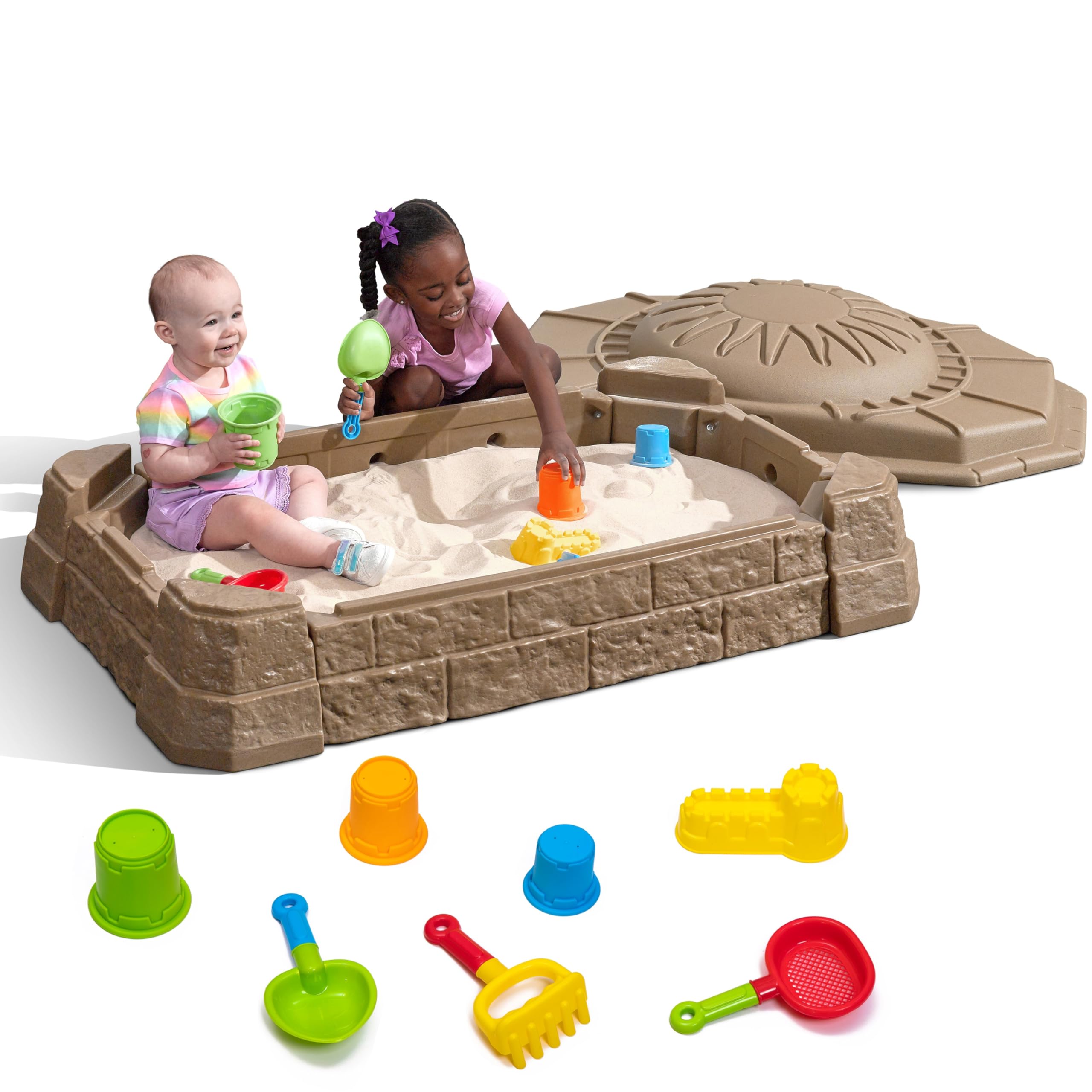
Four seats, molded into the corners of a 50-inch box, are why this one is our top pick. Each child gets an edge of their own and digs from a seated position instead of kneeling in the sand, and because the seats are part of the wall there's no folding bench or hinge to wear out. The walls stand 16 inches high, which means a toddler gets lifted in and a four-year-old climbs in alone — worth knowing before you picture a one-year-old scrambling over the side.

We were also taken with the lid. It's one rigid top with elastic tie-downs at each end, so a windy week doesn't leave it in the next yard, and the top is molded into roadways that turn it into a race track rather than a slab you resent moving twice a day. Off and on is a single lift. On a box this size that matters more than any accessory, because you'll do it every day of the summer.

The seven-piece tool set is a nice-to-have rather than a reason to buy. The finish is the practical part: hose it down, wipe the rim, and it still looks like a sandbox and not a mud puddle at the end of August. What it asks in return is floor space, 50 inches by 31, so a balcony or a narrow patio is the wrong home for it. On a lawn with two or three toddlers, nothing else in this group does more.

Bottom line: Our pick for most families: three toddlers can sit and dig at once, the lid ties down in wind, and the double-walled box takes a hose-down without complaint.

#2

SoliWood Octagon Sandbox

SoliWood Octagon Sandbox

Big flat yards

Doodle Score 9.2/10
Check Price

Worth Noting

  • Nylon cover fits loosely and tears; hard to replace
Frame
0.7" wood, angle-iron posts
Included
Nylon cover and fabric liner
Footprint
85"L x 78"W x 9"H
Sand Capacity
800-1000 lb
Read the full review

Eight hundred to a thousand pounds of sand. That's the number to sit with before you order this octagon, because the box is only half the purchase — at this size the sand arrives as a delivery, not a trunkload. What it buys is a pit 85 inches across and 78 deep with benches on all four sides, which makes it a four-to-eight-kid sandbox rather than a generous toddler toy.

Construction is the part we came away respecting. The frame is 0.7-inch wood with angle-iron posts tying the corners, so the benches take an adult's weight as readily as a child's, and the sides arrive as pre-built panels — the job on delivery is screwing the seat boards down, which wants a drill rather than the stamped wrench that comes with most flat-pack. Nine inches of depth is the other number that matters: shallow enough for a three-year-old to reach bottom, deep enough that the sand stays in the box.

What the wood doesn't come with is much of a finish, so plan a coat of sealer before the first winter — more brushing than a square box needs. Beyond that, the frame is the part least likely to give trouble, and the lifetime warranty against manufacturing defects suggests SoliWood knows it. Give it a flat, dedicated spot and treat it as garden furniture rather than a toy, because that's the use it's built for.

Bottom line: We point big-yard families here: it's a genuine four-to-eight-kid pit with benches on every side, as long as you price the sand and the cover before you commit.

#3

Little Tikes Big Digger Sandbox

Little Tikes Big Digger Sandbox

Toddlers

Doodle Score 9.2/10
Check Price

Worth Noting

  • One-toddler box, outgrown around age four
Size
29"L x 29"W x 9"H
Weight
15 lb
Included
Six play pieces, excavator built in
Material
Plastic
Read the full review

Twenty-nine inches square is not a mistake, it's the whole product. This box is sized for one small child and a bucket, and at 15 pounds you can carry it from the patio to the lawn and back without asking for help. Judged as a family sandbox it disappoints; judged as a first sandbox for a one- or two-year-old, it does exactly what it should.

The gimmick earns its place. The lid doubles as a truck ramp, so the box keeps its cover on and its play value up at the same time, and the molded excavator genuinely scoops and dumps rather than miming it. Six pieces come along — a dump truck, two figures, a cup, a sifter, a shovel and a rake — which is more than one child needs and, in our experience, exactly the number that gets left out overnight.

The lid is what will test you. It's a single rigid shell that seats only when it's square, so it takes both hands and a bit of aim; set it down on the lugs first and it drops into place, but rush it and you'll be fighting it. That's the price of a lid that doubles as a ramp, and on a box that one child uses, it's a trade worth making.

Bottom line: We recommend it as a first sandbox for one toddler on a patio or small lawn; expect a couple of summers before a bigger box takes over.

#4

Mederra Octagon Sandbox

Mederra Octagon Sandbox

Group play

Doodle Score 9.0/10
Check Price

Worth Noting

Included
Cover and bottom liner
Material
Cedar with water-resistant finish
Footprint
85"L x 78"W x 9"H
Sand Capacity
800-1000 lb
Read the full review

This is the other octagon here, and the honest way to describe it is: same footprint, less money, one extra thing to watch. Both boxes measure 85 by 78 inches, both take 800 to 1,000 pounds of sand, and both arrive with a cover and a bottom liner. Mederra builds its version from cedar with a water-resistant finish and sells it as meeting ASTM F963 and CPSIA, the US toy safety standards.

Our read is that the frame is where the two are closest, which makes cost the tiebreaker, and the Mederra wins that. The sides are thick enough to perch on while a kid digs, the four benches take an adult's weight, and assembly is brackets and screws at the corners rather than a bag of loose hardware. Cedar also weathers honestly — it greys rather than crumbles, though a fresh coat of finish now and then keeps it looking deliberate.

Where it slips is the cover. It's asked to work as a sunshade as well as a lid, and that's where trouble shows up first: a torn sheet or a snapped strut leaves you with an open box of sand, and an eight-sided cover isn't the easiest thing to replace off the shelf. Buy it for the frame and the footprint, and treat the cover as something you'll deal with later.

Bottom line: We put it just behind the SoliWood: the same octagon with less spent on it, and a cover more likely to need replacing than the frame is.

How We Tested 12 Sandboxes

We started by scanning the market for sandboxes that were actually in stock, filtered out models with vague dimensions or no cover, and narrowed the list to 12—wooden kits, molded plastic tubs, and a couple of bench-style designs. Over eight months, we set them up in backyards and on patios, rotating kids ages 2 to 9 through after-school play and weekend playdates. I timed assembly from opening the box to the first scoop of sand, with one adult working alone unless the instructions clearly required two.

Once built, each sandbox got the same treatment. I measured the exterior footprint and the actual interior play area, then checked whether two kids plus buckets and shovels could fit without constant collisions. Kids climbed on the rims, leaned on the seats, and stepped in and out on their own; I watched for wobble, flex, sharp edges, splinters, and pinch points, and noted whether a 2-year-old could get in without help or a 7-year-old looked cramped. Every unit stayed outside through sun, rain, and sprinkler sessions so I could check for warping, cracking, fading, and rusted hardware.

The lid and cover were their own test. After every rain, I opened each one and checked whether the sand was dry, then timed how long it took to remove and reseal the lid—sometimes with a kid tugging at my sleeve. I also watched whether covers blew off in wind or collected water in the folds. Fun and value are harder to measure, but we noted which sandboxes kids returned to without prompting, whether the seats got used, and what came in the box for the price—liner, cover, hardware, toys. The best ones made assembly forgettable and play easy to say yes to.

How to Choose Sandboxes

Start With Who's Digging, Not How It Looks

Sandbox shopping starts with the footprint, and that number decides everything else. A 29-inch plastic box is a one-toddler proposition: lovely on a patio, outgrown by four. A 50-inch box with seats fits two or three small children. The 85-inch octagons fit four to eight. Wall height matters just as much. Nine-inch walls let a preschooler step in and out; the 16-inch walls on the Step2 mean lifting a toddler in. Picture your kids next summer rather than this one, because the box will outlast the phase.

The Lid You'll Handle Twice a Day

Lids come in a few flavors: rigid tops you lift off in one piece, bench seats that fold down into a split cover, and fabric covers that tie on. Judge them on handling rather than on the brochure. You'll open and close one every day, and a lid that needs two hands and perfect aim gets left off, which defeats the point. Tie-downs are the difference between a lid that stays put in a windy yard and one that ends up against the fence.

None of them is a rain seal. Sand under a cover through a wet week comes out damp, and the sand along the lid line gets damper still. Plan for that rather than fight it: a box in the open wants a lid that fastens, and you should expect to open it to damp sand after a storm.

Budget for the Sand, Not Just the Box

Every sandbox here sells without sand, and the volume swings wildly. A 29-inch plastic box takes a few bags. The 85-inch octagons list 800 to 1,000 pounds, which is a delivery rather than a trunkload, and it's the cost people forget when they compare a big wooden box against a small plastic one. Decide how much sand you're willing to buy and shovel before you fall for an octagon. The box is the cheap half of the purchase.

Wood, Plastic, and What Each Asks of You

Plastic is lighter, needs no upkeep, and moves: the Big Digger weighs 15 pounds, so it follows the shade around the yard. Wood stays put, gives you benches, and looks like garden furniture. The SoliWood frame is 31 pounds empty and wants a coat of sealer before its first winter. On either material, the cover and the hardware wear out before the panels do. If the box will sit in one spot for years, wood earns its keep. If you want to move it, plastic.

Frequently Asked Questions

Final Verdict

For most backyards, buy the Step2 Naturally Playful II. The seats are the deciding detail: three toddlers, three corners, and a lid with tie-downs that doesn't end up in the hedge. It's the box we point to when a family has no unusual constraint to work around.

Constraints change the answer. A big flat yard with kids who invite the neighbors calls for the SoliWood octagon, with the sand budget and a replacement cover figured in. A patio or a one-year-old calls for the Big Digger, with an upgrade penciled in around age four.