Outdoor Play

Best Kids Sleeping Bags of 2026

The first backyard campout of the year ended at 1 a.m., when my daughter shuffled inside in socks and announced that her sleeping bag was cold and 'way too long.' She was right on both counts — an adult bag leaves a kid with a foot of dead air to warm up, and the whole thing swallows them the moment they roll over. A bag cut to a child's height and actually filled for overnight temperatures fixes both: it heats up faster, it stays put when they flip around, and it's light enough that they can haul it to the car themselves.

Over the past six months, my team and I have watched 12 of these bags get dragged through sleepovers, campouts, and grandparents' houses, and the differences surface fast when a tired kid is zipping one up in the dark. Here's a thing first-time buyers don't expect: temperature ratings on kids' bags tend to be optimistic, so shop a little warmer than the season you're actually camping in. The picks below cover the warm-weather sleepover kid and the cold-weather scout alike.

#1

Wake In Cloud Kids Sleeping Bag

Wake In Cloud Kids Sleeping Bag

Young space fans

Doodle Score 9.2/10
Check Price

Worth Noting

  • 45°F comfort floor rules out cold camps
Age Range
3 to 8 years
Carry Sack
Backpack style
Dimensions
61"L x 26"W
Temperature Rating
45°F - 77°F
Read the full review

Rockets, planets and a navy sky: this is the bag a four-year-old picks out for themselves and then sleeps in on the sofa for a week before the trip. Wake In Cloud sizes it at 61 by 26 inches for ages three to eight, and the carry sack is backpack style with straps rather than a plain drawstring bag, so a preschooler can wear it instead of dragging it.

Our reading is that it's the preschool pick of this group. The build is straightforward — a water-repellent 210T polyester shell, a 240T pongee lining, polyester fill, a full-length zipper, and a 45°F to 77°F rating — and for a kid who sleeps over at grandma's once a month, that's the right amount of bag. Nothing here is technical, and nothing needs to be.

The limits are worth naming. The 45°F floor covers a warm tent and a living-room carpet and not much below that, so this isn't the bag for a cold-weather camp; the TETON Junior handles that. And the space print runs out of appeal at about the same age the length runs out, around eight — the two ceilings arrive together, which makes the handoff to a bigger bag easy to time.

Bottom line: Our pick for the under-six set: a space print kids choose themselves, a backpack-style sack, and a build that suits warm nights and indoor sleepovers.
#2

KingCamp Kids Flannel Sleeping Bag

KingCamp Kids Flannel Sleeping Bag

Three-season camping

Doodle Score 9.0/10
Check Price

Worth Noting

  • Heaviest of the picks at about 3 pounds
Lining
100% cotton flannel
Weight
3 lb
Dimensions
66.9"L x 27.5"W
Temperature Rating
45°F
Read the full review

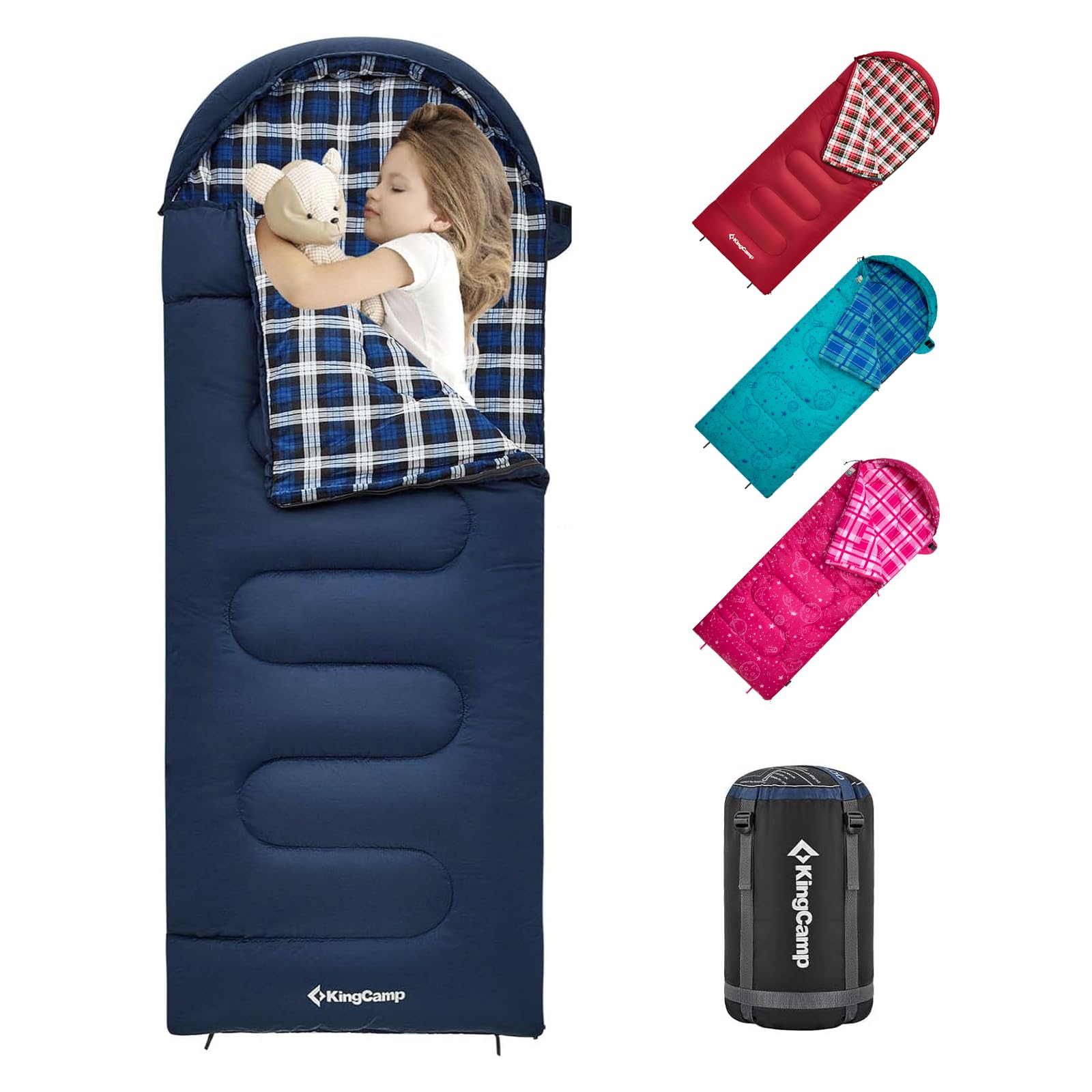
Zip a kid into a polyester bag and you hear every move they make; on the second night of a campout, that rustle is what everyone remembers. The KingCamp is lined in cotton flannel instead, and that single decision is why we point most families here first. It feels like bedding rather than equipment, it stays quiet when a kid rolls over, and it doesn't have the cold, slick start of a synthetic shell at two in the morning.

The warmth matches the feel. KingCamp rates the bag around 45°F and fills it with 300 g/m² of cotton hollow fiber, which makes it a three-season bag in the honest sense: spring and fall camping, a cool night in a tent, an unheated cabin. At 66.9 by 27.5 inches it's the roomiest bag we compared, and the brand puts the ceiling around four foot seven — enough length that a six-year-old gets several seasons out of it rather than one summer.

Two practical things came out of using it. The zipper runs close to the lining, so guide the slider past the fabric at the top corner rather than pulling hard; that's the difference between a two-second close and a snag. And it's a mild-to-cool weather bag by design — a hard frost asks for more fill, which is where the TETON Junior comes in.

What keeps us coming back is how little fuss it takes to get a child to sleep in it. A living-room floor, a tent in the yard, a bunk at a cousin's house — the flannel makes it feel like their own bed, and the full-length zipper opens it into a quilt when the night turns warm, which is how a lot of kids actually sleep in July. Wash it at the end of the season on the label's terms; a hot cycle is what flattens hollow-fiber fill.

Bottom line: The bag we point most families to first: a quiet flannel lining that feels like bedding, a roomy cut with years of growth, and honest three-season warmth.

#3

TETON Sports Junior 20F

TETON Sports Junior 20F

Cold-weather camping

Doodle Score 9.0/10
Check Price

Worth Noting

  • Narrow across the shoulders for older kids
  • Crackly taffeta shell
Weight
2.7 lb
Warranty
Limited lifetime
Dimensions
66"L x 26"W
Temperature Rating
20°F
Read the full review

Twenty degrees is a different class of bag from the 40s and 50s the rest of this list lives in. TETON builds the Junior like a scaled-down adult bag: semi-rectangular, a full-length draft tube behind the zipper, a hood section, two-way zippers, a lining pocket for a flashlight, and SuperLoft Elite hollow-fiber fill rated to 20°F. Cold is the one thing you can't retrofit into a sleeping bag after you've bought it.

We think that makes it the specialist of this group rather than the everyday bag, and everything else follows from it. At 2.7 pounds and 66 by 26 inches it's light enough for a kid to carry and long enough for most of them into middle school, and the limited lifetime warranty is the longest coverage of any pick here. For an October scout camp, a cold-weather trip, or a cabin whose stove goes out at midnight, this is the bag that goes in the car.

The stuff sack is where it goes sideways. It's cut tight for the bag, and getting 2.7 pounds of hollow fiber back through that opening takes real work — plan on an adult doing it, or throw a larger stuff sack in the car and skip the fight. That's a packing problem, not a sleeping one, and it doesn't cost the bag its place.

Two smaller things matter at the edges. The taffeta shell crackles a little when a kid turns over, and the 26-inch width is comfortable at seven and starts to pinch across the shoulders by ten or eleven. Buy it for the smaller, colder sleeper; if your child is already broad, size up to a full-length bag instead.

Bottom line: The warmest bag here by a wide margin — the one we pack for cold-weather camps, as long as an adult handles stuffing it back in the sack.

#4

tuphen Kids Sleeping Bag

tuphen Kids Sleeping Bag

Light packing

Doodle Score 9.0/10
Check Price

Worth Noting

  • Narrow 23.6-inch width
  • Zipper can snag on the lining
Lining
210T taffeta
Weight
2.09 lb
Dimensions
61.02"L x 23.62"W
Temperature Rating
40°F - 77°F
Read the full review

Just over two pounds is the number that matters here. The tuphen packs into a compression sack with straps, and at that weight a five-year-old can carry their own bag from the car to the tent instead of handing it to you — which is most of the point of buying a kid-sized sleeping bag in the first place.

The rest is sensible rather than special: a polyester shell, a 210T taffeta lining, a 40°F to 77°F rating, 61 by 23.6 inches, double-stitched seams, and a green dinosaur print that does a lot of the persuading. It's the cheapest bag in this group and the lightest, and for a summer tent, a daycare nap or a cousin's floor it covers the job without making anyone precious about the gear.

Where it lands for us is as the bag you buy two of. There's a version of this purchase where the sleeping bag goes to preschool, comes home muddy, and gets stuffed in a closet for a month — and this is the bag for that life. It's also the one we hand a kid who has decided they want to carry their own pack, because the low weight is what makes that independence possible rather than a nice-to-have.

The print is the closer. A child who has refused a sleeping bag all summer climbs into one with a dinosaur on it, and that isn't a line you'll find in any comparison table.

Bottom line: The lightest and cheapest bag in this group, and the one we hand a small kid who wants to carry their own gear.

#5

Coleman Kids 50°F Sleeping Bag

Coleman Kids 50°F Sleeping Bag

Indoor sleepovers

Doodle Score 9.0/10
Check Price

Worth Noting

  • 50°F rating suits warm nights and indoors
Warranty
5-year limited
Dimensions
60"L x 26"W
Fits Heights
Up to 5 ft
Temperature Rating
50°F
Read the full review

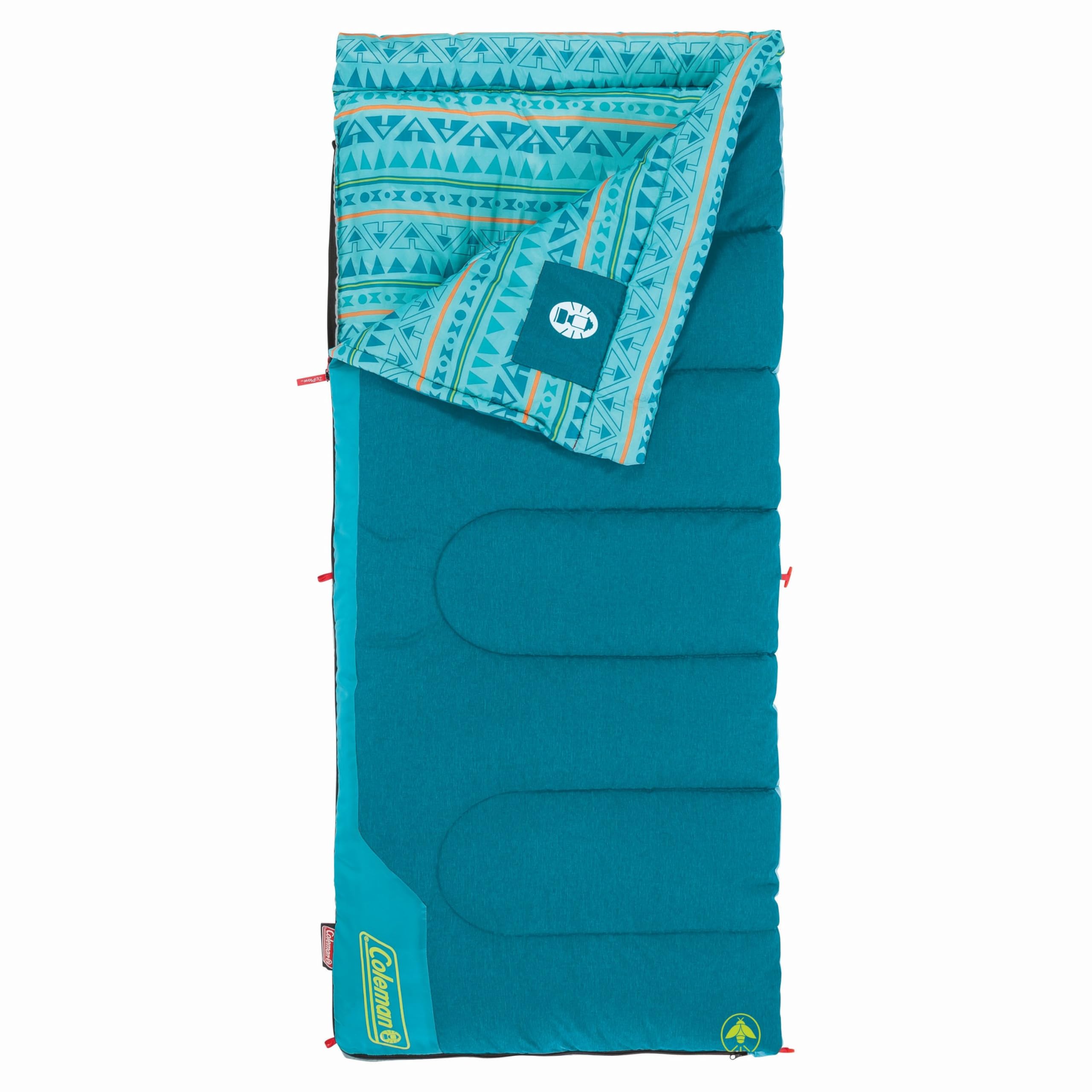
Glow-in-the-dark fabric sounds like a gimmick until you watch a six-year-old hunt for their bag in a dark living room. The Coleman's teal print charges under a lamp and gives off a soft glow, and there's a pocket inside for a small flashlight. No other bag in this group glows, which is a small thing and also the reason a kid picks this one off the pile.

The sizing is built for the short list of things a sleepover needs: a 60-inch length and six-and-up age guidance that line up with each other, room for a child up to five feet, a machine-washable bag, and a five-year limited warranty that trails only TETON's lifetime coverage here. Nothing about it is technical, and that's the point.

Where it earns its place is on carpet and in July. The rectangular shape gives a wriggly kid room to sprawl, and it doesn't cook them on a warm night — open the zipper and it works as a quilt, which is how a lot of children actually sleep at a sleepover. For a den floor and a birthday party, that's exactly the right amount of bag.

The stuff sack is the weak link. It's cut tight enough that getting the bag back in after a night on the floor takes patience and a second pair of hands, and a drawstring laundry bag or a slightly larger stuff sack solves it for good. Sort that out and the Coleman does precisely what a kids' sleepover bag should.

Bottom line: A sleepover specialist we like for the glow-in-the-dark fun, the five-year warranty, and a 50°F rating that suits living-room floors and summer tents.

How We Tested 12 Kids Sleeping Bags

We started with more than 40 bags from brands we trust in the outdoor space, then narrowed by what's printed on the label: temperature rating, packed weight, fill type, shell material, dimensions, and price. Bags that were just adult mummies scaled down got cut, as did anything substantially taller than our oldest tester. Twelve made the final list, and we lived with them for six months.

They went home with families on the team and slept in backyards, living rooms, and a full week of overnight camp. On cold nights we checked at 2 a.m., feeling the back of each kid's neck and asking whether they'd woken up chilly, and we tracked warm sleepers and cold sleepers separately. We measured every bag flat, then had kids of three different heights climb in, roll over, and try to sit up, which showed us exactly where shoulders pulled and where feet hit the end.

Each kid packed their own bag while we timed it, since a bag that takes four minutes to stuff is a bag that gets left on the bedroom floor. We zipped every one in the dark, with gloves on, and with a flashlight in the way, watching for snagged fabric and misaligned teeth, then rechecked the pulls after a month of use. Bags went through the washing machine twice and spent nights on dirt, gravel, and damp grass so we could see how shells scuffed and whether seams held. Kids voted on colors and patterns, which shaped the picks more than I expected. Finally, we weighed what each bag cost against its fill, its hardware, and how well the stuff sack survived the season.

How to Choose Kids Sleeping Bags

Read the temperature rating as a comfort floor

Ratings in this group run from 20°F to 50°F, and that spread matters more than anything else on the listing. A 45°F or 50°F bag is a summer, sleepover and heated-cabin bag; a 20°F bag like the TETON Junior is built for frost.

Those figures are comfort ratings, which assume a clothed sleeper on a pad. A child on a bare tent floor feels colder than the number suggests, so if your trip is spring or fall, add a foam pad underneath before you spend more on a warmer bag.

Fit the length to the child you have

Kids' bags here run 60 to 66.9 inches, and the makers translate that into height guidance: up to five feet for the Coleman, about four foot seven for the KingCamp, ages three to eight for the Wake In Cloud.

A bag that's far too long is worse than one that's slightly short, because there's more dead air for a small body to warm. Buy for the child you have plus a couple of inches, and expect to replace it around middle school rather than passing it down from a much older sibling.

Weight decides who carries it

These bags run from about two pounds to just over three, which sounds like a rounding error until a small kid is walking it to a campsite. Under two and a half pounds and your child can carry their own; over three and it quietly becomes your pack.

Look at how the sack is carried, too. A compression sack with straps or a backpack-style sack beats a plain drawstring bag for any child walking more than a few steps, and it's the difference between a bag they own and one they hand over.

Lining and shell: quiet beats technical

Polyester taffeta shells pack small and wipe clean, but they crackle every time a kid turns over — and in a small tent, that's the sound everyone remembers. A cotton flannel lining like the KingCamp's feels like a blanket and stays quiet.

The trade-off is weight and slower drying if it gets damp. For a bag that lives indoors and goes to camp a couple of times a year, we think flannel is clearly the better call. For wet-weather backpacking, it isn't, and taffeta earns its place.

Zippers and warranty decide how long it lasts

Zippers are the part that fails first on a kids' bag, and the fix is often handling rather than hardware: keep the lining clear of the teeth and teach a child to hold the fabric back while they zip. Two-way zippers and a draft tube behind the zip are worth having on a cold-weather bag.

Then check the warranty, because it tells you what the maker expects to replace. Coverage across this group runs from one year to a limited lifetime, and a longer one is worth real money on a bag a child will drag across gravel.

Frequently Asked Questions

Final Verdict

The KingCamp is the bag we point most families to first. The flannel lining turns a night on a floor into something closer to a real bed, the 66.9-inch cut lasts through several growth spurts, and it's warm enough for spring and fall camping.

If your trips run cold — October scout camps, unheated cabins — spend the extra on the TETON Sports Junior 20°F and accept that an adult handles the stuff sack. For pure sleepover duty, the Coleman's glow-in-the-dark print and five-year warranty make it the easier sell to a reluctant sleeper.