Games & Puzzles

Best Shuffleboard Tables of 2026

A shuffleboard table is really just one long, narrow strip of wood, and that strip is the entire game. If it isn't flat and level from end to end, every puck drifts toward one side and no amount of practice fixes it — which is why the frame, the legs, and the levelers underneath matter as much as the finish on the playing surface. Most people learn that after the table is already in the basement, usually somewhere in the middle of a long assembly.

I've played on tables that looked gorgeous and slid like a grocery store floor, and on plain-looking ones that played beautifully for years. Over the past nine months, my team and I have assembled, leveled, and played on six of them, and the differences came down to materials, how solidly the whole thing sat, and whether the price bought real wood or a convincing imitation. These tables are heavy — genuinely heavy — so it pays to decide where one will live before you buy, not after. The picks below all earned their floor space.

#1

Playcraft Georgetown 16 ft

Playcraft Georgetown 16 ft

Large rooms

Doodle Score 9.8/10
Check Price

Worth Noting

  • Needs several helpers on assembly day
Length
16 ft
Weight
345 lb
Assembly
Two-piece cradle and field
Playfield Thickness
1.75-inch butcher block
Read the full review

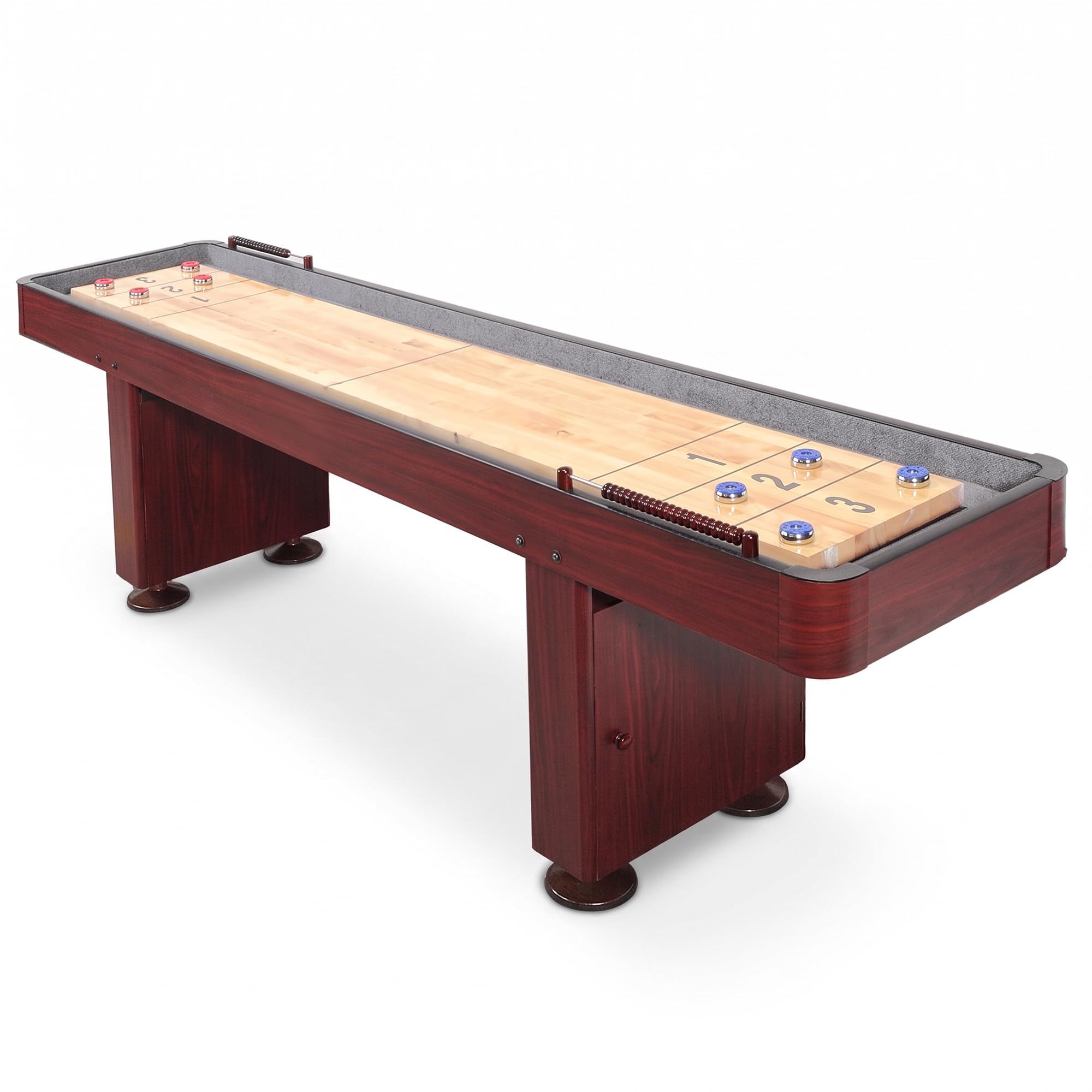
Sixteen feet of shuffleboard only makes sense if you can get it into the house, and the Georgetown solves that with a cradle and a playfield that each break into two pieces. It measures 192 inches long and weighs 345 pounds, and it is the only table here designed to go around the turn at the bottom of a staircase.

The build is the best in this set: a 1.75-inch true vertical stave butcher-block field, pro-style climate adjusters, six-inch metal levelers, a storage cabinet, and a matching abacus with eight deluxe pucks, a brush, and USA-made wax. Nothing in the cabinet is veneer pretending to be wood, and at this price we expect that. We just do not usually get it.

The seams are the one thing to get right. Line both halves up and check the field across the joint with a straightedge before you tighten anything down, because a seam that sits proud is a seam every puck finds. Once it is standing, the length is the whole experience: sixteen feet of run gives a shot somewhere to slow down and a player something to aim at.

What it asks for is floor. Think a long basement wall rather than a spare bedroom, and a wall that measures comfortably beyond the table's own 16 feet. What you get in return is the shortest list of compromises here.

Bottom line: The Georgetown is for the room that can take sixteen feet and the stairwell that cannot take a one-piece table.

#2

Playcraft Woodbridge 12 ft

Playcraft Woodbridge 12 ft

Serious home play

Doodle Score 9.2/10
Check Price

Worth Noting

  • Can arrive with cracked corners or damaged legs
Length
12 ft
Weight
350 lb
Storage
Built-in cabinet
Playfield Thickness
1.75-inch butcher block
Read the full review

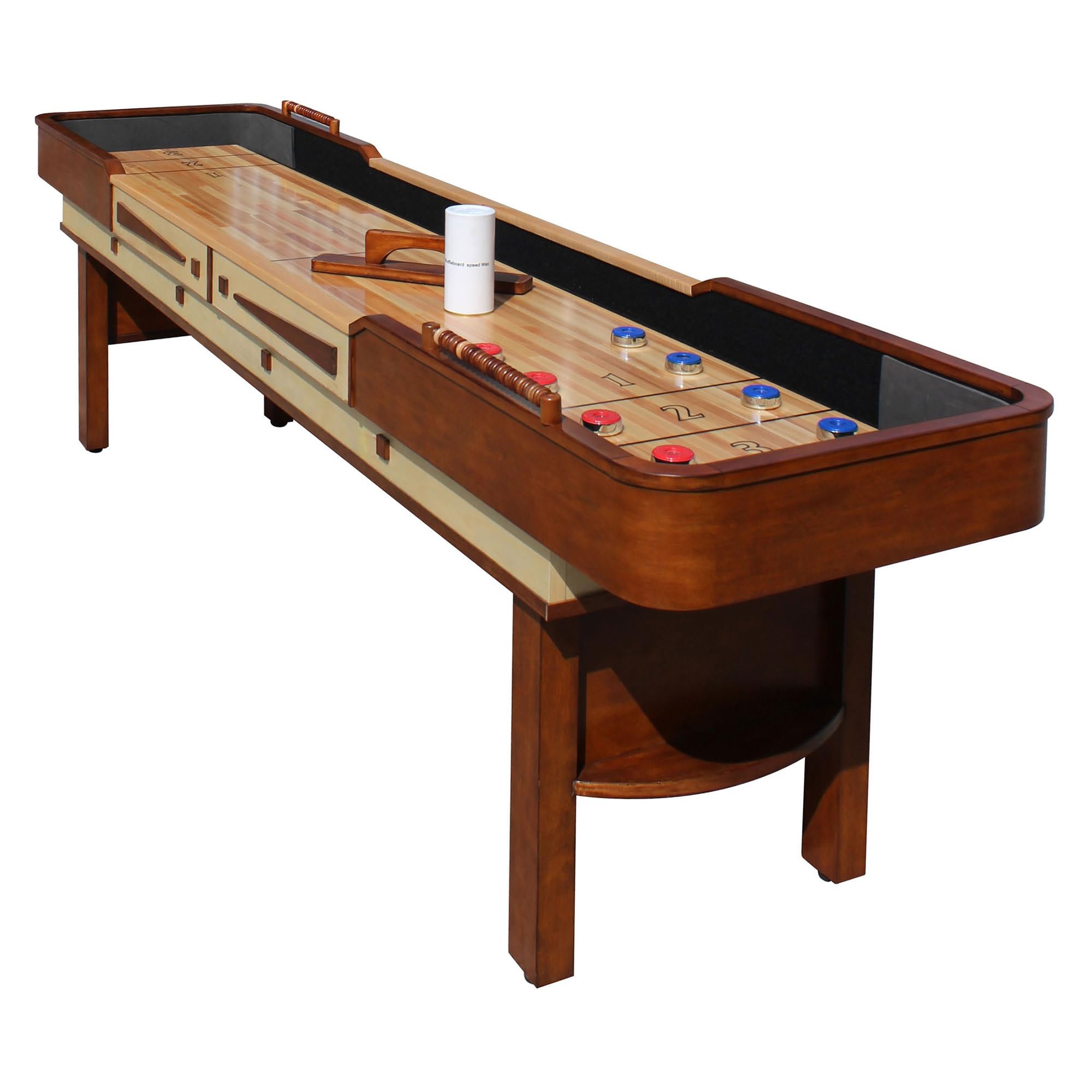
The specification that decided this one for us is 1.75 inches: the thickness of the butcher-block playfield, built from true vertical staves and finished with several coats of satin polyurethane. A field that thick is what keeps a table running true after a few seasons of humidity and hard shots, and the Woodbridge pairs it with pro-style climate adjusters, six-inch metal levelers, and the full twelve-foot length. Of the two twelve-footers here with a full-thickness solid field, this is the one we recommend.

The adjusters are the part we paid closest attention to. They run under the cradle and tension the playfield itself, so you can pull a developing bow or dip back toward flat as the seasons move the wood; the levelers do the separate job of tilting the whole cabinet to your floor. A table that cannot be corrected is a table you stop playing, and that pairing is the difference between furniture that hosts a game and a piece of equipment.

Twelve feet also gives the pucks somewhere to go. The shorter tables here are good games, but this is the first length in the set that plays like a proper run, and the hardwood frame and double-paneled arched legs keep it quiet while it does. At 350 pounds with the top shipped in one piece, delivery day is a three-person job; the bolt-together part is the easy half.

The built-in storage cabinet is the detail we ended up valuing most: pucks, brush, and wax live under the table instead of in a drawer across the room. Eight deluxe pucks, a matching abacus, a brush, and USA-made speed wax come in the box, and the one-year manufacturer warranty is the longest coverage stated on any table here. The espresso finish reads as furniture, not arcade.

Bottom line: The Woodbridge is the table we recommend to anyone who wants serious play at home: real butcher block, working climate adjusters, and a cabinet that hides the pucks.

#3

Hathaway Merlot 12 ft

Hathaway Merlot 12 ft

Family game rooms

Doodle Score 9.0/10
Check Price

Worth Noting

  • Adjuster hardware can be fiddly to line up
Length
12 ft
Weight
268 lb
Storage
Built-in shelf
Playfield Thickness
1.75-inch birch butcher block
Read the full review

Twelve feet and a 1.75-inch solid birch butcher-block field, for a little less than our top pick. We keep the Woodbridge ahead of it on the strength of a hardwood frame, a full year of coverage, and pro-style hardware, but the gap is narrower than the price difference suggests, and the Merlot does two things better.

The first is weight: 268 pounds against 350, which is a real difference on delivery day and again when the table has to move for a floor refinish. The second is noise. The gutters are lined with EVA foam, so an overthrown puck lands with a thud instead of a crack, and in a room next to a television that matters more than it sounds. Ten coats of lacquer over the birch keep the field running fast.

A built-in storage shelf, dual scorers, and a walnut finish that reads as furniture make it easy to live with, and it is the table here we picture in a den rather than a dedicated game room. It is also listed for ages 8 and up, the youngest guidance on any table in this set, which says something about how the cabinet is finished and how hard the makers expect it to be played.

Bottom line: For families who want twelve feet of real butcher block in a room that doubles as a den, this is the one we point to.

#4

GoSports Premium 9 ft

GoSports Premium 9 ft

First game room

Doodle Score 8.8/10
Check Price

Worth Noting

  • Six-month warranty
Length
9 ft
Weight
180.8 lb
Playfield
8 ft x 14 in
Surface Material
Composite butcher block veneer
Read the full review

What comes out of the crate is a built table with the legs off, plus eight regulation metal pucks, a 16-ounce canister of wax, and a brush. Bolt the powder-coated steel legs on, stand it up, and you are playing; the pre-assembled mainframe is why we suggest this one to anyone setting up a first game room.

At 180.8 pounds it is one of the easier full-size tables here to move, and at nine feet by 24 inches it fits a wall that a twelve-footer will not. We think it is the best value in this set, and what you trade for that sits in the playfield: a composite butcher-block veneer over engineered wood, 8 feet by 14 inches, set into the nine-foot cabinet.

That is the right place to save on a family table. The veneer is smooth, our field sat flat, and the shorter, narrower run suits casual play, so fewer shots carry the full length and sail off the end. Built-in scoring keeps the score at the table, and the wax and brush are the two things you would otherwise buy separately. If the room takes twelve feet and the budget stretches, the Hathaway Merlot is the step up; if not, nothing here gets you playing sooner.

Bottom line: Our pick for a first game room: it arrives nearly built, includes everything you need to play, and costs well under the butcher-block tables here.

#5

Barrington Urban 9 ft

Barrington Urban 9 ft

Modern game rooms

Doodle Score 8.8/10
Check Price

Worth Noting

  • Ninety-day warranty
Length
9 ft
Weight
185.2 lb
Room Required
13 ft x 6 ft
Playfield Thickness
1.5-inch engineered wood
Read the full review

Faux-concrete legs, a black UV-coated playfield, and a wood-grain cabinet give the Urban a look that is more loft than rec room, and in a finished basement that is most of the appeal.

The mainframe arrives preassembled and the levelers hide inside the legs, so setup is mostly the crossbar and a flip with two people. The field is 1.5 inches of UV-coated engineered wood, thicker than the cheapest tables here and thinner than the butcher-block ones, and the bead-style scorers slide at both ends with carpet-lined gutters behind them.

Underneath are wing-bolt climate adjusters. They are the right idea and the thing to find before assembly, because when a playfield arrives bowed, adjusters like these struggle to pull it flat. Check the field with a straightedge while it is still crated and use the return window rather than the wing bolts; that is the one piece of buying advice we underline for this table.

We like it for a room where the table is on show and the games are social rather than competitive: the play is quick, the cabinet looks deliberate against a finished wall, and nothing about it says bar. It is not the table for someone chasing a tournament field, which is where the butcher-block picks come in, but it is the one that makes a basement look finished.

Bottom line: We like the Urban for a finished basement where the table has to look good, as long as you check the playfield is flat before you commit.

#6

Hathaway Challenger 9 ft

Hathaway Challenger 9 ft

Everyday family play

Doodle Score 8.2/10
Check Price

Worth Noting

  • Laminate cabinet over engineered wood
  • Leveling can take repeated attempts
Length
9 ft
Weight
220 lb
Adjusters
Built-in climate adjusters
Playfield Thickness
1.5-inch hardwood butcher block
Read the full review

If the plan is a real wood playfield without the premium-table spend, this is where we point you. The Challenger's field is 1.5 inches of finger-jointed hardwood butcher block under a poly finish, not the thickest solid field here but solid wood all the same, inside a nine-foot cabinet with dual abacus scorers, carpeted gutters, six-inch leg levelers, and built-in climate adjusters.

Half an inch less field than the 1.75-inch tables is a fair trade at this length. The surface still runs fast and quiet, the carpeted gutters take the clatter out of a hard shot, and the abacus scorers sit at both ends where players actually stand. For a table that gets used after dinner rather than practiced on, that is the sensible middle of this set.

The money went into the field rather than the cabinet, and you can tell: MDF in a dark cherry laminate wrap, which photographs well and sounds like laminate when you knock on it. That is a trade we make every time, because a good field under a plain cabinet beats a fancy cabinet over a coated board, and this is the table here that proves the point most cheaply.

Two people are enough to assemble it, which is not true of everything in this set, and 220 pounds is manageable with a dolly and a clear path from the door. If the room only allows one table and the budget has a ceiling, this is the one that clears both.

Bottom line: We think the Challenger is the sensible middle: a solid wood playfield and climate adjusters without the premium-table price.

#7

Atomic 9 ft

Atomic 9 ft

Tight budgets

Doodle Score 8.2/10
Check Price

Worth Noting

  • Playfield can warp or crack under hard play
  • Particle-board cabinet with a laminate surface
Length
9 ft
Weight
156 lb
Playfield
Poly-coated
Included Accessories
8 pucks, wax canister
Read the full review

The Atomic is the least expensive full-size table in this set, and it is the one we recommend only when the budget is the deciding factor. Nine feet, 156 pounds, a poly-coated field, pedestal legs with levelers, abacus scoring at both ends, and eight pucks with a canister of wax in the box.

Light matters more than it sounds. A 156-pound table is a two-person move, and the levelers let you get the field true on a basement floor that is not. The coated surface is fast, and the abacus scorers are the same style the expensive tables in this set use, which is the sort of detail a budget table usually skips.

We recommend it for a garage, a rental, or a first table where the money is genuinely the limit. It is a starter table and it plays like one in the good sense: quick, simple, and forgiving of a room that does double duty. When the room changes, it is the table here that two people can carry out.

Bottom line: Buy the Atomic only when the budget decides: it is the least expensive full-size table here, and it plays.

How We Tested Shuffleboard Tables (and Re-Leveled Them)

We started with a shortlist of roughly 30 tables and cut it down by reading the specs closely: playing surface material (solid maple versus a laminate or veneer over a core), overall length, whether the legs had genuine adjustable levelers or just fixed feet, shipping weight, and how the table arrived. Six made the final cut, and we've lived with them for nine months.

Each one was built in a basement or garage game room with a stopwatch running, starting with one person to see how far they got before calling for help. We noted whether the hardware lined up, whether the instructions matched the parts actually in the box, and how much of the build was a two-person job. Once a table was standing, we leaned hard on the rails, nudged the corners, and played a full frame to listen for creaks, rocking, or give in the legs.

Leveling got its own pass. We laid a four-foot level down the length and across the width, adjusted and shimmed the way each manufacturer intended, then slid pucks with the same push over and over to see whether they tracked straight or wandered. We rechecked after a week, after a month, and again when the basement humidity swung, and we watched the finish for scratching, clouding, and wear in the gutters where pucks land. By month nine we could see which ones still looked and played the way they did in week one — and which price tags had actually bought solid wood instead of a dressed-up core.

How to Choose Shuffleboard Tables

Put the Playfield First

Solid butcher block, 1.5 to 1.75 inches thick, is what a table needs to stay flat and stay fast. The thicker the stave, the less a knock or a humid summer moves it, and the longer the field keeps running the way it did on day one.

Engineered and poly-coated fields are smoother than they sound and cost much less, but they are a coating over a board, and the board is what warps. If the budget only stretches to one upgrade, spend it here before you spend it on extra length or a fancier cabinet.

Length, and the Floor It Actually Needs

Nine feet is what most homes can take, twelve is the sweet spot if you have the wall, and sixteen is a commitment. A manufacturer's own guidance for a nine-footer is a 13-by-6-foot area to move and shoot from, and a longer table eats into that margin quickly.

Measure the route in as carefully as the room: doorways, the turn at the bottom of the stairs, and whether the crate can be tilted through them. Compact in a shuffleboard listing means compact for a shuffleboard table. A nine-footer is still more than nine feet long and two feet wide.

Adjusters Fix Flatness; Levelers Fix the Floor

These are two different jobs and the listings blur them. Leg levelers tilt the whole cabinet so the table sits level on an uneven floor. Climate adjusters are bolts under the cradle that tension the playfield itself, pulling a bow or a dip back toward flat as the seasons move the wood.

A table with levelers and no adjusters can still have a field you cannot play on, because pucks follow the bow rather than the line. Check the playfield with a straightedge before assembly, while the return window is still open.

Weight, Delivery, and Setup Day

Full-size tables in this set run from roughly 156 to 350 pounds, and the top often ships in one piece. That means two strong people at the light end and three or four at the heavy end, plus a clear path and a plan for the last six feet.

Freight delivery is the moment to pay attention. Unwrap the cabinet, corners, and legs and inspect them before you sign, and photograph anything cracked or scuffed. Keep the packaging until the table is standing and level, because getting it back out is harder than getting it in.

Accessories and Warranty

Most tables arrive with eight 1.75-inch pucks, a brush, a canister of powder, and scorers built into the cabinet, so there is nothing essential to buy on day one. What varies is coverage: warranties here run from 90 days to a year.

On a table that ships on a pallet, that difference matters more than it does on a small appliance. Read who pays return freight and who handles replacement parts before you order, and keep the original receipt.

Frequently Asked Questions

Final Verdict

The Playcraft Woodbridge is the table we point people to: a full 1.75-inch butcher-block playfield, climate adjusters that can genuinely correct it, storage for the accessories, and the longest warranty stated on any table here.

If your wall gives you nine feet rather than twelve, order the GoSports Premium instead. It arrives nearly built and costs well under the butcher-block tables. And if the basement stairs turn a corner, the two-piece Playcraft Georgetown is the only table here that gets around it.